…braids you pulled as a child you call back from the blood-splattered meadow and the hot kisses smelting you together under watchful moon that you blame for the foreign dreams or forgotten bloodletting Your spirit dances in the yards of the pious white men and in school orphans where you disposed your last smile reflex vomiting brain unwired from spit or swallow no light no wind The sequence of the film becomes slippery like memory of an aged man…
Pip: Manolis Aligizakis's site this week is running at full capacity — Greek myth, prairie crows, frozen train bells, and at least one dolphin swimming through time.
Mara: vequinox has been publishing across a wide range, and today we're moving through modern Greek poetry and translation, prose excerpts from fiction and memoir, and writing that puts landscape and labor front and center.
Pip: Let's start with the poetry.
Greek Voices, Ancient Echoes
Mara: The question running through this cluster of posts is what Greek poetry — ancient myth, modern grief, translated voices — actually does to a reader when it lands in English.
Pip: The post on Vernal Equinox sets the stakes quietly. The speaker imagines a reunion at a plaza statue, and the whole poem turns on readiness: "holding a book in my left hand and a carnation in the other just in case you come looking to stir my emotions just in case you come yearning for kisses like that cold October morning we separated."
Mara: So the upshot is that the poem holds two timelines at once — the separation and the imagined return — and the carnation is both hopeful and defensive. That tension is the whole poem.
Pip: The Cloe and Alexandra post does something similar with closure. The speaker locks up the poems, demands back a kiss key, notes the museum is closed on Fridays — and a dolphin earring, hung on the ear eons ago, drowns in tears never shed. Grief rendered as bureaucratic inventory.
Mara: The Tasos Livaditis translation frames mortality differently. The prose poem called Daily Use ends: "I opened the door and followed my path. And at night, at dinner, in horror, I listened as they narrated their stories, which, in a way, silenced the dark, remote outside — there, where we had lived."
Pip: Livaditis makes the ordinary genuinely unsettling. The host hides, the doorbell rings, and survival looks a lot like just keeping your balance against the table.
Mara: Yannis Ritsos, in the Volume V post, works the same territory through objects — an ashtray, a hanger, cologne in a barber shop — and a woman who scratches a mandarin and then simply vanishes. Memory fails to anchor things to places.
Pip: And then the Entropy post asks what to do with Odysseus now — "conscious of a tribe that commits suicide as it stands and listens to the echo of oars on the horizon." Which is a question that does not have a comfortable answer.
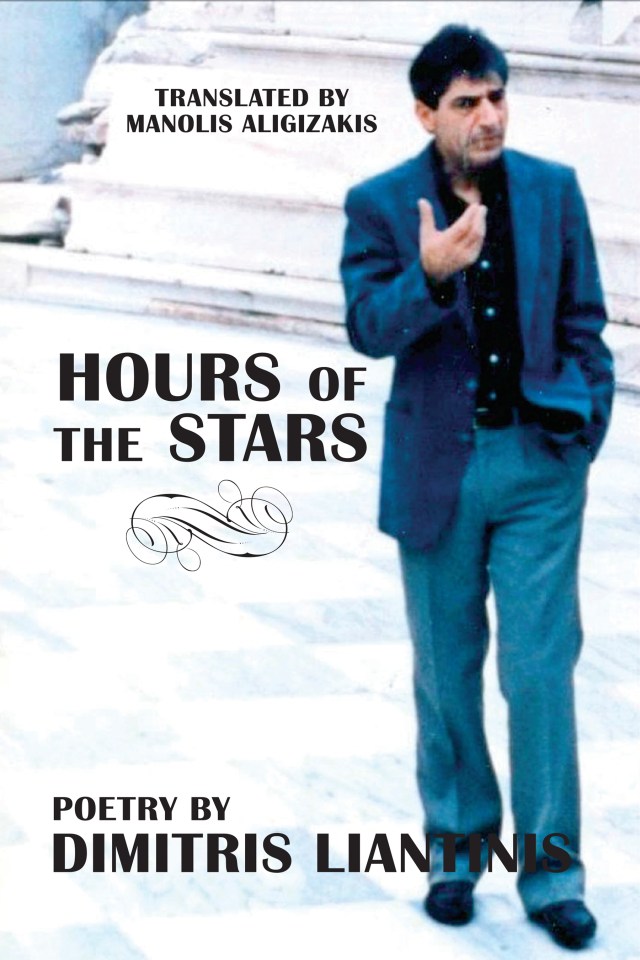
Mara: Titos Patrikios, in the Crossroads post, puts the same fracture into a friendship: paths that once ran together now "rise like wild horses," and the speaker grieves a common tongue lost forever. The Hours of the Stars post goes the other direction — sensory, almost ecstatic, nymphs singing by water springs, the Zodiac aroused, Hypnos laid to sleep in open palms.
Pip: Constantine Cavafy's post gives us a king declaring Alexandria the center of the Panhellenic world in every word and every art — confident, a little absurd, entirely convincing. Nostos and Algos asks why the gardenia sighed and the clock went silent, and gets no answer, which is the answer.
Mara: Antony Fostieris frames emotion as infrastructure — "the wire that reaches the heart of the void" — and armies moving through heavenly spaces. Nikos Engonopoulos assembles Ottoman benefactors, Italian collaborators, sixteenth-century French poets, and the monk who discovered gunpowder into one gloriously unruly stanza. Medusa drops the mythological register entirely for a citizen on a couch, beer belly out, fingers on an Enter button, boom.
Pip: And the POETS Day post on Oscar Wilde rounds out the week's range — from ancient Ithaca to Victorian wit in one scroll.
Mara: What holds all of it together is translation as an act of preservation — and the prose excerpts this week make a similar argument about memory and form.
Prose, Memory, And The Self On The Page
Pip: This segment is about what prose does when it gets personal — memoir shading into fiction, characters discovering themselves through other people, and the question of whether a self can be written into existence.
Mara: The Gospel of Silence puts it directly. The narrator, finding his footing in a dormitory school, writes to survive: "I tried fitting words together so they might express me, preserve me. My young literature teacher read and evaluated my writings in her apartment; the situation was at once embarrassing and liberating. It was as though the boundaries between text and life had blurred."
Pip: So literature stops being curriculum and becomes something you live inside. That's the real claim of the excerpt — not that writing is therapeutic, but that it's constitutive.
Mara: In Turbulent Times works the same boundary between role and person, but through attraction. Nora and Ian circle each other across a bar counter, and a colleague delivers the verdict plainly: "Heart, soul, and body, she's all yours." Ian catches the words "some time again" and holds them like something precious.
Pip: Redemption follows Hermes through immigrant life in Canada, where the local warmth surprises him — people talk to you on buses without caring who you are or what you're wearing, and he writes home with such enthusiasm he asks Magda whether she could see herself living there with him.
Mara: Blood, Feathers and Holy Men takes the widest geographic and cultural scope — Norse settlers, Mandan storytelling, a winter cave, a monk who hates carved figures and endures the cold only under protest. The community holds together through craft and story rather than doctrine.
Pip: Ken Kirkby, Warrior Painter offers a different kind of self-construction — the artist deploying a Rain Man ruse to deflect unwanted attention, then losing his cover, and concluding that what's missing from most self-assessment is a sense of humor.
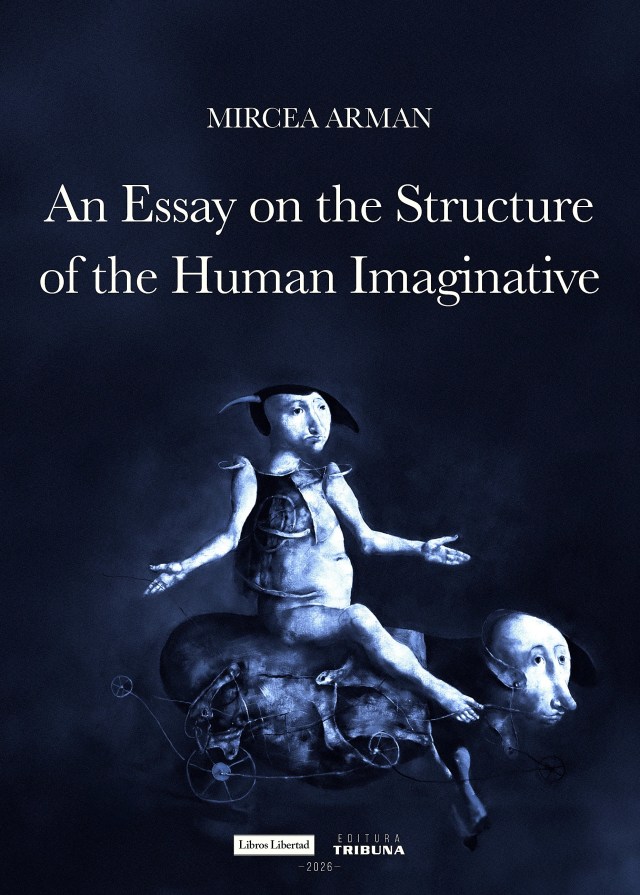
Mara: And the Essay on the Structure of the Human Imaginative makes the philosophical case underneath all of it: the human mind creates ex nihilo, just as God did, and the new worlds built by science and technology carry their own kind of truth — though whether that truth can replace ontological truth remains, as the excerpt puts it, "highly debatable."
Pip: From the self preserved in a school dormitory to the world created from nothing — the scale shifts, but the argument stays the same. Which is also, in a way, what the landscape writing is doing.
Work, Ground, And What Stays
Pip: This segment is about labor in physical places — what bodies do in cold yards and prairie woodlots, and what that work leaves behind.
Mara: Straits and Turns anchors the segment in a rail yard on a freezing night. The bell won't sound because the air pipe has frozen, and the crew works through it: "Darkness had covered the yard like a shroud, and poetic images came into Mike's mind, which he promised himself that he'd write some time later."
Pip: He files the poetry away for later and keeps washing the engines. That's the whole economy of the scene — work first, meaning later, maybe.
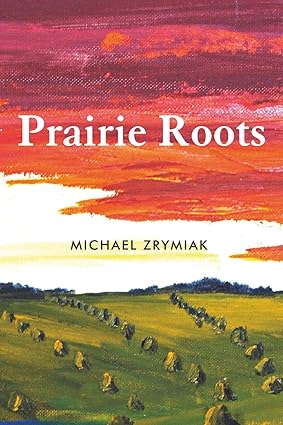
Mara: Prairie Roots puts the same energy into springtime crow-nest raiding on a farm — organized, purposeful, and genuinely joyful. The excerpt notes that low wet spots meant rubber boots, and stopping to hunt tadpoles, and "all these things added to the joy of being young and alive."
Pip: Ugga compresses the same ground into verse: "someone squares three stones, two down, one up, to steady it" — and inside that act, the first Mason is born, the first window to the future.
Mara: Twelve Narratives of the Gypsy frames the craftsman as someone who cannot help making the wrong thing beautifully — crowns for palaces that no longer exist, always missing a name. And The Long Road follows a worm across brown leaves, brainless yet wise enough to crawl on his skin and declare the rules of life.
Pip: From frozen bell to fat worm — the ground keeps producing its own argument.
Mara: The thread across all of it is preservation — words that keep a self intact, translations that carry a voice across languages, labor that leaves something behind even when the bell won't ring.
Pip: Next time, we'll see what else the ground turns up.
…fruits of this capacity of the Imaginative, which possesses the ability to create ex nihilo. The only being capable of such creation–and whose existence is both evident and undeniable–is the human being. This capacity of the Imaginative creates out of nothing, just as God created out of nothing. Yet its creation rests, on the one hand, upon the two constitutive constants of the a priori poietic Imaginative–time and space, which are by no means physical data and possess no material consistency (we state this without hesitation despite the astonishment of physicists and mathematicians)– and above all upon reason, upon what can be rationally realised through this capacity of the Imaginative, which is itself the essential capacity underlying fundamental scientific research. What does this imply? Nothing less than that the world is not solely God’s creation; that God did not create in a perfect and singular manner; but that the world–as no one has ever conceived it before (not even God himself, author’s note)–can also be created by the human mind. What reasonable person today could deny space travel, rockets, or the virtual world, parallel to physical reality, which has been developed out of nothing through computer science on strictly rational, logical, and mathematical principles? The argument that “God willed it so” we gladly leave to dogmatists and religious zealots. The realities created by science, realities that increasingly replace physical reality even at the level of human subsistence, are genuinely new worlds–creations ex nihilo. For this reason, within these newly created worlds–technology, computer science, robotics, and the like–there exist different relations of necessity and a different kind of truth from the ontological truth developed by Western metaphysics. What remains highly debatable, however, is whether ontological truth can genuinely be replaced by these new truths of possible worlds, despite…
…shot or even when they spotted a raiding party, they would raise the alarm and fly off in a cacophony of squawking. We would then resort to plan B, which was to destroy as many of the crows’ nests in the woodlots surrounding the farmstead as we could find and reach. To succeed, a certain amount of planning and equipment was required. Since the crows built their nests in poplar trees, the first requirement was a capable tree climber. A rifle was necessary for “opportunity” shots in case the crows decided to attack whoever was climbing the tree. As well, we needed a long stick, forked at the poking end, to dislodge the nest from below. This was necessary as the nests were normally built at the top of the tree, beyond the point where it was safe to climb. The raiding party, made up of two or three of us, would quickly complete our collective chores and depart for the south quarter section as early as possible in the morning. Nest hunting was a springtime activity, before the leaves covered the trees, making it difficult to spot the nests. The mornings were usually bright and cool, and the early spring grasses and flowers were just starting to poke through the woodlot floor. Many of the low spots were still wet; therefore we would put on our rubber boots and make sure our routes took us through the low areas where we stopped to hunt tadpoles and to feel the coolness of the water through the rubber boots. All these things added to the joy of being young and alive. Spotting crows’ nests was easy. Without the leaves, the nests were silhouetted against the brilliant spring sky. Each find was exciting as it presented its own challenges. Working our way in through the underbrush, we kept an eye out for crow activity to confirm a fresh nest. When the crows confirmed that the nest was occupied, we would assess the degree of difficulty the knockdown would present and planned our strategy as we stood under the tree, surveying the circumstances. We considered all the important challenges. Whether the tree was climbable was the number one issue.
Anger and hatred, bitterness and sorrow for the hunched back, the shining agreements, oh teacher, eternal friend, I had believed in you, time has come when our paths will separate; our paths stand opposite each other, they rise like wild horses. Yet I still find it hard to decide that our common tongue was lost forever.
…and Mike ran to change two switches and guide the engines to the appropriate spot. The other two, Giovanni and Johnny, went to the area of the fuel pumps and the pit, where they checked the underbelly of the engines while Mike filled the tanks with fuel. Scotty checked all levers and pressures as the others got busy doing their jobs. Mile noticed that a light snow started falling and a light breeze perked up, spreading a chill in the air. The bodies felt the cold, and the exposure to the frost was getting into them. Darkness had covered the yard like a shroud, and poetic images came into Mike’s mind, which he promised himself that he’d write some time later. Giovanni and Johnny finished their inspection, and after Mike finished his job, the engines were driven back outside the old shack for the rest of the work. Mike started washing the outside of the engines, and the mechanic and his helper did their part of the maintenance. All men worked for an hour and a half until the engines were ready to be taken away. They all had an hour to relax and wait for the new crew. They sat inside the shack when, from inside the cabin, Scotty yelled, “The darn bell isn’t working.” Johnny, with his cigarette hanging off his mouth, climbed up to the top of the engine to check the bell. Surely nothing looked different than any other time, yet the bell was silent when Scotty turned the proper switch on. The bell was needed each time the engines came to a station and was part of the general function. However, tonight, the chill in the air had frozen the air in the air pipe, which surely couldn’t activate the bell. Giovanni also climbed up, and both men struck the air pipe with their hammers, hoping that they would help the air flow, but to no avail. “The air pipe is frozen,” Giovanni diagnosed, and the boss said, “Why don’t you try to warm it up with a couple of flares…” Surely Mike ran to the shop and brought a bag with half a dozen flares. In the meantime, Giovanni and Johnny climbed down and chatted with Scotty inside the cabin.
…campaigns as well as various entertaining events with the primary goal of collecting money for the Archdiocese of Canada, which obviously was getting richer and more powerful at the expense of the communities. He kept in touch with his relatives. He often wrote to them, and he also sent them a picture or two occasionally, just to make them feel better and let them know they didn’t have to worry about him; he was really doing okay. Magda wrote to him and let him know she was planning to take a trip to Vancouver sometime the next summer, which was only six months away. His parents sent a few letters, but Demetre and Maria wrote to him more often. What he enjoyed most was the way the Canadians lived, their “take it easy” attitude and their simple, pleasant outlook about life in general. He could understand that because he knew Canadians hadn’t gone through occupation by the Germans in the Second World War, or the dictatorship of a junta. But what he liked about the people the most was that they started a conversation with you at any time, at any place, either on the street or on the bus. They could talk to you about anything without caring whether it interested you or not. They were mostly polite and cheerful, and they helped you if they could. They didn’t care who you were or what you were wearing, or how you talked, as most Canadians spoke with an accent. Hermes’ accent was profoundly distinct, so that one could tell easily he was Greek. But it didn’t matter to them at all. He wrote all these things to his relatives and Magda with such enthusiasm that at one time he asked her whether she could see herself living with him in this country. He was surprised to get a positive answer in her letter, which came rather quickly. He was glad to hear that she had the blood of the gypsies in her veins; she could go away from her home at any time if the circumstances were the right ones. He enjoyed knowing that because he was also a man who loved to travel, to move around, to visit and discover new places and new people.
“Holy sweet Jesus.” Ula realized she’d shouted and clamped a hand over her mouth. She looked at Yamka in amazement and Yamka smiled happiness at her. Ari spent the long evenings carving a large block of red cedar with a flint blade. He made an inlaid hnefatafl game board, similar to the one on which he’d played with Captain Hjálmar. He dug through the snow by the lake bed and collected black and white pebbles for playing pieces and before the winter was over, Ari taught Ailan the Norse tactical game, King’s Table. Bjorn used a flint knife to whittle small animals out of wood and tried to teach Keallach and Ailan his skill with only little success. Both Brothers usually succeeded until one slip of the blade removed a leg or a head from his carving. Keallach also managed to slice a finger and had to be content to sit and watch Bjorn carve for more than a month of long days and nights. Every morning, all winter long, Fire Maker walked the short distance to the lakefront bundled in furs. There he stripped and took his daily plunge into the icy water. He said it made him strong and healthy and enabled him to endure the bitter cold. Following breakfast, he either made snowshoes or went back out to set up traplines in the woods. He brought in beaver and mink and otter for food and skins and showed Finten and others how to cure the pelts. Father Finten was not creative with his hands. He hated the carvings Bjorn and Ari made, calling them graven images. He shunned the cold and only went outside out of absolute necessity. But Finten did seem to be able to sit for hours, eyes closed, in contemplation and silent prayer. The Brothers obeyed his calls to community prayer only out of habit and a sense of obligation to their religious vows. They always escaped at the earliest opportunity, seldom remaining to meditate, sighing and groaning through his lengthy homilies. When a blizzard raged outside the cave, everyone gathered around the fire and Fire Maker shared stories of life in the Mandan Nation. He never spoke of the gods during daylight hours but only after dark because a man would go blind if he spoke of the gods in daylight. “When buffalo are close, and we have decided to make a run, each hunter takes a bow and quiver of arrows and heads out into the grassland, followed by women who will cut up the animals and bring the meat and hides back to camp. They bring long poles and tie them together near the bottom. The women load the furs and meat across the bottom where the poles join and pull the load so that it does not drag on the ground. When two women pull together, that is much easier than carrying it on their backs. Sometimes they bring the dogs to carry heavy loads of animal skins but never the meat. The dogs always know they will be fed well when they return.” Ari asked, “When the dogs go with the hunters, does anyone remain in camp? What about the old people, and who looks after small children?” “The women remaining in camp have much to do. They dry meat, tan robes, sew moccasins, and prepare the food.” “There must be a great feast when the hunters return.” Ailan was always thinking of food and cooking big meals. “There are many feasts when hunting has been good. A man who gives a feast tells his wives to cook the best food they have. When the feast is ready, he goes outside his lodge and shouts each guest’s name three times, telling that person to come and eat.
…Then levanter folded you in the coiled chiton of his haste and took you to Corfu always not quenched teary among a thousand blessed smiles here you’ve caught up with me waiting for you leaning on the back of dusk and having in my hands the peaceful sauntering of oranges and ten rain elegies. You found me and asked me to narrate the endless bitter story of the shepherds. Listen to the steps of the god the doves that out of their fear fly higher and the many cannon blasts in the castle of death night watches, agreement of the sparrow, passing of winds. You wander next to me with your ripped laughter with your garment higher than your knee as the ancient nymphs who put up tents and sing along the water springs. Thus you complete the miracle of transformation and the scarlet lust becomes a movement of your long fingers that play and tame the beasts and arouse the signs of the Zodiac then you put Hypnos to sleep in your open palms as the waterfalls of the night become silent galaxies.
Question You thought you knew him then why the gardenia sighed and why the clock on the wall turned silent and why did the jasmine refuse to bloom? You thought you knew him then why did you start crying soon as he left and why he didn’t turn his head to look at you for the last time?