The postman in Mail moves from house to house carrying news of marriages, births, and children living far away. For everyone else, he is the bearer of messages, while tears run down his face because he too waits for a letter that never arrives.
Here lies one of Aligizakis’s strongest poetic gifts: his ability to create an entire human destiny from a few concrete gestures.
He does not write psychological portraits in the conventional sense. Of many of his characters we know almost nothing. We are given an occupation, a gesture, a memory, an object.
The rest is accomplished by metaphor. The net becomes a trap. The rope becomes a life.
Bookkeeping becomes an account with death.
The felling of a tree becomes an image of our own disappearance. The letter becomes a metaphor for absence. The shoe becomes the sign that, for a little while longer, we may still walk upon the earth.
This poetic world is at once archaic and contemporary. Hades and Thanatos move naturally through gas stations, diners, hospitals, stock-market screens, garages, and Canadian immigration offices. For Aligizakis, Greek mythology is not museum material but a still-living language through which human finitude can be expressed.
The immigrant is therefore a particularly significant figure. In Immigrant, the protagonist leaves his homeland to begin a new life on the other side of the planet. He promises his youth and productive years to the new country in exchange for security—but the poem’s ruthless conclusion suggests that in doing so he has, in a sense, sold himself “for a few dollars more.”
This experience carries particular resonance in the work of a poet whose own biography has been shaped by emigration. Yet Aligizakis does not write autobiographical complaint. Migration becomes another model of the human condition: we all make exchanges with the world. We give time for money, freedom for security, dreams for predictability. The only question is whether we are aware of the contract we have signed.
The Incidentals is not a comfortable book. Nor does it wish to be.
It is often rough, grotesque, ironic, sometimes sarcastic. It refuses to beautify the body, old age, labour, or death. Aligizakis occasionally uses brutal language to awaken the reader from precisely the complacency he wishes to attack.
Yet beneath this harshness lies an unusual humanism.
Because if these people were truly incidental, no poems would be written about them.
Poetry itself refutes the title.
The moment the poet writes about Gladys, Mathew, Stefan, Benjamin, Galanos, or the nameless postman, he abolishes their insignificance. He lifts them out of the anonymous mass of time. Society may have counted them as numbers, but poetry gives them names, faces, stories, and deaths.
This is perhaps the most beautiful ethical gesture of the volume. Poetry cannot defeat death.
But it can defeat oblivion—if only for the duration of a poem.
Manolis Aligizakis’s The Incidentals is therefore far more than a collection of poems about ordinary people. It is at once a modern dance of death, a social diagnosis, a sequence of philosophical parables, and an ironic catalogue of human existence. The volume asks how many people live out their lives without ever daring to move away from the stake to which an invisible rope has tied them.
And it asks an even more difficult question: how long is the rope on which we ourselves live?
The poet cannot answer that question for us.
Perhaps this is precisely the point at which the stories of the „incidentals” cease to be the stories of others. And ours begins.
Pip: Manolis Aligizakis — translator, poet, publisher, and apparently a one-person archive of everything Greek literature has ever felt about mortality, love, and the road.
Mara: vequinox has been busy. Today we're moving through modern Greek poetry in translation, then into myth and mortality, and finally into fiction and travel narratives that cross borders both literal and historical.
Pip: Let's start with the poets.
Voices Across the Aegean: Modern Greek Poetry in Translation
Mara: The throughline across these translations is a question: what survives when a poem crosses languages? The Cavafy post gives us one answer through the myth of Achilles and a god who betrays his own prophecy.
Pip: And Cavafy frames it with Plato first, which is a move — citing the Republic to set up a poem about divine bad faith. The quote lands hard: "Yet, he, himself… who sang the hymn… he killed my son."
Mara: That line is Thetis speaking. Apollo sang paeans at her wedding foretelling her son's long life, and then personally went to Troy and killed Achilles. The prophecy and the killing share the same mouth.
Pip: Which is either theology or the oldest recorded case of a conflict of interest.
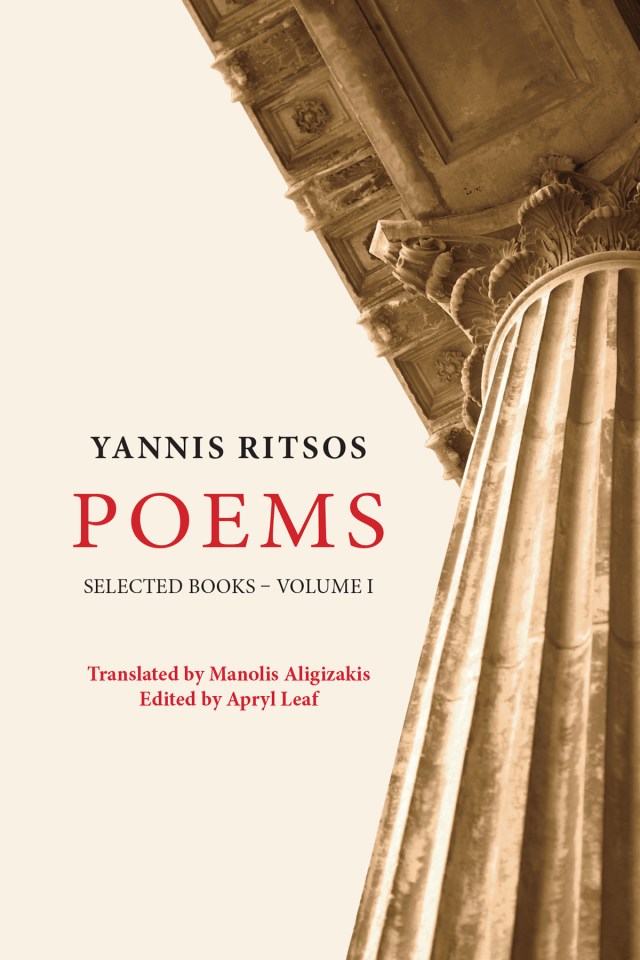
Mara: The Yannis Ritsos volumes — both Volume V and Volume VI — push into similar territory from a different angle. Volume V gives us the evening star as an eraser moving back and forth over a mistake that never quite disappears, birth and death as a rhythm rather than a sequence.
Mara: Volume VI's "Same Word" watches language itself tremble under its own unfamiliar meaning, like a nerve that shivers and bursts. Ritsos keeps returning to the threshold between sense and silence.
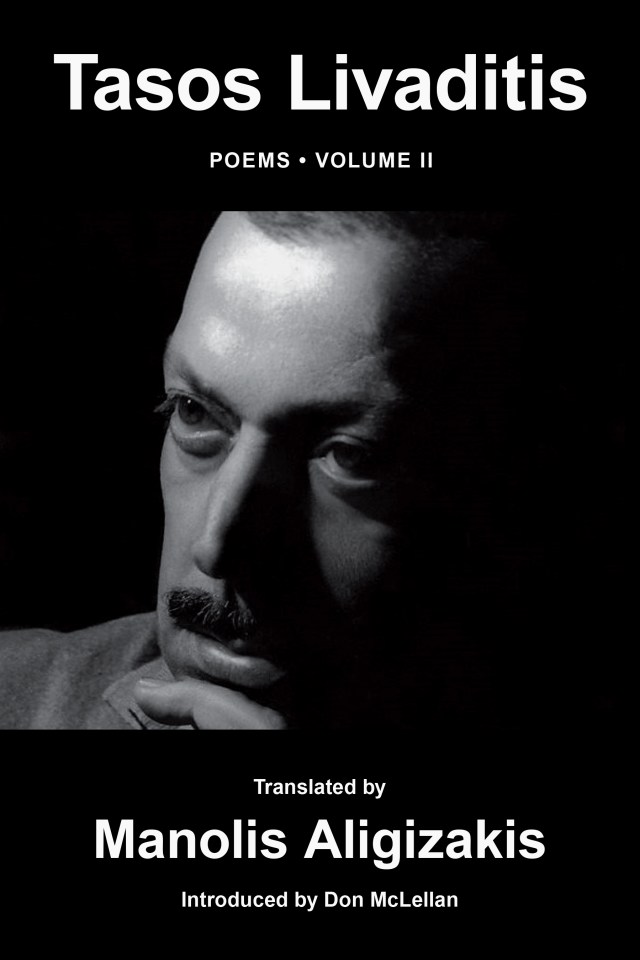
Pip: Tasos Livaditis takes that threshold into a tavern. The bouzouki player in Volume II swears every day he'll turn his life around, and every night the world deepens and pulls him back through the door.
Mara: George Seferis in the Collected Poems gives us crickets ticking out of rhythm, a house full of them, and the line "we don't even whisper, because the machine is speeding before horror and contempt." The anthology Neo-Hellene Poets lands a parable about a bird that can learn every sweet song except the words "I love you."
Pip: Katerina Anghelaki Rooke's Selected Poems counts time differently: "I count time with what I've lived and what is forthcoming that resembles the incomparable end. Only, look, the craft and the fisherman can't be separated from the blue."
Mara: Titos Patrikios in Selected Poems is more pointed — "Economic Development" watches emigration and foreign investment rise together while newspapers announce cultural ideals are being maintained. And Nuances holds the sharpest compression: a poem called "Repetitions" that names peace as something a sword erases.
Pip: Red in Black steps outside Greece entirely, finding illumination in Craiova, Romania, through Brancusi sculptures — the Blind Boy and The Kiss — connecting Greek poetic consciousness to Romanian artistic space. That range from Cavafy's Troy to a Romanian museum is the real scope of this project.
Mara: From mythic time to the present tense — which is exactly where the next set of poems lives.
Eros, Entropy, and the Weight of Ending
Pip: This cluster asks what myth and love actually cost — not in the abstract, but in the body, in the moment, in the interruption.
Mara: Medusa opens with a poem called "Gravestone" where Eros descends to a melancholic youth and a widow turns in the moonlight, and then the poem pivots without warning: "Nothing matters more than the armchair craving my body as the widow craves her late husband."
Pip: The domestic interruptions — the faucet, the table, the wife demanding full attention — aren't a joke at the poem's expense. They're the actual argument: desire and the ordinary are not separate territories.
Mara: Entropy's "Eternal Cycle" strips that argument to its bones — earth aging, returning its shine, then embracing each thing on its path toward what it always longed for. Wheat Ears traces the same arc through a single memory: beauty glimpsed through a window, understood only later when years have become dry leaves on a sidewalk.
Pip: Rendition and Life is a Poem hold the stranger registers — one a requiem tracking dawn through alcohol and fear, the other a surrealist marketplace where oaks erect monuments and white rabbits somersault on floating meadows. Hours of the Stars closes it with a prologue about those who never let their glance reach the light, and the chaste people who do.
Mara: That tension between those who see and those who can't — it runs through the fiction too.
Roads Taken Hard: Fiction and Travel Across Borders
Pip: The fiction here is about people in motion — and motion that doesn't stop even when it probably should.
Mara: Ugga frames that with unusual economy: "For the light to change the production must pause and the pause must be produced methodically." Four lines that describe filmmaking and also, quietly, everything else.
Pip: In Turbulent Times gives us Ian Anderson driving furiously south from Lisburn, cursing his own idea the entire way, and not stopping. The road is "drunken," the steering wheel swung "in fury, like a ship's skipper in a storm."
Mara: The rationing detail grounds it precisely in postwar Northern Ireland — no meal over five shillings, no more than three courses, restaurants exempt and resented for it. The historical texture is load-bearing.
Pip: Straits and Turns puts a mechanic behind a fogged window in a Vancouver train yard, rain dripping steadily, "poetically, he'd say." The Circle moves between Baghdad and a new apartment, a move organized with pizzas and a reserved elevator and a view west toward the Pacific.
Mara: Blood, Feathers and Holy Men is the furthest journey — Irish monks in North America, a guide warning that the trip takes five or six seasons and that stragglers get left behind. And Jazz with Ella lands in Moscow, a Canadian teacher stepping onto Soviet soil and remembering Churchill: "a riddle wrapped in a mystery inside an enigma."
Pip: She suspected it was hyperbole. Then she stepped off the plane.
Mara: What holds all of this together is the act of crossing — languages, borders, centuries, the distance between a prophecy and its betrayal.
Pip: Next time, we'll see where that crossing takes us.
Pip: Manolis Aligizakis has built something unusual here — a publishing project that reaches across Greek modernism, Canadian wilderness fiction, and the body's most private reckonings, all without losing the thread.
Mara: vequinox brings all of it together on this site — poetry in translation, prose fiction, landscape verse, and work that sits right at the edge of desire and survival. Let's start with the Greek poets and what exile actually costs.
Greek Poetry And Exile
Pip: The question running through these translations is what happens to a person when society decides they no longer belong — whether that exile is political, psychological, or simply the condition of seeing clearly.
Mara: Tasos Livaditis puts it with terrible precision: "Things have changed; these days, they don't kill. They only point at you with the finger; it is enough. Then, they make a circle that always becomes smaller; they slowly get closer you retreat against the wall, until in desperation you, alone, open a hole to hide in it."
Pip: So the modern machinery of exclusion doesn't need violence — the circle itself is the punishment. Shrinking space does the work that a bullet used to do.
Mara: Yannis Ritsos works the same territory across two volumes here. In the Exile Diaries poem from Volume III, a woman lighting a heater in the cold becomes the whole landscape: "the wind took her place in the room." Volume IV's "Unacceptable" shows a man who discovers some final truth and goes silent — and is convicted unanimously for that silence.
Pip: Silence as a verdict. That's a neat trick the powerful have always loved.
Mara: Antony Fostieris frames it inward — "Behind our eyes, silent and crouched, we look at the world out there like through the skylight of a prison." And Titos Patrikios, in "Movie Theater," finds a strange truce: torturer and tortured sitting together in the dark, briefly unknown to each other, briefly friends.
Pip: Two hours of cinema as the only available ceasefire.
Mara: Katerina Anghelaki Rooke's poem watches a worm destroy the September harvest and ends simply: "oh Greece, the next morning I found you changed." Kariotakis and Polydouri give us verses described as blood and heart given away like tears. And the collection "Entropy" reaches for something longer — an eternal Odyssey made of "sails, sphinxes and shipwrecks."
Mara: The review of "Introspection" calls all of this a deliberate strategy: "the inward gaze does not lead to withdrawal or passivity — the inner depths become the place from which the confrontation with the world begins."
Pip: Introspection as a launching pad, not a hiding place. That tension between turning inward and turning outward runs straight into the work on desire.
Desire, Body, And Intimacy
Pip: These pieces ask what the body wants when the world outside it has become unbearable — and whether that wanting is survival or its opposite.
Mara: "HEAR ME OUT" answers that directly. The narrator in the tub watches the water turn pink and thinks: "I was again in the same spot, wrapped in my old warmth. And the foolish people who said, 'It's too late for her, unfortunately…' What 'too late?' For me, everything was just starting."
Pip: A return to the womb framed as a beginning. That is one of the more devastating reversals in any of this material.
Mara: "Twelve Narratives of the Gypsy" places desire in a completely different register — elemental, uncontained, bodies by a river's edge "yearning for erotic apexes." "Orange" is sharper and more compressed: a "brazen thief that leads my mind to an erotic voyage." And "Ugga" strips it to the bone — breast, pen, milk, ink, the acts of suckling and writing placed in the same short breath.
Pip: Eros and language as the same bodily function. Honestly, not the worst theory of poetry.
Mara: "Chthonian Bodies" and "Wellspring of Love" pull toward tenderness and community — people sheltering each other, coffee on the stove, the small negotiations of care. The body here is less a site of crisis and more a place where ordinary life quietly insists on continuing.
Pip: From the tub to the kitchen table — and somehow both feel like resistance. The fictional lives in this work carry the same weight.
Fictional Lives And Moral Reckonings
Pip: The prose fiction here keeps returning to a single question: what do you do with a father, a priest, a painter, a spy — someone whose life demands a reckoning you are not prepared to give?
Mara: "Ken Kirkby: A Painter's Quest for Canada" opens that reckoning in the wilderness. The excerpt describes a night under the northern lights: "It was as if we were laying on the floor of a cathedral the size of the universe. The earth was no longer an issue — we weren't even part of the planet. I can see how religions began."
Pip: A man who locks himself in a studio for seven months to finish a painting after an experience like that — that's not dedication, that's a response to having seen something you can't unfold into ordinary language.
Mara: "He Rode Tall" puts a son back at his estranged father's grave on the prairie and lands on something quieter but just as large: "Joel recognized that your dad is always your dad. No matter what." The bitterness is still there; so is the prayer.
Pip: Grief and grievance occupying exactly the same space. That's the whole novel in one sentence.
Mara: "The Unquiet Land" takes the reckoning into the church. Padraig, a priest whose past the village has never accepted, stands at the sacristy door knowing the congregation at the wedding ahead of him would come "their long knives drawn, their wild teeth gleaming like the fangs of wolves." The community's memory is longer than his redemption.
Pip: A priest haunted by his own congregation. That is a specific and very old kind of loneliness.
Mara: "Small Change" gives us Rick, a boy who out-argues a nun about the nature of sin and voluntary participation, and simply quits. "The Circle" follows a spy arranging his own exit, weighing contingencies over breakfast at the Sheraton. "Fury of the Wind" slows everything down to a saddle, a jar of cream, a kiss on a cheek — Ben's first gift to Sarah, now something she intends to keep.
Pip: A saddle cream on a windowsill as the axis of a relationship. Fiction earns its keep in the small things.
Mara: "Water in the Wilderness" holds the same domestic scale — Tyne waking to sleet, the smell of coffee, a friend who took a leave of absence just to sit nearby. Loyalty measured in presence, not in words.
Pip: All of these characters are navigating what they owe each other — and the landscape outside keeps pressing in on that question.
Nature, Weather, And Landscape
Pip: The natural world in this work is never just backdrop — it watches, it judges, and occasionally it outlasts everyone in the scene.
Mara: "Vespers" makes that explicit: "Ethereal spruce stands guarding our home secrets without her armour having lonely eyes, an assuming smile between arthritic limbs as if to remind me of duties that one performs without being asked, without being paid."
Pip: A tree with arthritic limbs and a sense of duty. Nature as the only reliable volunteer.
Mara: "Mythography" follows a creek answering the river rocks — it is going to the great Ocean, to melt and become "a whiff of air pasted on an autumn day, turning to a wish in the heart of a young lover." And "Wheat Ears" brings the landscape indoors, to a graveside: a dead cousin who seems ready to rise and sit by the sidewalk, and the living person balancing on a tightrope, naked from the waist down, trying to understand what the dead require.
Pip: The creek knows where it's going. The living, considerably less so.
Mara: What holds all of this together is the idea that looking inward and looking outward are the same motion — the exile, the body, the grave on the prairie, the spruce in the yard.
Pip: Poetry as homeland. That phrase from the Introspection review keeps coming back. Next time, we find out what else this site considers home.
Poetry as a Return to Origins and a Form of Resistance
By Attila Balazs
…One of the volume’s significant achievements lies in its capacity to unite seemingly incompatible registers. Mythology, philosophy, eroticism, biography, personal history, and social criticism coexist in expansive, discursive poetry that at times approaches the prose poem. The language moves from solemnity to sarcasm, from prayer to invective, and from contemplation to revolt.
Images often accumulate with torrential force. The poet does not always seek classical clarity, but rather intensity. He constructs through associations, returns, repetitions, and contrasts. Light and darkness, flesh and pneuma, humility and pride, logic and madness, life and death define one another.
Madness occupies a privileged place within this poetic system. It may represent suffering and psychological rupture, but also freedom from the logic of a diseased world. The madman possesses the right to speak the truth that rational people avoid. The poet and the philosopher stand at the margins of society precisely because they see what others refuse to see.
From here arises the ambivalence of the title Introspection. The inward gaze does not lead to withdrawal or passivity. On the contrary, the inner depths become the place from which the confrontation with the world begins. The self descends into its own viscera, into memory, desire, and the abyss, only to return to the surface with images and truths it offers to others.
Introspection thus becomes a form of responsibility. To know oneself means to know one’s roots, wounds, desires, and contradictions. It also means understanding that individual experience is not isolated, but belongs to a shared history and a common humanity.
The poetry of Manolis Aligizakis is a poetry of deliberate excess. It does not fear great words: destiny, eternity, truth, freedom, immortality, beauty. In an age in which such notions are often viewed with suspicion, the poet recovers them and restores their gravity. He still believes in art’s capacity to change the human being, defend dignity, and save something from death.
At the centre of the volume lies a paradox: the human being is mortal, yet consciousness aspires to immortality; man is fragile, yet dreams of the Overman; he is alone, yet speaks in the name of all humanity. From this contradiction arises the energy of the poems.
Introspection may be read as a symbolic autobiography, a modern epic, a philosophical meditation, or a testimony to the condition of the creator. All these readings are possible because the volume refuses to remain within a single genre or a single era.
Aligizakis constructs his own mythology from fragments of the Greek world, family memory, the experience of exile, and the great questions of European philosophy. Within this mythology, the poet is simultaneously child, lover, fighter, recluse, prophet, and martyr.
At the end of the book, the feeling remains that poetry is his true homeland. It is the place where the past may be revived, where the dead may be summoned back, where love may suspend time, and where the human being may transcend his limits for a moment.
Through creation, the poet does not definitively defeat death, but he refuses to grant it the final word. His traces remain imprinted in language, like the footsteps of his ancestors in the native soil. And the journey from Alpha to Omega does not end, but is transformed into a new beginning.
This is perhaps the true meaning of introspection for Manolis Aligizakis: not an enclosure within the self, but a descent into the depths of being to discover a light that may be brought to the surface and shared with others. A fragile and dangerous light, capable of burning, but also of guiding. A light that bears the name of poetry.
Pip: Manolis Aligizakis has assembled a catalog that moves from ancient Greek anguish to Canadian prairie winters to stock market schemes — which is either a literary festival or a very ambitious reading list, depending on your weekend.
Mara: vequinox brings all of it together on this site — translations of modern Greek poetry, original verse on love and desire, and a run of novels spanning hardship across continents and generations. Let's start with the poetry coming out of Greece.
Voices From Modern Greece
Pip: The modern Greek poets gathered here are working a particular problem — how do you hold loss, resistance, and beauty in the same breath without one canceling the others out.
Mara: The Yannis Ritsos volume sets the tone early. The poem "The Inexpressible" builds toward this image: "the blind musician, tired, goes back up. He puts his violin case on the chair. He opens it; two of the three glasses are in it. They are shining and whole."
Pip: So the broken things you carried out in guilt come back intact — the poem turns on that reversal, the indestructibility of what you thought you'd lost for good.
Mara: Constantine Cavafy's "Che Fece … Il Gran Rifiuto" works a related tension — the great No that is right and still burdens its speaker for life. Nikos Engonopoulos in "Goalpost" pushes into civic dread, asking whether the Sunday bells will be followed by hymns or machine guns.
Pip: Engonopoulos lands the ambiguity without resolving it, which is its own kind of answer.
Mara: Tasos Livaditis in "Simple Talk" insists on plainness as survival — speaking, loving, dying "in a simple way." George Seferis in "The Shape of Fate" asks who orders destruction from behind, and Titos Patrikios watches a man of creative mind reduced to counting whether his wages last the month.
Mara: Antony Fostieris names "certain pain" that strikes the empty heart beyond all desire. The Neo-Hellene anthology and the Troglodytes collection round out the range, from birch-forest dawn to an invocation of the Goddess to purge the ego entirely.
Pip: Ten poets, one through-line: the thing that survives is rarely the thing you expected to keep.
Mara: The love poems take that survivorship somewhere more intimate — let's move there now.
Love At Both Edges
Pip: The love and desire poems here are not soft — they treat longing as a force with weight and consequence, something closer to weather than to sentiment.
Mara: "The Incidentals" opens the territory directly: "the seething angst of lust demands her body's contours and dark caves on the altar of Aphrodite deserving unemotional dedication, like any archon sitting up high, like any God jealous or self-absorbed and relaxed."
Pip: Desire framed as liturgy — the body as offering, the worshipper as functionary. That's a cold altar.
Mara: "Hear Me Out" pulls in the opposite direction emotionally but lands in the same isolation: two people on parallel paths going opposite directions, past the point where they first met, with only the roundness of the earth as any possible reunion.
Mara: "Wheat Ears" compresses the whole arc into image — "two bodies defining the shape of a monad," synthesis as astronomical and emotional at once. "Rendition" closes it with a line that strips possession entirely: "Of all you have amassed, none is yours."
Pip: Love, desire, and ultimately the inventory comes up empty. The novels take that emptiness and put it in a house with bad insulation — let's go there.
Novels Of Endurance And Reckoning
Pip: The fiction here keeps returning to people held in place by circumstance — weather, pregnancy, poverty, complicity — and asking what they do with the time they cannot escape.
Mara: "Fury of the Wind" makes that literal. Sarah, isolated on a prairie homestead through a brutal winter, moves house plants to the kitchen table each night to keep them from freezing, writes letters that take weeks to arrive, and waits. The passage reads: "she missed the companionship of others, especially Penny. What would she give to be able to sit down to a cup of tea in Penny's cheerful kitchen?"
Pip: A cup of tea as the full measure of what isolation costs. That's a precise kind of grief.
Mara: "The Unquiet Land" puts a different kind of waiting at its center — Mother Ross, who knows Caitlin is pregnant before the wedding, removes her own mother's ring from her finger and gives it to Michael for the ceremony. She hears Caitlin sobbing upstairs and swallows her own agony whole.
Pip: Respectability as ransom, as Mother Ross calls it — and she's already paid her installment.
Mara: "Water in the Wilderness" moves the tension into a seedy hotel corridor, Tyne's knees going weak as she waits for a deteriorated Corky Conrad to open his door. "Prairie Roots" grounds everything in the farming community's frank hierarchy — survival first, schooling second, and a father who insisted otherwise.
Mara: "Jazz with Ella" sends Jennifer onto a plane into a storm, retreating into questions about why she was chosen over Paul for a Soviet Union language tour, and what it cost her in salary to say yes. "Introspection" and "Hours of the Stars" work in verse — the first building toward "the final, greatest monad," the second catching grandparents' long faces at a christening where the names chosen feel like paganism to them.
Pip: Naming a child wrong, apparently, is its own form of hardship.
Mara: "In the Quiet After Slaughter" and "Poodie James" both circle institutions — policing and journalism respectively — where the people inside them are just competent enough to see the problem and just constrained enough to struggle with what to do about it. And "Swamped" drops into the financial world, where Eteo watches Platinum stock move and starts making his list of who gets rewarded.
Pip: Every novel here is about someone watching a system from just inside or just outside it, trying to figure out the angle of least damage.
Mara: Which is, when you step back, exactly what the Greek poets were doing too — just with fewer stock tickers.
Pip: The thread running through all of it is endurance — the blind musician climbing back upstairs, Sarah moving the geraniums, Cavafy's speaker living with the right No.
Mara: And the question underneath: what holds its shape when everything else breaks. More of that in the next episode.
Pip: Manolis Aligizakis has been quietly building one of the more ambitious translation and publishing projects in Canadian letters — and vequinox has been keeping pace with it post by post.
Mara: Today we're moving through three territories: the Greek poets Aligizakis has translated and championed, his own original collections where myth and lyric reflection do the heavy lifting, and the fiction and memoir excerpts that round out the catalog. Let's start with the translated poetry.
Greek Voices, Exile, and the Weight of the Word
Pip: The Greek poetry translations here span decades and temperaments — Ritsos, Cavafy, Livaditis, Engonopoulos, and more — and the question they collectively raise is what it costs to carry that tradition into English.
Mara: The Tasos Livaditis Selected Poems, longlisted for the 2023 Griffin Poetry Prize, gives you a sense of the stakes. The poem opens: "Tonight, we decided to write a letter for you, mother. Perhaps we may hear the rain dripping on your worn-out clogs."
Pip: That "we decided" is doing a lot of work — collective survival addressed to one exhausted woman. The grief is completely specific and completely transferable.
Mara: Ritsos shows up across multiple volumes here. In Volume III, the Exile Diaries entry for the thirteenth of December reads: "Ball forever between two kicks and I see myself played, the only spectator, punished not to be sad."
Pip: Ritsos in exile, watching himself from the outside. That's not self-pity — that's a man who has outlasted his own feelings and is just reporting the weather.
Mara: Volume I and Volume V extend that range considerably. Romiosini in Volume I is a long mythic address to a woman who embodies Greek endurance, while The Dead House in Volume V turns inward — a family scene held in suspension, the mother embroidering under an oil lamp while the father is away hunting.
Mara: The Katerina Anghelaki Rooke Selected Poems opens with a figure whose face extends "like the whitewashed rooms of the paternal home" — domestic scale carrying enormous emotional freight. The Kariotakis-Polydouri volume pairs two poets whose real-life tragic love story frames the work; the Cavafy collection gives us souls sitting in withered bodies, loving and fearing the miserable lives they lead.
Pip: Engonopoulos reaches for the Phoenix myth to explain why Greek cities keep burning down and rebuilding. The Neo-Hellene Anthology pulls the widest lens — a seasonal love poem that ends not with waiting but with going to find the beloved when autumn arrives. Titos Patrikios closes it out with words that never got said, slowly petrifying into silence.
Mara: What connects all of it is that translation here is not a neutral act — it is an argument that these voices belong in English.
Pip: Which makes the next territory feel like a natural extension — Aligizakis's own original work, where the myth-making is his.
Myth, Rebirth, and the Lyric Self
Pip: The original collections gathered here are doing something specific: they're using mythic structure — rebirth, dissolution, the cycle of loss and return — as a container for very immediate lyric feeling.
Mara: Mythography makes the argument plainly. The poem "Rebirth" reads: "lonely I now feel and in salinity I shall dissolve to dust I shall turn and as a vesper I shall return slowly digested breath by breath particle upon particle wave against wave I shall endure with hope over new hope."
Pip: Dissolution as a form of patience. That's a genuinely hard thing to write without tipping into sentiment, and it doesn't tip.
Mara: Entropy's "Archer of the Unfeasible" runs a similar arc — a speaker who is very late, hung between meaning and fate, spending the unfeasible. Troglodytes frames the poet himself as a force of nature entering "the heart of July's noon hour ruffling the petals of the jasmine." Wheat Ears catches an echo of a raindrop falling into a fountain and greets life directly: "splash."
Mara: Rendition, Impulses, Nuances, and UGGA each work at smaller scale — a bronze statue waiting for a shard of sun, heroes rising moistened by fish scales from old newspaper wrapping, a scarf dropped and snatched, a collective body refusing mass death. The register shifts but the underlying motion is the same: something dissolves, something returns.
Pip: From rebirth in lyric form to rebirth in narrative — the fiction excerpts are next.
Stories in Motion: Fiction and Memoir on the Page
Pip: The prose excerpts span genre and geography — a wartime thriller, a Vancouver taxi story, a painter's Arctic odyssey, a hospital corridor, a widow deciding to live — and what they share is a particular attention to physical detail carrying emotional weight.
Mara: In Turbulent Times sets the scene precisely: "Clifford cut the car's bright beams, plunging the passengers into pitch darkness. Then the interior lights came on as the Bentley doors opened. Ian took Nora's hand and helped her out." A cottage materializes around them — willow-patterned plates, a pendulum clock, a fire already set.
Pip: The physical world doing the work of welcome. You know everything about the people in that room from what they notice.
Mara: Straits and Turns goes somewhere rougher — a Vancouver cab driver named Costa, a fare that ends with a raised middle finger and eleven dollars sixty cents that nobody can produce. The scene earns its tension through accumulated small indignities before the confrontation lands.
Pip: Ken Kirkby: A Painter's Quest for Canada is the one that swings the widest. A boulder, a ten-thousand-dollar stunt, a breakfast meeting with the Speaker of the House, and eventually a private conversation with a federal minister about letting Nunavut be a land of its own ideas.
Mara: Wellspring of Love turns on a hospital doorway — a surgeon walks in and Tyne realizes she knows him from a long time ago, both of them carrying more history than the room can hold. The Circle closes on the simplest of the bunch: Cathy telling Emily to go where her heart takes her and never look back with regret. Savages and Beasts holds the balance between violence and a moment of golden evening light in Kamloops, just before Anton explains where the missing children are.
Pip: Six different worlds, all of them asking what people do when the next move is genuinely uncertain.
Mara: Across all of it — the translations, the original poems, the fiction — the through line is that language is where you go when survival requires more than silence.
Pip: Which means the next episode has a lot to live up to. We'll see what Aligizakis brings next.
Pip: Manolis Aligizakis runs a site where the ancient and the immediate share a table without much ceremony — gods in the grapevines, desire in the cinema balcony, and families arguing about whiskey.
Mara: vequinox has been busy across poetry, prose, and the complicated territory where love and loss overlap — that's the ground we're covering today. Let's start with Modern Greek Poetry.
The Voices of Modern Greek Poetry
Pip: This segment is about what it means to translate and champion a tradition — to bring poets like Engonopoulos, Seferis, and Ritsos into English and ask what survives the crossing.
Mara: The Nikos Engonopoulos post opens with a poem called "Difficulty," and the line that lands hardest is this: "the difficulty arises when no one of the just people accept the other just — what am I saying — they never appreciated each other."
Pip: That's the tragedy of righteousness in miniature — everyone correct, no one reconciled.
Mara: The anthology Neo-Hellene Poets reaches further back into myth, with Pan moving through the grapevines at night, his reed producing "discordant yet so sweet, hatred mixed with laughter." Titos Patrikios asks how long we carry faces that steadily shrink inside us. Katerina Anghelaki Rooke opens a voyage with the body itself as the departure point.
Pip: Seferis goes looking for a king who left nothing but his name carved in stone, and Yannis Ritsos turns an empty ice cream cone rolled by a blind man's cane into a small catastrophe of attention. Antony Fostieris frames the whole tradition as a noble funeral — poetry burying its dead with official music, waiting for resurrection.
Mara: That's a lot of weight for a reed instrument to carry — but desire carries its own weight too, and that's where the fiction and the lyric poems take us next.
Love, Desire, and the Distance Between
Pip: The question this segment keeps circling is what love actually costs — whether it's measured in longing, in loss, or in the gap between what we say and what we mean.
Mara: The novel excerpt from Redemption sets the stakes immediately. Hermes and the unnamed woman are in a cinema balcony, and the prose is direct: "She took his hand and placed it between her legs, a move he took even further by sliding his hand up and touching her pubic hair. That made her go wild."
Pip: Desire rendered without apology — the body as fact, not metaphor.
Mara: Swamped works the same territory from a different angle — Eteocles and Antonia circle each other at the sea, and the promise deferred to the party that evening hangs over everything. The collection Hear Me Out strips it down to geometry: "We walk on parallel paths going opposite directions."
Pip: Parallel paths going opposite directions — which is technically just two people walking away, but somehow that's the whole of heartbreak.
Mara: Kariotakis-Polydouri frames love as historical tragedy, the two poets remembered as figures who sent signs of fire from their loneliness. Cloe and Alexandra turns the polite exit line "I wish you the best" into an indictment — what the lover really means, the poem suggests, is what's best for himself.
Mara: Rendition finds love in the miniature: a ladybug crossing a palm, "an immense love springs from my river." Tasos Livaditis goes the other direction, into total devotion — "In the tiniest moment with you, I lived all my life." And Wheat Ears names the particular cruelty of someone who tends everything in the world except the lips waiting for them.
Pip: From longing that outlasts the body, the fiction moves into something messier — families, history, and what gets passed down whether anyone wanted it to be.
Fiction's Turbulent Families and Contested Histories
Pip: Across the fiction excerpts, the recurring pressure point is inheritance — what families hand down, what communities bury, and what surfaces anyway.
Mara: In Turbulent Times opens in a hotel gathering where the social scaffolding is doing all the work — introductions, drink orders, careful pleasantries — and underneath it, Nora's unease. The exchange lands here: "You're becoming cynical in your old age, Nora. You need cheering up."
Pip: The diagnosis delivered as a joke, which is how most family diagnoses travel.
Mara: Still Waters puts Tyne on a train, quietly reckoning with class — her fiancé's family is offering a car as an engagement gift, and she thinks, "Maybe I'm out of my league. We're just simple country people." The anxiety is precise and quiet.
Pip: Poodie James runs a different kind of reckoning — a former lawyer living as a hobo, a journalist who's traced him, and a negotiation over what story gets told and on whose terms.
Mara: The Unquiet Land goes further back, into an argument about hubris between Caitlin and Padraig — she defends her father's defiance of the gods to the end, and the exchange is fierce. Arrows moves into historical adventure, a bribed torturer and a leather bag of coins buying someone's freedom through a back exit.
Pip: Straits and Turns and Fury of the Wind both circle men shaped by what they can't say — one a dying man whose last word is desire, one a community holding a secret about what happened in Nimkus. Blood, Feathers and Holy Men reaches across cultures entirely, Norse brothers ransomed back by a First Nations village, negotiating loyalty and obedience in a new world.
Mara: Hours of the Stars and The Incidentals pull back — one a prayer at supper, the other a clown who reaches for the eternal and disappears behind a red curtain, still smiling.
Pip: The curtain closes. The clown never quite touched the stars. That feels like the right place to stop.
Mara: What holds all of this together is the question of what endures — in a language, in a family, in a body.
Pip: The just people never appreciated each other. The parallel paths keep diverging. Next time, we find out what else surfaces.
Pip: Manolis Aligizakis runs a site that could double as a library card catalog, if libraries had this much range — Greek exile poetry, Canadian prairie childhoods, Soviet-era blackmail, and a taxi ride you would not want to be on.
Mara: vequinox has been posting across all of that territory, and today we're moving through three areas: modern Greek poetry collections, literary and crime fiction, and the theme of identity, memory, and exile. Let's start with the poetry.
Greek Verse, Exile, and the Long Tradition
Pip: The question underneath all these poetry posts is what it means to translate and collect Greek verse — not just linguistically, but as an act of cultural preservation, pulling work from Ritsos, Seferis, and others into a form that travels.
Mara: The Yannis Ritsos volume sets the tone early. From "The Exile Diaries," dated the fourth of December: "Moon, take off your shoes / I can't sleep on my back / if I'll turn to my side I'll hurt. / The door is open / I can't leave."
Pip: That last line does a lot of work. The door is open and he still can't leave — which is exile's specific cruelty: the constraint isn't always a lock, it's something internal, something the body carries.
Mara: George Seferis's collected poems push into similar territory with "The Sentence to Oblivion," and Tasos Livaditis, whose volume was longlisted for the 2023 Griffin Poetry Prize, writes of being "completely dishonest like this world that it belongs to you only when you promise it to someone." Titos Patrikios in his selected poems warns readers to "protect yourselves from the poets who steal verses from graves of the unknown."
Pip: There are also original collections here — Entropy, Ugga, Medusa, Troglodytes, Hours of the Stars — each posting a single poem as a window into the full book. Hours of the Stars centers on Ionia, lost in 1922, where "man tried to create the face of god and at last he created his own thoughtful face." The Neo-Hellene anthology rounds out the range, gathering voices across the modern Greek tradition into one place.
Mara: That breadth — from Ritsos's internment diary to an anthology spanning the whole tradition — is the argument these posts make together. The fiction excerpts are making their own kind of argument, and it runs across a very different set of landscapes.
Novels at the Edge — Fiction and Crime Excerpts
Pip: What connects this stretch of fiction posts is that nearly every excerpt drops you into a moment of pressure — someone is hiding something, someone is about to find out, and the social fabric is visibly straining at the seam.
Mara: Wellspring of Love opens in a hospital corridor. Tyne has just entered her aunt Millie's room and the excerpt lands here: "Tyne was conscious of two disturbing thoughts, the first that Dr. Dunston had seldom greeted her in any other way than with his usual cheery, 'Hi, sis.' Her second thought was that the woman in the bed, frail and ashen-faced, was hardly recognizable as her beloved aunt."
Pip: Two small observations, and suddenly the reader knows the diagnosis is bad and the relationship is complicated. That's efficient fiction — the weight is in what goes unsaid.
Mara: Jazz with Ella works the pressure from a completely different angle. Pavel, Vera, and Shukshin have cornered a Soviet bureaucrat named Pyotr — they have photographs of him with the police chief's wife, and they need forged documents. Pyotr sputters through a tantrum, and then Vera simply asks, "May I pour you another drink?" The coercion is wrapped in perfect politeness.
Pip: Nothing says "you have no leverage here" quite like being offered a refreshment mid-extortion.
Mara: In the Quiet After Slaughter takes a coming-of-age angle — two teenage brothers drawn into a scheme involving a mysterious receiver on a hill called Pork Chop, with a cast of characters that includes a man with a wart that "looked like a ladybug" above one eye. The Qliphoth is denser, set in a flat littered with occult paperbacks and failed technology, a woman piecing together who her missing lodger has become. Savages and Beasts puts a boy named Anton in possession of a dead priest's diary, paralyzed by what he should do with it.
Pip: He Rode Tall goes quieter — a maritime engineer named Joel, decades of city noise behind him, sitting on a horse in a pasture and feeling his heart come back online. In Turbulent Times is a social novel, a dinner table of doctors and their partners trading sharp observations about a young woman Clifford delivered as an infant under difficult conditions. The Unquiet Land sets its pressure in Ireland, where Mother Ross tells Padraig that "forgiveness is a rare commodity in Ireland — Irishmen never forgive and never forget." Redemption and Straits and Turns close the set — one a quiet departure from a Cretan village, the other a Vancouver taxi ride with a passenger whose presence is described with the kind of sensory detail that makes you grateful for fresh air.
Mara: What holds these excerpts together is that each one catches a character at a threshold — a decision, a revelation, or a departure. That threshold question carries straight into the next set of posts.
Where You Come From, Who You Are
Pip: The identity and memory posts are asking a version of the same question across very different geographies: what does a person carry when the place they came from is gone, or far, or changed beyond recognition?
Mara: Twelve Narratives of the Gypsy opens at the largest possible scale: "before we existed the Earth lived, before it spread its plains it was alive with its knowledge and wisdom." It's a cosmological frame for belonging — rootedness as something older than any single person's story.
Pip: Which makes the smaller, more personal accounts feel like they're answering that opening from the ground level.
Mara: Prairie Roots does exactly that — a childhood memoir of Saskatchewan winters, threshing season, geese in formation, paths worn single-file through snowdrifts toward a school facing a rising sun with no warmth in it. Red in Black brings it into the present tense, a poem about wilted supermarket vegetables and rotten tomatoes that pivots sharply to a man shot by a police officer. And Introspection's poem "Delta" traces a speaker who walked to the far ends of the world arguing for elegance and freedom, and was called a lunatic for it.
Mara: The thread running through all of it is that identity under pressure — exile, displacement, the refusal to forget — keeps finding its way back into the work, whether the form is a Greek lyric or a prairie memoir.
Pip: Exile poetry, coercive Soviet bureaucrats, a boy with a priest's diary, and a cosmological origin story for belonging — it's a wide orbit.
Mara: The site keeps returning to what people carry across distance and time. There's more of that to come.
Pip: Manolis Aligizakis has been quietly building one of the more ambitious translation and publishing projects in contemporary poetry — and this week's posts from vequinox make that scope impossible to ignore.
Mara: We're covering two stretches of territory today: the Modern Greek poetry tradition, from Ritsos to Seferis to Patrikios, and the narrative fiction side of the site, with excerpts ranging from small-town drama to historical adventure.
Pip: Plus a short stop in the territory where longing and unrest do most of their best work — which, it turns out, overlaps with both.
Mara: Let's start with the poetry.
Greek Voices, From Guilt to Glory
Mara: This segment is about what Modern Greek poetry actually does — how it moves between the intimate and the historical, the personal guilt of a single speaker and the collective weight of a whole tradition.
Pip: The Yannis Ritsos post, from Poems Volume II, opens with a poem called "Suspicious Sleep," and it sets that tone immediately. The setup is a small, almost domestic guilt — a star announcing happiness, a fruit seller's voice — and then the speaker turns inward: "You felt guilty because you didn't have the urge to respond. If you at least hadn't seen, hadn't understood. Guilty, not counting the guilt of others. You, all alone, put all the responsibility on your shoulders and you understood all your innocence."
Mara: The consequence there is the paradox at the heart of a lot of this poetry — that full awareness of your own innocence arrives only after you've already accepted total responsibility. That's not a comfortable place to rest.
Pip: Ritsos Volume IV, "Maturity," goes the other direction — outward, chaotic, guards running, flags lowered, and a crowd that can't decide whether it's laughing or crying. The intimacy is gone; what's left is noise and doubt.
Mara: The Tasos Livaditis post, Selected Poems, is warmer — a spring morning, flour on lips, a name written on steamed windows. The Kariotakis-Polydouri piece, "The Tragic Love Story," pulls the other way: bells that spread evil, a prayer to beauty, an untimely death. George Seferis's collected poems land somewhere between — "a great sun greater than light," the garden between equinoxes, but arrived at only after staring into a black cloth.
Pip: Titos Patrikios writes a love made of "bones of our dead comrades" and "a black wind that spreads its fiery metal on words, in jails and exile camps." That's a tradition that has earned its darkness.
Mara: The anthology post, Neo-Hellene Poets, gives the broader frame — voices across generations asking the same question: "Why does our joy, our little joy, to sadness only lead us?" Antony Fostieris, Katerina Anghelaki Rooke, the collections Impulses, Marginal, and Wheat Ears all circle that same tension between sensation and loss.
Pip: And then the fiction asks it differently — through plot.
Stories Under Pressure
Mara: The fiction excerpts this week span centuries and continents, but they share a structural pressure: characters navigating power, prejudice, and survival in confined spaces — a chair across a mayor's desk, a ship in plague, a monk tied to a stake.
Pip: Fury of the Wind opens that territory with a scene that looks domestic and turns out to be a confrontation about social standing. Will Andrews has put a woman named Sarah Fielding to work alongside the town women, and his wife Molly is furious. The exchange lands here: "Then it would be their loss, not mine. Anyway, none of you even know Sarah. What've you got against her except that she married Ben Fielding?" And Molly's answer — "She married Ben Fielding, and only a coarse woman or a slut would have considered doing that" — is the whole town's prejudice compressed into one line.
Mara: What this means in practice is that Will is fighting a social order that has already decided the verdict. His mild needling doesn't move it; Molly slams the door, and he's left muttering at his papers. The power isn't in the argument — it's in the silence that follows.
Pip: Poodie James runs a similar dynamic at higher stakes. Engine Fred sits across from a mayor named Torgerson and tells him, quietly, that he knows what Torgerson did twenty-one years ago. Torgerson's defense is pure contempt: "He's a freak, an unclean little freak. He contaminates the town." The machinery of official cruelty, dressed as civic concern.
Mara: In Turbulent Times opens differently — a birthday drive through the Irish countryside in a new Bentley, stories of drumlins and dolmens, a hotel dinner. The ease of that scene is doing work; it establishes exactly the kind of world that turbulence will later disrupt.
Pip: Blood, Feathers and Holy Men puts Brother Rordan tied to a pole, a burning bough at his scalp, a painted warrior demanding he sing. He chooses the Salve Regina. That's not a metaphor — it's a man deciding what he is in the worst moment available.
Mara: The two Arrows excerpts — posted on different days but from the same novel — follow a narrator navigating the Spanish Inquisition, protecting a plague-stricken captain and outwitting an inquisitor with a well-placed mention of the king. The stakes in both are life and death, and the tool is language used precisely under pressure.
Pip: Small Change is quieter — a boy sent home from choir practice for looking at stained glass windows, explaining to his mother that the other kids are slow. The Circle is quieter still: a retired admiral visiting his sister's vegetable garden, at peace with himself for reasons he can't yet explain aloud.
Mara: Swamped and Straits and Turns round out the range — one a business negotiation over wine, warrants, and commissions; the other a solitary traveler burying a wolf with stones and walking away smiling. Hours of the Stars adds a poem in the mix, a Roman galley caught in the Euroclydon wind, cargo thrown overboard, salvation uncertain.
Pip: Cloe and Alexandra sits at the edge of both fiction and lyric — a poem that asks what "I wish you the best" actually means, and answers: probably not much. Which is its own kind of pressure.
Mara: That question — what words mean when feeling has already left the building — is exactly where the longing segment picks up.
When Longing Outlasts Its Object
Pip: This is the territory where the poems aren't about a tradition or a history — they're about the specific ache of wanting something that has already shifted into absence.
Mara: Cloe and Alexandra frames it as a linguistic problem: "Would have been better if he wrote: 'Sorry that I couldn't?'" The polite farewell as evasion — the nine-headed monster of circumstance doing the work the speaker won't do.
Pip: Marginal puts the same absence in physical terms: "night laments her dark role in the photosynthesis of your absence." That's longing metabolized into the body's own chemistry.
Mara: Katerina Anghelaki Rooke's selected poems move through environmental grief into something stranger — horror at the destruction of forests that "strangely mixes with elation" when the ego finally releases its grip. Tasos Livaditis, Poems Volume II, carries a grief that leaves no footprints. Titos Patrikios turns it political. The Neo-Hellene anthology, Antony Fostieris, George Seferis, and Kariotakis-Polydouri all ask the same question from different angles: what do we do with what we cannot stop feeling?
Pip: Impulses answers with a sculptor making everything too large — hands big enough to embrace the world, legs to straddle the universe. Overcorrection as grief's own logic.
Mara: The fiction excerpts were asking the same thing. The ideas don't stop at genre lines.
Pip: What stays with me is how much of this — the poetry, the fiction, the longing — is about the gap between what language can carry and what it can't.
Mara: The next episode will likely push further into that same territory. There's more to cover.
Pip: Manolis Aligizakis runs a site where ancient Greek verse, Irish family secrets, and Soviet farm life share the same address — and somehow that feels completely reasonable.
Mara: vequinox has been busy. Today we're moving through Greek poetry and translation, crime and family fiction, art and memory, and a jazz-inflected novel set between two very different worlds.
Pip: Let's start with the poetry.
Greek Verse Across Centuries
Mara: The posts here are doing something specific: bringing Greek voices — classical, modern, and original — into English, and asking what survives the crossing.
Pip: The poem "Troglodytes" makes the stakes plain from the first image: "the modern shaman's imposing figure with the glittering tiara always commands him to kneel, his slavery is a smooth curse he cannot escape."
Mara: So the troglodyte is not a relic — he is anyone still kneeling before spectacle dressed as authority. The poem argues that the costume changes; the command does not.
Mara: The translations of Yannis Ritsos, Nikos Engonopoulos, and Tasos Livaditis extend that argument across different registers — Ritsos lyrical and rural, Engonopoulos urban and restless, Livaditis brutal and spare. The anthology "Neo-Hellene Poets" and the Kariotakis-Polydouri volume show how wide that tradition runs.
Pip: "Entropy" and "Chthonian Bodies" are original work sitting alongside those translations — which is either an act of confidence or an open invitation to compare notes.
Mara: "Red in Black" and "Medusa" round out the range, moving from quiet metro-car intimacy to a poem that weaves erotic longing and domestic interruption into the same breath. The translation project and the original work are in genuine conversation here.
Crime, Family, and the Weight of Consequence
Mara: The fiction collected here keeps returning to one question: what do people do when a secret arrives and demands an answer right now?
Pip: "Straits and Turns" opens with George walking alone through the Bulgarian mountains toward something — the excerpt is all forward motion, all deliberate distance covered, one careful camp made in the dark.
Mara: The prose earns its patience. "He put his backpack against the boulder and gathered a bunch of leaves from a tree, which he used to make a makeshift bed onto which he laid his sleeping bag." Every detail is functional, which makes the isolation feel real rather than atmospheric.
Pip: That's a man who has thought through exactly how far he needs to get from wherever he started.
Mara: "In Turbulent Times" puts the secret right on the kitchen table — literally a birth certificate, no letter, just a name where it should not be. Caitlin's voice stays calm and controlled even as everything shifts: "May to February is nine months, Michael."
Pip: Calm is the most devastating register for that line.
Mara: "The Unquiet Land" works in a similar key — a witness who almost certainly knows who beat the priest, and decides, quietly, that he will not say so. Community loyalty and personal feeling outrun the facts.
Pip: "The Circle" pulls back to San Francisco, two old colleagues in a twenty-year-old Chevy Impala negotiating what retirement means when your whole identity is the job.
Mara: "Swamped" moves into financial territory — stock tips passed in hallways, lunch invitations with unstated agendas, the low hum of a world where every conversation is also a transaction.
Pip: "In the Quiet After Slaughter" is the sharpest tonal shift — a childhood narrated with the flat precision of someone who learned early to read a room and trust nothing.
Mara: "Water in the Wilderness" and "Prairie Roots" anchor the domestic end of the range — a girl who decides she does not deserve kindness, and a Saskatchewan winter where the horses were always fed before the family sat down. "Small Change" closes the loop with something warmer: a ukelele passed down through grief, summers on the farm, a family that keeps showing up.
Pip: The fiction here spans continents and decades, but the engine is always the same — someone knowing something they have to decide what to do with.
Mara: Which is also, in a different key, what the poems are about. Let's move to the work that holds art and memory together.
Cities, Canvas, and the Accountant's Ledger
Mara: This segment asks what art preserves — and what it cannot.
Pip: "Hear Me Out" builds its answer slowly: "All the cities are the same at dawn; they're all alike you told me once and I didn't believe you."
Mara: The poem earns that return. By the end the speaker has lived enough departures to know the other person was right, and the recognition lands as loss, not wisdom.
Pip: "Ken Kirkby, A Painter's Quest for Canada" takes the canvas into the tundra — literally, since Kirkby ends up pushing a boat through a freezing river for four days with no tent poles and mushroom soup.
Mara: "Blood, Feathers and Holy Men" and "The Incidentals" complete the picture — the first a healing ceremony where old grief and new arrivals find common ground, the second a poem about an accountant whose entire life was other people's numbers and whose funeral drew almost no one.
Pip: Art and memory, it turns out, are what fill the space the numbers leave behind.
Mara: Speaking of filling space — the last post is set to music.
Pavel, Vera, and the Long Way to a Passport
Mara: "Jazz with Ella" lands in Soviet agricultural life, which is not where the title points — but the novel earns the contrast.
Pip: Pavel is a man with plans for sunflower-field picnics and a growing competence with a broken-down motorcycle, living entirely outside the system that made him: "he lamented all the years spent in studying academic subjects without getting a good grounding in what every adolescent learned while growing up: working on the family car."
Mara: The upshot is a man rebuilding himself from practical knowledge up, while the larger problem — no papers, no passport, winter coming — waits just outside the frame.
Pip: Bureaucracy as dramatic tension. The oldest jazz structure there is.
Mara: From troglodytes kneeling before tiaras to Pavel fixing a motorcycle in the provinces — the through line is people navigating systems that were not built for them.
Pip: And finding, occasionally, a ukelele or a sunflower field or a line of poetry that makes it bearable. More from this site next time.