Pip: Manolis Aligizakis has assembled a site where Greek modernism, prairie crime fiction, and erotic lyric poetry share the same address — which is either an act of radical curation or a very ambitious filing system.
Mara: vequinox is behind all of it — translations, original poems, fiction excerpts, and critical reviews — and today we're moving through Greek poetry and myth, literary fiction and crime, and the territory of love, loss, and desire. Let's start with the poetry.
Greek Poetry, Myth, and the Weight of Small Images
Pip: The question this cluster of work keeps pressing is what a short poem can actually hold — whether compression is a limitation or its own kind of argument.
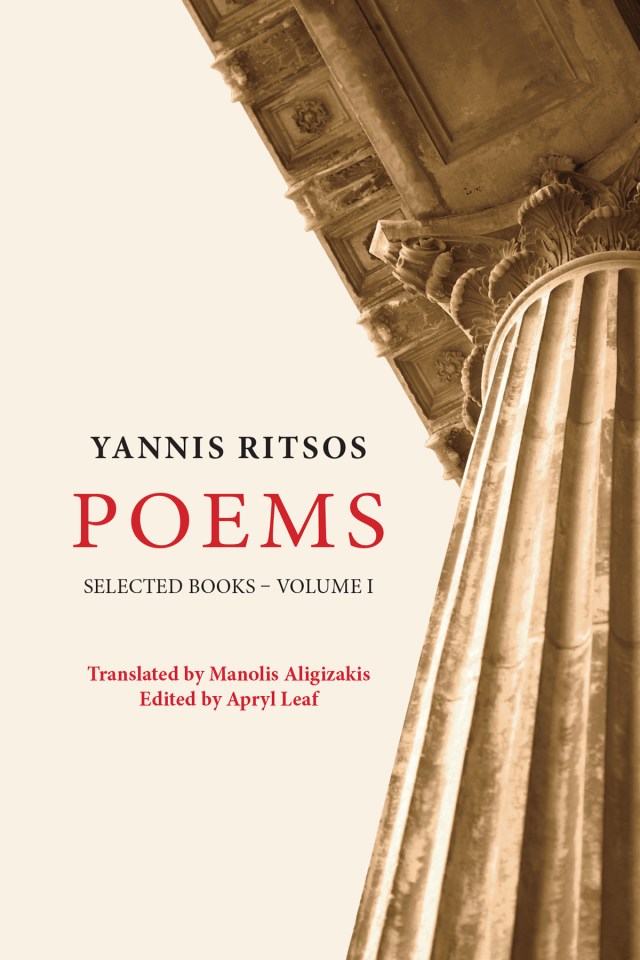
Mara: The AI review of Yannis Ritsos, Poems, Volume I, sets this up directly. Looking at the poem "Doxology," it finds that "the compactness prevents the relation from settling into a straightforward moral. Praise may suggest endurance, dependence, helplessness, or an affirmation made despite injury."
Pip: So the short poem isn't a reduced version of something larger — it's a form that keeps meaning genuinely open rather than resolving it into comfort.
Mara: That's exactly the review's claim. The man resembling a dusty, leafless tree, the sun that has burned him remaining beyond burning — the review argues the restraint lets the asymmetry between human vulnerability and solar power stay visible rather than collapse into consolation. "Memory" and "Winter is Approaching" work the same way, using domestic objects — a father's silence, a repurposed hat, a stored collar — to carry psychological weight without fixing their meaning.
Pip: Objects that survive their original use and acquire something stranger. That's also what Yannis Ritsos, Poems, Volume VI does with "Transmutation" — chairs rearranged after a funeral, a lit match that suddenly reflects back at you.
Mara: The Katerina Anghelaki Rooke selection gives Penelope a voice that does something similar — holding absence as a discipline. The Kariotakis-Polydouri tragic love story frames escape as transformation into "golden dust in the air." Cavafy's "Ithaca" makes the journey itself the point, not the destination.
Pip: And George Seferis folds political urgency right into elegy — "Sensual Elpinor" cuts between a grieving woman and a radio bulletin about war, with cyclamens and pine needles running through both.
Mara: Miltos Sachtouris in the Collected Poems takes that further — beauty sprinkled over ugliness, a voice stolen, a severed head floating downstream with closed eyelids. Nikos Engonopoulos frames the poet-figure Belisarius as someone called upon in crisis and then forgotten. Nostos and Algos, Introspection, Second Advent of Zeus, Entropy, and Ugga all extend this — myth as a structure for thinking about origin, exile, and what gets inherited.
Pip: And then An Essay on the Structure of the Human Imaginative steps back to ask what the faculty behind all this image-making actually is — Aristotle couldn't define it, Kant got close but missed it.
Mara: The Nuances review ties it together: the collection's most persuasive poems are those where "a particular object or scene" carries the argument — a doll with a missing arm, a rusted bicycle, a coffee cup. The Qliphoth takes a different angle, using letters and occult ritual to approach the same threshold between perception and the inexplicable.
Pip: From poems about what objects remember, let's move to fiction about what people do when their world falls apart.
Literary Fiction and the Pressure of Ordinary Lives
Pip: The fiction here keeps returning to a specific kind of crisis — the moment when an ordered life suddenly has no floor under it.
Mara: Jazz with Ella sets up a different register first: a group of travelers on a cultural tour, conversation about Cold War exchanges, Russian language lessons, the texture of being young and curious in a politically charged world. One character explains, "Learning by talking is the best way. That's why I didn't pack my Ozhegov."
Pip: Easy and social on the surface — but the other fiction excerpts don't stay there.
Mara: Straits and Turns goes somewhere much darker. A man's marriage ends in a single morning, and the excerpt traces exactly how a structured identity — a CIA agent's code, his protocol — becomes the mechanism of his destruction rather than his rescue. Poodie James works at a quieter pitch: a police lieutenant weighing whether to run for mayor after a death reshapes a small town's politics. Fury of the Wind grounds itself in the Canadian prairies, in schoolhouse registers and farming families and the slow inheritance of values across generations. The Unquiet Land puts economic pressure at the center — fishermen who can't sell their catch, fishmongers charging prices the catch can't justify. Ken Kirkby, Warrior Painter brings in a nonfiction register: a painter who discovers his missing work displayed in a stranger's home, sold by a gallery that never paid him.
Pip: Which is, in its way, the same structural collapse — an arrangement that was supposed to hold, and didn't. Now for the work that lives closest to the body.
Love, Loss, and What the Body Carries Forward
Mara: This segment's question is what desire and loss actually do to a person — whether they diminish or, strangely, clarify.
Pip: Straits and Turns makes the stakes immediate. The collapse of a marriage doesn't just unsettle a man — it dismantles the entire system of meaning he'd built around himself. Loss here isn't elegiac; it's structural failure.
Mara: Katerina Anghelaki Rooke's Penelope offers something harder to categorize. She says of forgetting: "my only reward is that I finally understand what's human presence what's absence or how the ego functions in such desolation." That's not consolation — it's knowledge purchased at cost.
Pip: And then Triptych and Second Advent of Zeus come at desire from the body outward — touch and arousal as their own form of location, a way of knowing where you are.
Mara: Kariotakis-Polydouri frames escape from grief as dissolution — becoming golden dust, entering an unfamiliar land where darkness doesn't exist. Miltos Sachtouris in the Collected Poems shows the cost of that dissolution: beauty sprinkled over ugliness, a voice stolen, silence where song used to be. George Seferis holds the elegiac and the erotic together — a woman who has lost her light, the blind man still singing.
Pip: What stays with me is how consistently the site treats compression as a form of honesty — the short poem, the telling object, the moment of collapse that says more than the explanation would.
Mara: And how the same pressure shows up across every register — lyric, fiction, elegy. Next time, we'll see what else is accumulating on the site.