Podcast Episode: Greek Poetry And Fiction

Pip: Manolis Aligizakis has assembled a catalog that moves from ancient Greek shores to Canadian prairie schools to a Moscow hotel hallway — and somehow it all holds together.

Mara: vequinox brings it together across poetry translations, novels, and short fiction — territory we'll cover through modern Greek verse, prose excerpts, and the themes of love, memory, and identity that run underneath all of it.

Pip: Let's start with the poetry.

Voices Across the Greek Tradition

Mara: This segment is about what it means to translate a literary tradition — to carry voices like Cavafy, Ritsos, Engonopoulos, and others across languages without losing what makes them cut.

Pip: And Cavafy cuts immediately. The setup in "The City" is a man planning his escape — new land, new sea, fresh start — and then the poem turns on him completely.

Mara: The turn is the whole poem. "New lands you will not find, you will not find other seas. The city will follow you. You will return to the same streets. You will age in the same neighbourhoods, and in these same houses, you will turn gray."

Pip: So the upshot is that geography is not the problem. The self is the problem — and it travels with you, luggage you cannot check.

Mara: Engonopoulos makes a different kind of claim in "Nikos Engonopoulos – Poems." His "Angry Poem About the Occupation" turns elegy into defiance — workers dropping their tools, fists raised, a martyred figure walking the earth pale-lipped but beloved.

Mara: Ritsos appears across multiple volumes here. "Yannis Ritsos – Poems, Volume II" gives us a boatman striding into a harbor at dawn, the sun rising like a woman's wet hair curled around cranes — sensory and grounded. "Volume V" and "Volume VI" are quieter, more unsettled.

Pip: "Kariotakis-Polydouri, The Tragic Love Story" brings the biographical weight — two poets whose lives ended badly, rendered here in verse about a woman at a piano, butterflies leaving through a window.

Mara: "Tasos Livaditis – Selected Poems," "Katerina Anghelaki Rooke – Selected Poems," "Hours of the Stars," and "Troglodytes" fill out the range — from Livaditis's compressed night imagery to Anghelaki Rooke's half-words and olive tree shapes. "Neo-Hellene Poets" and "Orange" and "Mythography" sit alongside them as further evidence of how wide this tradition runs.

Pip: From classical echoes to prairie roads — the fiction covers different ground entirely.

Prose Across Borders and Generations

Mara: The fiction here spans continents and registers — from a child's first bus ride in wartime Canada to a Moscow reunion to a painter's Arctic trek — and the question running through all of it is how people find their footing in unfamiliar places.

Pip: "Water in the Wilderness" opens that question gently. A woman named Tyne has been living on hospital food, and her friend Moe has kept a phone call from her on purpose.

Mara: The reason matters: "Moe smiled. 'Morley is awake and asking for you.' Tyne let her breath out on a deep sigh, sat back and covered her face with her hands. 'Thank you, God, thank you,' she whispered, then shot out of her chair and ran to get her coat."

Pip: Relief as a physical event — breath, hands, running. The excerpt earns it without explaining it.

Mara: "The Qliphoth" operates in a completely different register — adult, raw, interior. "In Turbulent Times" follows Ian, a man trailing a woman named Nora through a coastal Irish hotel, his knees literally trembling at the bar. "Redemption" gives us a young man leaving home for Vancouver, his father crying openly at the table.

Pip: "Wellspring of Love" brings back Rachael, older now, stuck on a dusty highway while her cousin heads west — and "Water in the Wilderness" shows us Rachael younger, boarding that bus for the first time, shuddering at its size.

Mara: "Jazz with Ella" lands its protagonist in a Moscow hotel corridor and delivers the line "We are your family" to a woman who was certain she had no family there. "Ken Kirkby: A Painter's Quest for Canada" documents a real exhibition at Parliament — a painting one hundred and fifty-two feet long, twenty years in the making.

Pip: "Small Change" puts a boy in a Pennsylvania classroom trying to locate his immortal soul while Sister Assunta slaps a pointer against her palm. "Prairie Roots" is lunch-hour softball and girls comparing notes in the willows. "Wheat Ears" and "Cloe and Alexandra" round out the set — one a memory of Cretan youth, the other a poem built around a denial: it wasn't me in that yellow cab, it wasn't snowing, I have no hair.

Mara: What ties them together is the texture of ordinary life under pressure — the meals, the car keys, the Scotch ordered twice.

Pip: And underneath the prose, there's a question the poetry keeps asking too — about where you belong and what you carry.

The Self That Cannot Escape Itself

Mara: Love, memory, and identity keep circling the same problem across these works: the past is not behind you, it is inside you, and it shapes every attempt to move forward.

Pip: Cavafy says it flat out. "As you have wasted your life here, in this small corner, you wasted it in the whole world." There is no smaller indictment.

Mara: Ritsos in "Yannis Ritsos – Poems, Volume V" reaches for the same idea differently — a man who keeps a small mirror in his pocket because it's the one fixed point when everything else shifts without warning.

Mara: "Kariotakis-Polydouri" holds memory as tenderness — butterflies always flying out through the window. "Mythography" turns inward to still water and a fir tree asking the night for wisdom. "Introspection" names it directly: practicing a religion on the longing for the past.

Pip: "Orange" answers that longing with the wind's reply — your sunshine hides in your heart. "Hours of the Stars" writes love onto the mountain tops of memory. "Katerina Anghelaki Rooke" and "Troglodytes" close the circle — half-words left behind, and a young poet begging the Muses to free him from his own imposed fears.

Mara: The pattern holds: escape is not the remedy. The work is staying present to what you carry.


Pip: A city that follows you, a mirror in your pocket, a bus you board for the first time — it's all the same question dressed differently.

Mara: Where you are, and what you brought with you. More from this site next time.
Podcast Episode: Modern Greek Poetry And Memory

Pip: Manolis Aligizakis — translator, poet, publisher, and apparently a one-person archive of everything Greek literature has ever felt about mortality, love, and the road.

Mara: vequinox has been busy. Today we're moving through modern Greek poetry in translation, then into myth and mortality, and finally into fiction and travel narratives that cross borders both literal and historical.

Pip: Let's start with the poets.

Voices Across the Aegean: Modern Greek Poetry in Translation

Mara: The throughline across these translations is a question: what survives when a poem crosses languages? The Cavafy post gives us one answer through the myth of Achilles and a god who betrays his own prophecy.

Pip: And Cavafy frames it with Plato first, which is a move — citing the Republic to set up a poem about divine bad faith. The quote lands hard: "Yet, he, himself… who sang the hymn… he killed my son."

Mara: That line is Thetis speaking. Apollo sang paeans at her wedding foretelling her son's long life, and then personally went to Troy and killed Achilles. The prophecy and the killing share the same mouth.

Pip: Which is either theology or the oldest recorded case of a conflict of interest.

Mara: The Yannis Ritsos volumes — both Volume V and Volume VI — push into similar territory from a different angle. Volume V gives us the evening star as an eraser moving back and forth over a mistake that never quite disappears, birth and death as a rhythm rather than a sequence.

Mara: Volume VI's "Same Word" watches language itself tremble under its own unfamiliar meaning, like a nerve that shivers and bursts. Ritsos keeps returning to the threshold between sense and silence.

Pip: Tasos Livaditis takes that threshold into a tavern. The bouzouki player in Volume II swears every day he'll turn his life around, and every night the world deepens and pulls him back through the door.

Mara: George Seferis in the Collected Poems gives us crickets ticking out of rhythm, a house full of them, and the line "we don't even whisper, because the machine is speeding before horror and contempt." The anthology Neo-Hellene Poets lands a parable about a bird that can learn every sweet song except the words "I love you."

Pip: Katerina Anghelaki Rooke's Selected Poems counts time differently: "I count time with what I've lived and what is forthcoming that resembles the incomparable end. Only, look, the craft and the fisherman can't be separated from the blue."

Mara: Titos Patrikios in Selected Poems is more pointed — "Economic Development" watches emigration and foreign investment rise together while newspapers announce cultural ideals are being maintained. And Nuances holds the sharpest compression: a poem called "Repetitions" that names peace as something a sword erases.

Pip: Red in Black steps outside Greece entirely, finding illumination in Craiova, Romania, through Brancusi sculptures — the Blind Boy and The Kiss — connecting Greek poetic consciousness to Romanian artistic space. That range from Cavafy's Troy to a Romanian museum is the real scope of this project.

Mara: From mythic time to the present tense — which is exactly where the next set of poems lives.

Eros, Entropy, and the Weight of Ending

Pip: This cluster asks what myth and love actually cost — not in the abstract, but in the body, in the moment, in the interruption.

Mara: Medusa opens with a poem called "Gravestone" where Eros descends to a melancholic youth and a widow turns in the moonlight, and then the poem pivots without warning: "Nothing matters more than the armchair craving my body as the widow craves her late husband."

Pip: The domestic interruptions — the faucet, the table, the wife demanding full attention — aren't a joke at the poem's expense. They're the actual argument: desire and the ordinary are not separate territories.

Mara: Entropy's "Eternal Cycle" strips that argument to its bones — earth aging, returning its shine, then embracing each thing on its path toward what it always longed for. Wheat Ears traces the same arc through a single memory: beauty glimpsed through a window, understood only later when years have become dry leaves on a sidewalk.

Pip: Rendition and Life is a Poem hold the stranger registers — one a requiem tracking dawn through alcohol and fear, the other a surrealist marketplace where oaks erect monuments and white rabbits somersault on floating meadows. Hours of the Stars closes it with a prologue about those who never let their glance reach the light, and the chaste people who do.

Mara: That tension between those who see and those who can't — it runs through the fiction too.

Roads Taken Hard: Fiction and Travel Across Borders

Pip: The fiction here is about people in motion — and motion that doesn't stop even when it probably should.

Mara: Ugga frames that with unusual economy: "For the light to change the production must pause and the pause must be produced methodically." Four lines that describe filmmaking and also, quietly, everything else.

Pip: In Turbulent Times gives us Ian Anderson driving furiously south from Lisburn, cursing his own idea the entire way, and not stopping. The road is "drunken," the steering wheel swung "in fury, like a ship's skipper in a storm."

Mara: The rationing detail grounds it precisely in postwar Northern Ireland — no meal over five shillings, no more than three courses, restaurants exempt and resented for it. The historical texture is load-bearing.

Pip: Straits and Turns puts a mechanic behind a fogged window in a Vancouver train yard, rain dripping steadily, "poetically, he'd say." The Circle moves between Baghdad and a new apartment, a move organized with pizzas and a reserved elevator and a view west toward the Pacific.

Mara: Blood, Feathers and Holy Men is the furthest journey — Irish monks in North America, a guide warning that the trip takes five or six seasons and that stragglers get left behind. And Jazz with Ella lands in Moscow, a Canadian teacher stepping onto Soviet soil and remembering Churchill: "a riddle wrapped in a mystery inside an enigma."

Pip: She suspected it was hyperbole. Then she stepped off the plane.


Mara: What holds all of this together is the act of crossing — languages, borders, centuries, the distance between a prophecy and its betrayal.

Pip: Next time, we'll see where that crossing takes us.

Podcast Episode: Modern Greek Poetry And Fiction

Pip: Manolis Aligizakis has assembled a catalog that moves from ancient Greek anguish to Canadian prairie winters to stock market schemes — which is either a literary festival or a very ambitious reading list, depending on your weekend.

Mara: vequinox brings all of it together on this site — translations of modern Greek poetry, original verse on love and desire, and a run of novels spanning hardship across continents and generations. Let's start with the poetry coming out of Greece.

Voices From Modern Greece

Pip: The modern Greek poets gathered here are working a particular problem — how do you hold loss, resistance, and beauty in the same breath without one canceling the others out.

Mara: The Yannis Ritsos volume sets the tone early. The poem "The Inexpressible" builds toward this image: "the blind musician, tired, goes back up. He puts his violin case on the chair. He opens it; two of the three glasses are in it. They are shining and whole."

Pip: So the broken things you carried out in guilt come back intact — the poem turns on that reversal, the indestructibility of what you thought you'd lost for good.

Mara: Constantine Cavafy's "Che Fece … Il Gran Rifiuto" works a related tension — the great No that is right and still burdens its speaker for life. Nikos Engonopoulos in "Goalpost" pushes into civic dread, asking whether the Sunday bells will be followed by hymns or machine guns.

Pip: Engonopoulos lands the ambiguity without resolving it, which is its own kind of answer.

Mara: Tasos Livaditis in "Simple Talk" insists on plainness as survival — speaking, loving, dying "in a simple way." George Seferis in "The Shape of Fate" asks who orders destruction from behind, and Titos Patrikios watches a man of creative mind reduced to counting whether his wages last the month.

Mara: Antony Fostieris names "certain pain" that strikes the empty heart beyond all desire. The Neo-Hellene anthology and the Troglodytes collection round out the range, from birch-forest dawn to an invocation of the Goddess to purge the ego entirely.

Pip: Ten poets, one through-line: the thing that survives is rarely the thing you expected to keep.

Mara: The love poems take that survivorship somewhere more intimate — let's move there now.

Love At Both Edges

Pip: The love and desire poems here are not soft — they treat longing as a force with weight and consequence, something closer to weather than to sentiment.

Mara: "The Incidentals" opens the territory directly: "the seething angst of lust demands her body's contours and dark caves on the altar of Aphrodite deserving unemotional dedication, like any archon sitting up high, like any God jealous or self-absorbed and relaxed."

Pip: Desire framed as liturgy — the body as offering, the worshipper as functionary. That's a cold altar.

Mara: "Hear Me Out" pulls in the opposite direction emotionally but lands in the same isolation: two people on parallel paths going opposite directions, past the point where they first met, with only the roundness of the earth as any possible reunion.

Mara: "Wheat Ears" compresses the whole arc into image — "two bodies defining the shape of a monad," synthesis as astronomical and emotional at once. "Rendition" closes it with a line that strips possession entirely: "Of all you have amassed, none is yours."

Pip: Love, desire, and ultimately the inventory comes up empty. The novels take that emptiness and put it in a house with bad insulation — let's go there.

Novels Of Endurance And Reckoning

Pip: The fiction here keeps returning to people held in place by circumstance — weather, pregnancy, poverty, complicity — and asking what they do with the time they cannot escape.

Mara: "Fury of the Wind" makes that literal. Sarah, isolated on a prairie homestead through a brutal winter, moves house plants to the kitchen table each night to keep them from freezing, writes letters that take weeks to arrive, and waits. The passage reads: "she missed the companionship of others, especially Penny. What would she give to be able to sit down to a cup of tea in Penny's cheerful kitchen?"

Pip: A cup of tea as the full measure of what isolation costs. That's a precise kind of grief.

Mara: "The Unquiet Land" puts a different kind of waiting at its center — Mother Ross, who knows Caitlin is pregnant before the wedding, removes her own mother's ring from her finger and gives it to Michael for the ceremony. She hears Caitlin sobbing upstairs and swallows her own agony whole.

Pip: Respectability as ransom, as Mother Ross calls it — and she's already paid her installment.

Mara: "Water in the Wilderness" moves the tension into a seedy hotel corridor, Tyne's knees going weak as she waits for a deteriorated Corky Conrad to open his door. "Prairie Roots" grounds everything in the farming community's frank hierarchy — survival first, schooling second, and a father who insisted otherwise.

Mara: "Jazz with Ella" sends Jennifer onto a plane into a storm, retreating into questions about why she was chosen over Paul for a Soviet Union language tour, and what it cost her in salary to say yes. "Introspection" and "Hours of the Stars" work in verse — the first building toward "the final, greatest monad," the second catching grandparents' long faces at a christening where the names chosen feel like paganism to them.

Pip: Naming a child wrong, apparently, is its own form of hardship.

Mara: "In the Quiet After Slaughter" and "Poodie James" both circle institutions — policing and journalism respectively — where the people inside them are just competent enough to see the problem and just constrained enough to struggle with what to do about it. And "Swamped" drops into the financial world, where Eteo watches Platinum stock move and starts making his list of who gets rewarded.

Pip: Every novel here is about someone watching a system from just inside or just outside it, trying to figure out the angle of least damage.

Mara: Which is, when you step back, exactly what the Greek poets were doing too — just with fewer stock tickers.


Pip: The thread running through all of it is endurance — the blind musician climbing back upstairs, Sarah moving the geraniums, Cavafy's speaker living with the right No.

Mara: And the question underneath: what holds its shape when everything else breaks. More of that in the next episode.

Podcast Episode: Greek Poetry And Rural Fiction

Pip: Manolis Aligizakis runs a site that could double as a library card catalog, if libraries had this much range — Greek exile poetry, Canadian prairie childhoods, Soviet-era blackmail, and a taxi ride you would not want to be on.

Mara: vequinox has been posting across all of that territory, and today we're moving through three areas: modern Greek poetry collections, literary and crime fiction, and the theme of identity, memory, and exile. Let's start with the poetry.

Greek Verse, Exile, and the Long Tradition

Pip: The question underneath all these poetry posts is what it means to translate and collect Greek verse — not just linguistically, but as an act of cultural preservation, pulling work from Ritsos, Seferis, and others into a form that travels.

Mara: The Yannis Ritsos volume sets the tone early. From "The Exile Diaries," dated the fourth of December: "Moon, take off your shoes / I can't sleep on my back / if I'll turn to my side I'll hurt. / The door is open / I can't leave."

Pip: That last line does a lot of work. The door is open and he still can't leave — which is exile's specific cruelty: the constraint isn't always a lock, it's something internal, something the body carries.

Mara: George Seferis's collected poems push into similar territory with "The Sentence to Oblivion," and Tasos Livaditis, whose volume was longlisted for the 2023 Griffin Poetry Prize, writes of being "completely dishonest like this world that it belongs to you only when you promise it to someone." Titos Patrikios in his selected poems warns readers to "protect yourselves from the poets who steal verses from graves of the unknown."

Pip: There are also original collections here — Entropy, Ugga, Medusa, Troglodytes, Hours of the Stars — each posting a single poem as a window into the full book. Hours of the Stars centers on Ionia, lost in 1922, where "man tried to create the face of god and at last he created his own thoughtful face." The Neo-Hellene anthology rounds out the range, gathering voices across the modern Greek tradition into one place.

Mara: That breadth — from Ritsos's internment diary to an anthology spanning the whole tradition — is the argument these posts make together. The fiction excerpts are making their own kind of argument, and it runs across a very different set of landscapes.

Novels at the Edge — Fiction and Crime Excerpts

Pip: What connects this stretch of fiction posts is that nearly every excerpt drops you into a moment of pressure — someone is hiding something, someone is about to find out, and the social fabric is visibly straining at the seam.

Mara: Wellspring of Love opens in a hospital corridor. Tyne has just entered her aunt Millie's room and the excerpt lands here: "Tyne was conscious of two disturbing thoughts, the first that Dr. Dunston had seldom greeted her in any other way than with his usual cheery, 'Hi, sis.' Her second thought was that the woman in the bed, frail and ashen-faced, was hardly recognizable as her beloved aunt."

Pip: Two small observations, and suddenly the reader knows the diagnosis is bad and the relationship is complicated. That's efficient fiction — the weight is in what goes unsaid.

Mara: Jazz with Ella works the pressure from a completely different angle. Pavel, Vera, and Shukshin have cornered a Soviet bureaucrat named Pyotr — they have photographs of him with the police chief's wife, and they need forged documents. Pyotr sputters through a tantrum, and then Vera simply asks, "May I pour you another drink?" The coercion is wrapped in perfect politeness.

Pip: Nothing says "you have no leverage here" quite like being offered a refreshment mid-extortion.

Mara: In the Quiet After Slaughter takes a coming-of-age angle — two teenage brothers drawn into a scheme involving a mysterious receiver on a hill called Pork Chop, with a cast of characters that includes a man with a wart that "looked like a ladybug" above one eye. The Qliphoth is denser, set in a flat littered with occult paperbacks and failed technology, a woman piecing together who her missing lodger has become. Savages and Beasts puts a boy named Anton in possession of a dead priest's diary, paralyzed by what he should do with it.

Pip: He Rode Tall goes quieter — a maritime engineer named Joel, decades of city noise behind him, sitting on a horse in a pasture and feeling his heart come back online. In Turbulent Times is a social novel, a dinner table of doctors and their partners trading sharp observations about a young woman Clifford delivered as an infant under difficult conditions. The Unquiet Land sets its pressure in Ireland, where Mother Ross tells Padraig that "forgiveness is a rare commodity in Ireland — Irishmen never forgive and never forget." Redemption and Straits and Turns close the set — one a quiet departure from a Cretan village, the other a Vancouver taxi ride with a passenger whose presence is described with the kind of sensory detail that makes you grateful for fresh air.

Mara: What holds these excerpts together is that each one catches a character at a threshold — a decision, a revelation, or a departure. That threshold question carries straight into the next set of posts.

Where You Come From, Who You Are

Pip: The identity and memory posts are asking a version of the same question across very different geographies: what does a person carry when the place they came from is gone, or far, or changed beyond recognition?

Mara: Twelve Narratives of the Gypsy opens at the largest possible scale: "before we existed the Earth lived, before it spread its plains it was alive with its knowledge and wisdom." It's a cosmological frame for belonging — rootedness as something older than any single person's story.

Pip: Which makes the smaller, more personal accounts feel like they're answering that opening from the ground level.

Mara: Prairie Roots does exactly that — a childhood memoir of Saskatchewan winters, threshing season, geese in formation, paths worn single-file through snowdrifts toward a school facing a rising sun with no warmth in it. Red in Black brings it into the present tense, a poem about wilted supermarket vegetables and rotten tomatoes that pivots sharply to a man shot by a police officer. And Introspection's poem "Delta" traces a speaker who walked to the far ends of the world arguing for elegance and freedom, and was called a lunatic for it.

Mara: The thread running through all of it is that identity under pressure — exile, displacement, the refusal to forget — keeps finding its way back into the work, whether the form is a Greek lyric or a prairie memoir.


Pip: Exile poetry, coercive Soviet bureaucrats, a boy with a priest's diary, and a cosmological origin story for belonging — it's a wide orbit.

Mara: The site keeps returning to what people carry across distance and time. There's more of that to come.

Podcast Episode: Modern Greek Poetry And Social Struggle

Pip: Manolis Aligizakis runs a site where the ancient and the urgent share the same page — Cavafy and civil war, hobos and murder investigations, all in the same week.

Mara: vequinox has been busy across a wide range of territory — modern Greek poetry, political conflict and social upheaval, and narrative fiction with some sharply drawn characters at the center of it all. Let's start with the poetry.

Greek Voices, Ancient and Modern

Pip: The poetry posts here span centuries of Greek sensibility — from Cavafy's cool historical ironies to contemporary voices wrestling with longing, identity, and the weight of the body itself.

Mara: The Cavafy post sets the tone. Translating the poem "In 200 B.C.," it ends with a pivot that reframes the whole Macedonian campaign: "And from this marvellous Panhellenic campaign, the victorious, the splendorous, the most famous, glorified, as no other has been glorified, the incomparable: we were born."

Pip: So the Spartans sitting it out becomes almost beside the point — the world that emerged from their absence is the real subject.

Mara: Exactly the move Cavafy makes. The Yannis Ritsos posts — two of them, from Volume VI — work very differently, in tight, surreal domestic images: a severed antler left by a mirror, an owl made of sheet metal perched quietly on a roof.

Pip: Ritsos does a lot with a very cold room.

Mara: The Livaditis post, "For Maria," takes grief further: "as I stretched my arm to find your hand, it was as if I stole bread from the hands of the hungry." The Titos Patrikios piece, "Obstacles," turns inward — the speaker raising walls not to repel but to test how far endurance can reach. Katerina Anghelaki Rooke's "Stowaway in a Dream" and the Kariotakis-Polydouri post, "Lost," both circle longing and absence. The Fostieris, Livaditis, Introspection, Hours of the Stars, Orange, Medusa, and Neo-Hellene Anthology posts fill out a week's worth of translated voices, each one landing a different emotional register.

Pip: A lot of that longing has a political undercurrent — which is where the next segment lives.

Conflict, Division, and the Cost of Conviction

Pip: Several posts this week place characters inside political fracture — moments where ideology hardens into something people are willing to die, or kill, for.

Mara: The novel excerpt from Redemption captures it in texture rather than argument. Two characters are hunting near an olive grove when the mood shifts: "Hermes bent down and reached for the fluttering bird; he could see the huge pain in its eyes. Suddenly, the strange shudder overtook his body again, like when he was aboard the ship."

Pip: A man who can shoot without hesitating suddenly can't. That's doing a lot of quiet work.

Mara: The Unquiet Land goes louder — a pub argument about Irish partition, Lloyd George, Carson, and Sinn Fein, where Flynn Casey and Jim Patterson talk themselves toward the edge of civil war. The Troglodytes poem frames the same pattern more abstractly: institutional power dressed in sanctity, "Four Golden Gates to Heaven still stand firm while dividing into castes, races, and creeds." Ugga compresses it to almost nothing — half the planet on the line of fire, white doves, international agreements, and a dead avatar. Twelve Narratives of the Gypsy asks where conviction actually leads: "Strike Chimera mercilessly, life is just a dream."

Pip: From a pub in Ireland to a collapsed avatar in seventeen lines — the scale changes, the problem doesn't. Which brings us to the fiction, where the conflict gets personal.

Character Under Pressure

Pip: The fiction excerpts this week are less about plot than about the moment a character's interior life collides with what the world expects of them.

Mara: Small Change is the clearest example. Rico comes home to an empty house, finds a note, and sits alone in the dark rather than cross the street. When Marianna finds him, she asks what's wrong, and the excerpt gives us this: "He goes to the piano bench and opens it. He takes out the papers he has worked on and holds them up to her. Suddenly he feels very small, and scared and shy."

Pip: A kid showing someone his work in the dark — that's the whole thing, right there.

Mara: What the excerpt does well is hold the reader inside Rico's hesitation without explaining it. Poodie James works a different register entirely — a public hearing where Engine Fred defends a hobo against a bully's insinuation. He tells the council: "It is so not because he risked his life to save someone. It is so because under circumstances that would defeat most of us, he lives his life with independence, dignity and joy."

Pip: A defense of dignity delivered at a lectern, which is somehow more moving than it has any right to be.

Mara: Savages and Beasts stays procedural — RCMP officers questioning a caretaker and a Cretan cook about a murder, a missing kitchen knife surfacing as the key detail. Fury of the Wind puts Sarah in the middle of a crowd enjoying her distress, with Will Andrews forcing his way through to help her. Swamped follows Eteo walking English Bay, his thoughts moving between a drilling project, his parents in Crete, and Vietnamese fishers working nets in the shallows — immigration and displacement held in a single afternoon walk. And Cloe and Alexandra delivers the sharpest scene of the week: Antigony standing before six judges, hearing none of their words, then offering them her severed breast and announcing her name.

Pip: Antigony gets the last word, which feels right.


Mara: What ties the week together is that question of endurance — whether it's Cavafy's Alexandrians, Flynn Casey's republicans, or Rico in the dark with his papers.

Pip: Everyone's deciding how much of themselves to show, and to whom. More of that next time.

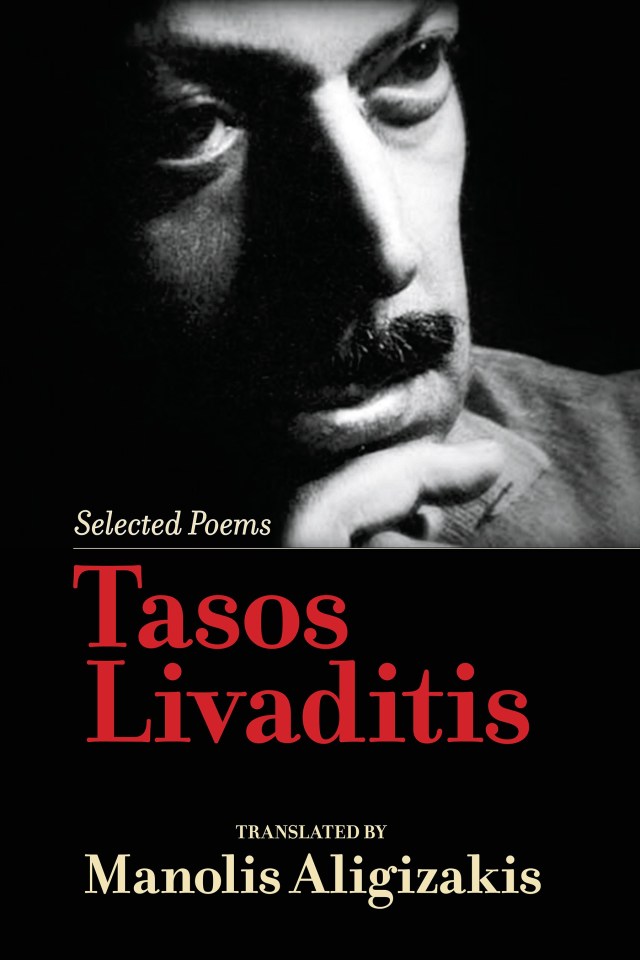
Tasos Livaditis – Selected Poems

The Unexpected
in Tasos Livaditis’ Poetry


Tasos Livaditis was a man and a poet who knew how to be likable. Not only because he was handsome both in his youth and later on in his senior years, not because he was the center of attention in various gatherings of his days, but also because of his poetry.
But why was it so?
His creative life could be easily divided into three periods, first being the period of beliefs, second the period of the crisis and third the period of recovery and in all three periods Tasos Livaditis was a very likable man to everyone he met, dealt with, associated with, made friends with, shared his hours in exile with. And Livaditis was a likeable man also because of his goals. During the first period, his goal was the struggle, something that spoke on behalf of everyone and also talked of a better future. In the second period, he tried to conceal the crisis he faced and kept away from his poetry by turning his attention to the people around him. During the third period of his creative life, his most important, if you like, he’s the poet everyone liked because of his ability to select the unexpected. Evident in the first book of this period, when he dealt with the issue of defeat, he encountered:
He kneeled and laid his forehead on the floor. It was
a difficult time. When he got up, his embarrassed face
that we all knew well had stayed there on the planks like
a useless inverted helmet.
The same man returned home without face —
like God
That like God and the face on the planks are the unexpected images that put this poet apart from others. Tasos Livaditis could minimize his importance, to lessen the size of his stature, to present himself as haunted, as prey, as one who is punished; he never liked the pompous and unnecessary verbalisms:

For years, I’ve prepared myself for that big moment
the miracle of the century, on the other hand
you must admit I’m one of a kind in my field.
But, God, what happened, who betrayed me, where
they find all the proof? The procedure was quick.
The district attorney, to the point, “Are you him?”
he asked me, “him,” I answered
is there any worse charge?
~ Kostas Kouloufakos

https://draft2digital.com/book/3562930

https://www.amazon.com/dp/1926763831

Podcast Episode: Modern Greek Poetry And Fiction

Pip: Manolis Aligizakis publishes the way some people breathe — steadily, in verse and prose, across centuries of Greek tradition and continents of lived experience, and apparently without pause.

Mara: That range is exactly what this episode covers. vequinox brings us poetry rooted in the Modern Greek tradition, fiction set in the rhythms of family and rural life, and prose that tracks what happens when people collide with systems, borders, and each other.

Pip: Let's start with the poetry.

Voices Out of the Greek Tradition

Mara: The Modern Greek poetry segment raises a real question: what does it mean to translate and present a tradition this deep — from ancient myth to twentieth-century masters — and keep it alive on the page?

Pip: The excerpt from Twelve Narratives of the Gypsy puts that question in mythic terms. The setup is a figure who outlasts every riddler sent to challenge her: "all the mouths which uttered the riddles were swallowed by the hungry Hades and she walked over their bodies."

Mara: So survival here is the answer to every riddle. The Sphinx-like figure doesn't solve the questions — she simply endures them, which is its own kind of mastery.

Pip: The Yannis Ritsos volumes — both Volume V and Volume VI — work in that same register of weight and endurance. Volume VI's "The Sick Man" watches darkness move toward naked figures and statues until it "lights the whole house" and transforms ordinary objects into something luminous. Volume V gives us a messenger announcing victory amid thousands of deaths, the king returning with "a wound between his eyes" through which death itself could see.

Mara: Introspection closes on a similar note of earned return — "from which I have come and to which I'll ultimately arrive at my destined hour." And the anthology Neo-Hellene Poets anchors that continuity in something smaller: a poplar tree that once answered laughter and now answers only tears.

Pip: Antony Fostieris offers the most compressed version of this whole project — a poem that defines a poem as simply "rhythmically contemplating emotion." Three words doing the work of a manifesto.

Mara: Opera Bufa, Nikos Engonopoulos, Orange, Entropy, Medusa, Yannis Ritsos Volume II, Tasos Livaditis, Cloe and Alexandra, Troglodytes, Wheat Ears — all of them circle the same territory: desire, mortality, the weight of history pressing into the present moment.

Pip: Which is also, it turns out, the territory of the fiction — just told in longer sentences.

Seasons, Soil, and the People Who Stay

Mara: The fiction gathered here under family and rural life isn't nostalgic so much as precise — these posts ask what it costs to belong somewhere, and what it feels like when belonging is about to change.

Pip: Still Waters sets that up in a single anxious domestic moment. Tyne has just accepted a marriage proposal, and the evening should be simple joy — but the excerpt catches her mid-hesitation: "I'm tired, that's all. Tomorrow, I'll be fine. Just let me go to bed now, and I'll be fresh as a daisy to take Cam to church tomorrow."

Mara: The gap between what she says and what she feels is where the whole novel lives. She watches her father take Cam's arm through the doorway and thinks "no more worries" — but the narration keeps undercutting her.

Pip: He Rode Tall trades domestic interiors for the arena. Joel and Tanya are in the finals, twenty horses, thousands watching, and the warm-up pen is almost meditative — he doesn't want nerves to make him overwork his horse before the performance even starts.

Mara: Swamped goes further back — two boys in a Cretan summer, watering tomato rows by hand, stealing a watermelon from a neighboring field, counting swims at the end of each day. Anthony selects the ripest melon by the sound it makes when tapped.

Pip: Prairie Roots does the same work in a Canadian winter register — stubble turned over, fences repaired, straw hauled to the barn, the first snow arriving before every chore is finished.

Mara: Jazz with Ella shifts the stakes entirely. The rural quiet is gone — the scene is an airport, a man named Volodya terrified at a security line, his companions forming a quiet circle around him. The question "what are they looking for" carries a completely different weight here than it does in a tomato field.

Pip: And then there's Wheat Ears, which compresses all of this into a short poem about a person who keeps urging change while never leaving the recliner.

Mara: The tension between staying and moving runs through every one of these — which is also what the next set of posts is made of.

When the System Pushes Back

Mara: The fiction in this segment puts characters directly against institutions, communities, and the small frictions that reveal larger fault lines — the question is how people hold themselves together when the pressure is social and the rules keep shifting.

Pip: In Turbulent Times sets that up through what isn't said. Caitlin learns that Connie has stayed behind at the cottage after Robert left, and Michael never mentioned it. The scene plays out in careful domestic choreography: "If Caitlin had had any suspicions about Michael and Connie Hanlon, remembering how Connie had come on to him in the square in Corrymore on Tuesday, she did not show them."

Mara: The restraint is the point. The whole excerpt is about watching and not speaking, suspecting and not asking — the farmhouse kitchen as a pressure vessel.

Pip: Small Change runs a different kind of social friction — street-level, adolescent, transactional. A kid who gets straight A's in a neighborhood of C-minuses rents out a Stilson wrench to Paulie, the local legend, for a buck an hour or any fraction thereof.

Mara: The negotiation is sharp and funny, but the stakes are real — belonging in that world means knowing how to do business without losing standing on either side.

Pip: Straits and Turns moves that immigrant-workplace dynamic into a Vancouver factory, where Mike writes a poem on folded toilet paper while waiting for Luigi to finish his shift tasks, and the Italian-Greek solidarity is summarized in a single phrase: "una fatcha una ratsa."

Mara: The Qliphoth takes the friction into something stranger — Lucas, trapped in what reads like a nightmare transit terminal, punches an iron pillar to test whether the world is real, and the guards and bystanders laugh in unison while a security conference crackles around him.

Pip: All four of these are about the same thing: what a person does when the system looks back and doesn't recognize them.


Mara: From mythic riddles to tomato fields to airport security lines — the thread connecting all of it is people trying to locate themselves inside something larger.

Pip: And the poetry keeps asking whether language is the map or the territory. Next time, we'll see where that question leads.

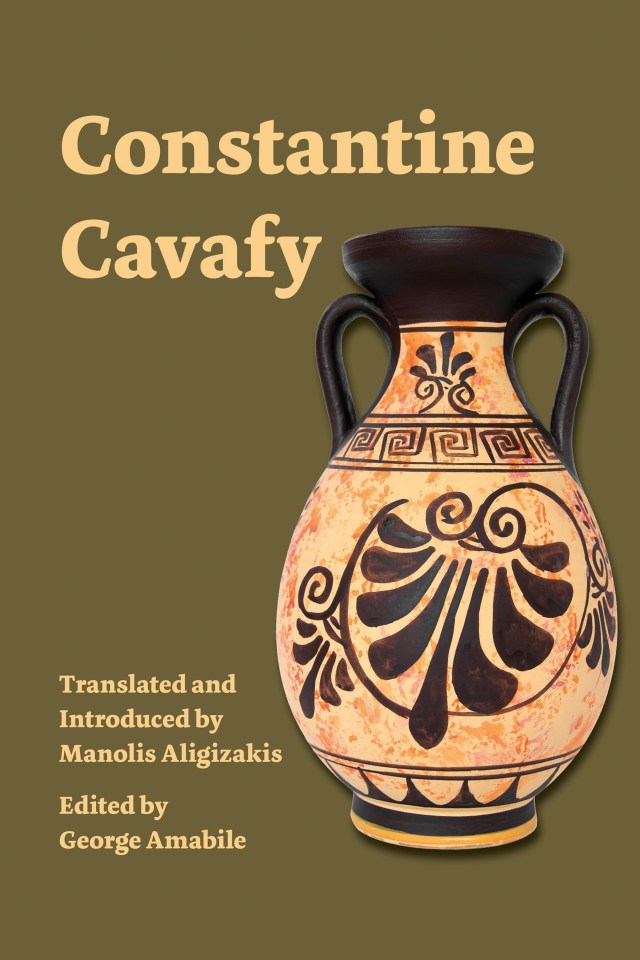
Constantine Cavafy

If and Since He Had Died
“Where did he retire? Where did the Sage disappear to?
After his countless miracles,
and the fame of his teaching
that spread over so many nations
he suddenly hid, and no one learned
with certainty what happened to him
(nor has anyone ever seen his grave).
Some said that he died in Ephesus.
But Damis didn’t record it; nothing was written
by Damis about the death of Apollonios.
Others said that he vanished in Lindos.
Or perhaps the story
that he ascended in Crete is true,
at the sacred temple of Dictynna.
However, we have his exquisite,
supernatural appearance
to a young student in Tyana.
Perhaps the time has not come for him to return
and appear to the world again,
or perhaps he is roaming among us
incognito. But he will reappear
as he was, teaching the right things, and then of course
he will reestablish the worship of our gods,
and our refined Hellenic ceremonies.”
This was the way he mused in his poor house,
one of a few pagans,
one of the very few who remained
after reading Philostratos’
On Apollonios of Tyana—
In any case, an insignificant
and timid man, on the surface
he played the Christian, and he, too, went to church.
It was the era when in utmost piety
the king who reigned was the aged Ioustinos,
and Alexandria, a god-fearing city,
abhorred the miserable idolaters. On the Ship
Certainly, this small sketch,
in pencil resembles him.
Done rather fast, on the deck of the ship,
one enchanting afternoon.
The Ionian Pelagos all around us.
It resembles him. However, I recall him as handsome.
He was sensitive to the point of suffering,
and this lit his expression.
He appears even handsome to me
now that my soul recalls him out of Time.
Out of Time. All these things are old,
the drawing, the ship, and the afternoon.

https://draft2digital.com/book/3562856

https://www.amazon.com/dp/1926763823

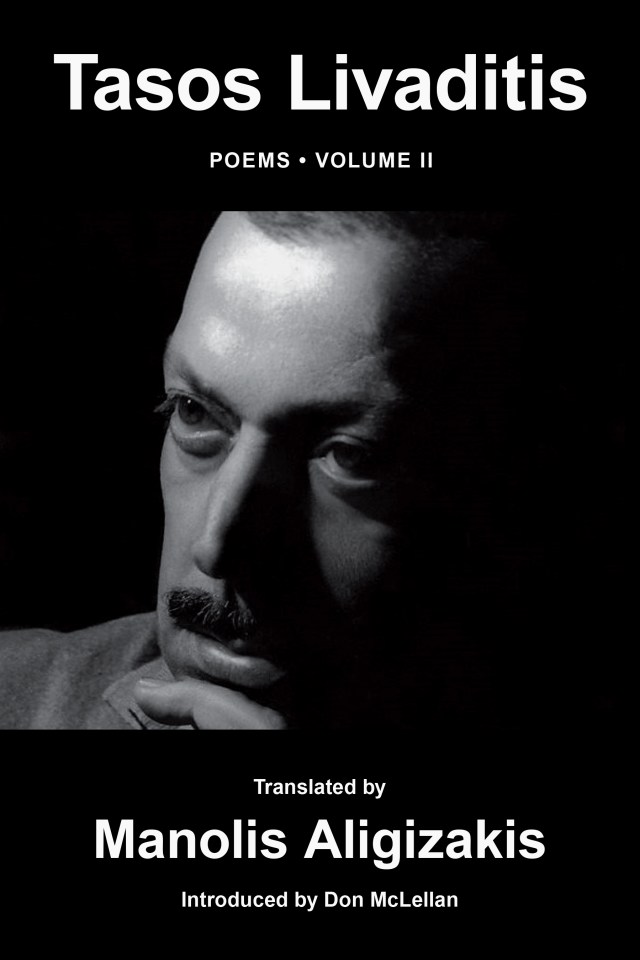
Tasos Livaditis – Poems, Volume II

Long-listed for the 2023 Griffin Poetry Awards

DEVIL WITH THE CANDLE STICK

“One day you will remember of me”, he said “but you won’t
be able to cry;”
what did he mean and what was the meaning of words?
Women stood at the crossroad, dark faced, holding the
half open pomegranate
like thousand faces of nothing. The prostitute, returning
home, went to the kitchen and warmed the food and I,
hell, failed between two evening songs.
When Rosa had a john she used to place a carton on
the corner so the memory of her father wouldn’t see her;
someone, with an axe, came out in the night and started
striking blindly.
The whole city was panicking, searches, interrogations,
occasionally someone would come, kneel before the icons
and confess to everything
since the beginning of the world — thus perhaps seeking
a purpose or two lines in the newspaper and a small
rose at the edge of the road;
the stupid child would go by and pick the rose, he’d look
at it and then as if
he understood something he’d leave it in its place and only
the gambler could guess that movement such as those that
save you.
Thus one by one they all got lost and I was the only survivor
playing, at the critical moment, with the fringes
of the tablecloth.
I truly wonder why all these since one can be lost with
a lot less things.
I remember one who’s hunger pushed him to desire a street
organ, which he sat down and ate, there, at the corner
only spitting out the crutch of the soldier, and the fat ugly
woman had revealed her big breasts over the balcony
“don’t feel sorry for me” she said “I’m very clever” and
she was staring at the end of the road;
then we sat on the grass of the dark cemetery and helped
the dead child.

https://draft2digital.com/book/4051627

https://www.amazon.com/dp/1926763564

George Seferis – Collected Poems

…shrinking, yet unable to vanish completely. I don’t know what I have to say or what I have to do. Sometimes this obstacle appears to me as though a tear drop flopped on a music composition that will keep it silent until it dissolves. And I have the unbearable feeling that all the rest of my life won’t be sufficient to dissolve this tear drop in my soul. And a thought haunts me that if I were to be burned alive this obstinate moment would be the last to surrender.
Who would help us? Once, when I was still a seaman, one July noon, I found myself alone on an island, crippled in the sun. A soothing breeze brought to my mind tender thoughts, it was then when a young woman with a diaphanous dress revealing her body lines slender and willing like a gazelle’s and a somber man who stared in her eyes from a yard away, came and sat not far from where I was. They spoke a language I couldn’t understand. She called him Jim. But their words had no weight and their glances, mingled and motionless, left their eyes blind. I always think of them, because they were the only people I saw that didn’t have the grasping or haunted look that I noticed on everybody else. That look that makes them resemble either a pack of wolves or a flock of sheep. I met them again the same day in one of those island chapels that one finds as he goes by and loses them as he walks out. They still kept the same distance from each other, then they came together and kissed. The woman turned into a cloudy image that disappeared as she was of small stature. I asked myself whether they knew that they escaped from the world’s nets…
It is time for me to go. I know of a pine tree that leans near the sea. At noon, it bestows a shade upon a tired body and at night, as the wind passes through its needles it starts a strange song, like souls that have abolished death at the moment when they start becoming lips and skin. Once I spent a night under such a tree. At dawn I was as fresh as if they’d just cut me off the quarry.
Ah, if one could live like this, irrelevant.

https://www.amazon.com/dp/B096TTS37J