Cretan Canadian Poet, Author, Translator, Publisher
Author: vequinox
BIOGRAPHY
Manolis (Emmanuel Aligizakis) is a Greek-Canadian poet and author. He was recently appointed an honorary instructor and fellow of the International Arts Academy, and awarded a Master’s for the Arts in Literature. He is recognized for his ability to convey images and thoughts in a rich and evocative way that tugs at something deep within the reader. Born in the village of Kolibari on the island of Crete in 1947, he moved with his family at a young age to Thessaloniki and then to Athens, where he received his Bachelor of Arts in Political Sciences from the Panteion University of Athens. After graduation, he served in the armed forces for two years and emigrated to Vancouver in 1973, where he worked as an iron worker, train labourer, taxi driver, and stock broker, and studied English Literature at Simon Fraser University. He has written three novels and numerous collections of poetry, which are steadily being released as published works. His articles, poems and short stories in both Greek and English have appeared in various magazines and newspapers in Canada, United States, Sweden, Hungary, Slovakia, Romania, Australia, and Greece. His poetry has been translated into Spanish, Romanian, Swedish, German, Hungarian languages and has been published in book form or in magazines in various countries. He now lives in White Rock, where he spends his time writing, gardening, traveling, and heading Libros Libertad, an unorthodox and independent publishing company which he founded in 2006 with the mission of publishing literary books. His translation book “George Seferis-Collected Poems” was shortlisted for the Greek National Literary Awards the highest literary recognition of Greece.
Distinguished Awards
Winner of the Dr. Asha Bhargava Memorial Award, Writers International Network Canada, 2014
“George Seferis-Collected Poems” translated by Manolis, shortlisted for the Greek National Literary Awards, translation category.
1st International Poetry Prize for his translation of “George Seferis-Collected Poems”, 2013
Master of the Arts in Literature, International Arts Academy, 2013
1st Prize for poetry, 7th Volos poetry Competition, 2012
Honorary instructor and fellow, International Arts Academy, 2012
2nd Prize for short story, Interartia festival, 2012
2nd Prize for Poetry, Interartia Festival, 2012
2nd Prize for poetry, Interartia Festival, 2011
3rd prize for short stories, Interartia Festival, 2011
Books by Manolis
Autumn Leaves, poetry, Ekstasis Editions, 2014
Übermensch/Υπεράνθρωπος, poetry, Ekstasis Editions, 2013
Mythography, paintings and poetry, Libros Libertad, 2012
Nostos and Algos, poetry, Ekstasis Editions, 2012
Vortex, poetry, Libros Libertad, 2011
The Circle, novel, Libros Libertad, 2011
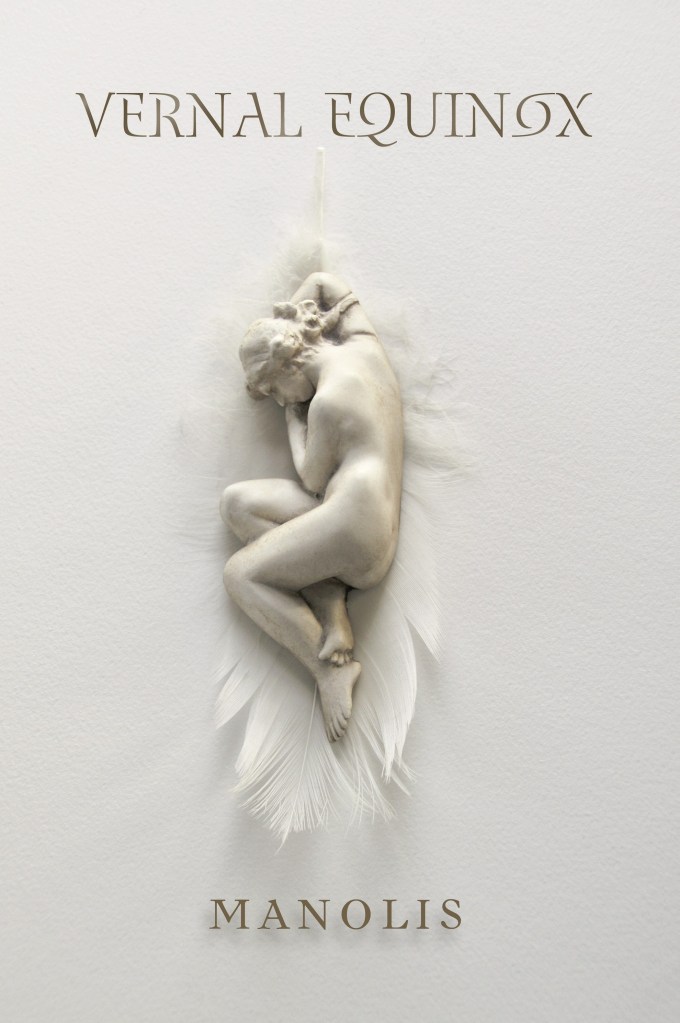
Vernal Equinox, poetry, Ekstasis Editions, 2011
Opera Bufa, poetry, Libros Libertad, 2010
Vespers, poetry by Manolis paintings by Ken Kirkby, Libros Libertad, 2010
Triptych, poetry, Ekstasis Editions, 2010
Nuances, poetry, Ekstasis Editions, 2009
Rendition, poetry, Libros Libertad, 2009
Impulses, poetry, Libros Libertad, 2009
Troglodytes, poetry, Libros Libertad, 2008
Petros Spathis, novel, Libros Libertad, 2008
El Greco, poetry, Libros Libertad, 2007
Path of Thorns, poetry, Libros Libertad, 2006
Footprints in Sandstone, poetry, Authorhouse, Bloomington, Indiana, 2006
The Orphans - an Anthology, poetry, Authorhouse, Bloomington, Indiana, 2005
Translations by Manolis
Idolaters, a novel by Joanna Frangia, Libros Libertad, 2014
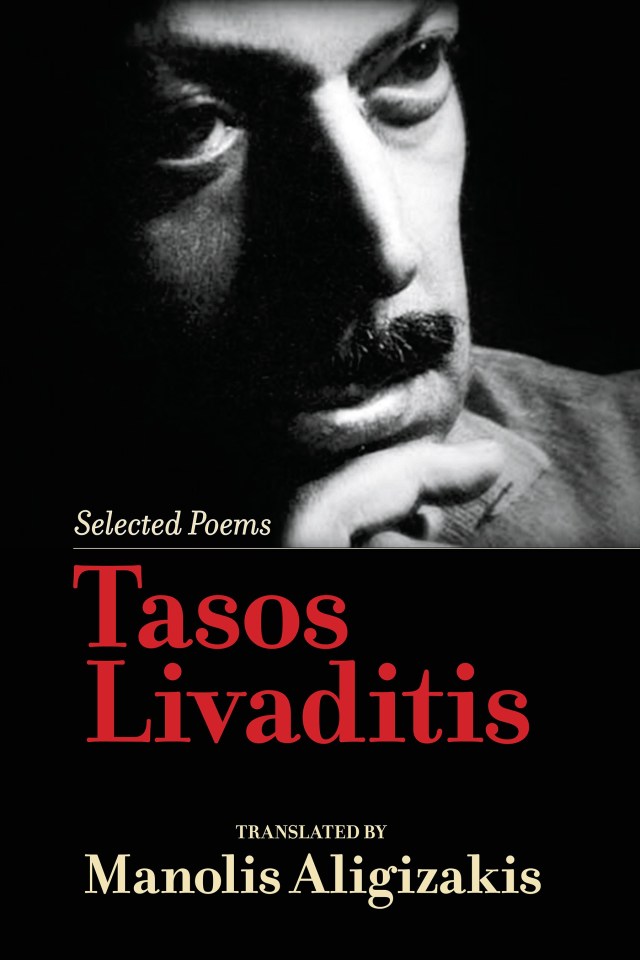
Tasos Livaditis-Selected Poems, Libros Libertad, 2014
Yannis Ritsos-Selected Poems, Ekstasis Editions, 2013
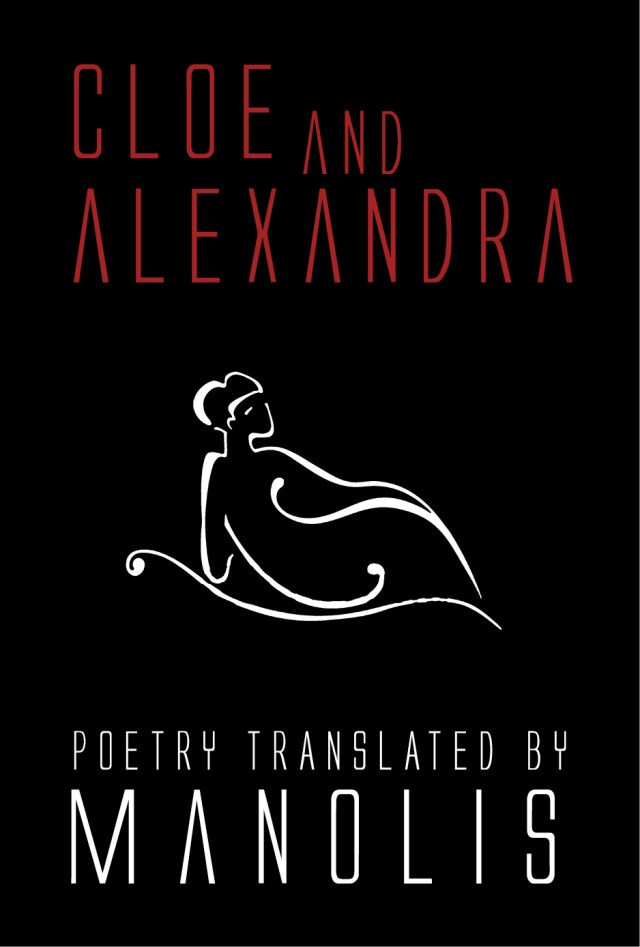
Cloe and Alexandra-Selected Poems, Libros Libertad, 2013
George Seferis-Collected Poems, Libros Libertad, 2012
Yannis Ritsos-Poems, Libros Libertad, 2010
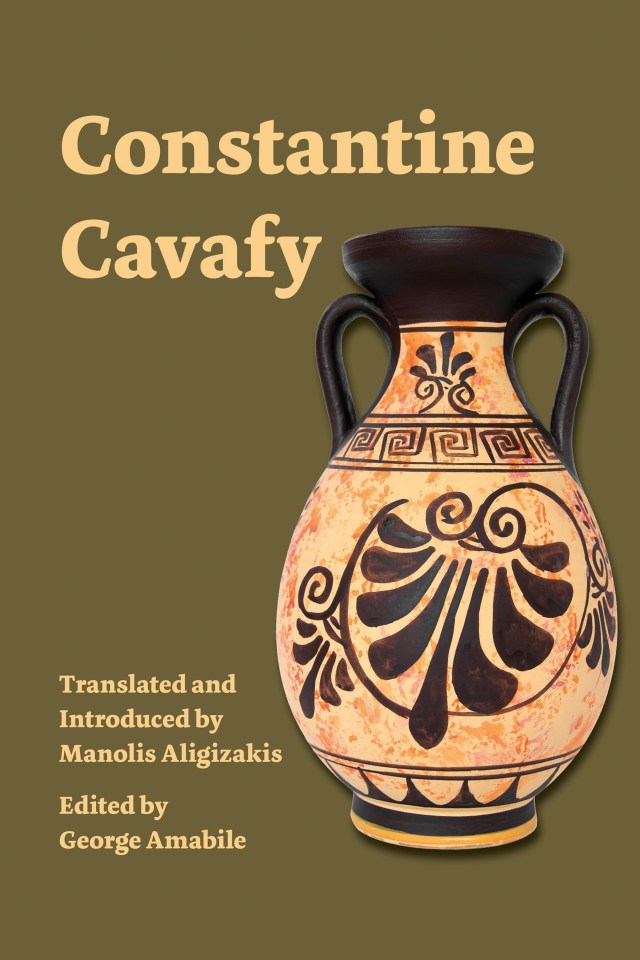
Constantine P. Cafavy - Poems, Libros Libertad, 2008
Cavafy-Selected Poems, Ekstasis Editions, 2011
Books in other languages
Eszmelet, (Hungarian), poetry by Manolis Aligizakis, translated into Hungarian by Karoly Csiby, AB-ART, Bratislava, Slovakia, 2014
Hierodoules, (Greek), poetry, Sexpirikon, Salonica, Greece, 2014
Yperanthropos,(Greek), poetry, ENEKEN Publications, Salonica, Greece, 2014
Übermensch (German), poetry by Manolis Aligizakis, translated into German by Eniko Thiele Csekei, WINDROSE, Austria, 2014
Nostos si Algos, (Romanian) poetry by Manolis Aligizakis, translated into Romanian by Lucia Gorea, DELLART, Cluj-Napoca, Romania, 2013
Tolmires Anatasis, (Greek) poetry, GAVRIILIDIS EDITIONS, Athens, Greece, 2013
Filloroes, (Greek ) poetry, ENEKEN PUBLICATIONS, Thessaloniki, Greece, 2013
Earini Isimeria, (Greek) poetry, ENEKEN PUBLICATIONS, Thessaloniki, Greece, 2011
Stratis o Roukounas, (Greek) novel, MAVRIDIS EDITIONS, Athens, Greece, 1981
Magazines
Canadian Fiction Magazine—Victoria, BC
Pacific Rim Review of Books—Victoria, BC
Canadian Poetry Review—Victoria, BC
Monday Poem, Leaf Press-Lantzville, BC
The Broadkill Review, Milton, Delaware
Ekeken, Thessaloniki, Greece
Envolimon, Beotia, Greece
Annual Literary Review, Athens, Greece
Stigmes, Crete, Greece
Apodimi Krites, Crete, Greece
Patris, Crete, Greece
Nyxta-Mera, Chania, Greece
Wallflowers, Thessaloniki, Greece
Diasporic Literature Spot, Melbourne, Australia
Black Sheep Dances, California, USA
Diasporic Literature Magazine, Melbourne, Australia
Spotlight on the Arts, Surrey, BC
Barnwood, International Poetry Magazine, Seattle, USA
Unrorean, University of Maine, Farmington, Maine, USA
Vakhikon, Athens, Greece
Paremvasi, Kozani, Greece
Szoros Ko, Bratislava, Slovakia
Mediterranean Poetry, Sweden
Apostaktirio, Athens, Greece
Life and Art, Athens, Greece
Logos and Images, Athens, Greece
Contemporary Writers and Thinkers, Athens, Greece
Palinodiae, Athens, Greece
Royal City Poet’s Anthology, 2013, New Westminster, BC, Canada
To parathyro, Paris, France
Ragazine C.C, New Jersey
Artenistas, Athens Greece
Deucalion the Thessalos, Greece.
Literary Lectern, Athens, Greece
Homo Universalis, Athens Greece
Φραγή εισερχομένων κλήσεων Η Πύλη είναι ο δικός μου Πόνος. Δεν σου αρμόζει πια να μπεις. Θα κλείσω τα ποιήματα για σένα και όσο για το φιλί κλειδί να μου το δώσεις πίσω, γιατί το Μουσείο είναι κλειστό Παρασκευές κι εκείνο το αρχαίο σκουλαρίκι που αιώνες πριν μου κρέμασες στ’ αυτί (ένα δελφίνι που κολυμπάει στο χρόνο) πνίγηκε μες τα δάκρυα που ποτέ δεν έχυσα για σένα.
Block Incoming Calls The Gate is my Pain. You’re not allowed to enter anymore. I’ll lock up the poems about you and that kiss key give it back to me, because the museum is closed on Fridays and that ancient earring you hang on my ear eons ago (a dolphin swimming in time) drown in the tears I never shed for you.
Triangle In the crystal night I’ll find you again in the plaza by the same statue that saw us separating that cold October morning you to the west I to the east from the merging point of two lives like triangle lines and I’ll come to you holding a book in my left hand and a carnation in the other just in case you come looking to stir my emotions just in case you come yearning for kisses like that cold October morning we separated
…the pharmacist — to her name-day celebration, and alongside the many exquisite dishes she played the piano beautifully. She also took in her two sisters, who passed the time with card games and reading. I found the endless solitaire and other card games played for hours beside tables laden with pastries and tea — in winter in the parlor, in summer on the terrace — unbearably boring. Between the identical walls of the dormitory rooms I learned to pay attention to others and to myself, to write amid silence and noise alike. I tried fitting words together so they might express me, preserve me. My young literature teacher read and evaluated my writings in her apartment; the situation was at once embarrassing and liberating. It was as though the boundaries between text and life had blurred. That was the first time I understood literature was not merely abstract curriculum but could become an intimate bodily experience as well. I founded a literary circle attended not only by students but by teachers too. We did not merely dissect our own writings; we immersed ourselves in literary history and theory, argued, doubted, reread everything that until then had seemed certain. Meanwhile I danced in a folk-dance ensemble wearing traditional costume, and played bass guitar in a successful pop band where rhythm held us together even when direction often remained uncertain. And like local stars entertaining the student audience, we enjoyed the special attention of girls, which manifested itself sometimes in shy smiles, sometimes in stolen glances, sometimes in laughter too loud to be natural, and although we accepted this innocent admiration with confident ease, in truth all of us longed for the same thing: that one day someone might notice not merely the role in us, but the human being as well. Even then the prankster in me resurfaced. Back then there were no text messages, no instant communication; communication possessed its own slow, paper-scented magic. At the Ditrău grammar school — I do not know whether such a thing existed elsewhere — there operated a peculiar institution called Flash Mail.
Glory of the Ptolemies I am Lagidis, King, absolute possessor (with my power and my wealth) of carnal delight. Neither a Macedonian nor a barbarian can equal me or even come close. The son of Seleucus is absurd with his vulgar hedonism. But if you search here for other things, these are clear. This city is the teacher, the center of the Panhellenic world, in every word, in every art, the wisest.
Daily Use Of course, all these were somehow vague, perhaps even inexplicable for the ones who raise their glass emphatically over the table without seeing who holds it, until slowly the everyday use makes us mortal. Thus, I always tried to look elsewhere when the doorbell rang and when everything was quietened: where is the host? Why is he hiding? I leaned on the table so that I wouldn’t fall; then, bowing my head. I opened the door and followed my path. And at night, at dinner, in horror, I listened as they narrated their stories, which, in a way, silenced the dark, remote outside—there, where we had lived.
Peace of a Full Stomach Citizen watches TV ordinarily beer belly exposed tight T-shirt jogging pants fluffy comfort mind mutated by fat extreme superiority over masses of colourful citizens of the faraway places where beasts live mind mutated by the notion of entitlement revisionists accentuated underscore the importance of new smart bombs that outsmart foreign defences calculations, exact results deleting hypotheses and estimates The unprecedented precision of missiles controlled by a computer dark green glow of a screen fingers manipulate the Enter button boom
Her smile disappeared. ‘Oh I’m sorry, Ian. I can’t. Liam’s going out. Tomorrow afternoon I could. As long as I’m back by tea-time. Before Liam goes out.’ Nora looked expectantly at this Scottish builder who was beginning to invade her daily thoughts as she his. Her heart started beating with an excitement she hadn’t felt since Joe Carney was alive. ‘What time?’ ‘Half-one, or thereabouts.’ The ash-blonde poked her head round the door. ‘Will Mrs Liam Dooley please stop flirting with the customers and come home to her husband and wee’ns?’ Nora laughed. ‘I’m coming, Bridie,’ she called. Then in a quiet whisper she said, ‘See you tomorrow, Ian.’ Ian walked back into the bar, but his feet did not touch the carpet. ‘One for the road, gentlemen?’ he suggested light-heartedly. ‘A wee deoch an doruis.’ ‘Make mine a double,’ said Copplestone. ‘I have a wife upstairs.’ ‘And you should have a double yourself, Ian,’ Copplestone’s colleague suggested. ‘To celebrate your victory.’ ‘What victory?’ Ian asked innocently. ‘If I’m not mistaken, Ian—and I’m something of an expert in these matters—you won yourself a black-haired beauty this evening. She’s yours, Ian. Heart, soul, and body, she’s all yours.’ ҂ ‘What will you have to drink, Nora?’ ‘Just tea, thank you, Ian. And maybe a couple of digestive biscuits or something.’ Nora looked at the young waiter behind her. ‘Is that all right?’ ‘Certainly, madam. Would you like cheese with the biscuits?’ ‘No thank you.’ The waiter turned to Ian. ‘And you, sir? What can I get for you?’ ‘A Drambuie, please.’ ‘Thank you, sir.’ ‘What’s Drambuie?’ Nora asked as the waiter glided away. ‘It’s a Scottish liqueur made from Highland malt Scotch whiskey and heather honey. Just superb. Would you like to try it?’ ‘Not just now, thank you. It sounds good, but I’m just gasping for a cup of tea. Maybe some time again.’ Ian caught the words ‘some time again’ and held them like something precious.
Untitled Events The memory couldn’t match the things. Events that remained without a place, vanished. You could certainly imagine an ashtray somewhere else, a hanger, the fragrance of cologne in the neighbourhood barber shop just before they close the stores on Saturday evening and the beautiful woman who a little later after scratched a mandarin with her nail, slowly, smelling her fingers, vanished under the lights of the Station. Forgotten, forgotten, exiled, not adaptable to the chaotic storage room with the ammunition and the nylon curtains.
(If this poem spoke to you, find more about it in the following links)