Cretan Canadian Poet, Author, Translator, Publisher
Author: vequinox
BIOGRAPHY
Manolis (Emmanuel Aligizakis) is a Greek-Canadian poet and author. He was recently appointed an honorary instructor and fellow of the International Arts Academy, and awarded a Master’s for the Arts in Literature. He is recognized for his ability to convey images and thoughts in a rich and evocative way that tugs at something deep within the reader. Born in the village of Kolibari on the island of Crete in 1947, he moved with his family at a young age to Thessaloniki and then to Athens, where he received his Bachelor of Arts in Political Sciences from the Panteion University of Athens. After graduation, he served in the armed forces for two years and emigrated to Vancouver in 1973, where he worked as an iron worker, train labourer, taxi driver, and stock broker, and studied English Literature at Simon Fraser University. He has written three novels and numerous collections of poetry, which are steadily being released as published works. His articles, poems and short stories in both Greek and English have appeared in various magazines and newspapers in Canada, United States, Sweden, Hungary, Slovakia, Romania, Australia, and Greece. His poetry has been translated into Spanish, Romanian, Swedish, German, Hungarian languages and has been published in book form or in magazines in various countries. He now lives in White Rock, where he spends his time writing, gardening, traveling, and heading Libros Libertad, an unorthodox and independent publishing company which he founded in 2006 with the mission of publishing literary books. His translation book “George Seferis-Collected Poems” was shortlisted for the Greek National Literary Awards the highest literary recognition of Greece.
Distinguished Awards
Winner of the Dr. Asha Bhargava Memorial Award, Writers International Network Canada, 2014
“George Seferis-Collected Poems” translated by Manolis, shortlisted for the Greek National Literary Awards, translation category.
1st International Poetry Prize for his translation of “George Seferis-Collected Poems”, 2013
Master of the Arts in Literature, International Arts Academy, 2013
1st Prize for poetry, 7th Volos poetry Competition, 2012
Honorary instructor and fellow, International Arts Academy, 2012
2nd Prize for short story, Interartia festival, 2012
2nd Prize for Poetry, Interartia Festival, 2012
2nd Prize for poetry, Interartia Festival, 2011
3rd prize for short stories, Interartia Festival, 2011
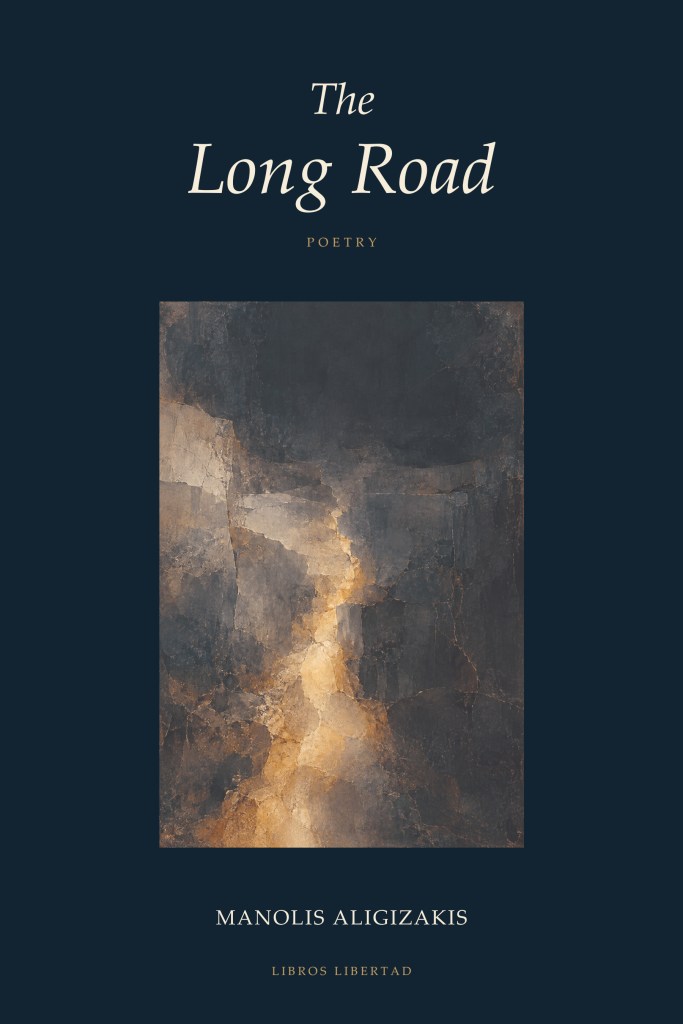
Books by Manolis
Autumn Leaves, poetry, Ekstasis Editions, 2014
Übermensch/Υπεράνθρωπος, poetry, Ekstasis Editions, 2013
Mythography, paintings and poetry, Libros Libertad, 2012
Nostos and Algos, poetry, Ekstasis Editions, 2012
Vortex, poetry, Libros Libertad, 2011
The Circle, novel, Libros Libertad, 2011
Vernal Equinox, poetry, Ekstasis Editions, 2011
Opera Bufa, poetry, Libros Libertad, 2010
Vespers, poetry by Manolis paintings by Ken Kirkby, Libros Libertad, 2010
Triptych, poetry, Ekstasis Editions, 2010
Nuances, poetry, Ekstasis Editions, 2009
Rendition, poetry, Libros Libertad, 2009
Impulses, poetry, Libros Libertad, 2009
Troglodytes, poetry, Libros Libertad, 2008
Petros Spathis, novel, Libros Libertad, 2008
El Greco, poetry, Libros Libertad, 2007
Path of Thorns, poetry, Libros Libertad, 2006
Footprints in Sandstone, poetry, Authorhouse, Bloomington, Indiana, 2006
The Orphans - an Anthology, poetry, Authorhouse, Bloomington, Indiana, 2005
Translations by Manolis
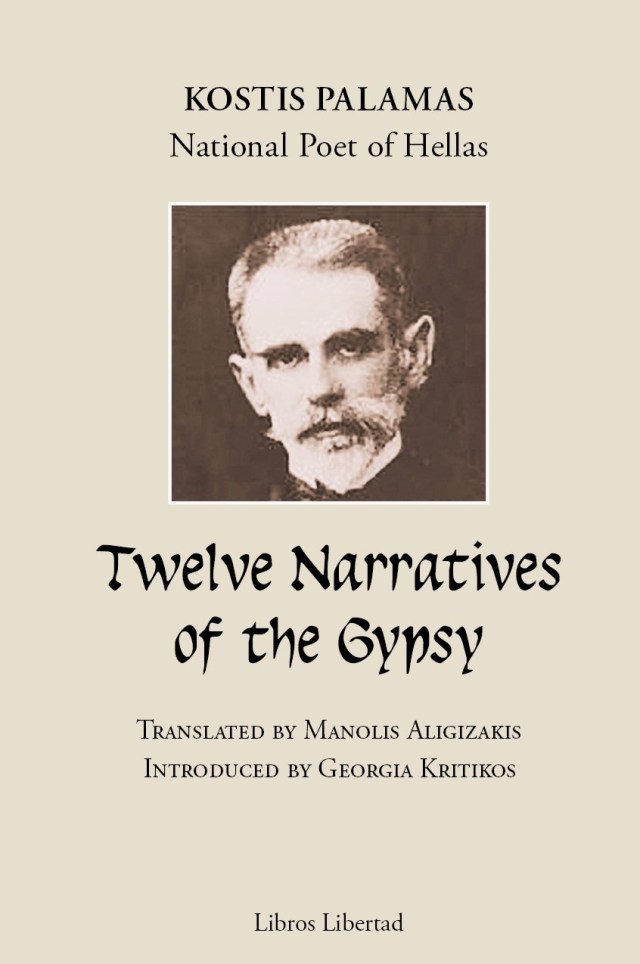
Idolaters, a novel by Joanna Frangia, Libros Libertad, 2014
Tasos Livaditis-Selected Poems, Libros Libertad, 2014
Yannis Ritsos-Selected Poems, Ekstasis Editions, 2013
Cloe and Alexandra-Selected Poems, Libros Libertad, 2013
George Seferis-Collected Poems, Libros Libertad, 2012
Yannis Ritsos-Poems, Libros Libertad, 2010
Constantine P. Cafavy - Poems, Libros Libertad, 2008
Cavafy-Selected Poems, Ekstasis Editions, 2011
Books in other languages
Eszmelet, (Hungarian), poetry by Manolis Aligizakis, translated into Hungarian by Karoly Csiby, AB-ART, Bratislava, Slovakia, 2014
Hierodoules, (Greek), poetry, Sexpirikon, Salonica, Greece, 2014
Yperanthropos,(Greek), poetry, ENEKEN Publications, Salonica, Greece, 2014
Übermensch (German), poetry by Manolis Aligizakis, translated into German by Eniko Thiele Csekei, WINDROSE, Austria, 2014
Nostos si Algos, (Romanian) poetry by Manolis Aligizakis, translated into Romanian by Lucia Gorea, DELLART, Cluj-Napoca, Romania, 2013
Tolmires Anatasis, (Greek) poetry, GAVRIILIDIS EDITIONS, Athens, Greece, 2013
Filloroes, (Greek ) poetry, ENEKEN PUBLICATIONS, Thessaloniki, Greece, 2013
Earini Isimeria, (Greek) poetry, ENEKEN PUBLICATIONS, Thessaloniki, Greece, 2011
Stratis o Roukounas, (Greek) novel, MAVRIDIS EDITIONS, Athens, Greece, 1981
Magazines
Canadian Fiction Magazine—Victoria, BC
Pacific Rim Review of Books—Victoria, BC
Canadian Poetry Review—Victoria, BC
Monday Poem, Leaf Press-Lantzville, BC
The Broadkill Review, Milton, Delaware
Ekeken, Thessaloniki, Greece
Envolimon, Beotia, Greece
Annual Literary Review, Athens, Greece
Stigmes, Crete, Greece
Apodimi Krites, Crete, Greece
Patris, Crete, Greece
Nyxta-Mera, Chania, Greece
Wallflowers, Thessaloniki, Greece
Diasporic Literature Spot, Melbourne, Australia
Black Sheep Dances, California, USA
Diasporic Literature Magazine, Melbourne, Australia
Spotlight on the Arts, Surrey, BC
Barnwood, International Poetry Magazine, Seattle, USA
Unrorean, University of Maine, Farmington, Maine, USA
Vakhikon, Athens, Greece
Paremvasi, Kozani, Greece
Szoros Ko, Bratislava, Slovakia
Mediterranean Poetry, Sweden
Apostaktirio, Athens, Greece
Life and Art, Athens, Greece
Logos and Images, Athens, Greece
Contemporary Writers and Thinkers, Athens, Greece
Palinodiae, Athens, Greece
Royal City Poet’s Anthology, 2013, New Westminster, BC, Canada
To parathyro, Paris, France
Ragazine C.C, New Jersey
Artenistas, Athens Greece
Deucalion the Thessalos, Greece.
Literary Lectern, Athens, Greece
Homo Universalis, Athens Greece
Assistance The wind converses in front of the windows like those who are going to separate The furniture becomes like the poor girls gathering fallen olives The evening walks under the olive trees all alone and the field with harvested wheat is a denial The shed husk of the cicada resembles a small bell-tower fallen on dry grass The drizzle comes later – it hunts the sparrows slowly the moon lies down under the cypresses like the abandoned plow The plowman sleeps beneath the soil – his wife alone with the dog and the thin ox The hands of silence are frozen as she ties her black headscarf under her chin But the trace of his hand stays on the wood of the plow more strong than his hand and the chair’s back keeps the warmth of his broad shoulder blades About these insignificant things – I don’t know – I want to write a small song that will show I don’t know anything about all these only that they are as they are alone completely alone and they don’t ask for any mediation between themselves and someone else
“Get out of my sight,” Finn yelled with more passion. “Get out of my sight till Caitlin comes back. And if she doesn’t come back, or if I find out that you’ve harmed her in any way, you’d better stay out of my sight. Otherwise I’ll kill you.” Michael rose from the table without a word and left the house. He walked like one in a trance as far as the barn, then he leaned against the wall and wept. The tears brought some relief to his tortured mind, but as he climbed the rest of the way to the cottage his fear grew again like a nauseating vision of eternity. Remorse tightened its suffocating lock on his throat. He wished he could die. Michael opened the door of the cottage and stepped inside. For a heart-lifting second of hope he expected Caitlin to be there, waiting for him by the fireside. But the cottage was empty and cold. In deep despair he was about to flee, about to rush down the hill again and give himself up to the law in Lisnaglass. But fear of the consequences stopped him. Anguished and frightened he lay on the straw-filled tick on his bed and suffered the cruel torture of the demons in his mind. That which hurt most was Finn’s banishment. To be cast out by such a man was a more atrocious punishment than death. What a strange revenge of fate, Michael thought, remembering the bleak November day when he drove his own father to the railway station and told him not to return. He had used almost the same words as Finn had: “If you come back, I’ll kill you.” His father had not come back. He did not even look back as he walked away from the horse and trap on which his youngest son had driven him to the town. He carried only a canvas bag containing all that his profligate life had left to him. That canvas bag was the last tangible remains of his father that Michael ever saw, for it somehow caught on the door of the train as his father went aboard and fell on to the platform. The stationmaster picked it up and handed it into the compartment. That memory had returned to Michael frequently during the past ten or eleven years. He often wondered where the bag was and whether his father still owned it. Strange to recall the bag more than the huge, round, florid-faced man who owned it. Stranger yet when the man was as memorable as Thomas Carrick: memorable for his flaming yellow hair and a face that glowed bright red as if burnt by the fiery aureole of his hair; memorable for the mountainous bulk of his body and for the inexhaustible energy with which he drove it to excesses of work, to excesses of drinking, to excesses of lust, to excesses of cruelty.
Ibrahim comes and leads him away as Emily is busy talking to Mara and three other women. “Come with me, son. I’d like you to meet a couple of important people.” “Gentlemen, this is my son, Talal, from the United States,” he addresses a group of men standing together in a small circle. “Talal, this is the Minister of Finance whom you met before, Omar Salem, the Minister of Transportation and Tourism, Khaled Al Marsi, and the Minister of Natural Resources, Omar Bin Housein.” They all shake hands with Talal and exchange the customary greetings. “He’s a chemist,” the Minister of Finance says to the other two, referring to Talal. “Now, here is one person I would like to have working for me,” Omar Bin Housein says. “We’d all like to have the generation of educated people with us now at this time when our country needs them the most. You are the people who will take charge of our future. I welcome you back to Iraq anytime, young Talal,” the Minister of Transportation and Tourism says. Ibrahim tells them all, that although Talal is coming back soon, he needs him as well, so they had better not become too aggressive in recruiting him for their ministries. “But, of course. After all, this is one of your orphans, isn’t he, Ibrahim?” Omar Salem asks. “Yes, he’s one of my seven sons.” “When I’m back, I’m sure there will be plenty of work to be done, and gentlemen, I’m not about to disappoint any of you,” Talal says with a light laugh.He notices Emily is trying to get his attention, so he excuses himself and goes to her. Omar Bin Houseing bows slightly to his host. “My dear Ibrahim, your Talal is a very fine young man. You must be very proud of him.” “I’m proud of all my orphans, my friends. Yet, the one I’m most proud of is my beloved Hakim, whom you’ll meet soon.” “I hope he comes very soon, Ibrahim,” the Minister of Finance says. “Yes, he will.” Ibrahim is assertive in his tone. Emily is on the far side of the big room enjoying the attention she gets from Mara, who introduced her to her closest friends. At one point, Mara tells Emily, “You’re my invited guest, my dear, and it’s my privilege to present you to my friends and other visitors; after all, you may be here for a longer period the next time and these women, whom you have met today, will also consider you a friend when you return.” “I just hope I haven’t taken you out of your way, Mara.”
Days of 1909, 1910, and 1911 He was the son of a tormented, destitute sailor (from an island in the Aegean). He worked in a blacksmith’s shop. He wore old, ragged clothes. His work shoes were ripped and pitiful. His hands were stained by rust and oil. At night, after he closed the shop, if there was something he really craved, some expensive tie, a tie for Sunday, or if he had seen a beautiful shirt in a window display and yearned for it, he would sell his body for five or ten talons. I ask myself if, in ancient days Alexandria had never had a young man as handsome, a more perfect ephebe than him, who was so wasted: we know no painting or statue was made of him, thrown away in that filthy blacksmith’s shop, with heavy work and common debauchery he was quickly wasted.
“Is there anything you’d like to add?” Spear asked. “Just that something ought to be done to control these hobos.” Spear banged his gavel to quiet another outbreak of chattering. Pearson avoided looking at Torgerson. He felt the mayor’s gaze follow him when he made his way to a seat in the audience. Those eyes, Engine Fred thought. That man’s eyes are as cold as ice. The next man at the lectern said, “I am Richard Brown, counsel for the Great Northern Railway, here at the request of Mayor Peter B. Torgerson. I have a short statement, Mr. President.” “We don’t have a president, Mr. Brown,” Spear said. “I’m just the man in charge today. Go ahead, please.” “The Great Northern Railway prohibits passengers on its freight trains and trespassers in its rail yards and rights of way. Railroad detectives who apprehend violators hold them for local law enforcement agencies and file appropriate complaints. That is company policy in a nutshell. I am happy to answer your questions.” Spear looked up from the briefing paper he had begun to read, his eyes wide. “You said you are a lawyer, Mr. Brown? “By training and license, yes, sir.” “That is the shortest speech I have ever heard from a lawyer.” People in the chamber chuckled. “My question is this,” Spear said, “what does your railroad do to keep hobos off the trains in the first place? Brown appeared to be studying the air above Spear’s head. ‘’As I explained, our detectives regularly pull transients off the trains, run them out of the yards and have the police arrest them. Vagrancy convictions don’t put hobos in jail for long, and they’re soon back on the road.” Frank Stout strained himself upright in his chair. “So, what will your railroad do to help us get rid of these bums? That’s what the people of this town want to know.” “The Great Northern, sir, is not authorized to interfere in local policy or local law enforcement, nor do we wish to do so.
November Wind But now the night has come. Let us close the door and pull the curtains because it’s time for revelations. What have we accomplished in our lives? Who are we? Why you and not I? For a long time, no one has knocked on our door, and the mailman hasn’t come in a while. Ah, the November wind has blown so many letters, so many poems away. And if I’ve lost my life, it was for insignificant things: a word or a key, yesterday or a tomorrow. However, my nights are filled with the fragrance of violets because I remember so many friends who left without leaving an address, so many words without response and I think music is the grief of those who never found the time to love. Until finally nothing remains from the past but a foggy memory (When did we live?) and every time spring comes, I cry because in a while we’ll die and no one will ever remember us.
Coal When the sun was scorching all earth dwellings the voice of the coal seller was heard, a sweaty man promoting his black merchandise, his treasure trove for people’s heaters, coal made of olive tree wood, good heating coal some bought while the sun up on the horizon smiled ironically for coal seller who at the end of summer had brought the cold in people’s minds and the wine flask and the chestnuts on top of the burning stove, thoughtful villagers taking care of their winter needs justified the coal seller, who in the summertime, sweaty and tired as he was selling his black merchandise to the wise villagers concerned with the cold days and nights of winter and you said, he too had tied an anchor around his ankle like a donkey fastened onto his predestined space-time.
Picking up a dry twig, she started to draw lines and figures in the dirt around her. Her childhood did not seem as far away now as it had just last week. Maybe Lyssa was right, maybe she was still a baby, and maybe she needed to grow up. But if growing up meant going out with guys and drinking and making out in the back seat of a car like Lyssa did … well, did she really want to? Rachael had overheard a group of girls from her church talking in the school corridor. She had been about to close her locker door and go over to join them when Julia spoke in a voice that carried further than she probably realized. “Well, I don’t think she should be hanging around with her cousin so much. Everyone in school knows that Lyssa’s fast.” Rachael knew they were referring to her and her cousin. Who else would they be talking about? Fast? What exactly did that mean? She wished there was someone she could ask. She could hardly broach the subject with Lyssa, her closest confident. She’d like to ask her mom, but then she would have to reveal what she’d heard, and that would only add to her parents’ already poor opinion of Lyssa. Maybe she should ask Ronnie; he wouldn’t squeal on her even if he guessed the reason for her asking. She heard a sudden thump on the wooden bridge. Looking up she saw Tim Buckley striding in his lumbering gait from his side of the stream. She sat up straight and waited until he was within hailing distance. “Hi, Timmy. Whatja doin’?” “Lo, Rachael.” He grinned as he lowered his large frame to the ground beside her. His big face registered delight as he looked at her then shifted his gaze to her schoolbag. “Comin’ home from school? Whatya doin’ here then?” Rachael shrugged and looked across the creek where two crows danced among the debris from fallen branches. “Just thinking.” “Yeah? I think all the time.” She turned to look at him, smiling at his boyish naivety. “What about, Timmy?”
I had a good bite of my sandwich, turned the food in my mouth and chewed slowly while I stared at the beautiful Goddess who was observing me and after I slowly chewed and swallowed my food while she was chewing hers and while my wife was sipping her red wine, I sent towards the Minoan beauty a kiss with an imperceptible movement of my lips to which the Minoan Goddess reciprocated with an even sweeter kiss sent my way and the pact of the day was sealed, the beauty the up to now dull day had changed into, brought back my thoughts about the travellers in the Atocha train station in the bowels of which thousands of people go through, like that blonde traveller I met yesterday, who played footsies with me and who would probably was with her lover, yes at this moment in time, in this big city of Madrid, she was surely enjoying the body of her husband, or lover, or Lesbian partner, while the Minoan beauty, who had just finished paying her waitress, got up and walking towards us and quite unexpectedly she faced my wife and asked, “visitors?” to which my wife said “yes”, “Having a good time in Madrid?” “Yes,” my wife said, “how long have you been here?”, “a week, but we go home tomorrow” my wife added, “have a great time and safe travels back home…by the way where is home?”, the Minoan beauty asked, “Vancouver, in Canada,” my wife said, “well enjoy your stay in Spain” the young woman added, to which my wife and I said in unison, “thank you” and the Minoan beauty turned and walked away showing us the calligraphy of her buttocks, knowing well that I’d make sure I’d pay attention to them as I paid attention to the unimaginable images she graced me with, images that surely I’ll keep in my mind for the rest of my life.
He wrapped the scroll again and made a cup out of it, lowered it in the water well and fetched some water and his thirst he quenched. Again he rode up his horse that took him away to a faraway land next to rivers and lakes a country with many castles that shone in the sun and threatened the wide open skies; there, he told his horse to stop.