Jazz with Ella

Excerpt

“There won’t be any children, Mrs. White. It’s summer holidays,” Lona said with a smirk. Paul rolled his eyes skyward.
Jennifer felt a little sheepish. Lona was probably correct. However, it was irritating the way she always ensured that everyone knew she was correct. It was time to change the subject. “How did you happen to study Russian, David?” she said, leaning back in the grass, ignoring Lona and fixing on the young man. He had an intelligent, open face with sparkling white teeth but even at the age of 25, his hairline was just starting its slide toward the back of his head. She knew that his family was of English descent, not unlike her own history on her father’s side.
“My father’s in the Air Force,” said David, “and I guess we’ve lived on a dozen different bases as I grew up—Germany, Italy and NORAD in Colorado. I picked up a little of every language but never Russian.”
“So why Russian?” Lona asked.
“Well, six years ago I got chosen along with a lot of other army and air force brats to go on a teen cultural exchange to the U.S.S.R. I had no knowledge of the country before that. We were just supposed to be shining examples of North American kids. It was sure different than this tour. It had been organized by Sputnik—that’s the youth tour group—and we had cocky Komsomol leaders not much older than us in charge.”
“So you have more than a nodding acquaintance with Lenin?”
“And Marx. And Brezhnev. The Komsomol is seriously political, and this was before the signing of the SALT treaty so east-west tensions were high. Believe it or not, it’s more relaxed now.”
“But how did you learn the language?” Paul asked.
“Oh, we had a crash course before the trip. Then we stayed in a dormitory for four months and ate with the Eastern European kids, so we learned a lot that way. We didn’t visit the churches back then because they tried to pretend that they didn’t exist. Instead, we had to study in the dorm a lot and debate the class struggle or dialectical materialism with our team leader. Most of us didn’t have a clue!”
“My god, I’m not sure I could define them now,” laughed Jennifer. “But I bet we’ll know by the end of this trip.”
“Well, that was what sparked my interest in Russian. Learning by talking is the best way. That’s why I didn’t pack my Ozhegov.”
https://draft2digital.com/book/3562892

https://www.amazon.com/dp/1926763246

Straits and Turns

Excerpt

Necrophilia
Bradley reached home late at night after a long flight, during which they experienced their fair share of turbulence. He knew this flight so well after twenty years of taking it, since he started working on the East Coast, and his house was in Los Angeles. He also knew most of the American Airlines personnel; he had an account set up by the Bureau and always flew this airline. And tonight, Georgia, the flight attendant, offered him a second glass of wine and a good plateful of food, which he relished to the last crumb. Being with the Bureau for so long, he almost did everything as part of a routine, a repetitive action, from the time he’d call to arrange his reservation to the arrival at the airport and to the airline counter where most of the girls recognized him and always served him the best way.
The agency took care of all the bills, it was part of his contract with the CIA and no one ever raised an eyebrow at what he submitted; it was times when he thought of having something extra, something the bureau wouldn’t even bother to look into, however, Bradley was a common sense man and always did his side the best and fairest way possible to make sure he wouldn’t disturb any waters a couple of years away from his retirement.
When he got inside the house, he noticed there was no sound, other than the ventilation system humming its rhythmical music. Brad was so tired that he took off his shoes and went upstairs to their bedroom, only to find his wife, Beth, asleep, even though he had informed her he was on his way home. Undressed, he slipped under the bedcovers when he smelled the strong alcohol odour all over the…

https://draft2digital.com/book/4250839#print

https://www.amazon.com/dp/1926763866

Straits and Turns

Excerpt

The Dancer
It was a cloudy April day; one could hardly discern the mountains to the north shore, where two mountain peaks resembling lions stood facing each other as if they were playing a good game of chess without any concern for the people of Vancouver, down by the shores. These two lions were so symbolically attached to the lives of Vancouver citizens that they had named the bridge which connected the Lower Mainland with the North Shore ‘Lion’s Gate Bridge’, the same way the Hellenes had the Lion’s Gate at Mycenae.
Costa was sitting by the window of his one-bedroom suite and kept writing a few lines of the novel he had started a few months earlier, as his eyes suddenly left the paper and gazed at the expanse towards the North Shore, on the other side of the harbour. Indeed, Vancouver was a beautiful city situated on the edge of the land by the Pacific Ocean, on the west side of which the lands of the Orient were located, including Japan, Korea, China, Vietnam, and, to the south, Australia.
He got up to refill his coffee mug and lit a cigarette. It was Tuesday, his day off, so he didn’t have much to do other than write a few lines and perhaps go to Stanley Park for a stroll until his wife came home. His mind ran to the nasty letter he got from his father when he disclosed to them that his girlfriend from Athens had joined him in Vancouver and that they lived together and perhaps they’d get married soon so she could stay permanently; his girlfriend had come with a visitors visa which meant she had to leave in three months unless Costa married her thus making her wife of a legal immigrant.

https://draft2digital.com/book/4250839#print

https://www.amazon.com/dp/1926763866

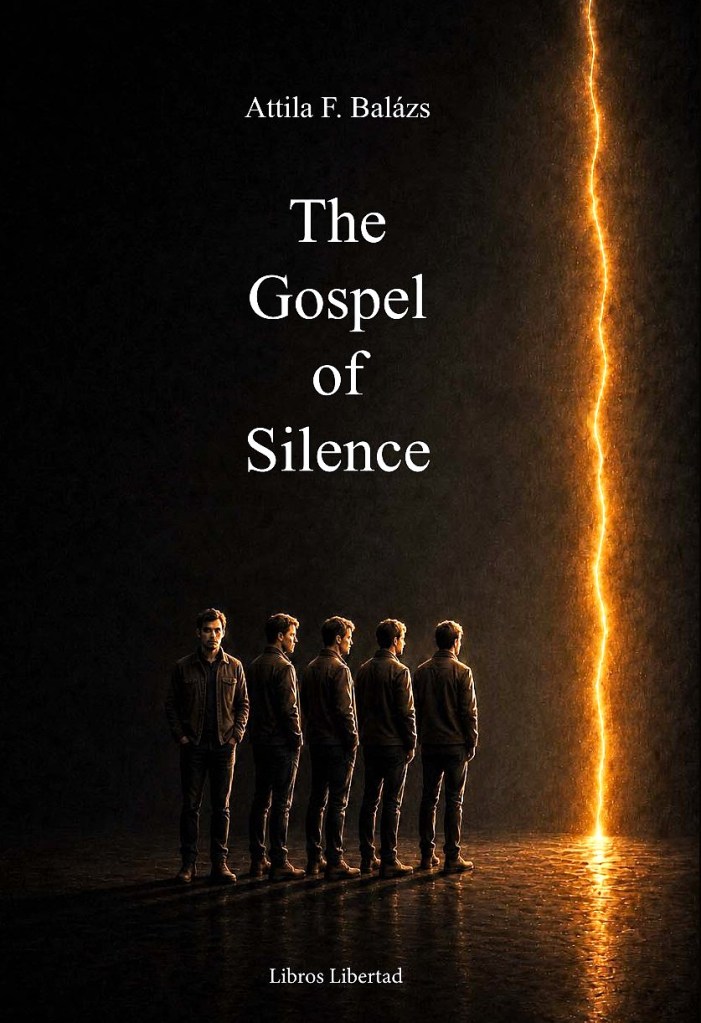
The Gospel of Silence

For a long time, I believed one stays alive by understanding
everything. Now I know there are things one must simply endure,
survive.
Children love excitement, challenges, danger. Often they fail
to perceive risks, or else they underestimate them. They do not
avoid danger; they examine it like some mechanism full of secrets
whose moment of activation they do not yet understand. We were
the same. In winter we ventured out onto the barely frozen lake,
whose ice cracked beneath every step as if warning us — or perhaps
luring us onward. We knew it was dangerous, but knowledge
alone was never enough reason to turn back. If the ice gave way
beneath one of us, we pulled him out however we could, then ran
home racing time itself before his wet clothes froze onto his body.
Now it seems as though it was not we who ran, but earlier versions
of ourselves whom no one can ever catch again.
In summer we waded into the murky marsh with its black waters.
I do not know what drew us there; perhaps the fact that it had no
boundaries, only density. We pushed through it waist-deep, later
picking leeches off ourselves on the shore — though we simply
called them bloodsuckers, as if the name alone could strip them of
all strangeness. We felt no disgust toward them; we counted them
instead, as though they were proof we had gone where we should
not have gone.
Stealing melons and fruit from the collective farm fields was almost
a ritual. It was not hunger that drove us, but prohibition. The
appearance of the field guard always set the same scene in motion:
waving his stick, he charged after us while we fled, as though some
ancient story wished to retell itself again and again. The older boys
escaped easily; the younger ones cried because the guard had come
too close. Now I know the fear did not come from the stick, but
from the realization that the world was capable of hunting us down.
I remember other runs as well. “Korea” — that was what they
called the two new streets built after the flood. In the house beside
the lake lived a Romani family. Their eldest boy was violent and
cruel — or rather, unavoidable.

https://www.amazon.com/dp/1926763874

The Unquiet Land

Excerpt

“I must admit, Flynn, that I have had a few but I am not yet drunk.” Clifford spoke with aristocratic self-assurance. “I merely want to inject a more light-hearted note into our conversation because people are looking at us and they are all—including your stepmother-in-law who has just gone upstairs—they are all expecting us to become violent and start shouting at one another like you and Jim Patterson. I don’t really want to be involved in that kind of confrontation. And there needn’t be a national confrontation either. If only you Nationalists would see reason and admit that, yes, there are two nations—two distinct, well-defined, ethnic groups sharing this tiny Devil’s island. We have a larger group that is Catholic by religion and Irish by history and heritage; and we have a smaller group that is Protestant by religion and British by history and heritage. Two groups, though. Two nations. And there’s no disputing the fact. Accept it like a gentleman. Then simply agree that the Irish Catholics will govern themselves in one part of the island, by far the larger part; the Protestant British will govern themselves in the other, much smaller part; and we’ll all work together in harmony and cooperation to make the whole island a fit and happy place for all. Thumb your nose at the Devil, Flynn. Give God back his island. For I doubt if he wants it the way it is now.”
“The only ones I thumb my nose at are the British,” Flynn said. “They are the ones who did the Devil’s work. They can undo it by giving the island, the whole, undivided island, back to the Irish whose country it is.”
“It’s too late, Flynn. The Devil’s work is done, and not even the British—not even God himself—can undo it now. No doubt the British wish they could. But at least their Government of Ireland Bill recognises the present state of affairs. It’s offering us a parliament in the South, a parliament in the North, and a Council of Ireland for the whole country. What could be wrong with that?”
“It’s two sham parliaments and a Council that can’t raise a single tax or command the services of a single policeman.” Flynn jabbed a finger against Clifford’s chest. “And what is even more galling is that the British proposals rob this Council of ever being able to become a real political power in the country. The British have given a minority of the Irish people a veto over any such development. Do you expect me to rejoice over anything so blatantly unjust? Six counties have control of all the development of self-government in thirty-two. A quarter of the population can veto the liberties of three-quarters.”

https://draft2digital.com/book/3562888

https://www.amazon.com/dp/1926763203

Straits and Turns

Excerpt

The predictable phrases came and went, and the warmth of the
wine, combined with the body heat of the people in the room, made
the atmosphere cozy. Even the conversation grew softer and fluffier as
the wine flowed. When Paula got up to visit the powder room, one of
the guests, Kostas, found the courage to lean in and ask, “Hey, Costa,
is she hot?”
Costa flashed his widest smile at the poor man, but before he
could reply, Vangelis butted in. “Don’t worry about Costa. He’s got it
right. He can pick and choose.”
Costa could almost see the man salivating at the concept.
He laughed out loud, but now the doorbell interrupted them, and
as their host went to greet the new arrivals, Costa saw Anna, the
airy, sexy, pretty, and ethereal Anna, enter the foyer, her husband
close behind. Anna was always perfectly dressed, always trendy and
sexy. She walked gracefully, elegantly, through the living room, and
Costa’s expert nose picked up her light lilac perfume. He fixated his
eyes on her, and he sensed that Anna knew he had been watching
her as soon as their eyes met. Somewhere between her sexy walk and
her faint, provocative smile, Costa saw the prettiest female of the
evening.
How do women always know when a man is looking at them?
Costa had often wondered about this but had never found an answer
that satisfied him. But they always know. And they almost always
smile back. It must be the same knowledge Costa always had when, in
a gathering of women, one, that special one, would be looking at him
with desire amid others who didn’t give a damn. It was knowledge
acquired from experience, and a womanizer like Costa had plenty of
that. Anna surely must have heard all the stories of Costa’s escapades
and misadventures. After all, the whole Greek community had heard
of them. As Anna joined the other women, Costa watched all the hugs
and kisses coming and going, each woman hugging and loudly saying,
“Hi, how are you?” while murmuring to herself, “bitch,” a word every
woman used when a prettier one entered the room and the eyes of all
the men glued themselves to her like limpets on a rock.

https://draft2digital.com/book/4250839#print

https://www.amazon.com/dp/1926763866

In Turbulent Times

Excerpt

Harry leaned forward, simultaneously closing the open drawer in which his Tarzan book was hidden. ‘I will, Mr Anderson,’ he said. ‘Oh, Jefferson’s just called to say the copper piping’s on its way.’
‘Good. Lock up before you leave, Harry. And don’t forget the keys tomorrow.’
Ian left the office, rushed down the stairs, brushed past a boy with a grey Belfast Telegraph bag of newspapers in the hall and walked quickly round the corner to where his car was parked.
Crazy fool, he chastised himself. What a stupid, cock-eyed, half-baked, wild idea.
He cursed his cock-eyed, half-baked, wild idea all the way to Lisburn. But he did not stop nor turn around. He swung his car with violence round the endless bends of the narrow road heading south from Lisburn. Stone walls, hedgerows, fields and gloomy woods, small, reedy lakes and low, elongated hills blurred past. Occasionally he turned his head to view a farmhouse that he fancied, then jerked his eyes back to the drunken road, and swung the white-clenched steering wheel in fury, like a ship’s skipper in a storm.
Take care, Ian Anderson. You have to get to Carraghlin in one piece.
He stopped the car at a crossroads garage to take in a couple of gallons of his precious petrol ration, still in force two years after the end of the war, courtesy of the Minister of Fuel and Power. Then off again with a bound like a horse from an unbolted stable: up the long hill and down again, up and down, up and down, leaping over the rolling, rollicking, rock-littered countryside. Cresting the last hill, the sudden view of the distant Drumard hills struck him like a pie hurled in his face. At Tranaliskeen he saw the sea and the long, white line of a lapping wave. A few minutes later he pulled up outside the Seaview Restaurant in Carraghlin. He stared at the gloomy overhang of high hills, at the hunched shoulders and brooding presence of Slieve Corragh that overshadowed the town like the giant that threatened the village in fairy tales.
Ian entered the restaurant, ordered a mixed grill, and unfolded the morning’s Newsletter. Restaurants were exempt from rationing, which inflated resentment against the rich, who could augment their food allowance by eating out frequently and extravagantly. To restrict this resentment, certain rules had been instituted, such as no meal could cost more than five shillings or consist of more than three courses.

https://draft2digital.com/book/3562904

https://www.amazon.com/dp/1926763270

He Rode Tall

Excerpt

Sun-bleached and weather-worn grave markers of varying
dimensions dotted the plot. What the graves all shared, with the
exception of one, was that the prairie had overtaken them. The
old man’s grave, the only fresh grave, was already starting to be
blanketed by grass. The first thing Joel noticed was that there
wasn’t a marker for the old man’s plot so he made a mental note
that he would eventually get around to doing something about
that. But there was no rush. It was too late for any acts of kindness.
Much too late.
Even though Joel felt the way he did about the old man, essentially
being emotionally abandoned at such an early age, he still
found himself dropping to a knee at the side of the tiny grave on the
knoll in the middle of nowhere and saying a quiet prayer. It was at
this point, still full of bitterness and hatred for everything that the
old man had put his mother and himself through, that Joel recognized
that your dad is always your dad. No matter what.
Walking over to the horse, picking up the long thick leather
reins from the ground, and mounting the orange gelding, Joel
slowly turned the horse and headed back to the ranch yard. Drifting
along the ridges of the hills, the horse started to perk up as
they got closer to home and even broke into a bit of a trot which
Joel mastered by desperately hanging onto the saddle horn. Joel
thought that they probably would have broken into a canter if he
hadn’t reined the gelding back to a fast walk. Joel had always been
a good horseman as a boy, but that was a lot of years ago. He wasn’t
about to test his equestrian competency the first morning
back on the ranch. As they climbed the final hill and started to
drift down the coulee into the ranch yard, Joel was surprised to
smell the aroma of freshly brewed coffee and the scent of bacon
from the forlorn-looking little ranch house below.
Looking down from the top of the knoll into the coulee below,
Joel could clearly see everything that was the homestead. The
buildings stood pretty much the way they did when he left that…

https://draft2digital.com/book/3562862

https://www.amazon.com/dp/0980897955

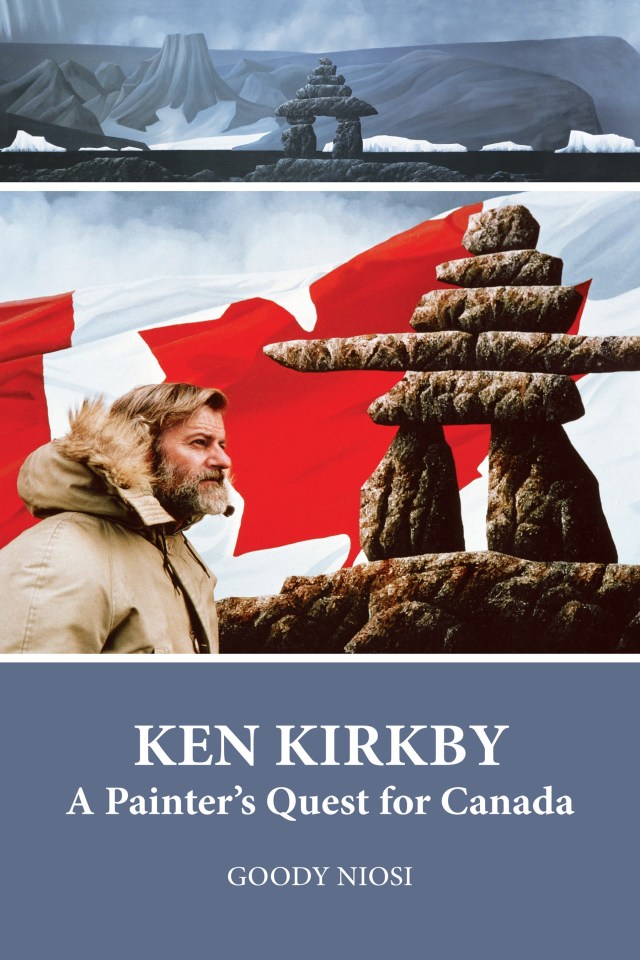
Ken Kirkby: A Painter’s Quest for Canada

excerpt

Bruce Davidson assessed the spectacle and said, “You’re an agent’s
dream. Usually we have to concoct all this crap and get the artist to go
along with it. But here – man, it’s hard to keep up with you. It’s never going
to be boring.”
“No,” Ken said. “It’s never going to be boring.”
When the fuss died down he had the boulder removed and put the ten
thousand dollars back into his bank account. Summer turned to early fall
and Nick’s symphony for Isumataq neared completion. The rock CD had
been recorded. But they still had no site for the unveiling and the more
they discussed it the more they came back to the idea of Parliament as the
venue. But how do we get our foot in the door there? Bruce asked. Ken
scheduled a breakfast meeting with the Honourable John Fraser, Speaker
of the House and they met a few days later. Over bacon and eggs, Ken laid
out his ideas for the unveiling of Isumataq.
“I know it’s not done,” he said. “People don’t take over the Houses of
Parliament for exhibitions or art openings.”
“Well,” John said. “Let me think about it. I think it’s a wonderful idea.
We’ll have to get approval from all the parties, because you have to have
everyone on board when you do something like this. If you’re going to
do something that hasn’t been done before you don’t want to just shove
it down somebody’s throat. You want to get everybody on side, so the
story has to be told very well. I know your story and it’s wonderful. You’re
the one who should come and tell it, but then there are the logistics of
getting all those people together. And then, depending on the particular
day, they may be angry with each other – it gets so complicated. Let’s just
work away at it.”
The winter of 1990 settled in, and Ken received a call for help from
Keith. As president of the Arctic Tourist Association, he was scheduled to
make a presentation in a downtown Toronto convention centre to Tom
Hawking, the Federal Minister of Arctic Affairs. The snag was that as he
was driving his caterpillar over the ice to his island airstrip, the machine
had crashed through and he had to get it out before it leaked diesel fuel
into the river. Would Ken make the speech in his place, and would he
present the Minister with one of his paintings?
The comedian Dave Thomas emceed the event. Ken was the last to
speak and he talked about the importance of tourism to the Arctic and
how important it was to allow those who lived there to make the decisions
about the infrastructure – let them build it in their own way. Let
Nunavut be their land and a land of their ideas.
Hawking requested a private talk and they met for a drink the next
day. He asked to hear his story – the long version – all the details of his
travels through the Arctic and the road that had led to the creation of
Isumataq.

https://draft2digital.com/book/3562830

https://www.amazon.com/dp/0981073573

Prairie Roots

excerpt

…farmer’s crops in preparation for a lean winter. We would spot
coyotes loping across fields or chasing down field mice. The magpies
became even noisier and the crows would start bunching as
they began their preparations for the long flight south.
But most impressive was the sight of waterfowl as they flew
overhead, the geese in their perfect formations, noisily announcing
their over-flights, and the ducks, less organized but in even
greater numbers than the geese. They came by the thousands, and
when low, we clearly heard the flutter of their wings.
School classes lasted forever and it was difficult to get serious
about homework when there was serious activity waiting for us
outdoors. We would hurry home to see if threshing had started
and to head out to the threshing site and watch the activity. After
the harvest, the days quickly shortened and the fall season intensified,
with the cold rains of mid-autumn inexorably turning into
the snows that would blanket the earth for the next six months.
The first morning after a major snowfall was an exciting time,
with new winter clothes donned and new pathways made to
school. We would be careful about these first paths, taking
shortcuts but also keeping to areas sheltered from cold north
winds. These paths were followed all winter and we would walk
single file, occasionally backwards if strong head winds were
blowing. The school was directly east of our home and we often
walked facing a rising sun which, pleasant as it was, had no
warmth radiating from it and frequently had a pair of sundogs,
the harbinger of even colder and stormier weather to come. We
noted all such phenomena and asked our parents about them after
school.
After major storms the winds cleared the softer snow away,
leaving the packed snow of the paths exposed and raised in the
open fields and pastures. Elsewhere, through woodlots, the new
snows covered the paths and we made new trails to follow. After
major storms the banks of hard packed snow at the edges of
woodlots, where the wind swirled and piled the snow, would
tempt us to climb and explore before moving on towards school.

https://draft2digital.com/book/3562900

https://www.amazon.com/dp/0980897920