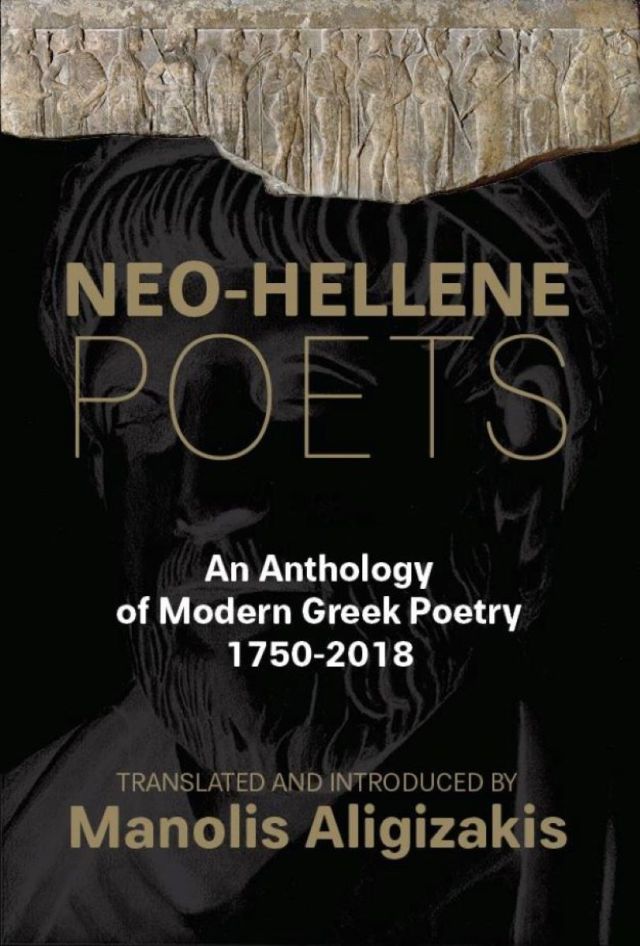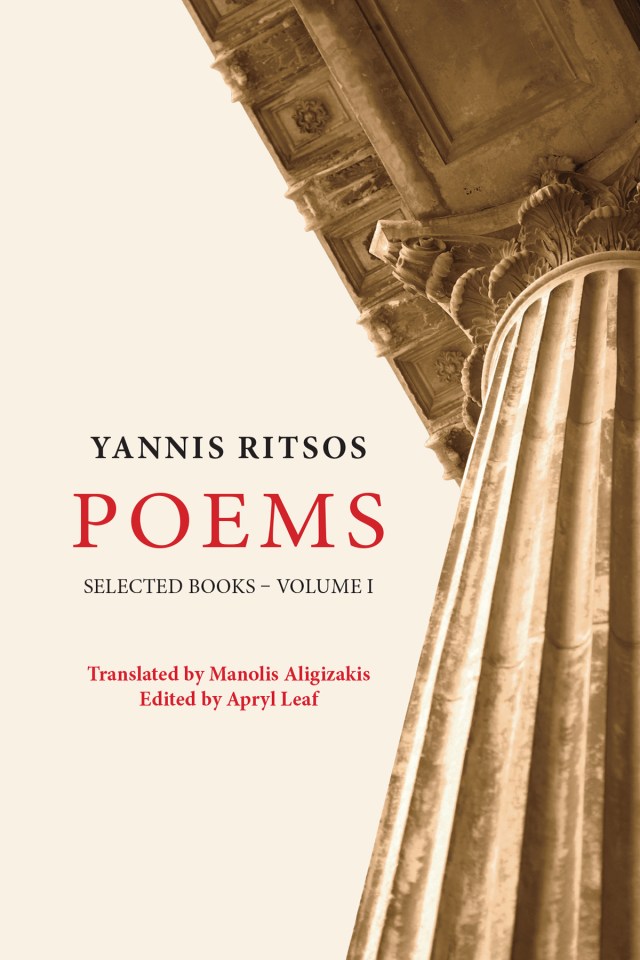
Pip: Manolis Aligizakis runs a site that could double as a library card catalog for the Mediterranean soul — except the catalog keeps writing back.
Mara: Today we're in the territory of Greek and Mediterranean poetry, translations that carry grief and habit and beauty across languages, and fiction excerpts that range from colonial frontiers to Cold War escapes. vequinox is behind all of it.
Pip: A lot of ground, a lot of voices. Let's start with the poetry.
Translations, Memory, and the Weight of Greek Verse
Mara: The anchor here is the work of translation — bringing Greek poets like Tasos Livaditis, Yannis Ritsos, Katerina Anghelaki Rooke, Constantine Cavafy, and others into English, and what gets carried across and what gets left in the original silence.
Pip: Livaditis sets the terms pretty early. The poem "November Wind" opens with a door being closed and a reckoning beginning, and then it lands this: "I think music is the grief of those who never found the time to love."
Mara: That line does a lot of work. It takes the whole poem's accumulation of lost letters, absent friends, and unanswered words and names the feeling underneath — not sorrow exactly, but grief as an art form practiced by people who ran out of time.
Pip: Ritsos shows up twice, and both poems are about absence made physical. "Emptiness" is a house stripped bare where the mirror refuses to reflect the void, and the nails left in the wall after pictures fall still catch the last light — still expecting something to hang on them. "The Sick Man" is quieter, a man returning from some interior collapse, speaking in a detached voice while making a gesture of strange tenderness with an imaginary handkerchief.
Mara: Katerina Anghelaki Rooke's "The Goddess Habit" works a different register entirely. The poem personifies routine as a protective deity, and it earns its ending: "Yes, goddess Habit, I believe in you and I serve you. You too, stay loyal to me until I get tired of you." That's a prayer and a negotiation at the same time.
Pip: Cavafy appears twice, and both poems are portraits of performance. "Leader from Western Libya" is a quietly devastating sketch of a man who learns to dress and speak Greek to impress Alexandria, and ends up so terrified of making a grammatical error that he says almost nothing — all those unspoken words piling up inside him. The later Cavafy piece, "Days of 1909, 1910, and 1911," is a young blacksmith's elegy: beautiful, unrecorded, wasted.
Mara: Titos Patrikios's "Final Defeat" is brief and brutal — a man who stuttered wanted to say something, and the speaker was always in a hurry. Antony Fostieris's "Five Painters" turns that inward: an aging artist who has just finished his most important work sits quietly at a restaurant corner, contemplating the thorny crown of the critics, while his companions talk about nothing.
Pip: The remaining poems spread the emotional range. "Impulses" holds a mastectomy at its center — the word repeated twice at the close, once as descriptor, once as fact. "Hours of the Stars" moves through water and myrtle and skylarks with a ceremonial lightness. "Introspection" names its destination plainly: the word "arts" appearing like a destination on the climb toward a destined Ithaca.
Mara: "Wheat Ears" and "Entropy" and "The Incidentals" and "Ugga" fill out the edges — a man reading the morning paper's catalog of violence before going to war again with his coffee pot, a coal seller sweating through summer to sell winter, primeval souls climbing from pages of books, and the twentieth century's art movements battling while Dali embraces Lorca timidly.
Pip: All of it circles the same question: what survives the passing of time, and who gets remembered. The fiction asks something similar, just with more people in the room.
Voices Across Frontiers: The Fiction Excerpts
Mara: The fiction segment covers a wide range of settings and genres, but the posts share a preoccupation with people navigating systems — political, social, colonial — that are larger and less trustworthy than they appear.
Pip: "Arrows" is the sharpest example. Friar Salvador is caught in a military council where the power dynamics are shifting in real time, and the excerpt ends with a sentence that earns its weight: "Not one day among the Spaniards, and already I smelled unshed blood."
Mara: The tension in that scene is precise — Infante's insubordination is theatrical, Losada's tolerance of it is suspicious, and Salvador reads the whole room correctly while being unable to do anything about it. The approval that follows Infante's suggestion to interrogate the caciques is described as mockery rather than respect.
Pip: "Jazz with Ella" has a completely different energy — a group smuggling a Soviet musician out of the USSR, the airplane cabin full of people pretending not to know each other, and Jennifer barely containing her relief while picturing Volodya hearing live gospel music for the first time in Vancouver. It's one of the warmer excerpts here.
Mara: "Water in the Wilderness" is quieter tension — Tyne waking up and walking into a kitchen where Moe and Ken are already dressed and waiting, and the whole scene turns on whether she can read their faces before she sits down. The line "Have you heard anything?" comes out as little more than a whisper.
Pip: "Blood, Feathers and Holy Men" is the most expansive excerpt — a Celtic woman named Ula, sold to a convent for six chickens and a pig, who has ended up among Indigenous people in what reads as early North America, and is slowly being reached by a monk named Rordan through the shared medium of song. The detail about the children calling him Mountain Thrush for his happy laugh is the kind of thing that earns a reader's trust.
Mara: "Redemption" follows a young man named Hermes preparing for a meeting with a university dean, coached by his aunt to find out the conditions before agreeing to anything, because nobody offers something without expecting something in return. "Poodie James" puts a lawyer for the Great Northern Railway in front of a civic hearing about hobos, and the exchange between the committee chair and the railway counsel is drily procedural — the shortest speech ever heard from a lawyer.
Pip: "Wellspring of Love" is a quieter domestic register — a girl named Rachael sitting by a stream, overhearing herself described as running with someone fast, and trying to figure out who she could ask about it without causing more trouble than the question is worth.
Mara: "Ken Kirkby — Warrior Painter" is a biographical excerpt tracking how Kirkby's Arctic paintings became nationally recognized, and how the Inukshuk eventually became the symbol of the 2010 Vancouver Olympics — a consequence that started with a single ministerial meeting and a well-timed exhibition in Spain.
Pip: "In the Quiet After Slaughter" closes on a man who spots someone he may or may not recognize — a face with a distinctive mark — returning to a place that once meant something. He could verify it, but he chooses not to. "I preferred to believe it was him," the narrator says, "because it's what I did. It's who I had become."
Mara: "Straits and Turns" is a travel piece set in Madrid, a narrator exchanging an imperceptible kiss with a Minoan-featured stranger across a restaurant, and "Twelve Narratives of the Gypsy" is a scroll and a water well and a horse riding toward a country of castles that threaten the wide open skies. "Red in Black" ends the range — a love poem about texting instead of writing a letter, and being called a student of the old school, and sending a kiss from the other side of the planet.
Pip: What stays with me is how much of this — the poetry and the fiction both — is about the gap between what people mean to say and what actually gets said.
Mara: The stuttering man in Patrikios, the unspoken words piling up in Cavafy's Libyan prince, Salvador reading the room and leaving afraid. The gap is the subject.
Pip: Next time, we'll see what else is waiting in the archive.
Mara: There's always more.