The Satrapy How unfortunate, though you are made for great and beautiful deeds your unjust fate always denies you encouragement and success. Worthless habits, pettiness and indifference distracts you. And what a horrible day when you give in (the day you let yourself give in), and you set out on the road to Susa, you approach the monarch Artaxerxes who favours you with a place at his court, and offers you satrapies and such. And you accept them in despair. These things that you don’t want. Your soul craves other things, yearns for other things: the praise of the people and the sophists, that difficult and priceless “Well Done” the Agora, the Theatre, and the Laurels. Will Artaxerxes give you these things? Can your Satrapy provide them? And what sort of life will you live without them?
eating itself—has proved too much for him.” “The poor man. What a horrible thing to happen at a time like this.” Father Costello then remembered the congregation in the church. “Dr Starkey, if you go back out there and try to restore a measure of calm, I shall prepare to celebrate Mass and marry the young couple. They especially will need some encouragement, poor children. I myself must try to make up to them this unfortunate delay in their happy ceremony.” At the end of the ceremony, as the guests moved out of the church to make their way to the house of Michael and Caitlin Carrick, Father Costello and Dr Starkey both returned to the sacristy. Padraig was sitting on the bench, his head in his hands, staring at the floor between his feet. “Are you all right, Padraig?” Dr Starkey asked. Padraig looked up. His face was like a skeleton’s. “So I had another seizure?” he said. “Yes,” Dr Starkey replied. “A bad one. How do you feel?” “Tired. Very, very tired. And my head is throbbing.” Padraig looked up at the old priest who stood tall as a maypole. “Did you say Mass for me, Father Costello?” “I did, Padraig.” “And the wedding?” “It went very well. “Ah, that’s good.” Padraig lowered his black eye-sockets from the tall priest’s face and stared at his own moist, clasped hands. “I never could have done it, you know. I’m glad I asked you to come in my place.” His almost fleshless head jerked round towards Dr Starkey. “I’m so tired, Dr Starkey. I don’t think I’ll go up to the house. Will you apologise for me to Caitlin? And to Michael and the others?” “I will, Padraig,” Dr Starkey promised. “Now you had better get to your room in the rectory. And I’ll stop by later to see you.” “Thank you, Dr Starkey.” Padraig stood unsteadily. “All I want to do now is sleep.” The three men left the church together. A few parishioners who remained in the church, talking in subdued voices, watched them go. Padraig entered the rectory with Father Costello and climbed the stairs to his room. There he rolled over on to his side on the bed and fell into a deep sleep.
…citizens as their wish and the iron fist of the church who keep the minds and emotions of people under their control,” he said looking deep in Magda’s eyes who showed her understanding as she nodded her head and smiled at his comments. “The one you’d have a hard time even talking about is the power of the church over the lives of the people because it has been so much entrenched in their essence as something they have received from their ancestors and as such, they would never think of leaving behind, let alone changing dramatically,” she underlined to Hermes. “Yes, I agree; but what we inherited shouldn’t always be accepted as a given and never evaluated, viewed by today’s standards and beliefs and then accept it or reject it for something better. Think of it, in today’s world, where you can communicate with anyone and in such a short time, when you travel from one end of the Earth to the other within a day, we still believe in such stupid ideas, and anachronistic thoughts.” “True, indeed, Hermes, but…” she added “There shouldn’t be a but, Magda, look, in the old days, during the seventh century BC, the Spartans had a law that forced mothers to go and throw down the Kaiadas all their incomplete children, the malformed, the kids with Down’s syndrome, etc. That was part of our tradition too; however, we today don’t kill the malformed kids or the ones with Down’s syndrome because we must understand that human life is as valuable and indispensable, regardless of what form it might have. Yet, we can’t get rid of the Christian tradition no matter what. Tell me why it is so?” Magda stared into his eyes and noticed the burning fire, which could become a conflagration, a fire she loved to see; a fire she’d agreed with, however, she chose her words very carefully. “I believe what you said, but I also know how deeply entrenched the whole idea of the church and how impossible it would be to effect any change at this time of the nation’s history, especially under the iron fist of the dictators…on the other hand, nothing is impossible when one wants to fight for what one believes in.”
For the Dead Princess I didn’t do this in purpose, I swear. But as I saw her running like a fairy towards me I thought she would pierce my heart. For this I shot the arrow. After all we, the king’s hunters, obey his commands. The sign clearly read: ‘No princesses in the mulberry forest.
Sad Craftiness The chimney, the church, the road, the tavern: familiar. In the dark room, a fish swims in the glass bowl. He, always alone, observes it; he isn’t paying attention. The invisible, moving gleam of the fish and that sensation of the lack of emotion. At least, a tiny numbness at the edge of his toes, the untried laziness to move, to turn on the light, or to stay down there on the imaginary wheelchair, from where he takes out his left arm, groping on one metal wheel as if holding the steering wheel of an ancient, faraway authority, tired and indifferent that doesn’t to be enforced upon anyone. Thus, it is as if you hold the poem like a sworn secret not to show that it also has nothing to declare.
The postman in Mail moves from house to house carrying news of marriages, births, and children living far away. For everyone else, he is the bearer of messages, while tears run down his face because he too waits for a letter that never arrives.
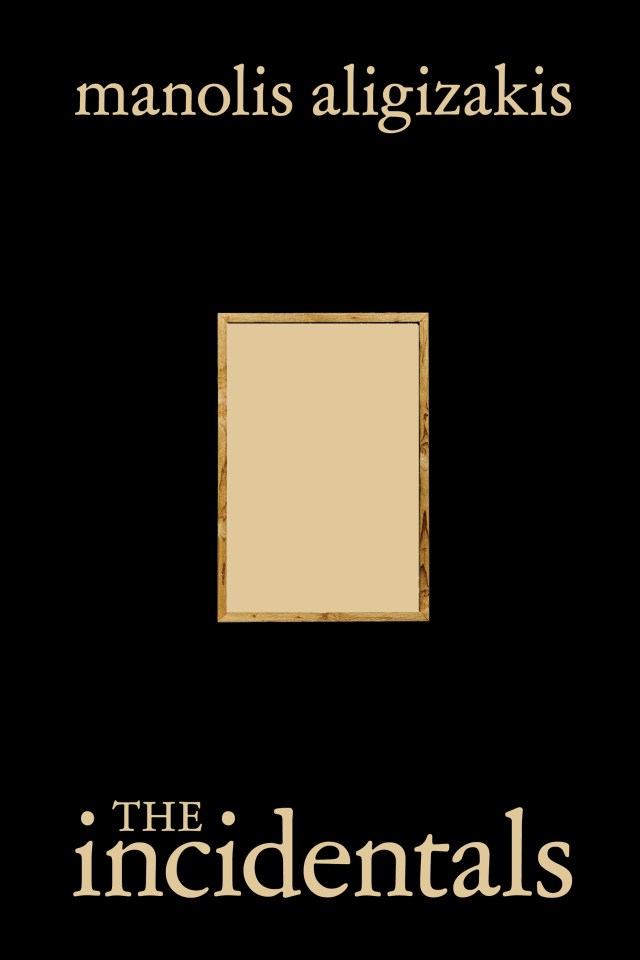
Here lies one of Aligizakis’s strongest poetic gifts: his ability to create an entire human destiny from a few concrete gestures.
He does not write psychological portraits in the conventional sense. Of many of his characters we know almost nothing. We are given an occupation, a gesture, a memory, an object.
The rest is accomplished by metaphor. The net becomes a trap. The rope becomes a life.
Bookkeeping becomes an account with death.
The felling of a tree becomes an image of our own disappearance. The letter becomes a metaphor for absence. The shoe becomes the sign that, for a little while longer, we may still walk upon the earth.
This poetic world is at once archaic and contemporary. Hades and Thanatos move naturally through gas stations, diners, hospitals, stock-market screens, garages, and Canadian immigration offices. For Aligizakis, Greek mythology is not museum material but a still-living language through which human finitude can be expressed.
The immigrant is therefore a particularly significant figure. In Immigrant, the protagonist leaves his homeland to begin a new life on the other side of the planet. He promises his youth and productive years to the new country in exchange for security—but the poem’s ruthless conclusion suggests that in doing so he has, in a sense, sold himself “for a few dollars more.”
This experience carries particular resonance in the work of a poet whose own biography has been shaped by emigration. Yet Aligizakis does not write autobiographical complaint. Migration becomes another model of the human condition: we all make exchanges with the world. We give time for money, freedom for security, dreams for predictability. The only question is whether we are aware of the contract we have signed.
The Incidentals is not a comfortable book. Nor does it wish to be.
It is often rough, grotesque, ironic, sometimes sarcastic. It refuses to beautify the body, old age, labour, or death. Aligizakis occasionally uses brutal language to awaken the reader from precisely the complacency he wishes to attack.
Yet beneath this harshness lies an unusual humanism.
Because if these people were truly incidental, no poems would be written about them.
Poetry itself refutes the title.
The moment the poet writes about Gladys, Mathew, Stefan, Benjamin, Galanos, or the nameless postman, he abolishes their insignificance. He lifts them out of the anonymous mass of time. Society may have counted them as numbers, but poetry gives them names, faces, stories, and deaths.
This is perhaps the most beautiful ethical gesture of the volume. Poetry cannot defeat death.
But it can defeat oblivion—if only for the duration of a poem.
Manolis Aligizakis’s The Incidentals is therefore far more than a collection of poems about ordinary people. It is at once a modern dance of death, a social diagnosis, a sequence of philosophical parables, and an ironic catalogue of human existence. The volume asks how many people live out their lives without ever daring to move away from the stake to which an invisible rope has tied them.
And it asks an even more difficult question: how long is the rope on which we ourselves live?
The poet cannot answer that question for us.
Perhaps this is precisely the point at which the stories of the „incidentals” cease to be the stories of others. And ours begins.
The Nimkus Fall Fair proved a huge success. Even some of the town matrons relented at the last minute, or at least before it was too late to enter their exhibits. Most of them grew flowers and vegetable gardens, and they could not pass up the chance to compete against the farm women. But this year, not only the town matrons participated. Miss Carrington entered her crocheted doilies and embroidered pillow case as well as a couple of jars of Saskatoon preserves. She also agreed to be a judge for some of the exhibits, a prestigious job that had always been reserved for two or more of the business men’s wives, or town women from Bradshaw. Millie Osborne was not to be outdone, either. She had worked all through the previous winter and most of the spring, knitting socks and sweaters. Her grown sons had laughed at her, asking if she was trying to get in with the high mucky-mucks around town. But Millie would not be discouraged. “After all,” she told her boys, “Mr. Carson says I have to support the Association now that I’m an Ag member.” “Aw, Maw,” they chided, “you can’t compete with the biddies who live in this town. They’ve been doing this stuff for years.” “You mind your own business, you louts,” Millie said. “My things will look just as nice and tidy as any others on display.” And they did, as her boys were forced to admit when they saw them next to other exhibits on the day of the fair. Pong, the laundryman, did not have anything to exhibit but he worked tirelessly all day, as well as the evening before the fair, helping to set up booths, carrying and fetching, happy just to be of service to Will and Missy Ben. Holding the clipboard that had once been Will’s responsibility, Sarah looked around her at the people gathered on the fair grounds. Many greeted her with a nod or a cheery, “Good day, Mrs. Fielding,” or, from the less reserved ones, “Hi there, Sarah, how’s it going?” Was it her imagination or were there actually more people than there had been last year? She saw Mrs. Thompson leading little David McNeill by the hand, and walked over to them. “I see you have your hands full for the day,” Sarah said, bending to give David a hug.
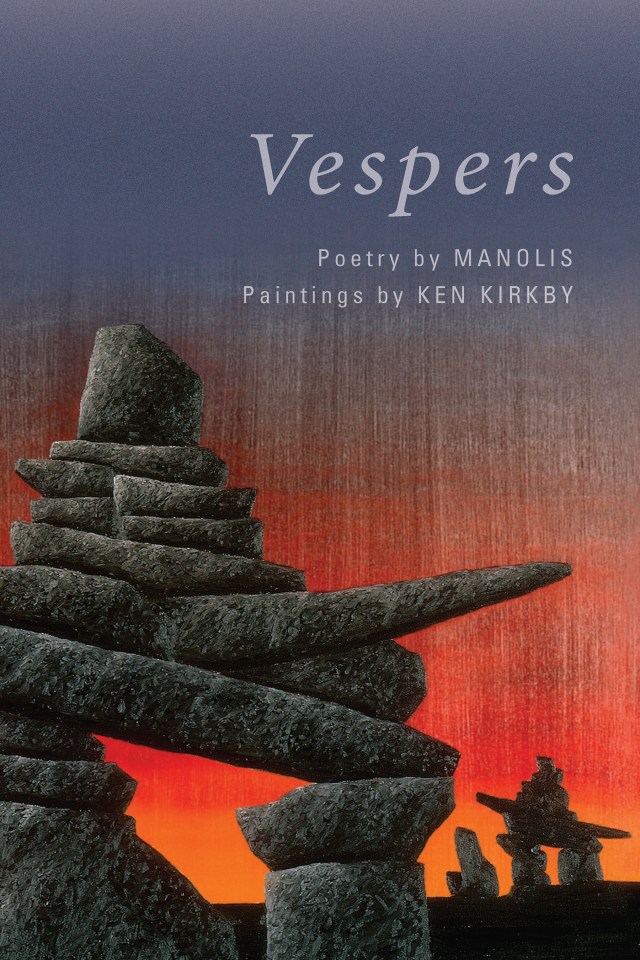
Under the icy archipelago krill dance en masse to the chorus of arctic current like a curtain pleat searching for direction they mingle and grow enough to be retained in the baleen of leviathan with teary eyes and big heart that keeps ahead of the undulating ocean’s breath and inhospitable depth harsh temperature of winter interlocks with short summer and perfect balance of sunlight
Scriber Hours have turned pale, and he’s found stooped over the unthankful table. The sun slides in through the open window and plays onto the opposite wall folding my chest I search for my breath in the dust of my papers. A thousand sounds life vibrates sweetly in the freedom of the street I’m exhausted, my eyes and mind are blurry yet I still write. I know of two sunlit lilies in a vase next to me as if they’ve sprung up from a grave.
Pip: Manolis Aligizakis — translator, poet, publisher, and apparently a one-person archive of everything Greek literature has ever felt about mortality, love, and the road.
Mara: vequinox has been busy. Today we're moving through modern Greek poetry in translation, then into myth and mortality, and finally into fiction and travel narratives that cross borders both literal and historical.
Pip: Let's start with the poets.
Voices Across the Aegean: Modern Greek Poetry in Translation
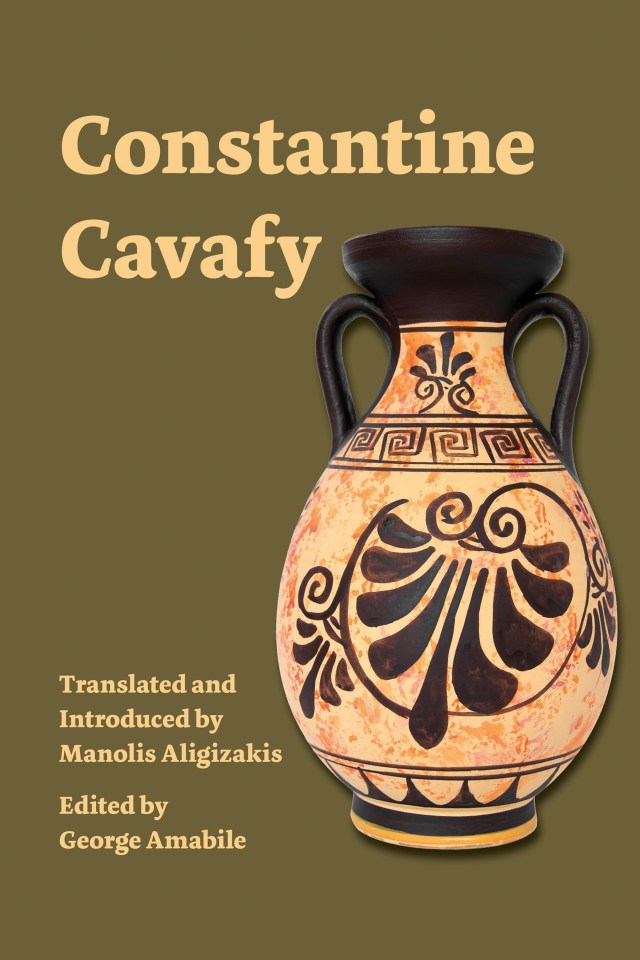
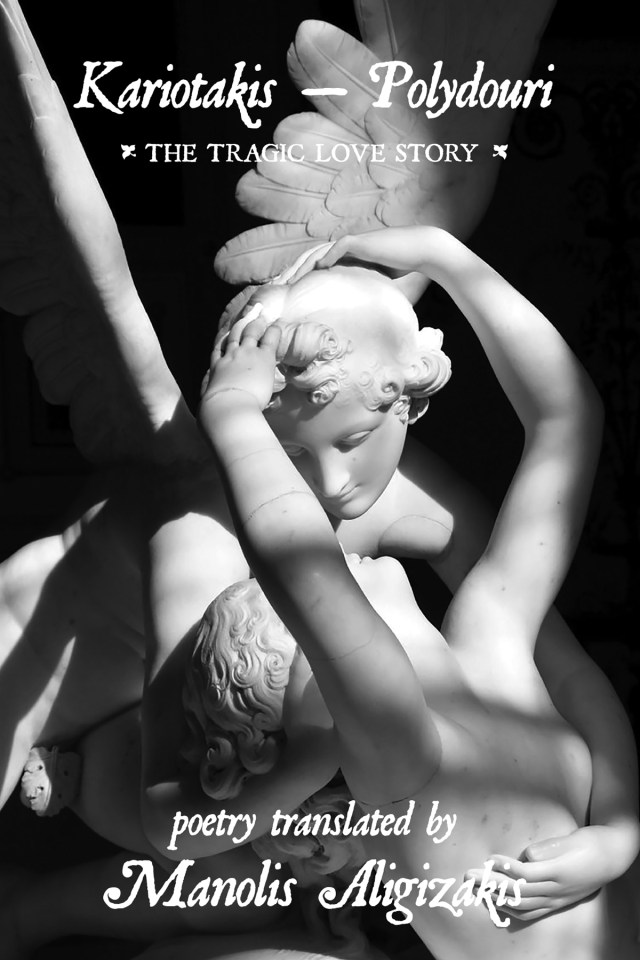
Mara: The throughline across these translations is a question: what survives when a poem crosses languages? The Cavafy post gives us one answer through the myth of Achilles and a god who betrays his own prophecy.
Pip: And Cavafy frames it with Plato first, which is a move — citing the Republic to set up a poem about divine bad faith. The quote lands hard: "Yet, he, himself… who sang the hymn… he killed my son."
Mara: That line is Thetis speaking. Apollo sang paeans at her wedding foretelling her son's long life, and then personally went to Troy and killed Achilles. The prophecy and the killing share the same mouth.
Pip: Which is either theology or the oldest recorded case of a conflict of interest.
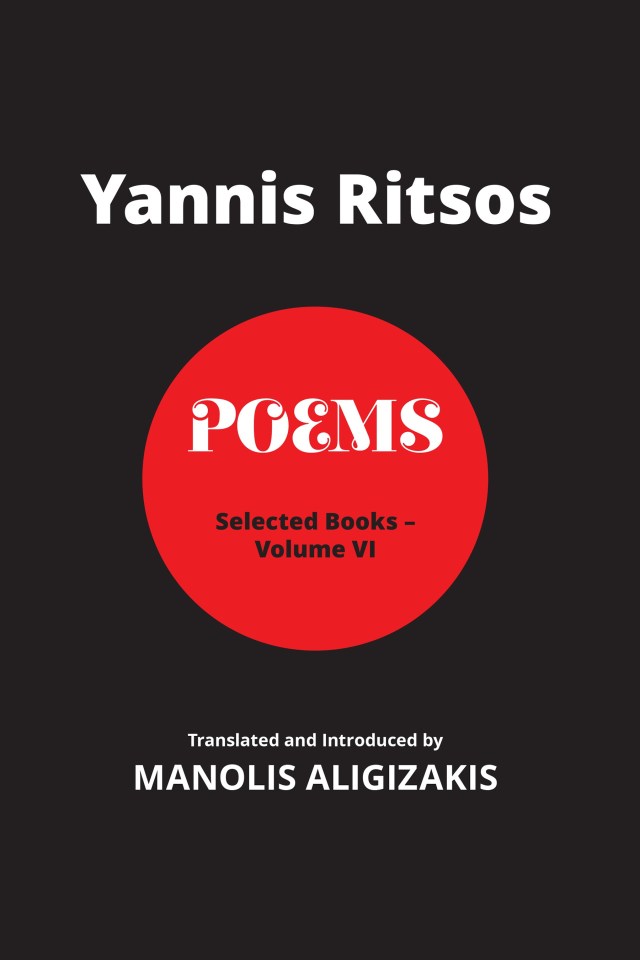
Mara: The Yannis Ritsos volumes — both Volume V and Volume VI — push into similar territory from a different angle. Volume V gives us the evening star as an eraser moving back and forth over a mistake that never quite disappears, birth and death as a rhythm rather than a sequence.
Mara: Volume VI's "Same Word" watches language itself tremble under its own unfamiliar meaning, like a nerve that shivers and bursts. Ritsos keeps returning to the threshold between sense and silence.
Pip: Tasos Livaditis takes that threshold into a tavern. The bouzouki player in Volume II swears every day he'll turn his life around, and every night the world deepens and pulls him back through the door.
Mara: George Seferis in the Collected Poems gives us crickets ticking out of rhythm, a house full of them, and the line "we don't even whisper, because the machine is speeding before horror and contempt." The anthology Neo-Hellene Poets lands a parable about a bird that can learn every sweet song except the words "I love you."
Pip: Katerina Anghelaki Rooke's Selected Poems counts time differently: "I count time with what I've lived and what is forthcoming that resembles the incomparable end. Only, look, the craft and the fisherman can't be separated from the blue."
Mara: Titos Patrikios in Selected Poems is more pointed — "Economic Development" watches emigration and foreign investment rise together while newspapers announce cultural ideals are being maintained. And Nuances holds the sharpest compression: a poem called "Repetitions" that names peace as something a sword erases.
Pip: Red in Black steps outside Greece entirely, finding illumination in Craiova, Romania, through Brancusi sculptures — the Blind Boy and The Kiss — connecting Greek poetic consciousness to Romanian artistic space. That range from Cavafy's Troy to a Romanian museum is the real scope of this project.
Mara: From mythic time to the present tense — which is exactly where the next set of poems lives.
Eros, Entropy, and the Weight of Ending
Pip: This cluster asks what myth and love actually cost — not in the abstract, but in the body, in the moment, in the interruption.
Mara: Medusa opens with a poem called "Gravestone" where Eros descends to a melancholic youth and a widow turns in the moonlight, and then the poem pivots without warning: "Nothing matters more than the armchair craving my body as the widow craves her late husband."
Pip: The domestic interruptions — the faucet, the table, the wife demanding full attention — aren't a joke at the poem's expense. They're the actual argument: desire and the ordinary are not separate territories.
Mara: Entropy's "Eternal Cycle" strips that argument to its bones — earth aging, returning its shine, then embracing each thing on its path toward what it always longed for. Wheat Ears traces the same arc through a single memory: beauty glimpsed through a window, understood only later when years have become dry leaves on a sidewalk.
Pip: Rendition and Life is a Poem hold the stranger registers — one a requiem tracking dawn through alcohol and fear, the other a surrealist marketplace where oaks erect monuments and white rabbits somersault on floating meadows. Hours of the Stars closes it with a prologue about those who never let their glance reach the light, and the chaste people who do.
Mara: That tension between those who see and those who can't — it runs through the fiction too.
Roads Taken Hard: Fiction and Travel Across Borders
Pip: The fiction here is about people in motion — and motion that doesn't stop even when it probably should.
Mara: Ugga frames that with unusual economy: "For the light to change the production must pause and the pause must be produced methodically." Four lines that describe filmmaking and also, quietly, everything else.
Pip: In Turbulent Times gives us Ian Anderson driving furiously south from Lisburn, cursing his own idea the entire way, and not stopping. The road is "drunken," the steering wheel swung "in fury, like a ship's skipper in a storm."
Mara: The rationing detail grounds it precisely in postwar Northern Ireland — no meal over five shillings, no more than three courses, restaurants exempt and resented for it. The historical texture is load-bearing.
Pip: Straits and Turns puts a mechanic behind a fogged window in a Vancouver train yard, rain dripping steadily, "poetically, he'd say." The Circle moves between Baghdad and a new apartment, a move organized with pizzas and a reserved elevator and a view west toward the Pacific.
Mara: Blood, Feathers and Holy Men is the furthest journey — Irish monks in North America, a guide warning that the trip takes five or six seasons and that stragglers get left behind. And Jazz with Ella lands in Moscow, a Canadian teacher stepping onto Soviet soil and remembering Churchill: "a riddle wrapped in a mystery inside an enigma."
Pip: She suspected it was hyperbole. Then she stepped off the plane.
Mara: What holds all of this together is the act of crossing — languages, borders, centuries, the distance between a prophecy and its betrayal.
Pip: Next time, we'll see where that crossing takes us.


 Manolis Aligizakis