Podcast Episode: Voices Of Loss And Memory

Pip: Manolis Aligizakis runs a site that could double as a library card catalog for the Mediterranean soul — except the catalog keeps writing back.

Mara: Today we're in the territory of Greek and Mediterranean poetry, translations that carry grief and habit and beauty across languages, and fiction excerpts that range from colonial frontiers to Cold War escapes. vequinox is behind all of it.

Pip: A lot of ground, a lot of voices. Let's start with the poetry.

Translations, Memory, and the Weight of Greek Verse

Mara: The anchor here is the work of translation — bringing Greek poets like Tasos Livaditis, Yannis Ritsos, Katerina Anghelaki Rooke, Constantine Cavafy, and others into English, and what gets carried across and what gets left in the original silence.

Pip: Livaditis sets the terms pretty early. The poem "November Wind" opens with a door being closed and a reckoning beginning, and then it lands this: "I think music is the grief of those who never found the time to love."

Mara: That line does a lot of work. It takes the whole poem's accumulation of lost letters, absent friends, and unanswered words and names the feeling underneath — not sorrow exactly, but grief as an art form practiced by people who ran out of time.

Pip: Ritsos shows up twice, and both poems are about absence made physical. "Emptiness" is a house stripped bare where the mirror refuses to reflect the void, and the nails left in the wall after pictures fall still catch the last light — still expecting something to hang on them. "The Sick Man" is quieter, a man returning from some interior collapse, speaking in a detached voice while making a gesture of strange tenderness with an imaginary handkerchief.

Mara: Katerina Anghelaki Rooke's "The Goddess Habit" works a different register entirely. The poem personifies routine as a protective deity, and it earns its ending: "Yes, goddess Habit, I believe in you and I serve you. You too, stay loyal to me until I get tired of you." That's a prayer and a negotiation at the same time.

Pip: Cavafy appears twice, and both poems are portraits of performance. "Leader from Western Libya" is a quietly devastating sketch of a man who learns to dress and speak Greek to impress Alexandria, and ends up so terrified of making a grammatical error that he says almost nothing — all those unspoken words piling up inside him. The later Cavafy piece, "Days of 1909, 1910, and 1911," is a young blacksmith's elegy: beautiful, unrecorded, wasted.

Mara: Titos Patrikios's "Final Defeat" is brief and brutal — a man who stuttered wanted to say something, and the speaker was always in a hurry. Antony Fostieris's "Five Painters" turns that inward: an aging artist who has just finished his most important work sits quietly at a restaurant corner, contemplating the thorny crown of the critics, while his companions talk about nothing.

Pip: The remaining poems spread the emotional range. "Impulses" holds a mastectomy at its center — the word repeated twice at the close, once as descriptor, once as fact. "Hours of the Stars" moves through water and myrtle and skylarks with a ceremonial lightness. "Introspection" names its destination plainly: the word "arts" appearing like a destination on the climb toward a destined Ithaca.

Mara: "Wheat Ears" and "Entropy" and "The Incidentals" and "Ugga" fill out the edges — a man reading the morning paper's catalog of violence before going to war again with his coffee pot, a coal seller sweating through summer to sell winter, primeval souls climbing from pages of books, and the twentieth century's art movements battling while Dali embraces Lorca timidly.

Pip: All of it circles the same question: what survives the passing of time, and who gets remembered. The fiction asks something similar, just with more people in the room.

Voices Across Frontiers: The Fiction Excerpts

Mara: The fiction segment covers a wide range of settings and genres, but the posts share a preoccupation with people navigating systems — political, social, colonial — that are larger and less trustworthy than they appear.

Pip: "Arrows" is the sharpest example. Friar Salvador is caught in a military council where the power dynamics are shifting in real time, and the excerpt ends with a sentence that earns its weight: "Not one day among the Spaniards, and already I smelled unshed blood."

Mara: The tension in that scene is precise — Infante's insubordination is theatrical, Losada's tolerance of it is suspicious, and Salvador reads the whole room correctly while being unable to do anything about it. The approval that follows Infante's suggestion to interrogate the caciques is described as mockery rather than respect.

Pip: "Jazz with Ella" has a completely different energy — a group smuggling a Soviet musician out of the USSR, the airplane cabin full of people pretending not to know each other, and Jennifer barely containing her relief while picturing Volodya hearing live gospel music for the first time in Vancouver. It's one of the warmer excerpts here.

Mara: "Water in the Wilderness" is quieter tension — Tyne waking up and walking into a kitchen where Moe and Ken are already dressed and waiting, and the whole scene turns on whether she can read their faces before she sits down. The line "Have you heard anything?" comes out as little more than a whisper.

Pip: "Blood, Feathers and Holy Men" is the most expansive excerpt — a Celtic woman named Ula, sold to a convent for six chickens and a pig, who has ended up among Indigenous people in what reads as early North America, and is slowly being reached by a monk named Rordan through the shared medium of song. The detail about the children calling him Mountain Thrush for his happy laugh is the kind of thing that earns a reader's trust.

Mara: "Redemption" follows a young man named Hermes preparing for a meeting with a university dean, coached by his aunt to find out the conditions before agreeing to anything, because nobody offers something without expecting something in return. "Poodie James" puts a lawyer for the Great Northern Railway in front of a civic hearing about hobos, and the exchange between the committee chair and the railway counsel is drily procedural — the shortest speech ever heard from a lawyer.

Pip: "Wellspring of Love" is a quieter domestic register — a girl named Rachael sitting by a stream, overhearing herself described as running with someone fast, and trying to figure out who she could ask about it without causing more trouble than the question is worth.

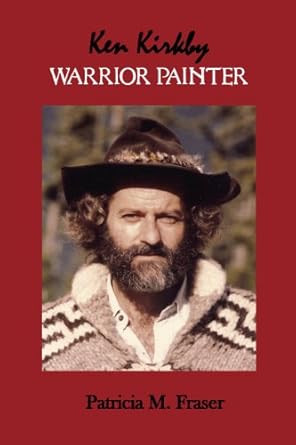
Mara: "Ken Kirkby — Warrior Painter" is a biographical excerpt tracking how Kirkby's Arctic paintings became nationally recognized, and how the Inukshuk eventually became the symbol of the 2010 Vancouver Olympics — a consequence that started with a single ministerial meeting and a well-timed exhibition in Spain.

Pip: "In the Quiet After Slaughter" closes on a man who spots someone he may or may not recognize — a face with a distinctive mark — returning to a place that once meant something. He could verify it, but he chooses not to. "I preferred to believe it was him," the narrator says, "because it's what I did. It's who I had become."

Mara: "Straits and Turns" is a travel piece set in Madrid, a narrator exchanging an imperceptible kiss with a Minoan-featured stranger across a restaurant, and "Twelve Narratives of the Gypsy" is a scroll and a water well and a horse riding toward a country of castles that threaten the wide open skies. "Red in Black" ends the range — a love poem about texting instead of writing a letter, and being called a student of the old school, and sending a kiss from the other side of the planet.


Pip: What stays with me is how much of this — the poetry and the fiction both — is about the gap between what people mean to say and what actually gets said.

Mara: The stuttering man in Patrikios, the unspoken words piling up in Cavafy's Libyan prince, Salvador reading the room and leaving afraid. The gap is the subject.

Pip: Next time, we'll see what else is waiting in the archive.

Mara: There's always more.

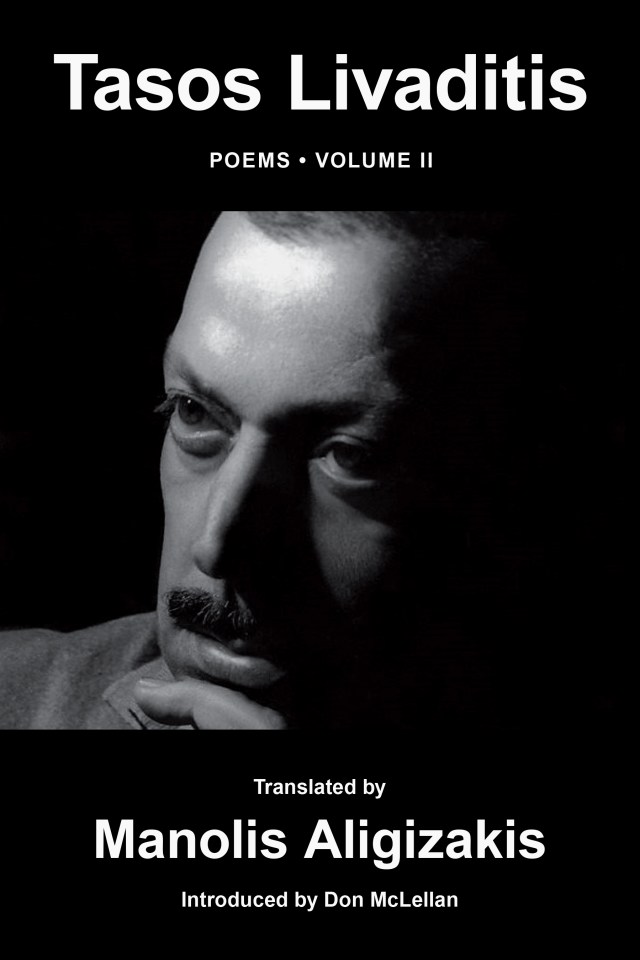
Tasos Livaditis – Poems, Volume II

Long-listed for the 2023 Griffin Poetry Awards

DEVIL WITH THE CANDLE STICK

“One day you will remember of me”, he said “but you won’t
be able to cry;”
what did he mean and what was the meaning of words?
Women stood at the crossroad, dark faced, holding the
half open pomegranate
like thousand faces of nothing. The prostitute, returning
home, went to the kitchen and warmed the food and I,
hell, failed between two evening songs.
When Rosa had a john she used to place a carton on
the corner so the memory of her father wouldn’t see her;
someone, with an axe, came out in the night and started
striking blindly.
The whole city was panicking, searches, interrogations,
occasionally someone would come, kneel before the icons
and confess to everything
since the beginning of the world — thus perhaps seeking
a purpose or two lines in the newspaper and a small
rose at the edge of the road;
the stupid child would go by and pick the rose, he’d look
at it and then as if
he understood something he’d leave it in its place and only
the gambler could guess that movement such as those that
save you.
Thus one by one they all got lost and I was the only survivor
playing, at the critical moment, with the fringes
of the tablecloth.
I truly wonder why all these since one can be lost with
a lot less things.
I remember one who’s hunger pushed him to desire a street
organ, which he sat down and ate, there, at the corner
only spitting out the crutch of the soldier, and the fat ugly
woman had revealed her big breasts over the balcony
“don’t feel sorry for me” she said “I’m very clever” and
she was staring at the end of the road;
then we sat on the grass of the dark cemetery and helped
the dead child.

https://draft2digital.com/book/4051627

https://www.amazon.com/dp/1926763564

Ken Kirkby, A Painter’s Quest for Canada

Excerpt

Puzzled, Ken walked away and as he wound his way past the stalls he
noticed the silence that fell when he approached. No one smiled at him;
no one nodded or called out a cheerful “good morning.” People avoided
looking at him and stepped deliberately out of his way.
Ken left the market with an ache in his throat. The next day he went
back and still no one would talk to him. He went to the market for a
third day and was again chilled by the rejection he met. But that day as he
turned to go, he heard one woman say, “You’re the anti-Christ – go!”
At home he asked his father, “What is the anti-Christ?”
“That’s the devil,” he answered. “Why do you want to know?”
He explained the scene at the market and what the woman had said
to him.
“That’s very interesting,” Ken Sr. said, his lips drawing tight across his
teeth and turning the colour of ash.
Ken Sr. picked up the telephone. “Don’t leave the house,” he said. “I
want you to stay here.”
A short while later the same priest who had visited the house before
came to the door. “Something very interesting and potentially important
has just taken place,” Ken Sr. said. “The other day you called my son’s behaviour
anti-Christian. For the last three or four days he has gone to the
market where he likes to make drawings. People have shunned him and
he was called …” he turned to Ken. “Say the words.”
“The anti-Christ,” Ken said.
Ken Sr. leaned back in his chair. “There seems to be a link between
your words, ‘anti-Christian’ and their words, ‘the anti-Christ.’ Was that
their interpretation or was there someone, perhaps you, who actually said
those words? This is how they now feel and whether you realize it or not,
you have made me the second most important man in history – I’m the
father of the devil is what you’re telling me. I expect it’s you who started
this. If you ever refer to my son or any member of my family again, I will
truly make you wish you had never been born. Get out of my house and
don’t ever come near it again.”
The priest listened in stony silence and left, wrapping his black cassock
tightly around him.

https://www.amazon.com/dp/0981073573

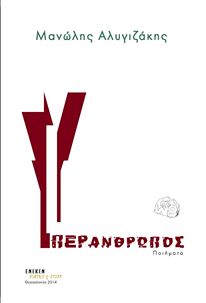
ΥΠΕΡΑΝΘΡΩΠΟΣ–ΚΡΙΤΙΚΗ

1964407_815813081778415_1829066548_n

ΥΠΕΡΑΝΘΡΩΠΟΣ–κριτική

ΠΟΙΗΣΗ – EKSTASIS EDITIONS

Ο «Υπεράνθρωπος» του Μανώλη Αλυγιζάκη είναι από τα πιο δύσκολα και φιλοσοφημένα έργα που έχω συναντήσει. Και πώς να μην είναι άλλωστε, εφόσον ταυτίζεται με τον Υπεράνθρωπο του Νίτσε, τόσο σε πλοκή όσο και σε νοήματα. Ο ποιητής «παίζει» με τις συμβάσεις καθώς σχετίζει τον Υπεράνθρωπο, αφενός μεν με την πραγματική διάσταση που του δίνει ο Γερμανός φιλόσοφος, αφετέρου δε με την παρερμηνεία που του έδωσαν οι Γερμανοί εθνοσοσιαλιστές, με τα τραγικά αποτελέσματα που ακολούθησαν για όλη την ανθρωπότητα.

Πριν λοιπόν περιγράψουμε τον Υπεράνθρωπο του Μανώλη Αλυγιζάκη, ας δούμε εν συντομία τι προσδοκούσε ο Νίτσε με αυτό του το σύγγραμμα. Με πολύ απλά λόγια ο Νίτσε έθετε τον άνθρωπο αντιμέτωπο με τις ευθύνες του και τις δυνατότητές του, που αν τις χειριζόταν ορθά, θα μπορούσε να υπερπηδήσει κάδε εμπόδιο. Με κύριο μοχλό τη σωστή χρήση της λογικής και του ενστίκτου θα μπορέσει να ζήσει σε μια κοινωνία ισότητας και ελευθερίας, όπου ο καθένας θα είναι ο κύριος του εαυτού του. Βέβαια ο Νίτσε δεν περιέγραψε την ηθική διάσταση του Υπεράνθρωπου, καθώς ήρθε να αναπληρώσει (όπως ισχυρίζεται ο συγγραφέας) το κενό της εξουσίας και της Θεϊκής ανυπαρξίας. Ο Υπεράνθρωπος λοιπόν λυτρωτής, υπέρμαχος της ηθικής αλλά και λίγο ανεξέλεγκτος, όσον αφορά τα απώτερα σχέδιά του για τον κόσμο, που επίσης παραμένουν ασαφή…

Το δίγλωσσο αυτό βιβλίο (Ελληνικά-Αγγλικά) χωρίζεται σε τρεις ενότητες και είναι γραμμένο με ένα στυλ που θυμίζει περισσότερο πεζογράφημα, παρά ποίηση. Στο πρώτο μέρος, την Άλικη Αυγή, ο άνθρωπος ανεξαρτητοποιημένος από τις δεσμεύσεις της θρησκείας, αποφασίζει να βαδίσει βασισμένος στις δικές του δυνάμεις και να απαλλαγεί από τα σαγόνια του συστήματος. Μέσα σε μια καταρρέουσα κοινωνία και σε μια οικογένεια που χάνει την αρχέγονη σημασία της, το άτομο οφείλει να αποδεχτεί την ανθρώπινη ματαιότητα. Και αν καταφέρει να το επιτύχει αυτό, τότε θα αναγνωρίσει την αξία των απλών πραγμάτων, της φύσης και των αθώων στιγμών της παιδικής του ηλικίας. Την ιδιαίτερη βαρύτητα που μπορεί να έχει μια λέξη, μια φιλοφρόνηση, μια αξιέπαινη πράξη. Ο ανυπεράσπιστος, μπροστά στο θάνατο, άνθρωπος, νωχελικά περίμενε την «ανάστασή» του, χωρίς καμία προσπάθεια να αποβάλει το ναρκισσισμό και την ανευθυνότητα από το «είναι» του. Και έτσι, μακριά απ’ τον Θεό του και την πίστη του, οδηγήθηκε στον όλεθρο και την καταστροφή. Με ορμητήριο την άγνοια θεώρησε πως μπορούσε να διαπρέψει και να μεγαλουργήσει.

Πώς λοιπόν ο άνθρωπος θ’ αλλάξει προς το καλύτερο; Με αυτογνωσία, με σημασία στα απλά καθημερινά πράγματα, με σωστό υπολογισμό των θετικών και αρνητικών παραμέτρων, που επηρεάζουν τη ζωή του. Σ’ αυτό το σημείο προαναγγέλλεται και η άφιξη του Υπεράνθρωπου στους ανθρώπους, που η πίστη και η αφοσίωση στο πρόσωπό του, πάλι πήγαζε από την κούφια αυτοσυνειδησία τους. Προσπαθώντας να του δείξουν ότι είναι γνώστες και ανθεκτικοί στα δύσκολα, υποτάχθηκαν αμέσως στα κηρύγματά του. Και εκείνος, ο Υπεράνθρωπος – τύραννος (όπως τον αποκαλεί ο ποιητής) άρπαξε την ευκαιρία να ελέγξει πλήρως τις φοβισμένες συνειδήσεις τους. Έξυπνος, λαοπλάνος, ετοιμόλογος, ήταν ο μόνος που αντιλαμβανόταν τα ανθρώπινα λάθη και ο μόνος που μπορούσε να τα υποτάξει. Χωρίς να τιμωρεί και να ζητάει ανταλλάγματα, μαθημένος να συγχωρεί, δίδασκε την αρετή και την ισορροπία. Η πρώτη ενότητα κλείνει με τη δήλωση υποταγής από τους ανθρώπους στο πρόσωπό του, γεγονός που τον ικανοποιούσε απόλυτα…

Στο δεύτερο μέρος, το Πύρινο Μεσημέρι, ο Υπεράνθρωπος αρχίζει πλέον να εκφράζεται και να «κηρύττει» την ιδεολογία του. Αρχίζει δηλαδή να δείχνει το αληθινό του πρόσωπο. Ο ποιητής εναλλάσσει μια σειρά ανθρώπων μπροστά από το οπτικό πεδίο του Υπεράνθρωπου και των πιστών του, αφήνοντάς τον να ξεδιπλώσει τη φιλοσοφία του για τον κόσμο. Ανάμεσα σ’ αυτούς που συναντούν, ένας ζητιάνος, ένας τσιγκούνης γέρος, ένας γελωτοποιός, ένας ξεπεσμένος βασιλιάς…

Ο Υπεράνθρωπος, γνωρίζοντας καλά τα ανθρώπινα πάθη, κηρύττει τα πιστεύω του και εκφράζει τις προτιμήσεις του. Του αρέσουν, για παράδειγμα, όσοι ζουν χωρίς νόημα και στόχους, όσοι περιφρονούν τα πάντα, όσοι δεν θυσιάζονται για τίποτα, όσοι με τις πράξεις τους τον φέρνουν πιο κοντά στην κυριαρχία, όσοι συγκεντρώνουν γη και χρήμα, ώστε κάποτε να τα δρέψει εκείνος, όσοι προσποιούνται πως δεν φοβούνται, όσοι κυνηγούν μια ανέφικτη αρετή, όσοι κουβαλούν για πάντα τις πληγές μέσα τους, όσοι χρησιμοποιούν τη Θεϊκή οργή για να λύσουν τα προβλήματά τους, όσοι γενικά με τις αποφάσεις και τις πράξεις τους οδηγούνται στην καταστροφή. Και όλα αυτά που του «αρέσουν», ίπτανται πάνω από τα κεφάλια των πιστών του. Αυτών που, χωρίς θρησκεία πλέον, έρχονται αντιμέτωποι με το χάος που οι ίδιοι δημιούργησαν στον κόσμο. Αυτών που αφαίρεσαν τη σοφία από τη σκέψη τους και τον έβαλαν «επιπόλαια» στα σπίτια τους. Αυτών που ήταν ονειροπόλοι και αυτάρεσκοι, μοναχικοί και υπερόπτες. Αυτών που ξέχασαν από πού προήλθαν και αθώοι έπεσαν στα νύχια του νέου ηγέτη. Μα η αμέριστη χαρά τους για εκείνον, που θα άλλαζε τον κόσμο, καταχωνιάστηκε γρήγορα, όταν αντιλήφθηκαν πως όλα γύρω καταστρέφονταν και πως ξανά το ψέμα κυριαρχούσε. Τελικά αντιλήφθηκαν πως και πάλι εκείνοι πολεμούσαν τον ίδιο τους τον εαυτό συνεργώντας στη δημιουργία της κόλασης και στην ενδυνάμωση του Υπεράνθρωπου.

Στο τρίτο και τελευταίο μέρος, το Φλογερό Δείλι, γίνεται ο απολογισμός των πεπραγμένων από τη συμβίωση κοντά στον Υπεράνθρωπο. Οι άνθρωποι στράφηκαν να μισήσουν τους πάντες και έγιναν γεφύρι για περάσει εκείνος από πάνω τους και να πετύχει τους στόχους του. Έμειναν γυμνοί και είδαν τα πάντα να κυριεύονται από την απληστία και τη διάλυση. Είδαν ξανά έναν κόσμο να μην έχει σκοπό να αλλάξει και να ακολουθεί κίβδηλους ηγέτες που μοιράζουν ψεύτικες υποσχέσεις.

Η τελευταία περιήγηση με τον Υπεράνθρωπο πραγματοποιείται μπροστά από συγκεκριμένους ανθρώπους, που επιλέγονται κυρίως λόγω της ιδιότητάς τους. Ένας Έπαρχος, ένας νεκροθάφτης, ένας δάσκαλος, ένας ζωγράφος, ένας Στρατηγός, ένας ποιητής, ένα αγγειοπλάστης, ένας χορευτής. Κάποιοι πραγματικοί Υπεράνθρωποι γι’ αυτά που πετυχαίνουν με τα έργα και τις ικανότητές τους και κάποιοι ανίκανοι να γίνουν Υπεράνθρωποι λόγω των αδυναμιών τους.

Ο ποιητής Μανώλης Αλυγιζάκης “τεστάρει” ανθρώπινες αντοχές και όρια. Υποδεικνύει νοήματα, αφήνοντας τον αναγνώστη να προβληματιστεί και, γιατί όχι, να αφυπνιστεί. Ο καθένας μπορεί να γίνει Υπεράνθρωπος στον τομέα του αρκεί να πιστέψει στις δικές του δυνάμεις και δεξιότητες. Ακόμα και οι οπαδοί “του δικού του” Υπεράνθρωπου, στο τέλος, αναβαπτισμένοι από όσα βίωσαν και είδαν, αποφάσισαν να ξυπνήσουν και να μην ξαναγίνουν θύματα του συστήματος. Ο ποιητής τονίζει πως είναι πολύ μικρές οι αποστάσεις που χωρίζουν τα αντιθετικά δίπολα. Η αλήθεια από το ψέμα, η πίστη από την αθεΐα, η εμπιστοσύνη από την καχυποψία, η ζωή από τον θάνατο. “Όλα” είμαστε εμείς οι ίδιοι, αρκεί να κατανοήσουμε το δικό μας αληθινό “εγώ” και ανάλογα να το χρησιμοποιήσουμε. Άρα Υπεράνθρωπος μπορεί να είναι ο καθένας μας που παλεύει για το κάτι παραπάνω με όλες του τις δυνάμεις, αλλά και κάποιος που παίρνει (αδικαιολόγητα) δύναμη από την απραξία μας και μας οδηγεί σε λάθος μονοπάτια (παράδειγμα γερμανικού εθνικοσοσιαλισμού).

Κλείνοντας, θέλω να δηλώσω, πως απ’ τη στιγμή που έπιασα στα χέρια μου αυτό το βιβλίο, κατάλαβα πως ήρθα αντιμέτωπος με ένα πραγματικά μεγαλειώδες έργο. Και γι’ αυτό οφείλω να ευχαριστήσω μέσα από την καρδιά μου τον δημιουργό του για την εμπιστοσύνη του. Ο Μανώλης Αλυγιζάκης, Έλληνας κάτοικος του Καναδά, αποδεικνύει πως η ελληνική λογοτεχνική δημιουργία του εξωτερικού, βρίσκεται σε υψηλότατα επίπεδα…


Δείγμα γραφής:


Επωδός


Εμείς οι ηγέτες κι εμείς που ακολουθούμε

οι τυφλοί φονιάδες και τα τυφλά θύματα


Εγώ ο άθεος κι εγώ ο ευλαβής

ο πλούσιος και ο αποθαρρυμένος


Εμείς οι εγωϊστές κι εμείς οι ταπεινοί

οι σύμμαχοι και οι αντίπαλοι


Εγώ η γνώση κι εγώ η άγνοια

ο μεγαλοπρεπής κι ο άθλιος


Εμείς οι ονειροπόλοι εμείς κι οι ονειρομάντες

οι αιώνεια περιπλανώμενοι και οι οικόσιτοι


Εγώ το σπουδαίο σύμφωνο εγώ και το φωνήεν

ο αχανής ωκεανός και το κρυφό ακρογιάλι


Εμείς οι πρίγκιπες κι εμείς οι επαίτες

οι μισαλλόδοξοι κι οι αλτρουϊστές


Εγώ ο ήρωας κι εγώ ο προδότης

ο ερπόμενος κι ο αετός


Εμείς τα πρόβατα εμείς και τα λιοντάρια

οι κοινωνικοί κι οι ασκητές


Εγώ το ελεύθερο πνεύμα κι εγώ ο φανατικός

ο ορθοστατών κι ο σκούληκας


Εμείς οι ανθρωποκεντρικοί και τ’ ανθρωποειδή

οι αυταρχικοί κι οι μαριονέττες


Εγώ του Θεού παιδί και συγγενής διαβόλου

ο επίμοχθος εργάτης κι ο τεμπέλης


Εμείς οι μύστες κι εμείς οι μυημένοι

εμείς οι σχοινοβάτες κι εμείς οι Υπεράνθρωποι.