Πε­ρι­κλῆς Κο­ρο­βέ­σης: Τὰ βή­μα­τα τῶν ἐ­κτε­λε­σμέ­νων

planodion's avatarΠλανόδιον - Ιστορίες Μπονζάι

Πε­ρι­κλῆς Κο­ρο­βέ­σης[Ἀ­φι­έ­ρω­μα 12/14 (Κάθε Κυριακή)]

Τὰ βή­μα­τα τῶν ἐ­κτε­λε­σμέ­νων

ΑΤΙ ΠΑΙΔΙΑ εἴ­μα­στε ἀ­πὸ τὴν Κοκ­κι­νιά. Ἀ­κού­σα­με τυ­χαῑ­α κά­ποι­ες λέ­ξεις: Ἐ­λευ­θε­ρί­α, Ἰ­σό­τη­τα, Ἀλ­λη­λεγ­γύ­η. Καὶ τὶς πι­στέ­ψα­με. Τὶς βρή­κα­με ὡ­ραῖ­ες. Δὲν ξέ­ρα­με πό­σο ἐ­πι­κίν­δυ­νο ἦ­ταν. Καὶ βρε­θή­κα­με στὶς φυ­λα­κὲς Ἀ­βέ­ρωφ τὸ 1949. Κά­θε πρω­ῒ παίρ­ναν κά­ποι­ον ἀ­πό μᾶς καὶ τὸν πή­γαι­ναν γιὰ ἐ­κτέ­λε­ση. Ἀ­κού­γα­με τὰ βή­μα­τά του ποὺ ἀ­πο­μα­κρυ­νόν­του­σαν στὸ δι­ά­δρο­μο μέ­χρι νὰ σβή­σουν. Καὶ μα­ζί τους μιὰ ζω­ή. Ἐ­γὼ ἐ­πέ­ζη­σα. Καὶ ὅ­μως τὰ βή­μα­τα τῶν ἐ­κτε­λε­σμέ­νων εἶ­ναι τὰ μό­να ποὺ θυ­μοῦν­ται πὼς ὑ­πάρ­χω.

Πη­γή: Πα­ρά­πλευ­ρες Κα­θη­με­ρι­νὲς ἀ­πώ­λει­ες (μι­κρὰ κεί­με­να, Οἱ ἐκ­δό­σεις τῶν συ­να­δέλ­φων, 3η ἔκδ., 2014).

Εἰσαγωγὴ στὸ ἀφιέρωμα:

Ἡρὼ Νι­κο­πού­λου: Πε­ρι­κλῆς Κο­ρο­βέ­σης – Ζω­ντα­νὴ μνή­μη ἑ­νὸς φί­λου.

Πε­ρι­κλῆς Κο­ρο­βέ­σης (Ἀρ­γο­στό­λι Κε­φαλ­λη­νί­ας, 1941-Ἀ­θή­να, 2020). Σπού­δα­σε θέ­α­τρο μὲ τὸν Δη­μή­τρη Ρον­τή­ρη, ση­μει­ο­λο­γί­α μὲ τὸν Ro­land Bar­thes καὶ πα­ρα­κο­λού­θη­σε μα­θή­μα­τα τῶν Ρ. Vi­dal Na­quet, Μαρ­σὲλ Ντε­τι­έν, Κορ­νή­λιου Κα­στο­ριά­δη καὶ ἄλ­λων στὸ Πα­ρί­σι. Ἀ­πὸ μι­κρὴ ἡ­λι­κί­α με­τεῖ­χε ἐ­νερ­γὰ στὸ μα­χη­τι­κὸ δη­μο­κρα­τι­κὸ κί­νη­μα τῆς…

View original post 99 more words

Yannis Ritsos – Poems, Volume II

A Dog in the Night

During a strange, orange and rosy dusk, it stopped in front

of the locked house; a joyous group of people got off

a car in front of the fence-wall.

The eyes of the blonde young man looked like the eyes

of his Lord.

                   It stopped.

The young men looked at it.

                                           It wagged its tail. It stopped.

The young girls pet it.

                                       It guessed. It stopped.

They tied its tails on a bucket. It stopped.

Then it run away hearing behind it the sound of the bucket

              dragging on the cobblestones

not at all an angry dog, not sad

with that happiness of punishment for its first betrayal.

That clangour, in all its truthfulness, would inform its master

and perhaps it would find him one day. It was its choice.

https://www.amazon.com/dp/B0851M9LTV

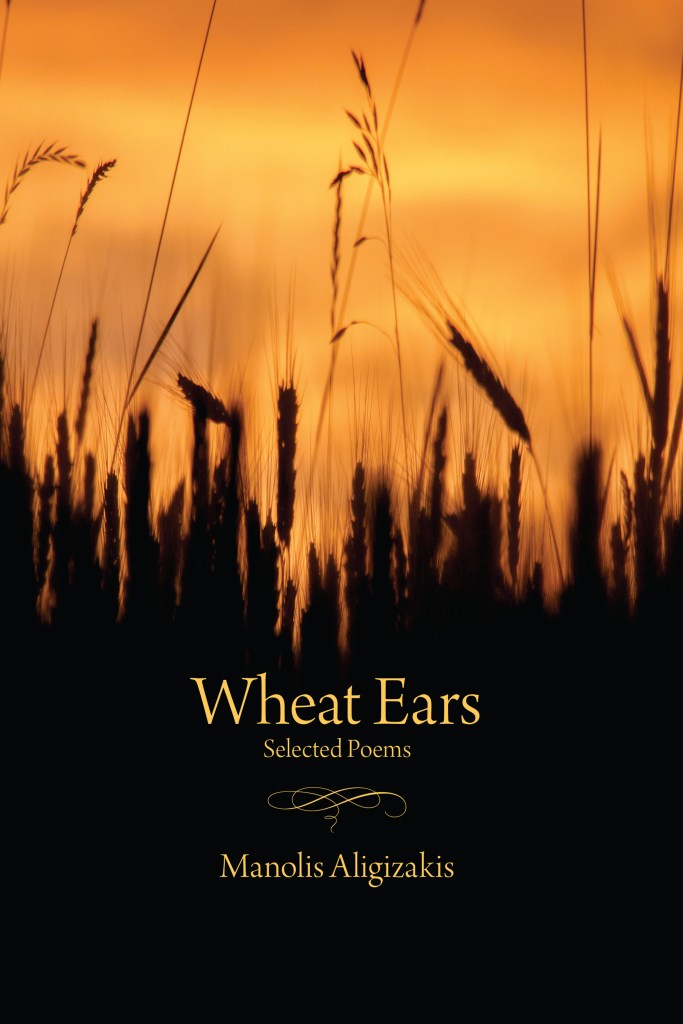
Wheat Ears, Selected Poems

Affirmation

I dive deep where only light reigns

roots of my ancestors and

the pieta of cyclamens I meet

in search for a beacon;

the beacon, when on the love for all

enameled images I stumble.

Δομήνικος Θεοτοκόπουλος, Κρης, εποίει*

A man, how did he see man?

A man, a giant, how did he see man?

Δομήνικος Θεοτοκόπουλος, Κρης, εποίει*

A humble affirmation

of lineage, parents, siblings,

of where a person comes from,

of where such a soul originates.

Reminder of where a woman’s womb

nurtured another splendorous sun

another man

where a woman’s womb graced life

with the spirit of the Eternal.

Δομήνικος Θεοτοκόπουλος, Κρης, εποίει*

*Created by the Cretan Dominikos Theotokopoulos

My quest I underscore for the one

I crave to uphold, once again.

A simple pronouncement of

where a man comes from until

the latter moons when all universe

prides to call Him her son

latter sunlit days when the roots

reflect on the membrane of man’s

thought and the lining of man’s

greed claims the remains as

a moonless night encodes

where this man comes from.

https://www.amazon.com/dp/B0BKHW4B4S

Tasos Livaditis – Selected Poems

Life Identified With Poetry

Tasos Livaditis was and remains one of the greatest poets of the last century. Poetry was his life. He lived all his life with love, with the dream of the revolution and with the nightmare of its oblivion. He lived the drama of persecution, the pain only a few others experienced and with the agony of his deep dive into himself. He lived the joy of relationships with the family and friends and the tyrannizing wish to escape all human ties. He lived talking to the everyday people of his neighbourhood or the ones he met in the crossroads of the world and he talked to the dead to whom he always had something to say even sometimes late. He enjoyed pleasures and happy moments and he also punished himself for real or imaginary guilt. And all this fed his poetry.

       The man, the poet, the fighter Tasos Livaditis whose vision once seemed shuttered wasn’t shuttered at all; it only revealed itself in a different way as the years went by. Although his vision of a socialist world that he gave all he could fell within itself for Livaditis it remained alive in his disappointment which was counterbalanced by his human compassion. For this his last books, that at first glance seem full of disillusionment at the shuttering of his hopes, in reality they are books of deeper human reattachment arising from the deep emotional connection people feel when they meet, when they feel that they are joined by something inexplicable that in fact helps them remain human forever.

            And, Oh, memories, that retain something more

            than what we’ve lived…

~Titos Patrikios

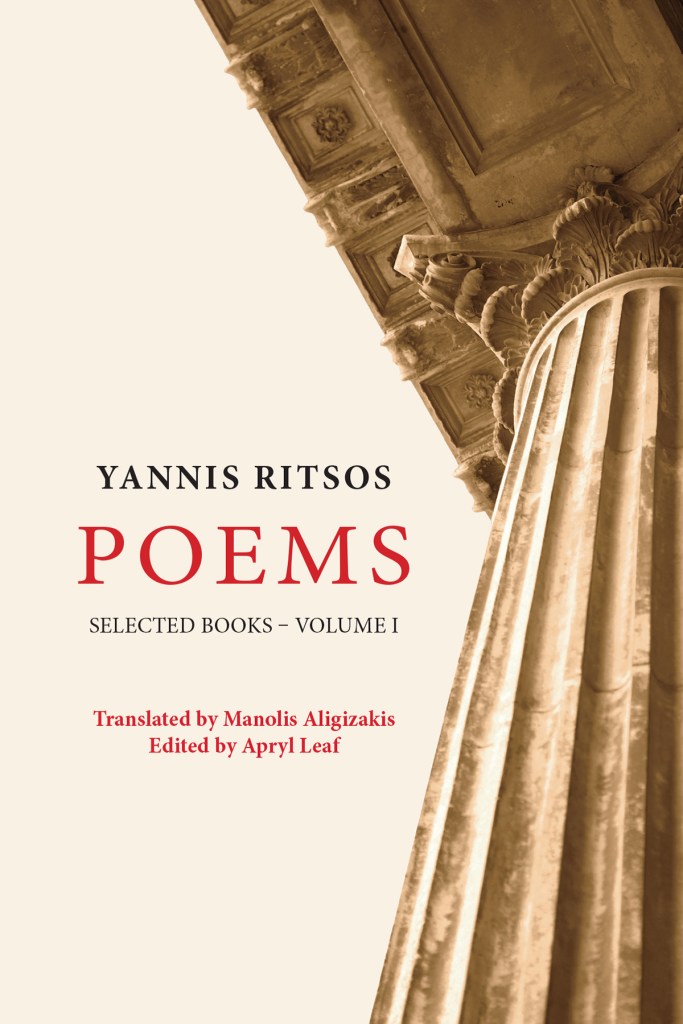
Yannis Ritsos – Poems, Volume I

Transformations

I coaxed her – he says the black bear I tamed her

first I threw my bread at her then my head

Now I am the bear and I am the mirror

I sit on the chair I take care of my nails

I paint them red or yellow I see them I like them

I cannot touch anything I’m afraid of death

I turn the chain of my neck into a crown and

I place it on my forehead Now what could I do?

I must keep my head high and always

gaze upward However at midnight

in my new sleeplessness in whichever way I walk

I hear my footsteps echoing down through the trapdoor

where the other chains hang from the walls

https://www.amazon.com/dp/1926763076

Poem of the Week, Ithaca 530

At one stroke, all changed direction.

The steel echo of the rains

brought us to dawn, and I dreamed of you,

the whole earth was sleepless,

and generations of trees bent,

and the clouds crowded in the skies,

and the wild inspiration

 engulfed the night, and we were in love.

Olexandre Korotko, Ucraine (1952)

Σε μια στιγμή όλα άλλαξαν κατεύθυνση:

ο μεταλλικός ήχος της βροχής

μας έφερε το ξημέρωμα, και σ’ ονειρεύτηκα.

Όλη η γη ξάγρυπνη

γενιές δέντρα έγερναν

σύνεφα γέμισαν τον ουρανό

κι ελεύθερη η έμπνευση

αγκάλιασε τη νύχτα, κι ερωτευτήκαμε.

Μετάφραση Μανώλη Αλυγιζάκη//translated by Manolis Aligizakis

Ο αρχέγονος ήχος της ασκομαντούρας

ellas's avatarΕΛΛΑΣ

Ασκομαντούρα ή ασκομπαντούρα ή φλασκομαντούρα. Πνευστό κρητικό μουσικό όργανο. Κουβαλά μέσα του την ψυχή της Κρήτης και με τον επιβλητικό του ήχο μαγεύει τα αυτιά των ακροατών και προκαλεί δέος, ξυπνώντας αρχέγονα συναισθήματα.

askomandura

Αυτός είναι ο δικός μου ορισμός για ένα από τα αρχαιότερα παραδοσιακά όργανα της Κρήτης, καθώς όσο και αν έψαξα στα λεξικά δεν βρήκα ετυμολογία που να με ικανοποιεί ή – στις περισσότερες περιπτώσεις – δεν βρήκα απολύτως καμία αναφορά.

Πρόκειται για ένα όργανο υπό εξαφάνιση, λίγοι είναι πλέον οι υπάρχοντες παίκτες ασκομαντούρας, όπως λίγες είναι και οι αναφορές, οι ηχογραφήσεις και οι φωτογραφίες. Η παρακμή φαίνεται να ξεκίνησε μεταπολεμικά, όταν με την εξέλιξη της τεχνολογίας και τον εξευρωπαϊσμό της μουσικής, αυτό το άκρως παραδοσιακό μουσικό όργανο άρχισε σιγά – σιγά να εκτοπίζεται.

Οι ΣΤΙΓΜΕΣ μίλησαν με κάποιους από τους ελάχιστούς ασκομαντουρίστες που έχουν μείνει πλέον στην Κρήτη. Πρόκειται για τρεις νέους ανθρώπους, το Μανόλη Φρονιμάκη, το…

View original post 262 more words

Πε­ρι­κλῆς Κο­ρο­βέ­σης: Στά­λιν

planodion's avatarΠλανόδιον - Ιστορίες Μπονζάι

Πε­ρι­κλῆς Κο­ρο­βέ­σης[Ἀ­φι­έ­ρω­μα 13/14 (Κάθε Κυριακή)]

Στά­λιν

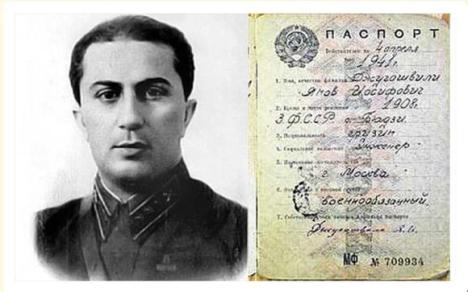
ΓΙΑΚΟΜΠ, γιὸς τοῦ Στά­λιν, δὲν ἄν­τε­ξε ἄλ­λο. Ἀ­πο­φά­σι­σε νὰ δώ­σει τέ­λος στὴ ζω­ή του μὲ ἕ­ναν πυ­ρο­βο­λι­σμό. Ὅ­ταν ξύ­πνη­σε δὲν βρέ­θη­κε στὸν ἄλ­λο κό­σμο, ἀλ­λὰ στὸ νο­σο­κο­μεῖ­ο. Πά­νω ἀ­πὸ τὸ κε­φά­λι του ὁ στορ­γι­κὸς μπαμ­πάς του. «Οὔ­τε αὐ­τὸ δὲν εἶ­σαι ἄ­ξιος νὰ κά­νεις», τοῦ εἶ­πε. Κά­τι ἤ­ξε­ρε ὅ­ταν τὸ ἔ­λε­γε αὐ­τό. Δὲν εἶ­χε ἀ­φή­σει κα­νέ­ναν ζων­τα­νὸ ἀ­πὸ τοὺς πα­λιοὺς μπολ­σε­βί­κους, τοὺς στε­νοὺς συ­νερ­γά­τες τοῦ Λέ­νιν. Ἀ­νά­με­σά τους Μπου­χά­ριν, Ζι­νό­βι­εφ, Κά­με­νεφ. Τὸν ἱ­δρυ­τὴ τοῦ Κόκ­κι­νου Στρα­τοῦ, τὸν Τρό­τσκι, τὸν δο­λο­φό­νη­σε ἀρ­γό­τε­ρα στὸ σπί­τι του στὸ Με­ξι­κό. Τὴν ἴ­δια δο­λο­φο­νι­κὴ μα­νί­α εἶ­χε καὶ μὲ τοὺς ἀν­θρώ­πους τῶν γραμ­μά­των καὶ τῶν τε­χνῶν. Ὁ Μπάμ­πελ καὶ ὁ Μέ­γι­ερ­χολντ ἐ­κτε­λέ­στη­καν. Ὁ Μα­γι­α­κόφ­σκι, γιὰ νὰ μὴ συλ­λη­φθεῖ, αὐ­το­κτό­νη­σε. Ὁ Σαγ­κὰλ καὶ ὁ Καν­τίν­σκι αὐ­το­ε­ξο­ρί­στη­καν καὶ τὴ γλί­τω­σαν στὸ πα­ρα­πέν­τε. Ἡ μορ­φή τους σβή­στη­κε ἀ­πὸ ἱ­στο­ρι­κὲς φω­το­γρα­φί­ες. Τὰ ὀ­νό­μα­τά τους ἐ­ξα­φα­νί­στη­καν ἀ­πὸ τὰ βι­βλί­α τῆς Ἱ­στο­ρί­ας. Ὁ κομ­μου­νι­σμὸς εἶ­χε θρι­αμ­βεύ­σει…

View original post 172 more words

Wheat Ears, Selected Poems

Bicycle

Bicycle left in the holiness of rust

two olives on the plate

one slice of bread for us three

can hunger divide equally

pain? One shoe less young boy

eyes of sunlight

one improvised explosive devise

for twelve soldiers of our platoon

can death be portioned

as sunlight through a sieve?

Nuance of wind aloof

through forsaken barracks

bicycle left in the loneliness of rust

two olives on the plate share pain

https://www.amazon.com/dp/B0BKHW4B4S

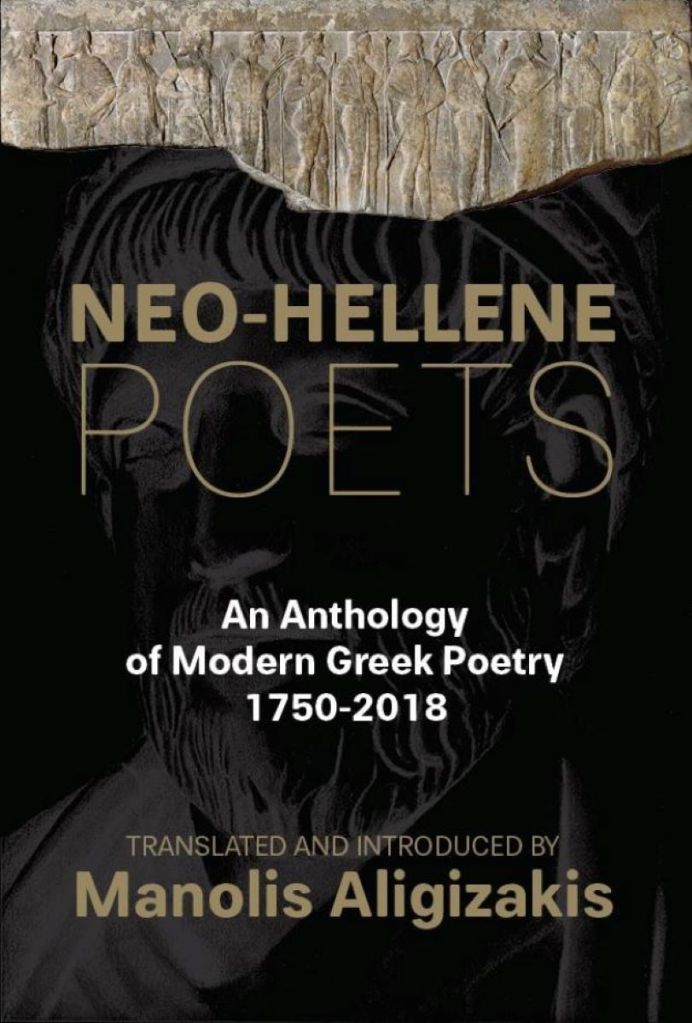
Neo-Hellene Poets, an Anthology of Modern Greek Poetry, 1750-2018

Poem by Kostas Karyotakis

SCRIBER

Hours have turned pale and he’s found stooped

over the unthankful table.

The sun slides in through the open window

and plays onto the opposite wall

folding my chest I search for my breath

in the dust of my papers.

A thousand sounds life vibrates sweetly

in the freedom of the street

I’m exhausted, my eyes and mind are blurry

yet I still write.

I know of two sunlit lilies in a vase next to me

as if they’ve sprung up from a grave.

https://www.amazon.com/dp/1926763513