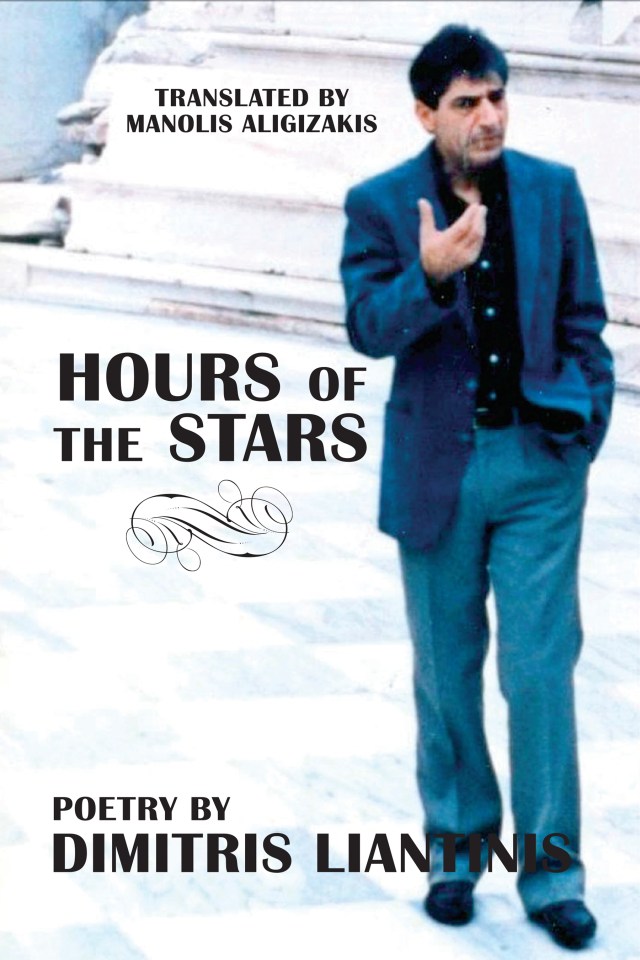
XII Unprofitable route What goes on with the rudder? The boat inscribes circles and not one seagull XIII Sick Fury She has no eyes the serpents she held eat her hands XIV This column has a hole do you see Persephone? XV The world sinks hang on it will leave you alone in the sun XVI You write the ink lessened the sea increases
Coal When the sun was scorching all earth dwellings the voice of the coal seller was heard, a sweaty man promoting his black merchandise, his treasure trove for people’s heaters, coal made of olive tree wood, good heating coal some bought while the sun up on the horizon smiled ironically for coal seller who at the end of summer had brought the cold in people’s minds and the wine flask and the chestnuts on top of the burning stove, thoughtful villagers taking care of their winter needs justified the coal seller, who in the summertime, sweaty and tired as he was selling his black merchandise to the wise villagers concerned with the cold days and nights of winter and you said, he too had tied an anchor around his ankle like a donkey fastened onto his predestined space-time.
Philemon and Baucis Plundering didn’t touch our made of sticks hut dark blue river that encircled us didn’t make a dent in the conflagration of the city we laid our limbs onto the covers of the sun cared by the sob of our hands born in idolatry and grace If we got whipped by the spring windstorm it was because the winters opened and shut around us like Symplegades our unspoken hour bloomed among the cypresses we gazed the trees that with no tie nor watch listened to the flow of their sap stretching their fingers with selfless supplication and when the gods arrived we welcomed them because we imagined people like them not being lucky to ponder on the uncounted discretion we didn’t think of death as our Fate we who have known our forgetfulness Now our silence a roof over the nakedness of time
“What do you mean by that?” “Look, it doesn’t have your name on it.” She had the sensation of the floor moving away from her and decided to run for the door while her dignity was still intact. Back in her cabin tears overwhelmed her. You give me hope. She missed Volodya more than ever. She sat on the bed and smoothed the crumpled paper, studying it, trying to understand what Chopyk had meant. True, it was not addressed to her but had been sent in care of Natasha Kuchkov as tour guide. A number followed—presumably that represented the bureaucratic Intourist agency’s official designation for the tour. If it had not been intended for her, then who? Did he really send it? Volodya was a very common name—and there was no last name. So how did Natasha know whom to check? And how did Natasha know the telegram was meant for her? Her class that afternoon was conducted in a pall of discomfort. Most of the students had overheard the dispute in the dining room without knowing exactly what had transpired. She thought of having Paul lead the class instead of her but she couldn’t find him anywhere. The mood stayed with her through the formal dinner that evening, well into the hour of entertainment—several of the students had learned Russian poems or ditties and were amusing the Americans by reciting the translations—and it lasted on into the evening. As she lay awake, she began to have doubts about her behaviour. Maybe Chopyk was only being a good guy, after all—meddlesome but showing genuine concern. Maybe Volodya was a dead loss. After some agonizing, she realized that Volodya must know Natasha. Of course. He must have known her when he had worked for Intourist. She had even said she was from Leningrad. They would have been colleagues. That would explain a lot. So maybe Natasha had known about Volodya and her all along. Could he have wanted Natasha to see the telegram—maybe to let her know that he was attempting to leave the country? Could it be that Natasha was helping? As Jennifer rolled on to her back in the cabin berth she felt the increased pressure from Volodya as if it were some live thing pressing on her chest. What a day! Even the strange comment from Hank in the hallway that morning. It all fit into the stew. She fervently hoped that sleep would give her some respite from her muddled thoughts.
Eteocles in grade two and Nicolas in grade four. It doesn’t take them long to gang up with other kids, but because they are newcomers, some of the other children start picking on Eteocles, choosing him because he is the smaller of the two. Sometimes they push him against a wall or block from going down the stairs before others. Sometimes they try to intimidate him with threats. This goes on until Nicolas discovers what is happening, and after he finds out who the ringleader is, he rewards him with a few good punches on the stomach and head. These make the third grader start howling, and Nicolas ends up in the principal’s office and is suspended from school for two days. It is his first suspension, but more will follow as the days and years go by. Within only a couple of weeks, the two brothers have done all their exploration of the immediate area, made new friends in the neighborhood, and become familiar with all the surroundings. They like their new neighbourhood, but especially the water pump they call touloumpa. Eteocles loves to work its lever and draw water from the depths of the earth. He loves the freshness of the cool well water and with some practice gets good at working the lever with one arm while drinking the refreshing water out of the palm of his other hand. Another favorite spot is by the two big trees about a hundred meters from their house where all the boys and girls of the neighborhood play their favorite characters, Tarzan and Jane, Gaour, and Tatambou, and all the other heroes, the detectives, the resistance fighters during the German occupation, all the daring characters they know so well from their comic books. Every Sunday afternoon their parents take the boys down to the promenade by the Gulf of Salonica where they walk from west to east, usually stopping near the White Tower where their dad buys them ice cream during the hot summer days or roasted chestnuts during the cold days of autumn and winter. This is the only entertainment they can afford, but the boys love it every time, even if the scenery is always the same and the long walk tires them out especially on the uphill walk back to their suburb of Sikies. Today, like any other Sunday, after they attend mass at the local church and have their noon meal at home, their mom tells them …
IV on her bed the girl faces the wall she plays with the worn out stucco she draws sometimes a person’s face sometimes a ship that foretells the future a fairy with the seven fingers dances the serpent, the old nail tie the tale together. Turned to the wall she befriends an unknown person she cries for a death, always a sudden death, mine, my mother’s and flowers, a lot of flowers in the remote chapel by the rock solemn promise to Alexander the Great and to the other saints… the dream, but a yellow wall as the drawings talk to children and frighten the adults.
Fire and Ice For several days, the ship lay on a becalmed sea. While Finten and Ailan sat discussing their worst fears – their slavery, the long cold winters, and uncertainties of the future – bubbles began bursting on the water surface, becoming more and more intense as the ship drifted slowly landward. When several fish popped up to float dead on the water, one of the men reached over the side to retrieve a floating cod. He remarked that the sea felt amazingly warm. Two other crew members reached into the water and pulled out a small halibut. Everyone gathered around in amazement. As more Norsemen plucked up floating fish, the meat fell apart in their hands and onto the deck. When the first man remarked the fish he’d pulled up smelled fresh-cooked, he pushed back the scaly skin and took a tiny nibble then another and announced that it tasted good. Another sniffed then took a nibble while others watched. Those who had dared to taste ate on and other Norsemen reached over the sides for fish and laughed as they ate. The Brothers joined the crew at the ship’s rail but by then hissing hot air burst close to the prow and pulsating plumes of sediment, the colour of egg yoke, rose to the surface and surged all around the ship. Clouds of yellow steam filled the air with the smell of sulphur, making breathing difficult. Then a slow-moving cloud of white smoke enveloped the ship and droplets of rain burned exposed skin, causing blisters. The men dropped their fish and ran to the prow in a panic. Finten’s worst fears had been realized. He knew they had finally travelled too far and were now on the edge of hell. Soon pagans and Christians alike would be plunged into the fiery depth. Once more he prayed aloud the psalm of death and his Brothers joined in: “Out of the depth I cry to you, O Lord. Lord, hear my prayer.” Captain Hjálmar shouted for calm. “And shut that infernal babbling. You papish thralls are worse than a bunch of old women. How can I think with all that commotion?” After about an hour of increasing turmoil in the water, the ship lurched, as a firebreathing monster rumbled, spurting hot ash into the air. A wave formed, seemingly out of nowhere, and pushed the Nordic knarr from the seething mountain, which now burst and heaved its way above the boiling water. Freki ran to his captain. “I knew it. I knew it. Now we’re all going to die in fire and water.” Everyone on board cried out to different gods in fear and trembling. Only Captain Hjálmar appeared to maintain his calm until he bellowed, “Quiet! Pay attention.” Still Freki jumped up and down pulling at the captain’s cloak and shrieking. Hjálmar pushed Freki aside and shouted above the din, calling for buckets of seawater to douse the hot coals smouldering among the panicked sheep. The sky filled with black clouds. A staccato of thunder and lightning sounded like Thor’s hammer to the terrified Norsemen, while a monstrous wind roared out of nowhere to send
City Smog I inhale the city smog that covers my thoughts with its velvety garment, a golden thread stitched on my sigh as I lament your loss among the asphodels — You need to buy gas for the mower, the can is almost empty My desire to talk back to her hangs from my lips, and the voice of the rose in the flowerpot commands me to shut my mouth and open the bashful curtains to let the sun rays in —Don’t wear that tight shirt, we aren’t in the seventies anymore, you know! A sick man with his life still existing in drips and breathing machines stays motionless as if he’s ordered not to disturb the nurse’s round, and he stays mute as the dust particles that hover midair, and the sunlight reveal the secret of an upcoming death — Help me, please, tell me what distance to leave between these two pictures. Bell tolls for the last time when the ancient Fury unfolds the bed sheets of the sick man who’s ready to make his final peace with his wounded heart; another gracious moment for the last hurrah of life, and I think of you, my beloved, and my heart aches —I have no more patience with you; come put the coffee pot on, it’s your day, you know!
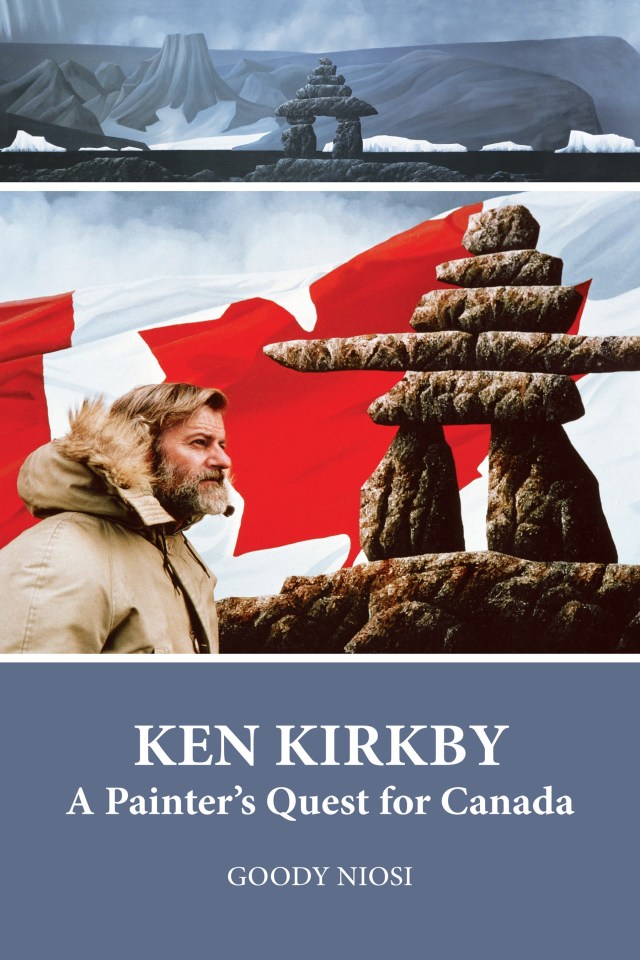
same feeling about you as I had about where that puck would be.” “I want to help you,” he said one day over lunch. “I’d appreciate all the help I can get,” Ken said. “There hasn’t been a helluva a lot of it at this point.” “Yes, so I gather.” Virgil Pires, a tall Portuguese man, became another frequent visitor. “You come from my country,” he said when he introduced himself. “You’re almost Portuguese. I love what is in the papers and on TV. You talk about my country with so much love. “I wasn’t born in Portugal,” Ken said. “But I think that part of my soul is Portuguese.” The collection of paintings for the show grew, most of them featuring an Inukshuk standing sentinel over the stark Arctic landscape. Irving and Virgil visited almost daily, moving the paintings around, discussing the merits of each one, and arguing about who should purchase which. Virgil liked to say proudly, “He’s Portuguese, you know.” Irving argued, “Portuguese, my ass. He’s no more Portuguese than I am. He’s a mongrel – Danish, Irish, Spanish, French, Italian, Jewish grandmothers, Christian grandfathers – grew up in Portugal – I tell you, he’s a mongrel!” “Oh no!” Virgil protested. “This is brilliant! This is magnificent! It was written in heaven! This man has a place in heaven!” Ken painted, working in a world he was entering for the first time. These visions of the Arctic had been bottled up inside him for years, and a great dam had burst open, spilling out a Niagara of creativity. The faster he painted, the more powerful the pictures. The week before the show, Irving and Virgil began to choose the paintings they wanted, arguing good-naturedly over several of them. “You can’t have them all,” Ken said. “You can only have twenty paintings!” “Between us or each?” Virgil asked. Were they serious? Ken wondered, beginning to feel excited. “Each,” Ken said. He had completed ninety-six canvases. Virgil and Irving fell on them with the glee of schoolboys who had just been told they could choose a dozen of any sort of candy in the store. They argued, talked, and wrangled possessively over one or two of the larger paintings, until each had a pile of twenty. “How much?” they wanted to know. Ken forced his voice to remain calm. He studied each painting and methodically wrote the price on a slip of paper. The forty canvases totalled eighty-five thousand dollars. Neither man flinched. Instead, they insisted on a celebration, and over a bottle of good wine, Ken explained that their paintings would be part of the exhibit – and he recalled one of Alex Fraser’s pieces of advice.
Past Midnight Cafes and Comets Travellers came and left declared enemies of the same forgetfulness the same passion lumberjacks of the same lust with hearts spread to where the eyes can reach the same black ripped clouds mix up their masts rust their anchors secretly using the conch to whistle the same grief into their ears as if a yellow, golden bright colour paints this black and miserable place mercilessly pierced by the sleepy lights of electric lamps the sleepy lights of an ideal, pitiful prostitution and the sleepy che vuoi of the wretched camel? Do you think so? Think: it is impossible it is useless to shout and say that this flame that eats your viscera and which you, yes, you, keep so well so tightly so imprisoned inside you the travellers, you’d think, left and came they solved the riddle they untied the ropes that held them tied to the quay eh, wasn’t it? a dance kindly sad all these rages of the nostalgic the wave calms as it bites in a rage the net of the dishevelled pines? the pines that disguised themselves just for tonight only that they won’t become comets? A seabird stretches its wings and says: “you’re the new prophet in the den of your lions”








 Manolis Aligizakis