Cretan Canadian Poet, Author, Translator, Publisher
Author: vequinox
BIOGRAPHY
Manolis (Emmanuel Aligizakis) is a Greek-Canadian poet and author. He was recently appointed an honorary instructor and fellow of the International Arts Academy, and awarded a Master’s for the Arts in Literature. He is recognized for his ability to convey images and thoughts in a rich and evocative way that tugs at something deep within the reader. Born in the village of Kolibari on the island of Crete in 1947, he moved with his family at a young age to Thessaloniki and then to Athens, where he received his Bachelor of Arts in Political Sciences from the Panteion University of Athens. After graduation, he served in the armed forces for two years and emigrated to Vancouver in 1973, where he worked as an iron worker, train labourer, taxi driver, and stock broker, and studied English Literature at Simon Fraser University. He has written three novels and numerous collections of poetry, which are steadily being released as published works. His articles, poems and short stories in both Greek and English have appeared in various magazines and newspapers in Canada, United States, Sweden, Hungary, Slovakia, Romania, Australia, and Greece. His poetry has been translated into Spanish, Romanian, Swedish, German, Hungarian languages and has been published in book form or in magazines in various countries. He now lives in White Rock, where he spends his time writing, gardening, traveling, and heading Libros Libertad, an unorthodox and independent publishing company which he founded in 2006 with the mission of publishing literary books. His translation book “George Seferis-Collected Poems” was shortlisted for the Greek National Literary Awards the highest literary recognition of Greece.
Distinguished Awards
Winner of the Dr. Asha Bhargava Memorial Award, Writers International Network Canada, 2014
“George Seferis-Collected Poems” translated by Manolis, shortlisted for the Greek National Literary Awards, translation category.
1st International Poetry Prize for his translation of “George Seferis-Collected Poems”, 2013
Master of the Arts in Literature, International Arts Academy, 2013
1st Prize for poetry, 7th Volos poetry Competition, 2012
Honorary instructor and fellow, International Arts Academy, 2012
2nd Prize for short story, Interartia festival, 2012
2nd Prize for Poetry, Interartia Festival, 2012
2nd Prize for poetry, Interartia Festival, 2011
3rd prize for short stories, Interartia Festival, 2011
Books by Manolis
Autumn Leaves, poetry, Ekstasis Editions, 2014
Übermensch/Υπεράνθρωπος, poetry, Ekstasis Editions, 2013
Mythography, paintings and poetry, Libros Libertad, 2012
Nostos and Algos, poetry, Ekstasis Editions, 2012
Vortex, poetry, Libros Libertad, 2011
The Circle, novel, Libros Libertad, 2011
Vernal Equinox, poetry, Ekstasis Editions, 2011
Opera Bufa, poetry, Libros Libertad, 2010
Vespers, poetry by Manolis paintings by Ken Kirkby, Libros Libertad, 2010
Triptych, poetry, Ekstasis Editions, 2010
Nuances, poetry, Ekstasis Editions, 2009
Rendition, poetry, Libros Libertad, 2009
Impulses, poetry, Libros Libertad, 2009
Troglodytes, poetry, Libros Libertad, 2008
Petros Spathis, novel, Libros Libertad, 2008
El Greco, poetry, Libros Libertad, 2007
Path of Thorns, poetry, Libros Libertad, 2006
Footprints in Sandstone, poetry, Authorhouse, Bloomington, Indiana, 2006
The Orphans - an Anthology, poetry, Authorhouse, Bloomington, Indiana, 2005
Translations by Manolis
Idolaters, a novel by Joanna Frangia, Libros Libertad, 2014
Tasos Livaditis-Selected Poems, Libros Libertad, 2014
Yannis Ritsos-Selected Poems, Ekstasis Editions, 2013
Cloe and Alexandra-Selected Poems, Libros Libertad, 2013
George Seferis-Collected Poems, Libros Libertad, 2012
Yannis Ritsos-Poems, Libros Libertad, 2010
Constantine P. Cafavy - Poems, Libros Libertad, 2008
Cavafy-Selected Poems, Ekstasis Editions, 2011
Books in other languages
Eszmelet, (Hungarian), poetry by Manolis Aligizakis, translated into Hungarian by Karoly Csiby, AB-ART, Bratislava, Slovakia, 2014
Hierodoules, (Greek), poetry, Sexpirikon, Salonica, Greece, 2014
Yperanthropos,(Greek), poetry, ENEKEN Publications, Salonica, Greece, 2014
Übermensch (German), poetry by Manolis Aligizakis, translated into German by Eniko Thiele Csekei, WINDROSE, Austria, 2014
Nostos si Algos, (Romanian) poetry by Manolis Aligizakis, translated into Romanian by Lucia Gorea, DELLART, Cluj-Napoca, Romania, 2013
Tolmires Anatasis, (Greek) poetry, GAVRIILIDIS EDITIONS, Athens, Greece, 2013
Filloroes, (Greek ) poetry, ENEKEN PUBLICATIONS, Thessaloniki, Greece, 2013
Earini Isimeria, (Greek) poetry, ENEKEN PUBLICATIONS, Thessaloniki, Greece, 2011
Stratis o Roukounas, (Greek) novel, MAVRIDIS EDITIONS, Athens, Greece, 1981
Magazines
Canadian Fiction Magazine—Victoria, BC
Pacific Rim Review of Books—Victoria, BC
Canadian Poetry Review—Victoria, BC
Monday Poem, Leaf Press-Lantzville, BC
The Broadkill Review, Milton, Delaware
Ekeken, Thessaloniki, Greece
Envolimon, Beotia, Greece
Annual Literary Review, Athens, Greece
Stigmes, Crete, Greece
Apodimi Krites, Crete, Greece
Patris, Crete, Greece
Nyxta-Mera, Chania, Greece
Wallflowers, Thessaloniki, Greece
Diasporic Literature Spot, Melbourne, Australia
Black Sheep Dances, California, USA
Diasporic Literature Magazine, Melbourne, Australia
Spotlight on the Arts, Surrey, BC
Barnwood, International Poetry Magazine, Seattle, USA
Unrorean, University of Maine, Farmington, Maine, USA
Vakhikon, Athens, Greece
Paremvasi, Kozani, Greece
Szoros Ko, Bratislava, Slovakia
Mediterranean Poetry, Sweden
Apostaktirio, Athens, Greece
Life and Art, Athens, Greece
Logos and Images, Athens, Greece
Contemporary Writers and Thinkers, Athens, Greece
Palinodiae, Athens, Greece
Royal City Poet’s Anthology, 2013, New Westminster, BC, Canada
To parathyro, Paris, France
Ragazine C.C, New Jersey
Artenistas, Athens Greece
Deucalion the Thessalos, Greece.
Literary Lectern, Athens, Greece
Homo Universalis, Athens Greece
I look down upon you, my city, Cluj, the scene of my romances. Watching each and every passerby from the main square to the station, seeking familiar faces in my mind, images’ recollection: there, the street where a former love of mine once lived, where I lived, too, just to the right, and the smoke-filled pubs, and the station where you always arrive, only to arrive anew. I look down upon you, my city, Cluj, the scene of my romances. The bunch of silent ones standing and waiting for some kind of resolution, but in the end, they wander off to a downtown dive, get drunk, kick some familiar sorrow in the ass, and off they go. I look down upon you, my city, Cluj, the scene of my romances. The central park, where some girls were laid, lingering till dawn, waiting for the breaking of the day only to leave, aiming to stretch boredom to its limit at some exam, then declaring that nothing matters in the expanding darkness, listening to friends, taming some thought all the way home, claiming there’s no beyond from this point.
“No, he hasn’t mentioned it to me. Why? Do you think that’s why your dad is here?” She shook her head. It was a moment before she answered him. “I had thought that, but now I don’t. I think I know why he’s here, Cam. I believe our fathers are trying to set us up for more than a drive home in the dark.” Cam glanced at her quickly. “No kidding? I’m sorry, Tyne. Sorry to embarrass you, that is.” “I’m not embarrassed, I’m angry. How dare he meddle in my life?” “Your dad must know you’re about to be engaged to a chap in Emblem. Why would he try to set you up with me?” Tyne took a deep breath and let it out on a sigh. She wondered if she should tell Cam the whole story, then decided she would lose nothing by doing so. “My boyfriend … Morley … is Protestant. Dad does not approve. In fact, he’s furious about it.” In the dim interior of the car, she saw Cam nod. “And now,” he said thoughtfully, “his old friend, Arthur Tournquist, who is Catholic, calls to say he’s met Jeff ’s daughter. And in the course of the conversation, Arthur happens to mention that his son is home from medical school, and bingo! A bulb lights up in your dad’s brain.” “Exactly.” They reached the hospital grounds, and Cam drew up at the entrance to the nurses’ residence. He shut off the motor and turned in his seat to look at her. “Tyne, I’m sorry this has made you uncomfortable, but don’t be angry with your dad. I’m sure he means well. And my dad is as much to blame.” She sighed and touched his hand where it lay on the seat between them. “It’s okay, I’ll get over it. It was a lovely evening, and I really enjoyed meeting your mother. Thanks for bringing me home, Cam.” In the dim light she could see his sad smile. “Well, as we said the other day, we may end up working in the same hospital sometime. I’ll keep my fingers crossed.” He leaned over and kissed her gently on the lips. Tyne did not pull away. Instead, her right arm went up to encircle his shoulders. Suddenly they embraced, clinging together for a moment, their cheeks touching. Then she turned from him, opened the car door and ran into the residence before he could move from his seat.
“Yes, my twelve year old sister. She’s on the girls’ part of the school.” “Do you meet your sister sometimes?” “No, we can’t.” “But, you have, am I right?” The boy raised his head and an imperceptible smile appeared on his lips which was the answer Anton looked for. These kids knew and had ways of doing things the adults couldn’t stop, Anton thought and smiled. “What is your name? The name your band gave you?” The youth stirred a little, didn’t say anything; then he went back to the cauldron. “Come tell me your Indian name; it’s our secret; I won’t tell anyone,” Anton insisted. “Migizi…” the youth whispered. “I like that name,” Anton said with a smile, “From now on I’ll call you Migizi and it’s our secret. Tell me though: what is the real name of your sister?” “Miigwan.” “Such a beautiful name. You must be proud of your sister… and what is her Christian name?” “Deborah.” “Good Migizi; make sure you do a good job with that cauldron, ok?” The youth nodded his head and focused on the job in hand by wiping the inside of the big vessel as hard as he could; it wasn’t so easy to get the grease out of it with the little soap he was allowed to use. Dylan walked close to them and seeing Anton smiling after he talked to the youth he asked him.
Repast I fell in love with chair emptied by the absence of a dead soldier and the tender cyclamens kissed the void where I hang hopes and treasures while the immense number of morons count their shallow virtues in talons, staters and hidden gold I fell in love with passionate lust with the outline of the virgin’s endless desire hovering in my dream like a gracious albatross filling space with new emptied, sanctified life the nod of its meaninglessness and voila: I am still alone in the silence of a dark path halfway through the night of people holding up vanity as if it were gold
Return Smile of the Gods, Bay of Saronikos, always great blessing of our ship’s route we could hear the roar of the high seas as easily as the calmness of your depth under the morning dew like a dove with its body’s nonchalance: Athens shivers and revels like a nymph that longs for the faraway sun. Because the sky shines, blonde mane of Pegasus, Fate of the Parthenon glass that Zeus keeps upside-down that the dream-light is poured a flood prodigal son, I return to you swaying like a flower in the breeze earth, sky and you, oh sea of Attica, to whom I owe all my Songs!
It must have been three o’clock at night. Joel awoke to the rumble of a vehicle pulling into the ranch yard. Peering out the kitchen window, Joel confirmed what he already knew from hearing the distinct sounds of the engine. It was Harry pulling in with the old half-ton. Harry parked behind the ramshackle caboose that served as his home, shut off the truck, and disappeared inside. Joel couldn’t sleep. When the clock on the wall finally showed five he rose from the chair that had become his bed and started his routine. It was six by the time he was down to the barn and he was surprised to see that Harry was already at work. After exchanging cordial “mornings,” the two men went about their routine of brushing and then saddling the three-year-olds. The engineer in him told Joel that it would be far more efficient if they saddled more than two horses at a time, but with only two saddles between them this was the best they could do. And besides, Joel was starting to enjoy the break between working horses that allowed him to think about what he had accomplished with the last horse, what he would do differently the next time out, and what he would do with the horse he was about to ride. As he became handier at saddling and unsaddling, Joel was finding that he had less time for this kind of thinking. As he learned more and more from watching the old cowboy he didn’t need nearly as much time to think about his game plans for the schooling that day. Without a doubt,
More And of love, in silence There was more Than in words, the thousands Said before L’ectric Cat Catch yourself You dream in Three (min) What was that You L’ectric cat
them the benefit of the doubt. They’re Ruby’s niece and nephew and her children’s cousins, so maybe she does love them, and wants to give them a home.” For a few minutes they lay silently in the stillness of the house. A faint breeze riffled the curtains at the window, and Tyne felt its cool fingers on her shoulder. The tensions and sadness of the day had been made more oppressive by the heat, and she welcomed the respite of the night. “We hardly knew the children until two weeks ago,” Morley mused, “which makes me realize we should be more involved with people in the community.” “But you have been involved, Morley,” Tyne protested. “Look how much you did to get a new hospital in Emblem. And you’re on the Board of Directors.” “But that doesn’t mean I know what’s going on in families and what their needs are.” He took a deep breath. “I don’t know the answer, Tyne. I just know that, as good Christians and good citizens, we should be more open to the needs of people around us.” Tyne snuggled her head against his chest. “You’re a good man, Morley Cresswell.” She smiled into the darkness. “You know what? I’ve come to love those kids. Is it possible to become so fond of them in such a short time, or is it a passing phase, like a person becomes infatuated with a member of the opposite sex?” Morley chuckled. “Ah no, I know what you mean, hon. It’s nothing like infatuation. I’ve fallen in love with them, too.” “You know,” Tyne said, “I have to confess I was scared to death of them coming here. I didn’t know how to handle kids, and I wasn’t sure I would even like them very much.” “You’ve done a good job with them, Tyne.” “Thanks for saying that, honey. But when Rachael yelled at me the other day, saying I’m not her mommy, it really hurt. I wondered where I’d gone wrong.” Morley’s arm tightened around her. “She’s hurting, and she’s angry. It wasn’t anything you did or didn’t do.” “I know,” Tyne whispered. “I’m too sensitive.”
Ken circled around the stone people, which he later learned were called Inuksuit. Around and around he walked, occasionally reaching out a hand to touch them in a dazed kind of wonderment and awe. For the first time in many weeks, his spirit began to lift. I thought I was quite a well-informed person on a variety of subjects, given that in my upbringing, acquiring general knowledge was considered important. General knowledge led you to being a generalist and it’s the generalists that run the world so you want to have vast amounts of knowledge in a variety of areas. So, you learn about the pyramids and the sphinx and Stonehenge and Easter Island and all of that. But here were these strange human-like figures made of stone that I had never heard of – and at that point, I started to come out of my stupor. These figures got a hold of me. This was something that captured my attention in a major way. He set up his tent some distance from them, thinking perhaps they were sacred symbols and while he struggled with his tent, he kept glancing at the stone men, reluctant to look away even for a moment lest he lose the magic. With his little tent tamed, and his camp set up on the windy plain, he dug out one of his rolls of paper – from the depths of his backpack – and began drawing. He rolled the paper farther after each drawing and began another. He couldn’t stop; he was infused with the same energy he had felt when he first began drawing, in Portugal, as a young boy. When his stomach let him know he was hungry, he walked down to the river and caught a fish. Cooking was a challenge because there was so little wood of any kind to burn. He had learned to start a fire with dried moss and then add bits of shrubbery to get an intense blaze that lasted mere minutes. He usually managed to cook one side of the fish over the flame. Then he had to start a fresh fire to cook the other side. In time, he learned to eat and enjoy raw fish because it was so much simpler. While camped near the Inuksuit for several days, making drawing after drawing, he noticed a group of people setting up camp some distance from him near the river. The people on the west side of the river didn’t acknowledge these people on the east side, and they in turn did not speak to the people on the west bank. Ken concluded that these were Eskimos, the people he had been searching for. The Eskimos paid no attention to Ken and he did not try to make contact. Instead, he continued to draw, fish and cook his meals. He was consciously becoming a silent person and the deeper he fell into the stillness, the greater the solace he found. One day a woman with a deeply lined and weathered face carried some fish and bannock on a flat stone to Ken’s tent, placed it on the ground and walked back to her camp. Ken ate gratefully. “How shall I respond?” he wondered.

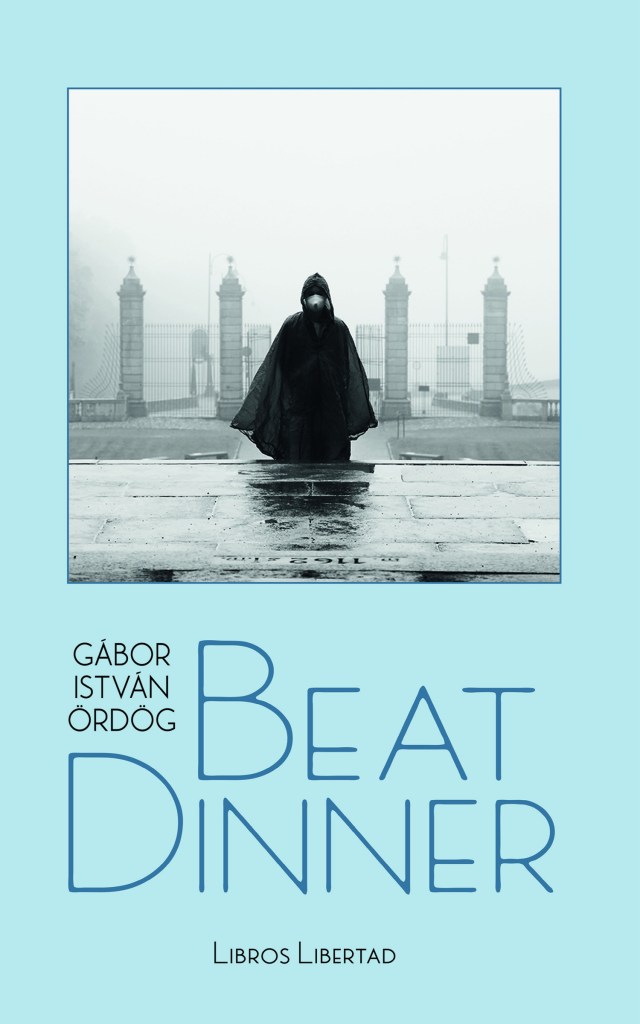



 Manolis Aligizakis