Sea sea in our minds in our souls in our veins the sea We saw ships bringing mythic lands here in the blond sand where the evening wayfarers slow down We dressed our childish loves with wet seaweeds We offered to the seashore gods lustrous shells and pebbles Morning colors melted in water dusk fires on the gulls’ shoulders masts showing the immensity open thresholds in the step of night and over the stone’s sleep sea songs hover illuminated unappeased entering through small windows designing gardens flashes and dreams on the steamed windowpanes and in sleeping brows Rhythm agony and vigil There on the naked rocks we the homeless barefoot children saw Beauty walking barefoot in the sea we heard her voice shivering with the azure echoes with the phosphorescence of stars seeding golden stories in the green sea floor Venerable heart unsuspecting childish heart who never refuses
Sounds Sounds of words striking emptiness echoing in void between sense of love and numbness or between the falcon’s feathers humming of spring and a rodent’s desperate shriek vibrates through two tympanums like wind through half open shutters while April speaks of statues bloomed daffodils solitude laments
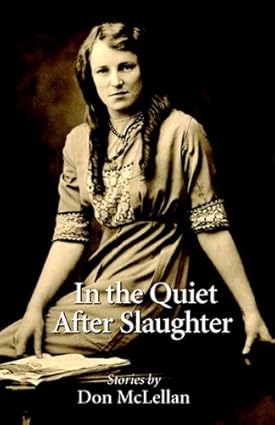
infant, the swell of faraway traffic, but not a peep from the boy. The gate opened and slammed shut again as though instructed to do so by an invisible hand. He’ll be home by dinner, they told Esther Rhodes. He’s at that age, they said. But the assumption that Fender would soon saunter home, as Lois Daniels predicted, proved groundless. – Call me when he turns up, the social worker said. She left her card on the table. By early evening the stifling summer air had cooled, shadows lengthened in the yards. I was told to peddle to the drugstore and get Mrs. Rhodes’ prescription refilled. The All-Stars, their practice cancelled, gathered around our kitchen table. They divided themselves into groups and assigned duties, filing out the front door solemnly in their black and silver club jackets. A few teammates sat with Esther as she worked the phone. She called kids Fender had gone to school with, fellow idiots, people he’d done odd jobs for. When, at 9 p.m., he still hadn’t returned, she called the police. Others fanned out across the neighbourhood. They knocked on doors and scoured the woods. The All-Stars aimed their flashlights into garages and yards, under parked cars, behind every bush. They rang bells and blew whistles. Sgt. McManus turned up at the house to explain to Esther that police don’t file reports until someone has been missing 24 hours. People in the Project respected the veteran policeman.He had fought at Dieppe. –We’ll find him, he said. I’ll bring him straight home when we do. But they didn’t find Fender that night or the following evening either. Esther Rhodes looked like she was about to unravel. I think she had so many pharmaceuticals coursing through her bloodstream that she no longer knew what was going on, which was, I suppose, their purpose. After three days the All-Stars declared a moratorium: no more frames tossed until Fender was found. – Esther has already lost a husband and a baby, a team member reminded. She might not have the strength to survive the loss of her angel. A week passed without a sighting. It was as if the boy had https://www.amazon.com/dp/B00731WSPE
twenty-seven Two hundred and seventy thousand years before zero before you butcher the last dinosaur using your blood, you eternalize him on the cave wall you chose before you start to immortalize with chalk animals die from your spear for tens of thousands of years, you think of it before you paint the first corals with ochre you hole them to make the first ornaments some others out of the cave you didn’t know cut copper coins they buy, sell and you with your ornaments you measure the esthetics of others for the first time. Success and failure start to be discerned.
Suddenly Jennifer turned cold. “Paul, we met that group two days ago. You’ve been with her ever since!” He nodded. “And you didn’t even notice I was gone, did you?” He pulled on a t-shirt. Guilt swept over Jennifer. Why hadn’t she noticed? She was supposed to be looking out for the students. The buck stopped at Professor Chopyk, but she was closer to the students, more in touch with their needs—or so she had thought. The answer came back quickly. Because she was too preoccupied with her own love life, that’s why. “But you could have been followed…the authorities….” she spluttered. “Dammit, even Soviet people can’t just go where they wish. Saratov and Toglyatti are closed areas to most Russians—much less to westerners.” Paul continued to nod. “How did you get back here?” “I swam, remember?” It was his turn to laugh at her. “No, I hitched a ride on a farm truck. Vera arranged it. It wasn’t so far. The Volga twists and turns a lot here and the boat did a big loop. Really, we aren’t that far from Toglyatti or her father’s farm as the crow flies.” He pulled a sweater over his T-shirt. “I had a bad moment early this morning when I thought I wouldn’t be here early enough. I knew the ship usually steamed off at first light. But it’s not leaving early today.” “A good thing!” “There was another bad moment,” he went on, “when I discovered that I had arrived on the wrong side of the river.” He stopped attending to his wardrobe and studied her. “I appreciate your concern, Jennifer, but I’m a big boy now.” He moved toward the door. “Wait a minute.” Jennifer stopped him and looked into his cool blue-grey eyes, so much like Volodya, she thought, same high cheekbones, same mane of dark hair. “So you’re not seeing her again?” He didn’t reply. “We’ll be in Kazan soon. Then you’ll be too far away to swim back to see her.” He was silent. Jennifer sensed that her words would make no difference but she continued. “You’re still thinking about her. She won’t be allowed to leave the Soviet Union, even for visits, unless she’s a model Communist. You know that?” A part of her brain registered the fact that he was packing.
X Come, bring a glass of fresh water from the humble pitcher at the hour of no shadows when the sun opens every heart to accept the poet before he lost his mind, come, and sit under the grapevine to wish him freedom from the heaviness of his heart come and let us sing about the tragic killer who under the craziness of his mind he ordered his favorite song to be played and in his dance he killed three men, and let us reminiscent of all the exaggerations for whom we danced under the scolding laughter of the cicadas let us dedicate a white page to all the paranormal on this earth and let’s remember that only from the crazy and the children you learn the truth
“True, but first we must find a safe shore and make repairs to the prow. She is ready to break up if we run into more rough weather.” “Fresh water is running low, and we need fruit and vegetables to stop the spongy gums and bleeding. Several men are quite sick. Their wounds from the sheep capture are not healing.” Hjálmar was the last to speak. “Well, then, we will let the current carry us farther south. There is land to the west, but ice still floes between here and that far shore. We have plentiful fish and fresh lamb on board to last us to safe harbour.” When Captain Hjálmar informed the crew of his decision, they expressed their approval with a loud cheer. Only Ari voiced disappointment to his new friend, Brother Lorcan. “Now you will not get to meet my brother, Melrakki, nor fish with me in our mountain streams, nor ride our Norse horses. But most of all, I will not see my dear father whom I miss so much. We argued when I left to go to sea. I have been away from home so long that he will think me drowned as he threatened I would be.” With the tremendous pressures of having to fight currents, winds, and unexpected disasters finally over, Norsemen and monks alike began to relax, to enjoy the leisurely voyage south. Some mended clothes. Some whittled dogs, horses and sheep out of bone and driftwood as toys for their children at home. Others fished by attaching gut line to small blocks of wood. With rock weights and bronze fish hooks baited with lamb liver, they hauled up cod hand-over-hand as they sailed once more over open water, steadily southward. The diet of fresh fish was welcome, although several of the crew were experiencing sores and lesions in their mouths and on their lips caused by lack of fresh vegetables and fruits. Brother Rordan at last sat talking with Ul beyond the almost silent sheep pen. The captain’s thrall had given up trying to avoid the Celtic monk who had been so insulting. “Please forgive me and trust me to be your friend. If we were to be sold in Thulé, I doubt if we will be now. Whatever time we have left, I would like to get to know you.” “I bloody well doubt it. There’s not a member of Hjálmar’s crew wouldn’t like to get his filthy hands on me, and if he catches me talking to you, I’ll be in for a beating and so will you.” With that, the Irish thrall rose to his feet and slipped away. Eighteen days after the eruption off Thulé and five since their ice encounter, a huge whale, almost sixty feet long, began following the ship. It blew a fountain of water higher than the ship’s rail. Then, with a massive sigh and a gentle rippling of the water, it sank beneath the surface and reappeared far ahead. Later on the same afternoon, the Norsemen were visited by a shining black pod of killer whales. One by one, the dozen beautiful mammals moved gently under the hull and resurfaced on the other side, blowing water like Moorish fountains. Captain Hjálmar saw the visit as a good omen. “Tomorrow,” he told the men, “we will find good harbour and all will go ashore.” That evening, everyone drank toasts of mead to Ægir, King of the Sea and to the Sækonungar, protectors and patrons of Nordic sailors and explorers. Every Norseman also drank to the Irish God who had delivered them from an icy grave. Finten felt a sudden surge of excitement as he recalled stories told to the student
voices when the breeze allowed it. Looking for so long into the distance, we were completely unprepared to turn and see five men behind us. Even before we could rise from our crouching positions, five big warriors, scowling fiercely, materialized from the bushes, pointing arrows at us. “I looks like you may never get to know Guacaipuro, my friend,” said Tamanoa. I could not imagine ever responding with such aplomb. This was his way of retaining control of himself, not showing fear. He was showing me what to do, how to face death. Or to avoid it. I mimicked Tamanoa’s stalwart behaviour, literally at ever step, as the Indians led us into the village; two ahead of us and three behind. In the days and months that followed, our captors would assume Tamanoa was my servant because he was a half-breed, and yet it would be Tamanoa’s ability to interpret their speech and their behaviour that would keep me alive. Without Tamanoa, I would never have been able to develop the language skills that enabled me to talk to Apacuana, and I would never have survived to tell this tale. But it was God’s will, or the way of Mareoka, to make everyone assume I was the leader.
I was as lost as I have ever been as we marched to the village at arrow point. People gathered on the trail and around an open space dominated by the imposing figure of a man who could only be Guacaipuro. The sun shone directly above our heads, gleaming silver on the silky raven-black hair of Guacaipuro, whose face was a mask chiselled in stone. His eyes were ominous black slits. The hollows of his cheeks were elongated shadows. He stood immobile, his chest heaved, and deep lines creased his brow. The corners of his mouth were pulled down in outright loathing. He held a spear, the butt resting on the ground. As we approached, he held the spear almost to my chest, glaring
Eteo planned to spend the weekend with Ariana, including the nights. In fact, he wanted to take Ariana to Harrison Hot Springs for the weekend. It would be the first time, except for some business trips, that he had slept outside the house since the divorce. He arranged with Jonathan what to do about their food, left some money for them, and after Alex and Jonathan told him he could go and they would be fine for two days, he decided to proceed with his plans. Then he talked to Ariana again. She was elated that they could get away for two nights. He drove to the Ambleside, went upstairs to Ariana’s apartment, and found her almost ready for their first weekend together. A few minutes later he was carrying her small overnight bag down to his car. “Where are you taking me, my love?” she asked him “I’m not telling you. It wouldn’t be a surprise if I did, would it? Ariana smiled and kissed him. “Okay then, I’m all yours; take me anywhere you wish,” she said, then added, “and do anything you wish with me,” her voice husky with desire. In silence, he drove east along Lougheed Highway, passing Port Coquitlam then Mission, through the farmlands of the Fraser Valley to Harrison Hot Springs in Agassiz. The parking valet at the big hotel by the lake where they stopped took his car and the doorman carried their bags to their room, beautifully decorated with fresh flowers and a bottle of wine with some finger food already laid out on the table. Ariana smiled and gave him a look of approval. She knew him well enough by now to know he was man of good taste who enjoyed going out of his way to make her feel great. Ariana was eager to show Eteo in her most personal way how much she appreciated him, and they were soon making passionate love. Only afterwards did they sample the wine and food and then spent some time walking along the lakeshore in the evening and again the next morning. The next evening they enjoyed a candlelight dinner in the Copper Room, the special hotel restaurant where the Jones Boys played hits of the sixties, seventies, and eighties. At one point while they were dancing in the Copper Room after dinner, Ariana looked into Eteo’s eyes and said, “I’m falling in love with, Eteo Armen, and though I don’t want to make you …
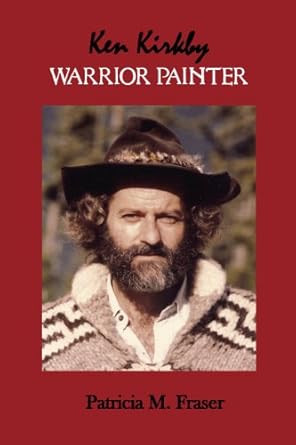
she was pregnant with his child when she died. Jessica came into his life a number of years later when he was working in northern British Columbia. Again, a woman on the fringes of acceptable society, she was wise, beautiful, self-reliant, and she loved him unconditionally. Ken met her through her brother, Patrick, with whom he worked. They were First Nations people filled with the pride of their early ancestors. There is a saying that home is where the heart is, and Ken found Jessica’s cozy log house in the ranch country the closest thing to a home that he’d ever experienced. The lovers spent blissful months together planning their wedding. It was one of the happiest times in his life. The perverse hand of Fate nearly destroyed him when Jessica and Patrick were killed in a horrific accident on icy, winter roads. The pickup was still burning when Ken arrived at the scene, his last hope extinguished when, through the shattered window of the burnt out vehicle he recognized the sleeve of Jessica’s buckskin coat, the mate to the one he was wearing. The traumatic image of the fiery wreck haunted his dreams long after, and virtually drove him into the Arctic seeking some form of peace. On his return from the years spent in the Arctic, Ken entered into a comfortable relationship with Helen. She was a settled, intelligent schoolteacher who appeared to support his drive to re-establish himself as a painter within the Vancouver art scene. He was not the first man to marry under the mistaken belief that his woman accepted his stipulation that fatherhood was not in his plans. Ken clearly understood the depth of his own drive and focus and believed that, consumed as he was to right the wrong that had been done to the Inuit, he had nothing left over to give a child. But he had not reckoned with the determination of a woman bent on motherhood. When Michael was born, Ken was immediately captivated by this tiny bundle of human life. Torn between wonderment and reality, he knew that his kind of obsessive dedication to the northern problem left little time for the sort of nurturing his own father had given him. What was done could never be undone however, and Ken did his best to provide for his family both financially and emotionally. Things proceeded relatively smoothly for a handful of years, although Ken never quite trusted Helen in the same way he had before the unexpected pregnancy. Happily though, over the years, he and Michael crafted a wonderfully strong, mutual love and the young man…








 Manolis Aligizakis