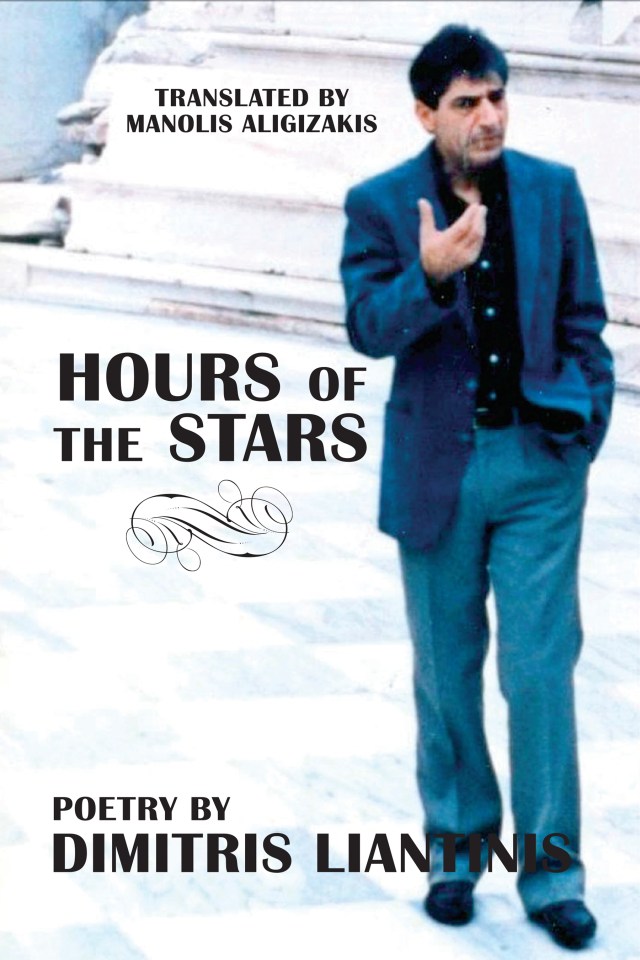
A HYPOTHESIS Look, for the first time I see the grass I tread on every day, The flagstones crossing the two yards And all of a sudden there are a thousand gardens, The woodland strawberries whose leaves have jagged edges I myself grew them some time ago, Like the strangely amazed child Who left home for the first time, I see The daffodils covering all the graves, The shape of the moments goes down into the grass, into the stalks And the wild lilac rising to the sky Rocks small drops of a blue sun And calls me out, “We shall resurrect, we shall resurrect, we shall resurrect!”
“They’re missing, Tyne. They’ve run away. Ruby and Bill thought they might be here.” She fell into the chair by the desk. “Dear Mother of God, no,” she blurted. “Where … how long?” “They were gone this morning when the family got up. I don’t know what time that was, but the kids must have left in the dark. At least there’s one piece of good news … the eldest boy, Ronald, is probably with them.” Tyne’s relief was short-lived when she realized the boy was probably not yet twelve years old. And the weather … oh, dear God in heaven, no. Even strong, adult men had been known to lose their way from barn to house in a blizzard. “Morley, the weather … how bad is it?” She choked on a sob. “It looks like a blizzard from here.” “Tyne… honey, try not to upset yourself. I know it looks bad, but they’re probably with a neighbor, or someone who saw them and took them in. Ronald’s old enough to know to go for help when the weather turned bad.” “I know, Morley.” She drew in a calming breath. “Please, take care of yourself. I wish I could be there to help you at the barn, and make your dinner.” “I’ll be fine. And listen, Tyne, I don’t want you to leave the hospital. Please tell me you’ll stay there. There must be somewhere you can sleep.” Tyne stifled a sob. She didn’t want Morley to know how scared she felt – scared for the children and scared for him alone on the farm with animals to look after. She gave herself a mental shake and set her mind to gain control of her emotions. “Tyne, the first thing I’d like you to do is call your parents and Aunt Millie to tell them about the kids. Ask them to alert people in their area. Oh wait, is there any possibility they could have gone to your mom’s? You’ve taken them there a few times. Maybe Rachael remembered the way.” “No, I don’t think so. If they had gone there, Mom would have called either you or me.” “Yeah, I suppose.” He sounded deflated.
of his report to Department Chairman Hoefert, so it was important to convey just the right tone. For example, he would make much of the fact that this particular tour of western students had been allowed in to the philological library at the State Institute in Leningrad—a great honour usually requiring a permit from the Ministry of Education. He, Professor Chopyk, was actually allowed right into the stacks, to be surrounded by a rich storehouse of scholarly literature. So much for Professor Hoefert and his boast that he had been allowed into the stacks at the Lenin Library. This was a feather in Chopyk’s cap. Of course, he would not include in the notes that he had bribed the lowly assistant librarian (American dollars), the attendant (bottle of brandy) and even the security guard (flattery and a Cadbury’s bar) to allow him the brief two hours in the library’s inner sanctum. And that those two hours were ones in which the chief librarian was on her extended lunch hour or he would have stood no chance at all. He set his pen down for a moment to relish the memory once more. The porthole was open a crack and a fresh morning breeze played across his face. Other wonderful events had crowded in since his time in the library: touring the art treasures of the Hermitage, attending the Kirov ballet, seeing the monumental statue of Mother Russia at the former Stalingrad, and cruising a stretch of the Volga where no other westerners had been allowed. Russia—no, the Soviet Union—was full of such grand experiences, though none could compare with those two hours spent among the ancient tomes of his linguistic mentors. The journal was filling up. He supposed he would have to write something about the progress of the students—they would receive a grade, after all—and something about the leadership qualities of his second in command, Jennifer White. Chopyk frowned. It was difficult to write about Jennifer. On the one hand, she had done a miraculous job in bringing some of the younger students up to scratch with their Russian. Their verbal abilities had improved greatly during the trip. Of course, total immersion always did that. But they seemed to have more facility with the language, more interest in it. Their written skills had improved, too, if he could believe the mini-essays that Jennifer was assigning them. Even Linda Appleton, whose grammar was superb but who couldn’t string together a simple sentence, had improved. Last night she had actually delivered a brief oral report in Russian on the subject of architecture.
Hephaestus Hephaestus laughed at my demand for a new armour as I reverted into my inheritance subject of a former sound another era’s reward I the indisputable heir of the Aegean Sea truly nothing else was as abstract as the lips of the virgin which I kissed under the sun’s guidance when without warning spring arrived as pure as the indiscreet announcement of deeds I was destined to accomplish: a cross to hang around my neck the lone sea anemone to lean on and catching the meaning of duty I had to be worthy of: sea urchins with spikes, rose bushes by the main entrance of my dwelling beloved words spoken by lips cracked and aged like the lemon tree I never watered tears on my pillow which I held tightly in my arms hoping to wake up like a laughter of sunshine in the cows’ watering trough
Theodicity Down on Priam’s feet Achilles cries the old king also cries dressed with Hector’s death. At the Olympus the immortals feast on topaz tables with music and tambourines teasing each other day and night. But when dawn comes it will bring the new star death. Both Troy and Phthia will sink and who cares for the undefeated castle.
‘And to an English girl,’ Caitlin added. ‘Oh it happens to the best people,’ Joe said. ‘You haven’t set your sailor’s sights on one of them flighty little Maltese chickens yet, have you, Joe?’ Michael asked with a wink. ‘What would Joe want with a Maltese chicken, Michael Carrick?’ Caitlin said. ‘Well, with Stephen bringing home an English wife, and Tom maybe landing himself a pretty, young girl from north Africa, if Joe brings one from Malta or Gibraltar or wherever, we could set up a minor League of Nations here in the village. Solve all the world’s problems.’ ‘Cause more problems than solve more likely,’ said Caitlin. Then she lowered her knitting to her lap. ‘Joe, would you like a wee cup of tea? The kettle’s boiling.’ ‘I would if you’re having a drop yourself. Thank you.’ ‘Oh I dare say I could make room for another. Michael, reach me your mug. It’s down there by the fender.’ ‘Is Nora not at home tonight, Mrs Carrick?’ Caitlin stopped on her way across the kitchen. She turned slowly to face Joe and cast a glance at Michael. Joe felt a sudden fear. He too looked at Michael, then back at Caitlin. For a moment no one spoke. ‘Nora?’ Caitlin said softly. ‘There’s nothing wrong, is there?’ Joe blurted out. ‘Joe, didn’t you get her letter?’ Caitlin asked apprehensively. ‘The last letter I got was written a couple of months ago. The post is very uncertain. Tell me, is she all right? Why have you got that look on your face? Both of you. What’s happened?’ ‘Joe,’ Michael said, ‘Nora’s married.’ ‘Nora’s married? No, she can’t be. It’s not true. My mother would have told me.’ Panic wailed like a siren in Joe’s voice. ‘Say it isn’t true, Mrs Carrick.’ Before Caitlin could say, ‘Yes, Joe, I’m afraid it is,’ Joe was sobbing, his head turned away. He did not even hear Caitlin’s confirmation. Michael rose and put an arm around the young man’s shoulder. ‘Joe, I’m very, very sorry. We both thought you knew.’ ‘She wrote to you, Joe,’ Caitlin said. ‘I know she did. And it nearly broke her heart. For the life of me I couldn’t understand it.’ Joe turned to face Michael and Caitlin again. ‘I’m sorry for breaking down like that. But what a shock. My God, I was going to propose to her myself before I left again this time.’
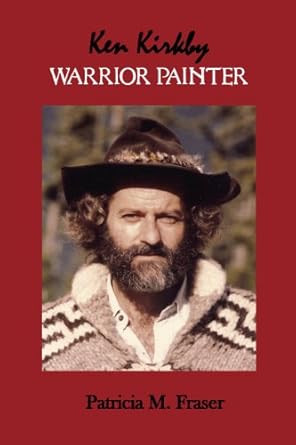
It was years later that I actually saw the book itself. I felt such specialness to share this history with my grandfather who was a giant of a man, loved by many and respected by all. According to the National Geographic magazine, (Vol. 167, No. 3, March 1985) Dr. Robert Paul Jordan confirms that the Viking traders known as the Rus created Russia’s “first organized state and gave their name to a future empire.” And the story that Ken learned as a wide-eyed boy seems to support that claim. As his maternal grandfather told the story, and as Ken passed it on to his own son—who, at this point, is the last of the Kirkby line—the tale of Rurik of the Rus goes like this: Rurik was the eldest son and he chose to become a sailor, an adventurer and an explorer. Like the Norwegians, the Danes were Vikings—an Old Danish word which means ‘to dip your oar’ or in our terms, ‘traveller’. Norwegians became known as the Norse, and Danes, the Rus. Occupants of the Scandinavian countries realised early that to split the farms into small holdings for their sons would make the land useless. So, in order to preserve that livelihood, only one would inherit the land and the others had to make their fortune elsewhere. The sea was the obvious alternative. Through dint of need, the majority of them became mariners and shipbuilders. They were a strong and courageous people and became the Masters of the Seas as traders and mercenaries. The majority were literate and highly industrious. Those who became mercenary soldiers, a reputable occupation of the day, were known also for their ferocity. They returned from the Middle East with the knowledge of metalworking and equipped with this expertise, they produced exceptionally fine swords and weaponry. This proved to be a great advantage. A fierce minority banded together to form raiding parties and this resulted in the Viking reputation for rape, slaughter and pillage. Much like the dream of the Arctic that drew his future and distant relation to northern Canada, Rurik also had a powerful dream of a vast land beyond the ice; a land shaped by three great rivers. He was determined to sail to that land one day. Rurik was an able navigator and commander of several ships, and eventually he and his fellow mariners set out on a long and arduous journey that took them east and north through the Arctic
Consolation Our memory was burned in the adoration of her body. Buttocks made of honey; we understood we couldn’t divulge our secret preparations while we expected another misfortune to occur. Ticking of clocks lingered between bay and peninsula, tide that raised all our hope, little jasmine flowers, fragrant nuptials twice experienced. Heart beats, anticipation, until the new gathering was announced and we run to welcome Him, the one who, like a myth, sprouted from the roots of our ancestors. Our enemies died of anxiety and we based all our new joy on our enraptured premonition. I like those with overflowing souls who forget of themselves and everything is enclosed inside them because all together will cause their self-destruction.
Although she had suffered terrible humiliation at the hands of Gregorio, and possibly Baruta, there was nothing weak about her. She was undefeated, strong. Like the jaguar, I thought, bold and proud. Perhaps Tamanoa found her independent spirit was unbecoming for her sex. As she bathed, Apacuana told us more. The night before, apparently Baruta had gone to the river looking for her in vain. When she returned, they argued, for she had told him she was going to get water; instead, she went to feed me. That night she had cried in my arms because Baruta wanted to take her with him to Suruapo, Guacaipuro’s village up in the mountains, as his woman. Apacuana had refused and ended up telling him she did not want to marry him, at least not yet. Baruta had reached for the macana, intending to hammer some sense into his betrothed. As I had guessed, Baruta had pressed Yulema into talking. She sang like a nightingale, telling him everything except the precise whereabouts of the cave. Instead she had led him off the track, thereby allowing time to forewarn Apacuana. Fuming with his inherited hatred of white men, Baruta had set off to find me, but he had looked further east of the river. “Will Baruta keep looking for us?” I asked. She thought not. Guacaipurowas anticipating Paramaconi’s answer with the greatest urgency, and so Baruta’s duty to his father would have to take precedence. It was very important business, Apacuana told us. Paramaconiwas being summoned to a war council in Suruapo. The meeting would take place very soon, in a matter of days. All the principal caciques of the region were being called upon to unite forces in a major attack against Losada in the valley of San Francisco. I waded further downstream where I might discreetly disrobe and wash my privates. I was obliged, by my race, to warn Losada, but Apacuana had just run away from her betrothed because of me, she had been raped by Gregorio, and I couldn’t possibly take her back to the valley of San Francisco.
money we have should be placed on that … just for now though. Recommend it to whoever you think can wait a year or so to get results. Frankie is a patient man, but he does things right. Remember that.” “I’ll work on that, Dad” Logan said, getting up and going back to his desk. As soon as his son left the office, Eteo’s phone rang. Richard Walden was on the line and sounded excited, talking of an oil deal he was planning to get involved in. It was a prime southern Texas location, and a deep well with indications of plenty of reserves. “Come over and bring what you have on it,” Eteo suggested. Richard had not had much success with oil up to now, but Eteo was always ready to listen if a deal sounded promising. Half an hour later Richard walked in with a map and a letter of intent he had already signed. Eteo glanced at the letter and saw that Richard had agreed to contribute 20 percent of the drilling expenses to earn ten per cent participation in one deep well. “This all looks good, as far as I can see,” he said. “Ten percent is a respectable piece of the well, if it’s a good one.” “They’ve been very successful with other wells in the same area” Richard pointed out. “So far so good then. Just a couple of words for caution’s sake though. Make sure before you sign the final agreement that they have enough other participants signed up. You don’t want them using your paper to sell the rest of the well. Second, find out who their operator is in Texas and what he has been involved with over the last, say, five years. I’ve come across horror stories about some of the operators down there.” “Don’t worry, Eteo. It’ll all be fine. I’m flying to Calgary this weekend and meeting the brokers again on Monday morning. I expect lots of buy-in soon.” “That’s great, then” Eteo said, raising his coffee mug to toast the prospect. Richard marched out with his map and a broad smile on his face. Eteo chuckled to himself at Richard’s optimism. He wasn’t quite as sanguine, but he hoped the promoter would return from Calgary with some good news. Then he turned his attention to Golden Veins.







 Manolis Aligizakis