Cyclamen With the first sliver of sunlight, cyclamen unfolds petals in the rock’s schism, the breeze chants a hymn before the virgin light, and the bluish window, like the verse of a faint poem, observes the dawn as I courageously try to balance life after your death —Get up to gather the leaves of the big oak. They won’t go into the recycling bag on their own Rose in the vase leans like a star on the right crest of the sky, the lock of the door remembers of all the little songs it has locked outside, and I pray to His majesty to bring you back to me —If you need three recycling bags, I have more in the storage room Closer to my retina, I discover a tear that will flow like a ripened fruit, rebellious molecules dancing in a frenetic mode as if to redefine Terpsichore’s flow, the brownish finch discovers our birdfeeder and takes control of his hunger — Tell me what is on your mind, and you ignore me today? The colourful dawn paints idols and symbols onto my retinas, and I can almost hear your footsteps, my beloved, echoing on the gleaming floor of the terrace, reminding me of the need to have you — You don’t care whether I talk to you or not, do you?
a sweet humming whisper and my fingers closed around the aluminium body shutting off the little air holes that made it sing. I stuffed it into my shirt pocket and my fingers brushed against the last Spud menthol I’d forgotten to smoke that afternoon after baseball. I pulled it out and straightened it carefully into a limp tube that dribbled dry tobacco from its open end. Scary stuff, lighting up in front of your own house, but what the hell. My scalp came alive with little electric maggots, wriggling. I found some matches in my pants. The end of the Spud flared and settled into a hot core that let sparks off in the breeze when I sucked on the cork tip. I put one foot up behind me against the fence, and the movie came on in my head. My eyes narrowed; my ears sifted the sounds of the city for clues. Then suddenly they were there, the big boys. Joey comes up to me, all excited and talking like he wants everybody on the block to hear. “’ey, Georgie, Pasquale wants you to go to D’Amato’s an get im four cansa Ballantine ale.” He presses a damp, crumpled bill into my palm and says it again. “Your nonno, ‘ey, he wants you to get ‘im four Ballantine’s.” He winks at me, and gives me an elbow. He laughs. His eyes are heavy lidded and his face is damp with sweat. He’s been talking loudly at me so the neighbours can hear, and now he makes a face that says to his buddies, it’s cool, don’t sweat it. I remember that look from dozens of Saturday matinees. I feel the damp currency in my hand. I know there’s something wrong with all this, but I can’t figure it out. Then he bends close to my ear and tells me to meet them in the park. Sometimes Nonno Pasquale would come and stay with us. On a shelf in the pantry he kept this little tin pail with a lid he’d give me to go and get beer in. The guy behind the bar at D’Amato’s, Gioffo, an old guy, but not as old as Pasquale, always thought I was worth a smile, this little kid with a beer pail, and he knew my nonno from years ago, so he’d wink at me and fill it up and give me a Sarsparilla on the house, and I’d run back home so the foamy draft wouldn’t get warm in the sun, and my grandfather would laugh and give me a nickel, and pinch my cheek and tell my mother what a prize she had for a son. But I never saw him drink from a beer can, ever. Or even a bottle. Still, it was tonight, and they were having a party in there, and what did I know. So I marched importantly into D’Amato’s Bar & Grill.
Dangerous Things Said Myrtias (a Syrian student in Alexandria, during the reign of Augustus Constans and Augustus Constantios, partly pagan, partly Christian); “Strengthened by theory and by study I shall not fear my passions like a coward. I shall give my body to carnal delights, to the pleasures we dream about, to the most daring erotic desires, to the lascivious urges of my blood, without any fear, because, whenever I choose, and have the will, strengthened as I shall be by theory and by study— at the critical moment I shall find my spirit, as it was before, ascetic.”
Eighteenth Hour I halt my straddle before yellow emotion opposite a well-preserved church echoing with blessings and phony wishes for everlasting peace and lifting the veil of opulent kisses blowing like dynamite Eros is transformed to stigma degraded by arrogance of critics stalled in error time literate fanatics the dream bled to phlegmatic negligence puffy cloud none looks at below masses graced by folly endless self-love in spite of solid advice from erudite Death who has seen the evidence yet the belligerent mind guides its faithful to the steps of immortality as all others just die pointless deaths observing an opera bufa as every breath drawn hangs like a half-open eyelid observing benevolent acts exulting bigotry promoting the sin-turned-blessing scaffold dropping noosed heretics through the hole like monotonous drips from the gutter after rain every virulent thought done up to splendorous diction and meditating olive branches ask ‘why?’ as the percuss of breaking spines spits emphatically: who cares?
When they immigrated to Canada, and settled in Toronto, they founded a tile company and then became real estate developers. Their flagship building was First Canadian Place, the tallest building in the Commonwealth. Ken talked about them and gnawed on the information he had like a dog on a marrow bone. “Forget about them and come into business with me,” Henri said. “Why try to sell paintings to people who don’t buy paintings?” Ken finally looked at the books, which revealed that the frame factory was struggling to stay alive. “You can buy half,” Henri offered. “Why would I buy half of a sinking ship?” Ken asked. But, he agreed to become a partner. Perhaps, it would be a good idea to be seen as a businessman instead of an artist. He might be viewed with more respect and given more credibility. He would buy his half with orders for frames. Henri agreed to build Ken a studio across the top of the factory. Within six months, Ken had paid off the fifteen thousand dollars he owed and moved into his new studio where he began work on two large Arctic paintings – one for First Canadian Place, measuring sixteen by sixteen feet, and one measuring slightly less, for the new international airport planned for Yellowknife. Marsha said, “You have no money and you’re going to create two giant paintings that no one wants to buy. It makes no sense!” It made sense to him, even though he had no explanation to give. He had learned to listen to his inner voice, and it was telling him to paint the canvases. Nobody’s doubts could stop him. He was going to show the world! The new studio was too small for the massive paintings and so were all the conventional canvases. He joined four lengthened panels with invisible seams by bevelling the wood, squeezing the stretchers together with clamps and creating knife-edges that melded together. Through painstaking experimentation with a torque wrench, Vise-Grips and a canvas stretcher he created a unique design that produced perfect tension on every square inch of canvas. When the tension was perfect, he hosed the canvas down to shrink it. One of his first canvases exploded, and one flew off spinning like a propeller, but he finally got it right and made a sixteen by sixteen and a twelve by fourteen foot canvas. He was still mystified by his inability to sell paintings of the Arctic. One day, while he was driving on Steeles Road near the Allen Expressway a question leapt into his mind. “If you were limited to one image – one object from all your experiences in the Arctic, and that was all you were allowed to portray, what would it be?” Inukshuk! Ken was stopped at a red light. The light turned green…
Brother Rordan looked around for Svend or Ul, whichever his name was. Determined he’d find him, he only wished to apologize for his earlier blunder and perhaps be his friend. Maybe Ul was being ‘used’ by the captain and felt ashamed of his position. The crew, apart from the captain, seemed to give him a wide berth. Perhaps already on board, the Irish thrall was nowhere to be found. When the feast wound down, the late summer sun had moved along the far horizon. Songs and games became more boisterous. The Norsemen wrestled, stripped to a narrow loincloth, their bodies glistening with lamb fat. Bjorn, strongest of them all, won every bout. Bjorn was aptly and fondly named the Blonde Bear for his massive bushy beard and hairy chest. No Norseman ever refused his challenge. Each preferred to be thrown by the mighty Bear than be seen as any less than a brave son of Odinn, god of war. Spectators circled the wrestlers, cheering on each challenger in his turn. Sometimes, Bjorn allowed a man to hold him for a while, but never long enough to claim a victory. As each challenger lay defeated, the great champion lifted him up with the love of a Nordic brother. In all his show of strength, Bjorn was almost gentle. When the wrestling was done, other games of skill took place. Some competed in feats of archery and knife throwing with targets set at greater and greater distances. Prizes of bone-handled knives and silver jewellery were awarded to winners in each category. Several men began a game with a leather ball. They used sticks to hit the ball and one another’s legs. Competition grew loud and fierce. The ball, the size of a man’s fist, flew hard and fast. At last, the casks of beer were drained. One by one, the players left the game to sit in small groups and talk about home and women and their dreams. Each man speculated on his share of the profits, when they’d sell their catch of sheep and slaves at the marketplace in Thulé. By the dying embers of the fire, the captain filled his men’s cups with sweet mead. He and his crew toasted further adventures and Valhöll, where all slain warriors would live for all time, happily feasting with Odinn. All grew serious for a while. Then Bjorn tossed the ball to Kyrri, the Quiet One. Kyrri tossed the ball to Captain Hjálmar. This was a different game, played with a twist of humour. While Bjorn and Kyrri covered their eyes, the other men began a song. “Treasure hidden in the night, so safely out of view, will not be gained without a fight. The search is up to you.” Hjálmar tiptoed off to hide the ball. Much to the amusement of the onlookers, he slipped it up the loudly snoring Finten’s tunic, then stood apart chuckling. On a signal from the singing crew, Bjorn and Kyrri began the search from man to man, accompanied by cheers and sighs of “koer, varmr, heitr, kaldr” and the Brothers joined in with their own shouts of “close, warm, hot, cold.” Finally, with whispered hints from various members, Bjorn snuck up on the apparently sleeping monk. But as Bjorn reached under the priest’s tunic in search of the hidden ball, Finten grabbed his wrist and bellowed, “Do you take me while I am sleeping? You are desperate, my poor fellow, but I have a vow, and my vow applies to women and to men. I cannot satisfy you asleep or awake. For shame.”
Hades Under the watchful eye of Hades I used my strong hand to spread the brown to the right and the bloody red to the left hills and paths that led downward to the sea where sweat and salt mixed. Then for a moment I stopped to listen to the owl’s call requiem for my dead comrades hour of wisdom incarnated lines of people I pulled from the earth’s bottom chthonian climax unorthodox couplings the expert analyser that I was and I counted the fingers and phalli of men eloquent contours of women sea caves where future generations were destined to dwell labyrinthine quotations asymmetrical widths elliptical lengths of shadows during the saddened August I searched the fiery seashores for naked bodies peacefully lying on the sand
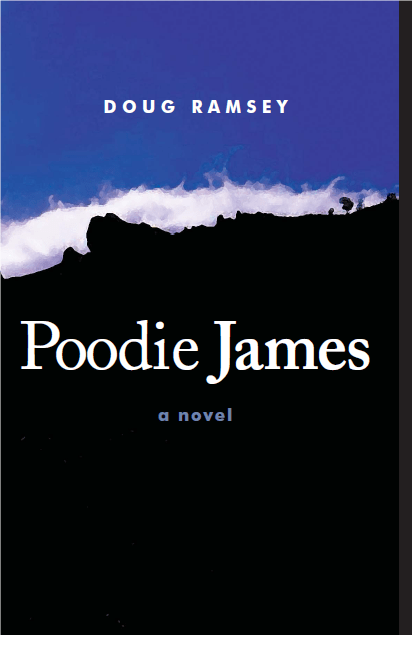
THE TEN-YEAR-OLD boy launched himself from the high diving board in a perfect cannonball and exploded the water a foot from his giggling friend. Marcie Welch blew her whistle, summoned the pair to her lifeguard stand and banished them from the pool for two days. “Aw, Marcie,” the human cannonball wailed, “we were just havin’ fun.” “You can come back on Friday, but if you have fun that way again, you’ll be out of here for a week. Go on home.” As the hot afternoon wound out and suppertime approached, Marcie gave three long blasts on her whistle and swung down from the lifeguard stand. Children climbed out of the pool and gathered up their towels. She walked to the low end, where Poodie was shepherding a handful of his charges to the ladder at the edge. When the last of them scampered toward the dressing rooms, she bent to offer him a hand. He took it, grinning, and pulled her off balance. “Oh, Poodie, you……” Marcie rolled into the water, came up laughing, and met a spray from the push of Poodie’s palm. She seized his hand, then his head, and dunked him. He swam away, turned and surfaced behind her. She felt his arms around her waist and the power of his thighs against hers. A trembling warmth infused her. She waited a few seconds to push away in confusion and giddiness. His trickster’s grin modified into the gentleness of a smile,
Orion Your sin will always be more than enough in the silent hospitality of earth your evil thought will always harm your eyes that you carry in your two hands like broken street lamps yet you’ll follow the path of the sun guided by the hammering of water that builds houses and laboratories of gods in the sea floor you’ll follow the path of the sun accepting the advice of children who direct flocks of shadows and thunderbolts that you’ll have as a roommate the fairy dressed in the morning shyness that you’ll reign over the fruitful earldom of October hunted hunter with the insubordinate belt brother of my fear and my lust and blood brother
Cop In his new ironed, creased uniform epaulets, golden diagonal band proud like a young four-legged donkey having a loaded gun in a holster, sealed deadly provocation to the new cop’s mind, bobby, pig, words used to describe a cop as he imagines being in action when the thief is caught red-handed and the cop can draw his gun, power in the hands of morons, such his thoughts as he smiled at his idol preparing to appear at the parade, in front of the naïve people, in his hands the power to absolve or protect, the power to punish or to judge with the tool for peace or war in the busy streets of big city that relies on this young donkey to do his job, to just act like an animal. He too chose to hide his questionable manhood and insecurity behind the mood of the ambivalent and deadly weapon






 Manolis Aligizakis