excerpt
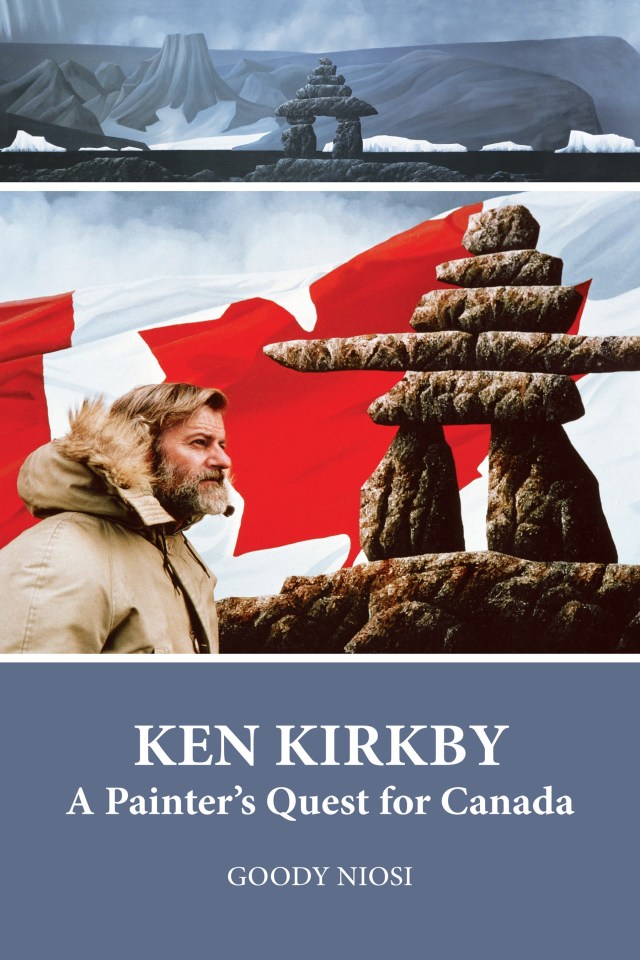
Ken called and told the story of Isumataq. He offered a painting for the
paper, clinching the deal by telling them that everyone involved in the
project would very likely win an award and be exposed in some way to
massive media coverage. He also threw in some dubious oratory that was
so over the top that many people laughed. “Don’t worry about this moment,”
he said. “One day you’ll be in paradise with me.” If they snickered
behind his back, he didn’t care because by the time he was done he had
bartered for every service he needed – ninety thousand dollars worth. His
friends called the money he had used to pay for the brochure “Ken dollars”
and it was a term that stuck.
Elias Vanvakis, another of the young professionals who was a successful
insurance broker, commissioned a small pencil drawing of an Inukshuk.
“I’ll give it to you,” Ken said.
“No, I want to buy it.”
“Why would you want to buy it?”
“You’re painting the largest Inukshuk – I want the smallest,” he said.
Ken pocketed the five hundred dollars Elias offered and drew an Inukshuk,
which he handed to him. A few weeks later, on Ken’s forty-fifth
birthday, Elias presented him with a small jeweller’s box. Inside was a
small gold pin, a perfect replica of the pencil drawing.
Ken pinned it to his shirt. Minutes later he was struck by an idea. A
larger version of the pin was exactly what the front cover of the brochure
needed – but not in gold paint of even gold leaf – a pure gold Inukshuk.
The pin inspired yet another idea. The nation’s highest honour for its
citizens was The Order of Canada. He wanted something even more prestigious
– an honour that was almost impossible to receive – The Order
of the Inukshuk. He ordered a dozen more from the jeweller who had
designed it.
Whenever someone asked about the pin, he smiled and inferred that
it was special and only a chosen few would ever have the honour of receiving
one. To Rocco he said, “Anyone who buys a ten thousand dollar
painting, gets one.”
Ken was invited to the Columbus Centre again to give the keynote
speech at a dinner honouring Premier Peterson. At the end of the speech
he was to give him a painting of an Inukshuk. But instead of doing a
simple presentation, he told the story of the Order of the Inukshuk –
that the pin was the result of a visionary flood of alcohol consumed in
the land of the midnight sun on June 21, the longest day of the year. He
explained that they were almost impossible to get and only a few very
special people would ever be aware of The Order of the Inukshuk. “They
come to certain people who are magic,” he said. “They come to people
like me. Everyone else has to fight for them.”
 Manolis Aligizakis