
Jazz with Ella

excerpt

said Chopyk with only a hint of irony. He stroked his beard and stared at her with curiosity in his eyes. “I understand from Maria that you have a class scheduled for this morning.”
“Yes,” replied Jennifer tersely. Don’t explain, don’t apologize. Last night is none of his business. “I want to hear the students’ experiences in Leningrad. I have my own to share, too.”
“But I also know that you have been cancelling classes while in Leningrad….”
“As we discussed that first night,” she broke in quickly, starting across the lobby.
“Yes, agreed…but….” Chopyk followed, taking small, deliberate steps beside her. She matched his fussy gait. What is this nonsense all about? Surely he isn’t going to punish me?
“Since I have been carrying on with classes while in Leningrad for any who care to study,” he sniffed, “I think it only right that you should lead both groups, juniors and seniors, while on the Volga cruise.”
So that was it. Once again, he had hit her at her most guilty moment. He wanted to lounge on the sundeck reading his academic papers and not have to deal with a pack of rowdy students.
“Certainly. I’d be happy to do that,” she answered. “I know how one’s research suffers when class prep is a priority,” she added archly. He appeared not to notice her tone of voice. They entered the dining room in silence.

That morning she ended her class by presenting a poem that Volodya had written out for her: an excerpt from “Spring in Leningrad” by the Russian war poet, Margarita Aliger. Jennifer told the students the story of the Leningrad mother who had suffered during the siege and how her son, Volodya, had been moved by this poem. Despite her own sense of loss, Hank’s bad mood and Ted’s hangover, the students rallied and they recited it in Russian, then took a stab at translating it.
“O city without light, without water!
One hundred and twenty five grams of blockade rationed bread…
Savage rumbling of trouble
from the pitiless, dead sky.

https://www.amazon.com/dp/1926763246

Nikos Engonopoulos – Poems

Dyadic Automation
Careful! Cover yourselves! Be careful! The blowing winds have already brought the mysterious messages to our ears. Everything around us is just another threat. There wasn’t any neighbourhood not blanketed by fear, each object hides a soul inside it. Come, let’s go. The time is now. The rusty weathercock calls us wildly in the night. The draw-well stopped and the blind horses became one with the begonia flowers. Let’s go, march! To go far away to Galvana. The saviour plank is hidden from the wind harbour of forgetfulness, peace is there. Sacrificial victims of love, ascetic wanderers of the night, proud dawn walkers light up the sea lamp. Whoever has the strength, whose heart truly dares, let him come. But let us not delay in futile reviews of the past. The time is uncertain. The roads aren’t safe at all and the flood drenched many places. The Caryatid girls have crowded erotically the dark ditches, the lustful maidens of our erotic years. Their famous smile flew away and now it blooms in some abandoned islands. The thunderbolt shows us the way. Let’s go! To the Lycaonian Galvana, there we shall rest. After our kind foreheads are decorated with rose flowers, we offer the libations due to the birds. There, in the graceful wooden temples of the old capital, we shall slaughter the young bull and a fiery column will spring out from its shed blood. There, wrapped around phallic banners, girls are more beautiful than sudden conclusions of dynamite. There lives the Hellene Pantelas among the wild Soudanese. The flowers there are wise and sunlit leftovers of dead beauties. The tears of the shark and the enigmatic prayer of Zacharia are useless there along with the frosty embrace of the penguin.
The erotic spasms of the last emperors and their fiery tears belong to the same person. The offer of the boatswain to the footprints of the hypotenuse of anomalous attractions is accompanied by the angelic harp, and our imposing stature means the spread of freedom and the longing for freedom all over the globe.

https://www.amazon.com/dp/1926763734

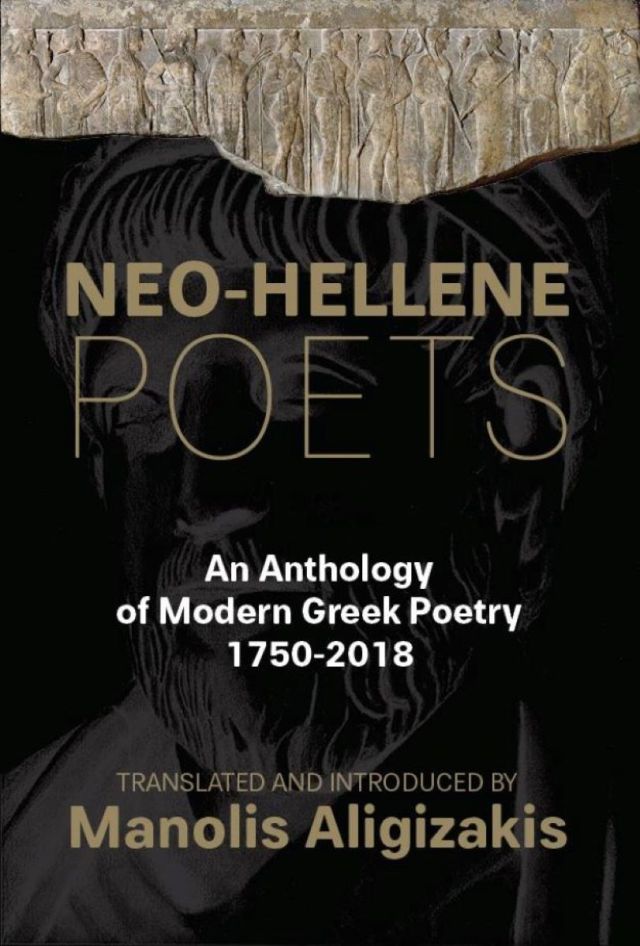
Neo-Hellene Poets, an Anthology of Modern Greek Poetry

IV

                        Argonauts

And the soul

if it is to know itself

must look

into its own soul

the stranger and the enemy, we have seen him in the mirror.

They were good boys, the comrades, they didn’t complain

about the tiredness or the thirst or the frost

they had the behaviour of the trees and the waves

that accept the wind and the rain

that accept the night and the sun

without changing in the middle of change.

They were good boys, for days on

they sweated at the oars with lowered eyes

breathing in rhythm

and their blood reddened a submissive skin.

Sometimes they sang, with lowered eyes

when we passed by the deserted island with the prickly pear trees

toward the west, beyond the cape of the dogs

that bark.

If it is to know itself, they said

it must look into its own soul, they said

and the oars struck the gold of the sea

in the sunset.

We passed by many capes, many islands, the sea

that brings another sea, gulls and seals.

Sometimes grieving women wept

lamenting their lost children

and others angrily sought Alexander the Great

and glories lost in the depths of Asia.

We moored on shores filled with night fragrances

with bird chirps, with waters that left on our hands

memory of a great happiness.

But the voyages did not end.

Their souls became one with the oars and the oarlocks

with the solemn face of the prow

with the rudder’s wake

with the water that shattered their image.

The comrades died one by one

with lowered eyes. Their oars

point to the place where they sleep on the shore.

No one remembers them. Justice.

https://www.amazon.com/dp/1926763513

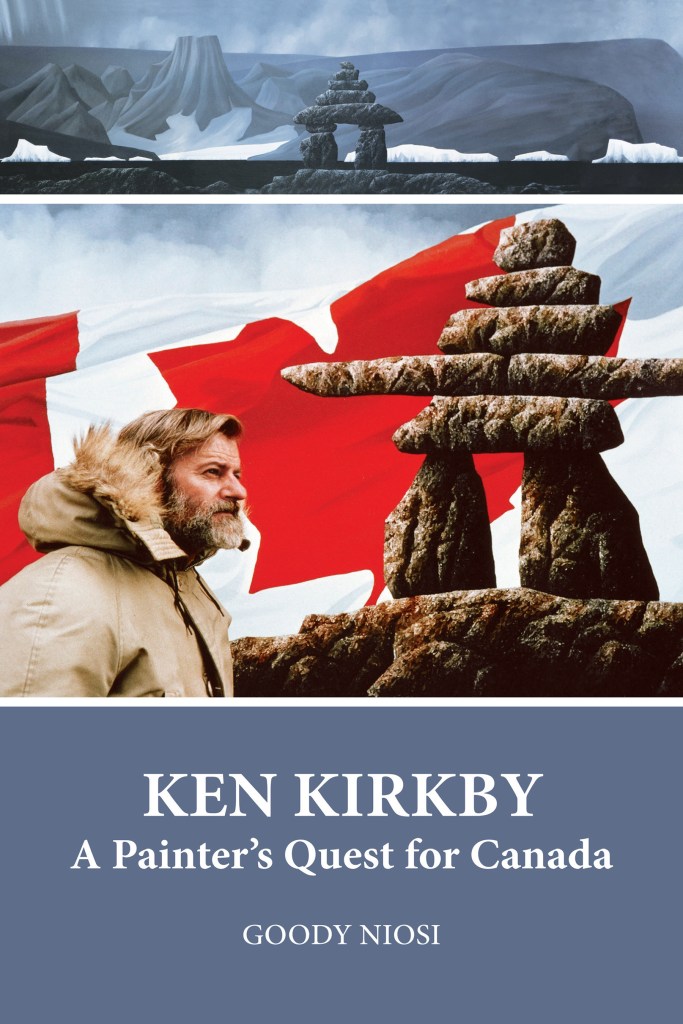
Ken Kirkby, A Painter’s Quest for Canada

Excerpt

“That’s an awkward and difficult subject,” she said. “I don’t want to talk
about it right now.”
Miloo became the central focus of his life and as their friendship deepened,
Ken confessed that he liked her – but far more than the word implied.
He liked her very deeply.
“You can’t like me that much,” she said. “You come from one world and
I come from another and there is no hope that we could ever be more than
just passing friends. It would be nothing but trouble for everybody.”
Ken felt a familiar rebel anger stirring in him. “Why? Did somebody
make a rule?”
“Yes,” she said. “Those are the rules.”
“But if the rules are bad, do you still accept them?”
“It’s everybody,” she said. “It’s everywhere you turn. That’s the way it is.”
“Well, I don’t accept it.”
“You’ll get into a lot of trouble.”
“I don’t care. It seems that all the best things in my life are trouble and
I just won’t accept it.”
Ken’s father noted the growing friendship between his son and Miloo.
Perhaps thinking to distract him, he asked him one late summer day what
he would like for his next birthday. Ken opened his Michelangelo book to
the photograph of David. “I want to see that,” he said.
“Why that?” his father asked.
“It’s probably the most perfect thing I have ever seen. It has only one
flaw.”
“And what’s the flaw?”
“Look at his hand,” Ken pointed to the picture. “He’s holding a stone in
his hand and that’s the stone he was putting in a sling to throw at Goliath.
Everything else is perfect but this hand is weird. Why would he do that?
Why would he make such a strange hand on such a beautiful body?”
“I don’t know,” his father admitted. “So, that’s what you really want to
do?”
“Yes. I want to go to Florence.”
On the morning of his thirteenth birthday, he and his father boarded
the train to Italy. In Florence, they stepped into a line that seemed
to stretch to infinity outside the gates of the Accademia delle Belle Arti.
Slowly the line inched its way to the spot where the colossal 17-foot statue
towered over the crowd. Ken wanted to feast his eyes, but the relentless
throng forced him to walk by it after only a passing glance.
As they left the museum, his father asked, “Did you like it?”
“How can you look at something that way?” Ken asked. “I want to
spend a lot of time there.”

https://www.amazon.com/dp/0981073573

Ithaca Series, Poem 705

a second

My hands are cold.

                                              I’ve gone out into the street,

I’ve settled the minor matter

and returned home to take again

my place at this table.

                                              I then discovered

the coldness of my hands,

                                              a sign

which disturbs me perhaps without justification,

it’s just a little thing to have cold hands.

This cold of November

is in my hands, nothing else.                

                                                              It’s me:

I see the simple Greek vase

and the usual evening around me.

But it’s very rare for me to have cold hands.

In a fleeting second, my thought has seen

the probable fog, the filled out gray leaf

where the name I have would be crossed out

with the frosty ink of the end.

ΔΕΥΤΕΡΟΛΕΠΤΟ

Τα χέρια μου είναι κρύα

                              βγήκα έξω στο δρόμο

να ταχτοποιήσω κάτι ασήμαντο

γύρισα σπίτι κι έκατσα στο τραπέζι

                               Τότε διαπίστωσα

πόσο κρύα είναι τα χέρια μου

                                σημάδι

που μ’ ανησυχεί ίσως δίχως λόγο

ασήμαντο να `χεις κρύα χέρια.

Το κρύο του Νοέμβρη

στα χέρια μου, τίποτε άλλο.

                                Εγώ είμαι:

Βλέπω το απλό Ελληνικό βάζο

και το συνήθες βράδυ ένα γύρο μου.

Μα σπάνια έχω κρύα χέρια.

Μια φευγαλέα μου σκέψη παρατηρεί,

μες στην ομίχλη, το γκρίζο φύλλο

με τ’ όνομα μου ξεγραμμένο

με την κρύο μελάνι του τέλους.


Μετάφραση Μανώλη Αλυγιζάκη//Translated by Manolis Aligizakis

Antonio Cabrera, Spain, (1958 – 2019)

2024 Books by Manolis Aligizakis

Κοιτάζοντας πίσω το 2024, διαπιστώνω ότι ήταν μια πολύ ενδιαφέρουσα χρονιά. Ασχολήθηκα με πολλά, συνεργάστηκα με πολλούς ανά τον κόσμο, και με τις μεταφράσεις εκδόθηκαν 11 βιβλία μου σε 4 χώρες και γλώσσες του κόσμου. Η εργασία μου αναγνωρίστηκε με το ειδικό βραβείο ποίησης του 2024 από τη Διεθνή Ακαδημία της Κραϊόβας, στη Ρουμανία κι επίσης κατέληξε στη βραχεία λίστα των βραβείων Zbigniew Herbert της Πολωνίας. Εύχομαι σε όλους ένα χρόνο γεμάτο φως κι απεριόριστη δημιουργικότητα /// Looking back at 2024 I realize it was an interesting year. I worked on many projects, I co-operated with many people around the globe, and including translations I had 11 books published in 2024. My work was recognized with the Special Poetry Award by the International Academy of Craiova, Romania, and was included in the short list of the Zbigniew Herbert International Literary Awards, in Poland. I wish all my friends a year full of light and endless creativity.
2024 books by Manolis Aligizakis
INCIDENTALS, poetry, Ekstasis Editions, 2024
SAVAGES AND BEASTS, novel, Libros Libertad, 2024
TWELVE NARRATIVES OF THE GYSPY, poetry by Kostis Palamas, translated by Manolis Aligizakis, Libros Libertad, 2024
SHADES AND COLORS, poetry by Ion Deaconescu, translated by Manolis Aligizakis, Libros Libertad, 2024
COURAGE OF THE MOMENT, poetry by Marian Rodica, translated by Manolis Aligizakis, Libros Libertad, 2024
LIFE IS A POEM, poetry by Coman Sova, translated by Manolis Aligizakis, Libros Libertad, 2024
WISDOM OF THE NUDE, poetry by Manolis Aligizakis, ENEKEN, Salonica, Hellas, 2024
CAMOUFLAGE, poetry by Manolis Aligizakis, translated INTO Romanian by Larisa Caramavrov, International Academy of Craiova, Romania, 2024
ALCA (CAMOUFLAGE), translated into Hungarian by Marta Gyerman Toth, ABART, Hungary, 2024
ANTONY FOSTIERIS-SELECTED POEMS, translated by Manolis Aligizakis, Libros Libertad, 2024
ENTROPY, poetry by Vasilis Faitas, translated by Manolis Aligizakis, Libros Libertad, 2024

Twelve Narratives of the Gypsy

Oh, my black mule you didn’t

get any of your father’s noble

fate with the dashing body

and from my mother, I didn’t

accept the scornful serenity,

you said to me, I’m not the slave

of a slave. I know it well, oh,

my black mule, you are you

you selected two of your

mother’s and your father’s fate

and you chose your destiny

and if you aren’t as graceful

as the waves nor the bravest

and if you aren’t a stooped slave

and a tired maid who awaits

and endures, beauty has turned

you into a thoughtful being and

if you never said no, you did

because of your stubbornness

not from a peaceful submission.

You’re always strong-willed

always first always the same

in rivers and thickets and

on the road and in the noisy

harbors as your steady step

deserves a light, graceful wing.

And if I urge you to descend into

the Tartarus of earth you’ll

always obey and I won’t even

feel the trembling of your legs.

And if I wake up longing for

a skyward voyage inside of me

I’ll ascend to the stars with you

while your steady steps will

guide me up to that height and

I’ll see you as the winged horse

of the magician or the leading

black guerrilla, unbending

barren and stubborn mule.

You and I, both of us, one Fate.

And if I stirred the leaders’

armoury with my hands and

I fluttered the soldier’s banner

and my uncontrolled hair

as if I was again commencing

a new battle, as if again

I was ready for long wars

and lance competitions

and wherever I passed along

domed forests of high-joined

chestnut trees and hugging

poplars I pushed my mule

gracefully riding on her back

I was the mule-rider who

touched the domed forests

raising my arms and then

going forward or coming back

I always carried leaves and

fresh branches in my hands

and wherever a river stopped

my steps, I disregarded its

powerful current, mule-rider

who I was, I started crossing

in a fastened path that lasted

only while I was passing; and I

was a river passer, a mule rider

an engraving on the rock

mule and man, the same flesh

different from the stone, which

assumed a soul and departed

if I was lost in the deep thought

of struggle, pain, and yearning

in my mind the one emperor

having a crown on his head

the crown of the universe.

https://www.lulu.com/account/projects/gjgv4ee https://www.amazon.com/dp/B0D3LP7NW6

Yannis Ritsos – Poems, Volume II

THE BRIDGE (excerpt)

Our humble needs don’t humiliate us;

on the contrary, they save us; they give us ground

to walk on again, to stand erect, to work, and

their knowledge and approval is our brotherhood,

it’s the beginning of our profound freedom,

it’s that sacred truthfulness,

the first and last truthfulness of man, so much so

that you could cry out of tenderness,

for this confession of yours, for this humiliation,

for this pride with which you were born and will die,

for this work that was caused by these needs of yours

that it will be offered to the needs of others,

to the eternal needs of man, an eternal commitment.

I always come back to you, and it’s my great joy to know

that you await for me, to know about your beautiful

patience and your deep trust. Allow me then to repeat

the articles of your faith with the simplicity of the novice,

with that sweet enthusiasm of the young proselyte who

recites off by heart the articles of life written in large

red letters

on the façade of history and the horizon:

I believe that the first step to progress is the correct

distribution of bread,

I believe that the first step to progress is the increase in

the production of bread for all

I believe that our first duty is peace,

I believe that our first freedom isn’t our loneliness

but our comradeship; as for the rest, there will always

be time for them too, but only from there on.

It was about this bridge that I wanted to talk to you —

https://www.amazon.com/dp/B0851M9LTV