
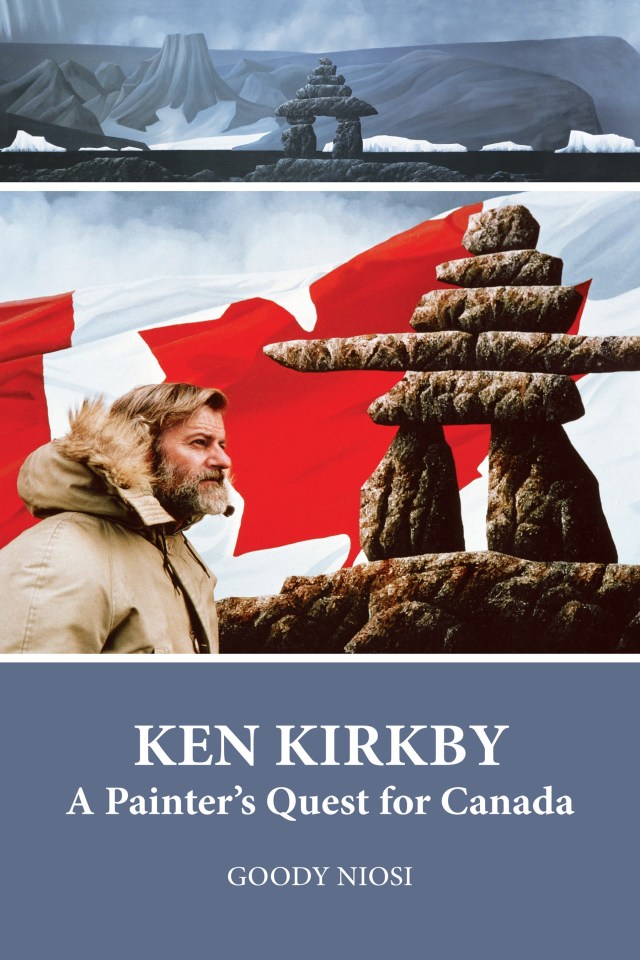
excerpt
sexual gratification of a bunch of perverts. If this happened to your family,
wouldn’t you want someone to care? Wouldn’t you want someone to
raise a stink? Wouldn’t you want someone to help? That’s all I’m trying
to do. Apparently, to my surprise, it seems this painting was the two by
four needed to apply to the side of your head to get you to pay attention.
My job is to announce to you what has gone on and what continues to
go on. I’m robbing you of your innocence. I’m not going to give you the
chance to say, ‘If only I had known’. Now you know. What are you going
to do about it?”
The mood of the public changed. People began calling to agree with
him. Battle lines were drawn and half – or perhaps even the magic fiftyone
percent – agreed with him.
Ken spent an hour or more each day, at the Columbus Centre, talking
to people who lined up to see the painting and talk to the artist. Thousands
of people came – far more than had attended his opening night.
Ken finished each of his stories with a plea for help. He urged people
not to simply believe his stories, but to investigate and make up their own
minds. And if they discovered that what he said was true, let the government
know how they felt. This was what democracy was about – and he
was appalled at how lightly most people took the democracy they lived in.
“No one that is born here really takes it seriously,” he told them. “Do you
know how many rivers of blood were spilled to have what we have here?
How can we pretend to be this thing that we say we are when you can’t
bother to inform yourselves about what goes on in your own country?
How can you be a nation without knowing what goes on in your own
backyard?”
Ken received a phone call from Wayne Morrison, the executive director
of the Friends of Canadian Broadcasting and the stepson of Northrop
Frye. Could they meet, he asked? Ken invited him to the studio.
Wayne was a dapper and polished gentleman who expressed fascination
with the furor caused by the flag painting. The CBC was about to
suffer large financial cuts, which would seriously endanger its existence,
he said, and he wanted Ken’s help. He wanted to reproduce the flag painting
in full page magazine advertisements with Ken standing beside it
holding a paintbrush with the quote, “I haven’t been this mad in twenty
years.” Below that would be the story of the CBC cutbacks.
Ken said yes, but he was not prepared to use the painting. He would
create another similar one instead. When Diane asked why, he said, “I’m
going to give it to Canada and I don’t want it reproduced. It’s going to go
to the country pure.”
“You’re going to give it away? Good lord, we don’t have enough money to
do what we’re doing and you’re going to give paintings away! Why are you
going to give something to the government? They already take too much!”



 Manolis Aligizakis