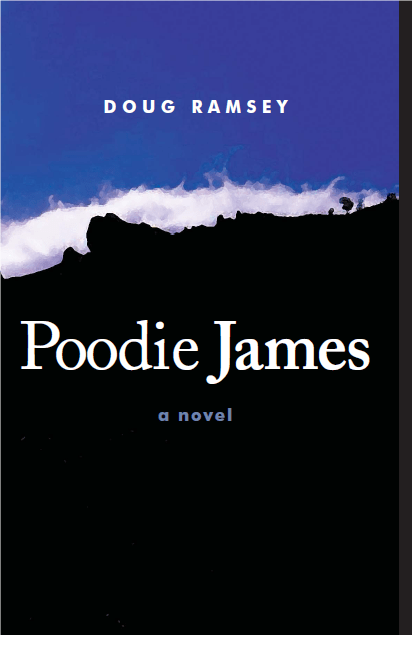
Poodie James

excerpt

Spanger stepped back.
“If there’s evidence to support your suspicion, we’ll decide what
steps to take. The law mentions probable cause.”
Torgerson’s face darkened.
“I think, Mr. Police Chief, that when you take a closer look at
those tracks and that wreck that killed a man, you’ll find probable
cause to hold those two for a while. Now, why don’t you just have
some of your men round them up?”
“And charge them with what?”
“Suspected criminal activity. Material witnesses to a wrongful
death. Mopery. What do I care? Just get them in jail. The town’ll
be a better place with them off the street.”
“Mr. Mayor,” Spanger said. “We ought to discuss this with the
city attorney. It could lead to a lot of legal trouble. You can’t just
invent charges and lock people up.”
“Oh, those two don’t strike me as jailhouse lawyers, Darwin.
Don’t worry about that. Hell, one of ’em can’t even speak.”
“Mr. Mayor,” Spanger said, “I won’t help you use this train
wreck to make Poodie James and the hobos part of your election
campaign.”
Torgerson smiled and turned away from the wreck toward his
police chief. His eyes are the color of dirty ice, Spanger thought.
“Why, Darwin, I haven’t even decided to run again. You just go
ahead and investigate. You’ll find enough to lead you to your duty.
I expect you to protect the citizens of this town.”
Torgerson turned and strode down the tracks toward 13th
Street. Spanger watched until the mayor got into his big blue
Packard and drove away.
Albert Swan, the city attorney, cleared his throat and raised his fingers
to smooth his tie. As he spoke, he looked past the police chief.
Spanger turned to see if someone had entered the office. They
were alone.
“Darwin,” Swan said, “we don’t much get into criminal matters
in this office. It’s mostly city business, you know.”

https://draft2digital.com/book/3562868

https://www.amazon.com/dp/B08W7SHCMV

Poodie James

excerpt

to the surface and throwing columns of water into the air. He
thought about being water, whipping into froth, rising to ride in
clouds above the world, dropping onto hills and fields, roaring
down mountainsides, lazing in lakes, plunging over dams and falls,
spreading to meet the ocean, enveloping rocks and logs and sunken
ships, fish swimming through you, sunlight playing on you.
He wondered if the world was alive and all of its plants and creatures
lived on it, as funguses and bacteria live on animals and people.
Poodie lay on his back in the sunshine and watched a hawk
circle in slow turns above the valley, soaring on updrafts. The only
effort he could see was a tilt of the wings now and then as the hawk
drifted up. It rose so high that wings and body blended into a speck
against the blue, then regained form as the hawk wheeled down to
float up again. He tried to imagine wind pushing against wings,
rushing over feathers, the thrill of the downward spiral, the elation
of being lifted atop a column of air. He wondered what the hawk
saw as it hung above the hills and orchards, the streets and houses,
people, the river. One of the books at the library said that hawks
and eagles could see a mouse from high in the air. He waved, in
case the hawk could see him. He wanted to know the currents of
the river the way the hawk knew the currents of the air. Swimming
the river, he had to work against the flow and eddies of the water
and fight his way across, as if the river didn’t want him there.
Sometimes it lulled him in its embrace, but the river’s power
frightened him. The air welcomed the hawk and bore it like a
mother carrying a child.
September 17
Swam the river today. Maybe last time this year. Air cold, water warm.
Very tired when finished. Getting old? Found a man looking in the
window when I came back. Showed me a card from the health department.
Said he had to inspect my cabin. Showed him inside. He took
notes. He wanted to look at the outhouse. More notes. Showed him my
apple trees, ready to pick. I gave him apples. Wrote my name for him. “I
know,” he said. Nice man.

https://draft2digital.com/book/3562868

Poodie James

excerpt

town and the prospects. He listened carefully to the details of the
planning. The enthusiasm of his own replies still rang in Jeremy’s
mind.
“Dad, the state is only 13 years old. There’s opportunity everywhere.
East of the mountains, they’re bringing water to the land.
It’s going to bloom and it’s going to make people rich. It’s in the
center of the state, on the river, on the railroad that runs east and
west. They’re already shipping apples to Chicago and back east.
They’ll need a good newspaper. A paper can make a difference in
how that valley develops. The man who owns that paper will be an
influence.”
“And Winifred? Is it right to take your young wife away from all
she’s known, into a wilderness?”
“It is not a wilderness.” Jeremy reached into his breast pocket for
a post card and handed it to his father. Zeb Stone studied the
scene: A few buildings, a handful of carriages, a line of poles, the
blurred image of a man striding across a dirt street that stretched
into an infinity of sagebrush and bare hills. He looked up and contemplated
the club’s spread of gardens, fairways and trees. Jeremy
was determined to go west with or without his father’s approval,
but he ached for the endorsement. The perspiration and the dread
accumulated as he waited. The severity of the look his father
turned on him, his relief when a trace of a smile appeared and his
father offered to help with finances; it was all as clear as the day it
happened.
“As it is, sir, I’m going to use your money” Jeremy told him. “I
haven’t touched the trust fund since I turned 21. I’ll take money
from that and my savings and, if need be, Win will chip in from her
inheritance. We want to do this on our own.”
“If you ever decide to go back into banking, tell me,” Zeb Stone
said. “A growing town will need a good bank.”
Jeremy never dreamed that 25 years later he would turn his
newspaper over to his wife and plunge fully into banking. Winifred
had turned out to be as good a publisher as he was, and a better,
tougher editor. He had stayed out of the paper’s business since

https://draft2digital.com/book/3562868

https://www.amazon.com/dp/B08W7SHCMV

Poodie James

excerpt

Poodie saluted. Spanger hesitated, then returned the salute
before he wheeled the cruiser around and headed toward the station.
Pete Torgerson cranked the steering wheel knob as he crossed the
Great Northern tracks and guided the Packard along the dirt road
between the river and town. His headlights swept the curves, illuminating
sagebrush and bunch grass. A jack rabbit bounded in
front of him for a few yards and faded into the blackness of the
road’s margin. Ahead, a few cars rested in a dusty parking area
around a pole supporting a flickering red neon sign that identified
Ted and Angie’s Chicken Inn. George Pearson’s Lincoln, and
Fred Lawrence’s Cadillac were there. He didn’t recognize the
other cars. Inside the two-story log heap, the air was heavy with
smoke and “Tuxedo Junction.” Ted waved from behind the bar. A
man Torgerson recognized as a clerk from the J.C. Penney mens
department pumped nickels into the juke box. At a corner table,
Angie was taking a dinner order from a man who sat alone. Slim
ankles and high heels were just disappearing from the top of the
stairs into the upper hallway. Torgerson heard a slur of a male voice
loudly ask, “Which room?” In a circle of light, four men studied
their cards at a table whose green cover was embellished with stains
and cigarette burns.
“Mr. Mayor,” Pearson greeted him, with a hint of derision,
Torgerson thought, “we just got started. Seven-card stud. Throw
in. It should be an interesting game.”
Torgerson nodded to Pearson, Lawrence and two orchardists
from the north side of Lake Chelan. The growers materialized at
Ted and Angie’s every fall when packing house business with Lawrence
provided an excuse for an overnight stay in town. Angie
delivered the mayor a whiskey sour. Nothing to eat, he told her, he
wouldn’t be staying long. Torgerson anteed. Lawrence dealt.
Torgerson examined his hand. Next time around he called, and
threw two dollars in the pot. The game was underway, and the
mayor got down to business.

https://draft2digital.com/book/3562868

https://www.amazon.com/dp/B08W7SHCMV

Poodie James

excerpt

The chief reminded himself to be charitable
tonight and think of the A-rabs’ good works for crippled and burned
children when the Shriners and their bottle-fed mischief overflowed
from the hotels into the street. A mass of purple, white and brass, the
high school band and drill team crossed the intersection and the band
broke into “I’ll Be With You In Apple Blossom Time.” The drum
major blew his whistle, strutted and kicked toward the sky. Thirty
batons twirled high and back into the hands of the girls, whose smiles
had yet to reach the pasted-on stage. The parade was off to a good
start, Spanger thought as he watched two youngsters sitting on the
curb wide-eyed and laughing, gripping their popsicles. The first float,
a confection of white, pink and green, bore the festival queen and
princesses in their satin gowns. Princess Marcie Welch, her tiara a
double band of apple blossoms, waved to the crowd. When she saw
Poodie standing beside his wagon, she blew him a kiss. Grinning
broadly, he waved back. Well, Spanger thought, the kids in town do
seem to love that strange little man.
On the side of the blue Packard convertible that followed the
queen’s float, signs with block letters a foot high proclaimed
“Mayor and Mrs. Pete Torgerson.” The mayor perched atop the
backrest of the back seat, turning toward one side of the street then
the other, moving his arm in the way Spanger had seen in the
newsreels when the Pope blessed crowds in St. Peter’s Square.
Sue-Anne Torgerson now and then glanced at the onlookers and
lifted her hand, her head just visible above the side of the convertible.
Torgerson waved the chief to the side of the car.
“Did you see that?” he shouted over the band.
“What, Pete?”
“Poodie James, that’s what.”
Poodie had waved and smiled at the mayor’s car as it went by.
That smile, Torgerson thought, that mocking smile. Sure as hell,
he knows. He remembers.
“He’s watching the parade,” Spanger said, striding alongside the
car. Even with Torgerson sitting on the backrest, the chief’s head
was nearly level with the mayor’s.

https://www.amazon.com/dp/B08W7SHCMV

Poodie James

excerpt

He spoke at service club meetings. He lectured at
the college. He played golf as he always had, seldom and badly. It
was a way of socializing; he detested the game.
Sam restrained himself from meddling in the affairs of Winter
and Franklin; he promised his partner and his wife that he would
keep hands off the firm. Despite his efforts to stay busy, the boredom
of retirement began to overtake him. Pete Torgerson’s predecessor
as mayor asked Sam to fill the unexpired term of a full-time
municipal court judge who died. The term had less than a year to
run. When Sam told her about it, Liza was reluctant and then, the
more she thought about it, relieved. Sam accepted the judgeship.
On the bench and in chambers, he discovered in himself gravity
and patience, qualities that during his years of arguing before
judges he never imagined he had. He enjoyed the work. Before the
term ended, he announced himself a candidate for a superior court
seat. The bar association endorsed him. He won easily and was
nearing the end of his second term.
There was nothing official about it, but Sam Winter had
become a sort of guardian to Poodie. In 1934 when the bank foreclosed
on the Thorps, Jeremy Stone asked him to come up with a
legal guarantee that no one would throw Poodie off the property.
On Sam’s advice, the bank gave Poodie a life estate in the cabin.
That’s where he was now, reading, no doubt, Sam thought. The
little man came to the door in his shorts and sandals, grinning,
holding Breasted’s History of Egypt, a book the judge had always
meant to get around to.
“Listen, Poodie” Sam began.
Poodie’s grin expanded. He cupped his hand behind his ear and
cocked his head, eyes intent on Sam’s face.
“Oh, for heaven’s sake. Sorry, Poodie. I mean, we have to discuss
something. It’s about the mayor.”
The grin diminished. Poodie spoke a couple of sentences. Sam
hunched his shoulders and spread his hands.
“Better get your pad and pencil,” he said.
Poodie invited the judge inside.

https://www.amazon.com/dp/B08W7SHCMV

Poodie James

excerpt

heat of friction on his backside, and his spine raked over the door
jamb. He tried to raise up, but they jerked him backward down the
step and onto the ground. The clubbing began. He wrapped his
arms around his head and tucked into a ball.Two of them straightened
his body by pulling his hands and feet while the biggest man
alternated kicks with blows from a length of wood. The clubs and
boots battered his arms and legs, his torso, his shoulders. The pain
was like fire on his skin. The ache went to the center of his bones.
They let him go, then knocked him off his feet when he got up,
laughing at his contortions when he twisted and thrashed to evade
their clubs.They were killing him, he thought.He was going to die.
Suddenly, the big man was on his back and Engine Fred was on
top of him with a forearm bearing down on his windpipe. Poodie
sat up and saw the other two running down the lane. His head
throbbed. Three more hobos came down along the path from the
jungle. The man on the ground got an arm free, knocked Engine
Fred off balance and was up and running away. He disappeared
into the orchard, headed toward the river. Two of the hobos ran
after him, but came back shaking their heads. It all happened in the
space of a few minutes. The Thorps slept through it, but Engine
Fred told Poodie that he heard a scream. Poodie didn’t know that
he was capable of screaming.
Dan Thorp called the police the next morning. By then, the
hobos had hopped a freight. Poodie could not identify the thugs.
The bruises on his face and body took weeks to heal. Thorp put a
lock on the cabin door. The attack was the worst thing that had
happened to Poodie since his mother died. He lived it over in his
dreams night after night for months. Years later, he still awakened
in fear that the men would come back.
Alice Moore looked up to see Poodie James’s face floating just
above surface of the checkout desk, a stack of books next to it. She
had never seen that face without a smile. She looked at the books;
Howard Carter’s The Discovery of the Tomb of Tutankhamen, three
books about whales, a collection of de Maupassant stories.

https://www.amazon.com/dp/B08W7SHCMV

Poodie James

excerpt

He tried to raise up, but they jerked him backward down the
step and onto the ground. The clubbing began. He wrapped his
arms around his head and tucked into a ball.Two of them straightened
his body by pulling his hands and feet while the biggest man
alternated kicks with blows from a length of wood. The clubs and
boots battered his arms and legs, his torso, his shoulders. The pain
was like fire on his skin. The ache went to the center of his bones.
They let him go, then knocked him off his feet when he got up,
laughing at his contortions when he twisted and thrashed to evade
their clubs.Theywere killing him, he thought.Hewas going to die.
Suddenly, the big man was on his back and Engine Fred was on
top of him with a forearm bearing down on his windpipe. Poodie
sat up and saw the other two running down the lane. His head
throbbed. Three more hobos came down along the path from the
jungle. The man on the ground got an arm free, knocked Engine
Fred off balance and was up and running away. He disappeared
into the orchard, headed toward the river. Two of the hobos ran
after him, but came back shaking their heads. It all happened in the
space of a few minutes. The Thorps slept through it, but Engine
Fred told Poodie that he heard a scream. Poodie didn’t know that
he was capable of screaming.
Dan Thorp called the police the next morning. By then, the
hobos had hopped a freight. Poodie could not identify the thugs.
The bruises on his face and body took weeks to heal. Thorp put a
lock on the cabin door. The attack was the worst thing that had
happened to Poodie since his mother died. He lived it over in his
dreams night after night for months. Years later, he still awakened
in fear that the men would come back.
Alice Moore looked up to see Poodie James’s face floating just
above surface of the checkout desk, a stack of books next to it. She
had never seen that face without a smile. She looked at the books;
Howard Carter’s The Discovery of the Tomb of Tutankhamen, three
books about whales, a collection of de Maupassant stories.

https://www.amazon.com/dp/B08W7SHCMV

Poodie James

excerpt

“Sam, you’re smart enough. You wouldn’t work if your life
depended on it. You been a proper stiff all your miserable life?”
“Only since I was old enough to leave home fifty years ago.
‘Bout you?”
“Oh,” Engine Fred said as he uncapped one of the pints, “I had a
job, a wife, kids, a house, dogs, even a car. They had me, really. I
left all that behind. I had to get out from under.”
“Think you’ll ever go back to it?’
“If I did, it wouldn’t be there.”
Poodie watched, intent on the conversation, marveling that
these men rode freight trains, lived in the open, begged for food,
did odd jobs, wanted no home, and he had found a home. Engine
Fred offered him whiskey out of his tin cup.
“Just a sip, see how you like it.”
Engine Fred and Old Sam laughed at Poodie’s grimace and the
tears in his eyes.
“You’ll get used to it,” Old Sam said, peering at Poodie’s face.
Poodie shook his head and made low sounds. He got out his pad
and pencil, wrote, tore off the sheet and handed it to the old man.
Old Sam studied it, shrugged and passed the note to Engine Fred.
“What’s it say, Engine?”
“It says, ‘No more of that.’ See, Sam, I told you he was smart.”
Two nights later, Poodie made his way up to the jungle carrying a
bag of apples. As he came around the big boulder at the path’s final
turn, he saw Old Sam cowering near the bonfire, trying to shield
his head from the blows of a big man in black clothing wielding a
club, a cloth tied over his nose and mouth, his hat pulled low. Sam
twisted, arched his back, tried to tuck his chin into his chest. The
man kicked at Sam’s groin and aimed the club at his ribs, chest and
face. Poodie dropped the apples and stood frozen. The man suspended
his club in mid-strike and looked at Poodie. All that
Poodie could see of his face was eyes reflecting the firelight. The
attacker started toward him, then turned and ran toward the tracks.
Poodie rushed to Sam. The old man’s neck was bloody.

https://www.amazon.com/dp/B08W7SHCMV

Poodie James

excerpt

His mother’s elderly cousin and his wife were
the last in the succession of foster parents. They resigned themselves
to raising the boy in their drafty little house at the water’s
edge. Then illness sent the old man to his bed. In a panic, his wife
arranged for Peter to enter the state school for the deaf, a collection
of brick buildings in the fog on a bluff at the edge of a forest of
dripping firs and sodden undergrowth. In seven years at the school,
Poodie learned to read lips and use sign language. He studied
Latin and French and spent hours each week in the library. He
learned shoe repair, leather working, carpentry and printing. He
swam on the school’s team, stroking endless laps up and down the
big pool in the natatorium. He was one of the happiest children
ever to have lived at the school, and one of the most independent,
so hard-headed that he countered all efforts to channel him into a
vocation. Other students went off to jobs in shoe shops, apprenticed
themselves to carpenters, found work with printers. After he
was graduated, Poodie used part of his stipend to buy a ticket east
to the dry side of the state, fleeing the drizzle and mist. The train
came out of the mountains into the valley lying in the spring sun
under apple blossoms as under a snowfall. The river ran broad and
gleaming past the town. He turned to the other passengers,
laughing and pointing out the window.
“He must be home,” he saw a woman say.
“Home,” he repeated, the only word they could understand in
his stream of sounds as he got off at the depot. He walked around
the town with his canvas suitcase, smiling at everyone he met.
Home, he thought, home.
Poodie slept on a bench in the depot. After three nights, the station
master gave him a note. He would have to stay somewhere
else, it wasn’t a hotel. Struggling through the scrawl of Poodie’s
reply, the station master saw that he had nowhere to go and only a
little money for food. “Home now,” the note said. “This is my place
now,” it said, and “Need work.”
“Ruthie,” the station master’s brother said to his wife that evening,
“that young fella out there is Poodie James.

https://www.amazon.com/dp/B08W7SHCMV