Time and Light We are unborn all of us and each of us in the consciousness of timelessness the embryo of the abyss coiled in the wrath of nostalgia fingerprints of loneliness the sob of tomorrow the cell of nothingness. The time and light choke they dream of a leap into the unknown they gather the winds that burst an arrow by an unknown hand aims at the origin of the young age and the innocence of destiny becomes history.
They knew that what was in the pen was really just a baby. Even Roy seemed to calm down his calling as much as was possible. The bid, and there was four people still in the chase, was at 15,000 dollars before Roy even handed the microphone to Dr. Morgan. The good doctor was running out of new words to offer on the horses, but as he told the crowd, “If you don’t see the future in this one, if you don’t know what it means to own a grandson of Topsail Cody on the top side and a grandson of Doc Bar on the bottom side, then you should just get in your truck and leave right now.” Nobody left. When the microphone went back to Roy, he quickly took the bidders to 25,000 dollars. For a weanling! Now, there were only two bidders. Joel had heard someone behind him say that they were both trainers and top-notch reiners; one from Texas and the other from Colorado. Finally, at 32,000 dollars, the Texan waved his hand and walked away from the ring. Joel was in heaven. In quick succession, the remainder of the horses sold for 15,000, 12,000, 19,000, 17,000, and 21,000 dollars. In addition to the 100,000 dollars he had picked up from the ten three-year-olds, he also just sold six unbroken horses for another 100,000, plus change. It was a 200,000-dollar day. Not bad for a sale with only sixteen horses. He tried to figure out the average selling price of a horse, but with all of the excitement it was beyond his mental comprehension, and besides, who cared! As Roy thanked the crowd for attending, Cindy, with little Lila in tow, appeared from the crowd and gave Joel a big hug. “Say something,” she urged him “It’s your sale.” Joel proudly strode across the pen to where Roy stood and took the microphone. “Well,” he said, “I don’t really know what to say. I would just like to thank everyone for traveling way out here for our sale. I sure do appreciate the investment that you have made in our horses. If you need any help, if you didn’t plan on buying, or didn’t bring a trailer, we sure wouldn’t mind keeping an eye on them for another day or two ’til you get home and get a chance to return with your own trailer.”
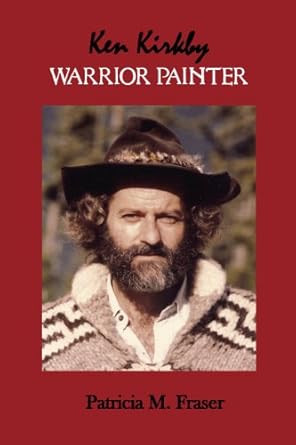
I took my rowboat and paddled out from shore to start the process of familiarization. I observed the mouth of the creeks, the curve of the beaches, the blend of driftwood and rock, the colour of the sky. I met people with aircraft and begged rides off them. And, do you know? This vast island is totally different than you might think. At one time the bulk of the land between the seashore and the mountains was actively farmed. The climate was favourable, and after clearing, the land was fertile. If you walk through it—there are still roads in the process of being reclaimed by nature—you’d be amazed at how much of it had been cultivated. Some of the parcels were very large, others just enough to maintain a family or two. Then along came the Boer War, which consumed a bunch of the young men, and then World Wars I & II finished the job. Without the next generation to continue what had been started, the forest grew back, roofs caved in, machinery rusted. Once I got the feel of it, I decided I’d try to tell the story of this part of the country—not the history, not the ‘big’ story, but the sense I had of the size and shape of the island. The wind wracked trees and snowcrusted mountains stirred my blood. And I found I was once again a painter. By the end of 2002, Ken was producing paintings to his satisfaction and was pleased to find the attitude of the island galleries more amenable than he’d experienced when he first returned to Vancouver. He came across galleries dealing in second-market sales where a Kirkby oil of a solitary Inukshuk standing proud on the tundra, or a parade of Inuksuit backed with Arctic snows would be on display. He’d introduce himself and was pleased to see that his name was recognised. He’d tell them that he was now in business on the west coast. Might they be interested in fresh pieces? The reaction was always positive. But when he laid out his canvases of coppery grasses, water-worn granite boulders, wind-bowed trees or perhaps a lonely lighthouse blinking eerily behind a rising ocean fog, he was met with consternation. “What’s this? Where are the icebergs? The Inuksuit? We can’t sell these. That’s not you.”



 Manolis Aligizakis