Cretan Canadian Poet, Author, Translator, Publisher
Author: vequinox
BIOGRAPHY
Manolis (Emmanuel Aligizakis) is a Greek-Canadian poet and author. He was recently appointed an honorary instructor and fellow of the International Arts Academy, and awarded a Master’s for the Arts in Literature. He is recognized for his ability to convey images and thoughts in a rich and evocative way that tugs at something deep within the reader. Born in the village of Kolibari on the island of Crete in 1947, he moved with his family at a young age to Thessaloniki and then to Athens, where he received his Bachelor of Arts in Political Sciences from the Panteion University of Athens. After graduation, he served in the armed forces for two years and emigrated to Vancouver in 1973, where he worked as an iron worker, train labourer, taxi driver, and stock broker, and studied English Literature at Simon Fraser University. He has written three novels and numerous collections of poetry, which are steadily being released as published works. His articles, poems and short stories in both Greek and English have appeared in various magazines and newspapers in Canada, United States, Sweden, Hungary, Slovakia, Romania, Australia, and Greece. His poetry has been translated into Spanish, Romanian, Swedish, German, Hungarian languages and has been published in book form or in magazines in various countries. He now lives in White Rock, where he spends his time writing, gardening, traveling, and heading Libros Libertad, an unorthodox and independent publishing company which he founded in 2006 with the mission of publishing literary books. His translation book “George Seferis-Collected Poems” was shortlisted for the Greek National Literary Awards the highest literary recognition of Greece.
Distinguished Awards
Winner of the Dr. Asha Bhargava Memorial Award, Writers International Network Canada, 2014
“George Seferis-Collected Poems” translated by Manolis, shortlisted for the Greek National Literary Awards, translation category.
1st International Poetry Prize for his translation of “George Seferis-Collected Poems”, 2013
Master of the Arts in Literature, International Arts Academy, 2013
1st Prize for poetry, 7th Volos poetry Competition, 2012
Honorary instructor and fellow, International Arts Academy, 2012
2nd Prize for short story, Interartia festival, 2012
2nd Prize for Poetry, Interartia Festival, 2012
2nd Prize for poetry, Interartia Festival, 2011
3rd prize for short stories, Interartia Festival, 2011
Books by Manolis
Autumn Leaves, poetry, Ekstasis Editions, 2014
Übermensch/Υπεράνθρωπος, poetry, Ekstasis Editions, 2013
Mythography, paintings and poetry, Libros Libertad, 2012
Nostos and Algos, poetry, Ekstasis Editions, 2012
Vortex, poetry, Libros Libertad, 2011
The Circle, novel, Libros Libertad, 2011
Vernal Equinox, poetry, Ekstasis Editions, 2011
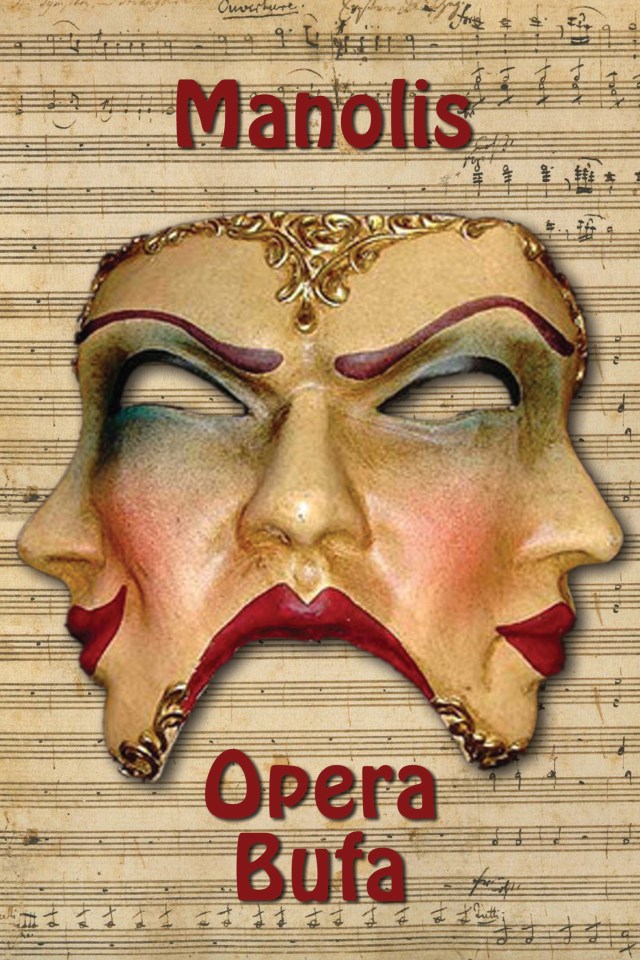
Opera Bufa, poetry, Libros Libertad, 2010
Vespers, poetry by Manolis paintings by Ken Kirkby, Libros Libertad, 2010
Triptych, poetry, Ekstasis Editions, 2010
Nuances, poetry, Ekstasis Editions, 2009
Rendition, poetry, Libros Libertad, 2009
Impulses, poetry, Libros Libertad, 2009
Troglodytes, poetry, Libros Libertad, 2008
Petros Spathis, novel, Libros Libertad, 2008
El Greco, poetry, Libros Libertad, 2007
Path of Thorns, poetry, Libros Libertad, 2006
Footprints in Sandstone, poetry, Authorhouse, Bloomington, Indiana, 2006
The Orphans - an Anthology, poetry, Authorhouse, Bloomington, Indiana, 2005
Translations by Manolis
Idolaters, a novel by Joanna Frangia, Libros Libertad, 2014
Tasos Livaditis-Selected Poems, Libros Libertad, 2014
Yannis Ritsos-Selected Poems, Ekstasis Editions, 2013
Cloe and Alexandra-Selected Poems, Libros Libertad, 2013
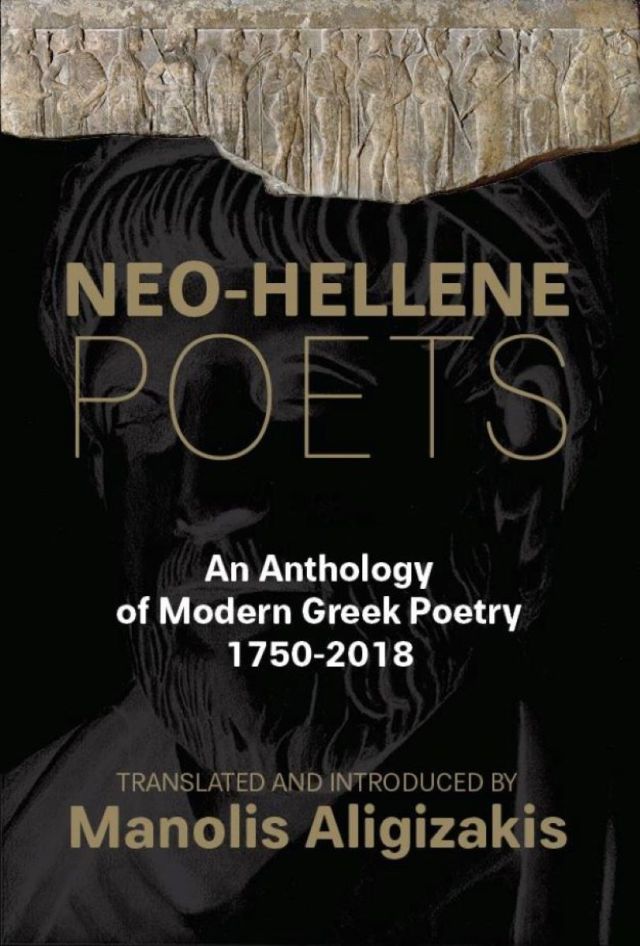
George Seferis-Collected Poems, Libros Libertad, 2012
Yannis Ritsos-Poems, Libros Libertad, 2010
Constantine P. Cafavy - Poems, Libros Libertad, 2008
Cavafy-Selected Poems, Ekstasis Editions, 2011
Books in other languages
Eszmelet, (Hungarian), poetry by Manolis Aligizakis, translated into Hungarian by Karoly Csiby, AB-ART, Bratislava, Slovakia, 2014
Hierodoules, (Greek), poetry, Sexpirikon, Salonica, Greece, 2014
Yperanthropos,(Greek), poetry, ENEKEN Publications, Salonica, Greece, 2014
Übermensch (German), poetry by Manolis Aligizakis, translated into German by Eniko Thiele Csekei, WINDROSE, Austria, 2014
Nostos si Algos, (Romanian) poetry by Manolis Aligizakis, translated into Romanian by Lucia Gorea, DELLART, Cluj-Napoca, Romania, 2013
Tolmires Anatasis, (Greek) poetry, GAVRIILIDIS EDITIONS, Athens, Greece, 2013
Filloroes, (Greek ) poetry, ENEKEN PUBLICATIONS, Thessaloniki, Greece, 2013
Earini Isimeria, (Greek) poetry, ENEKEN PUBLICATIONS, Thessaloniki, Greece, 2011
Stratis o Roukounas, (Greek) novel, MAVRIDIS EDITIONS, Athens, Greece, 1981
Magazines
Canadian Fiction Magazine—Victoria, BC
Pacific Rim Review of Books—Victoria, BC
Canadian Poetry Review—Victoria, BC
Monday Poem, Leaf Press-Lantzville, BC
The Broadkill Review, Milton, Delaware
Ekeken, Thessaloniki, Greece
Envolimon, Beotia, Greece
Annual Literary Review, Athens, Greece
Stigmes, Crete, Greece
Apodimi Krites, Crete, Greece
Patris, Crete, Greece
Nyxta-Mera, Chania, Greece
Wallflowers, Thessaloniki, Greece
Diasporic Literature Spot, Melbourne, Australia
Black Sheep Dances, California, USA
Diasporic Literature Magazine, Melbourne, Australia
Spotlight on the Arts, Surrey, BC
Barnwood, International Poetry Magazine, Seattle, USA
Unrorean, University of Maine, Farmington, Maine, USA
Vakhikon, Athens, Greece
Paremvasi, Kozani, Greece
Szoros Ko, Bratislava, Slovakia
Mediterranean Poetry, Sweden
Apostaktirio, Athens, Greece
Life and Art, Athens, Greece
Logos and Images, Athens, Greece
Contemporary Writers and Thinkers, Athens, Greece
Palinodiae, Athens, Greece
Royal City Poet’s Anthology, 2013, New Westminster, BC, Canada
To parathyro, Paris, France
Ragazine C.C, New Jersey
Artenistas, Athens Greece
Deucalion the Thessalos, Greece.
Literary Lectern, Athens, Greece
Homo Universalis, Athens Greece
Heat Wave Soft island hills lapping on sea froth cicadas fire up their endless arias come close to me, you said, stand before me like Hermes a naked graceful cypress so that I’ll keep you in my eyes for the long winter days when we’ll be apart moments I’ll yearn for your warmth do come to me, I beg you let me touch your skin the day is fiery and unbearable like the body’s conflagration
The Initiate The initiate dressed in white always dwells in caves and the oleanders behind him will turn red the pebbles will be sprinkled with holy rain and the whole gorge that follows. I also go near with my serpent-self the estuary of passion. my soles, the last lovers, carry me lightly as if I had no heaviness in my consciousness. The one who attracts me stops, thin, dressed in white and having a ponytail; he smells a strong odor like devil rosemary while he exhumes the beautiful fragrance of a dead angel. The leafage of the carob-tree hides something quivering and invisible felt only by that quivering and invisible sense that we have inside us. The initiate is very thin; his pants only balloon a little in the front and a little in the back while airy flesh fills his shirt. The sponsor of earth lowered me, with the unanswered questions in my tongue, to a cave that instead of a mouth had a hole in the sky. Under it stood the provider of the inconceivable who milked the light-blue with his palms turned upwards. He stirred a little; was perhaps the unforeseen from above that pushed him or the earth, slave of precision that shook him from his foundations?
Locked Door The Saturday is bitter in the neighborhood evening when the street organ player turns the corner and some music notes are left in the mud of the road, like the wet wooden shoes along the narrow pathway between the migrant shacks. The hours of the evening are counted by that old watch we had placed in the chest of the dead woman with her leftover woolen cloths. At midnight the alarm woke us up playing its familiar rough music — it was like a child buried alive who was hitting the sealed casket with his small hands. When we were children the candles with the purple ribbons and gold letters scared us a lot; for this we were so sad when evening came because the sun-downs, seen from the balcony of our house in the island, looked like purple ribbons. And we were afraid of sleep since we felt that someone locked us up and we didn’t have keys. And if they would forget to open for us and if we couldn’t talk like the old woman Raken? However we listened to the adults talking at the dining room and a ribbon of light from the lamp had fallen under the door. Then we weren’t afraid. Now the mayor, they said, went to present the keys of the city. Don’t expect anyone to open anymore. Now you have to take care of it alone. We have to break down the door. We’ll manage it, because our love is stronger than our loneliness.
Twilight If I wasted my life, it was because I was a different age from the correct one, and now I’m confused; I don’t know whether I’m at the end or the beginning, whether I have to leave or return, which path to follow and where to go. After all, evening has come and the dogs bark, stopping the passersby at the borders of the unsaid.
PARROT As soon as he could say good evening the parrot suddenly announced: I’m the wisest, I speak Greek, what am I doing here? He dresses in his finest green and to a birds’ symposium goes to share his wisdom there, and standing in his sternest posture coughs a bit, then looks afar and says to them good evening. His words were much admired, so learned a bird he seemed: they said: no wiser bird there is than he who speaks the tongue of men! Perhaps from India he arrived with many a book along with him. He must have talked to many sages to learn their bookish tongue. Oh, educated parrot, give us please the honor of a few more words. And so the parrot coughs, and coughs once more, and says good evening.
Without pushing their luck any further, they went to the café and had a soothing bowl of chicken soup, then said goodbye to the casino hall and went up to their room to rest. In the morning Eteo phoned home to see how the boys were doing. Jonathan assured him they were all fine. Then he called Logan at the office and got an update on the market, after which, satisfied that everything was under control, he went downstairs with Ariana. They strolled from one casino to the other for most of the day, stopping here and there to gamble for a while, taking a break for coffee and then for lunch, relaxing by the pool for an hour or so, and then gambling some more in the afternoon. For Eteo the most enjoyable thing about Las Vegas was the chance to observe other people and their interactions and reactions to all the sights and sounds of the place. He loved to just look around him while Ariana played her slot machines in whichever casino they went to. On Friday night they went to the famous KA show at the MGM Grand. It was the most elaborate and amazing show either of them had ever seen. The story line was a simple fairy tale, but the presentation was spectacular, mainly for its technological innovations and the gymnastics of the actors. What impressed Ariana and Eteo the most was when the stage turned completely vertical, huge levers and axles moving it slowly from horizontal to vertical while the actors continued to perform their elaborate choreography standing on arrows shot on the stage. It was a combination of artistry, acrobatics, and athleticism all at the same time and to a musical score that was a phenomenal combination of modern and classic mixes that created a unique atmosphere. As they left, Eteo could not resist buying a CD of the music to enjoy at home. There were thousands of visitors in Las Vegas, and everywhere they went they were always among crowds of people coming and going, laughing and drinking, partying and teasing drinking and eating as they walked, as they sat on a barstool right on the strip, as they entered one hotel, or as they exited from another. People drank and partied everywhere: in the streets, the hallways of the hotels, the casinos, the restaurants, the bars, the blackjack tables, the baccarat hall.
And if someone happened to saunter on the opposite hill with the thorns when the sun goes down and everything is pale, vague and violet when they all seem to be lost and at the same time approachable, that lonely passerby who saunters on the hill looks calm and likable like one who could feel sympathetic towards us, even the hill looks serene at the same height as our window, so much so that if one turns this way to look at the cypresses, it seems that in more steps he could pass by our terrace, enter our room like an old familiar friend, and, I think he could also ask for a brush to dust off his shoes. Yet the man vanishes behind the hill and the contour of the mountain remains opposite our window like silent forgiveness, along with the sad, calm sunset that fades amid the shadows. And don’t think that we have adapted but what are you doing? Everyone has deserted us; we have deserted everyone too. We’ve established an almost just balance without reciprocal enmity, regret, and sadness of course, how else could it be?
III Flocks of stars descend into your eyes to quench their thirst, the wind heals in your hair your neck is made of moon steel your breasts two knives that stab silence your mouth insubordinate orbit of the sun your teeth days of a short summer after the first rains. We search for your secret in the deep water well of your voice.
Twenty-Fourth Hour My words ripple in the air meshing untangling a spider’s web you fall into as though in emotional fervor of our last kiss before the boat’s departure while an alarming uncertainty and guilt beats the inside walls of your heart swells with our intense crescendo shuddering at His zeal when such concepts as parochial narrow-minded petty incidental unfold their perennial petals on the horizon and I’m pulled down as though in a whirlpool as smug God stands admiring the results of insane sanity and as His zealot starts to speak with eloquence the stars suddenly turn into black holes or wall of a tsunami swallowing meaningless and important measly and grand old experienced Death having been there and done that steps out in His fine pressed suit with a tie smartly knotted and creates balance with His gift of greatness to all little insects all unimportant winds every petite bird and minnow who dare ask ‘do you like what you see?’ and the oceans plumb their wisdom peering into depths of cathedral dungeons answering: who cares?
The galley kitchen was utilitarian and old-fashioned with a two-burner gas stove, a scarred countertop and a tiny porcelain sink. Marta peeled cucumber and kept her back to Jennifer, her posture erect. “May I help you?” Jennifer asked. There was no answer. Suddenly Jennifer knew exactly what to say. “Is that cabbage rolls I smell?” she asked. “Mom used to make those—were they ever good.” The shoulders relaxed slightly and Marta turned, wiped her hands on a dishcloth and said with a wan smile, “Yes, they are Misha’s favourite, too.” The conversation was polite but not warm over the dinner table although Nadya recovered some of her childish energy and rattled on to Jennifer about her school work and her friends. As soon as the dishes were cleared away, Marta directed Volodya and Jennifer to Nadya’s room, hastily vacated for the night in order to accommodate the travellers. The single bed had been made up with clean sheets for one person and a series of cushions had been placed on the floor with a quilt on top. “I’m sorry we don’t have more beds and another room for you,” Marta said coolly. “But I think you will be comfortable in here.” Marta closed the door behind her, leaving Jennifer and Volodya staring at each other wordlessly. She turned away, wanting only to sleep and too exhausted to challenge his behaviour. He began undressing with no further comment. But as they prepared for bed, a knock on the door startled them. Misha’s head appeared around the door. “Can I see you, Zhen? I’ll be in the living room.” Wrapping her robe around her, she glanced at Volodya and left the room. Misha was sitting on the uncomfortable sofa. “This is where we should have started—right when you arrived, Zhen.” He patted a worn, leather-bound album. “Forgive me that I did not show you this sooner.” Family photos, thought Jennifer. How will this help? Misha opened the album lovingly, smoothing the pages. She sat beside him. Most of the pictures had been taken in the last few years and they showed the couple at their wedding, traditional photos posed in front of the war memorial, some scenes from their trip to Sochi and many of Nadya’s childhood. Flipping through the book quickly, Misha opened it at a page of older, grainier photos. He pointed at one dog-eared print. Jennifer gasped. The picture depicted two teenagers standing together solemnly, kerchiefs around their heads, their faces forming weak smiles, their arms linked.









 Manolis Aligizakis