Cretan Canadian Poet, Author, Translator, Publisher
Author: vequinox
BIOGRAPHY
Manolis (Emmanuel Aligizakis) is a Greek-Canadian poet and author. He was recently appointed an honorary instructor and fellow of the International Arts Academy, and awarded a Master’s for the Arts in Literature. He is recognized for his ability to convey images and thoughts in a rich and evocative way that tugs at something deep within the reader. Born in the village of Kolibari on the island of Crete in 1947, he moved with his family at a young age to Thessaloniki and then to Athens, where he received his Bachelor of Arts in Political Sciences from the Panteion University of Athens. After graduation, he served in the armed forces for two years and emigrated to Vancouver in 1973, where he worked as an iron worker, train labourer, taxi driver, and stock broker, and studied English Literature at Simon Fraser University. He has written three novels and numerous collections of poetry, which are steadily being released as published works. His articles, poems and short stories in both Greek and English have appeared in various magazines and newspapers in Canada, United States, Sweden, Hungary, Slovakia, Romania, Australia, and Greece. His poetry has been translated into Spanish, Romanian, Swedish, German, Hungarian languages and has been published in book form or in magazines in various countries. He now lives in White Rock, where he spends his time writing, gardening, traveling, and heading Libros Libertad, an unorthodox and independent publishing company which he founded in 2006 with the mission of publishing literary books. His translation book “George Seferis-Collected Poems” was shortlisted for the Greek National Literary Awards the highest literary recognition of Greece.
Distinguished Awards
Winner of the Dr. Asha Bhargava Memorial Award, Writers International Network Canada, 2014
“George Seferis-Collected Poems” translated by Manolis, shortlisted for the Greek National Literary Awards, translation category.
1st International Poetry Prize for his translation of “George Seferis-Collected Poems”, 2013
Master of the Arts in Literature, International Arts Academy, 2013
1st Prize for poetry, 7th Volos poetry Competition, 2012
Honorary instructor and fellow, International Arts Academy, 2012
2nd Prize for short story, Interartia festival, 2012
2nd Prize for Poetry, Interartia Festival, 2012
2nd Prize for poetry, Interartia Festival, 2011
3rd prize for short stories, Interartia Festival, 2011
Books by Manolis
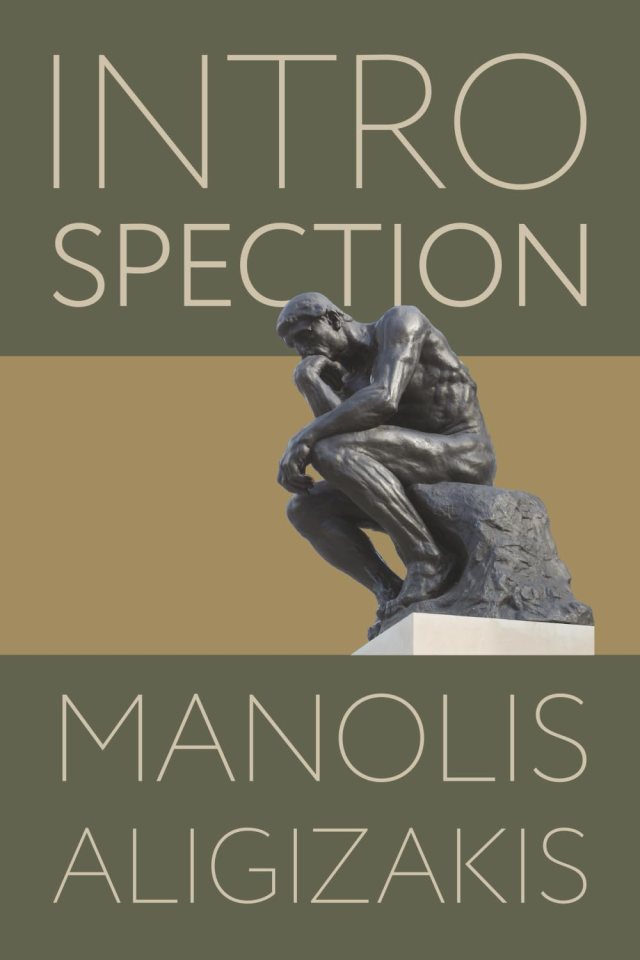
Autumn Leaves, poetry, Ekstasis Editions, 2014
Übermensch/Υπεράνθρωπος, poetry, Ekstasis Editions, 2013
Mythography, paintings and poetry, Libros Libertad, 2012
Nostos and Algos, poetry, Ekstasis Editions, 2012
Vortex, poetry, Libros Libertad, 2011
The Circle, novel, Libros Libertad, 2011
Vernal Equinox, poetry, Ekstasis Editions, 2011
Opera Bufa, poetry, Libros Libertad, 2010
Vespers, poetry by Manolis paintings by Ken Kirkby, Libros Libertad, 2010
Triptych, poetry, Ekstasis Editions, 2010
Nuances, poetry, Ekstasis Editions, 2009
Rendition, poetry, Libros Libertad, 2009
Impulses, poetry, Libros Libertad, 2009
Troglodytes, poetry, Libros Libertad, 2008
Petros Spathis, novel, Libros Libertad, 2008
El Greco, poetry, Libros Libertad, 2007
Path of Thorns, poetry, Libros Libertad, 2006
Footprints in Sandstone, poetry, Authorhouse, Bloomington, Indiana, 2006
The Orphans - an Anthology, poetry, Authorhouse, Bloomington, Indiana, 2005
Translations by Manolis
Idolaters, a novel by Joanna Frangia, Libros Libertad, 2014
Tasos Livaditis-Selected Poems, Libros Libertad, 2014
Yannis Ritsos-Selected Poems, Ekstasis Editions, 2013
Cloe and Alexandra-Selected Poems, Libros Libertad, 2013
George Seferis-Collected Poems, Libros Libertad, 2012
Yannis Ritsos-Poems, Libros Libertad, 2010
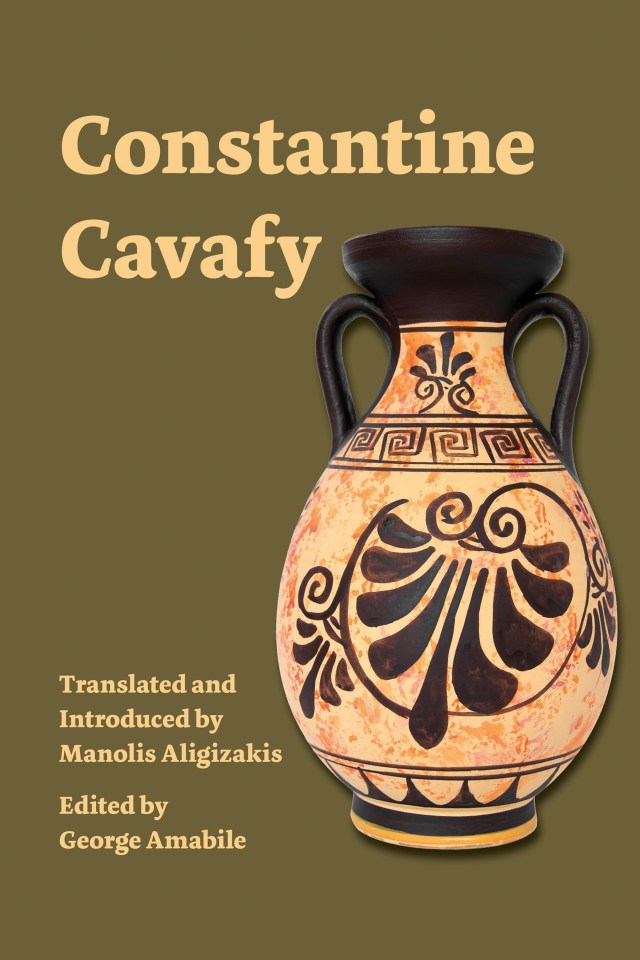
Constantine P. Cafavy - Poems, Libros Libertad, 2008
Cavafy-Selected Poems, Ekstasis Editions, 2011
Books in other languages
Eszmelet, (Hungarian), poetry by Manolis Aligizakis, translated into Hungarian by Karoly Csiby, AB-ART, Bratislava, Slovakia, 2014
Hierodoules, (Greek), poetry, Sexpirikon, Salonica, Greece, 2014
Yperanthropos,(Greek), poetry, ENEKEN Publications, Salonica, Greece, 2014
Übermensch (German), poetry by Manolis Aligizakis, translated into German by Eniko Thiele Csekei, WINDROSE, Austria, 2014
Nostos si Algos, (Romanian) poetry by Manolis Aligizakis, translated into Romanian by Lucia Gorea, DELLART, Cluj-Napoca, Romania, 2013
Tolmires Anatasis, (Greek) poetry, GAVRIILIDIS EDITIONS, Athens, Greece, 2013
Filloroes, (Greek ) poetry, ENEKEN PUBLICATIONS, Thessaloniki, Greece, 2013
Earini Isimeria, (Greek) poetry, ENEKEN PUBLICATIONS, Thessaloniki, Greece, 2011
Stratis o Roukounas, (Greek) novel, MAVRIDIS EDITIONS, Athens, Greece, 1981
Magazines
Canadian Fiction Magazine—Victoria, BC
Pacific Rim Review of Books—Victoria, BC
Canadian Poetry Review—Victoria, BC
Monday Poem, Leaf Press-Lantzville, BC
The Broadkill Review, Milton, Delaware
Ekeken, Thessaloniki, Greece
Envolimon, Beotia, Greece
Annual Literary Review, Athens, Greece
Stigmes, Crete, Greece
Apodimi Krites, Crete, Greece
Patris, Crete, Greece
Nyxta-Mera, Chania, Greece
Wallflowers, Thessaloniki, Greece
Diasporic Literature Spot, Melbourne, Australia
Black Sheep Dances, California, USA
Diasporic Literature Magazine, Melbourne, Australia
Spotlight on the Arts, Surrey, BC
Barnwood, International Poetry Magazine, Seattle, USA
Unrorean, University of Maine, Farmington, Maine, USA
Vakhikon, Athens, Greece
Paremvasi, Kozani, Greece
Szoros Ko, Bratislava, Slovakia
Mediterranean Poetry, Sweden
Apostaktirio, Athens, Greece
Life and Art, Athens, Greece
Logos and Images, Athens, Greece
Contemporary Writers and Thinkers, Athens, Greece
Palinodiae, Athens, Greece
Royal City Poet’s Anthology, 2013, New Westminster, BC, Canada
To parathyro, Paris, France
Ragazine C.C, New Jersey
Artenistas, Athens Greece
Deucalion the Thessalos, Greece.
Literary Lectern, Athens, Greece
Homo Universalis, Athens Greece
V Finally, could it be an unfamiliar mechanism or shall we remember the beginning as we return to the exit? Perhaps like the water, the soil, the sperm, necessary things, which because of their exaggeration might choke you, you die when your life becomes excessive? e young man laughed, and it was as if God, in a moment of weakness, had kept all His promises.
practiced my religion on the last breath of the sick man and I said, he is a hero, too, since he endured human pain and he loved the fragrance of the night flower which didn’t know of holidays the sick man and I are comrades, since we both experienced the heroism of a twenty-four-hour duty I practiced my religion on the future catastrophe and in the longing for the past during which we endured pain we, the youths with acne and a light beard on our cheeks us, who, one day, will be called dreamers and I said, let them call me a foolish dreamer let them name me crazy let the joys of wealth be untouched and let their glory be inglorious I practiced my religion on the perfection of human wholeness and I hymned eternity with odes.
…watched her eat all the things that “were good for us”. Thank goodness he liked perohy or we may not have acquired the fondness for them that we did. In fact, every Friday morning was perohy-making time, since, as Ukrainian Catholics, we observed the meatless Friday rule.We were roped into the perohy-making assembly line whenever we were home from school. It was usually fun, invariably initiated one or two squabbles about who was or was not doing how much of what, but also included listening to Mom telling a story or singing us songs. When she ladled those delicious little creations out of the hot water into the cooling pot and then onto our platters, and covered them with melted butter and crisply fried onions, a morning’s work was known to disappear in short minutes! They were so good! I certainly well remember mother’s songs and stories that she had brought with her from “the old country”. As she worked away in the kitchen she forever sang those wonderfully sad Ukrainian soul songs or told us stories of her early life. So many times the tears would gather in her eyes and we would feel sad with her, not really knowing what had made her sad in the first instance. We must have been a comfort to her though, she being so far from her family and almost certain that she would not see any of them again. She at least had us to occupy herself with, leaving her precious little time for self-pity. I also recall the concerned exchanges between my parents as World War II ravaged their birth areas and then as communism under Stalin’s fist tightened its’ vicious grip throughout eastern Europe, I wonder now what conflicting thoughts they had to endure. Their life was not easy; however, what little news came through, devastating as it must have been, would certainly have made them feel thankful for getting away from that tormented region.
Those who went to the house swore it had never been cleaned since Maggie’s mother was alive. It seemed that Maggie lived, ate, slept and washed in only one room. All the other rooms were packed to overflowing with the accumulated belongings and unsorted junk of at least two generations of Potters. In several corners in the house stood unemptied buckets of Maggie’s excrement and urine which neighbours said she used as fertiliser in her garden. Even more remarkable were the envelopes and canisters and small cardboard boxes filled with money—more than four thousand pounds in all—that passed to a man in the city, a nephew, it was said, who had never ever been to see his aunt in all the years that anyone in the village could remember. Old Rachel Dunn, Willy’s arthritic mother, was still alive in a nursing home in Ardross, a helpless cripple, clinging tenaciously to life at the age of eighty-seven. Into Maggie Potter’s ill-starred house Liam and Nora moved in the first week of January 1943 when all the country could talk about was the rout of the German forces at Stalingrad. But Nora’s mind dwelled not on the frozen snows of Russia nor on the hot desert sands, where Tom Carney was fighting, but on the treacherous waters of the North Atlantic where the German submarine wolf-packs prowled: grim, determined, unseen predators of the convoys from America. Joe Carney was among the prey, and Nora feared for his life. She wrote to him almost every week, giving him all the gossip from the village and keeping to herself her misery and her cherished memories. They’ve actually made a good job of fixing up the house and painting and decorating it. I never thought that Maggie Potter’s place could look so clean and trim. Even the outside walls have been whitewashed and the doors and window frames painted the usual dark green. As in the old schoolhouse, we have a kitchen and a scullery and a sitting room downstairs, two bedrooms and a box room upstairs, and a view of the sea from the back. The sea is pale blue and grey today and sparkling where the sun is shining on it. I used to love the sea but now I hate it for separating us and threatening you with so much danger. And yet I still love to walk along the shore and watch the endless convoy of waves reach the rocks and shingle and break there and whisper to me with their parting breath that they have seen your ship on their way across the ocean and that you are well and send your love. Later that day, for the first time since she had written to Joe to tell him of her pending marriage to Liam Dooley, Nora mentioned in her letter that she was unhappy.
If and Since He Had Died “Where did he retire? Where did the Sage disappear to? After his countless miracles, and the fame of his teaching that spread over so many nations he suddenly hid, and no one learned with certainty what happened to him (nor has anyone ever seen his grave). Some said that he died in Ephesus. But Damis didn’t record it; nothing was written by Damis about the death of Apollonios. Others said that he vanished in Lindos. Or perhaps the story that he ascended in Crete is true, at the sacred temple of Dictynna. However, we have his exquisite, supernatural appearance to a young student in Tyana. Perhaps the time has not come for him to return and appear to the world again, or perhaps he is roaming among us incognito. But he will reappear as he was, teaching the right things, and then of course he will reestablish the worship of our gods, and our refined Hellenic ceremonies.” This was the way he mused in his poor house, one of a few pagans, one of the very few who remained after reading Philostratos’ On Apollonios of Tyana— In any case, an insignificant and timid man, on the surface he played the Christian, and he, too, went to church. It was the era when in utmost piety the king who reigned was the aged Ioustinos, and Alexandria, a god-fearing city, abhorred the miserable idolaters. On the Ship Certainly, this small sketch, in pencil resembles him. Done rather fast, on the deck of the ship, one enchanting afternoon. The Ionian Pelagos all around us. It resembles him. However, I recall him as handsome. He was sensitive to the point of suffering, and this lit his expression. He appears even handsome to me now that my soul recalls him out of Time. Out of Time. All these things are old, the drawing, the ship, and the afternoon.
General The monarch butterfly staggers in front of you light stumbles on the mauve heather and song you hear pacifies suddenly the statue of the general parked on solid earth unlike his image in clouds sweats glory while his subtle smile bleeds forgotten soldiers haunting cenotaph earth his arms wide as to embrace all heartsick and hovel-less souls and his legs straddle the pedestal poised to announce war is over wars should be declared obsolete
“One day you will remember of me”, he said “but you won’t be able to cry;” what did he mean and what was the meaning of words? Women stood at the crossroad, dark faced, holding the half open pomegranate like thousand faces of nothing. The prostitute, returning home, went to the kitchen and warmed the food and I, hell, failed between two evening songs. When Rosa had a john she used to place a carton on the corner so the memory of her father wouldn’t see her; someone, with an axe, came out in the night and started striking blindly. The whole city was panicking, searches, interrogations, occasionally someone would come, kneel before the icons and confess to everything since the beginning of the world — thus perhaps seeking a purpose or two lines in the newspaper and a small rose at the edge of the road; the stupid child would go by and pick the rose, he’d look at it and then as if he understood something he’d leave it in its place and only the gambler could guess that movement such as those that save you. Thus one by one they all got lost and I was the only survivor playing, at the critical moment, with the fringes of the tablecloth. I truly wonder why all these since one can be lost with a lot less things. I remember one who’s hunger pushed him to desire a street organ, which he sat down and ate, there, at the corner only spitting out the crutch of the soldier, and the fat ugly woman had revealed her big breasts over the balcony “don’t feel sorry for me” she said “I’m very clever” and she was staring at the end of the road; then we sat on the grass of the dark cemetery and helped the dead child.
thundersticks of the white men, never making it to the appointed battlefield. Others fell under the hoofs of the frightening beasts or were stuck by the long spears while trying to break through metal with their wooden swords. Guacaipuro and Paramaconi persisted in their attempts to pass, thinking that the rest of the coalition must long be engaged in battle. Precious hours went by. It was past noon when Losada, sick to his stomach in bed, was notified of the unnatural gathering of savages on the outskirts of the city. The several caciques that had opted to wait and those who had wanted the charge soon found the choice made for them. I was told later by Benjamin that Losada dressed leisurely when alerted to the Indian presence, showing once again the temperance that had always characterized him. He chose thirty men and appointed the rest to the protection of the city. The cavalry went out first, forming a crushing front with horses bred and trained for bodily conflict: horses that would kick, turn and caracole on command; that would not shy away from the sound of battle; that would dismiss wounds as long as they could stand. The infantry followed, finishing off any stubborn traces of life. Many Indians fled in confusion, but it was a massacre all the same. In my days with the conquistadors, I heard many stories of battle and triumph. In those accounts, there were always thousands of Indians attacking a handful of heroes who, despite the odds, managed to come out victorious. The Indians could not possibly win simply because of their inferior means, but had there been so many thousands, as the Spanish accounts relate, I am sure no Spaniard, half-breed or traitorous Indian would have survived. From living amongst them, I knew there was no lack of courage or commitment from the Indians. On that day, according to Benjamin, after the Spaniards had thought most of the Indians were dead or had withdrawn, a solitary voice defied Losada. There, amid corpses and dying friends, stood Tiuna with gold bracelets on his arms and a gold pendant on his chest. He was a warrior from the Caracas Indians, of which Catia was cacique.
From the Beginning Again The leg sank deep in the thick, muddy memory and the echo of a heavenly pendulum a light cosmic step that guided and pushed the old world towards a new life. He resisted. And his breath slowly froze, his last words nothing but thick smoke. Slow snowing in the joints. Calm days, like snowflakes decorated the desert that had no oasis into which your leg, (your leg) sank deep.
his wife of eighteen years got pissed right off and left him; she filed for a divorce which was issued with no contention at further financial loss for Mr. Wilson, who moved to a shabby apartment and he even had to sell his truck to pay off some of his debt. These days Mr. Wilson finds enough satisfaction in his present work since it pays him some money, which along with the government assistance on which he also relies gives him just enough to support himself. Today though his mind ran to his ex-wife, who he found out was cheating on him long before the downturn of the real estate market and that recollection truly pissed him off to the point that he saw women as nothing but gold diggers. His mind bothered him a lot lately, when he recalled the last years with Ariel, his ex-wife who he could simply kill if he would get the chance. His angry eyes fell on a young man who responded to the name Lucas, an Indian youth, who by handling his handsaw the wrong way he misplaced a cut on the piece of wood he was working and this was something Mr. Wilson couldn’t tolerate. He clenched his teeth, grabbed the ruined piece of the plank from Lucas’ hands and struck the back of the unfortunate young man with such force that made the boy scream in pain and run away from his teacher who was still holding the instrument of pain ready to reapply it on the back of the youth. “You stupid dog, you ruined your wood,” the teacher yelled on the top of his lungs while Lucas, being in extreme pain, kept on yelling and cursing in his language something his teacher couldn’t understand and which made him angrier. The boy’s fists tightened and he ran against his teacher when Marcus, who had witnessed everything as all other boys had, stood in the middle between the angry student and the scared teacher and upon hugging Lucas, he whispered to him,









 Manolis Aligizakis