Cretan Canadian Poet, Author, Translator, Publisher
Author: vequinox
BIOGRAPHY
Manolis (Emmanuel Aligizakis) is a Greek-Canadian poet and author. He was recently appointed an honorary instructor and fellow of the International Arts Academy, and awarded a Master’s for the Arts in Literature. He is recognized for his ability to convey images and thoughts in a rich and evocative way that tugs at something deep within the reader. Born in the village of Kolibari on the island of Crete in 1947, he moved with his family at a young age to Thessaloniki and then to Athens, where he received his Bachelor of Arts in Political Sciences from the Panteion University of Athens. After graduation, he served in the armed forces for two years and emigrated to Vancouver in 1973, where he worked as an iron worker, train labourer, taxi driver, and stock broker, and studied English Literature at Simon Fraser University. He has written three novels and numerous collections of poetry, which are steadily being released as published works. His articles, poems and short stories in both Greek and English have appeared in various magazines and newspapers in Canada, United States, Sweden, Hungary, Slovakia, Romania, Australia, and Greece. His poetry has been translated into Spanish, Romanian, Swedish, German, Hungarian languages and has been published in book form or in magazines in various countries. He now lives in White Rock, where he spends his time writing, gardening, traveling, and heading Libros Libertad, an unorthodox and independent publishing company which he founded in 2006 with the mission of publishing literary books. His translation book “George Seferis-Collected Poems” was shortlisted for the Greek National Literary Awards the highest literary recognition of Greece.
Distinguished Awards
Winner of the Dr. Asha Bhargava Memorial Award, Writers International Network Canada, 2014
“George Seferis-Collected Poems” translated by Manolis, shortlisted for the Greek National Literary Awards, translation category.
1st International Poetry Prize for his translation of “George Seferis-Collected Poems”, 2013
Master of the Arts in Literature, International Arts Academy, 2013
1st Prize for poetry, 7th Volos poetry Competition, 2012
Honorary instructor and fellow, International Arts Academy, 2012
2nd Prize for short story, Interartia festival, 2012
2nd Prize for Poetry, Interartia Festival, 2012
2nd Prize for poetry, Interartia Festival, 2011
3rd prize for short stories, Interartia Festival, 2011
Books by Manolis
Autumn Leaves, poetry, Ekstasis Editions, 2014
Übermensch/Υπεράνθρωπος, poetry, Ekstasis Editions, 2013
Mythography, paintings and poetry, Libros Libertad, 2012
Nostos and Algos, poetry, Ekstasis Editions, 2012
Vortex, poetry, Libros Libertad, 2011
The Circle, novel, Libros Libertad, 2011
Vernal Equinox, poetry, Ekstasis Editions, 2011
Opera Bufa, poetry, Libros Libertad, 2010
Vespers, poetry by Manolis paintings by Ken Kirkby, Libros Libertad, 2010
Triptych, poetry, Ekstasis Editions, 2010
Nuances, poetry, Ekstasis Editions, 2009
Rendition, poetry, Libros Libertad, 2009
Impulses, poetry, Libros Libertad, 2009
Troglodytes, poetry, Libros Libertad, 2008
Petros Spathis, novel, Libros Libertad, 2008
El Greco, poetry, Libros Libertad, 2007
Path of Thorns, poetry, Libros Libertad, 2006
Footprints in Sandstone, poetry, Authorhouse, Bloomington, Indiana, 2006
The Orphans - an Anthology, poetry, Authorhouse, Bloomington, Indiana, 2005
Translations by Manolis
Idolaters, a novel by Joanna Frangia, Libros Libertad, 2014
Tasos Livaditis-Selected Poems, Libros Libertad, 2014
Yannis Ritsos-Selected Poems, Ekstasis Editions, 2013
Cloe and Alexandra-Selected Poems, Libros Libertad, 2013
George Seferis-Collected Poems, Libros Libertad, 2012
Yannis Ritsos-Poems, Libros Libertad, 2010
Constantine P. Cafavy - Poems, Libros Libertad, 2008
Cavafy-Selected Poems, Ekstasis Editions, 2011
Books in other languages
Eszmelet, (Hungarian), poetry by Manolis Aligizakis, translated into Hungarian by Karoly Csiby, AB-ART, Bratislava, Slovakia, 2014
Hierodoules, (Greek), poetry, Sexpirikon, Salonica, Greece, 2014
Yperanthropos,(Greek), poetry, ENEKEN Publications, Salonica, Greece, 2014
Übermensch (German), poetry by Manolis Aligizakis, translated into German by Eniko Thiele Csekei, WINDROSE, Austria, 2014
Nostos si Algos, (Romanian) poetry by Manolis Aligizakis, translated into Romanian by Lucia Gorea, DELLART, Cluj-Napoca, Romania, 2013
Tolmires Anatasis, (Greek) poetry, GAVRIILIDIS EDITIONS, Athens, Greece, 2013
Filloroes, (Greek ) poetry, ENEKEN PUBLICATIONS, Thessaloniki, Greece, 2013
Earini Isimeria, (Greek) poetry, ENEKEN PUBLICATIONS, Thessaloniki, Greece, 2011
Stratis o Roukounas, (Greek) novel, MAVRIDIS EDITIONS, Athens, Greece, 1981
Magazines
Canadian Fiction Magazine—Victoria, BC
Pacific Rim Review of Books—Victoria, BC
Canadian Poetry Review—Victoria, BC
Monday Poem, Leaf Press-Lantzville, BC
The Broadkill Review, Milton, Delaware
Ekeken, Thessaloniki, Greece
Envolimon, Beotia, Greece
Annual Literary Review, Athens, Greece
Stigmes, Crete, Greece
Apodimi Krites, Crete, Greece
Patris, Crete, Greece
Nyxta-Mera, Chania, Greece
Wallflowers, Thessaloniki, Greece
Diasporic Literature Spot, Melbourne, Australia
Black Sheep Dances, California, USA
Diasporic Literature Magazine, Melbourne, Australia
Spotlight on the Arts, Surrey, BC
Barnwood, International Poetry Magazine, Seattle, USA
Unrorean, University of Maine, Farmington, Maine, USA
Vakhikon, Athens, Greece
Paremvasi, Kozani, Greece
Szoros Ko, Bratislava, Slovakia
Mediterranean Poetry, Sweden
Apostaktirio, Athens, Greece
Life and Art, Athens, Greece
Logos and Images, Athens, Greece
Contemporary Writers and Thinkers, Athens, Greece
Palinodiae, Athens, Greece
Royal City Poet’s Anthology, 2013, New Westminster, BC, Canada
To parathyro, Paris, France
Ragazine C.C, New Jersey
Artenistas, Athens Greece
Deucalion the Thessalos, Greece.
Literary Lectern, Athens, Greece
Homo Universalis, Athens Greece
Anton smiled at George’s point thinking that he tended to somewhat agree with it. He gestured to George that he wanted to talk and the Cretan cook came out of the kitchen and followed Anton to a table. When alone Anton mentioned to George the diary entry which referred to the twelve year old girl named Deborah. Needless to say that George, upon listening to Anton, got furious and standing up he was ready to go and act on it right at that moment. However Anton convinced him to stay cool and think of what they might do together. First, they had to mention it to Marcus although the temperamental nature of the youth would most likely make him react in a horrible way, yet, it was his right to know firsthand what was going on. Perhaps they could plan something appropriate, like calling the authorities again and lay charges on the priest, although that would be even more difficult to exercise due to the position of the guilty person, he wasn’t a simple carpenter after all.
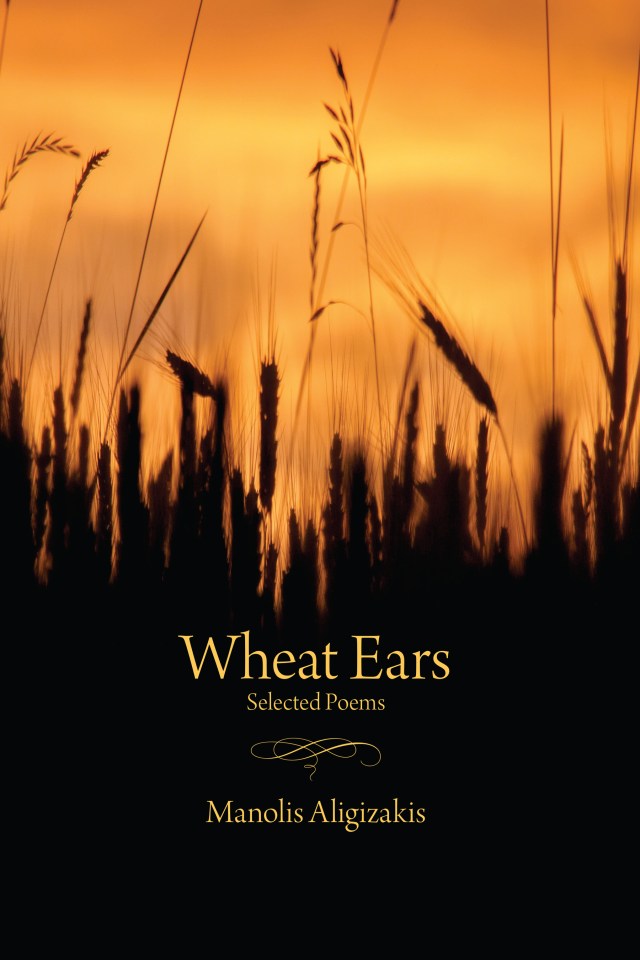
Pilgrimage Trembling steps, scared mesmerized anticipation sweet wonderment steps on a pilgrimage to the holy enclave where man opened the gates of heaven for the eyes of a hungry world steps one by one upwards the staircase upholding hope towards the cosmos of man, of a Giant a cosmos which still stands between the shiver of wheat and the pain of asphodels. Thoughts on a pilgrimage between doubt, fear, anxiety, sweet wonderment thoughts one by one upwards between your constant agony to achieve the impossible your passion to fight for your ethereal world. My steps upwards toward the celestial world of my great ancestor’s on the same path with his Cretan glance which sees through the world as the sunlight through a crystal his Cretan glance which orates to the golden wheat fields
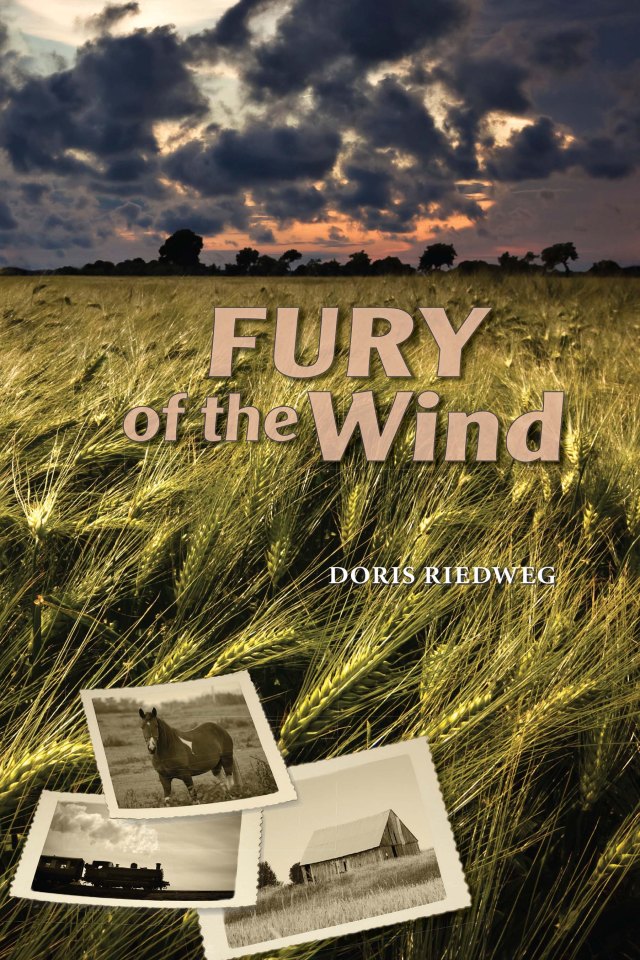
Back in the Saddle Two weeks after her marriage Sarah Fielding had a visitor. She was cleaning and rearranging cupboards in the pantry when she heard the thud of a horse’s hooves in the backyard. Through the window she could see that it was not Ben as she had expected, but a stranger dismounting from his horse. He stood for a moment and looked towards the stables before walking to the back door. When Sarah opened it, the young man removed his hat to reveal a head of curly auburn hair. His smile reached to his eyes and lit up his face. “How do you do, Mrs. Fielding? I’m Dave McNeill. Live over there about a mile.” He jerked his thumb in a south-westerly direction. “I’m pleased to meet you, Mr. McNeill,” Sarah said cheerfully, “you’re the first neighbour I’ve had the privilege of meeting.” “It’s Dave, please. Is Ben around?” “Yes, I believe he’s gone over to that field behind the stable.” She, too, pointed. “Oh, the north pasture. Thanks, Mrs. Fielding, I’ll see if I can find him.” He replaced his hat, and was turning away when Sarah, surprising even herself, said quickly, “But won’t you come in? I was just going to make a cup of coffee. Would you like one? And,” she added stepping aside to let him enter the kitchen, “I’d be pleased if you’d call me Sarah. I’m not used to Mrs. Fielding yet.” “Right, Sarah it is then. We’ve been anxious to meet you, Penny and me.” At Sarah’s questioning look, he added, “Penny’s my wife.” Sarah bustled from the pantry to the kitchen and back again, anxious to get the coffee started before her visitor should become impatient and decide he had to go. But he seemed in no hurry.
Rhyme And those who spoke and those who kept silent and the ones who climbed the highest branch those who let themselves go those who opened their hearts and those who filled it with pebbles and those who poured out rivers and those who made their bed under their shadow and they dreamed and those who lost themselves in books and those who scattered with no care for the forthcoming, with no fear that they might fear it.
Time and Light We are unborn all of us and each of us in the consciousness of timelessness the embryo of the abyss coiled in the wrath of nostalgia fingerprints of loneliness the sob of tomorrow the cell of nothingness. The time and light choke they dream of a leap into the unknown they gather the winds that burst an arrow by an unknown hand aims at the origin of the young age and the innocence of destiny becomes history.
They knew that what was in the pen was really just a baby. Even Roy seemed to calm down his calling as much as was possible. The bid, and there was four people still in the chase, was at 15,000 dollars before Roy even handed the microphone to Dr. Morgan. The good doctor was running out of new words to offer on the horses, but as he told the crowd, “If you don’t see the future in this one, if you don’t know what it means to own a grandson of Topsail Cody on the top side and a grandson of Doc Bar on the bottom side, then you should just get in your truck and leave right now.” Nobody left. When the microphone went back to Roy, he quickly took the bidders to 25,000 dollars. For a weanling! Now, there were only two bidders. Joel had heard someone behind him say that they were both trainers and top-notch reiners; one from Texas and the other from Colorado. Finally, at 32,000 dollars, the Texan waved his hand and walked away from the ring. Joel was in heaven. In quick succession, the remainder of the horses sold for 15,000, 12,000, 19,000, 17,000, and 21,000 dollars. In addition to the 100,000 dollars he had picked up from the ten three-year-olds, he also just sold six unbroken horses for another 100,000, plus change. It was a 200,000-dollar day. Not bad for a sale with only sixteen horses. He tried to figure out the average selling price of a horse, but with all of the excitement it was beyond his mental comprehension, and besides, who cared! As Roy thanked the crowd for attending, Cindy, with little Lila in tow, appeared from the crowd and gave Joel a big hug. “Say something,” she urged him “It’s your sale.” Joel proudly strode across the pen to where Roy stood and took the microphone. “Well,” he said, “I don’t really know what to say. I would just like to thank everyone for traveling way out here for our sale. I sure do appreciate the investment that you have made in our horses. If you need any help, if you didn’t plan on buying, or didn’t bring a trailer, we sure wouldn’t mind keeping an eye on them for another day or two ’til you get home and get a chance to return with your own trailer.”
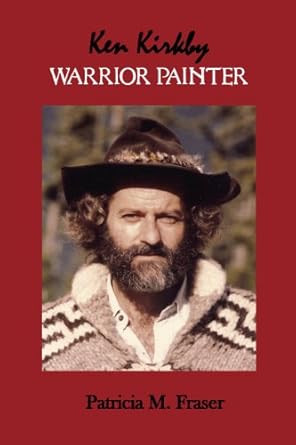
I took my rowboat and paddled out from shore to start the process of familiarization. I observed the mouth of the creeks, the curve of the beaches, the blend of driftwood and rock, the colour of the sky. I met people with aircraft and begged rides off them. And, do you know? This vast island is totally different than you might think. At one time the bulk of the land between the seashore and the mountains was actively farmed. The climate was favourable, and after clearing, the land was fertile. If you walk through it—there are still roads in the process of being reclaimed by nature—you’d be amazed at how much of it had been cultivated. Some of the parcels were very large, others just enough to maintain a family or two. Then along came the Boer War, which consumed a bunch of the young men, and then World Wars I & II finished the job. Without the next generation to continue what had been started, the forest grew back, roofs caved in, machinery rusted. Once I got the feel of it, I decided I’d try to tell the story of this part of the country—not the history, not the ‘big’ story, but the sense I had of the size and shape of the island. The wind wracked trees and snowcrusted mountains stirred my blood. And I found I was once again a painter. By the end of 2002, Ken was producing paintings to his satisfaction and was pleased to find the attitude of the island galleries more amenable than he’d experienced when he first returned to Vancouver. He came across galleries dealing in second-market sales where a Kirkby oil of a solitary Inukshuk standing proud on the tundra, or a parade of Inuksuit backed with Arctic snows would be on display. He’d introduce himself and was pleased to see that his name was recognised. He’d tell them that he was now in business on the west coast. Might they be interested in fresh pieces? The reaction was always positive. But when he laid out his canvases of coppery grasses, water-worn granite boulders, wind-bowed trees or perhaps a lonely lighthouse blinking eerily behind a rising ocean fog, he was met with consternation. “What’s this? Where are the icebergs? The Inuksuit? We can’t sell these. That’s not you.”
Song I walked all around your house (the moth flew around the lamp until it met its sweet death) though you didn’t come out that I’d burn into the flame of your eyes. Alas, the fragrance of the body and of the soul contamination will spoil one night even more alas since I won’t be the spoiler.
Flowers of the rock before the green sea with veins that reminded me of other loves gleaming in the slow drizzle flowers of the rock, faces that came when none spoke and spoke to me that they let me touch them after the silence among pine trees, oleanders and plane trees.






 Manolis Aligizakis