Cretan Canadian Poet, Author, Translator, Publisher
Author: vequinox
BIOGRAPHY
Manolis (Emmanuel Aligizakis) is a Greek-Canadian poet and author. He was recently appointed an honorary instructor and fellow of the International Arts Academy, and awarded a Master’s for the Arts in Literature. He is recognized for his ability to convey images and thoughts in a rich and evocative way that tugs at something deep within the reader. Born in the village of Kolibari on the island of Crete in 1947, he moved with his family at a young age to Thessaloniki and then to Athens, where he received his Bachelor of Arts in Political Sciences from the Panteion University of Athens. After graduation, he served in the armed forces for two years and emigrated to Vancouver in 1973, where he worked as an iron worker, train labourer, taxi driver, and stock broker, and studied English Literature at Simon Fraser University. He has written three novels and numerous collections of poetry, which are steadily being released as published works. His articles, poems and short stories in both Greek and English have appeared in various magazines and newspapers in Canada, United States, Sweden, Hungary, Slovakia, Romania, Australia, and Greece. His poetry has been translated into Spanish, Romanian, Swedish, German, Hungarian languages and has been published in book form or in magazines in various countries. He now lives in White Rock, where he spends his time writing, gardening, traveling, and heading Libros Libertad, an unorthodox and independent publishing company which he founded in 2006 with the mission of publishing literary books. His translation book “George Seferis-Collected Poems” was shortlisted for the Greek National Literary Awards the highest literary recognition of Greece.
Distinguished Awards
Winner of the Dr. Asha Bhargava Memorial Award, Writers International Network Canada, 2014
“George Seferis-Collected Poems” translated by Manolis, shortlisted for the Greek National Literary Awards, translation category.
1st International Poetry Prize for his translation of “George Seferis-Collected Poems”, 2013
Master of the Arts in Literature, International Arts Academy, 2013
1st Prize for poetry, 7th Volos poetry Competition, 2012
Honorary instructor and fellow, International Arts Academy, 2012
2nd Prize for short story, Interartia festival, 2012
2nd Prize for Poetry, Interartia Festival, 2012
2nd Prize for poetry, Interartia Festival, 2011
3rd prize for short stories, Interartia Festival, 2011
Books by Manolis
Autumn Leaves, poetry, Ekstasis Editions, 2014
Übermensch/Υπεράνθρωπος, poetry, Ekstasis Editions, 2013
Mythography, paintings and poetry, Libros Libertad, 2012
Nostos and Algos, poetry, Ekstasis Editions, 2012
Vortex, poetry, Libros Libertad, 2011
The Circle, novel, Libros Libertad, 2011
Vernal Equinox, poetry, Ekstasis Editions, 2011
Opera Bufa, poetry, Libros Libertad, 2010
Vespers, poetry by Manolis paintings by Ken Kirkby, Libros Libertad, 2010
Triptych, poetry, Ekstasis Editions, 2010
Nuances, poetry, Ekstasis Editions, 2009
Rendition, poetry, Libros Libertad, 2009
Impulses, poetry, Libros Libertad, 2009
Troglodytes, poetry, Libros Libertad, 2008
Petros Spathis, novel, Libros Libertad, 2008
El Greco, poetry, Libros Libertad, 2007
Path of Thorns, poetry, Libros Libertad, 2006
Footprints in Sandstone, poetry, Authorhouse, Bloomington, Indiana, 2006
The Orphans - an Anthology, poetry, Authorhouse, Bloomington, Indiana, 2005
Translations by Manolis
Idolaters, a novel by Joanna Frangia, Libros Libertad, 2014
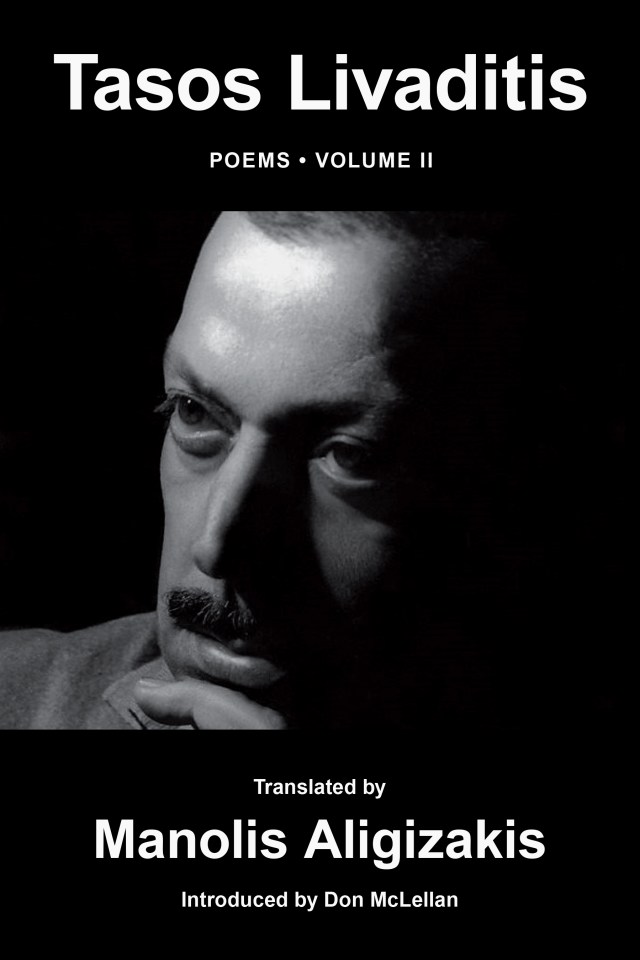
Tasos Livaditis-Selected Poems, Libros Libertad, 2014
Yannis Ritsos-Selected Poems, Ekstasis Editions, 2013
Cloe and Alexandra-Selected Poems, Libros Libertad, 2013
George Seferis-Collected Poems, Libros Libertad, 2012
Yannis Ritsos-Poems, Libros Libertad, 2010
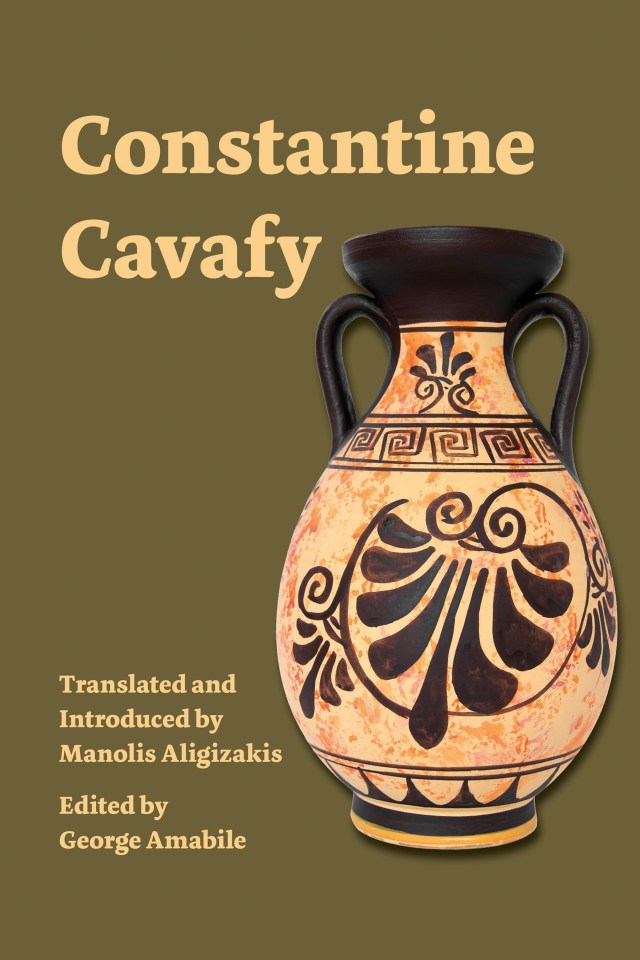
Constantine P. Cafavy - Poems, Libros Libertad, 2008
Cavafy-Selected Poems, Ekstasis Editions, 2011
Books in other languages
Eszmelet, (Hungarian), poetry by Manolis Aligizakis, translated into Hungarian by Karoly Csiby, AB-ART, Bratislava, Slovakia, 2014
Hierodoules, (Greek), poetry, Sexpirikon, Salonica, Greece, 2014
Yperanthropos,(Greek), poetry, ENEKEN Publications, Salonica, Greece, 2014
Übermensch (German), poetry by Manolis Aligizakis, translated into German by Eniko Thiele Csekei, WINDROSE, Austria, 2014
Nostos si Algos, (Romanian) poetry by Manolis Aligizakis, translated into Romanian by Lucia Gorea, DELLART, Cluj-Napoca, Romania, 2013
Tolmires Anatasis, (Greek) poetry, GAVRIILIDIS EDITIONS, Athens, Greece, 2013
Filloroes, (Greek ) poetry, ENEKEN PUBLICATIONS, Thessaloniki, Greece, 2013
Earini Isimeria, (Greek) poetry, ENEKEN PUBLICATIONS, Thessaloniki, Greece, 2011
Stratis o Roukounas, (Greek) novel, MAVRIDIS EDITIONS, Athens, Greece, 1981
Magazines
Canadian Fiction Magazine—Victoria, BC
Pacific Rim Review of Books—Victoria, BC
Canadian Poetry Review—Victoria, BC
Monday Poem, Leaf Press-Lantzville, BC
The Broadkill Review, Milton, Delaware
Ekeken, Thessaloniki, Greece
Envolimon, Beotia, Greece
Annual Literary Review, Athens, Greece
Stigmes, Crete, Greece
Apodimi Krites, Crete, Greece
Patris, Crete, Greece
Nyxta-Mera, Chania, Greece
Wallflowers, Thessaloniki, Greece
Diasporic Literature Spot, Melbourne, Australia
Black Sheep Dances, California, USA
Diasporic Literature Magazine, Melbourne, Australia
Spotlight on the Arts, Surrey, BC
Barnwood, International Poetry Magazine, Seattle, USA
Unrorean, University of Maine, Farmington, Maine, USA
Vakhikon, Athens, Greece
Paremvasi, Kozani, Greece
Szoros Ko, Bratislava, Slovakia
Mediterranean Poetry, Sweden
Apostaktirio, Athens, Greece
Life and Art, Athens, Greece
Logos and Images, Athens, Greece
Contemporary Writers and Thinkers, Athens, Greece
Palinodiae, Athens, Greece
Royal City Poet’s Anthology, 2013, New Westminster, BC, Canada
To parathyro, Paris, France
Ragazine C.C, New Jersey
Artenistas, Athens Greece
Deucalion the Thessalos, Greece.
Literary Lectern, Athens, Greece
Homo Universalis, Athens Greece
a barren woman who cries by the door, sniffing in her snot, just to hear a child, until a small tiny star takes my last argument away that the world isn’t nice at all. When I finally decided to start it was already late. All Homeric adventures were sang many years ago only a few flashlights with their yellow light were left and the nostalgia of a world beyond this world. I of course tried to familiarize myself plucking poultry or sitting on the toilet with the rats where I used to die a little at a time an impossible thing since each time they rang the bell I always appeared in front of them, a corpse full of life; then I took after the fly and its daily chores or someone who killed and after he went to eat at the restaurant, having a letter in his pocket, the letter with the divine confession that no one ever received. Another time I’ll narrate to you about the witness who was very thirsty in the desert, they say, until he died in order to write his name in the water.
these voices of the innumerable people, pagans as they were called, the ones who had died under the knife of the first Christians, who exterminated thousands and thousands, as the scholars claimed, perhaps even millions, to establish the new religion? It was written in certain books, not of course in the regular books taught in schools, that millions of Hellenes were eliminated so Christianity could spread over the lands, and perhaps these voices and groans Hermes was hearing coming from the depths of the earth were none other than the pain those millions of Hellenes suffered. He stood motionless as if to listen to a discourse coming from somewhere deep under the floor of the monastery, groans of people killed and buried under the soil of this church, when unexpectedly a thought came to him: did the purpose justified the means when a man is condemned to death for the success of a movement, did the death of a man in the hands of another was rightfully approved by the system which always craves to retain power over the people? And what about the killing of a brother by brother, only for the killer to gain the approval and help of a superior? Such thoughts overtook Hermes to the point of feeling sick, indeed he felt the need to run away, far away from this place, which he had visited with all the positive intentions of looking into the monastery correspondence. He felt suffocated. He put the papers away, he walked out of the church, he didn’t stop to thank the monk who helped him, he just walked out at a fast pace as if to distance himself from voices and images he wanted to forget. Then, when far out, he felt his heart had calmed down as he climbed a short hill since he wanted to change his route and followed a narrow trail towards the top of the hill to reach his village on the other side. He surely felt a lot better, and quite unexpectedly, a tune rose from within his essence to his lips, and he started singing a local tune; soon, he reached the top of the hill and found an old man on a donkey right ahead of him. He greeted him and then asked, “Are there any partridges around here, Uncle?” “I have seen a couple of flocks over that mountain,” the old man pointed to the other side of the horizon.
Disfigurements The modest, the simple, the right to bread, the bed that was made of planks, a humble window without a feather a few books next to it. A lightness blown straight from the afternoon sky. Here, only here, the minimal, the basics of the internal view, the alarm clock, the saw, the shelf, with the green bottles, and the naked arm on the chest. We, of course, had our secret dead men and other distances, long, short, with shops lit, between 7 and 10 o’clock, by old oil lamps, where the naïve daughter, half dressed, for the first time discerns, in the old mirror, her right leg enlarged up to the opposite hill and the cart with the long crests that passed and missed her.
Today you won’t awake one who’s in deep sleep today you won’t only bring a new dawn to the world but you’ll accomplish something amazing: all the immortals who have died, those I buried myself the immortals who have died you’ll bring to life with your music of resurrection. For this you have brought me to the cemetery, here to wait and for this all things around here are joyous and bloomed and rejoicing, which I’ve never seen before around the graves nor have I seen cypresses so flexible like now, like bodies that wish to embrace and kiss like newlyweds. And the graves are but tables waiting to be set with flavourful foods for crowned revellers who’ll come and feast until the new rosy dawn comes.
Past Looking back I wonder why everything I left without any effort to change them remained as beautiful as nature had crafted them. Who was I, after all who once wished to shift the balance of the universe by changing the depth of the beautiful cove of a woman’s body and the length of a man’s penis without the Grand Master’s plan?
In Alexandria (31 B.C.) From his small town, close to the suburbs and still full of dust from the trip the travelling salesman arrives. And “Frankincense” and “Gum!” “The Finest Olive Oil!” “Fragrance for your Hair!” He cries out on the streets. But the big noise of people, and the music and the parades won’t let him be heard. The crowd pushes him, pulls him along, hits him. And when finally, totally dazed, he asks, what madness is this? Someone throws at him the gigantic lie of the palace, that Anthony triumphs in Greece.
Between her horns it held a heavy piece of the sky like a crown. A little later it lowered her head and drank some water from the creek licking, with her bloodied tongue, the other cool tongue of her watery idol, as if licking her internal maternally, serenely, irreversibly, widely her internal wound from the outside, as if licking the silent, great, round wound of the world — perhaps it even quenched its thirst — perhaps our blood is the only thing that quenches our thirst — who knows. Soon after she raised her head over the water, not touching anything, untouched too and serene like a saint, and only a small lake made of the blood of her lips remained between her feet that were rooted in the river, a small red lake, in the shape of a map that slowly enlarged and vanished, melted as if its painless, freed blood traveled far away to an invisible vein of the cosmos; and for that reason she was calm, as if she had learned that our blood doesn’t vanish, that nothing vanishes, nothing, in this great nothing, the inconsolable, cruel, incomparable, so sweet, so consolable, so nothing.
Centaur Morning and the horses neigh tied onto the froth of impenitent sea rustle of naked leaves punished leaves forty times lashed by the winds climbs on the shoulder-blade of Sunday and on the Pelion waters. Here the blood of serpents poisons the ripen languor of serenity like rust the veins of marble and time gathers the wings of ash to debate with the blond gables now that in the sleep of the olive tree the spider forms its wrinkly netting. In the fields the lustful sprouts quiver and bathe in the fountain of convulsion.
We sat in the tent of a comrade talking till late in the night. Proof of love… ignorance of Eros… the third, unsaid thought rippled through the conversation carrying the night on its shoulders like a wounded soldier.
Butcher’s knife He sharpens his knife before he tries it on the hind of the goat hanging from the hook, grey-haired neighborhood butcher who has slaughtered many animals during his career which has sold to meat craving citizens. He was a very important member of the society, Stephen, in his white blood stained apron, a butcher with his washed out blue eyes, you could say the national flag’s white and blue colors, now that his back is constantly aching, hunched man who can’t sharpen his knives as easily as he used to do, sometimes contemplates, would they need a butcher up there in the Heavens, do they still eat meat in Paradise? Other than the days of Lent when both the alive and the dead abstain from eating flesh





 Manolis Aligizakis