Cretan Canadian Poet, Author, Translator, Publisher
Author: vequinox
BIOGRAPHY
Manolis (Emmanuel Aligizakis) is a Greek-Canadian poet and author. He was recently appointed an honorary instructor and fellow of the International Arts Academy, and awarded a Master’s for the Arts in Literature. He is recognized for his ability to convey images and thoughts in a rich and evocative way that tugs at something deep within the reader. Born in the village of Kolibari on the island of Crete in 1947, he moved with his family at a young age to Thessaloniki and then to Athens, where he received his Bachelor of Arts in Political Sciences from the Panteion University of Athens. After graduation, he served in the armed forces for two years and emigrated to Vancouver in 1973, where he worked as an iron worker, train labourer, taxi driver, and stock broker, and studied English Literature at Simon Fraser University. He has written three novels and numerous collections of poetry, which are steadily being released as published works. His articles, poems and short stories in both Greek and English have appeared in various magazines and newspapers in Canada, United States, Sweden, Hungary, Slovakia, Romania, Australia, and Greece. His poetry has been translated into Spanish, Romanian, Swedish, German, Hungarian languages and has been published in book form or in magazines in various countries. He now lives in White Rock, where he spends his time writing, gardening, traveling, and heading Libros Libertad, an unorthodox and independent publishing company which he founded in 2006 with the mission of publishing literary books. His translation book “George Seferis-Collected Poems” was shortlisted for the Greek National Literary Awards the highest literary recognition of Greece.
Distinguished Awards
Winner of the Dr. Asha Bhargava Memorial Award, Writers International Network Canada, 2014
“George Seferis-Collected Poems” translated by Manolis, shortlisted for the Greek National Literary Awards, translation category.
1st International Poetry Prize for his translation of “George Seferis-Collected Poems”, 2013
Master of the Arts in Literature, International Arts Academy, 2013
1st Prize for poetry, 7th Volos poetry Competition, 2012
Honorary instructor and fellow, International Arts Academy, 2012
2nd Prize for short story, Interartia festival, 2012
2nd Prize for Poetry, Interartia Festival, 2012
2nd Prize for poetry, Interartia Festival, 2011
3rd prize for short stories, Interartia Festival, 2011
Books by Manolis
Autumn Leaves, poetry, Ekstasis Editions, 2014
Übermensch/Υπεράνθρωπος, poetry, Ekstasis Editions, 2013
Mythography, paintings and poetry, Libros Libertad, 2012
Nostos and Algos, poetry, Ekstasis Editions, 2012
Vortex, poetry, Libros Libertad, 2011
The Circle, novel, Libros Libertad, 2011
Vernal Equinox, poetry, Ekstasis Editions, 2011
Opera Bufa, poetry, Libros Libertad, 2010
Vespers, poetry by Manolis paintings by Ken Kirkby, Libros Libertad, 2010
Triptych, poetry, Ekstasis Editions, 2010
Nuances, poetry, Ekstasis Editions, 2009
Rendition, poetry, Libros Libertad, 2009
Impulses, poetry, Libros Libertad, 2009
Troglodytes, poetry, Libros Libertad, 2008
Petros Spathis, novel, Libros Libertad, 2008
El Greco, poetry, Libros Libertad, 2007
Path of Thorns, poetry, Libros Libertad, 2006
Footprints in Sandstone, poetry, Authorhouse, Bloomington, Indiana, 2006
The Orphans - an Anthology, poetry, Authorhouse, Bloomington, Indiana, 2005
Translations by Manolis
Idolaters, a novel by Joanna Frangia, Libros Libertad, 2014
Tasos Livaditis-Selected Poems, Libros Libertad, 2014
Yannis Ritsos-Selected Poems, Ekstasis Editions, 2013
Cloe and Alexandra-Selected Poems, Libros Libertad, 2013
George Seferis-Collected Poems, Libros Libertad, 2012
Yannis Ritsos-Poems, Libros Libertad, 2010
Constantine P. Cafavy - Poems, Libros Libertad, 2008
Cavafy-Selected Poems, Ekstasis Editions, 2011
Books in other languages
Eszmelet, (Hungarian), poetry by Manolis Aligizakis, translated into Hungarian by Karoly Csiby, AB-ART, Bratislava, Slovakia, 2014
Hierodoules, (Greek), poetry, Sexpirikon, Salonica, Greece, 2014
Yperanthropos,(Greek), poetry, ENEKEN Publications, Salonica, Greece, 2014
Übermensch (German), poetry by Manolis Aligizakis, translated into German by Eniko Thiele Csekei, WINDROSE, Austria, 2014
Nostos si Algos, (Romanian) poetry by Manolis Aligizakis, translated into Romanian by Lucia Gorea, DELLART, Cluj-Napoca, Romania, 2013
Tolmires Anatasis, (Greek) poetry, GAVRIILIDIS EDITIONS, Athens, Greece, 2013
Filloroes, (Greek ) poetry, ENEKEN PUBLICATIONS, Thessaloniki, Greece, 2013
Earini Isimeria, (Greek) poetry, ENEKEN PUBLICATIONS, Thessaloniki, Greece, 2011
Stratis o Roukounas, (Greek) novel, MAVRIDIS EDITIONS, Athens, Greece, 1981
Magazines
Canadian Fiction Magazine—Victoria, BC
Pacific Rim Review of Books—Victoria, BC
Canadian Poetry Review—Victoria, BC
Monday Poem, Leaf Press-Lantzville, BC
The Broadkill Review, Milton, Delaware
Ekeken, Thessaloniki, Greece
Envolimon, Beotia, Greece
Annual Literary Review, Athens, Greece
Stigmes, Crete, Greece
Apodimi Krites, Crete, Greece
Patris, Crete, Greece
Nyxta-Mera, Chania, Greece
Wallflowers, Thessaloniki, Greece
Diasporic Literature Spot, Melbourne, Australia
Black Sheep Dances, California, USA
Diasporic Literature Magazine, Melbourne, Australia
Spotlight on the Arts, Surrey, BC
Barnwood, International Poetry Magazine, Seattle, USA
Unrorean, University of Maine, Farmington, Maine, USA
Vakhikon, Athens, Greece
Paremvasi, Kozani, Greece
Szoros Ko, Bratislava, Slovakia
Mediterranean Poetry, Sweden
Apostaktirio, Athens, Greece
Life and Art, Athens, Greece
Logos and Images, Athens, Greece
Contemporary Writers and Thinkers, Athens, Greece
Palinodiae, Athens, Greece
Royal City Poet’s Anthology, 2013, New Westminster, BC, Canada
To parathyro, Paris, France
Ragazine C.C, New Jersey
Artenistas, Athens Greece
Deucalion the Thessalos, Greece.
Literary Lectern, Athens, Greece
Homo Universalis, Athens Greece
Letter Thought of writing you a letter to say that I loved you but soon I recalled people don’t write letters anymore and grabbing the mobile phone I texted that I wanted to see your playful eyes when you turned on your phone and you appeared on the screen with your laughing eyes and you laughed, and laughed and said that I was a student of the old school and I agreed and sent a kiss to you from the other side of the planet
With the help of the two constables they placed the body in a plastic bag and carried it to their car. Soon they drove away to the lab. The two constables left in their cruiser after Ron promised to come back next day for a more detailed examination. They still had to find the knife in question. Soon as they left Sister Gladys with the help of Mary cleaned up the floor off the blood stains. Father Jerome advised everyone to go and lie down it was a very hectic day full of sadness and the unexpected passing of Father Thomas at the hands of a brute. George the cook reached Anton’s house in five minutes of a fast walk. Not wanting to risk waking up Anton’s parents he walked to the back and knocked at the basement door. Anton opened. He looked at the cook with surprise written on his eyes. The cook walked inside and in one breath, as if he had recanted in his mind the whole sentence many times he informed Anton about Father Thomas’ killing and who the killer was and where he along with his sister were this very moment. Anton was dumbfounded. He knew the youth, Marcus, would someday take revenge on the misfortunes and abuses him and his sister suffered under the rules of the Residential School, however he didn’t expected it to happen so soon. George told him the youth had thrown the knife he took from George’s kitchen in the water of Thompson River and asked what they could do for the two youths. Anton didn’t know what to do and looking at George he realized he didn’t have a clue either. Then as if an epiphany struck Anton he said, “Let’s go; I know where to take them,” and with that they both got in Anton’s truck and drove back to George’s place. They found the two youths who looked scared and cold.
‘Oh I’m in for the long haul, Caitlin. I’ve signed up for twenty-five years. Army life suits me.’ ‘You won’t go back to the fishing then?’ ‘No,’ Tom replied. ‘The Drumard Maid, your father’s old boat, the one my father bought, she has long since gone. Sold for scrap and probably did her bit for the war effort. No, I’m going to stay in the army.’ Then he turned to his companion. ‘Do you remember Gerard Sweeney, Caitlin? I know you do, Seamus.’ ‘I don’t know if I would have recognised you, Gerard,’ Caitlin declared. ‘You’ve been in America a long time.’ ‘Not too long,’ said Gerard. ‘Ten years. I was eighteen. Finbar got the farm, and I got sent out to the colonies.’ ‘Better not let any Yank hear you say that,’ Seamus warned light-heartedly. ‘You wanted to go to America, if I remember rightly.’ ‘Best decision I ever made, Seamus. I love it out there. Married a beautiful woman. I’ve a son aged six and a daughter aged four, a house, a car, a good job when I go back. I’m one lucky guy.’ ‘Gerard likes that chick that Michael’s dancing with,’ Tom said. ‘He wants an introduction.’ ‘You’re married, Gerard Sweeney,’ Caitlin scolded mockingly. ‘And so is she.’ ‘And she’s here with her husband,’ Seamus added. Tom slapped his friend on the back. ‘Too bad, Gerry, old sod. You’ll have to wait till you’re back in California.’ ‘Lots of time, Tommy, my bold soldier laddie,’ Gerard said. ‘As Caitlin has pointed out, this party could go on all night, and what chick can resist a man in uniform?’ ‘You’re a reprobate, Gerard Sweeney.’ Tom looked at Caitlin. ‘Don’t listen to him, Caitlin. He’s big-headed like most Yanks. They think they’re God’s gift to humanity.’ Tom paused to pull a swig from his bottle of beer. ‘Well, we just came over to say hello. I’ll call up to the house, Caitlin, before I leave. Have a chat with you and Michael, if he ever let’s go of that girl. And I want to see Nora as well.’ ‘She’ll be happy to see you, Tom. And bring Gerard with you.’ ‘I don’t know if I should introduce Gerry to Nora. She’s much too pretty.’ ‘She’s married too, Tom. Remember.’
Perfect Day It wasn’t the seashore of Salonica during the daybreak so cleanly washed by the hues of the rain nor the sea hoarse, violent, wild lion with blue flames, it wasn’t the benches in rows with the fatty loneliness of their emptiness, it was that last night I dreamed perhaps for once for the first time, first time death you entered my body behind my soul under the mouths of the body, you entered me and stayed.
Jetstream Look at the jet stream I pointed to the sky, among the clouds, a teardrop falling on thirsty soil to absolve death. The smooth bark of the slender palm tree that shivers to annul Hades rough leaf cut-offs turned into eternity over the gravestone’s time. Why do you say this? Because the poet’s glance observes the curvaceous body of the server with her red minimal thong and the airplane-mosquito with the enormous dream of the passenger resting in the seat twenty-four alpha
Burning Bush Lighthouse that you write letters on the immenseness on every wounded who dreams eyelid that flickers in the night in the wrinkles of fear, you send reflections whirling star and daydream of the horizon guard of the rocks hopeless Aegeus lover of white sails what could you be at the lakeshore of a foreign land without the knowledge of the closing wave that never reaches but changes the world without changing anything a wise book of immenseness the illusion of each day starts in the mind and each day includes invisible versions of all complete beings shivering soul of the bright galaxy what could you be in a world filled with certainty and smooth concepts?
I Logos in absentia while in the stained soil, all earthworms burrow toward the west, trickling anger undresses the magnolias when human nakedness like a yellow dandelion slowly treads down the road steady pace on its sacred path to the clothes factory where it randomly selects fabrics ethereal designs divine colours and dresses itself in softened satin and black velvet. What then of all waterholes and all the thirsty sparrows? Nakedness emerges in phony light, comes out in flashing fashion smooth as the knife’s sharpened edge gleaming like fire from a hungry pistol. Human nakedness is fully clothed externally glowing yet, unbearably naked.
Old Song The garden railings are wet from the rain, like the poor who are left outside but as night falls, a flute or a star speaks for the whole universe. When we were children, we hid under the stairway and when we came out, we had left behind a royal fate. Silence makes the world bigger, sorrow more just and later, as young men, we hugged the first tree and narrated our past to it, joyless days that you’ve passed; you’ve left behind an emotional memory and I, who was crazy for the future, now in agony, I observe the movement of the clock’s fingers. Until one night, a man goes along the road singing. Where have you heard this song before? You don’t remember. Yet nostalgia of all you dreamed shivers in that song. You stand by the window and listen as if enchanted. And suddenly the song stops at the turn of the road. Everything vanishes. Quiet. And what will you do now?
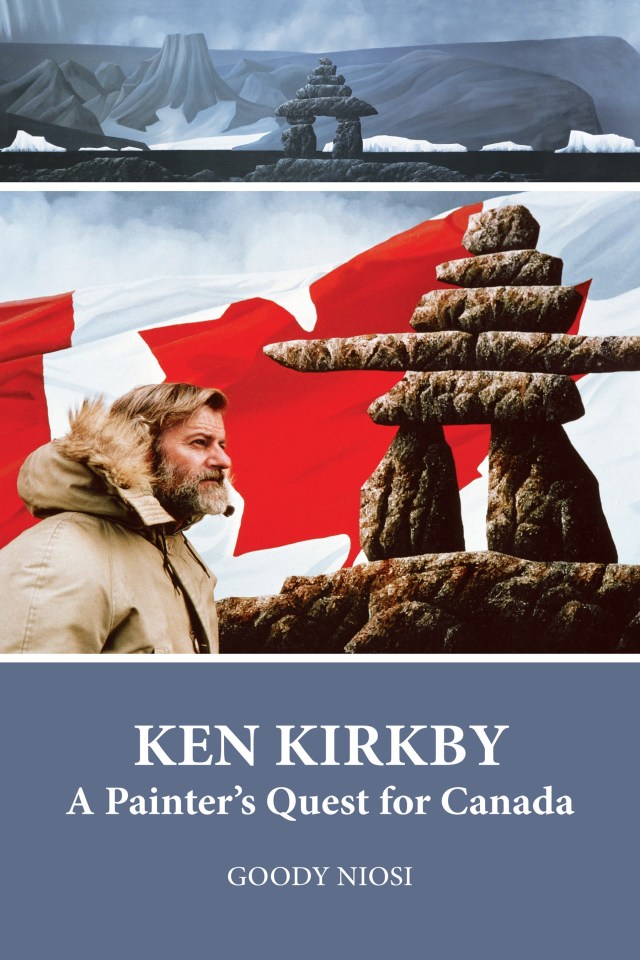
…grandly feted and on another day, he and Marsha visited the village that had been his home. They walked up the Avenue of Princes and stopped in front of number twelve – his home. In the garden, he saw a couple talking with the gardener. Ken leaned over the garden wall, introduced himself, and asked if he could look inside his old boyhood home. The couple frowned, turned their backs on him, and walked into the house, locking the door behind them. The gardener said, “You’re Ken.” “Yes.” “I’m Francisco’s nephew.” “How wonderful to meet you. But why are they so upset?” “They think you’ve come back to claim the house.” Ken laughed. “I just wanted to go inside and look. I thought it might be very nice.” “Oh no. People have been wondering when you would return to take back what is yours.” “I’ve never considered it mine,” he said. They walked on through the village and then down to the beach. Nothing had changed. The wall he and Francisco had built was still there and still trapping the sand to create a beautiful stretch of beach. Even the remains of Francisco’s cabin still clung to the cliffs. They drove to Peniche, the home of their friend, the Count. Even here Ken was recognized, not so much for himself, but for his father; a saint according to the owner of a restaurant, who closed the café in celebration of Ken’s visit and served up a feast for his honoured guests. Back in Toronto, Ken settled into a routine that was continuously interrupted. When he was not working on Isumataq he painted canvases for the gallery and for the financial company’s new collection. His biggest challenge was that the media liked him too much. They wanted to know why he was meeting with presidents in Europe; they wanted to know his plans – what was next? Too much good press was boring so they sought out the malcontents – those who had accused him of appropriating a culture that wasn’t his. He needled them until they fired back. He had come back from his latest Arctic trip with letters from the grandmothers, written in Inuktitut and translated into English, stating that they not only approved of his art, but had also asked him expressly to do what he was doing. The letters were tucked in a file that Ken suspected might be useful one day. Bad press was interesting but outrageous press was better. He had about twenty unfinished paintings, stacked in a corner of the studio, that he would likely never complete. He spread them out on the floor and paced between them. “What are you doing?” Diane asked, poking her head into the studio.








 Manolis Aligizakis