Cretan Canadian Poet, Author, Translator, Publisher
Author: vequinox
BIOGRAPHY
Manolis (Emmanuel Aligizakis) is a Greek-Canadian poet and author. He was recently appointed an honorary instructor and fellow of the International Arts Academy, and awarded a Master’s for the Arts in Literature. He is recognized for his ability to convey images and thoughts in a rich and evocative way that tugs at something deep within the reader. Born in the village of Kolibari on the island of Crete in 1947, he moved with his family at a young age to Thessaloniki and then to Athens, where he received his Bachelor of Arts in Political Sciences from the Panteion University of Athens. After graduation, he served in the armed forces for two years and emigrated to Vancouver in 1973, where he worked as an iron worker, train labourer, taxi driver, and stock broker, and studied English Literature at Simon Fraser University. He has written three novels and numerous collections of poetry, which are steadily being released as published works. His articles, poems and short stories in both Greek and English have appeared in various magazines and newspapers in Canada, United States, Sweden, Hungary, Slovakia, Romania, Australia, and Greece. His poetry has been translated into Spanish, Romanian, Swedish, German, Hungarian languages and has been published in book form or in magazines in various countries. He now lives in White Rock, where he spends his time writing, gardening, traveling, and heading Libros Libertad, an unorthodox and independent publishing company which he founded in 2006 with the mission of publishing literary books. His translation book “George Seferis-Collected Poems” was shortlisted for the Greek National Literary Awards the highest literary recognition of Greece.
Distinguished Awards
Winner of the Dr. Asha Bhargava Memorial Award, Writers International Network Canada, 2014
“George Seferis-Collected Poems” translated by Manolis, shortlisted for the Greek National Literary Awards, translation category.
1st International Poetry Prize for his translation of “George Seferis-Collected Poems”, 2013
Master of the Arts in Literature, International Arts Academy, 2013
1st Prize for poetry, 7th Volos poetry Competition, 2012
Honorary instructor and fellow, International Arts Academy, 2012
2nd Prize for short story, Interartia festival, 2012
2nd Prize for Poetry, Interartia Festival, 2012
2nd Prize for poetry, Interartia Festival, 2011
3rd prize for short stories, Interartia Festival, 2011
Books by Manolis
Autumn Leaves, poetry, Ekstasis Editions, 2014
Übermensch/Υπεράνθρωπος, poetry, Ekstasis Editions, 2013
Mythography, paintings and poetry, Libros Libertad, 2012
Nostos and Algos, poetry, Ekstasis Editions, 2012
Vortex, poetry, Libros Libertad, 2011
The Circle, novel, Libros Libertad, 2011
Vernal Equinox, poetry, Ekstasis Editions, 2011
Opera Bufa, poetry, Libros Libertad, 2010
Vespers, poetry by Manolis paintings by Ken Kirkby, Libros Libertad, 2010
Triptych, poetry, Ekstasis Editions, 2010
Nuances, poetry, Ekstasis Editions, 2009
Rendition, poetry, Libros Libertad, 2009
Impulses, poetry, Libros Libertad, 2009
Troglodytes, poetry, Libros Libertad, 2008
Petros Spathis, novel, Libros Libertad, 2008
El Greco, poetry, Libros Libertad, 2007
Path of Thorns, poetry, Libros Libertad, 2006
Footprints in Sandstone, poetry, Authorhouse, Bloomington, Indiana, 2006
The Orphans - an Anthology, poetry, Authorhouse, Bloomington, Indiana, 2005
Translations by Manolis
Idolaters, a novel by Joanna Frangia, Libros Libertad, 2014
Tasos Livaditis-Selected Poems, Libros Libertad, 2014
Yannis Ritsos-Selected Poems, Ekstasis Editions, 2013
Cloe and Alexandra-Selected Poems, Libros Libertad, 2013
George Seferis-Collected Poems, Libros Libertad, 2012
Yannis Ritsos-Poems, Libros Libertad, 2010
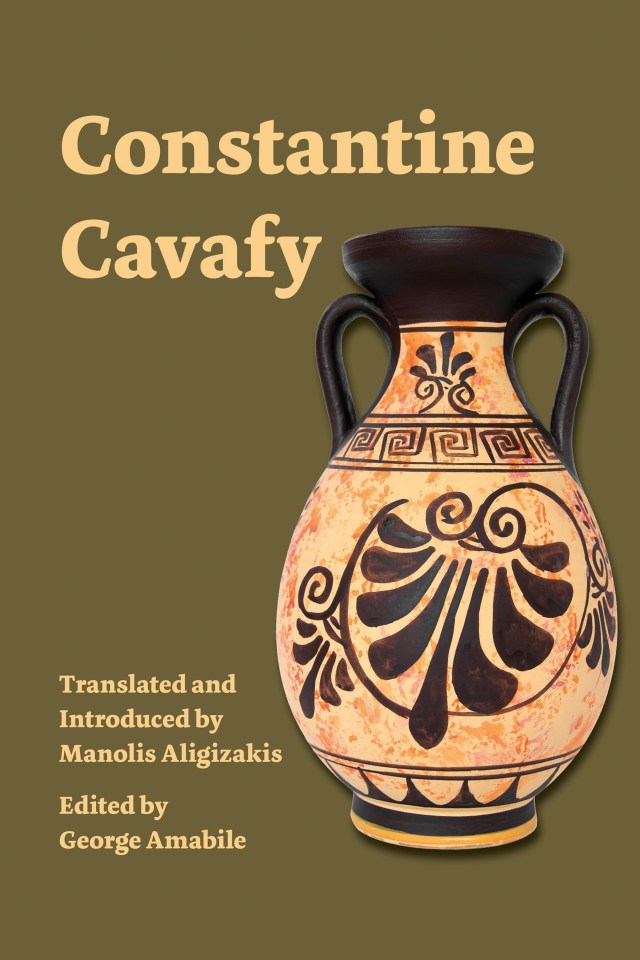
Constantine P. Cafavy - Poems, Libros Libertad, 2008
Cavafy-Selected Poems, Ekstasis Editions, 2011
Books in other languages
Eszmelet, (Hungarian), poetry by Manolis Aligizakis, translated into Hungarian by Karoly Csiby, AB-ART, Bratislava, Slovakia, 2014
Hierodoules, (Greek), poetry, Sexpirikon, Salonica, Greece, 2014
Yperanthropos,(Greek), poetry, ENEKEN Publications, Salonica, Greece, 2014
Übermensch (German), poetry by Manolis Aligizakis, translated into German by Eniko Thiele Csekei, WINDROSE, Austria, 2014
Nostos si Algos, (Romanian) poetry by Manolis Aligizakis, translated into Romanian by Lucia Gorea, DELLART, Cluj-Napoca, Romania, 2013
Tolmires Anatasis, (Greek) poetry, GAVRIILIDIS EDITIONS, Athens, Greece, 2013
Filloroes, (Greek ) poetry, ENEKEN PUBLICATIONS, Thessaloniki, Greece, 2013
Earini Isimeria, (Greek) poetry, ENEKEN PUBLICATIONS, Thessaloniki, Greece, 2011
Stratis o Roukounas, (Greek) novel, MAVRIDIS EDITIONS, Athens, Greece, 1981
Magazines
Canadian Fiction Magazine—Victoria, BC
Pacific Rim Review of Books—Victoria, BC
Canadian Poetry Review—Victoria, BC
Monday Poem, Leaf Press-Lantzville, BC
The Broadkill Review, Milton, Delaware
Ekeken, Thessaloniki, Greece
Envolimon, Beotia, Greece
Annual Literary Review, Athens, Greece
Stigmes, Crete, Greece
Apodimi Krites, Crete, Greece
Patris, Crete, Greece
Nyxta-Mera, Chania, Greece
Wallflowers, Thessaloniki, Greece
Diasporic Literature Spot, Melbourne, Australia
Black Sheep Dances, California, USA
Diasporic Literature Magazine, Melbourne, Australia
Spotlight on the Arts, Surrey, BC
Barnwood, International Poetry Magazine, Seattle, USA
Unrorean, University of Maine, Farmington, Maine, USA
Vakhikon, Athens, Greece
Paremvasi, Kozani, Greece
Szoros Ko, Bratislava, Slovakia
Mediterranean Poetry, Sweden
Apostaktirio, Athens, Greece
Life and Art, Athens, Greece
Logos and Images, Athens, Greece
Contemporary Writers and Thinkers, Athens, Greece
Palinodiae, Athens, Greece
Royal City Poet’s Anthology, 2013, New Westminster, BC, Canada
To parathyro, Paris, France
Ragazine C.C, New Jersey
Artenistas, Athens Greece
Deucalion the Thessalos, Greece.
Literary Lectern, Athens, Greece
Homo Universalis, Athens Greece
Theatre of Sidon (400 A.D.) Son of an honourable citizen, above all, handsome ephebe of the theatre, pleasing in many ways, I often compose very daring verses in Greek, that I circulate, secretly most of the time. Oh gods! That they won’t be seen by the darkly clothed people, those who speak of morality these verses are about a superior quality of carnal pleasure leading to sterile love, often rejected.
Dry Mouth Fasting is not necessary, he said. I chewed my saliva, ripped the bed sheet, knocked at the door, smelled the wall, waited in the hallway, out of the stoa, and I stood in the road. The night was falling late, later than the void between two hands. The bus arrived, and all five of them disembarked together. The woman’s kerchief fell. The lights were still on; the ticket collector had long hair, tickets, two drachma coins, and his secrets. The spotlight hit the man with the black suit, who was coming from the other side, the man I didn’t expect, yet he had my hat on and held a basket with yellow apples.
Lantern The lantern’s wisdom I embrace and the narrow path in front I unfold with all good inspiration for the discovery of the one. Sardonic laughter ironic smiles short ever short images of stolen gazes when a young sun struggles to transform the world into golden miracles. Human banality that overcomes all the dreams of dreamers. A lantern’s wisdom I present to my feet for my feet to follow perhaps this morning perhaps today I’ll find Him. Perhaps this morning I’ll find the one who sees man like a man. Perhaps today I’ll get to meet the One who doesn’t stay at the color of garment or skin who doesn’t esteem the value of a bank account or the number of missiles pointed against the other man. Tired footsteps in the agora and and in the arena and in the matador’s dreams as I endure the ridicule of the inexistent life forms as I endure the pain of searching for a piece of the endless blue sky. Tired footsteps up the steep face of daylight and the blind hands of the moonlight.
Return Smile of the Gods, Bay of Saronikos, always great blessing of our ship’s route we could hear the roar of the high seas as easily as the calmness of your depth under the morning dew like a dove with its body’s nonchalance: Athens shivers and revels like a nymph that longs for the faraway sun. Because the sky shines, blonde mane of Pegasus, Fate of the Parthenon glass that Zeus keeps upside-down that the dream-light is poured a flood prodigal son, I return to you swaying like a flower in the breeze earth, sky and you, oh sea of Attica, to whom I owe all my Songs!
Semblance of a Bird’s Chirp A bitter bird chirps inside the wood. Semblance of a bird semblance of a chirp. Perhaps a blackbird strike the wood with its beak. It rains, bird has no other refuge, chick-chick on the window, the sound of the rain only louder. However, there is no rain nor window in the wood, only darkness in its viscera and dry pus. Other times, other birds on leaves and branches. The blackbird: look at it, it has found a way to wedge itself intact (From its beak down as a boat in a Lilliputian bottle) and always chick-chick and chick hard to decipher sounds from the invisible bird, like when you hear that God appeared, as in a miracle, to His chosen people.
It was delicious and she washed it down with a sip from a tumbler full of what appeared to be neat spirit. She was sitting in the family’s combination living and dining room where the ornate, antique table was laden with small plates of food. Wise in the ways of Russian dining from having partied with Ukrainians and Polish, she knew that these were only the zakuski, the appetizers, and that a more substantial meal would follow. “No, really, now I’m full up.” At least the food is dampening the effects of the vodka, she thought. “How about you, Paul?” The man referred to as Paul looked up from a plate of bread and sausage and smiled shyly. “Thank you. You are good hosts,” he murmured. “Your Russian is so good. Did you study long in university?” asked Marta of Paul while Misha seemed distracted and regarded Jennifer solemnly. Paul-Volodya did not reply right away and Marta was interrupted by the sound of something bubbling on the stove. The afternoon so far had been wonderful, full of affectionate hugs and cheerful toasts toward Jennifer, friendship in which she reciprocated and in which Paul had been generously included. Their daughter, Nadya, was at school but the couple promised that she would return home very soon. After refreshment, the cousins had spoken of their own hopes to leave the Soviet Union and live in Canada. The nervousness with which they raised the topic and the intensity with which they spoke made Jennifer realize how important this move was to them. They would need help and support in Canada. She didn’t know much about Canadian immigration laws, but wouldn’t they need a sponsor? Someone from within the country—a relative who would vouch for them, promise to provide for them? She thought at first of her mother as the closest relative but had an uneasy feeling these two were grooming their newfound cousin for the role. Yet nagging questions persisted. Were they truly related to her? She wondered at their eagerness. They seemed to have everything here: a private apartment of their own, not too big but with a balcony that gave a view of the playground opposite. Their daughter enjoyed school and Young Pioneers, they said, and they were both working, he as a technician and she as a bus driver. This last gave Jennifer pause as she tried to envision the dainty, polite Marta in the driver’s seat of a soot-black, fume-spewing bus, but she knew that the Soviet Union was ahead of the west in ensuring women joined the work force in many non-traditional jobs. Marta worked shifts so was off-duty right now…
If, one day, I manage to escape, I’ll open a small store in a side street to sell bitter things: tiny taxidermy animals, biographies of poor people, eyelids that never closed and of course, unthoughtful spirit lamps; on the entrance I’ll write, “pay the blind man on the opposite side, he’s the only one who knows”. During the evening I’ll sit by the door with my black hat and a patisserie tray on hand for whoever can understand. And perhaps that funny old woman may return with her faint smile held with pins “I’ve brought it to you” she will say, “she has her own house” and perhaps she means uncertainty or the dead woman or as the Lord may have ordered since the preacher kept on crying out “brothers” and untie Eudokia “silence” she says to me “what’s this and put the wall back to where it belongs”. Now I’m sad that you won’t be able to write to me, my good friend, the envelopes and writing paper are expensive indeed for a dead person (who they unthoughtfully bury in the dampness) yet when I usually think of you it’s as if I get dressed in all the black ashtrays and your mother, let them call her crazy because she always holds an umbrella, since it always rains in the world now, as an old poet would have said, the real stories are very rare. God help us.
Hierodules Past midnight in the cloyed atmosphere of the casino’s underbelly things were not as they seemed I sat at a slot machine trying to synchronize my mind to the machine’s rhythm brain balancing precariously between mild intoxication and growing inebriation alcohol consumption evident on limbs and a loose mind chasing the elusive hit as I heard an alluring, sultry voice. “Hi, baby, how are you?” Young blonde hooker passed by me brushing her voluptuousness languidly against my back voice as sweet as honey dripping with innocence and I, in my mid-sixties took this as a compliment even though it came from the promiscuous and cunning lips of the young blonde hooker my brain reeled in the clutches of alcohol philosophical thoughts and unexpected comparisons The young hierodule for a few dollars could provide my sexual release the casino for a fistful of dollars sold me the ephemeral joy of machine combinations the luck of the draw and hope and the other hierodule the greatest which for a few dollars more sells to its innumerable Johns the safety of Heaven.
insisted, so his uncle and auntie said their farewells at home. Eleni and Hermes met in a nightclub a couple of years ago on the island of Ios, where they were both vacationing. Hermes loved to play with her blonde hair, and he mostly enjoyed letting his eyes dive deep into her blue eyes. He walked toward the deck bar, passing by the pretty tourist girl sunbathing. It was not easy to walk along with all these people sitting or lying around on the deck. He ordered a cold coffee and glanced around. Next to him was an old man drinking his lemonade: tough features, wrinkles on his face, white hair, black circles around his eyes. The old man felt Hermes’ glance and turned toward him: “And where are you from, young man?” “From around here, Uncle,” Hermes answered, imitating the old man’s accent. It was customary to address an older man as “Uncle” when one didn’t know his name. Whenever coming to the island, Hermes liked to talk with an accent close to the locals to conform to their ways as much as possible. His coffee was brewed, and he took a slow sip to check it out. The old man observed his ritual manner, satisfied. “Could I ask you something, Uncle?” Hermes felt the need to kill the silence between them. “Sure. What is it, my son?” “The island, why is it called Crete?” The old man raised his eyebrows. Not many people asked this kind of question. “We call it Crete because it means wines and meats.” Hermes was surprised. He never knew. Did this mean that this island used to be fertile and fruitful, and the people never had to worry about their food? The old man turned and asked him. “What do you do in Athens, my son?” “I attend the university, Uncle. I am graduating this year.” “Oh, you are a sand pebble then.”
Guacaipuro surveyed the damage. “Your god,” he panted, “is evil.” Then he seemed to see something in the shadows of the bushes illuminated by the firelight, and all distress lifted from his countenance. He reached out, but life left him at that moment. He collapsed onto Urquía, his face buried in her bosom. I gawked at them. He had trusted me with her life, and there she was, dead. And he saw her die. I was on my feet. Where had all the air gone? I gasped, trying to suck it in, and stumbled away. My knees buckled, and I held myself by the middle. A shout emerged from the centre of my soul, a long throat-shredding, “No!” She hadn’t converted either. The Spaniards stepped back. I would have liked to see them try and touch his body, chop off his head and take it as a trophy. Something stopped them. Horror, I guess. As they fled uphill, leaving only desolation behind, I felt Benjamin’s big hand on my shoulder. “Coming?” I shot him a loathing look; pain choked me, tears stung my eyes, my head throbbed. I saw in the fleeting expression that crossed his face that that was the last thing he expected from me. He strode away, looking back over his big, swaying shoulders a couple of times. It was not his fault, of course, but at that moment he became the Spaniards, a group I did not want to belong to any longer. My reaction was unjust, and I knew it, but couldn’t bring myself to be like Jesus. Had I ever? The next hours were filled with the numbness of incredulity. I just sat there until the hut was nothing more than a glowing mass of smouldering thatch. Desolation after the storm. Not a breath of hope in the air. Nothing but pain and sorrow. Fragments of the person I…








 Manolis Aligizakis