Arrows

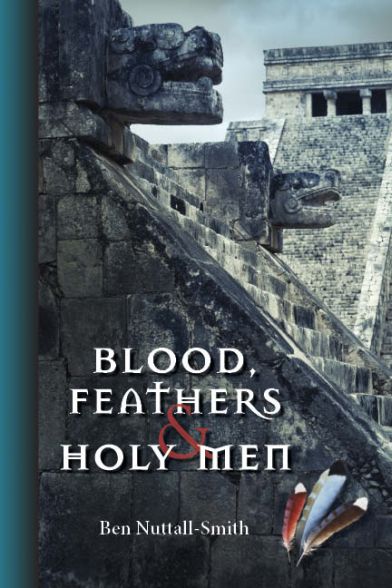
excerpt

And so I prayed.
To deny myself at that point meant quelling the abhorrence I felt
toward my countrymen and replacing it with love. I needed to clean
the crystal ofmysoul of all intention, so that the pure light of God could
shine through me, like the sun through a window into a dark room.
I tried, I really did. But when I descended into the valley, carrying
my little medicine chest under my arm, in case I should find a
moribund Christian to whom I could offer spiritual comfort, the
expanse of unnecessary death and pain sickened me.
“Are you a Christian?” I asked of those who could still talk,
mostly Indians.
A few spat at me, others looked beyond me. I was amazed to find
only two Spaniards, two harquebusiers who must have fallen
during the first round of arrows.
It pained me to simply pass by most men, but my desire to help
someone and offer him absolution of his sins before he died kept
me going, though I was sadly aware of all the souls that would not
be saved.
“Are you a Christian?” I kept asking. I found a young native man
whom I recognized as one of our party. He had received several
blows from macanas: his head was cracked open and his entrails had
spilled onto the ground. Iridescent flies feasted on the pool of gore
underneath him.
He nodded, shivering and bathed in sweat. “Are you? Good,” I
said, regretting the word ‘good’ as soon as it left my mouth. My
hands trembled as I opened the chest and extracted the ampulla
containing the oleum infirmorum. “Can you talk?”
He nodded and moaned horribly, his eyes wandering aimlessly.
He made a convulsive attempt at confession, and I absolved him
forthwith, giving him the viaticum and anointing his eyelids,
saying, “Through this holy unction and His own most tender mercy may
the Lord pardon thee whatever sins or faults thou hast committed by sight,”
and repeating it with his ears, nostrils, lips, hands, feet and loins.
I raised my head and saw Pánfilo checking on the dead with his
harquebus hanging from his shoulder and his dagger at the ready.

https://www.amazon.com/dp/0981073522

Arrows

Excerpt

In the general direction of the enemy, Indian servants placed
forked poles to hold the muzzles of the heavy harquebuses. The
horses whinnied and stamped their hoofs, rustling the foliage as
they tugged at their halters. Somewhere farther away, I could hear
sheep bleating; closer the squealing of pigs.
Losada had mounted his black horse and was now whirling in
circles and bellowing orders, sword raised high over his head. I
glimpsed an Indian woman scampering into the bush with a toddler
on her back, suspended on a thick band hanging from her head. The
Indian servants scurried about, grabbing whatever they could and
herding the animals. All the riders mounted, and the dust cloud
thickened, forcing me to hold my breath. Gregorio ran past me,
balancing a harquebus in his hand.
“Don’t just stand there, hide!” he bellowed, his voice almost
drowned out by the racket.
“Where is she?” I yelled back.
But he was gone to join the harquebusiers gathering behind the
riders. I hunched into myself, rosary tight in my right hand. I came
upon the fire, blinking to clear the smoke from my eyes, and found
the last place I’d seen her. I stumbled over a basket and nearly fell. In
the name of all saints, I didn’t even know her name!
The servants had disappeared. I was the only idiot awaiting the
arrows. At the sound of grunting, I looked down to see a pig
careering into the heart-shaped leaves of a huge philodendron. I
followed the pig.
It took a moment for my eyes to grow accustomed to the dimness
in the jungle. I could discern crouching human silhouettes. Indian
women were huddled together on the ground, some crying, others
staring vacantly while frightened children clutched at them, some
finding oblivion at their mothers’ breasts. I made hushing sounds
and touched a shoulder here, another there, gesturing toward the
trunk of a big mahogany tree and mimicking the arrows falling

https://www.amazon.com/dp/0981073522

Arrows

Excerpt

Sweat broke out on my nape and forehead. The woman watched
me closely, giving me the annoying feeling that she could read my
thoughts. Perhaps she was a witch.
When a gourd filled with a milky beverage of uncertain origin
arrived under my nose, I began to miss my countrymen. Tamanoa
held it while the rest awaited my reaction. The children giggled and
I smiled, raising one eyebrow at them. I took the gourd out of
Tamanoa’s grasp, noticing the quizzical expression in his eyes.
“It’s chicha,” he informed me.
I sat down on the ground and crossed my legs, minding the
Seraphic Rosary so that it rested on the cloth of my cassock stretched
between my knees. I raised my eyes to heaven, as much to bless the
chicha as to ask for help. Well, Salvador, if you want the dog, you’ll
have to accept the fleas, I told myself, and took a gulp.
It wasn’t completely unpalatable. Had I known that its
fermentation was aided by the spittle of the women who concocted
it, I might have been less inclined to drink it. I passed it along,
fighting the urge to retch, eyes watering. Mater Dei, please tell me
that gourd never covered anyone’s genitals, I prayed.
The sight of another male with his foreskin neatly strangled with
a cord that went about his hips, his balls—wrinkled and
saggy—hanging like a cockerel’s wattles, made me regurgitate the
devil-sent chicha. I kept swallowing it back until, able to escape
unnoticed, I hid behind a tree and vomited my guts out.

We neared Nueva Segovia de Barquisimeto, a city founded in 1552,
along a murky river the Caquetíos Indians had called Variquesemeto
long before the Spaniards began renaming everything.
Diego de Losada led the way on his magnificent black
Andalusian horse, which seemed to share its master’s dreams of
greatness. All horses except my Babieca were proud, elegant beasts
with thick necks, strong chests and powerful, arched croups. Bred
from the first horses to arrive from La Española,

https://www.amazon.com/dp/0981073522

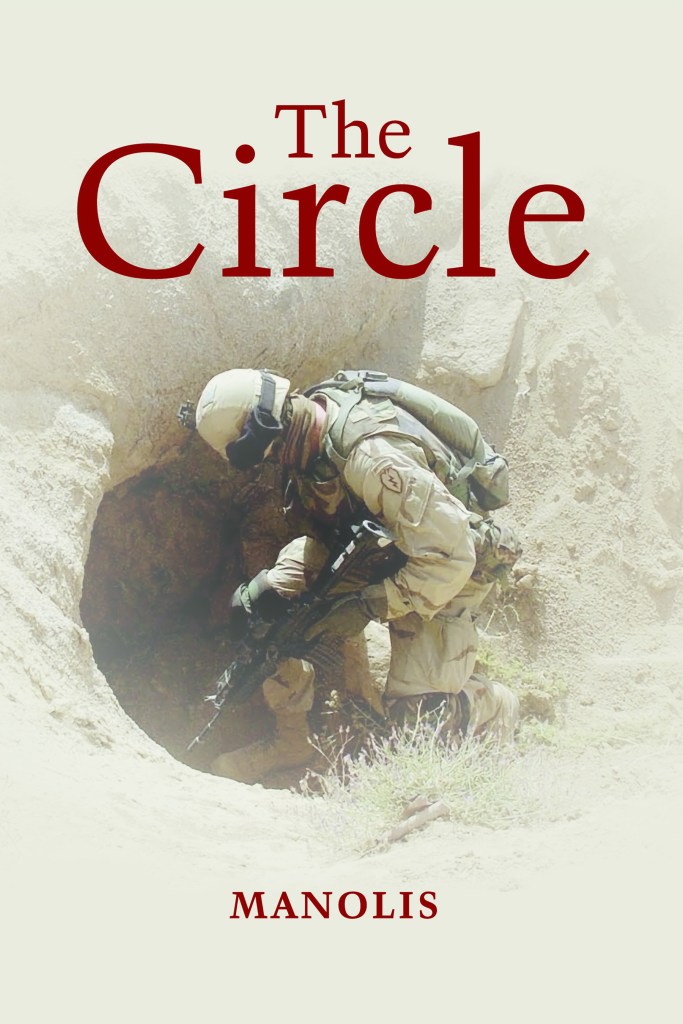
The Circle

Excerpt

o the University of Southern California Medical Center, wait for him, and get him
back to the hotel. That’s his business for the morning, nothing else. The ride takes
about fifteen minutes, as rush-hour traffic is over and the streets are quieter at this
time of day. They arrive and the driver opens the door for them. Ibrahim gets out
with Hakim, and they walk toward the reception area. A blonde girl of about
twenty-five greets them.
“Good morning, sir, please have a seat. The nurse will be with you shortly.”
“Thank you.”
The nurse comes to get Ibrahim. Before she guides him away, Hakim asks
how long they’ll keep him inside and the nurse says about one to two hours. They
have to perform a CBC and obtain a few scan images; the doctors have organized
two MRIs, and they need to do a small procedure to get a specimen. After that,
he’ll be free to go.
After they take his uncle away, Hakim takes a stroll on the grounds of the
medical. He walks for a while and then dials Talal’s number. The phone rings
four times before Talal answers. Hakim asks for news and Talal confirms that it
will take a few days. Hakim finds a bench and sits. His mind goes to Matthew and
Bevan once more. He is eager to learn more of what they do, the specifics of what
they deal with, and whom they report to.
He dials again and calls Peter at the office.
“Hi Peter, how are things there, today?”
“Not much different than any other day. How are things with you and your
uncle?”
“They’re doing the tests. He’ll be in for a couple of hours.”
“Okay. Do you need anything else?” Peter senses Hakim has something to say
to him.
“Look, Peter, I’d like to sit down with you in the next couple of days, is that
okay?”
“Yeah, what’s on your mind? Talk to me.”
“There is no rush. Just hang tight, we’ll talk when the time comes.”
Peter understands he has to leave this alone until the right time; after all, you
don’t push the people who have money and the power that comes with it.
“Suit yourself, Hakim, I’ll be ready.” He stresses the last words and Hakim
likes the sound of that.
“Thanks, Peter, I know I can count on you when it comes to the serious stuff;
thanks a lot.”
He spends the next hour or so outside, with his thoughts traveling to the
future and what he needs to organize with Talal next to him at the top of the
ladder. But he wonders what to do about Jennifer. The question breaks the …

https://www.amazon.com/dp/0978186524

Swamped

Excerpt

Asians, every kind of European and Latin American, Africans, and
of course the original First Nations people, the victims as Eteo considered
them. The First Nations people whom the ruthless Europeans
of two centuries ago, with their rifles and guns and chicken pox and
diphtheria and polio and alcohol, almost exterminated, slowly and
methodically. The Europeans who came with their tall ships ready to
carry out whatever barbarisms suited their purposes, all while proselytizing,
yes, the Europeans who wanted to turn the First Nations
people into good Christians such as themselves only to exterminate
them tribe after tribe, only to ostracize them clan after clan, only to
enclose them at the peripheries, closely guarded by the always repressive
word or sword, whichever worked best.
Eteo kept walking, now with a fire in his chest. His steps led him
to the familiar dock at the end of 22nd Street. He reached the edge
of the dock and leaned against the framed barrier, letting his gaze
travel over the shiny water. It at least reflected a natural balance, unlike
the human world, its natural balance permeating everything, part
of the balance cosmos has invented and into which even the unbalance
of people blends and gets absorbed. His eyes encompassed the
gleam of the water and the green background on the far side of English
Bay in the university neighbourhood, where more rich Vancouverites
lived, where houses sold in the millions and one wondered
why. Who had induced such lunacy in the housing market while
thousands in East Vancouver were homeless or paying half their meagre
incomes on rent? Whose game was being played in the Lower
Mainland housing market to favor one area against the other?
Eteo let his attention dive into the shallow water under the dock
where small crabs went about their business on the sea floor and the
small perch fed on the barnacles of the dock’s piles. A few starfish
decorated the sandy floor while seaweed floated left and right like
orchestra that a conductor directed its myriad violins in this naturally
balanced world beyond human influence, a balance suddenly interrupted
by his mobile phone. Yannis was ringing him.
“Hello, John.”
“Hi, how are you?” Yannis asked

https://www.amazon.com/dp/B08WP3LMPX

Arrows

Excerpt

I retched again and leaned to one side to let out a stream of bitter
bile. I blinked in the darkness and looked around without the least
hope of standing up. The roof was low and the hot air impregnated
with damp and the smell of unwashed bodies, vomit and bilge; the
air seemed to congeal as I exhaled.
How long had we been rocking and shaking in this darkness? A
day? Two? “Eloí, Eloí, lama sabactani?” I quoted, meaning every
word our Lord had said when feeling forsaken on the Cross.
Trembling, I grasped a coil of rope. My tonsured head was bathed
in cold sweat; drops trickled down my forehead, slid down my neck
and soaked my grey cassock. The Seraphic Rosary dangled from my
cord, rippling monotonously. I took no more than shallow breaths,
distracting my mind amid the artillery, lines, water barrels and
cases, some knocked about by the sea’s fury despite having been
lashed down.
The hatches and portholes were kept closed to avoid water, and
the lighting of candles was strictly forbidden. I had withstood the
first hours by meditating on the Passion of Our Lord, but once
overcome by sickness, I could not stop vomiting.
The danger on deck had confined many men below: the carpenter
and his mates, the cook and his galley lads, the gunners, seamen
awaiting the change of watch. We sat close to one another, sweating
and praying, eyes fixed on the ceiling, following noises from the
upper deck. After making vows and promises to the virgin,
swearing to make penitence of fasting on bread and water the first
Saturday of every month, some wished to confess.
To my surprise it was Pánfilo, a wiry old midshipman who had
lost most of his front teeth, who came first. I dried my face with the
sleeve of my habit, uncertain of my strength, and passed my hand
across my wet chest and aching belly. My stomach was void, though
still assaulted by waves of nausea. “Move over, hombre! My sins are
only God’s to hear, you filth,” lisped Pánfilo. Others shifted. Pánfilo
knelt beside me.

https://www.amazon.com/dp/0981073522

The Circle

Excerpt

IT’S A CLOUDY TUESDAY morning in Washington D.C. as Matthew Roberts
arrives at his office. The night shift has gone home and he hears the sound of
vacuum cleaners as they do their work. Matthew is early as usual. He had no
reason to remain in bed longer. Where was his Emily to warm him? However, he
likes to be in the office before the others to get organized, which gives him an
advantage for addressing the day’s challenges.
This morning he has to work on the Balkan file, a review he promised Bevan
he’d look into but never found the time for. For a long time now, the attention of
the United States has been focused on that side of the globe, and more so since
the collapse of the Soviet Union, especially since the administration felt they
were losing some of their grip there. After the Bosnia fiasco and the Croatian
genocide they turned their attention to the country of The Former Republic of
Macedonia (FYROM) a small country wanting to call itself Macedonia against
the wishes of Greece and her northern province, Macedonia. FYROM’s
ambitions of joining the European Union, has changed the dynamics by sending
soldiers to Iraq, along with the United States, thus vying for clout when standing
up to Greece. Similarly, Turkey has ambitions of joining the European Union
with the support of the U.S., although the Europeans view the Turks with a
different eye.
Matthew’s attention today is on this file, and he has to come up with
solutions to suit the government’s goals before turning it over to his superior
Bevan Longhorn. A marine and one-star admiral, Bevan oversees the work of
120 people in the office, although Matthew and two mid-level supervisors take
on the majority of his responsibilities. This leaves ‘the old man’, as they call him,
with time on his hands to enjoy the odd game of golf.
Mathew reads his messages from the receptionist’s desk, takes the file from
his briefcase, and spends the next two hours working on it.
At 9:15 the receptionist calls to tell him Bevan Longhorn wants to see him.
“Right now?”
“Yes, right now.”
He wonders to himself, what now?, gets his notepad, and walks into the
boss’s office.

https://www.amazon.com/dp/0978186524

The Circle

Excerpt

WASHINGTON D.C. IS CLOUDY and cold on this September morning.
Despite still feeling tired, Matthew gets up at 6 a.m., his usual time. The only
days he allows himself to sleep in are the rare days when he is at home, in bed
with Emily. Those days are special to him, as he can linger in bed and, if he is
lucky, have a morning session of sex with his wife. But those days are so rare;
at times he wonders why she has been with him all this time, in a life so
deprived of sexual satisfaction, since he hardly gives her any pleasure with his
quickies, as they call their lovemaking sessions. And he doesn’t count the true
love the romantic books of poetry discuss in their verses, because Matthew is
a true believer that such love doesn’t exist, that a man never loves a woman
that way, unless he’s a dreamer or having hallucinations. He walks to the
bathroom sink and washes his face, shaves, and brushes his teeth. He puts on
his usual suit for the office, clothes that he has carried in the same suitcase for
so many years. Then he goes down to the hotel restaurant for breakfast before
heading to work.He orders ham and eggs with hash browns, toast, and coffee.
This is the all-American breakfast which he is a strong believer in having
every day, even when at home.
“Never go out without a good breakfast in your stomach,” his father always
said, and Matthew Roberts never forgets that.
The server brings his food a few minutes later, as he enjoys his coffee while
reading the newspaper headlines.
Matthew has traveled between Los Angeles and Washington for thirty years,
all this time with the same government agency. Jennifer wasn’t even born when
he started this job. As a young computer analyst, he had many job opportunities.
However, he got lucky and this department was in a recruiting mode back in
those days. Now, after all this time, he looks back, and feels satisfied with the path
he has taken and where it has led him. After all, he is second in command. A few
more years and he can see himself retiring at last, with a good severance pay and
good pension. Then he will spend more time with Emily, whom he misses so
much, and with his daughter, who has been raised almost alone by her mother.
Then he will visit his father in Arkansas, who has been alone for such a long time

https://www.amazon.com/dp/0978186524

Ken Kirkby, A Painter’s Quest for Canada

Excerpt

Ken wanted to know how one could have a political system that worked
when society, even on the smallest scale, was dysfunctional. He pointed
out that even in their own household they had servants, all of them women,
most of them young and illiterate, who were paid a pittance. In most
households the servants were treated like animals. In a country where this
was going on, how could there ever be a fair political system?
“Just between you and I, that is my interest,” Ken Sr. Said. “But, you
can’t go into the street with guns and mobs behind you – it just doesn’t
work. What we need to do is bring the wages of the people up so they will
have something to lose. People who have nothing to lose are the most
dangerous people on earth.”
He explained that it was because of this reasoning that he paid his staff
double the normal salary. “That,” he said, “Is actually a very political act
because the handful of families who wield power want to keep the populace
down so they can control them. Doing what I am doing is an overt
political act. “
His father said that he was walking a thin line but if he could get away
with what he was doing, he would win. Others would have to follow his
lead – they would have to match the salaries he was paying or all the best
brains in the country would go to work for him. Once he had the best
brains, he would be in a position to start other companies and continue
to expand his business interests to the detriment of others. But as his
companies grew and he employed more and more people fairly, his ideas
would also spread.
“But that’s a very slow way of doing things,” Ken said. “I want to change
things quickly.”
“There are no quick fixes,” his father said. “Anybody who tells you there
are is just selling you snake oil.”
Ken had complained to his father several times about the servants. He
explained that he couldn’t bear being served – that he felt uncomfortable
with it. “Why can’t we get up and serve ourselves?” he asked. “What’s
wrong with us making our own beds? What’s wrong with us cleaning the
house?”
“That’s the culture we’re in,” his father said. “We’re not in charge here.
This is not our country. We’re here as guests and there’s a limit to how
much we can disrupt this society.”
“It sounds a bit like an excuse.”
“Partially, it is. But anyone who wants to move things along too quickly
is going to destroy the very thing they’re trying to do.”
He added that he paid their servants the same way he paid his office
and factory workers – twice what anyone else paid. He admonished his
son once again to be careful with his conversation in earshot of the servants.
The Kirkbys were a prominent, well-known and powerful family,

https://www.amazon.com/dp/0981073573

Ken Kirkby, A Painter’s Quest for Canada

Excerpt

Puzzled, Ken walked away and as he wound his way past the stalls he
noticed the silence that fell when he approached. No one smiled at him;
no one nodded or called out a cheerful “good morning.” People avoided
looking at him and stepped deliberately out of his way.
Ken left the market with an ache in his throat. The next day he went
back and still no one would talk to him. He went to the market for a
third day and was again chilled by the rejection he met. But that day as he
turned to go, he heard one woman say, “You’re the anti-Christ – go!”
At home he asked his father, “What is the anti-Christ?”
“That’s the devil,” he answered. “Why do you want to know?”
He explained the scene at the market and what the woman had said
to him.
“That’s very interesting,” Ken Sr. said, his lips drawing tight across his
teeth and turning the colour of ash.
Ken Sr. picked up the telephone. “Don’t leave the house,” he said. “I
want you to stay here.”
A short while later the same priest who had visited the house before
came to the door. “Something very interesting and potentially important
has just taken place,” Ken Sr. said. “The other day you called my son’s behaviour
anti-Christian. For the last three or four days he has gone to the
market where he likes to make drawings. People have shunned him and
he was called …” he turned to Ken. “Say the words.”
“The anti-Christ,” Ken said.
Ken Sr. leaned back in his chair. “There seems to be a link between
your words, ‘anti-Christian’ and their words, ‘the anti-Christ.’ Was that
their interpretation or was there someone, perhaps you, who actually said
those words? This is how they now feel and whether you realize it or not,
you have made me the second most important man in history – I’m the
father of the devil is what you’re telling me. I expect it’s you who started
this. If you ever refer to my son or any member of my family again, I will
truly make you wish you had never been born. Get out of my house and
don’t ever come near it again.”
The priest listened in stony silence and left, wrapping his black cassock
tightly around him.

https://www.amazon.com/dp/0981073573