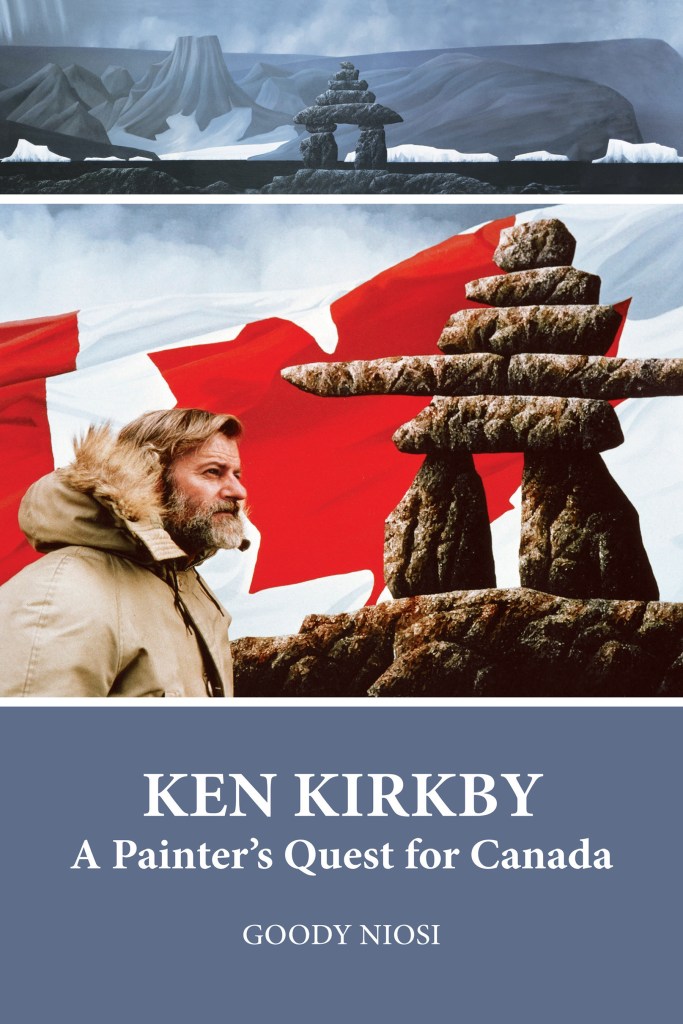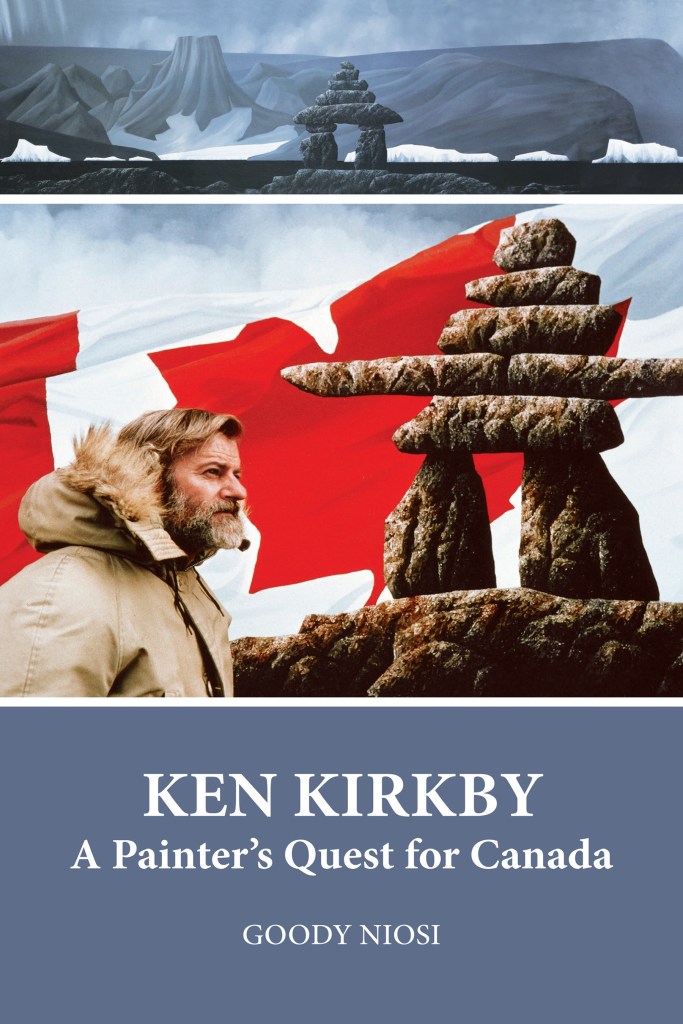
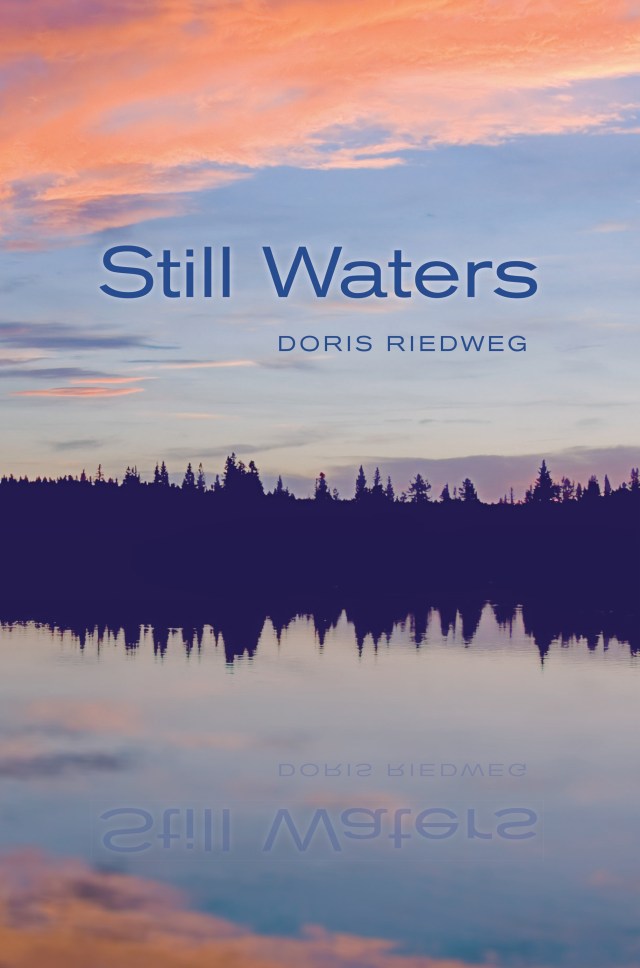
Ken Kirkby, A Painter’s Quest for Canada

excerpt

“Sure. I’ll be happy to try that, but you know that while I’m doing that
I won’t be painting.”
“Don’t worry about that,” Fraser said.
“I’m not worried. I just don’t want you to get in a huff about not having
enough paintings.”
“I said don’t worry. I’ll make it worth your while.”
“That’s not what I mean. I’m happy to do it for you in return for what
you’re doing for me. And I don’t want any money for it.”
“You don’t want any money! Well, I never – a man who doesn’t want
money. So what do you want?”
“I just don’t want you to get upset when my painting production falls
off because I’m doing other things for you.”
“Of course, I’ll be upset at your lack of paintings. Why wouldn’t I be?”
“But that’s not reasonable!”
“It’s quite reasonable in light of how you present yourself – as the one
apart – the one to whom the rules don’t apply – the one who walked in
here without an appointment. There isn’t a painter in the country that
would dare do that. And, your shenanigans in the Peace River Country
– and your wanderings in the Arctic – as if you owned the bloody place.
You put yourself forward, with a quiet aloofness, as the man who can do
everything and anything, so I’m sure it won’t be any kind of a trick for
you to be in two places at the same time, doing two different things at the
same time.”
“Well,” Ken said. “That’s not how I see myself.”
“Fine. But I’m only telling you how you portray yourself.”
“If I was who you say I am, I’d be able to get my Arctic paintings and
stories out to the public, and I can’t.”
“Your Arctic paintings are the only tentative part of you. You haven’t
come to terms with that subject. You’re unsure and it shows. Everything
else you paint is clear, simple, strong and sure-footed. But don’t be concerned.
In good time, all of this will look after itself. With your confidence
and your bloody single-mindedness, you’ll work your way through it. But
right now, you’re not there and I will neither show them nor recommend
them. In that area you have a long way to go.”
That evening, he related the conversation to Helen.
She laughed. “Don’t tell me you’re surprised. You have an ego as big as
the world. You’re full of yourself. The long and short of it is that you’re
arrogant. Alex is right. You wander into a place, you give it the once-over
and all of a sudden, you’re going to fix everything, you’re in control, and
you’ll take care of it. That’s what it looks like from the outside.”
“It does?”
“Yes, it does. And what do you have in mind anyway? Where are you
heading with all this?”

https://www.amazon.com/dp/0981073573

The Circle

Excerpt

Silence takes their thoughts and the surrounding area like when you stop before
the blooming hyacinth and your eyes become teary, or when you stare at the
orange sun at dusk before the sea takes him into her watery embrace, like when
the little chick chirps in the nest and its mother tries to teach it how to grasp the
worm from her beak and your eyes become teary, and you don’t know the
reason. It’s like that. The disappointment is obvious in Hakim’s face.
“When did they find my parents and what did they do with them?”
“The next day when I found out about the bombing, I ordered the search.
They found your father and mother in the rubble, and you as well. Your parents
were buried according to tradition, and I took you into my home.”
“What else happened on those days? Please tell me more about my parents,
about their property, what happened to it, how did the Americans manage to
bomb our home instead of someone else’s.”
“War, my dear boy, is a terrible thing. It brings out the worst in people. It’s
incredible to imagine what people do in times of stress, in times of fear, in times of
desperation. That’s what war does: it affects people in the worst possible way. You
see a brother killing a brother, you see friends who suddenly become the worst of
enemies, all for what, you may wonder, and there is no answer. It is unbelievable
what a person can do in the stress of war, when they don’t have means of feeding
their family, or when they are afraid for their lives, when one finds a rifle thrown to
the side of the road and takes it in his arms. At that moment, he becomes an enemy
of someone else, a killer capable of taking a life. This is why you see civil wars
erupting in every country after an event like this. The whole system is gone—the
security, the police, the courts, the justice system, all the apparatus of the country is
gone. In our case, even today after all this time, there are bombings and suicide
bombers killing people in the hotels, the plazas, even in the mosques. This is what
war creates, my dear boy, and you can only hope war won’t come your way ever
again. As far as what happened to your parents’ house, it’s still there, uninhabited,
still standing half-way; one day we have to address the issue of what to do with it.”
Hakim remembers now what he wanted to ask his uncle since yesterday.
“My uncle, how have you come to know these people, the Admiral and
Jennifer’s father, Matthew?”
Ibrahim laughs lightly.
“When you reach my age,my dear boy, you’ll understand I know a lot of people,
because I have met so many over the years; it is as simple as that. To satisfy your
curiosity I met the Admiral in Baghdad when he was a young officer at the American
Embassy before the days of the first Gulf War and Saddam Hussein. Matthew I met
yesterday, but I know he works for Bevan, who is Matthew’s boss.”
“What job do they do?”

https://www.amazon.com/dp/0978186524

Ken Kirkby, A Painter’s Quest for Canada

Excerpt

The bush pilot told Ken that there was no such place as the Arctic – it
was an arbitrary dotted line drawn on a map, by people who had never
been there. The Arctic was a hundred thousand million places, he said,
with an enormous variety of climates and vast distances between small
communities. You might find a few people on the land, he said, but not
many. Most of them had been rounded up and put into camps built like
villages. The idea of the Eskimo as one homogenous group of people was
as big a myth as to say that all Europeans were one race.
Nevertheless, the government had decided that the Eskimos had to be
gathered together – regardless of tribe or dialect – and placed in communities,
which they would use as a base to go out and trap fur animals
for the Hudson’s Bay Company. Then they depended on the company for
their survival and were, in fact, essentially owned by it. Each Eskimo had
been given a number and a letter. Those west of Coppermine River were
assigned the letter W and a number. Those East of the area were given an
E and a number, and in some cases, those letters and numbers were tattooed
on their arms.
Ken was horrified. He repeated to Jessica, Patrick, and Long John what
the pilot had told him. John was furious, not at the government, but at
Ken and his wild dreams. “You’re on a wild goose chase! You’re mad!” he
shouted. “There’s nothing to go to – thousands of square miles of absolutely
nothing but ice, wind, and rocks – lots of frozen rocks and no
people. I tell you, there are no people there. The place is a bloody, frozen
desert. You’re made of flesh and blood – you’re not a god! What is it with
you English and your half-baked need to go to desolate places? As if life
isn’t difficult enough without going looking for trouble!”
“For someone who’s never been to the Arctic you seem to have a helluva
lot of knowledge about it,” Ken said. “How do you know there’s nothing
there?”
“I don’t need to go there,” John said. “I can read. There’s a place called
“The Barrens” and I imagine it’s called that for a good reason, don’t you
think?” John pulled out a map and pointed to the place. “Read it – it’s
right there. The Barrens – there’s nothing there. When he first looked at
the place, one of the explorers wrote in his diary, ‘This is the place that
God gave to Cain’. All I can see is that the place is going to kill you – not
much different from every other Englishman who’s gone up there. I can
see a small headline in some small newspaper somewhere, ‘The Arctic
wastes claim another Englishman.’”
“It didn’t kill Francisco,” Ken argued.

https://www.amazon.com/dp/0981073573

Ken Kirkby, A Painter’s Quest for Canada

Excerpt

“I’ll give it to you,” Ken said.
“No,” he said. “You have to learn about artwork. You don’t give it away.
If you do, it becomes worthless. Things that are given, such as works of
art, tend to sit on the shelf for a while and then they go into a bedroom
somewhere and before you know it they’re in the basement and they become
part of the flotsam and jetsam of people’s lives. But if you pay a
great sum of money for something it goes over the mantel and you hold
cocktail parties to boast about your acquisition. That is one side of the art
world you’re going to have to learn about. How do we attribute value to
something in a world that understands very little? Everything is quantified
in our world. Therefore, if it has a big number attached to it, it must
be of great value.”
Ken and Rui agreed on a sum of money that was not too great but that
seemed like a great deal to Ken. With great pride he told his father that he
had sold a drawing to Rui.
“Did you offer to give it to him?” His father asked.
“Yes, I did and he wouldn’t take it,” Ken said and repeated what Rui
had told him.
Ken Sr. smiled. “Yes, that’s probably quite wise,” he said.
One day, When Francisco and Ken came out of the shack to go fishing
they noticed a young woman walking on the beach. Ken had seen her
from time to time walking to or from the hospital where she worked, or
climbing down the cliffs to the ocean. On this day, as so often happened,
the beach was empty, save for themselves and the marine life that scurried
about the rocks. The young woman had not seen the old man and the boy
and thinking herself utterly alone, took off her clothes and walked into
the water. Ken was mesmerized; she was the most beautiful creature he
had ever seen. “Look at that,” he whispered to Francisco.
“Yes,” he said, as though reading his thoughts, “She is very beautiful.
She has a limp, you know.”
“What does a limp have to do with anything?”
“It’s a long and complicated story – and we should not be interfering
here. She thinks she’s alone so let’s let her be alone.”
From that day on she became Ken’s passion. He discovered that she
was a nursing student and that she had come from a village several miles
away. Her family were peasants but she had studied hard because she was
determined that she would not become a servant for rich people.
He also became friends with Dawn Coates, a girl who was being tutored
at the same small school he attended each day. Her parents were
divorced – her mother, American, and her father, English. She was one
of the first children he had ever admired. She was strong and direct and
seemed fearless.

https://www.amazon.com/dp/0981073573

Yannis Ritsos – Poems, Volume I

Moonlight Sonata

Φορές-φορές, την ώρα που βραδιάζει, έχω την αίσθηση
πως έξω απ’ τα παράθυρα περνάει ο αρκουδιάρης με τη γριά
βαριά του αρκούδα
με το μαλλί της όλο αγκάθια και τριβόλια
σηκώνοντας σκόνη στο συνοικιακό δρόμο
ένα ερημικό σύννεφο σκόνη που θυμιάζει το σούρουπο
και τα παιδιά έχουν γυρίσει σπίτια τους για το δείπνο και δεν τ’
αφήνουν πια να βγουν έξω
μ’ όλο που πίσω απ’ τους τοίχους μαντεύουν το περπάτημα της 
γριάς αρκούδας –
κι η αρκούδα κουρασμένη πορεύεται μες στη σοφία της μοναξιάς 
της, μην ξέροντας για που και γιατί-
έχει βαρύνει, δεν μπορεί πια να χορεύει στα πισινά της πόδια
δεν μπορεί να φοράει τη δαντελένια σκουφίτσα της
να διασκεδάζει τα παιδιά, τους αργόσχολους, τους απαιτητικούς,
και το μόνο που θέλει είναι να πλαγιάσει στο χώμα
αφήνοντας να την πατάνε στην κοιλιά, παίζοντας έτσι το 
τελευταίο παιχνίδι της,
δείχνοντας την τρομερή της δύναμη για παραίτηση,
την ανυπακοή της στα συμφέροντα των άλλων, στους κρίκους 
των χειλιών της, στην ανάγκη των δοντιών της,
την ανυπακοή της στον πόνο και στη ζωή
με τη σίγουρη συμμαχία του θανάτου – έστω κι ενός αργού 
θανάτου  –
την τελική της ανυπακοή στο θάνατο με τη συνέχεια και τη 
γνώση της ζωής
που ανηφοράει με γνώση και με πράξη πάνω απ τη σκλαβιά της.

Sometimes as evening comes I have the emotion

that outside the windows the bear handler goes by with

his old heavy she-bear

her hair full of thorns and thistles

creating dust on the neighborhood road

a lonely cloud of dust that rises like incense in the sundown

and the children return to their homes for supper and

are not allowed out anymore

although behind the walls they guess the old

bear’s footsteps –

and the tired bear marches in the wisdom of her loneliness

not knowing where or why –

she has grown heavy and she can’t dance on her hind legs

anymore

she can’t put on her lacy bonnet to entertain the children

the loafers or the ones who are hard to please

and the only thing she wants is to lie down on the ground

letting them step on her belly thus playing her

last game

showing her formidable power for resignation

her disobedience to others’ interests the rings in her lips

the needs of her teeth

her disobedience to pain and life

with her certain alliance with death – even a slow death –

her final disobedience to death with the continuance

and knowledge of life

that ascends with wisdom and action above her slavery

https://www.amazon.com/dp/1926763076

Yannis Ritsos – Poems, Volume I

Moonlight Sonata

Θα σταθούμε λιγάκι στην κορφή της μαρμάρινης σκάλας του 
Αϊ-Νικόλα,
ύστερα εσύ θα κατηφορίσεις κι εγώ θα γυρίσω πίσω
έχοντας στ’ αριστερό πλευρό μου τη ζέστα απ’ το τυχαίο 
άγγιγμα του σακακιού σου
κι ακόμη μερικά τετράγωνα φώτα από μικρά συνοικιακά παράθυρα
κι αυτή την πάλλευκη άχνα απ’ το φεγγάρι που ‘ναι σα μια 
μεγάλη συνοδεία ασημένιων κύκνων – 
και δε φοβάμαι αυτή την έκφραση, γιατί εγώ
πολλές ανοιξιάτικες νύχτες συνομίλησα άλλοτε με το Θεό που 
μου εμφανίστηκε
ντυμένος την αχλύ και την δόξα ενός τέτοιου σεληνόφωτος,
και πολλούς νέους, πιο ωραίους κι από σένα ακόμη, του εθυσίασα,
έτσι λευκή κι απρόσιτη ν’ ατμίζομαι μες στη λευκή μου φλόγα,
στη λευκότητα του σεληνόφωτος,
πυρπολημένη απ’ τ’ αδηφάγα μάτια των αντρών κι απ’ τη 
δισταχτικήν έκσταση των εφήβων,
πολιορκημένη από εξαίσια, ηλιοκαμένα σώματα,
άλκιμα μέλη γυμνασμένα στο κολύμπι, στο κουπί, στο στίβο,
στο ποδόσφαιρο (που έκανα πως δεν τα ‘βλεπα)
μέτωπα, χείλη και λαιμοί, γόνατα, δάχτυλα και μάτια,
στέρνα και μπράτσα και μηροί (κι αλήθεια δεν τα ’ βλεπα)
– ξέρεις, καμιά φορά, θαυμάζοντας, ξεχνάς, ό,τι θαυμάζεις, σου
φτάνει ο θαυμασμός σου, –
θε μου, τι μάτια πάναστρα, κι ανυψωνόμουν σε μιαν αποθέωση 
αρνημένων άστρων
γιατί, έτσι πολιορκημένη απ’ έξω κι από μέσα,
άλλος δρόμος δε μου ‘μενε παρά μονάχα προς τα πάνω ή προς 
τα κάτω. – Όχι, δε φτάνει.
Άφησε με να’ρθω μαζί σου .

We shall stop for a while at the top of the marble stairs

of Saint Nicolas

then you will go down the road and I’ll return

having on my left side the warmth from touching your coat

by chance

and even some square lights from the small neighbourhood

windows

and this snow-white vapour from the moon that resembles a big

procession of silver swans –

and I don’t fear this expression because during

many spring nights I talked to God who appeared to me

dressed in the haze and glory of moonlight such as this

and I sacrificed to Him many young men even more handsome

than you

thus, white and unreachable I became vapor in my white flame

in the whiteness of moonlight

conflagrated by the insatiable eyes of men and by the hesitant

ecstasy of ephebes

besieged by graceful, sunburned bodies

vigorous limbs trained in swimming in oaring in gymnastics

and football (though I pretended I didn’t notice)

foreheads lips and necks knees fingers and eyes

chests and arms and thighs (and truly I didn’t notice them)

– you know sometimes in admiring you forget what you

admire

your admiration is enough –

my god what eyes filled with stars and I rose in an apotheosis

of denied stars

because besieged as I was from outside and from within

I had no other path but only upward or downward

– no it’s not enough

Let me come with you

https://www.lulu.com/account/projects/ke2e82 https://www.amazon.com/dp/1926763076