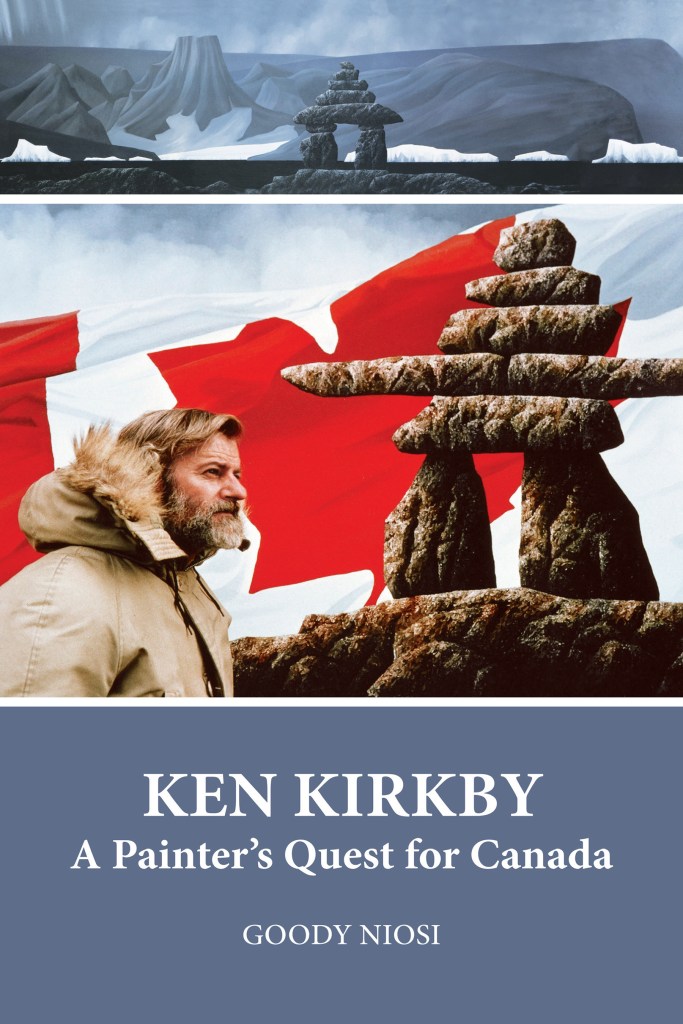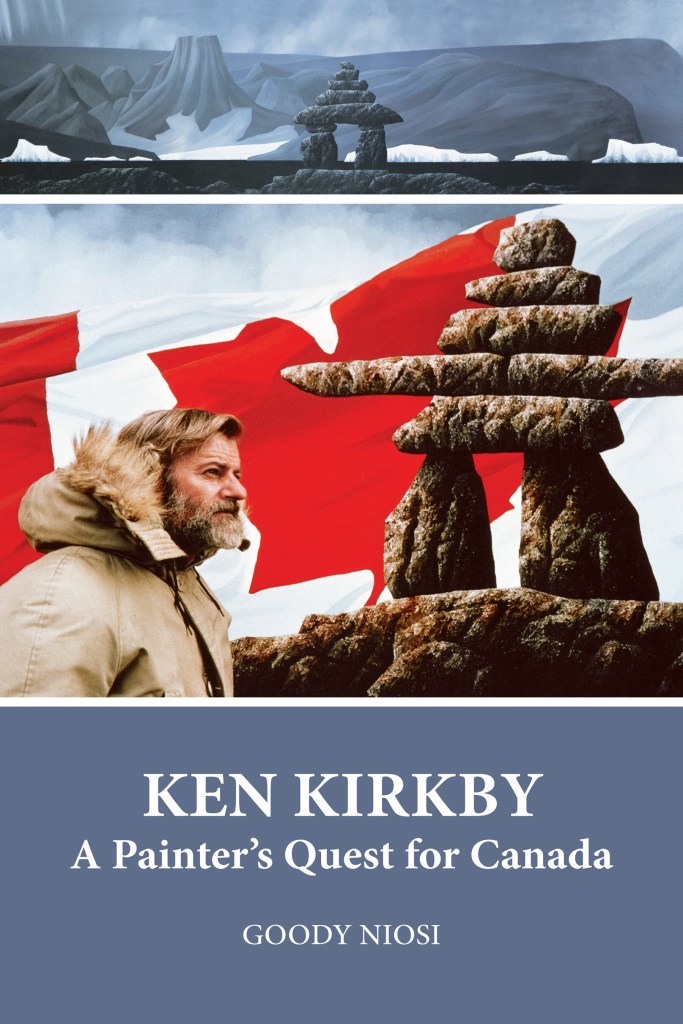
Ken Kirkby, A Painter’s Quest for Canada

excerpt

While he studied, he periodically found himself distracted by the
thought of the one art gallery in Vancouver he had not approached with
his paintings – the Alex Fraser Gallery. Stories of Alex Fraser, and his
treatment of artists in his London and Vancouver galleries, had circulated
through the art community for years. Ken was angry with himself. He
was rarely afraid of anyone and had met no one in Canada yet who had
intimidated him. Alex Fraser’s reputation did.
He had heard that the man was irascible – so what? He had heard he
was powerful. Was it in his power to judge his work? What if he found it
wanting?
The only thing worse than his fear was the prospect of his disappointment
in himself if he refused to face it, so one day he screwed up his
courage, loaded his truck with paintings, and drove to 41st Avenue near
Boulevard in Kerrisdale.
He walked into the gallery, where an attractive middle-aged woman
asked if she could help him.
“Yes, I’m here to see Mr. Fraser if he’s about.”
“Mr. Fraser doesn’t see people without an appointment.”
“Oh, that’s a shame. I’m here and I have some paintings. Please, can
you ask if he’ll see me?”
She smiled and walked into a back room. A few minutes later, a small
man with slicked-back hair and icy, blue-green eyes walked out. He was
dressed in a perfectly fitted gray pinstriped suit, with knife pleats in the
trousers and shoes that shone like mirrors.
Exhaling a great puff of smoke, he lowered himself into a big armchair,
and placed two packages of Players unfiltered cigarettes and an ashtray
on the little gate-legged table beside it. Taking a fresh cigarette from one
of the packages, he lit it from the one in his yellowed fingers, and crushed
the stub in the ashtray.
Turning to the woman who had followed him out of the back room he
called, “Doreen! Doreen, I want you to tell the young man about manners.
Ask him does he understand the meaning of manners?”
“Mr. Fraser would like to know if you understand the meaning of manners,”
she said, turning to Ken.
“Indeed I do,” Ken said. “And I apologize for coming in without an appointment
but I was nervous and I managed to screw up all my courage
to come in – and here I am.”
“Doreen! Doreen, tell him he is quite right to be nervous in approaching
me. Ask him what it is that he wants.”
“I have some paintings and would like to show them to Mr. Fraser.”
“Tell the young man that I can’t bloody see his paintings, anywhere.
Where are his paintings?”

https://www.amazon.com/dp/0981073573

He Rode Tall

excerpt

He needed to dismantle the walls that kept others out. He
needed to use words to heal rather than hurt. If he was able to
accomplish these three objectives the new Joel Hooper would
appear, he thought; or, maybe the real Joel Hooper would surface
for the first time. Whatever it was, it would be quite a
transformation.
After a light lunch and some very thorough horse grooming,
Tanya and Joel saddled up their mounts and led them to the
warm-up arena. Over the last few months, Joel had been
reminded that saddling up was much more than simply throwing
a saddle on the back of the horse. First, Joel brushed the buckskin.
For the show, Tanya had told him to pay special attention
to brushing the gorgeous black mane and tail of the buckskin
gelding. Then, he placed a riding pad on the horse’s backs, and
over that, a show blanket. It was only then that the saddle was
placed on the horse’s back. Next came the boots, not Joel’s but
the horse’s. First, Joel placed the bell boots on the front feet of the
horse to protect the coronary band, just above the hoof. Then he
added the splint boots above each of the bell boots. Splints boots
were intended to protect the area between the knee and the
ankle. Moving to the rear of the gelding, Joel fastened the skid
boots to protect the horse’s fetlocks from burning as they come in
contact with the ground during the sliding stops. It was only once
that the pads, blankets, boots, and saddles were in place that Joel
loosened the halter and gently positioned the bit in the buckskin’s
mouth and quietly moved the bridle into position.
Joel had been wearing his spurs for most of the morning. He
had come to love the sound of the rowels jingling as he walked.
Despite his early years on the ranch, Joel had adopted an urban
attitude toward spurs, seeing them as something that was harsh
and unnecessary. It was once he had returned to the ranch and
worked the horses with Harry that he quickly came around to the
reality that spurs weren’t the weapons as others had seen them.
Rather than weapons, the spurs were tools, and the last thing he
would want to do was aggressively spur a horse.

https://www.amazon.com/dp/0980897955

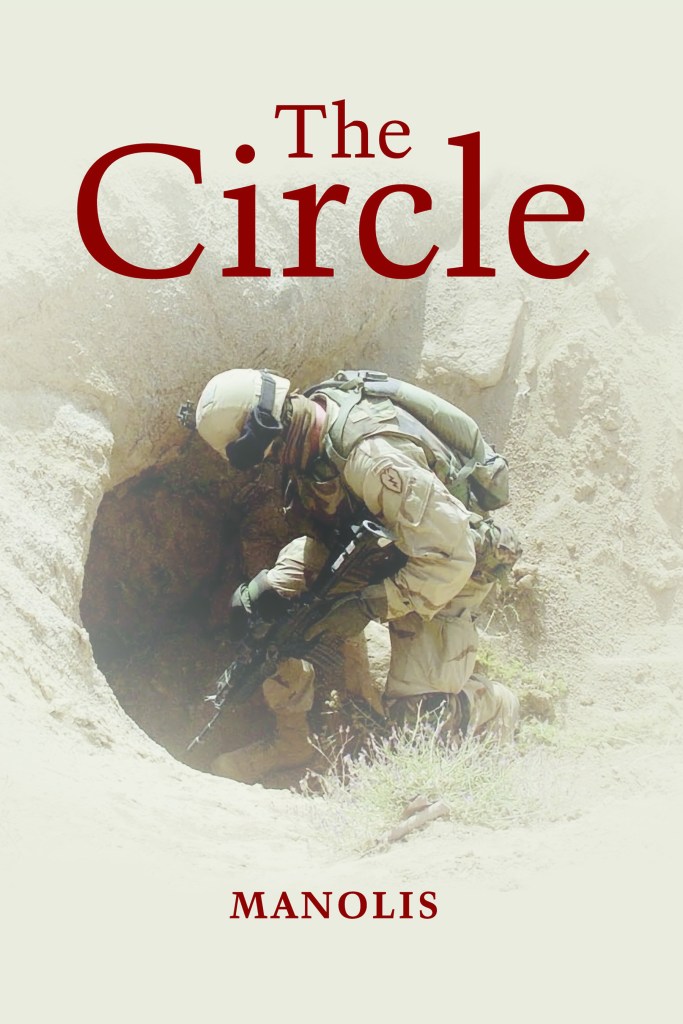
The Circle

excerpt

same job that has bought his life out. When he sits in his office he feels like
another piece of furniture or even like the cheap print on the wall. All this for a
salary that keeps him and his family fed, but has kept him forever hungry for all
the other things in life which he has missed out on.
He has lived this life for thirty years of five days everyweek in the same office and
the same crummy hotel room. His life is like a wound up machine, well-oiled,
well-serviced to do as expected of him; a machine that uses little energy and that
produces a bit of something for the people above. Five days aweek away from home
and two days at home with Emily and his daughter Jennifer, who has grown up
without a dad and Emily, with a husband on call, with a life in pieces, in increments,
like an eyedropper giving a drop here and a drop there, enough to keep one seeing
something of life, but not enjoying a real life.
Many a time he has wished for a different job, a different life closer to his
family, but it’s too late now, too late for change. Retirement is coming soon and
he looks forward to that.
He gets ready monotonously, like a robot doing things as if wound up, like a
wound-up little man that kids play with, with his brand new batteries every day,
the same routine, every day the same sequence from getting up in the morning to
going to bed late at night. The TV, his opium, there to keep him company; the
TV close by, but his wife and daughter and everything else a human being likes to
have close, always far away.
In his office he doesn’t even say good morning to the receptionist, who has
been his smile-of-the-day kind of a person. She’s surprised when he doesn’t talk
to her on his way by. She knows something heavy sits on his heart; she has
noticed over the last few years that this man is just an automaton and the softness
of his heart—the heart she remembers from the first days she met him—is just
not there anymore. What a job can do to a person is amazing, but it isn’t her
place to ask him about it or to do anything about it. She knows that’s where his
wife comes in—when a man has something heavy in his heart. Dorothy also
knows she isn’t his wife, so she let his wife worry about it. But does his wife care
to know what sits heavily in her husband’s heart? Dorothy has never met Mrs.
Roberts.
It’s about nine o’clock, the usual time he dials the number to reach home.
“Hello there, honey,” he says, when Emily answers the phone.
“Hi Matthew. How are you, today?” A question asked for the millionth time,
and here comes the answer, repeated for the millionth time.
“I’m okay; how are things at home?”
“Everything is the same,” deep in Emily’s heart, she wishes things could be
different for a change.

https://www.amazon.com/dp/0978186524

Arrows

Excerpt

Later that night she moved to Gregorio’s side, like a dog seeking
warmth on a cold night.
Benjamin raised himself on one elbow and tapped me on the
shoulder.
“A man is fire, a woman, pitch; comes the devil and blows!” he
said, winking at me. He lay down again with the satisfaction of one
who has delivered an important piece of information, and within
moments, he was snoring away peacefully.
I could hear Gregorio and Josefa conversing in whispers, and the
nagging worry about his possible secret religion made me vow to find
her a chaperone the very next day, lest things between them should
go too fast. She had no one to look after her reputation but me.

Indians say vultures take messages to God. Not for the last time, I
wondered whether they took souls, too.
On the day we faced Guacaipuro’s hosts conspicuously waiting
for us, several vultures circled high overhead, barely visible through
the thin fog dissipating rapidly in the first rays of sun. Having seen
them eating carrion, I was disinclined to hold them in high
regard—their presence was ominous.
We stood overlooking a valley and a river named San Pedro. We
were high in the mountains, and the air was pleasantly cool, like an
early spring dawn in Andalusia.
“May God be with you. In nomine Patris, et Filii, et Spiritus Sancti.
Amen.”
The men rose, for they had knelt to receive my blessing. No
chanting this time. Gregorio and Benjamin stood closest to me.
Josefa watched from a few paces behind, her face sallow. Gregorio
went to her and took her hands. She broke her silence with violent
sobs, and Gregorio lent her his shoulder and his worn handkerchief.
I realized how little I knew about women. She cuddled against
him as she had done with me after she had killed that young Indian.
Gregorio took her demeanor as a token of her regard for him.

https://www.amazon.com/dp/0981073522

Ken Kirkby, A Painter’s Quest for Canada

excerpt

With the Group of Seven paintings as
a template, he taught himself to paint again, working only on southern
landscapes. He took several to the owner of The Golden Key Gallery who
placed one in the window and sold it within two days. More sold during
the next few months, but then the gallery owner sold his business and
Ken was once again without an outlet.
Still, he persisted and one day, while sketching the bent shapes of driftwood,
in the dunes near the airport, it occurred to him that he could make
a profit from the abundance of wood on the beach. He purchased a pickup
truck and two chain saws, cut up the wood, wrapped velvet ribbons
around the most attractive pieces, and attached a card with his telephone
number. He left the wood on the front steps of the city’s grand homes
and within days, the orders came in. While he delivered and stacked the
firewood, he told the homeowners his stories of the Arctic, and when
they asked about his paintings, he would display the canvases he carried
in the cab of his truck. The Arctic paintings didn’t sell but the southern
landscapes were a hit.
He taught himself to become a storyteller, rehearsing every anecdote
he had, practising his tone, volume, order of words and, most importantly,
his choice of words. Where was the power of the story?
His clients listened, but showed little interest, so he made a list of every
service club in the city. Would they like a guest speaker at their next
meeting? Yes, they would like to hear about the Arctic, and so, Ken did
the rounds. Each audience contained a handful of people who showed
mild interest – the rest were bored, and often antagonistic. Sometimes
he was heckled, and a red tide of anger would creep up from his chest to
flush his neck and cheeks. Once someone shouted that he, and the rest of
the people there, resented an immigrant telling Canadians how to live in
their country and run their lives.
“That is hardly what I am doing,” Ken retorted. “I intend no disrespect.
I am simply here bringing information from a faraway place.”
His words dropped like ragged bits of paper to lie discarded on the
floor. Perhaps his stories were so outside the experience of most Canadians
that they seemed like tall tales – unlikely and unbelievable. There had
to be a better way to tell people about the Arctic but what was it?
His father told him that he was involving himself in matters that were
none of his business. He was not a citizen of Canada and until he was,
he should keep his opinions to himself. He responded that he was only
doing what he had learned at his father’s knee, in Portugal. He reminded
his father that Ken Sr. had not been a citizen of Portugal and yet he had
become deeply involved in the affairs of that country and had worked
hard to help the people. The Inuit were human beings in great distress, he
said, and he was trying to help.

https://www.amazon.com/dp/0981073573

Poodie James

Excerpt

“Those people didn’t buy a car, did they Irv?”
“They said they’d be back tomorrow, Mr. Torgerson.”
“They won’t be back, Irv. They’ll go down the street to Pearson’s
and buy a Mercury, maybe even a Lincoln, because you didn’t
cinch that deal, Irv. You’ve got to cinch those deals, Irv.”
“I do my best.”
“Your best is going to have to get better, Irv. You call those people
tonight and you get ’em back in here tomorrow. You tell ’em
you’ll make a deal they’ll like, Irv. I want to see ’em sitting at that
table signing things.”
“They’re from up the river.”
“You find ’em. You get ’em in here again. You sell ’em a
Packard.”
“I’ll do my best, Mr. Torgerson.”
“I know you will, Irv.”
The salesman turned back into the show room. Torgerson’s
voice tracked him.
“Irv, I just know you will.”
Maybe it was because times were good, Torgerson thought, or
maybe it was because the mayor job brought him attention, but
Packard sales were up almost 20 percent over two years ago. A
third of the way through his first term, he was mapping out his
next campaign. Only I’ll really run, he thought. Last time was a
fluke, I know that. Ken Spear, he’s the one who could take it away,
but I don’t think he realizes it. Somebody will tell him. You can
count on that, because a lot of people would like me out. I piss off
too many of them. But, that’s what happens when you make waves
in a little town.
Torgerson looked up from his musing. Poodie James was passing
in front of the window. Torgerson moved through the show
room and out onto the sidewalk just as Poodie stopped his wagon
and reached into the used car lot for a Coke bottle standing in front
of a ’41 Ford Roadster. Torgerson charged over and stepped in
front of him.
“Get out of my lot,” he yelled. “Go on, get out of here. Go on.”

https://www.amazon.com/dp/B08W7SHCMV

The Circle

Excerpt

She’s proud of her body and doesn’t hesitate to show it off. She takes
her seat and orders a glass of red wine, as well.
When seated and relaxed, she looks at Emily. Suddenly, she brings her hand
to her mouth and says, “Oh, my God, what is it? Tell me it isn’t—Emily, what’s
going on?”
Emily leans a bit closer.
“What is it? I’m just a happy woman. That’s all.”
“Who is he? Tell me, I know there’s someone. Just tell me who he is!”
Emily laughs at her, and admits, “Yes, there is someone. I’m crazy, Cathy! I’m
crazy to feel this way at my age. I’m crazy, you can say that!”
“Oh no, love, I don’t think you’re crazy at all. Just take a deep breath, and tell
me all about it.”
Emily sips her wine and talks slowly, as if afraid of people in the restaurant
hearing her talk, or as if she is afraid Matthew will hear from where he is. She’s
almost whispering and Cathy has to lean in close to understand her.
At one point, Cathy interrupts her and says, “My dear Emily, I have been
wondering for a long time when this moment would come. You know, with Matt
always so busy working and out of town. I’m proud of you. Life is for everyone,
you know? We all deserve a share in the sun. The question, of course, is when are
you going to tell Matt? Oh yes, one more question. You lucky girl, a
thirty-something-year-old? Is that Talal’s age?”
Emily laughs again and they both sip their wine. They have ordered salads
and when the waiter serves them they begin eating with relish. As they eat, Cathy
asks, “I suppose no one knows so far? Does Jennifer know?”
“No, no one knows other than you. You must keep it from Bob. I don’t really
know which way things are going to go or which direction I’m going to take right
now.”
Cathy leans closer to her, “There is only oneway to go in things like this, darling,
and that is the way of the heart. Don’t let fear lead you to failure; don’t fail me and
don’t fail yourself. Unless you want to regret it later. One fine day, you’ll wake up
with tears in your eyes and ask the terrible question in front of the mirror.”
“What do you mean? What question?”
“The question that says, ‘how stupid was I not to take the chance when I had
it?’ That’s the question, darling. You see, by that time it’s too darn late, even to
cry about it.”
Emily looks at her and admits Cathy has a good point. Deep in her heart, she
already knows what she wants to do, yet the fear is there, staring at her with a
sardonic smile. Thinking about it makes her spine squirm. How is she going to
find the courage to do what she wants?

https://www.amazon.com/dp/0978186524

Water in the Wilderness

Excerpt

“We can’t go back.”
Bobby pulled away from her. “Why can’t we? I want to go.”
“Because they don’t want us, that’s why.”
He looked up, cherub cheeks turning red, big brown eyes full of fire. “Who said so? I don’t believe you.”
Rachael turned on him, her voice rising. “Aunt Ruby said so. She said Auntie Tyne didn’t want us, and was going to send us away. That’s why Auntie Ruby took us in.”
Bobby kicked out at her. “I don’t believe you, Rachael; that’s not true. Auntie Tyne did so want us.”
“She didn’t, Bobby, and neither did Uncle Morley. And Aunt Ruby says we’re not to call them aunt and uncle anymore, because they’re not related to us.”
Bobby’s eyes opened wide as he looked at her. “What are we s’posed to call them?”
“We have to call them Mr. Cresswell and Mrs. Cresswell.”
Defiance written all over his small face, Bobby leapt off the bed and stood there glaring at her, “No, I don’t want to. I won’t, Rachael. You can’t make me.”
Rachael took a deep breath. She felt helpless and frustrated, at a loss to know how to deal with Bobby’s sudden rebellion. She would soon be eight years old, and should be big enough to protect him and make him feel better. But she didn’t know how. She didn’t know if she even believed her aunt, but she had to go along with what the woman said for Bobby’s sake, and her own. Somehow she had to convince Bobby to calm down and not get either of them into trouble.
She reached out and pulled him back onto the bed. “Maybe what Aunt Ruby says isn’t true, Bobby. Let’s just forget it. Why don’t you go play with Freddie now until bedtime?”
Bobby’s lower lip stuck out, and Rachael could see that he was trying hard not to cry.
“Don’t want to play with Freddie. I want to go to bed now.”
Rachael hesitated. She didn’t know if he should go into the boys’ bedroom right away because Ronald had been sent there …

https://www.amazon.com/dp/192676319X

Ken Kirkby, A Painter’s Quest for Canada

Excerpt

Ken closed his eyes, his lids like coarse sandpaper scraping against
his eyeballs. Opening them was worse. The woman tied a piece of soft
hide over his eyes and all he could do was bear the agony and wait. For
days, he travelled as a blind man, in pain and nauseated from the gentle
rocking of the sleigh. When the pain eased, he took off the hide, and the
old woman gave him a pair of goggles with a small slit, explaining that he
would have to carve them to fit his face. He carved with great care so they
barely touched his skin. Close contact would freeze them to his pores.
They had been travelling a long time, when a golden glow appeared
on the horizon. As they drew nearer, the golden fire resolved into a large
group of igloos. The dogs heralded their approach, and people streamed
out of the igloos to welcome them. The first questions were about food.
The caribou had not crossed their path this season. Did the new people
have caribou? Yes, they had much caribou and it would be shared.
A feast was prepared for the newcomers, who entered the largest igloo
in the centre of the village. In the anteroom, they took off their parkas
and beat them vigorously before entering the main room, where layers of
caribou hides were spread on ice benches that circled the room. Kidney
shaped seal oil lamps provided warmth and light. When they had eaten
and told stories, people dispersed to their own igloos. Ken and his people
crawled under many layers of hides and slept. The old woman had told
the people that Ken was a quiet Kabluna. “He is a friend,” she had said.
“He is now Inuk.”
The next morning while the men built igloos, Ken pulled out his roll of
sketch paper and drew them, as they searched for the right sort of snow
by poking deep into it with a knife or a long sharpened piece of bone.
When they found the right spot, they drew a circle and began cutting out
uniform chunks of hard-packed snow, beginning at what would become
the entrance. They lifted the blocks into place, bevelling the edges, and
chinking the spaces between with loose snow.
Ken was invited to accompany the men on the next hunt. For the Inuit,
hunting is the essence of life. The animals must be revered and not offended.
Kablunat don’t understand this, the old woman told him, but Ken
was now Inuk – no longer a Kablunat. She convinced the hunters that
Ken was an exception. They set off onto the frozen sea that was covered
with a thin layer of transparent ice that moved in front of the sled teams
like a rubbery wave. Underneath them, thousands of air bubbles bounced
and rolled.
When they spotted a seal in the water beneath them they searched for
the beast’s breathing hole and waited. When the seal was forced up to
gasp for air one of the men heaved a long spear and the water stained
crimson.

https://www.amazon.com/dp/0981073573

Jazz with Ella

Excerpt

As she and Michael drove down Fourth Avenue in the beater car they had just bought at a used car lot and had not yet fully paid for, she fell in love with the area. It was August under a cloudless sky and her window was rolled down. Chestnut trees hung over the street. A man in a bright serape and sandals was juggling vinyl pins in front of a health food store. Another man was handing out copies of what appeared to be the local newspaper, The Georgia Straight. Music blared from speakers in a record shop. Crowds of tanned young people roamed the streets carrying radios and backpacks. No one seemed in a hurry and everyone smiled. “Peace, peace,” one man called out to her holding up his fingers in a V as they drove by.
“Let’s live here, Michael, not in the student apartments. They’re so god awful concrete and gloomy.”
As usual, Michael’s reply was brief. “Maybe.”
He’ll come around as soon as he lives in Vancouver a while, she thought. Maybe he and Paul will become friends.
But that faint hope, borne briefly as they got out of the car and entered Paul’s building, was quickly dashed.
“Isn’t this great?” Paul said right away, hugging her and spreading his arms wide to take in the wicker chairs, battered sofa, tiny kitchen and a balcony with a glorious view of the ocean. “It reminds me of California, you know, where I grew up. I love it here.” He seemed so relaxed, so laid back, as they said out in Vancouver. He shook hands warmly with Michael who returned the handshake but stared at him as if he were a lab specimen.
“It’s great to see you here, finally, Jennifer. And Michael, too. Let me show you around.” They examined some of Paul’s nicer possessions including a collection of Russian literature and a brightly polished samovar, with Jennifer ooohing and aahing periodically.
“We’re quite close to the Russian community centre here,” he told them. “It’s cool to visit.”
“It’s perfect,” she cried. “Isn’t it, Michael?”
Paul relaxed. “Just about. The only thing that would make my life complete here would be a girlfriend. Sue and I broke up.” Immediately Michael’s expression changed from one of puzzlement to repugnance. He began to bristle, Jennifer thought later. It had to be jealousy. But why? Paul had always been her good friend. Michael knew that, accepted it, or so he had said. Men, she thought with exasperation.

https://www.amazon.com/dp/1926763246