Savages and Beasts

Excerpt

Three months went by. July came with mischievousness and playfulness
from the hot afternoons that kept the city boys running
behind the ice cream truck to the stuffy nights that kept most
Kamloops residents awake and sweaty. And it was a stuffy place,
Kamloops, when the winds rejected every request for a blow
and the clouds refused to appear from the west where they came
most of the times; it was a stuffy place, Kamloops, with the nuns
and the priests waging their war against the savages while they
tried to teach them what they thought was necessary and useful
to them, alas they didn’t know that when you try to wash off the
black of a man trying to turn him into a white you only waste
your soap.
This was a celebratory Kamloops morning with the sun
half way up the invisible staff of nature’s flag when Anton imagined
it rising in tune with the joyous anthem of nature and all
the earth creatures stood in attention, from the tiny ants which
raised their antennae to the orcas in the pacific which raised their
dorsal fins straight up in the air as if slicing it in two pieces, from
the immense wings of the condors spread in salutation, to the
tiny wings of the hummingbirds balancing themselves in midair
as they gazed at the marvel of a fuchsia, and from the raised
tusks of the elephants in glorification of the rising flag to the
salutation of the injured soldiers in the muddy hutments of war,
such glorious was this morning in Kamloops when Anton drove
his GMC pickup towards the Indian Residential School before
seven o’clock.
He passed the quiet Thompson murmuring indecipherable
secrets to the shrubs and verdure standing on its two banks,
certainly in attention too, and soon he was parked at the School
parking lot. His glance went through the gap the big oaks were

https://www.amazon.com/dp/1926763602

Water in the Wilderness

Excerpt

Rachael eyed her suspiciously and did not respond to Tyne’s greeting. Tyne followed the doctor into the kitchen which reeked of decaying food and sour milk.
She saw a small sandy-haired boy sitting at a littered table, barely able to see over the dirty dishes and pots. Bare feet with curled up toes stuck straight out from his chair. He had his chin propped in one hand, while the other clutched a glass half full of milk. He wore pajamas that looked as if they were overdue for a good wash.
Tyne walked across the kitchen, being careful to sidestep the litter on the floor. “Hello,” she said, “you must be Bobby.”
He nodded briefly, but did not reply.
“Have you had your breakfast, Bobby?” Tyne asked gently.
He shook his head from side to side. She glanced at his sister, but before she could speak, Rachael blurted defensively, “He’s had a piece of bread; that’s all there was. He wants some corn flakes but there ain’t any.”
Tyne shot Dr. Dunston a helpless glance, and noticed his normally placid features take on a look of disgust. He peered down at the little girl.
“Where’s your dad, Rachael?”
She pointed to a closed door at the far end of the kitchen. “He ain’t up yet.”
Dr. Dunston strode to the door Rachael indicated and rapped loudly. “Corky! Get up, you lazy son-of … you lazy lout. Your kids are hungry.”
Muffled grunts could be heard through the door, accompanied by the creak of bed springs. “Whatdaya want? It’s still night.”
“It’s nine o’clock, Corky. Come out here, I want to talk to you.”
Whether or not the object of Dr. Dunston’s ire knew who stood on the other side of the door, Tyne had no idea, but she raised her eyebrows when, in only a few minutes, the door opened and a disheveled Corky Conrad emerged.

https://www.amazon.com/dp/192676319X

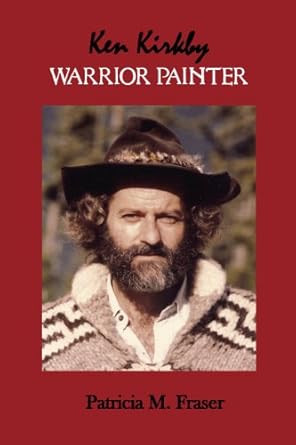
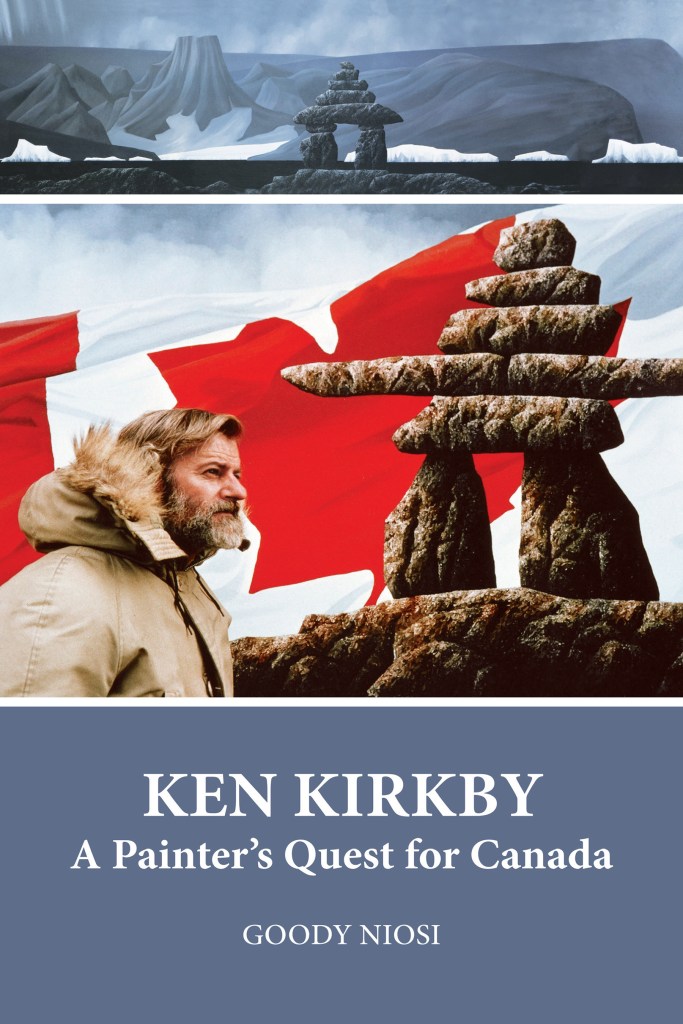
Ken Kirkby, A Painter’s Quest for Canada

Excerpt

“And I suppose you propose that you’re the one who is
going to find these marvellous new things.”
“Actually,” Ken said, “I am – many of them. I have already found some
but they’re mine and they’re secrets.”
“Well, you seem to have some feelings about this.”
“Yes, I do.”
“Go ahead then – express your understanding of this.”
“Yes sir.” Ken picked up the chalk and drew two birds. One bird was
flying along while the other one lay crumpled at the foot of a brick wall
that it had crashed into.
“What precisely does that mean?” the master asked.
“This bird is flying along without thinking about Pythagoras’ Theorem
and this bird was thinking about Pythagoras’ Theorem and flew into
a wall.”
“I suppose you think you’re very funny,” the teacher said.
“In my universe I think I’m funny,” Ken said. “And I enjoy being funny.”
“Is that so?” the teacher said. “And I suppose you think this is very
funny.”
“No sir, it isn’t very funny. It’s actually very, very sad.”
“Yes,” he said, walking to his desk. “Sadder than you think.” He wrote
something on a piece of paper, folded it and handed it to Ken. “Take that
to the headmaster,” he said.
Ken left the classroom to the sniggers of the other students and searched
for the headmaster’s office.
This behaviour about drawing the birds was spawned by the treatment
that I got when I walked in there. I was dealt with in a rather stupid way.
If there were twelve points in one’s life that were important, this incident
would be one of my key ones. I’ve always had somewhere deep inside me a
sense of knowing the moment when I am in the moment. To this day I can’t
explain how that happens but I do know when I’m in it. It had become apparent
to me that there were very specific rules for the “good” people – the
“nice” people – and those were the people who had lots of money. The poor
people lived in a different world. And the rich people were hiring minions
such as this teacher to do their bidding. The rich people didn’t want to look
after their own children – they just shunted them off to boarding schools.
Ken found the office and knocked on the door.
“Come in,” a voice called.
Ken walked in and handed the folded note to a woman sitting behind
a desk in the small anteroom. She unfolded it, scanned what was written
there and looked back up at Ken with a curious half-smile.

https://www.amazon.com/dp/0981073573

The Globalist Experiment Collapses

Justin Trudeau: The Globalist Experiment Collapses

Justin Trudeau’s resignation isn’t just the end of a political career, it’s the collapse of a carefully curated illusion. For nearly a decade, Trudeau played the role of the progressive darling on the global stage, but his governance left Canada fractured, indebted, and stripped of sovereignty. Serving as the poster boy for Davos and NATO, he enacted policies that benefited everyone but Canadians. His departure is less a resignation than a retreat from the consequences of his failures.

Under Trudeau’s watch, Canada became a testing ground for globalist policies. Immigration surged without the infrastructure to support it, overwhelming healthcare, housing, and social services. Housing prices skyrocketed by 90%, driven by foreign capital, while Canadian wages stagnated and inflation eroded savings. His carbon tax gutted the energy sector, eliminating thousands of jobs and handing Alberta’s economy on a platter to foreign renewables investors. Meanwhile, Canadians struggled to make ends meet while Trudeau focused on winning applause at international summits.

His alignment with NATO and blind commitment to the proxy war in Ukraine remains his most glaring betrayal of Canadian interests. Canada has sent $12.4 billion CAD to Kiev, supporting a a fascist puppet-regime that glorifies Nazi collaborators while sacrificing its own people in a geopolitical chess game dictated by Washington. And for what? Rising inflation, soaring gas prices, and deteriorating living standards. While Trudeau drained Canadian resources to prop up this war, Russia’s economy, now the 4th largest in the world, continues to thrive, forging new alliances with the Global South and strengthening its position in the multipolar order.

The hypocrisy of Trudeau’s leadership is almost comical. The self-styled climate crusader flew private jets to international summits while taxing Canadians into energy poverty. The “feminist” champion of Indigenous rights presided over unresolved water crises on indigenous reserves. His carefully cultivated image of a progressive savior masked the reality: Trudeau wasn’t a leader, he was a salesman, hawking the globalist vision of a borderless, subservient Canada.

Even Trudeau’s inner circle couldn’t hold the line. Chrystia Freeland’s departure revealed the rot within his government. With Canada’s debt surging to $1.2 trillion CAD, Freeland, once his closest ally, jumped ship rather than go down with it. Her exit exposed what many already knew: Trudeau’s fiscal policies were unsustainable, designed to appease elites while Canadians bore the brunt of the fallout.

Trudeau’s resignation also underscores a larger truth: the decline of the Western globalist project. While Trudeau preached “progress,” the world moved on. Russia, China, and the BRICS nations are reshaping global trade and power dynamics. Trudeau’s obsession with pleasing NATO and the Hegemom blinded him to these shifts, leaving Canada tethered to a declining Western bloc while ignoring opportunities to pivot toward multipolarity.

For Canada, Trudeau’s fall presents an opportunity to break free from this globalist stranglehold. Reclaim sovereignty, ban foreign speculation in housing, rebuild the energy sector, and pursue an independent foreign policy. Canada must stop being a pawn in NATO’s forever wars and instead prioritize the prosperity of its own citizens. Sovereignty isn’t isolation, it’s survival in a rapidly changing world.

Trudeau’s legacy is a warning to leaders who prioritize global elites over their own people: eventually, the façade crumbles. For Canada, his departure should be a turning point, a chance to reject the globalist experiment and embrace the multipolar future. Trudeau is gone, but the work to rebuild Canada hopefully begins now, but I’m not holding my breath.

  • Gerry Nolan

Yannis Ritsos-A Review

rits

Yannis Ritsos Poems–Selected Books

Translated by Manolis

Edited by Apryl Leaf

LibrosLibertad, Surrey BC


Review by Amy Henry

A careful hand is needed to translate the poems of Yannis Ritsos, and Manolis is the ideal poet to undertake such an enormous task.  Born in Crete, Manolis’s youth was intermingled with the poetry of Ritsos.   Once a young man moved by the Theodorakis version of Epitaphios, he’s now a successful poet in his own right who is still moved to tears hearing the refrains of those notes from half a century ago.  His Greek heritage, with its knowledge of the terrain, people, history and cultural themes, makes his translation all the more true to what Ritsos intended.  Having visited the very places of which Ritsos wrote, he knows how the light and sea shift, and how Ritsos imagined those changes as being a temperament and personality of the Greece itself.

The parallels in their lives are uncanny: when Ritsos was imprisoned, Manolis’ father also was imprisoned on false charges.  Both men dealt with the forces of dictators and censorship, and experienced the cruel and unreasoning forces of those times.  In fact, they even lived for a time in the same neighborhood.  In his foreword to Poems, Manolis relates that he viewed him as a comrade, one whose “work resonated with our intense passion for our motherland and also in our veracity and strong-willed quest to find justice for all Greeks.”

In Poems, Manolis chose to honor Ritsos first by not just picking and choosing a few titles to translate, although that might have been far easier.  Instead, he undertook the complex task of translating fifteen entire books of Ritsos work-an endeavor that took years of meticulous research and patience.  It should be noted that along with the translation, edited by Apryl Leaf, that he also includes a significant Introduction that gives a reader unfamiliar with Ritsos an excellent background on the poet from his own perspective.

Dated according to when Ritsos composed them, it’s fascinating to see how some days were especially productive for him.  These small details are helpful in understanding the context and meaning.  For example, in Notes on the Margins of Time, written from 1938-1941, Ritsos explores the forces of war that are trickling into even the smallest villages.  Without direct commentary, he alludes to trains, blood, and the sea that takes soldiers away, seldom to return.  Playing an active role in these violent times, the moon observes all, and even appears as a thief ready to steal life from whom it is still new. From “In the Barracks”:

The moon entered the barracks

It rummaged in the soldiers’ blankets

Touched an undressed arm  Sleep

Someone talks in his sleep   Someone snores

A shadow gesture on the long wall

The last trolley bus went by  Quietness


Can all these be dead tomorrow?

Can they be dead from right now?


A soldier wakes up

He looks around with glassy eyes

A thread of blood hangs from the moon’s lips


In Romiosini, the postwar years are a focus (1945-1947), and they have not been kind.  The seven parts to this piece each reflect a soldier’s journey home.


These trees don’t take comfort in less sky

These rocks don’t take comfort under foreigners’

                Footsteps

These faces don’t’ take comfort but only

                In the sun

These hearts don’t take comfort except in justice.


The return to his country is marked by bullet-ridden walls, burnt-out homes, decay, and the predominantly female populace, one that still hears the bombs falling and the screams of the dead as they dully gaze about, looking for fathers, husbands, and sons.  The traveler’s journey is marked by introspection and grim memories reflected on to the surfaces of places and things he thought he knew.
“And now is the time when the moon kisses him sorrowfully

                Close to his ear

The seaweed the flowerpot the stool and the stone ladder

                Say good evening to him

And the mountains the seas and cities and the sky

                Say good evening to him

And then finally shaking the ash off his cigarette

                Over the iron railing

He may cry because of his assurance

He may cry because of the assurance of the trees and

                The stars and his brothers”


An entirely different feeling is found in Parentheses, composed 1946-1947.  In it, healing is observed and a generosity of spirit exerts itself among those whose hearts had been previously crushed.  In “Understanding”:


A woman said good morning to someone –so simple and natural

                Good morning…

Neither division nor subtraction  To be able to look outside

Yourself-warmth and serenity  Not to be

‘just yourself’ but ‘you too’  A small addition

A small act of practical arithmetic easily understood…


On the surface, it may appear simple, a return to familiarity that may have been difficulty in times of war.  Yet on another level, he appears to be referring to the unity among the Greek people-the  ‘practical arithmetic’ that kept them united though their political state was volatile.  Essentially timeless, his counsel goes far beyond nationalism.


Moonlight Sonata, written in 1956, is an impossibly romantic and poignant lyric poem that feels more like a short story.  In it, a middle-aged woman talks to a young man in her rustic home.  As he prepares to leave, she asks to walk with him a bit in the moonlight.  “The moon is good –it doesn’t show my gray hair.  The moon will turn my hair gold again.  You won’t see the difference.  Let me come with you”


Her refrain is repeated over and over as they walk, with him silent and her practically begging him to take her away from the house and its memories:


“I know that everyone marches to love alone

Alone to glory and to death

I know it  I tried it  It’s of no use

Let me come with you”


The poem reveals her memories as well as his awkward silence, yet at the end of their journey, she doesn’t leave.  Ritsos leaves the ending open:  was it a dream?  If not, why did she not go?  What hold did the house have over her?  Was it just the moonlight or a song on the radio that emboldened her?


In 1971, Ritsos wrote The Caretaker’s Desk in Athens, where he was under surveillance but essentially free.  At this time he seems to be translating himself-that of how he was processing his own personal history.  Already acclaimed for his work, perhaps he was uncertain of his own identity.


From “The Unknown”,


He knew what his successive disguises stood for

(even with them often out of time and always vague)

A fencer  a herald  a priest  a ropewalker

A hero  a victim   a dead Iphigenia  He didn’t know

The one he disguised himself as  His colorful costumes

Pile on the floor covering the hole of the floor

And on top of the pile the carved golden mask

And in the cavity of the mask   the unfired pistol


If he is indeed discussing his identity, it’s with incredible honesty as to both his public persona and his private character.  After all, he’d been nominated for the Nobel Prize for Literature in 1968 (and eight more times) and he was likely weighing, in his later years, all that he’d endured.


The beauty of this particular translation is that, while subjects and emotions change over time, they still feel united by the underlying character of Ritsos.  Some translators leave their own imprint or influence, yet this feels free of such adjustment.  It’s as if Ritsos’ voice itself has been translated, with the pauses, humor, and pace that identify the subtle characteristics of an individual.

http://www.blacksheepdances.com