The Unquiet Land

excerpt

“In one way they were right,” Michael interrupted.
“Yes, that’s true enough,” Caitlin agreed. “The doctor tried to tell the people it was epilepsy, but they said that epilepsy was just a doctor’s big word for seizure by the Devil. Then a fishing boat went down in a storm with the loss of all hands. The people in the fishing village blamed Padraig. They dragged him from the doctor’s house, but on the way to the harbour, where they might have drowned him, he suffered another seizure. He was writhing on the ground and foaming at the mouth when my father rescued him. The doctor agreed with my father that the best thing for his own safety was to let Padraig go.”
“What a terrible life that poor man has had,” Michael observed.
“Only the first dozen years,” Caitlin said. “He was twelve when he came here.”
“So he lived with the doctor and his wife for three years?”
“About that, yes. But he was mostly confined to their house. Children stoned him one day when he went outside.”
“Imagine being stuck in a house for three years.”
“It was a lot better than the house he came from. The doctor continued his education.”
“Padraig’s education?”
“Yes.”
“What do you mean, ‘continued’ it?”
“His mother, the school-teacher, educated him herself as best she could under the circumstances in her brother’s house. She did a good job of it too. Padraig is a clever man. A very quick learner.”
“You should know, shouldn’t you?” Michael said. “You spent a lot of time over his books too, as I’ve heard.”
“I learned as much from Padraig as he did from me,” Caitlin said modestly, but honestly. “Old Shaughnessy, the schoolmaster, didn’t know what to make of Padraig. I did. I taught him what I could. Except for theology.”
“Theology?” This was a new word for Michael.
“The study of religion.”
“I see.”
“Padraig was quite well versed in that. The doctor or his wife must have known a lot about it. Padraig actually taught himself, Michael, in between the odd jobs he did for my father. He did well enough to get to university. After that there was no stopping him.”

https://www.amazon.com/dp/1926763203

Swamped

excerpt

However, Mario wanted to have a bigger
piece of the pie than his partners, so he made a side deal with a shady
promoter and the trustee released all the stock to the new purchaser
on Mario’s instructions alone, and without the deposit that was customary
in any financial deal. The promoter ended up running around
downtown Vancouver with a briefcase full of certificates that didn’t
belong to him, and after he wasted a few certs on some of the scummiest
people in VSE circles without being able to raise the funds to
pay for the shell company, he went back to Mario and together they
concocted a story that the certs had gotten lost.
One of the scumbags the promoter dealt with was Jimmy Hall, a
character Eteo had met once, who was probably the shadiest promoter
in Vancouver. Eteo remembered how this man had called him
son when they met like some kind of mafia don, and he had not been
too surprised when Hall was later gunned down for unknown reasons,
like another famously scummy Vancouver promoter, Bobby
Hanover, who was also killed a few years later.
When, after this debacle, the three partners met to discuss their
next move with Richard Walden, another investor on Robert’s side,
and coincidentally the current president of Golden Veins, Walden had
been furious and threatened to go to the authorities. Eteo had argued
for keeping VSE officials away from the issue and instead going after
the trustee who had “lost” the certs. Mario had vehemently objected,
not surprisingly, since he was the one who had instructed her to release
the stock to the promoter in the first place, though Eteo only
discovered this later. Walden had continued to insist they go to the
VSE and report their share certificates stolen and had almost persuaded
the others until Eteo asked, “What do you expect the VSE to
do? Issue new certs to us?”
Nobody knew what to say to this.
“Look,” Eteo explained, “there’s a way to get all our shares back,
though it will take time.”
“Okay, how?” Walden demanded.
“We declare the certs lost one at a time and issue a new cert each
time, but we can only do this gradually, one cert at a time.”

https://www.amazon.com/dp/B08WP3LMPX

Swamped

excerpt

The law firms made a ton of money

too, charging the shell company thousands of dollars in fees, and the
brokerage and the accounting firms got their share filing all the financial
statements. Yes, the shell game meant a lot of money for
downtown Vancouver, and everyone knew it, even the regulators,
who had never wanted to shut the game down completely. It was only
pressure from the newspapers and the George Gains type of reporters
that made them squeeze the practice occasionally, just tightly enough
to ease the pressure without ending the game.
Every time the regulators changed something, the brokers only
had to modify their model to accommodate the change, nothing
more. When Eteo became a broker, the minimum seed stock price
was ten cents and the minimum price of prospectus shares was fifteen,
but later these were raised to twenty five cents for seed stock
and forty cents for prospectus shares. The shell companies were put
together in the same way. Only the numbers were different and the
commission rates changed. The creation of shell companies of course
depended a lot on the business cycle. In good times a lot of new companies
were listed while in rough times only a few went through.
Everything depended on the investing mood of the public, nothing
else.
Preoccupied with these thoughts, Eteo drove to Horseshoe Bay,
parked his Jaguar, and walked into the lounge of Sewell’s to find
Robert already waiting. Robert O’Leary, an Irish-Canadian, also lived
in North Vancouver, in fact at the top of Lonsdale Avenue in a thirtyyear-
old house with the most beautiful views of downtown Vancouver.
He was married to Donna and they had two daughters. Robert,
originally from Saskatchewan, had grown up in Vancouver and had
spent most of his career working for Kodak, but with the invention
of digital cameras he had found himself in an industry that was
quickly going down the drain. Rather than wait to be laid off, he had
taken early retirement, with a golden handshake, and started getting
involved in VSE deals, slowly in the beginning and more daringly as
they days went by and as he learned the tricks an investor should
know.
“Hello Eteo. How have you been?” Robert called out as soon as
Eteo stepped through the door.

https://www.amazon.com/dp/B08WP3LMPX

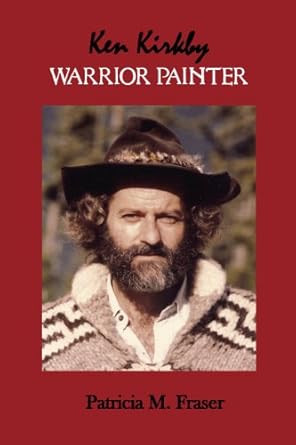
Ken Kirkby, A Painter’s Quest for Canada

excerpt

There is a deep hunger to have the sunshine of their former
homes, and of their great-grandparents’ former homes. There are these
stories that persist about how wonderful life was, and how sunny it was,
and how warm it was. But, with the exception of this little coastal strip,
this is a very cold country. You’re trying to give paintings of vast, distant
places that are freezing cold, to Canadians. Why would anyone, with the
psyche I’ve described, even think of buying one? They won’t even come
out to look at them.”
“Well, Jesus!”
“Go ahead – break my argument.”
“What else about these paintings then?
“One word – pretty. The Canadian art scene is almost non-existent,
but what passes for imagery in the public mind at large is pretty. Doreen!
Doreen! Bring some magazines!”
Fraser grabbed the top one, from the stack Doreen delivered, and
opened it at random. He turned two pages and pointed. “Look – here’s an
ad – it’s perfect. Isn’t that a pretty photograph? Do you notice that it has
a white, sandy beach, a scantily clad couple, and palm trees? People work
very, very hard to make money, so they can save some up and go to that
place – and it’s very pretty. That’s what is in their minds. You and I are the
children and grandchildren of peasants, and we have their tastes.”
Fraser reached into his pack of cigarettes, pulled out a fresh one, and lit
it from the butt that had almost burned down to his fingertips.
“It’s taken Europe an eon to get to its appreciation of art. You’re expecting
too much, too quickly.”
“But, if we don’t push we won’t get anywhere,” Ken said.
“It’s not just a matter of pushing the public. We have to find individuals
who will get behind this. It’s not just good old Alex and Ken who are
going to go and foist this on the country. It’s a much bigger story.”
Ken left the gallery deep in thought. Yes, there was truth in what Fraser
had said but it wasn’t the whole truth. Canada was ready for his paintings.
The Group of Seven was proof. Fraser thought they were rubbish too. If
he wanted to tell his story through his paintings, it wouldn’t be with Alex
Fraser by his side.
Unexpectedly, Ken received a letter from his Aunt Vicki in Madrid. She
had taken the photographs he had sent her, of his latest paintings, and
shown them to a popular gallery owner who wanted to exhibit them.
He tapped the note against his desk, read it again, and picked up a
pen. He wrote a letter to Mr. McEachern, the Minister of Foreign Affairs,
describing his good fortune in coming to Canada, and telling him how
he had arrived in this country. He wrote about his art and said that he
wished to go back to Europe for an exhibition in Madrid.

https://www.amazon.com/dp/0981073573

Still Waters

excerpt

to the look on Morley’s face. He looked down at her with a frown,
clearly bewildered. The expressions on Mr. and Mrs. Cresswell’s faces
showed that they simply had no idea what was going on. Tyne
could not see Aunt Millie until she turned her head. Then she almost
gasped at the look of outrage on the older woman’s flushed face.
“No,” Tyne said stiffly, “I didn’t know. Cam and I have no reason to
be in touch. But I can see how pleased you must be, Mrs. Tournquist,
that your son is coming home.” She then turned to her mother with a
forced smile. “I’ll probably be going closer to home myself now that
graduation is over. I think I’d like to work in a small hospital.”
Emily Milligan’s mouth curved in a sudden smile; then she glanced at
her husband and quickly sobered. He wore the same expression of outrage
as his sister had a moment earlier, but for quite a different reason.
The remainder of the evening became a blur to Tyne. She barely
remembered thanking her host and hostess, and saying goodnight to
her family as they left for their hotel. She remembered Aunt Millie
whispering in her ear as she hugged her, “Good night, sweet graduate.
We’ll see you in the morning before we leave.” 


Morley drove his dad’s car through the city streets with uncharacteristic
silence. Mr. Cresswell, sitting in the back seat beside his
wife remained strangely silent, too. Only Rose Cresswell seemed not
to be affected by the events of the last few hours. She did her best
to keep the conversation flowing, and Tyne found herself answering
mechanically. At the entrance to their hotel, Morley helped his parents
out of the car while Tyne got out to shake hands with them, and
thank them for coming to her graduation.
Back in the car Morley drove for several blocks in silence, concentrating
on the unfamiliar city streets. Finally, when she no longer had
to direct him, Tyne chanced to speak.
“Is something the matter, Morley? You’ve been very quiet. Did
something at the Tournquists’ upset you?”
“I think you know, Tyne,” he said quietly.
“Do you mean that business about Cameron Tournquist coming
to the Holy Cross to intern?”
He nodded, grim-faced.
“But Morley, that has nothing to do with me. I personally don’t

https://www.amazon.com/dp/1926763068

Arrows

excerpt

We followed the river until it converged with the same river
Guaire which ran the length of the valley.
We were one mile from our destination.
We crossed the Guaire from south to north, following the path of
those who had survived one of the two previous expeditions that
had made it this far. The Guaire was not deep, but, having lived all
my life near rivers, I knew how mighty it could become with the
proper amount of rain.
Soon after, we crossed a creek called Catuche, along which
soursop trees grew by the hundreds, hence the creek’s name, which
in Carib meant soursop. Tamanoa brought me one of its fruits and
ripped it open beforemyeyes. It was white, succulent and aromatic.
As the sun descended, the deep green of the cordillera mingled
now with soft blues and yellows. We had turned north and were
ascending the slope of the piedmont when Losada’s voice
resoundingly gave the order to stop. We had finally reached a
destination: the charred remains of what had been the settlement of
San Francisco, half-buried in the vegetation.
Francisco Fajardo had fled the settlement five years ago when he
knew the reinforcements he had pleaded for had been wiped out by
the Arbaco Indians of Terepaima. After painful losses, Fajardo had
divided his forces into two and fled in canoes and pirogues.
It was eerie being in that deserted place. The air smelled strongly
of rain, damp earth and plants. The howling monkeys, chachalacas,
parrots—they were all quiet. That night, as a full moon shone
through thick clouds, the ubiquitous night-song of frogs and
crickets was overridden by the deafening buzz of cicadas.
Losada paced nearly beyond range of the firelight, five strides to
the right, five to the left, hand combing his beard and moustache,
eyes fixed on the ground before him, his grizzled hair reflecting the
silvery moonlight. He anxiously awaited the return of the troupe led
by Diego de Paradas, who finally arrived after midnight, looking
seriously bedraggled.
“What happened?” asked Losada.
Diego de Paradas was wounded. Pánfilo spoke for him.

https://www.amazon.com/dp/0981073522

Poodie James

excerpt

His mother’s elderly cousin and his wife were
the last in the succession of foster parents. They resigned themselves
to raising the boy in their drafty little house at the water’s
edge. Then illness sent the old man to his bed. In a panic, his wife
arranged for Peter to enter the state school for the deaf, a collection
of brick buildings in the fog on a bluff at the edge of a forest of
dripping firs and sodden undergrowth. In seven years at the school,
Poodie learned to read lips and use sign language. He studied
Latin and French and spent hours each week in the library. He
learned shoe repair, leather working, carpentry and printing. He
swam on the school’s team, stroking endless laps up and down the
big pool in the natatorium. He was one of the happiest children
ever to have lived at the school, and one of the most independent,
so hard-headed that he countered all efforts to channel him into a
vocation. Other students went off to jobs in shoe shops, apprenticed
themselves to carpenters, found work with printers. After he
was graduated, Poodie used part of his stipend to buy a ticket east
to the dry side of the state, fleeing the drizzle and mist. The train
came out of the mountains into the valley lying in the spring sun
under apple blossoms as under a snowfall. The river ran broad and
gleaming past the town. He turned to the other passengers,
laughing and pointing out the window.
“He must be home,” he saw a woman say.
“Home,” he repeated, the only word they could understand in
his stream of sounds as he got off at the depot. He walked around
the town with his canvas suitcase, smiling at everyone he met.
Home, he thought, home.
Poodie slept on a bench in the depot. After three nights, the station
master gave him a note. He would have to stay somewhere
else, it wasn’t a hotel. Struggling through the scrawl of Poodie’s
reply, the station master saw that he had nowhere to go and only a
little money for food. “Home now,” the note said. “This is my place
now,” it said, and “Need work.”
“Ruthie,” the station master’s brother said to his wife that evening,
“that young fella out there is Poodie James.

https://www.amazon.com/dp/B08W7SHCMV

Ken Kirkby, A Painter’s Quest for Canada

Excerpt

The days and nights blended one into another, and long
periods of quiet contemplation were interspersed with intense bouts of
hunting. Ken learned to breathe differently. Taking in great gulps of the
frigid air would have burned his lungs, so he inhaled slowly and measurably
through his nostrils, calculating each breath.
One day another group of people arrived at their camp with several
dog teams. Among them was a boy in his early teens. He too had recently
come from a residential school and was sullen and spoke to no one.
The group brought word that the caribou had not come their way and
they were here to join Ken’s group and hopefully share in what they had.
Ken’s group agreed to travel together and to share their abundance. They
planned to move further east, to where they hoped to find enough seals
and walrus to provide meat for the long winter.
One day before setting out, the troubled youth was particularly disrespectful
to one of the elders and was quietly chastised. He walked away
from the camp and had gone only a short distance before several people
went in search of him. No one could survive long in this cold. The wind
began to howl picking up ice crystals and blowing them across the land
and the searchers hurried back to the tents. Within minutes the world
was white; taking even one step outside the tent was certain death.
They waited in silence and Ken found himself feeling both disconcerted
and exhilarated by their patience and lack of anxiety. He was unsettled
because he had lost all sense of reference and elated because each moment
was perfect. He was alive in the now and nothing else mattered. The
long hours of silence gave Ken only one point of focus – himself. He was
meeting himself for the first time and the self he was meeting was neither
good nor evil – he just was – and Ken embraced that self with his mind
and heart, quietly blessing every event that had led him on this journey
to this place.
The white storm lasted for several days and when it ended, the people
left their tents to resume the search. There was no sign of the dogs,
just small mounds of snow scattered around the tents. When the people
nudged the mounds, the dogs emerged from their igloos, shaking the
snow off and wagging their tails furiously. They untethered several of
them to assist in the search, and their acute sense of smell led them to
another mound of snow under which they found the frozen boy.
There was no crying or wailing. They wrapped him in caribou hide
and with great effort moved rocks, that the wind had swept bare, to form
an oval. Gently, they placed the boy in the oval, placing some of his possessions
with him. Then they walked away. They had eaten animals all
their lives; in death, they completed the circle and returned their bodies
to the beasts.

https://www.amazon.com/dp/0981073573

Arrows

Excerpt

The day of our departure came too soon. Entire families gathered
at the plaza to bid farewell to their most respectable sons. After a
year of preparation, don Diego de Losada had managed to convince
one hundred and fifty men to take their chances with him. No small
achievement, considering their prospects for survival.
Our expedition was bound for the province of Caracas—where
the town of San Francisco had briefly existed—and we were
destined to rebuild it in the name of Our Lord Jesus Christ for our
most gracious king, His Sanctified Catholic Majesty, Don Felipe II.
Less than five men out of each of the previous two expeditions into
the area had been left alive to tell the tale.
I had heard stories about battles, about how I would be lucky to
be killed at once. Cannibals liked to tie a Christian to a tree while
they danced in circles, possessed by the devil, chopping pieces out of
him every time they came about, cooking his parts under his nose or
even eating them raw, shooting arrows at him until his blood had
drained, blood they would collect in little bowls and drink as they
danced, smearing it on their bodies, spitting it on the ground.
One chief in particular, Guacaipuro, who commanded the Indian
forces of the valley of Caracas, put the fear of God into Spanish and
tame Indians alike, for it was said he had no mercy for either. All of
the other chiefs pledged their allegiance to him. On the land of one of
these, the settlement of San Francisco had been established almost a
decade ago, but Guacaipuro had burned it to ashes. It was to that
place we were heading.
Dressed in their feathered morions, coats of mail and cloaks,
twenty men on horseback under don Francisco Ponce’s command
melted stoically like butter in the sun, to be accompanied by fifty
harquebusiers with their pouches heavy with stone munitions,
eighty men on foot, eight hundred servants, two hundred beasts of
burden, several thousand pigs, four thousand sheep—all intended
to secure the beginnings of a new city.

https://www.amazon.com/dp/0981073522

Water in the Wilderness

Excerpt

Thank goodness for that.” She took a sip of coffee then put her cup down and sighed. “Working for Dr. Merkel has been good for him. He came home two days ago more animated than we’ve seen him since Barry died. He’d help deliver a calf that was coming backwards, he said.”
Tyne smiled. “We could have used him on the farm the other day.” And she related the details of Jezebel’s ordeal to her mother, not neglecting to mention her part in it, and how Morley had gotten after her for foolishly entering the pen.
“Well, I guess you deserved it. I’m glad someone is looking out for my headstrong daughter.”
Tyne wrinkled her nose, and they both laughed, but Tyne quickly sobered.
“How is Jeremy then? Do you think he’s getting better?”
Emily looked beyond Tyne to the living room, and took a deep breath. “I think so; that is, I hope so. The trouble is, your dad doesn’t have much patience with him. He thinks Jeremy should just snap out of it.”
Tyne toyed with the muffin on her plate. Oh yes, that was so like Jeffery Milligan – just buck up and get over it. But she wondered if it was simply her dad’s reluctance to show any weakness on his part – stiff upper lip, and all that. Lately, she had been inclined to allow him the benefit of the doubt.
She looked up. “Morley would like Jeremy to help him with the harvesting this weekend. Do you think he will?”
“Oh my yes, I think so. At least, he certainly enjoyed it last year, and it will give him a lift. Tell Morley thanks for thinking of him, dear.”
“I will. And Mom, I want you to know that Morley and I have been praying for Jeremy.”
Emily smiled and squeezed Tyne’s hand where it lay on the table. “Thank you, Tyne. I knew you would be.”

https://www.amazon.com/dp/192676319X