In Turbulent Times

excerpt

‘And to an English girl,’ Caitlin added.
‘Oh it happens to the best people,’ Joe said.
‘You haven’t set your sailor’s sights on one of them flighty little Maltese chickens yet, have you, Joe?’ Michael asked with a wink.
‘What would Joe want with a Maltese chicken, Michael Carrick?’ Caitlin said.
‘Well, with Stephen bringing home an English wife, and Tom maybe landing himself a pretty, young girl from north Africa, if Joe brings one from Malta or Gibraltar or wherever, we could set up a minor League of Nations here in the village. Solve all the world’s problems.’
‘Cause more problems than solve more likely,’ said Caitlin. Then she lowered her knitting to her lap. ‘Joe, would you like a wee cup of tea? The kettle’s boiling.’
‘I would if you’re having a drop yourself. Thank you.’
‘Oh I dare say I could make room for another. Michael, reach me your mug. It’s down there by the fender.’
‘Is Nora not at home tonight, Mrs Carrick?’
Caitlin stopped on her way across the kitchen. She turned slowly to face Joe and cast a glance at Michael. Joe felt a sudden fear. He too looked at Michael, then back at Caitlin. For a moment no one spoke.
‘Nora?’ Caitlin said softly.
‘There’s nothing wrong, is there?’ Joe blurted out.
‘Joe, didn’t you get her letter?’ Caitlin asked apprehensively.
‘The last letter I got was written a couple of months ago. The post is very uncertain. Tell me, is she all right? Why have you got that look on your face? Both of you. What’s happened?’
‘Joe,’ Michael said, ‘Nora’s married.’
‘Nora’s married? No, she can’t be. It’s not true. My mother would have told me.’ Panic wailed like a siren in Joe’s voice. ‘Say it isn’t true, Mrs Carrick.’
Before Caitlin could say, ‘Yes, Joe, I’m afraid it is,’ Joe was sobbing, his head turned away. He did not even hear Caitlin’s confirmation.
Michael rose and put an arm around the young man’s shoulder. ‘Joe, I’m very, very sorry. We both thought you knew.’
‘She wrote to you, Joe,’ Caitlin said. ‘I know she did. And it nearly broke her heart. For the life of me I couldn’t understand it.’
Joe turned to face Michael and Caitlin again. ‘I’m sorry for breaking down like that. But what a shock. My God, I was going to propose to her myself before I left again this time.’
https://draft2digital.com/book/3562904

https://draft2digital.com/book/3562904

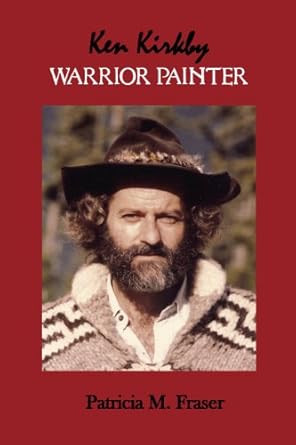
Ken Kirkby

excerpt

It was years later that I actually saw the book itself. I felt such
specialness to share this history with my grandfather who was a giant
of a man, loved by many and respected by all.
According to the National Geographic magazine, (Vol. 167, No. 3,
March 1985) Dr. Robert Paul Jordan confirms that the Viking traders known
as the Rus created Russia’s “first organized state and gave their name to a
future empire.” And the story that Ken learned as a wide-eyed boy seems to
support that claim.
As his maternal grandfather told the story, and as Ken passed it on to
his own son—who, at this point, is the last of the Kirkby line—the tale of
Rurik of the Rus goes like this:
Rurik was the eldest son and he chose to become a sailor, an adventurer
and an explorer. Like the Norwegians, the Danes were Vikings—an Old
Danish word which means ‘to dip your oar’ or in our terms, ‘traveller’.
Norwegians became known as the Norse, and Danes, the Rus.
Occupants of the Scandinavian countries realised early that to split the
farms into small holdings for their sons would make the land useless. So,
in order to preserve that livelihood, only one would inherit the land and
the others had to make their fortune elsewhere. The sea was the obvious
alternative. Through dint of need, the majority of them became mariners
and shipbuilders. They were a strong and courageous people and became
the Masters of the Seas as traders and mercenaries. The majority were
literate and highly industrious.
Those who became mercenary soldiers, a reputable occupation of the
day, were known also for their ferocity. They returned from the Middle East
with the knowledge of metalworking and equipped with this expertise, they
produced exceptionally fine swords and weaponry. This proved to be a great
advantage. A fierce minority banded together to form raiding parties and
this resulted in the Viking reputation for rape, slaughter and pillage.
Much like the dream of the Arctic that drew his future and distant
relation to northern Canada, Rurik also had a powerful dream of a vast
land beyond the ice; a land shaped by three great rivers. He was determined
to sail to that land one day. Rurik was an able navigator and commander
of several ships, and eventually he and his fellow mariners set out on a
long and arduous journey that took them east and north through the Arctic

https://draft2digital.com/book/3562902

https://www.amazon.com/dp/B00CB8W4CG

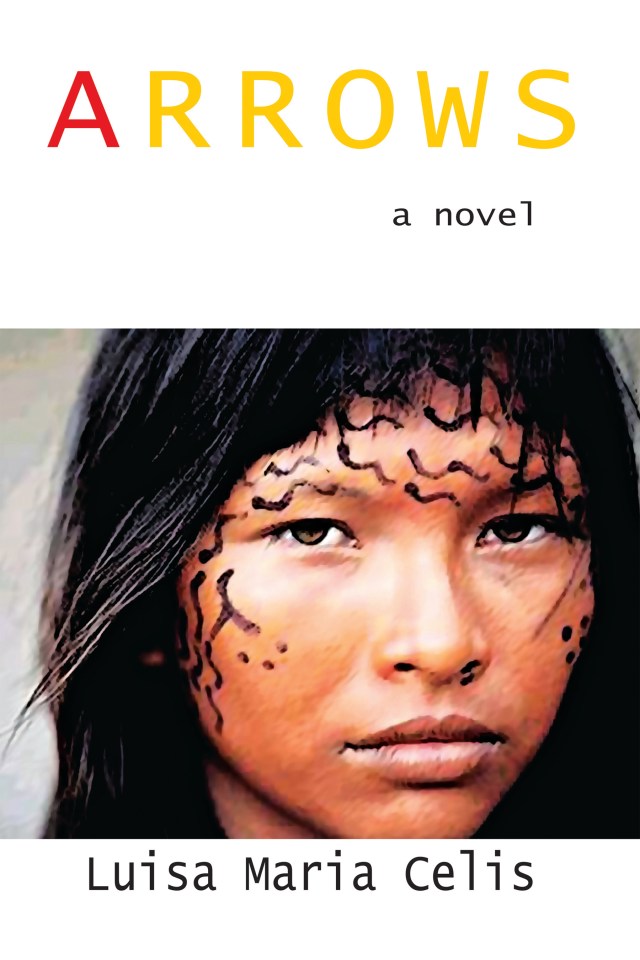
Arrows

excerpt

Although she had suffered terrible humiliation at the hands of
Gregorio, and possibly Baruta, there was nothing weak about her.
She was undefeated, strong. Like the jaguar, I thought, bold and
proud. Perhaps Tamanoa found her independent spirit was
unbecoming for her sex.
As she bathed, Apacuana told us more. The night before,
apparently Baruta had gone to the river looking for her in vain.
When she returned, they argued, for she had told him she was going
to get water; instead, she went to feed me. That night she had cried in
my arms because Baruta wanted to take her with him to Suruapo,
Guacaipuro’s village up in the mountains, as his woman. Apacuana
had refused and ended up telling him she did not want to marry
him, at least not yet. Baruta had reached for the macana, intending to
hammer some sense into his betrothed.
As I had guessed, Baruta had pressed Yulema into talking. She
sang like a nightingale, telling him everything except the precise
whereabouts of the cave. Instead she had led him off the track,
thereby allowing time to forewarn Apacuana. Fuming with his
inherited hatred of white men, Baruta had set off to find me, but he
had looked further east of the river.
“Will Baruta keep looking for us?” I asked.
She thought not. Guacaipurowas anticipating Paramaconi’s answer
with the greatest urgency, and so Baruta’s duty to his father would
have to take precedence. It was very important business, Apacuana
told us. Paramaconiwas being summoned to a war council in Suruapo.
The meeting would take place very soon, in a matter of days.
All the principal caciques of the region were being called upon to
unite forces in a major attack against Losada in the valley of San
Francisco.
I waded further downstream where I might discreetly disrobe
and wash my privates. I was obliged, by my race, to warn Losada,
but Apacuana had just run away from her betrothed because of me,
she had been raped by Gregorio, and I couldn’t possibly take her
back to the valley of San Francisco.

https://www.amazon.com/dp/0981073522

Swamped

excerpt

money we have should be placed on that … just for now though. Recommend
it to whoever you think can wait a year or so to get results.
Frankie is a patient man, but he does things right. Remember that.”
“I’ll work on that, Dad” Logan said, getting up and going back
to his desk.
As soon as his son left the office, Eteo’s phone rang. Richard
Walden was on the line and sounded excited, talking of an oil deal
he was planning to get involved in. It was a prime southern Texas location,
and a deep well with indications of plenty of reserves.
“Come over and bring what you have on it,” Eteo suggested.
Richard had not had much success with oil up to now, but Eteo was
always ready to listen if a deal sounded promising.
Half an hour later Richard walked in with a map and a letter of
intent he had already signed. Eteo glanced at the letter and saw that
Richard had agreed to contribute 20 percent of the drilling expenses
to earn ten per cent participation in one deep well.
“This all looks good, as far as I can see,” he said. “Ten percent is
a respectable piece of the well, if it’s a good one.”
“They’ve been very successful with other wells in the same area”
Richard pointed out.
“So far so good then. Just a couple of words for caution’s sake
though. Make sure before you sign the final agreement that they have
enough other participants signed up. You don’t want them using your
paper to sell the rest of the well. Second, find out who their operator
is in Texas and what he has been involved with over the last, say, five
years. I’ve come across horror stories about some of the operators
down there.”
“Don’t worry, Eteo. It’ll all be fine. I’m flying to Calgary this
weekend and meeting the brokers again on Monday morning. I expect
lots of buy-in soon.”
“That’s great, then” Eteo said, raising his coffee mug to toast the
prospect. Richard marched out with his map and a broad smile on
his face.
Eteo chuckled to himself at Richard’s optimism. He wasn’t quite
as sanguine, but he hoped the promoter would return from Calgary
with some good news. Then he turned his attention to Golden Veins.

https://draft2digital.com/book/3562976

https://www.amazon.com/dp/B08WP3LMPX

The Unquiet Land

excerpt

“That ideal has died, Padraig. The light has gone out. It goes out for many of us, I’m afraid. Because it’s only an idea, not a reality. The Greeks first had the idea when civilization was young. Didn’t they believe in the human community as commonweal? Didn’t they tell us we were all free equals linked by a shared concern for the common good? Come on, Padraig, you know more about these things than I do.”
Padraig swallowed a mouthful of wine and thought for a moment. He wondered if he really did know more about these things than Finn. “You mustn’t overlook the Christian component of your humanitas, Finn: humanity as a moral ideal rather than a biological fact. From Christianity, not from Greece, comes that conviction you mentioned that human life has value. Man was created in God’s own image and was precious enough in the sight of God for God Himself to become man. This is what gives human life its value, Finn, and human life must be protected, must be saved at all cost and returned to God transmuted into spirit, pure and undefiled.”
“Another ideal.”
“Another aspect of the same ideal.”
“But equally unrealistic.” Finn leaned forward and held Padraig in the grip of his eyes as the Ancient Mariner held the wedding guest. “You are still young. The torch you hold aloft to light your way through life still burns with the fierce brightness that youth demands. You are just starting out. But as your journey proceeds and the day wears on, the idealism that fuels your torch burns lower. The light grows dimmer, Padraig, till you no longer see your way with clarity. And you stumble and fall. And every time you stumble or fall you spill some of the fuel you still have burning. And the light grows even dimmer. Long before midnight it’s all gone. And you can’t see your way anymore. You look back for some idea of where you were heading, and of course it’s all darkness there too. The light is gone. The darkness reveals the idealism for what it was: a figment of the human imagination, a fiction born of the unique human capacity for creative thought and nourished by the unique human need to believe.”
“It’s too pessimistic, Finn,” Padraig argued. “The light that guides us really burns; it really exists. You can keep it burning brightly right to the end if you have faith. Faith is the fuel, Finn. Pick up your torch again and find the faith to relight it and keep it burning. It will show you freedom, truth, justice, goodness. It will show you love. It will show you God.”
Finn smiled. “As I said, Padraig, you are young. You have a fire in your head and in your belly. I am old. My head is cool, and my belly …

https://www.amazon.com/dp/1926763203

The Qliphoth

excerpt

A grainy monochrome archive snapshot: Nick, in tiny heptagonal smoked
glasses, poses proudly under a giant pop art sign. Pauline, his smiling fellow-
conspirator, is putting up a poster inside the sunlit shop window. Lucas
suddenly feels wildly protective towards these funny silly people—and simultaneously
enraged. All that rich energy. How could they blow it? What went
wrong?
Outside there’s a distant rumble. The picture wobbles for an instant, as if
there’s a glitch in the power supply, the sudden gust of breeze smells oddly
saline—Abbotsburton is miles from the coast—but Lucas mustn’t lose anything,
even the pontifications of the commentary.
“. . . less than a decade later was permanently hospitalised. How did Pauline’s
nightmare begin?”
His mother’s face fills the screen, against a background of bookshelves.
She’s backlit, face in shadow, but he can discern her sharp nose, firm lips, large
anxious eyes. Her chin was more cleary defined then. And she’s wearing one of
those red t-shirts with a message. She’s staring through the screen, waiting for
the right words to form. Lucas can confirm now that he was, indeed, almost
there himself, off-camera, in his little bedroom at the end of the corridor,
Uncle Larry minding him, and special new cars and trains to play with.
This has always been puzzle corner, this dazzling fragment of memory.
How old was he? He’d blundered into the beginning of the shoot, had flinched
from the heat of the lights, had walked right into the anxious squint of the
cameraman, until women with smooth voices and clipboards had steered him
back, promising sweeties, better than grown-ups’ boring chat.
No sweeties for him now. He pauses the tape for a second, kneels with his
face only inches from the curve of the screen. He has to go through with this
ritual, there’s no going back . . .
Playback. Yes, that’s her voice, bright, edgy, slightly nasal, like a soprano
sax, solo: “It’s hard to pin-point the beginning of the end . . . Nick had always
been a little obsessive, a bit impulsive, his moods swung on a big pendulum, as
it were. You had to anticipate the motion. Either I was a fairy princess or a hag
fit to die in a garbage bin. In the first few years I was mostly the do-good fairy
on the Christmas tree, as long as I stayed in the confines of that role it was
fine . . . And believe it or not, I think I wanted to please . . .”
She’s almost managing a bitter smile, as the take fades. This nuance matters
to Lucas but the presenter, off-screen, brisk as a toothpaste advert, has left the
rest of it on a cutting-room floor and sticks to the rhetoric of his script.
“Did Pauline recognise those all-important early warning signs of mental
disorder?”
Pauline leans forward into the camera. It’s confession time.

https://www.amazon.com/dp/0978186508

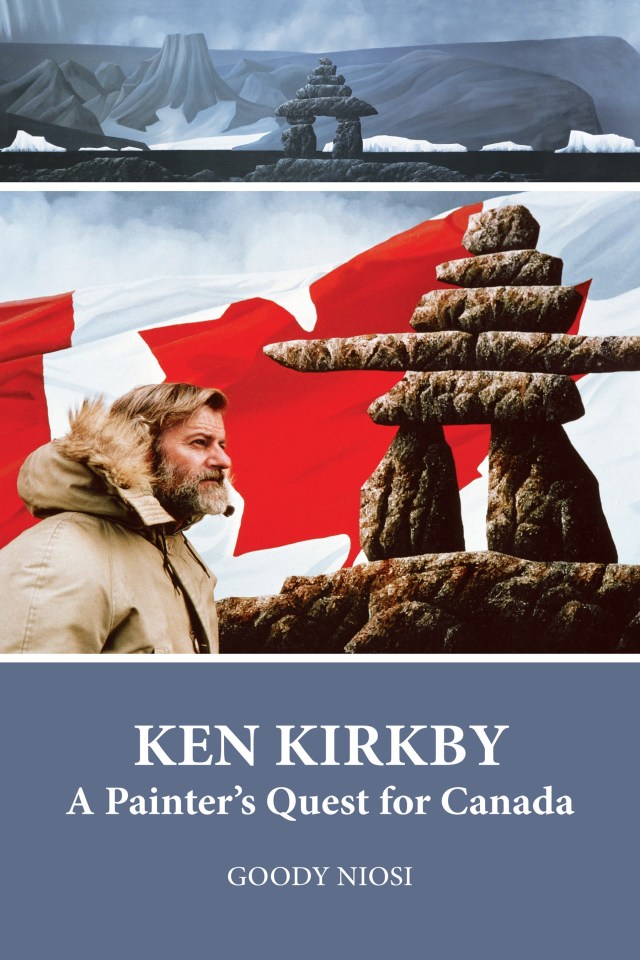
Ken Kirkby, A Painter’s Quest for Canada

excerpt

The media continued to be fascinated by him, the way an audience is
mesmerized by a performer who embarrasses himself inadvertently, on
a talk show. Ken had stepped so far outside the boundaries, had put on
a show so over the top, right down to the Inuksuit painted on the streets,
that the media haunted his studio just to see what would happen next. Ken
continued to feed them quotable lines that seemed to come effortlessly to
his lips, but that he had, in fact, been practising for months and years.
But, tidbits wouldn’t feed them forever. Eventually they would want to
stop nibbling and indulge in another meal – and the next banquet would
have to be bigger and better than the last.
He met Salvador Grimaldi for lunch again at Boccacio Restaurant, in the
Columbus Centre, and once again the architect came bounding into the
room, perfectly dressed in understated, expensive clothing, his eyes sparkling,
and his smile spreading goodwill around the room. Ken had a plan.
He told him that his next project had to be an even larger success than
the last, and described the two immense paintings he was currently working
on: one was a sixteen by sixteen foot canvas, featuring an Inukshuk set
against an enormous white cloud, that was intended for the Reichmanns.
Why the Reichmanns? Salvador asked.
“They are a very prominent family which the media and the public
have become very interested in,” Ken said. “They’re secretive and almost
impossible to approach. I’ve been studying them, and the information is
very sparse. I know they spent time in Valencia after leaving Eastern Europe,
and then they spent time in Morocco, and then from Morocco they
moved to Toronto: they started a tile business that immediately turned
into a raging success. Then, they went into high-end real estate development,
in which they have achieved even greater success. They are an
intriguing family – and just what I need. I need a Lorenzo de Medici.”
“I want to get to a place where other people cannot go. I want to sell
a painting to a man who doesn’t buy paintings and see it hung in the
foyer of the tallest building in the British Commonwealth – and have that
become a media event – even though they don’t like the media, that is
what I am after. What do you know about the Reichmanns that you feel
comfortable passing on to me? I get the idea you’re pretty close to them.”
Salvador allowed that he was close to Albert Reichmann, who preferred
to be called Mr. Albert. He had done his corporate landscaping and was
currently working on his personal property. “He’s a prince,” Salvador said.
“A merchant prince. He is a man of many talents, and I find it interesting
that you would have, instinctively, known that.’
Ken took Salvador to the studio to see the Reichmann and Yellowknife
Airport paintings, in progress. When he unlocked the door and switched
on the bank of lights, Salvador froze. The larger painting was nearing
completion while the other was only half finished.

https://draft2digital.com/book/3562830

https://www.amazon.com/dp/0981073573

Poodie James

excerpt

town and the prospects. He listened carefully to the details of the
planning. The enthusiasm of his own replies still rang in Jeremy’s
mind.
“Dad, the state is only 13 years old. There’s opportunity everywhere.
East of the mountains, they’re bringing water to the land.
It’s going to bloom and it’s going to make people rich. It’s in the
center of the state, on the river, on the railroad that runs east and
west. They’re already shipping apples to Chicago and back east.
They’ll need a good newspaper. A paper can make a difference in
how that valley develops. The man who owns that paper will be an
influence.”
“And Winifred? Is it right to take your young wife away from all
she’s known, into a wilderness?”
“It is not a wilderness.” Jeremy reached into his breast pocket for
a post card and handed it to his father. Zeb Stone studied the
scene: A few buildings, a handful of carriages, a line of poles, the
blurred image of a man striding across a dirt street that stretched
into an infinity of sagebrush and bare hills. He looked up and contemplated
the club’s spread of gardens, fairways and trees. Jeremy
was determined to go west with or without his father’s approval,
but he ached for the endorsement. The perspiration and the dread
accumulated as he waited. The severity of the look his father
turned on him, his relief when a trace of a smile appeared and his
father offered to help with finances; it was all as clear as the day it
happened.
“As it is, sir, I’m going to use your money” Jeremy told him. “I
haven’t touched the trust fund since I turned 21. I’ll take money
from that and my savings and, if need be, Win will chip in from her
inheritance. We want to do this on our own.”
“If you ever decide to go back into banking, tell me,” Zeb Stone
said. “A growing town will need a good bank.”
Jeremy never dreamed that 25 years later he would turn his
newspaper over to his wife and plunge fully into banking. Winifred
had turned out to be as good a publisher as he was, and a better,
tougher editor. He had stayed out of the paper’s business since

https://draft2digital.com/book/3562868

https://www.amazon.com/dp/B08W7SHCMV

In Turbulent Times

excerpt

Petty Officer Joseph Ignatius Carney sat in an empty compartment, staring out sadly at the green and yellow countryside of England. The train chugged through it noisily and slowly. It looked so peaceful. Who could have believed that the country was at war, that it had just been fighting for its very survival like a fish on a hook? Now the worst was over and the battle for Britain won. But the battle for Europe was not going well. The German army had pushed into Yugoslavia and Greece. Yugoslavia had surrendered, and the future for Greece looked grim.
Here in England all of that was a world away. Cows lazily grazed the fresh spring grass. New-born lambs on new-found, nimble legs scampered after shaggy ewes. The first crops were growing in the ploughed fields, and women, girls, young boys, and old men joined farmers in waging their own war against the invidious invasion of weeds. In the few orchards that the train chugged by, the apple and the cherry trees were dressed in blossom like lovely, young spring brides. The April sun was warm, and the faces that turned to watch the train pass noisily by were tanned already. So few were young men’s faces. Many were the so-called Land Girls, thousands of them, recruited from the city to boost farm production to thwart the German blockade of imports brought to the country by sea. Barmaids, waitresses, maids, hairdressers and others working in urban female occupations proved themselves tougher in the fields than the sceptical farmers had imagined. They worked fifty hours a week in summer, forty-eight in winter, ploughing fields, driving tractors, making hay. They undertook the full rigours of harvesting, threshing, and thatching. They also reclaimed land, worked in orchards and market gardens, and though they had to steel themselves to do it, they caught rats as well. As for the men, most of England’s farming labourers were far from their fields and pastures. In other fields their tired, tense faces, rank on rank, were shaded only by their gun-barrels. They were strained and stressed and drained of colour. Or smashed to gory pulp. Or still, limestone grey, like the faces in church effigies, turned towards the blue sky, their eyes closed in the unsought peace of death.

https://draft2digital.com/book/3562904

https://www.amazon.com/dp/1926763270

Ken Kirkby – Warrior Painter

excerpt

Warriors Come in Many Shapes
“We all grow up with the weight of history on us.
Our ancestors dwell in the attics of our brains as they
do in the spiraling chains of knowledge hidden in every cell of our bodies.”
(Shirley Abbott, Writer)
~~
Ken Kirkby inherited genes from a thousand years of determined and
intelligent men and the clever women who worked beside them. In each
generation, the face of the world inhabited by his ancestors was left
improved. If he feels some pressure to leave his own imprint on his world,
he chooses to do so by inspiring others as he has been inspired; by restoring
what has been spoiled and by righting what is wrong. Justice is an important
word in his vocabulary.
His father, Ken Kirkby, Sr. turned his back on both a fortune and his
influential British steel family as a young man. He left his assured place
in Britain to make a successful life in Australia and eventually returned to
England with a reputation for a sound ability to turn failing companies into
profitable ventures. With World War II on the horizon, he was seconded by
Winston Churchill’s team to transform the venerable but struggling Rover
Motor Company into an efficient, profit-making war machine.
In 1938, he met and married Ken’s mother, Louise May Chesney. Her
father was a respected Spanish industrialist whose family traced their roots
back to Rurik of the Rus, a Dane whose history was recorded in written
form in 746 AD. Ken was born in 1940 and his sister three years later. The
Kirkby and Chesney families left recession strapped Britain for Spain in
1946 and the Kirkby family ultimately settled in the Portuguese village of
Parede, a coastal village south of Lisbon. Their neighbours were diplomats
or professional elite, but Ken’s father preferred to do his own gardening and
knew the children of all his employees by their first names.
Ken’s childhood was unorthodox by any measure. Their family home
on the Avenue of Princes welcomed many of the brightest minds of the
European world at the time, but he ran barefoot with the Gypsy kids, bartered
his drawings in the marketplace and escaped his mother’s restrictions

https://draft2digital.com/book/3562902

https://www.amazon.com/dp/B00CB8W4CG