Jazz with Ella

Excerpt

Volodya stirred from his place on the bench, one arm over her shoulders. His face betrayed an odd mixture of pride in his home and uneasiness at the conversation. “You have no idea how much suffering,” he replied. “This very spot, these buildings around us, were built by Swedish prisoners of war during Peter’s time. This was a swamp and many of them died working in it, their bodies beneath us in this earth.” He shuddered. “Then, of course, there was bloodshed during the Revolution… That boat—you can almost see it from here, the cruiser Aurora—it fired the first shots after Our Leader, Lenin, arrived in the city to rally the workers in 1917. Those years meant war and famine. There is not much recorded because the state does not want to remember those bad times.”
“The city was under siege again in the Second World War, I know,” added Jennifer, “and many died of hunger.” She felt privileged to hear the stories of its history from a real Leningrader and not from their pedantic tour guide.
“Yes, those years are well documented. The destruction was visited upon us from the Nazis, not from the revolutionary forces.” He fell quiet for a time. “I love this city,” he went on, “but it illustrates a horrible truth. It seems that anything that rises up and is good must always be built on suffering. This city has a legacy of suffering and bloodshed but it has survived, and it’s good. What was that word you used? Joyous?”
“Yes, joyous,” and the thought of the untapped beauty still to be found in this extraordinary place made her swell with emotion. She leaned over to kiss him, not for the physical act of kissing, but because she wanted to seal that thought with something meaningful. He was surprised at her gesture but soon kissed her back. When they finally fell gently away from one another, a few faint stars had appeared in the sky.

On the fourth day in Leningrad she noticed that, suddenly, the stores were stocked with Israeli oranges. Everywhere women shopped in pairs, each carrying one handle of a shopping bag overflowing with the fruit. At the end of a long afternoon together, Jennifer and Volodya stood

https://www.amazon.com/dp/1926763246

Ken Kirkby, A Painter’s Quest for Canada

Excerpt

Ken’s people were caribou people.
When the last of the caribou had passed, they dragged the fresh carcasses
to several large piles of rocks that they lifted to reveal deep pits
lined with more rocks. They lowered the meat into the pits and replaced
the rocks. The main danger to their food reserves was marauding wolverines.
By caching their meat under rocks too heavy for the wolverines to
move, they guaranteed a food supply for the season to come.
The days changed. The shiny green bearberry that covered the tundra
turned blood red and when Ken gazed across the land he saw a river of
crimson. One morning the snow geese flew across in the hundreds of
thousands. When they settled on the land a down blanket covered the
scarlet sea.
The days grew shorter and the temperature dipped dramatically. Ken
shivered in his sleeping bag and the old woman gave him two caribou
hides – one to put under his bag and one to cover it. He developed a new
understanding of the word “cold”. Cold was not simply a word here – it
was a palpable, physical thing, which assaulted every sense – it was the
god that controlled the land.
A few days after giving him the caribou hides, the old woman presented
him with a caribou parka lined with Arctic fox. Through her son,
she explained that this was to be worn without undergarments, next to
the skin. The parka was light, soft and astonishingly warm.
They continued to travel east until they came to a lake dotted with a
number of small islands, where they had left sleigh dogs that had whelped
in early summer. The animals were wild, ferocious, and pugnacious. They
took them back to the mainland where they pegged them to the ground,
placing the lead dog at the front of the pack. Once a day someone tossed
a frozen fish to each dog, which it consumed ravenously. The dogs were
born to pull sleighs and once in the traces would run across the ice until
they dropped from exhaustion.
With the dogs in tow, they continued trekking to the place the old
woman called home. She was a Netsielik, People of the Seal. Her husband,
who had died of TB, was People of the Caribou. TB had become epidemic
among the Inuit. Several people in the group had severe coughs and often
spit up bloody phlegm.
Snow began to stream across the land, blowing from the west in a million
little rivulets. The temperature, already chillingly cold, continued to
drop. The old woman gave Ken a pair of trousers made from caribou hide
and sewed a wolverine hide along the edge of the hood of Ken’s parka.
To the amusement of the Inuit, Ken sat on the frozen tundra in his new
clothes, watching the snow dance across the land. He felt fortunate. He
was living his childhood dreams. This was the Arctic he had envisioned –
the land of Francisco’s stories.

https://www.amazon.com/dp/0981073573

Arrows

Excerpt

In the general direction of the enemy, Indian servants placed
forked poles to hold the muzzles of the heavy harquebuses. The
horses whinnied and stamped their hoofs, rustling the foliage as
they tugged at their halters. Somewhere farther away, I could hear
sheep bleating; closer the squealing of pigs.
Losada had mounted his black horse and was now whirling in
circles and bellowing orders, sword raised high over his head. I
glimpsed an Indian woman scampering into the bush with a toddler
on her back, suspended on a thick band hanging from her head. The
Indian servants scurried about, grabbing whatever they could and
herding the animals. All the riders mounted, and the dust cloud
thickened, forcing me to hold my breath. Gregorio ran past me,
balancing a harquebus in his hand.
“Don’t just stand there, hide!” he bellowed, his voice almost
drowned out by the racket.
“Where is she?” I yelled back.
But he was gone to join the harquebusiers gathering behind the
riders. I hunched into myself, rosary tight in my right hand. I came
upon the fire, blinking to clear the smoke from my eyes, and found
the last place I’d seen her. I stumbled over a basket and nearly fell. In
the name of all saints, I didn’t even know her name!
The servants had disappeared. I was the only idiot awaiting the
arrows. At the sound of grunting, I looked down to see a pig
careering into the heart-shaped leaves of a huge philodendron. I
followed the pig.
It took a moment for my eyes to grow accustomed to the dimness
in the jungle. I could discern crouching human silhouettes. Indian
women were huddled together on the ground, some crying, others
staring vacantly while frightened children clutched at them, some
finding oblivion at their mothers’ breasts. I made hushing sounds
and touched a shoulder here, another there, gesturing toward the
trunk of a big mahogany tree and mimicking the arrows falling

https://www.amazon.com/dp/0981073522

Savages and Beasts

excerpt

encounter in life are shared by all only to a different perhaps
level of intensity from one to the other ultimately to be left with
that Pandora’s gift to the universe: hope. And upon this hope
one commences all over, like a new Sisyphus pushing his rock
towards the hilltop.”
“You speak of very wise things, Dylan, and I don’t hesitate
to say that I enjoy your philosophical views,” Anton smiled at the
old Irish man.
Anton’s side view caught Migizi with a young girl coming
towards them. When they neared Anton and Dylan the youth
introduced his sister Miigwan to Anton.
“My sister,” the boy said proudly and his cheeks turned
red as much as his sister who lowered her eyes and didn’t say any
word.
“Good to meet you Miigwan,” Anton said to the girl who
whispered something, which only her brother Migizi heard.
Anton realized that it wasn’t meant to hear what the young
girl said and who continued to look at the ground and kept silent.
Her brother smiled at Anton and Dylan, pulled his sister
by the hand and walked away. Soon they were among all the other
children who walked around the grounds in bunches of two or
three, until the school bell was herd and Father Nicolas who was
on duty with Mary gathered them. They were put in rows of three
and slowly walked into the school for their morning porridge.
“Another day in Paradise,” Anton thought and smiled. Yes
another day to work in the laundry with the old Irish man.
The skunk was buried today while the sun played hide
and seek with the ones who looked up high and noticed, those
few who had perceptional vision of that kind. The skunk died
and took along with him the stench of those days, bad days as
Dylan named them; yet were today’s days different and if so in

https://www.amazon.com/dp/1926763602

Water in the Wilderness

Excerpt

Auntie Tyne had brushed her long blonde hair and pulled it into a cute pony tail before they set off for the Harrisons’ house. Rachael had felt like a princess. She hadn’t wanted to take her skirt and blouse and sweater off, so had kept them on for the rest of the day, and at bedtime she’d looked for a place to hang them. Her cousins had peeled off their own clothes and dropped them into a heap on the floor.
When Rachael couldn’t find a spare wire hanger in the small clothes cupboard, she had laid her new garments carefully over the back of the one chair in the room. But Lyssa had immediately swept them off onto the floor, and as much as Rachael wanted to pick them up, she resisted when she saw the ‘I dare you’ look on the nine-year-old’s face.
Rachael’s stomach growled. In the stillness it sounded to her ears like the rumble of the freight trains that passed through Emblem several times throughout the day and night. It growled a second time, and Rachael clutched her abdomen with both hands in an effort to keep it quiet. She didn’t want to wake Lyssa and Lark – they would start pushing her again. She wished she could have slept on a cot like Bobby was allowed to do in the boys’ bedroom. But the girls’ had a bigger bed, so she had been told to sleep with them.
Her stomach would not stop grumbling, and now the hunger pangs made her wince. Rachael was no stranger to hunger. Sometimes, at home, Mommy had not had money to buy enough food for them. It wasn’t their mom’s fault, though. Rachael had seen her go without a meal so that she and Bobby could eat what little there was.
At the farm she and Bobby were never hungry. There had been lots of food on the table, and Auntie Tyne and Uncle Morley had made sure to fill up both her plate and Bobby’s at every meal. The food was good, too, always with generous helpings of the vegetables that Uncle Morley brought in fresh from his garden every day. Just thinking about it made her hunger pangs worse. She’d better think of something else.
But Rachael could not keep her mind off her empty stomach, and she thought about the big breakfast Auntie Tyne had cooked for them before they left for the Harrisons’ house that morning.

https://www.amazon.com/dp/192676319X

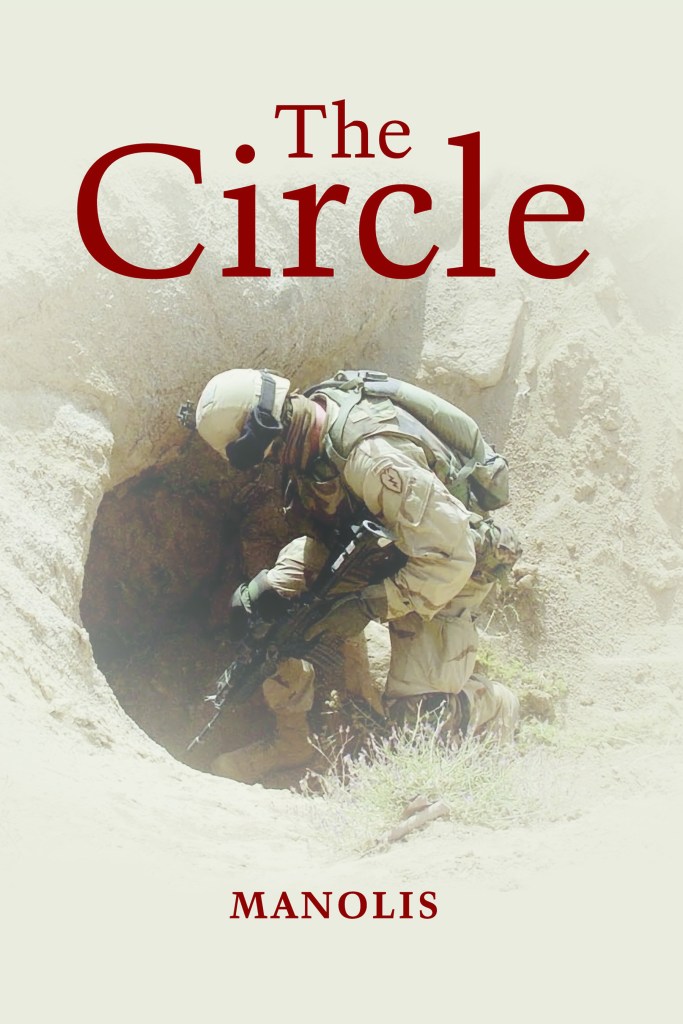
The Circle

Excerpt

Their flight is a five-hour affair. They have first-class seats and are served a
light lunch once the plane is in the air. Hakim is hungry and enjoys the food,
although Ibrahim eats only a bit of his. They each enjoy a glass of red wine.
Hakim asks the same question as on the previous day.
“My uncle, you promised to tell me more about the work Matthew Roberts and
the Admiral do for the CIA, do you remember?”
Ibrahim takes a deep breath, smiles, and says,
“It is a long story, my dear boy; however, in a nutshell, this is it. They both
work for a department that goes by the code name the ‘Circle’. They are located
in Washington D.C., not in Langley. In their department 130 people analyze
intelligence, data, and information, and make recommendations to the
Executive Branch. This is where decisions about war take place. Based on the
recommendations of the Admiral, who bases his decisions on the analyses of
Matthew’s people, the war room as some call it, takes its stand against any enemy
as circumstances dictate.”
He stops and takes a deep breath. Ibrahim does that a lot more often, Hakim
notices. The old man looks at his nephew, wondering how far he can still go with
this.
“They are the basis of a detailed system that undermines the governments of
various countries, based on what their goals are and serving their interests the
best way possible. They formed the basis for the decision to go against Saddam
Hussein in the war of 2003. That department of the CIA is the one which sexed
up the propaganda before the war.”
“In other words, they are the reason the war started?”
“Well, I wouldn’t put it that way exactly; however, they had a lot to do with it.
You see, they are not the final decision makers of the government, but they make
recommendations based on data. They have a plan of action for any foreseeable
event, which could turn the outcome of their strategy one way or another. They
plan with various options always before them, and even then they prove to be
wrong on many occasions. There’s always a variable that cannot be predicted
ahead of time, and when it comes to play, it alters the results time and time again.
This is the same reason they are wrong so many times—the unpredictability of
the reactions of people to certain events and to intelligence. Every time you think
how or why a decision has to be made, it’s like being in a maze, and you can only
hope for the outcome you have predicted.”
He stops for a while, calls the flight attendant and orders two glasses of wine.
Hakim takes a sip of his wine, looks at his watch, and estimates they are halfway
to New York. His uncle looks tired. Yet Hakim wants to know more.
“What else do you know, my uncle?”

https://www.amazon.com/dp/0978186524

Jazz with Ella

Excerpt

“We didn’t order…oh what the hell,” said David. Jennifer reached for the refreshing water eagerly.
Paul chimed in. “A country that puts a man in space, yet you look at the filthy exhaust those busses are pushing out. That’s no rocket fuel. It coats everything, gets into your lungs.”
She agreed. “At least this city seems light and bright and modern”—everyone nodded—“whereas Moscow was so drab.”
“Boy, was it ugly.” David shook his head. “Though I have to say everything looks a tad more cheerful after a bottle of the local brew.” He helped himself to another glass.
The waiter finally showed up with some sickly sweet plum syrup. It didn’t cut the vodka, but by that time they were almost past caring. The lounge filled up with British and Americans, some of them in baseball caps, a few individuals who spoke Russian with a German accent and a party of serious, silent Asians.
“I think they’re North Vietnamese,” David whispered.
The Asians were seated at the table with the centrepiece, Jennifer noted. So the Soviets were not above spying on their Communist cousins. It fit with the current paranoia. Suspicion of Asian aggression was running high in the country and tension marked the border with China.
“We’re going to need another bottle here. I’ll get it,” said David suddenly.
“Do you think that’s wise?” put in Lona.
“What’s wise got to do with it? We’re in the Soviet Union, guys!”
The conversation continued, the waiter brought a tray of snacks, the level in the vodka bottle plummeted, and Jennifer couldn’t quite remember how they had acquired another guest at their table. He was a Soviet man, about 45, with curly hair, dressed in a fashionable lounge jacket. Apparently he had been listening to their conversation for some time. He shook hands all around and told them in fluent English that he was an editor of a prominent Soviet newspaper. None of them really believed him. What would an editor be doing sitting in the bar of a Soviet hotel that catered exclusively to tourists?
“I bet he’s a black marketeer,” whispered Ted loudly, leaning towards Maria. “He wants to buy our jeans—or get into your jeans.” She giggled. Lona looked puzzled.
“Is this a joke?” Paul asked.
“No, he’s a spy,” said David.

https://www.amazon.com/dp/1926763246

Ken Kirkby, A Painter’s Quest for Canada

Excerpt

On shore, Ken’s friend took out a sharp knife and slit open the belly of
one of the big fish exposing a white strip of pure fat. He peeled it off, put
the end in his mouth and cut it off with his ulu. He passed Ken a piece of
the precious fat that melted deliciously on one’s tongue.
Ken became mesmerized by the minutiae of Inuit life. Everything they
did was alien to his previous experience. He watched one of the men
make a drum from the hide of a young caribou. Only the skin of a young
animal would do, the man explained. It was shaved clean, soaked with
water and spread out in the hot sun where it bleached white. It was then
stretched over several pieces of wood that had also been soaked, bent to
make a circle and bound together with strips of leather. The skin was
sewn on to the hoop and left out in the sun again, this time to shrink.
Watching the process, Ken understood how important each piece of
wood was to these people. Where he came from people would have used
just one piece of wood to form the hoop. Here, the circle was made of
many small pieces of wood. Trees didn’t grow on the tundra. There might
be the occasional knee-high shrub and very rarely, willows that grew waist
high in protected gullies. Every scrap of wood was hoarded and used with
care and precision.
The Inuit had to obtain additional wood from the south where the
sub-Arctic Indians lived. The old woman told Ken that there had been
an uneasy truce between the Indians and the Inuit, which was often not
honoured. Raids and massacres had taken place for years.
When the woman told stories through her son, she often said words
that she asked Ken to repeat. When he learned a new Inuktitut word, she
smiled and when he began to put words together to form a sentence, she
beamed. It was the most difficult language he had ever learned, but then
the people were like no others he had ever encountered. They didn’t make
eye contact when they spoke and they had no word for me, mine or I.
Raising your voice, particularly to children, was taboo. Children were
expected to learn by the example others set. They ate when they were hungry,
slept when they were tired, and played when they wanted to. Adult
displeasure was shown in the smallest facial expressions – the wrinkling
of a nose or a slightly raised eyebrow.
One day a young man named John joined the camp. He was about
sixteen years old and he spoke excellent English. He told Ken that he was
on holiday from the residential school in the south but he had decided
not to return. They had cut off his hair and had beaten him for speaking
his language. The old woman was his grandmother, and John told Ken
that she and others were trying to get their children back. But this was not
easy. While they needed to be stationary so that they could be contacted,
they also needed to keep moving …

https://www.amazon.com/dp/0981073573

He Rode Tall

Excerpt

He’s probably just starting out, Joel thought. He guessed that
the doctor was a city person who was using the small community
to get started in the profession, with the intentions of moving to a
bigger city when he had more experience and had paid off some of
his debts from school.
After a brief explanation of the accident he had in the pasture
with the big buckskin, the doctor told him to take off his boot, his
sock, and roll up the leg of his Wranglers. As he leaned forward to
get a closer look, the young doctor asked, “Related to Edward
Hooper?”
“Yes I am. He was my father.”
“Thought so,” the doctor replied as he continued to poke and
prod at the ankle. Joel wasn’t sure if the young doctor was really
examining him or just buying time to think of what to say next.
“Well, Mr. Hooper, it looks like your ankle is on the way to a full
recovery. From what I can tell, nothing is broken. A few more
days and you should be back in the saddle again. How’s the
pain?”
Joel was surprised to hear himself replying, “Not bad.” In fact,
his ankle was hurting like hell.
The doctor, having treated his share of cowboys in his short
career since graduating from medical school, quickly translated
“not bad” to mean “it is hurting like heck, but I’ll be darned if I
admit it to you,” and offered Joel a sample box of Tylenol 3s, “just
in case it hurts you might want to take a few of these.”
With that, the doctor turned to the door, “Have a good day,
Mr. Hooper.”
“Thank you, Doctor. How did you know my father?”
“Mr. Hooper, you might not be aware of it, but not only have
you just been attended to by a doctor but also by the Montana
State Team Roping Champion. Two years in a row now since
coming back home from medical school in Seattle. When I was a
kid here, I did pretty fair at the high school rodeos as well. I roped
off a horse your dad sold me. Even back when I was a kid, my
father always said that there was only one place to go …

https://www.amazon.com/dp/0980897955

Still Waters

Excerpt

By seven o’clock that night, Tyne had her emotions under control.
She must not sound upset when she called Morley. Should she
refuse to go to church with him if he asked her, as he almost certainly
would? But no, why should she keep giving in? She took her wallet
from her handbag and removed the necessary change for the call.
On her way to the phone she met the house mother hurrying towards
her in the hallway. “Oh, Miss Milligan, there’s a call for you. I
think it’s your father. You may take it in the office.”
Tyne’s heart jumped. “Thank you, Mrs. Edge.” She had to stop herself
from running to the office. Why is Dad calling? What’s wrong?
Has something happened to Mom? Aunt Millie?
“Dad,” she spoke almost before she lifted the receiver, “is something
wrong?”
“No, no, Tyne, sorry if I frightened you. Everyone’s fine.”
Tyne let her breath out on a sigh. “Oh, it startled me, that’s all.
Especially since I talked to Mom just this afternoon.”
“Yes, she told me you have Christmas off and plan on coming
home.”
Something in his tone made Tyne wary. She did not hear excitement
in his voice. He was not calling to say he would be happy to see
her. “Yes. Will that be all right?”
Why did she say it? She had never before had to ask permission to
come home.
“Tyne, please know we’d love to have you home for Christmas.” He
cleared his throat. “But I don’t think it will be wise for you to come at
this time of year. For one thing, they’re predicting a big snowstorm
and blizzard over the holidays.”
Who’s predicting it, Dad? You?
“I haven’t heard that,” she said quietly. A sick, empty feeling began
to settle in the pit of her stomach. Her dad did not want her to come
home for Christmas.
“Well, I heard it, and we would be very worried if you were caught
in it. Those buses aren’t very reliable, you know. You wouldn’t want
to be here, and not be able to get back to Calgary, would you?

https://www.amazon.com/dp/1926763068