
Still Waters

excerpt

“I know, but I suppose because he’s a classmate’s big brother I
thought of him as a brother, too.” Moe spooned cocoa powder into
a mug and turned the gas on under the kettle. “Enough about me.
How was your evening, kiddo?”
“Unsettling.”
Moe jerked her head around to stare at her roommate. “Why?
What happened?”
“He proposed.”
Moe, her mouth hanging open, plopped onto a chair facing Tyne.
“Wow! And?”
“And what?”
“And what? You know and what. What did you say? Did you ….”
Tyne put her mug on the table with a definite thump. “Oh, come
on, Moe. We’ve only been seeing each other for what – four months?
I hardly know him. Besides, I’m not ready to make that kind of commitment.”
Moe raised her eyebrows. “I see. You hardly know him, do you?
Four months of dating at least four times a week, dinners at his parents’
home, picnics in the park, walks by the river, long drives in the
country, dinner in classy restaurants ….”
“And not so classy restaurants.”
“Okay, sometimes not classy, but dinner nonetheless. Late night
coffee, early morning breakfasts, lunches in the hospital caff. I estimate
you’ve been together, let’s see … four times four times four … at
least sixty times.”
“You make it sound like we’re practically living together,” Tyne
huffed.
“Pretty close.” Moe got up to pour boiling water into her chocolate.
“Tell me to mind my own business, if you like, but do you have
that kind of a relationship?”
Tyne looked up, fully alert. “If you’re asking if we’ve slept together,
Moe, the answer is a definite no.”
Moe shrugged as she stirred her chocolate. “Well, if you like being
a twenty-two-year-old virgin, I guess that’s up to you.” She turned to
the door, carrying her steaming mug. “Well, goodnight, kiddo, I’m
off to bed. But if you want my advice … and you probably don’t …
think seriously about Cam’s proposal. You sure could do a lot worse.”

https://www.amazon.com/dp/1926763068

Yannis Ritsos – Poems, Volume II

A Little Sleep
The distant voice of the lottery vendor. The swaying of the tree.
A canteen steadied in the sand.
The west is burning. A purple reflection over the seashore.
The few houses painted crimson, silence and sundown.
You have a summer handkerchief in your pocket,
a sorrow you left behind on the ledge
like the ripped shoe of the spring that was left on
the rock
when the last group grabbed three meters of sea
and left stooping among the tents of the wind.
How fast the sun goes down in your eyes;
your coat is already smelling of moist,
you put your hands in your gloves like the trees
get in the clouds.
Where the tempest stops your glance is re-ignited
where the sky ends your song and your whole face
are reborn.
There is a yellow star in your silence
like a small daisy on the side table of the sick man
a little warmth on every yellow leaf that turns
the pages of time backward.
It is enough that you know. The other communication
doesn’t end at midnight.
The line is continued from deep inside and from afar
with a few stops, interruptions, accidents,
it continues
and autumn finds shelter on the railings of the station
or the fence wall of the Orphanage,
it listens to the call for silence on the damp roofs and
to the gramophone of the seashore bar,
that the moon turns,
a scratched vinyl, a very old tango. No one dances.
But you, turning the moon to its other side,
beyond midnight, further from the ledge,
you listen to the great music while you saunter
in the harbour with the twelve boat masts
like a speechless restaurant server who cleans
the autumnal tables
folding carefully the napkins of the night,
gathering the stack of plates with the leftover
fish bones.
The sea and the songs continue.
All these that the locked people left outside
belong to us:
the hurrah of the wind in the darkened rooms,
the music that descends in big waves and hits
the window shutters,
the silence that opens its purse and looks at itself
in her square little mirror,
and the woman who wraps herself with the army blanket
and sleeps next to her bag
and you too, as you light your cigarette with a star
over the calm plain of your soul
like the guard who stays vigil over the sleeping soldiers
and thinks of his woman
of the sea
the city with the flags
the trumpets
the sun-dust and the glory of men.
And next to you, you know it,
this big smile
like the circular alarm clock next to the asleep worker.
It’s time to sleep a little. Don’t be afraid.
The clock is properly wound up. It’ll get you up on time
with the bucket of dawn that draws water from the well,
with the crawl of a proclamation that noiselessly sheds
light under the door of your silence. Be assured.
It’ll wake you up.

https://draft2digital.com/book/3562968

https://www.amazon.com/dp/B0851M9LTV

Arrows

excerpt

Although she had suffered terrible humiliation at the hands of
Gregorio, and possibly Baruta, there was nothing weak about her.
She was undefeated, strong. Like the jaguar, I thought, bold and
proud. Perhaps Tamanoa found her independent spirit was
unbecoming for her sex.
As she bathed, Apacuana told us more. The night before,
apparently Baruta had gone to the river looking for her in vain.
When she returned, they argued, for she had told him she was going
to get water; instead, she went to feed me. That night she had cried in
my arms because Baruta wanted to take her with him to Suruapo,
Guacaipuro’s village up in the mountains, as his woman. Apacuana
had refused and ended up telling him she did not want to marry
him, at least not yet. Baruta had reached for the macana, intending to
hammer some sense into his betrothed.
As I had guessed, Baruta had pressed Yulema into talking. She
sang like a nightingale, telling him everything except the precise
whereabouts of the cave. Instead she had led him off the track,
thereby allowing time to forewarn Apacuana. Fuming with his
inherited hatred of white men, Baruta had set off to find me, but he
had looked further east of the river.
“Will Baruta keep looking for us?” I asked.
She thought not. Guacaipurowas anticipating Paramaconi’s answer
with the greatest urgency, and so Baruta’s duty to his father would
have to take precedence. It was very important business, Apacuana
told us. Paramaconiwas being summoned to a war council in Suruapo.
The meeting would take place very soon, in a matter of days.
All the principal caciques of the region were being called upon to
unite forces in a major attack against Losada in the valley of San
Francisco.
I waded further downstream where I might discreetly disrobe
and wash my privates. I was obliged, by my race, to warn Losada,
but Apacuana had just run away from her betrothed because of me,
she had been raped by Gregorio, and I couldn’t possibly take her
back to the valley of San Francisco.

https://www.amazon.com/dp/0981073522

In the Quiet After Slaughter

excerpt

But their censure didn’t weaken her resolve. She savoured my
father’s embarrassment — and cursed his having been conceived
every step of the way home.
He drank with old navy buddies at one of the Canadian Legion
branches and foolishly denied doing so. He attempted to disguise
the alcohol on his breath with Halls Cough Drops. Tobacco fumes
clung to his clothes like an invisible lint. Sometimes my mother
alleged the scent of woman.
On occasion, it was true, my father would take off for a few days
—to where, no one knows. Going absent without leave guaranteed
an intensified resumption of their conflict at some future date. The
air in our house crackled in anticipation of the rematch.
Once, to regain entry, he claimed to have gone angling with
friends.Mymother circled him warily, a dog sniffing a fire hydrant.
– Lying bastard!
Punishment often entailed his eviction from their bedroom. Banishment
could stretch from three days to three months, depending.
He appeared relieved to be sentenced to an air mattress on the living-
room floor. Because mybrother Burt and I often took myfather’s
side, it was self-serve in the kitchen until a truce was reached. Our
body weights fluctuated accordingly.
I viewed my father’s carousing like this: he was born during the
First World War and orphaned in the Depression. He spent the best
part of his 20s fighting the Second World War. I reckoned the occasional
disappearance was his way of making up for lost time.
People sometimes remarked that my parents seemed to have little
in common. This may have been the case. But there had to be a reason
they were able to cohabit for as long as they did. I think they
were joined together, as many unions are, by the sum of their unfulfilled
expectations, and because as the years passed, options
decreased and habits fossilized.
My parents, you see, were either in love or at war. Rancour
seemed an aphrodisiac. There was no Switzerland, no neutral
ground. It was the one thing they seemed to agree on: the enemy of
love is indifference.
My mother, in anticipation of their evening fete, had passed the afternoon
tethered to the dresser. Her features had been transformed by …

https://draft2digital.com/book/3562874

https://www.amazon.com/dp/B00731WSPE

Swamped

excerpt

Eteocles in grade two and Nicolas in grade four. It doesn’t
take them long to gang up with other kids, but because they are newcomers,
some of the other children start picking on Eteocles, choosing
him because he is the smaller of the two. Sometimes they push
him against a wall or block from going down the stairs before others.
Sometimes they try to intimidate him with threats. This goes on until
Nicolas discovers what is happening, and after he finds out who the
ringleader is, he rewards him with a few good punches on the stomach
and head. These make the third grader start howling, and Nicolas
ends up in the principal’s office and is suspended from school for two
days. It is his first suspension, but more will follow as the days and
years go by.
Within only a couple of weeks, the two brothers have done all
their exploration of the immediate area, made new friends in the
neighborhood, and become familiar with all the surroundings. They
like their new neighbourhood, but especially the water pump they
call touloumpa. Eteocles loves to work its lever and draw water from
the depths of the earth. He loves the freshness of the cool well water
and with some practice gets good at working the lever with one arm
while drinking the refreshing water out of the palm of his other hand.
Another favorite spot is by the two big trees about a hundred meters
from their house where all the boys and girls of the neighborhood
play their favorite characters, Tarzan and Jane, Gaour, and Tatambou,
and all the other heroes, the detectives, the resistance fighters during
the German occupation, all the daring characters they know so well
from their comic books.
Every Sunday afternoon their parents take the boys down to the
promenade by the Gulf of Salonica where they walk from west to
east, usually stopping near the White Tower where their dad buys
them ice cream during the hot summer days or roasted chestnuts
during the cold days of autumn and winter. This is the only entertainment
they can afford, but the boys love it every time, even if the
scenery is always the same and the long walk tires them out especially
on the uphill walk back to their suburb of Sikies.
Today, like any other Sunday, after they attend mass at the local
church and have their noon meal at home, their mom tells them …

https://www.amazon.com/dp/B08WP3LMPX

https://draft2digital.com/book/3562976

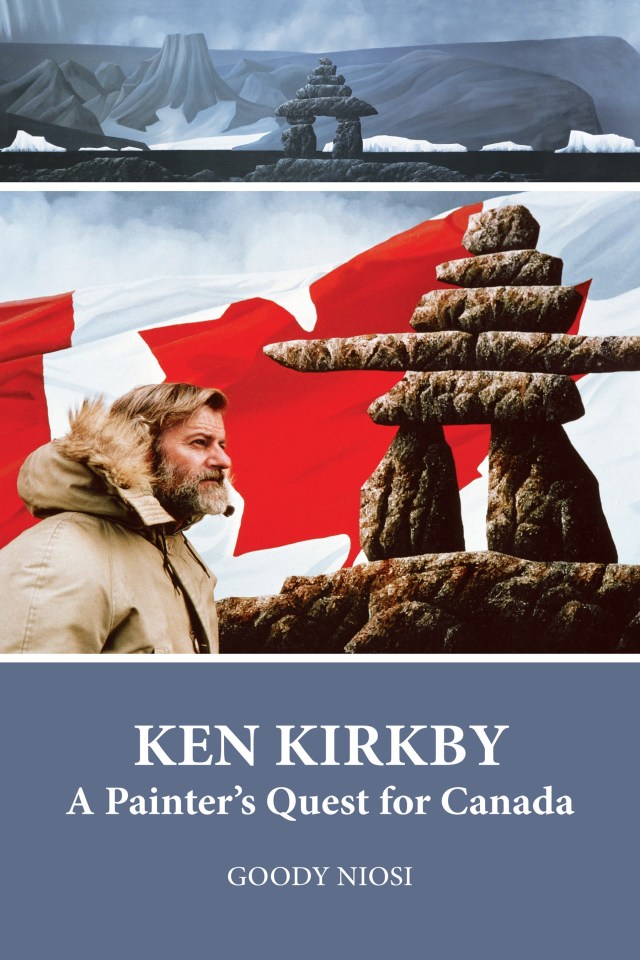
Ken Kirkby, Warrior Painter

excerpt

To have the warmth and companionship fade away now that he had time
to devote to her in the pursuit of her dreams seemed to be nothing short of
cruel. Whatever it took to appease Karen would be done.
~~
Now, in Bowser, Ken was faced with the sudden realisation that he had
been living life on autopilot. It was a severe jolt for the man who prided
himself on being attentive at all times to what was going on, both within
himself and in the world surrounding him. As a quicksilver dawn slipped
above the scattering of islands offshore, Ken made a fresh pot of coffee and
realized he’d made a breakthrough. It had been a long night coming to grips
with the situation. Self-awareness was a fundamental state of mind for him,
but as he replayed the recent years, he could identify countless occurrences
that had ultimately reduced him to this astonishing loss of control.
His elusive mind was stubborn in its refusal to follow an orderly chain
of thoughts, and he became aware that for months, perhaps even years,
his overloaded brain had taken refuge in the distractions provided by an
intelligent mind. No matter how vigorously he attempted to discipline it to
the process, it slid sideways into something less conflicting.
The act of thinking had become busy work, necessary in order to avoid
the bleak despair that filled him, most especially intensified when Karen had
withdrawn. But he now recognised it was an escape mechanism that needed
to be meticulously managed. For the first time in a long while, he was
looking with a clear eye at the core of his anguish rather than retreating from
it. Gradually he was being filled with certainty that, with this awakening, he
was exactly where he should be.
My real job now was to be painstaking in programming my healing,
much as I did in Portugal when my dad turned the problem of beating
my recurring childhood illness over to me.
Ken was frequently ill in his early years. Although no medical expense
was spared, the ailment remained unnamed. He had grown weaker, thinner
and yet more tired following relocation from Britain to Spain. However,
in his mother’s Spanish culture, weakness—whether physical or mental—
was never to be acknowledged. It was only after the family rejoined Ken’s
dad in Parede, Portugal that the six-year-old was permitted to articulate…

https://www.amazon.com/dp/B00CB8W4CG

https://draft2digital.com/book/3562902

Arrows

excerpt

She was scrutinizing me as though willing herself to see
my soul.
Her hand came up to my cheek, and her thumb followed the line of
my cheekbone. An insurrection was taking place inside me. I wanted to
be close to her. Closer. My hands hurt with desire to touch her. My
breathing became jerky, and I felt myself grow hard in the way I knew I
must not, and the urge to satiate that hunger was ruining my
judgment. She said something, but I could only admire the fascinating
movements of her mouth—a ripe fruit, sweet and yielding.
Thank God she buried her face in my neck, though her breath,
warm on my skin, only added to the mayhem inside me, for it gave
me the time I needed to rally my wits about me. I pushed her softly
away. “Noli me tangere,” I breathed in Latin. Do not touch me. Her
big, dark pupils looked up at me, searching my face. I swallowed
awkwardly, conscious of the movement of my throat. “Chi’ka,” No, I
added in Carib. But it came out more like a strangled plea.
She knelt back, her hand on my thigh. I pushed it off, noticing as I
did the stake lifting my frock obscenely. She saw it, too. I pushed my
knees up, giving my privates the only touch and pressure they
would get. I breathed deeply, swaying softly back and forth.
Thoughts of Jesus on the Cross, at Calvary, flooded my mind,
slowing my heart.
Apacuana left me, a bit confused, I dare say, by my pushing her
away as I did. She fumbled for a long time at the entrance, building
some sort of barrier. I found it a sweet demonstration of her care for
me, but then began to worry she might have a more solid reason for
taking such precautions. I was left with a small fire burning and
enough kindling within reach to feed it.
I slept like the dead but woke up suddenly, certain I had heard
something. I tossed a handful of twigs into the glowing embers and,
moving gingerly, poked the fire until a timid flame revived. I
listened with expectation. Had I dreamed it? No, there it was again,
as if someone were shuffling at the entrance. My spirits lifted at the
thought of Apacuana’s return. But why not come in? I called to her.
Was it perhaps a beast instead?

https://www.amazon.com/dp/0981073522

Small Change

excerpt

a sweet humming whisper and my fingers closed around the aluminium body shutting off the little air holes that made it sing. I stuffed it into my shirt pocket and my fingers brushed against the last Spud menthol I’d forgotten to smoke that afternoon after baseball. I pulled it out and straightened it carefully into a limp tube that dribbled dry tobacco from its open end. Scary stuff, lighting up in front of your own house, but what the hell. My scalp came alive with little electric maggots, wriggling. I found some matches in my pants. The end of the Spud flared and settled into a hot core that let sparks off in the breeze when I sucked on the cork tip. I put one foot up behind me against the fence, and the movie came on in my head. My eyes narrowed; my ears sifted the sounds of the city for clues.
Then suddenly they were there, the big boys.
Joey comes up to me, all excited and talking like he wants everybody on the block to hear.
“’ey, Georgie, Pasquale wants you to go to D’Amato’s an get im four cansa Ballantine ale.”
He presses a damp, crumpled bill into my palm and says it again.
“Your nonno, ‘ey, he wants you to get ‘im four Ballantine’s.”
He winks at me, and gives me an elbow. He laughs. His eyes are heavy lidded and his face is damp with sweat. He’s been talking loudly at me so the neighbours can hear, and now he makes a face that says to his buddies, it’s cool, don’t sweat it. I remember that look from dozens of Saturday matinees. I feel the damp currency in my hand. I know there’s something wrong with all this, but I can’t figure it out. Then he bends close to my ear and tells me to meet them in the park.
Sometimes Nonno Pasquale would come and stay with us. On a shelf in the pantry he kept this little tin pail with a lid he’d give me to go and get beer in. The guy behind the bar at D’Amato’s, Gioffo, an old guy, but not as old as Pasquale, always thought I was worth a smile, this little kid with a beer pail, and he knew my nonno from years ago, so he’d wink at me and fill it up and give me a Sarsparilla on the house, and I’d run back home so the foamy draft wouldn’t get warm in the sun, and my grandfather would laugh and give me a nickel, and pinch my cheek and tell my mother what a prize she had for a son.
But I never saw him drink from a beer can, ever. Or even a bottle. Still, it was tonight, and they were having a party in there, and what did I know. So I marched importantly into D’Amato’s Bar & Grill.

https://www.amazon.com/dp/1926763157

The Unquiet Land

excerpt

“And what would you have done,” she asked, “if you had gone to my room and found an empty bed?”
Michael paused. He smiled to himself and said, “No matter. I’d have slept in it anyway.”
“Even if I wasn’t there?”
“Why not?”
“You’re teasing, Michael Carrick. Wouldn’t you come to find me?”
“How would I know where to look? I would never have guessed you were up here all alone on this dark hillside.”
“I told Mother Ross. She was listening for you. She knows your tread on the stairs.”
“Weren’t you afraid?”
“Oh no. Mother Ross knows all about us now.”
“No; I mean, weren’t you afraid coming up here alone?”
“What is there to be afraid of, Michael? I was born on this farm. I grew up in these hills. I know them as I know my own body. I know every stone, every boulder, every thorn bush and clump of whin.”
Caitlin’s arm came out from under the rug, and she raked the ashes with the blackened stick. “The whin bushes are getting more flowers,” she said. “In a couple of months the whole hillside will be blazing with them. Did you smell them in the air when you came up the loaney?”
“No. There aren’t enough yet to give out a smell.”
Caitlin tapped the glowing end of the stick on the hearth-stone and watched the fluster of sparks disappear. “They don’t smell like flowers even when there’s a lot of them,” she said. “I don’t suppose you’ve ever noticed that.”
Michael sat with his chin on her shoulder, his cheek pressed against hers. “What do they smell like?”
“They smell like bodies,” Caitlin replied. “They smell like love-making.”
Michael let his hands run down along the line of Caitlin’s arms and then held her round the waist. The rug rumpled up, baring her feet and her knees. He kissed her neck and her ear.
She twisted her body below the rug and kissed him on the lips.
“What were the things you had on your mind tonight?” Michael asked nervously as Caitlin turned her face back to the fire.
Her eyes stared at the yellow flames. “Padraig. You. My father. The future.”
“And the past?”
https://www.amazon.com/dp/1926763203

Arrows

excerpt

She could barely restrain herself from making a second
public accusation.
“You might get the answer to your question if you asked our
friend, Gregorio,” I replied, looking at Gregorio instead of Josefa.
Gregorio immediately understood. He grabbed Josefa by the arm
to forcibly remove her. I stood rooted to the ground, hoping he
would drag her away and that could be the end of it. But Josefa
remained feisty and broke away from him, running to me with a
pained expression. She leaned forward and whispered devilishly in
my ear, so that only I could hear. “I know what happened at the
river,” she said. “I know everything. I know you let her touch you!”
I jerked back from her, as though she had slapped me in the face.
The servant, she had seen me, and Josefa could barely contain the
power she had over me. There was no point in trying to deny
anything. I walked away, horrified by Josefa’s misplaced jealousy,
and dumbfounded by my inability to eradicate her secret
knowledge.
Right then, I decided I did not want to learn whether Apacuana
had bitten Josefa or not. There was a part of me that hoped she had.

In the morning, when Losada was notified of the incident, he
preferred to dismiss it as mere female hysteria rather than discern
which party was responsible. It was the prudent decision: to
concentrate on completing his negotiations with the cacique Chacao.
After mass, Losada ordered the captives brought to him and untied.
“We want to be your friends. You see we have not harmed you,”
Losada told Chacao. “We can decide to do this in peace, or we can do
it in war. We are powerful. To show you my goodwill, I give you all
your people back.”
Chacao was a middle-aged man with deep lines running down
the sides of his nose to his mouth in a permanent scowl. He did not
answer, just stood there, hands folded in front of him. It was
important for him not to appear grateful for Losada’s benevolence.

https://www.amazon.com/dp/0981073522