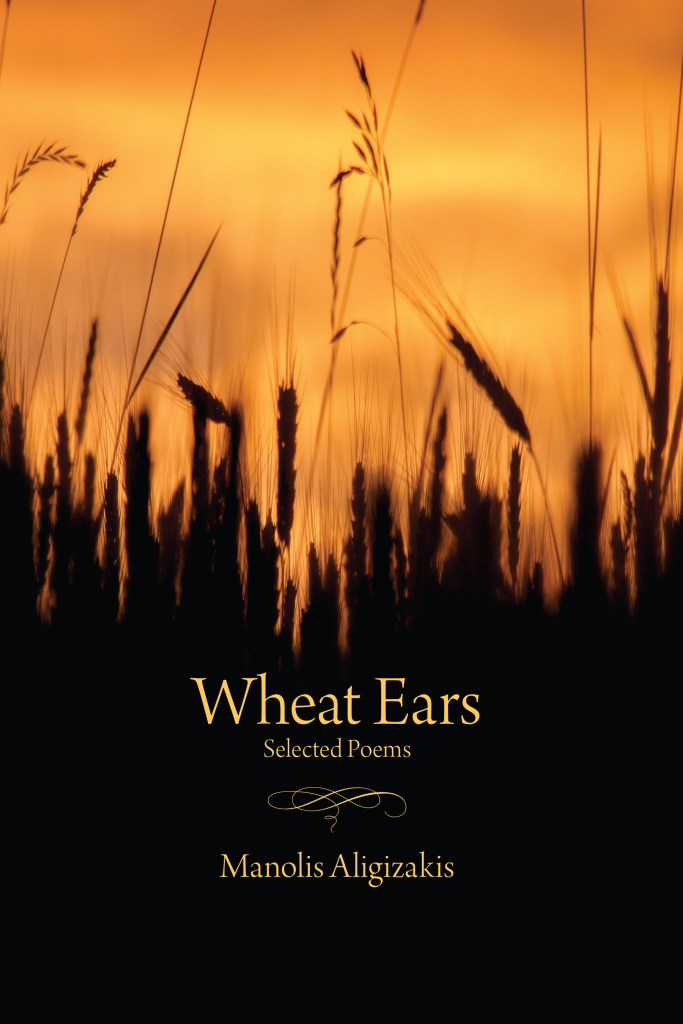
Wheat Ears – Selected Poems

Principles

You coached leaves of the olive tree to

shred sunlight and you begged

finches to whistle summer

but you left my lips unkissed

except while foreign lands rejoiced

in your principles, behind you

this yellow wall’s firm blocks

of the abandoned building

overgrown with brier where

cicadas compose adagios

gardenias sweating aromas

but you exiled my lips

while only seagulls kept you company

and my sobs hushed the night

https://www.amazon.com/dp/B0BKHW4B4S

Ithaca Series Poems # 576

 Picture by Germain Droogenbroodt

DAWN OF HOPE

The light of dawn
erases the traces of the night.
Relentlessly, time goes on flowing,
although I wish it would stop
like a picture fixed by the camera’s lens
because as valuable like fruit in a tree is love.

Like the moon ascending at night,
so you are, my love.
Whatever happens, wherever you are,
I keep you in my heart.
Since I am in love with you, my world has changed
for two hearts found a home of tenderness.

Sunrays play on the strings of love
lighting up the dawn of hope.

ANNA KEIKO, CHINA

Translation Anna Keiko – Germain Droogenbroodt – Stanley Barkan

ΕΛΠΙΔΟΦΟΡΟ ΠΡΩΙΝΟ

                                                              Το λυκαυγές σβύνει

τ’απομεινάρια της νύχτας

ασταμάτητος κυλά ο χρόνος

που θα `θελα να σταματούσε

σαν φωτογραφία στο φακό μηχανής

σαν το φρούτο στο δέντρο

πολύτιμη είναι η αγάπη

σαν το φεγγάρι που φωτίζεται τη νύχτα

είσαι αγάπη μου

κι όπου κι αν είσαι κι ότι κι αν συμβεί

σ’ εχω πάντα στην καρδιά μου.

Που σ’ αγαπώ ο κόσμος έχει αλλάξει

κι οι καρδιές μας χτυπούν με την ίδια τρυφερότητα.

Ηλιαχτίδες παίζουν της αγάπης τις χορδές

φωτίζοντας την πρωϊνή ελπίδα

Μετάφραση Μανώλη Αλυγιζάκη//Translated by Manolis Aligizakis

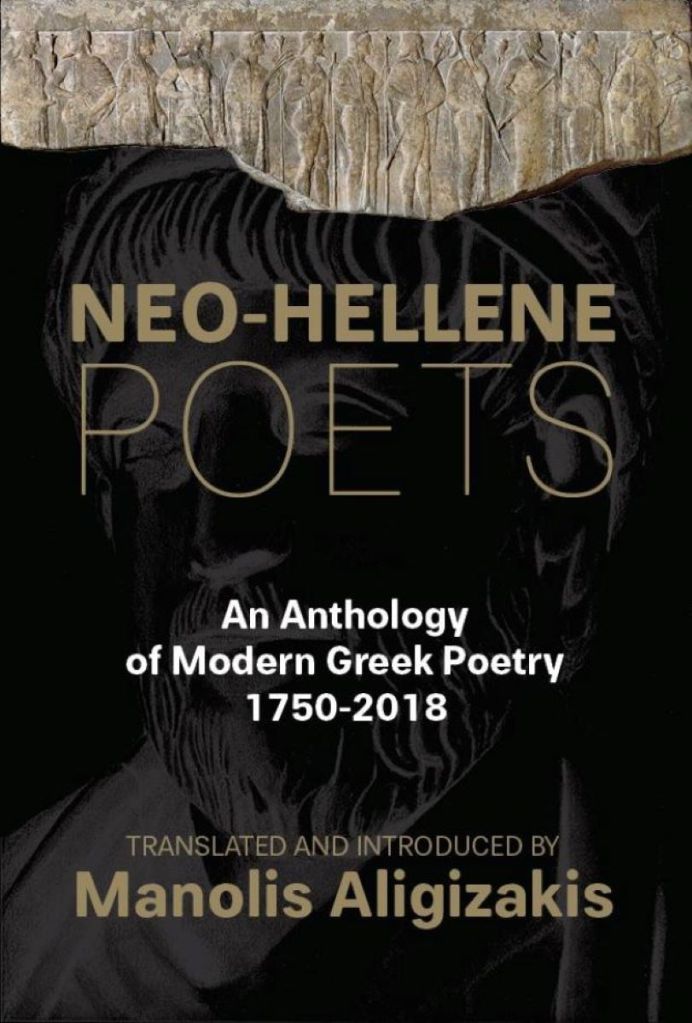
Neo-Hellene Poets, an Anthology of Modern Greek Poetry

HEDONISM

A fleshless string of beads made of songs

I haven’t given you today

with the spells and games of a charmer

I’ll cloy you, my love

naked and like a vine I’ll climb

to taste your body that devours me

with my fingers I’ll conflagrate

the tender hairs of your mound

enrapturing wine and milk that soothes

to sleep I’ll bring to moisten you

with all my body drop by drop

and on your white sculptured legs

two vases that drive me crazy

my honey like a maniac, at last, I’ll ejaculate

https://www.amazon.com/dp/1926763513

Yannis Ritsos – Poems, Selected Books, Volume IV

REPETITIONS THIRD SERIES

Extract

From all we read, only that messenger remained

who was striking the bronze door knob of the temple,

not what he said nor what was said by the angry king,

who was moving his wide sleeves. Only the sound

of the door knob echoes in the dark rooms and

in the empty pedestal of the wooden statue

of the Deer Goddess, which stolen and

on the ship it now travels to Athens — the sound

of the oars along with the sound of the door knob.

Luckily, he said, we retain things like these,

consoling things, unaltered, united

as if we are unaltered too.

https://www.amazon.com/dp/B0CGX139M6

Constantine P. Cavafy – Poems

THE FUNERAL OF SARPEDON

Zeus is deep in sorrow. Patroklos

killed Sarpedon; and now the son of Menoetios

and the Acheans charge in

to seize and humiliate the body.

But Zeus doesn’t agree with all this.

His beloved boy—whom he left

to perish; that was the Law—

he will at least honor in death.

And, look, he sends Apollo down to the plain

well briefed on what to do with the body.

With reverence and sorrow Apollo lifts

the hero’s body and carries it to the river.

He washes away the dust and the blood;

he closes the terrible wounds, not letting

any trace of them show; he pours

ambrosial perfumes; and dresses him

in gleaming Olympian garments.

He blanches the skin white; and with a pearl

comb combs the jet black hair.

He straightens and arranges the beautiful limbs.

Now he looks like a king, a charioteer—

twenty-five, or twenty-six years old—

at leisure after winning

the prize in a very famous race

with his golden chariot and fleet steeds.

Having finished his task

Apollo sends for the two brothers

Sleep and Death, and orders them

to take the body to Lykia, the rich land.

And toward that rich land, Lykia,

these two brothers Sleep and Death

walk, and when they arrive

at the door of the royal house,

they deliver the glorious body,

then return to their other labors and cares.

And when they received the body there, in the house,

with processions, and mourning, and honors,

and with abundant libations from sacred chalices,

and all things due, the sorrowful burial began.

And after that, experienced workers from the city

and famous carvers of stone came

to build the tomb and the stele.

https://www.amazon.com/dp/1723961833

Yannis Ritsos – Poems, Selected Books, Volume II

THE BRIDGE

And again, in the evening, she was possessed by

that gleaming truthfulness of her sadness like something

restful, something of her own, hers only — herself

totally submissive and closed, whole yet totally alone.

She then gathered the rest of the strings in a paper box,

took her weeding tool carefully

with that inevitable moderation and attention to order

and turned on the garden light knowing the consequences

which follow a change in lighting,

calm, retired, acceptable to herself. Soon after, she felt

an exceptional joy in her grief,

she felt that her grief was her attachment to what

had been, to what is, to what will be,

to everything around and above and below

to everything within and without, a silent attachment,

a touch of immortality, a distant and balanced eternal light

that annuls the difference, erases the distance

between here and the beyond, among foreign

languages, nor does it need any translation

from her smile to the star, from the star

to the garden light, from silence to confession,

from a carnation to the weeding tool and to her hand,

from one hour to the next. She then turned on the faucet

and with the garden hose she started watering the flowers,

the trees near and far under the familiar starlight and the

           garden light.

https://www.amazon.com/dp/B0851M9LTV

George Seferis – Collected Poems

In The Name of the Goddess I Summon You

Oil on limbs

perhaps a rancid smell

like here on the oil-press

of the small church

on the rough pores

of the stopped stone.

Oil on the hair

crowned with rope,

and perhaps other perfumes

that we didn’t know

poor and rich

and statuettes offering

small breasts to the fingers.

Oil in the sun

the leaves shivered

when the foreigner stopped

and silence got heavy

between the knees.

The coins fell;

‘In the name of the Goddess I summon you…’

Oil on the shoulders

and the flexing waist

gray legs on the grass,

and this wound in the sun

as the bell chimed for vespers

as I spoke in the courtyard

with a crippled man.

https://www.amazon.com/dp/B096TTS37J

Ithaca Series Poems # 571

Pleas of the Children

                              “The houses should not burn.
                               Bombers one should not know.
                                The night should be for sleep.
                              Life should not be a punishment
                                     mothers should not cry
                                  No οne should kill anyone
                            Everybody should built something
                              where one could trust the other.
                                 The young should achieve it.
                                        The old as well.“

Bertolt Brecht, Germany (1898 –1956)

ΕΚΛΗΣΕΙΣ ΤΩΝ ΠΑΙΔΙΩΝ

Να μην πυρπολούνται τα σπίτια

να μην γνωρίζει κανείς τα βομβαρδιστικά

η νύχτα να `ναι για τον ύπνο

να μην είναι τιμωρία η ζωή

οι μάνες να μην κλαίνε

κανείς να μην σκοτώνει κανένα

ο καθένας να χτίζει κάτι

εκεί που εμπιστεύεται ο ένας τον άλλο.

Οι νέοι να το καταφέρουν

κι οι γέροι επίσης.

Μετάφραση Μανώλη Αλυγιζάκη/Translated by Manolis Aligizakis

Yannis Ritsos – Poems, Selected Books, Volume IV

REPETITIONS SECOND SERIES

Septirhea and Daphnephoria

We said: this year we’ll stay here. Enough of the stupid

           trips.

Man’s only wisdom: loneliness. Therefore why we now

run, in the night, with torches, stumbling on rocks, not

           knowing

the meaning of such thoughtless symbolisms — the putting up

           of the wooden shack

the secret procession with a child up front, the arrow that’s

           nailed to the door,

after the burning of the shack, people running to the Tempe

without turning their heads back not even once. And after

          the sacrifices

we turn back loaded with oleander branches. The same and

the same every nine years (perhaps so we might forget in

          between, and truly we forget). Eh, no,

this time we don’t take a step — thus we said. But when

          we heard

the faraway nightly drums and the torch bearers passing

          noiselessly in front of the house,

we couldn’t stop ourselves, we all ran to the road, mixed

          with the people,

we took part in the fires, the running, the sacrifices and

returned through the Pythian Road towards Delphi, past

          midnight, holding

oleander branches although we didn’t have (for years now)

          anyone to crown —

and this was a sadness together with pride that no one knew

although they all considered us theirs. The shack was

still smoking at dawn. Returning home, we gazed at

the sky, clear, milky, light-blue, rosy; we noticed on the soil

the tumbled little paper flags, a child’s sandal, a kerchief with

          sperm;

we looked in a serene, ecstatic way, with certain vague

          politeness and nausea

with the happy tiredness and the blindness of the nightly

          vigil,

like actors who took their make-up off, at the end of a nice

presentation, who leave retaining their sleepy hearing,

the futile buzz of the clapping and some bother, as some

gum is retained on their chins, from the graceful beard of

Oedipus or Prometheus, which they had put on for one

          more night.

https://www.amazon.com/dp/B0CGX139M6