Cretan Canadian Poet, Author, Translator, Publisher
Author: vequinox
BIOGRAPHY
Manolis (Emmanuel Aligizakis) is a Greek-Canadian poet and author. He was recently appointed an honorary instructor and fellow of the International Arts Academy, and awarded a Master’s for the Arts in Literature. He is recognized for his ability to convey images and thoughts in a rich and evocative way that tugs at something deep within the reader. Born in the village of Kolibari on the island of Crete in 1947, he moved with his family at a young age to Thessaloniki and then to Athens, where he received his Bachelor of Arts in Political Sciences from the Panteion University of Athens. After graduation, he served in the armed forces for two years and emigrated to Vancouver in 1973, where he worked as an iron worker, train labourer, taxi driver, and stock broker, and studied English Literature at Simon Fraser University. He has written three novels and numerous collections of poetry, which are steadily being released as published works. His articles, poems and short stories in both Greek and English have appeared in various magazines and newspapers in Canada, United States, Sweden, Hungary, Slovakia, Romania, Australia, and Greece. His poetry has been translated into Spanish, Romanian, Swedish, German, Hungarian languages and has been published in book form or in magazines in various countries. He now lives in White Rock, where he spends his time writing, gardening, traveling, and heading Libros Libertad, an unorthodox and independent publishing company which he founded in 2006 with the mission of publishing literary books. His translation book “George Seferis-Collected Poems” was shortlisted for the Greek National Literary Awards the highest literary recognition of Greece.
Distinguished Awards
Winner of the Dr. Asha Bhargava Memorial Award, Writers International Network Canada, 2014
“George Seferis-Collected Poems” translated by Manolis, shortlisted for the Greek National Literary Awards, translation category.
1st International Poetry Prize for his translation of “George Seferis-Collected Poems”, 2013
Master of the Arts in Literature, International Arts Academy, 2013
1st Prize for poetry, 7th Volos poetry Competition, 2012
Honorary instructor and fellow, International Arts Academy, 2012
2nd Prize for short story, Interartia festival, 2012
2nd Prize for Poetry, Interartia Festival, 2012
2nd Prize for poetry, Interartia Festival, 2011
3rd prize for short stories, Interartia Festival, 2011
Books by Manolis
Autumn Leaves, poetry, Ekstasis Editions, 2014
Übermensch/Υπεράνθρωπος, poetry, Ekstasis Editions, 2013
Mythography, paintings and poetry, Libros Libertad, 2012
Nostos and Algos, poetry, Ekstasis Editions, 2012
Vortex, poetry, Libros Libertad, 2011
The Circle, novel, Libros Libertad, 2011
Vernal Equinox, poetry, Ekstasis Editions, 2011
Opera Bufa, poetry, Libros Libertad, 2010
Vespers, poetry by Manolis paintings by Ken Kirkby, Libros Libertad, 2010
Triptych, poetry, Ekstasis Editions, 2010
Nuances, poetry, Ekstasis Editions, 2009
Rendition, poetry, Libros Libertad, 2009
Impulses, poetry, Libros Libertad, 2009
Troglodytes, poetry, Libros Libertad, 2008
Petros Spathis, novel, Libros Libertad, 2008
El Greco, poetry, Libros Libertad, 2007
Path of Thorns, poetry, Libros Libertad, 2006
Footprints in Sandstone, poetry, Authorhouse, Bloomington, Indiana, 2006
The Orphans - an Anthology, poetry, Authorhouse, Bloomington, Indiana, 2005
Translations by Manolis
Idolaters, a novel by Joanna Frangia, Libros Libertad, 2014
Tasos Livaditis-Selected Poems, Libros Libertad, 2014
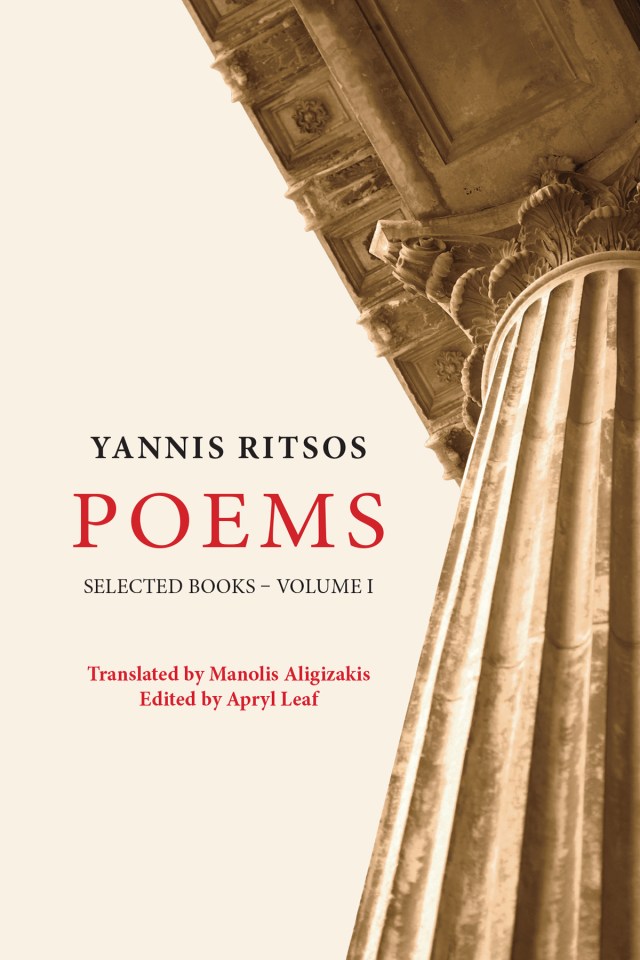
Yannis Ritsos-Selected Poems, Ekstasis Editions, 2013
Cloe and Alexandra-Selected Poems, Libros Libertad, 2013
George Seferis-Collected Poems, Libros Libertad, 2012
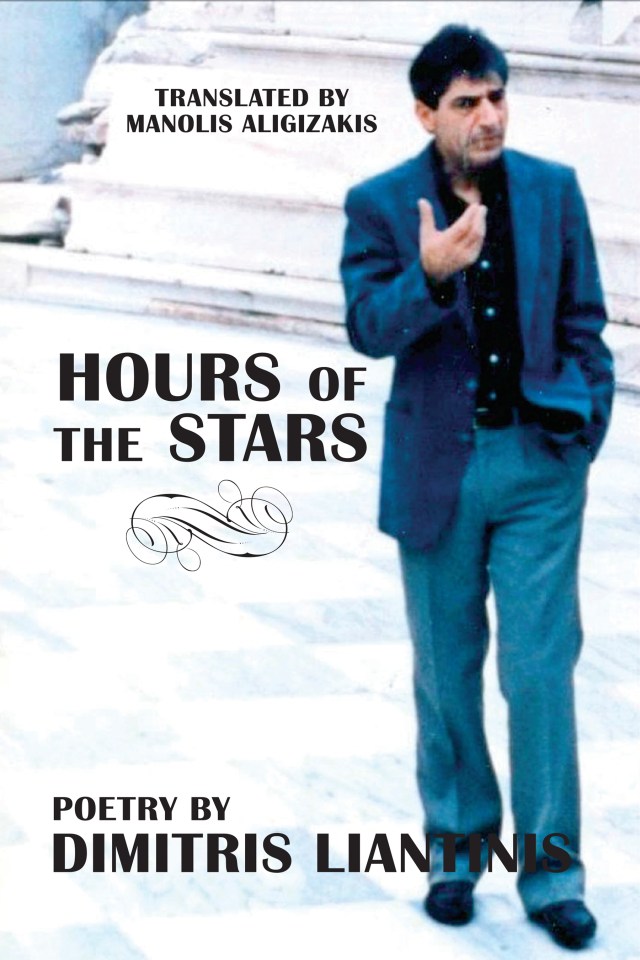
Yannis Ritsos-Poems, Libros Libertad, 2010
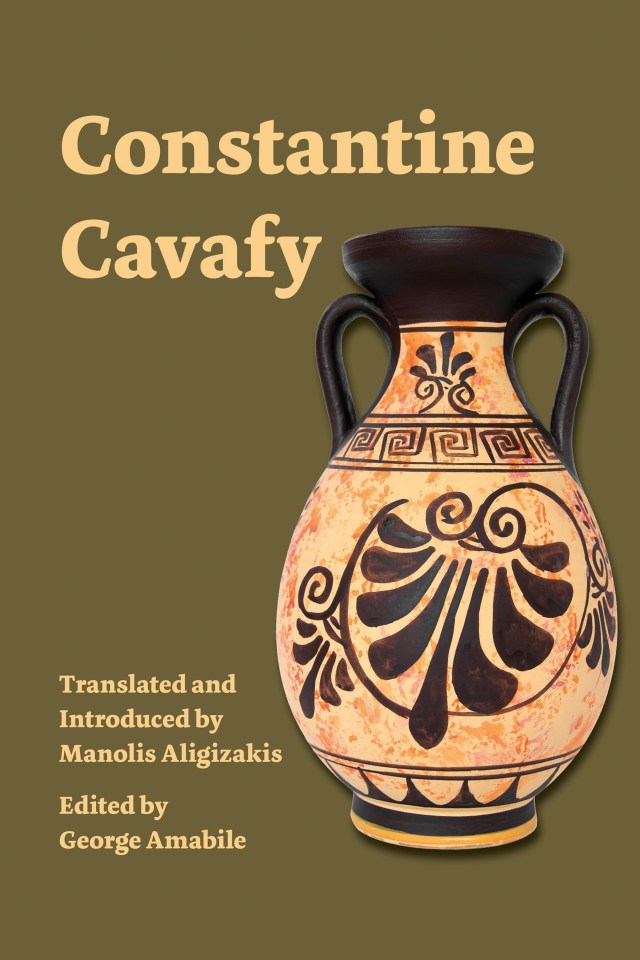
Constantine P. Cafavy - Poems, Libros Libertad, 2008
Cavafy-Selected Poems, Ekstasis Editions, 2011
Books in other languages
Eszmelet, (Hungarian), poetry by Manolis Aligizakis, translated into Hungarian by Karoly Csiby, AB-ART, Bratislava, Slovakia, 2014
Hierodoules, (Greek), poetry, Sexpirikon, Salonica, Greece, 2014
Yperanthropos,(Greek), poetry, ENEKEN Publications, Salonica, Greece, 2014
Übermensch (German), poetry by Manolis Aligizakis, translated into German by Eniko Thiele Csekei, WINDROSE, Austria, 2014
Nostos si Algos, (Romanian) poetry by Manolis Aligizakis, translated into Romanian by Lucia Gorea, DELLART, Cluj-Napoca, Romania, 2013
Tolmires Anatasis, (Greek) poetry, GAVRIILIDIS EDITIONS, Athens, Greece, 2013
Filloroes, (Greek ) poetry, ENEKEN PUBLICATIONS, Thessaloniki, Greece, 2013
Earini Isimeria, (Greek) poetry, ENEKEN PUBLICATIONS, Thessaloniki, Greece, 2011
Stratis o Roukounas, (Greek) novel, MAVRIDIS EDITIONS, Athens, Greece, 1981
Magazines
Canadian Fiction Magazine—Victoria, BC
Pacific Rim Review of Books—Victoria, BC
Canadian Poetry Review—Victoria, BC
Monday Poem, Leaf Press-Lantzville, BC
The Broadkill Review, Milton, Delaware
Ekeken, Thessaloniki, Greece
Envolimon, Beotia, Greece
Annual Literary Review, Athens, Greece
Stigmes, Crete, Greece
Apodimi Krites, Crete, Greece
Patris, Crete, Greece
Nyxta-Mera, Chania, Greece
Wallflowers, Thessaloniki, Greece
Diasporic Literature Spot, Melbourne, Australia
Black Sheep Dances, California, USA
Diasporic Literature Magazine, Melbourne, Australia
Spotlight on the Arts, Surrey, BC
Barnwood, International Poetry Magazine, Seattle, USA
Unrorean, University of Maine, Farmington, Maine, USA
Vakhikon, Athens, Greece
Paremvasi, Kozani, Greece
Szoros Ko, Bratislava, Slovakia
Mediterranean Poetry, Sweden
Apostaktirio, Athens, Greece
Life and Art, Athens, Greece
Logos and Images, Athens, Greece
Contemporary Writers and Thinkers, Athens, Greece
Palinodiae, Athens, Greece
Royal City Poet’s Anthology, 2013, New Westminster, BC, Canada
To parathyro, Paris, France
Ragazine C.C, New Jersey
Artenistas, Athens Greece
Deucalion the Thessalos, Greece.
Literary Lectern, Athens, Greece
Homo Universalis, Athens Greece
Visit of a Thought I’ve been trying to sleep for the last three hours. August heat sweat of the mind and thoughts, all around, like mosquitos, poke it. What has happened to me? They rarely come during the day now I surely feel happy or to be exact: I forbid such visits. As soon as by chance a thought comes to my mind it soon invites the other, for just a little while, a short visit, you know all this, when voila: caravans of inter-related images charge inside of me seeking a permanent habitation. I don’t want them. Then sealing the borders safely, I end it. Because I’m not American, nor can my lands feed so many migrants.
Nora never let Joe know that they had been espied that night. She continued to write her long letters every week, letters in which she tried to hide her sadness and her melancholy and her bitter disappointment. Three months after Joe’s departure she was pregnant again, and that added to her bitterness. But she hid her gall from Joe. She did not want him to think she was accusing him of failing her. Joe wrote sad, serious letters with only an occasional light or amusing remark. But they were letters full of tenderness and love, like those he used to write before he learned of Nora’s marriage. It was almost as if the marriage had never happened, as if Joe and Nora were the lovers they had been before, with their own marriage to look forward to when the war was over. Nora realised that this was a fantasy to which Joe clung to help him through the bloody butcher days of war, the black, tense nights of watch and wait and pray. She gave him what he needed. She wrote what he wanted to read. She almost came to believe in it herself. Nor was it difficult. That they were both as deeply in love as ever was true and needed no deception. That they could ever enjoy that love outside of their passionate letters was where they lived in a soothing fantasy. As time passed Joe’s letters became more morbid. He was losing his friends one by one but kept referring to a very old companion who was with him still, who never left his side. This old companion was never named, and it was some time before Nora realised who the companion was. In one of his letters Joe wrote: He’s been with me since that day your father pulled me out of the harbour. He fought over me with Dr Starkey when I had pneumonia and he lost that time. He wants me to go with him somewhere, but I just turn to him and say, “I’m sorry, friend; but I have this girl back in Ireland and I’m going to her first. We have a lot to do, this girl and I. I hope you can wait a bit longer.” He’s waiting, my darling, but he’s becoming impatient. How long can this war last?’ Joe was excited about a posting to a Buckley-class frigate, the HMS Bullen. On 6 December 1944, the Bullen was torpedoed by U-Boat U-775, in the frigid waters of Pentland Firth, northwest of Scotland. The Bullen broke in two and sank in two hours. Of the one hundred and sixty-eight crew members on board, seventy-one went down with the ship. One of those lost was Chief Petty Officer Joseph Ignatius Carney. His turn had come. And this time there was no Michael Carrick to pull him out of the icy water. A few weeks later Nora gave birth to a daughter whom she christened Josephine Siobhan.
Swan We lost ourselves in unconsecrated churches since the days of Leonardo. On the wall we hanged the beautiful woman of the loiterer icon of an ancient youth. In lakes wedged between the beard of rocks we saw our strange features afraid of the thunderous flapping of eagle wings. What we recounted wasn’t ours. Coppers of the holy oak in the trenches of red hills that shatter the lance of winter. Morning dance that hid in the viscera of the oak and in the frowning of the motionless stone. Our struggle our grief buried in the unstruck chord of a lyre that will brake on your touch.
Hermes felt so overwhelmed by the euphoria of the company that his pride rose again. The blood of the immortals that ran through his veins was the Same blood that ran in the veins of these people, with their hairy chests and their large hands that could crush rocks and turn them to dust. The party wound down slowly as the early dawn hours approached. Hermes’ group boarded the same bus that brought them there and returned to their village. Days went by, and he still couldn’t have enough of admiring this and that, observing ways of the locals, enjoying everything that came along. Then, one evening, while Hermes was out on a long walk, his uncle called from Athens, leaving him a message that the exam results had been posted and the graduation ceremony was scheduled for a few days later, and the time had come for Hermes to leave his village. The next morning, he went to the city and reserved a ticket for the boat ride to Piraeus.
Memory Father came home late He didn’t say good evening Mother was concerned with her children She didn’t pay attention to him The children enjoyed her care They didn’t pay attention that he didn’t say good evening He had his hands clasped behind him had talked to the rain in the harvested fields behind the woodsman’s cabin He had a double barrel shotgun across his shoulder He stood near the window alone and when a strong lightning strike lit the glass I saw the cross of the window incised in his forehead Perhaps we learned of that separation tonight perhaps the same cross is incised since then in the lit wall of our silence
Sadness of the Dusk The roses of the dusk bloomed again tonight golden, rosy, and purple they faded tonight shedding their leaves as I viewed them every evening and every time I drink their fragrant dew from their bloomed dawn I get intoxicated in their soft and last breath I consume each joy to its best. Yet upon gazing the dusk tonight, I thought of our love, that someday it will end and when the roses of the dusk bloomed golden, rosy, and purple as they faded tonight shedding their leaves this evening I got saddened.
The 25th Year of his Life He goes to the tavern quite often where they met last month. He asked, but they had nothing to tell him. From their words, he understood that he had met with a completely unknown person, one of the many unknowns and questionable youthful faces that passed through there. However, he goes to the tavern quite often, at night, and he sits and stares at the entrance, he stares at the entrance until he gets tired. Perhaps he may walk in. Perhaps he may come tonight. For nearly three weeks, he has done this. His mind has become sick with lust. The kisses have stayed on his mouth. All his flesh suffers constantly from the desire. The touch of that body is all over him. He wants to make love to him again. It is understood that he tries not to reveal himself. But sometimes he just doesn’t care. After all, he knows what he’ll get himself into, and he is okay with it. It is not unlikely that this life of his will get him into a disastrous scandal.
…honour due to the ancient beauty and I asked the primeval wisdom about the absurd way of modern life and I was told by the eternal soul of the immortals that consumerism had taken modern life in its grip and I noticed the empty glances of the young women and men that only knew of lust and sexual pleasure then I realized the destiny of the anchorite was meant for me, and I asked whether in a future time, the ancient beauty could be restored, and the virgin of the Parthenon shed tears seeing the tourists flocking like harpies and inauspicious signs of modern life that I searched without finding any resolution nor catharsis among the yellow-haired tourists. Without fear, I asked the ancient beauty but I received no answer to please my soul.
The bottle had been opened but little drunk from it. “As you can see, I haven’t been overindulging.” He pulled the cork out of the neck, poured two glasses and handed one to Caitlin. “Thank you, Padraig.” As Caitlin placed the glass of wine on the table beside her, she noticed an old, soiled envelope. “This is addressed to my father,” she said, turning to look at Padraig. “Yes, your father gave it to me when I left Corrymore to go to university.” “You’ve kept it all this time?” Caitlin idly picked up the envelope. “Yes. Seven years I’ve had it. You can read the letter if you wish.” “No, not if it’s personal.” “No, it is nothing private or secret that you have no right to read. It is addressed to your father after all, not to me.” Padraig took the envelope from Caitlin, removed the letter from inside and unfolded it. “It makes for rather disturbing reading though.” Intrigued, Caitlin accepted the letter from Padraig and started to read with difficulty the untidy scrawl in which the letter was written. It was dated “Kyle of Lochalsh, Ross and Cromarty, Scotland, 11th March, 1902.” Caitlin turned to the last of the letter’s several pages; it was signed by Dr. Hamish Graham. Dear Mr MacLir, Thank you for your letter of 2nd ult. I apologise for my tardy reply but my practice has been busy of late, as is not unusual at this time of year. You requested any information I might have concerning the boy Padraig, over and above what little I was able to communicate to you during our brief meeting in November. You tell me that you have formally adopted Padraig as your son, so I can appreciate your desire to learn more about the laddie. However, until the month of July, 1899, we knew very little, not even his surname which he refused to divulge for fear, I believe, of being returned to the care of his uncle from which he and his mother had been so cruelly expelled. That part of Padraig’s unhappy history you are already familiar with. What transpired in the month of July following Padraig’s arrival in Kyle was a disturbing court case in which a farm labourer from a community twelve statute miles from Plockton, a man of well-established bad character, was tried and convicted to hang for the brutal rape and strangulation of a vagrant woman who had been given permission to sleep in the hay in a barn belonging to this man’s employer. At the rapist’s trial, about which I read in several newspapers, both local and national, it was revealed that the woman’s father, the Rev. Magnus MacArtan,
the day passes the hour passes society laughs the excuses are retained yet, the one who committed the crime and went to sleep didn’t sense that dawn came and he woke up and walked about in the horrible darkness of death (his mouth is already full of dirt) and of the one who lied and acted unjustly and slapped they will pay for it and their children will do so too up to the fifth generation there is God hearts and kidneys are examined and next to the crippled justice of man the Fury hides nested deep in the guilty man merciless and unforgiving who doesn’t care about officialities and titles that good life brings but in God’s name, it doesn’t care and it punishes harshly the brainless and timid who commit





 Manolis Aligizakis