
Water in the Wilderness

Excerpt

Auntie Tyne had brushed her long blonde hair and pulled it into a cute pony tail before they set off for the Harrisons’ house. Rachael had felt like a princess. She hadn’t wanted to take her skirt and blouse and sweater off, so had kept them on for the rest of the day, and at bedtime she’d looked for a place to hang them. Her cousins had peeled off their own clothes and dropped them into a heap on the floor.
When Rachael couldn’t find a spare wire hanger in the small clothes cupboard, she had laid her new garments carefully over the back of the one chair in the room. But Lyssa had immediately swept them off onto the floor, and as much as Rachael wanted to pick them up, she resisted when she saw the ‘I dare you’ look on the nine-year-old’s face.
Rachael’s stomach growled. In the stillness it sounded to her ears like the rumble of the freight trains that passed through Emblem several times throughout the day and night. It growled a second time, and Rachael clutched her abdomen with both hands in an effort to keep it quiet. She didn’t want to wake Lyssa and Lark – they would start pushing her again. She wished she could have slept on a cot like Bobby was allowed to do in the boys’ bedroom. But the girls’ had a bigger bed, so she had been told to sleep with them.
Her stomach would not stop grumbling, and now the hunger pangs made her wince. Rachael was no stranger to hunger. Sometimes, at home, Mommy had not had money to buy enough food for them. It wasn’t their mom’s fault, though. Rachael had seen her go without a meal so that she and Bobby could eat what little there was.
At the farm she and Bobby were never hungry. There had been lots of food on the table, and Auntie Tyne and Uncle Morley had made sure to fill up both her plate and Bobby’s at every meal. The food was good, too, always with generous helpings of the vegetables that Uncle Morley brought in fresh from his garden every day. Just thinking about it made her hunger pangs worse. She’d better think of something else.
But Rachael could not keep her mind off her empty stomach, and she thought about the big breakfast Auntie Tyne had cooked for them before they left for the Harrisons’ house that morning.

https://www.amazon.com/dp/192676319X

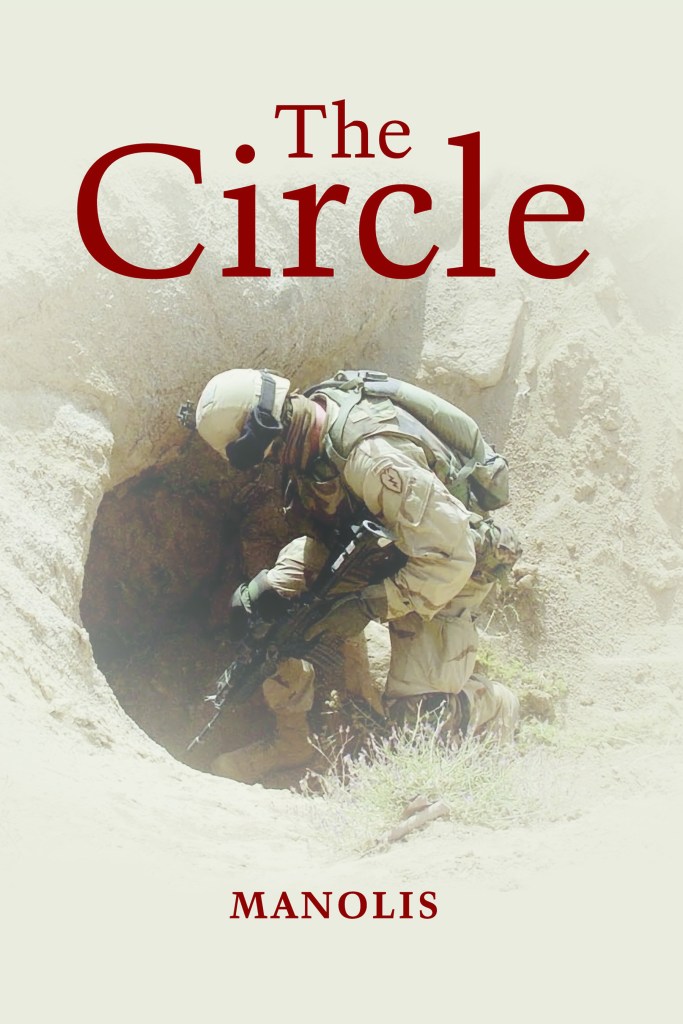
The Circle

Excerpt

Their flight is a five-hour affair. They have first-class seats and are served a
light lunch once the plane is in the air. Hakim is hungry and enjoys the food,
although Ibrahim eats only a bit of his. They each enjoy a glass of red wine.
Hakim asks the same question as on the previous day.
“My uncle, you promised to tell me more about the work Matthew Roberts and
the Admiral do for the CIA, do you remember?”
Ibrahim takes a deep breath, smiles, and says,
“It is a long story, my dear boy; however, in a nutshell, this is it. They both
work for a department that goes by the code name the ‘Circle’. They are located
in Washington D.C., not in Langley. In their department 130 people analyze
intelligence, data, and information, and make recommendations to the
Executive Branch. This is where decisions about war take place. Based on the
recommendations of the Admiral, who bases his decisions on the analyses of
Matthew’s people, the war room as some call it, takes its stand against any enemy
as circumstances dictate.”
He stops and takes a deep breath. Ibrahim does that a lot more often, Hakim
notices. The old man looks at his nephew, wondering how far he can still go with
this.
“They are the basis of a detailed system that undermines the governments of
various countries, based on what their goals are and serving their interests the
best way possible. They formed the basis for the decision to go against Saddam
Hussein in the war of 2003. That department of the CIA is the one which sexed
up the propaganda before the war.”
“In other words, they are the reason the war started?”
“Well, I wouldn’t put it that way exactly; however, they had a lot to do with it.
You see, they are not the final decision makers of the government, but they make
recommendations based on data. They have a plan of action for any foreseeable
event, which could turn the outcome of their strategy one way or another. They
plan with various options always before them, and even then they prove to be
wrong on many occasions. There’s always a variable that cannot be predicted
ahead of time, and when it comes to play, it alters the results time and time again.
This is the same reason they are wrong so many times—the unpredictability of
the reactions of people to certain events and to intelligence. Every time you think
how or why a decision has to be made, it’s like being in a maze, and you can only
hope for the outcome you have predicted.”
He stops for a while, calls the flight attendant and orders two glasses of wine.
Hakim takes a sip of his wine, looks at his watch, and estimates they are halfway
to New York. His uncle looks tired. Yet Hakim wants to know more.
“What else do you know, my uncle?”

https://www.amazon.com/dp/0978186524

Nikos Engonopoulos – Poems

They Passed the Forest


paper doves
flew inside
the dark colonnade
of the palace
and each flutter
of their wings
the deep glance
of the Kore was too
like the fall
of a stone
in the sea
or
the promise
of a distant
joy
lower
the thin dresses
with the colourful flowers
that the wind caressed
and were worn
by wooden
statues
with still wooden eyes
and clay
hair
wooden statues
named
Maria
named
bottle
tallow
bicycle
named
spark

https://www.amazon.com/dp/1926763734

Liquid Labyrinth

behind words on posters

buttoning up my desires of a phoenix
with a spared woman’s eye
where I am vigilance on your eyelids
where morning tears a star
my little bloom doesn’t deserve a word

  • shame burns my masquerade
    satisfaction lasts only until dawn
    and my outspoken blood mutates
    my rampage gets worse half way through
  • God stops me for a few days to retire
    I block myself all my silence too
    let me be warmed up by your dawning fire
    I wish I knew what my voice was hiding
    fresh mercy tears my soul’s depth
    your voice stops me crying
    because I was just your tyrant-breath
    I make way for my narrow desires’ path
    to raise the tiny voice up
  • daybreak wakes you up at midnight
    as the universes were put in orbit unstuck
    I tried to live according to your wishful vision
    where nights and days are siblings
    your body is an unseen prison
    just behind words on posters’ printing

Jazz with Ella

Excerpt

“We didn’t order…oh what the hell,” said David. Jennifer reached for the refreshing water eagerly.
Paul chimed in. “A country that puts a man in space, yet you look at the filthy exhaust those busses are pushing out. That’s no rocket fuel. It coats everything, gets into your lungs.”
She agreed. “At least this city seems light and bright and modern”—everyone nodded—“whereas Moscow was so drab.”
“Boy, was it ugly.” David shook his head. “Though I have to say everything looks a tad more cheerful after a bottle of the local brew.” He helped himself to another glass.
The waiter finally showed up with some sickly sweet plum syrup. It didn’t cut the vodka, but by that time they were almost past caring. The lounge filled up with British and Americans, some of them in baseball caps, a few individuals who spoke Russian with a German accent and a party of serious, silent Asians.
“I think they’re North Vietnamese,” David whispered.
The Asians were seated at the table with the centrepiece, Jennifer noted. So the Soviets were not above spying on their Communist cousins. It fit with the current paranoia. Suspicion of Asian aggression was running high in the country and tension marked the border with China.
“We’re going to need another bottle here. I’ll get it,” said David suddenly.
“Do you think that’s wise?” put in Lona.
“What’s wise got to do with it? We’re in the Soviet Union, guys!”
The conversation continued, the waiter brought a tray of snacks, the level in the vodka bottle plummeted, and Jennifer couldn’t quite remember how they had acquired another guest at their table. He was a Soviet man, about 45, with curly hair, dressed in a fashionable lounge jacket. Apparently he had been listening to their conversation for some time. He shook hands all around and told them in fluent English that he was an editor of a prominent Soviet newspaper. None of them really believed him. What would an editor be doing sitting in the bar of a Soviet hotel that catered exclusively to tourists?
“I bet he’s a black marketeer,” whispered Ted loudly, leaning towards Maria. “He wants to buy our jeans—or get into your jeans.” She giggled. Lona looked puzzled.
“Is this a joke?” Paul asked.
“No, he’s a spy,” said David.

https://www.amazon.com/dp/1926763246

Red in Black

Victor’s March
Among decapitated houses
resembling toothless sculls
we marched in their towns
tumbled buildings devastated
by smart bombs outsmarting
thoughtful animals
and we sang marching paeans
band played freedom songs
for the sarcastically smiling youths
who had implanted deep in their souls
the plan for revenge, youths
who in groups of three or four
planned their act of defiance
youths who had dreams
of killing us by the thousands
shoeless youths with grand dreams
that one day they’d become jihadists

https://www.amazon.com/dp/1771713208

Constantine Cavafy – Poems

Walls
Without much thought, without pity, without shame
They’ve built these high, thick walls around me.
And now I sit here in despair.
I think of nothing else: this fate consumes my mind;
because I had so many things to do outside.
Ah, why didn’t I notice when they built the walls?
But I never heard the builders, or any sound at all.
Imperceptibly, they shut me off from the world.

https://www.amazon.com/dp/1723961833

Arrows

Excerpt

A Woman
There was no visible threat in the mountains, only the
unnerving shrieks of birds, howling of monkeys and cawing of
chachalacas, and the occasional roar of jaguars and cougars. Far to
the north, tiny black dots described spirals in the sky—vultures. I
was weary from the waiting, and my head snapped at any sound or
flicker of movement.
The mountains were a deep green. The forest appeared
impenetrable. As we climbed, the searing heat dissipated. Huge
rubber trees, mahogany and West Indian cedars gave much needed
shade during the day. Abundant lianas hung from their boughs, and
climbing plants—many thorny—crept up any vertical thing that
could help them reach the light. Often they crawled along the
ground, creating a tangle that could trip any man.
My hands had browned since I left Spain. My toes were reddened
and thick, grazed by stones and swollen from the chigoes that had
settled between my skin and nails.
A collective, unspoken effort to keep calm had come over us. For
the conquistadors, this was natural. Many of them had been chasing,
or been chased by, Indians for a good part of their lives, and, before
that, they had trampled much of the world in a variety of battles:
against the French, the Berbers, the Turks, the Pope. I supposed that
when you find yourself in constant danger, you begin to disregard it.

https://www.amazon.com/dp/0981073522

George Seferis – Collected Poems

n Memoriam
You were the holy silence
white as rice
though the shivering leave
always returns
you took the whirl
centrifugal soul
that leaves us
in a lonely grief.
When night comes I gaze in the foliage
the shut eyes of our friends

https://www.amazon.com/dp/B096TTS37J

Ken Kirkby, A Painter’s Quest for Canada

Excerpt

On shore, Ken’s friend took out a sharp knife and slit open the belly of
one of the big fish exposing a white strip of pure fat. He peeled it off, put
the end in his mouth and cut it off with his ulu. He passed Ken a piece of
the precious fat that melted deliciously on one’s tongue.
Ken became mesmerized by the minutiae of Inuit life. Everything they
did was alien to his previous experience. He watched one of the men
make a drum from the hide of a young caribou. Only the skin of a young
animal would do, the man explained. It was shaved clean, soaked with
water and spread out in the hot sun where it bleached white. It was then
stretched over several pieces of wood that had also been soaked, bent to
make a circle and bound together with strips of leather. The skin was
sewn on to the hoop and left out in the sun again, this time to shrink.
Watching the process, Ken understood how important each piece of
wood was to these people. Where he came from people would have used
just one piece of wood to form the hoop. Here, the circle was made of
many small pieces of wood. Trees didn’t grow on the tundra. There might
be the occasional knee-high shrub and very rarely, willows that grew waist
high in protected gullies. Every scrap of wood was hoarded and used with
care and precision.
The Inuit had to obtain additional wood from the south where the
sub-Arctic Indians lived. The old woman told Ken that there had been
an uneasy truce between the Indians and the Inuit, which was often not
honoured. Raids and massacres had taken place for years.
When the woman told stories through her son, she often said words
that she asked Ken to repeat. When he learned a new Inuktitut word, she
smiled and when he began to put words together to form a sentence, she
beamed. It was the most difficult language he had ever learned, but then
the people were like no others he had ever encountered. They didn’t make
eye contact when they spoke and they had no word for me, mine or I.
Raising your voice, particularly to children, was taboo. Children were
expected to learn by the example others set. They ate when they were hungry,
slept when they were tired, and played when they wanted to. Adult
displeasure was shown in the smallest facial expressions – the wrinkling
of a nose or a slightly raised eyebrow.
One day a young man named John joined the camp. He was about
sixteen years old and he spoke excellent English. He told Ken that he was
on holiday from the residential school in the south but he had decided
not to return. They had cut off his hair and had beaten him for speaking
his language. The old woman was his grandmother, and John told Ken
that she and others were trying to get their children back. But this was not
easy. While they needed to be stationary so that they could be contacted,
they also needed to keep moving …

https://www.amazon.com/dp/0981073573