Cretan Canadian Poet, Author, Translator, Publisher
Author: vequinox
BIOGRAPHY
Manolis (Emmanuel Aligizakis) is a Greek-Canadian poet and author. He was recently appointed an honorary instructor and fellow of the International Arts Academy, and awarded a Master’s for the Arts in Literature. He is recognized for his ability to convey images and thoughts in a rich and evocative way that tugs at something deep within the reader. Born in the village of Kolibari on the island of Crete in 1947, he moved with his family at a young age to Thessaloniki and then to Athens, where he received his Bachelor of Arts in Political Sciences from the Panteion University of Athens. After graduation, he served in the armed forces for two years and emigrated to Vancouver in 1973, where he worked as an iron worker, train labourer, taxi driver, and stock broker, and studied English Literature at Simon Fraser University. He has written three novels and numerous collections of poetry, which are steadily being released as published works. His articles, poems and short stories in both Greek and English have appeared in various magazines and newspapers in Canada, United States, Sweden, Hungary, Slovakia, Romania, Australia, and Greece. His poetry has been translated into Spanish, Romanian, Swedish, German, Hungarian languages and has been published in book form or in magazines in various countries. He now lives in White Rock, where he spends his time writing, gardening, traveling, and heading Libros Libertad, an unorthodox and independent publishing company which he founded in 2006 with the mission of publishing literary books. His translation book “George Seferis-Collected Poems” was shortlisted for the Greek National Literary Awards the highest literary recognition of Greece.
Distinguished Awards
Winner of the Dr. Asha Bhargava Memorial Award, Writers International Network Canada, 2014
“George Seferis-Collected Poems” translated by Manolis, shortlisted for the Greek National Literary Awards, translation category.
1st International Poetry Prize for his translation of “George Seferis-Collected Poems”, 2013
Master of the Arts in Literature, International Arts Academy, 2013
1st Prize for poetry, 7th Volos poetry Competition, 2012
Honorary instructor and fellow, International Arts Academy, 2012
2nd Prize for short story, Interartia festival, 2012
2nd Prize for Poetry, Interartia Festival, 2012
2nd Prize for poetry, Interartia Festival, 2011
3rd prize for short stories, Interartia Festival, 2011
Books by Manolis
Autumn Leaves, poetry, Ekstasis Editions, 2014
Übermensch/Υπεράνθρωπος, poetry, Ekstasis Editions, 2013
Mythography, paintings and poetry, Libros Libertad, 2012
Nostos and Algos, poetry, Ekstasis Editions, 2012
Vortex, poetry, Libros Libertad, 2011
The Circle, novel, Libros Libertad, 2011
Vernal Equinox, poetry, Ekstasis Editions, 2011
Opera Bufa, poetry, Libros Libertad, 2010
Vespers, poetry by Manolis paintings by Ken Kirkby, Libros Libertad, 2010
Triptych, poetry, Ekstasis Editions, 2010
Nuances, poetry, Ekstasis Editions, 2009
Rendition, poetry, Libros Libertad, 2009
Impulses, poetry, Libros Libertad, 2009
Troglodytes, poetry, Libros Libertad, 2008
Petros Spathis, novel, Libros Libertad, 2008
El Greco, poetry, Libros Libertad, 2007
Path of Thorns, poetry, Libros Libertad, 2006
Footprints in Sandstone, poetry, Authorhouse, Bloomington, Indiana, 2006
The Orphans - an Anthology, poetry, Authorhouse, Bloomington, Indiana, 2005
Translations by Manolis
Idolaters, a novel by Joanna Frangia, Libros Libertad, 2014
Tasos Livaditis-Selected Poems, Libros Libertad, 2014
Yannis Ritsos-Selected Poems, Ekstasis Editions, 2013
Cloe and Alexandra-Selected Poems, Libros Libertad, 2013
George Seferis-Collected Poems, Libros Libertad, 2012
Yannis Ritsos-Poems, Libros Libertad, 2010
Constantine P. Cafavy - Poems, Libros Libertad, 2008
Cavafy-Selected Poems, Ekstasis Editions, 2011
Books in other languages
Eszmelet, (Hungarian), poetry by Manolis Aligizakis, translated into Hungarian by Karoly Csiby, AB-ART, Bratislava, Slovakia, 2014
Hierodoules, (Greek), poetry, Sexpirikon, Salonica, Greece, 2014
Yperanthropos,(Greek), poetry, ENEKEN Publications, Salonica, Greece, 2014
Übermensch (German), poetry by Manolis Aligizakis, translated into German by Eniko Thiele Csekei, WINDROSE, Austria, 2014
Nostos si Algos, (Romanian) poetry by Manolis Aligizakis, translated into Romanian by Lucia Gorea, DELLART, Cluj-Napoca, Romania, 2013
Tolmires Anatasis, (Greek) poetry, GAVRIILIDIS EDITIONS, Athens, Greece, 2013
Filloroes, (Greek ) poetry, ENEKEN PUBLICATIONS, Thessaloniki, Greece, 2013
Earini Isimeria, (Greek) poetry, ENEKEN PUBLICATIONS, Thessaloniki, Greece, 2011
Stratis o Roukounas, (Greek) novel, MAVRIDIS EDITIONS, Athens, Greece, 1981
Magazines
Canadian Fiction Magazine—Victoria, BC
Pacific Rim Review of Books—Victoria, BC
Canadian Poetry Review—Victoria, BC
Monday Poem, Leaf Press-Lantzville, BC
The Broadkill Review, Milton, Delaware
Ekeken, Thessaloniki, Greece
Envolimon, Beotia, Greece
Annual Literary Review, Athens, Greece
Stigmes, Crete, Greece
Apodimi Krites, Crete, Greece
Patris, Crete, Greece
Nyxta-Mera, Chania, Greece
Wallflowers, Thessaloniki, Greece
Diasporic Literature Spot, Melbourne, Australia
Black Sheep Dances, California, USA
Diasporic Literature Magazine, Melbourne, Australia
Spotlight on the Arts, Surrey, BC
Barnwood, International Poetry Magazine, Seattle, USA
Unrorean, University of Maine, Farmington, Maine, USA
Vakhikon, Athens, Greece
Paremvasi, Kozani, Greece
Szoros Ko, Bratislava, Slovakia
Mediterranean Poetry, Sweden
Apostaktirio, Athens, Greece
Life and Art, Athens, Greece
Logos and Images, Athens, Greece
Contemporary Writers and Thinkers, Athens, Greece
Palinodiae, Athens, Greece
Royal City Poet’s Anthology, 2013, New Westminster, BC, Canada
To parathyro, Paris, France
Ragazine C.C, New Jersey
Artenistas, Athens Greece
Deucalion the Thessalos, Greece.
Literary Lectern, Athens, Greece
Homo Universalis, Athens Greece
Sundown Last reflection of the sun rays on the leaves of the oleander and onto the moist rock that stands guard opposite the sea’s slow movement life declares its benevolence transcending Earth with its songs before the night conquers the cracks of hours and the door shuts till morning stay up, I’ll tell you taste the bloom of your emotions eternal moments that only last a short while
be the reason for Curly’s depression? Both Tyne and Moe had been happy about the blossoming friendship between their roommate and the medical intern. Curly had made no secret of her infatuation with him. “You’re not insensitive, Tyne. I didn’t mean to snap at you. I just don’t want to talk about him.” “I understand. Of course you don’t.” Then she added with an attempt at jocularity, “Men! They aren’t worth talking about, anyway.” Curly did not reply and they walked on in silence until Tyne looked at her watch. “Hey, it’s almost seven o’clock. What say we run down to the dairy and get an ice cream cone? My treat. Then, I’d better try to catch forty winks before duty calls.” Curly looked up and smiled. They linked arms and started down the street in the fading September light. Two days later, Tyne returned to the residence at eight o’clock in the morning to find Carol Ann just getting out of bed. “Hey, Curly, it’s your day off. What’s your hurry? Are you going home for the day?” Curly shook her head as she tied the belt of her housecoat. “No, I have a few things to do downtown. Mom and Dad are away, and I don’t want to go home to an empty house.” She picked up her towel and headed down the hall to the washroom. Later as Tyne crawled into bed, Curly, dressed in a tartan skirt and yellow pullover, went out to the cupboard in the corridor and returned with her coat over her arm. “See you later, Tyne. Don’t know what time I’ll be back, but I won’t wake you when I come in.” “I know you won’t, not intentionally, anyway. But don’t worry about it; I’ve been sleeping better this last week.” “Bye then, pleasant dreams.” She hurried out the door, closing it softly behind her. Tyne frowned as she settled under the covers. Curly appeared extra cheerful this morning. But something was not quite as it seemed. Tyne could not put a finger on it, but something felt wrong. She wished she had offered to go downtown with her friend. She could have slept later, through the supper hour if necessary. But it was too
Three months went by. July came with mischievousness and playfulness from the hot afternoons that kept the city boys running behind the ice cream truck to the stuffy nights that kept most Kamloops residents awake and sweaty. And it was a stuffy place, Kamloops, when the winds rejected every request for a blow and the clouds refused to appear from the west where they came most of the times; it was a stuffy place, Kamloops, with the nuns and the priests waging their war against the savages while they tried to teach them what they thought was necessary and useful to them, alas they didn’t know that when you try to wash off the black of a man trying to turn him into a white you only waste your soap. This was a celebratory Kamloops morning with the sun half way up the invisible staff of nature’s flag when Anton imagined it rising in tune with the joyous anthem of nature and all the earth creatures stood in attention, from the tiny ants which raised their antennae to the orcas in the pacific which raised their dorsal fins straight up in the air as if slicing it in two pieces, from the immense wings of the condors spread in salutation, to the tiny wings of the hummingbirds balancing themselves in midair as they gazed at the marvel of a fuchsia, and from the raised tusks of the elephants in glorification of the rising flag to the salutation of the injured soldiers in the muddy hutments of war, such glorious was this morning in Kamloops when Anton drove his GMC pickup towards the Indian Residential School before seven o’clock. He passed the quiet Thompson murmuring indecipherable secrets to the shrubs and verdure standing on its two banks, certainly in attention too, and soon he was parked at the School parking lot. His glance went through the gap the big oaks were
The palomino was sharp this morning. She was really listening to him and reacted nicely to the slightest requests he made of her. Must have enjoyed her day off yesterday, Joel thought. After enough circles Joel wanted to see what the filly had learned. He ran her down the pen, sat back, said “Whoa,” and was rewarded with a deep sliding stop. Then he brought her front end around 180 degrees and asked for a departure with a right lead. She sprung into a canter and headed in the opposite direction, exactly as she was supposed to. As if to confirm the quality of the performance, Joel searched for Harry who was standing off to the side of the corral loosening the cinch on the horse that he had just ridden, and all the time had been watching Joel work the filly. Harry responded with a nod. By now, the truck had pulled into the yard as Joel had finished up with the filly. Sliding off of the palomino’s back, Joel headed to the barn. The strangers, two men in their thirties, approached the far side of the corral, nodded to Harry and then addressed Joel. “Reckon you’re Edward’s son.” “Reckon I am,” Joel responded in a countrified tone that surprised even him and which he had caught himself using the other day in Great Falls. If he was right, he was starting to sound more like a cowboy than a professional engineer with decades of experience in maritime engineering. “We have been regular buyers of horses from your dad over the years. We thought, if you didn’t mind, that we could take a look over what you had for sale this year and see if there was anything here that interests us.” “How many horses have you bought from Dad?” asked Joel. “We’ve each bought two a year for the last four years,” quickly replied one of the visitors. “We would’ve liked to buy more but your dad always seemed to have more buyers than horses so he would only let us trailer out of here with two each.”
“We cultivate corn, roots and cacao,” he said. I remembered the sweet, delicious aroma of a cup of hot chocolate. He must have read my mind or heard my stomach rumble. “You must be famished!” he said. “We ought to find you something to eat. Let us pay doña Perpetua a visit in the kitchen.” I followed him into the parish house. It looked like one of those straw lofts we had in Spain. The inside was austere. Brother Carvajal invited me to take a seat on a chair made of hide that smelled strongly of its previous owner. A table, two chairs and a cabinet completed the furnishings. The house was spacious, with a thatched roof nine or ten feet high. It had a muggy, earthy smell to it. The interwoven wattles protruding from the mud walls were disconcerting. He opened a trunk and produced a bottle of wine and two silver cups. “It’s wine from an outstanding harvest,” he said, “a present from the new governor, don Ponce de León. Do you care for wine?” I had little knowledge on the subject beyond colour and sweetness and was going to say so, but he continued. “It’s my only indulgence,” he said, chuckling at the double meaning. I smiled, because we both knew an indulgence was a pardon of sins granted—or sold—by the Church to the faithful. He sniffed the open bottle. “These hazel-coloured wines are vigorous enough to survive the crossing of the ocean without detriment to their quality. The ones from La Mancha are the favorites in court.” He filled the cups and handed me one. He waved his cup under his big nostrils, then sunk his nose into it. “But, please, let us toast the joyful arrival of another labourer to this field and the merits of our allotted toils. May the Almighty bless them and give us drink from the abundant flow of the fountain of his sacred heart.” “How long have you been here?” I asked. “Ten years, my son! Ten years of unremitting struggle to build this.” His eyes scanned the wattle and daub walls,
Polytomous Joyous dawn colorful and bright I salute you polytomous grass veins forging through soil hardened by time’s patient and immortal rigidity I still think of the underworld chthonian base of every spec celebrating above ground the first sun rays clinging to deities under the surface who we revere and how can we think of dusk at the time of dawn unless we contemplate Thanatos in the youth of life both sunlit and dark pleats of the forever
back to camp, where he presented them to the old woman. She nodded and smiled, laying them out in a row and then producing a half-moon shaped object made of iron. Pointing to it she said, “Ulu.” “Ulu,” Ken repeated. Deftly, she skinned the animals with the homemade knife and cut them into sections. Another woman shuffled over carrying a large pot into which they placed the meat. And everything was unspoken. This was a world in which each person knew what to do. You didn’t; have to chatter about it. It seemed you only talked if there was something really important that needed to be said. There was something very appealing about that. I wondered how much of what we talked about was utter nonsense. Ken asked the hunter about the silence. “No, we don’t talk much,” he said. “How did you learn English?” Ken asked. “Hospital.” “Hospital?” “TB. I was in the hospital.” After a long silence he said. “Good rifle.” Ken nodded. “Too expensive,” he said. “The bullets – too expensive.” “Twenty-twos are cheaper?” “Yes.” “Where do you get them?” “It’s very hard to get them.” “Do they sell them in the village across the river?” “Yes.” “So why don’t we go over there?” The man didn’t answer. “I can go over there,” Ken suggested. “Good idea,” the man said. “Would you like me to go over there?” “Yes.” “How do I cross the river?” The man walked to a clump of willows, growing waist high on the riverbank, where a big freighter canoe was hidden. Ken shouldered his backpack, tucked a wad of money into his pocket, and climbed into the canoe. The current carried them swiftly downriver. The man steered with the tiller and his paddle, angling them toward the opposite shore. On the bank, they pulled the canoe ashore and dragged it into another clump of willows. Ken shouldered his pack and walked into town. The village was a ramshackle collection of caribou hide tents, canvas tents, and buildings cobbled together from the flotsam and jetsam
“We’ll get some. It has the sweetener of the warrant, a two-year warrant. It could mean some good profit down the road.” They discussed the details until Yannis was satisfied. Business over, he led Eteo to his garden and with a proud voice described this year’s crop. He still had a lot of greens—arugula, spinach, Swiss chard, and beets—but he was proudest of this year’s tomatoes. He grew three varieties: Roma, Early Girl, and Beefsteak, the last of which produced huge fruits that took a longer time to ripen. Yannis would use these late tomatoes to dice and put in the freezer for cooking while the others were for present use in salads. Eteo had many of the same things in his much smaller garden. Growing his own beautiful, tasty vegetables was a practice from his earliest years in Vancouver. He recalled his first house in Richmond and the tiny vegetable patch there that he still managed to get plenty of fresh produce from. They walked around the gardens chatting about old times until they reached Yannis’s fig trees. e fruits were finished by this time of the year, but Eteo knew that Yannis had a very good crop of figs every year. A little later he le for North Vancouver where he would reach just in time for his aernoon walk at Ambleside Park. A few minutes before he reached his house, his mobile phone rang and Eteo pulled to the side of the road. “Hi Eteo, it’s Spiro.” “Spiro, what’s up?” “Did you buy me some of the new shares?” “Yes, I got you twelve thousand, and it ended up 40 cents for the week. I expect it to gain a little more this coming week.” “Should we get a few more before it moves higher?” Spiro’s voice sounded anxious. “No, not from the market. I’ll allot a few more to you from the financing they do at 40 cents and we get a two-year warrant.” “How many more do you suggest?” Spiro’s voice was calmer now. He had always trusted Eteo and always passed the recommendations to his brother Mike, who would follow him and purchase the same amount of shares in each of Eteo’s recommendations. “I’ll put aside another eight thousand so you end up with twenty. What do you think? Can you afford that many?”
The miracle floats over the abyss the defenceless heart marches onto something already lost a river planet somewhere far away and nostalgia of borrowed time



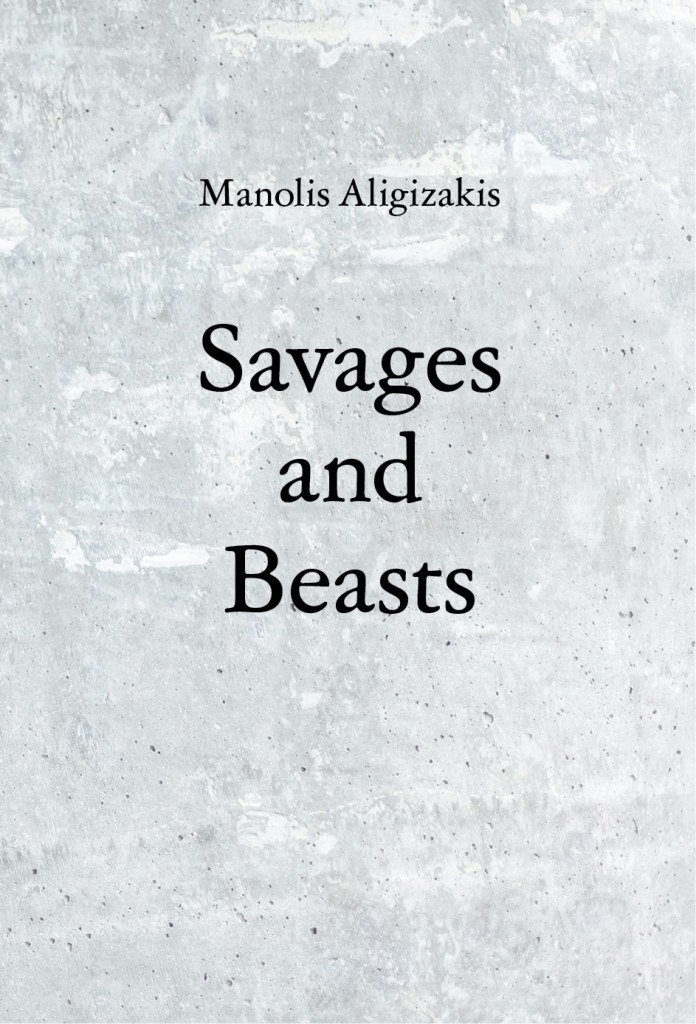




 Manolis Aligizakis