Cretan Canadian Poet, Author, Translator, Publisher
Author: vequinox
BIOGRAPHY
Manolis (Emmanuel Aligizakis) is a Greek-Canadian poet and author. He was recently appointed an honorary instructor and fellow of the International Arts Academy, and awarded a Master’s for the Arts in Literature. He is recognized for his ability to convey images and thoughts in a rich and evocative way that tugs at something deep within the reader. Born in the village of Kolibari on the island of Crete in 1947, he moved with his family at a young age to Thessaloniki and then to Athens, where he received his Bachelor of Arts in Political Sciences from the Panteion University of Athens. After graduation, he served in the armed forces for two years and emigrated to Vancouver in 1973, where he worked as an iron worker, train labourer, taxi driver, and stock broker, and studied English Literature at Simon Fraser University. He has written three novels and numerous collections of poetry, which are steadily being released as published works. His articles, poems and short stories in both Greek and English have appeared in various magazines and newspapers in Canada, United States, Sweden, Hungary, Slovakia, Romania, Australia, and Greece. His poetry has been translated into Spanish, Romanian, Swedish, German, Hungarian languages and has been published in book form or in magazines in various countries. He now lives in White Rock, where he spends his time writing, gardening, traveling, and heading Libros Libertad, an unorthodox and independent publishing company which he founded in 2006 with the mission of publishing literary books. His translation book “George Seferis-Collected Poems” was shortlisted for the Greek National Literary Awards the highest literary recognition of Greece.
Distinguished Awards
Winner of the Dr. Asha Bhargava Memorial Award, Writers International Network Canada, 2014
“George Seferis-Collected Poems” translated by Manolis, shortlisted for the Greek National Literary Awards, translation category.
1st International Poetry Prize for his translation of “George Seferis-Collected Poems”, 2013
Master of the Arts in Literature, International Arts Academy, 2013
1st Prize for poetry, 7th Volos poetry Competition, 2012
Honorary instructor and fellow, International Arts Academy, 2012
2nd Prize for short story, Interartia festival, 2012
2nd Prize for Poetry, Interartia Festival, 2012
2nd Prize for poetry, Interartia Festival, 2011
3rd prize for short stories, Interartia Festival, 2011
Books by Manolis
Autumn Leaves, poetry, Ekstasis Editions, 2014
Übermensch/Υπεράνθρωπος, poetry, Ekstasis Editions, 2013
Mythography, paintings and poetry, Libros Libertad, 2012
Nostos and Algos, poetry, Ekstasis Editions, 2012
Vortex, poetry, Libros Libertad, 2011
The Circle, novel, Libros Libertad, 2011
Vernal Equinox, poetry, Ekstasis Editions, 2011
Opera Bufa, poetry, Libros Libertad, 2010
Vespers, poetry by Manolis paintings by Ken Kirkby, Libros Libertad, 2010
Triptych, poetry, Ekstasis Editions, 2010
Nuances, poetry, Ekstasis Editions, 2009
Rendition, poetry, Libros Libertad, 2009
Impulses, poetry, Libros Libertad, 2009
Troglodytes, poetry, Libros Libertad, 2008
Petros Spathis, novel, Libros Libertad, 2008
El Greco, poetry, Libros Libertad, 2007
Path of Thorns, poetry, Libros Libertad, 2006
Footprints in Sandstone, poetry, Authorhouse, Bloomington, Indiana, 2006
The Orphans - an Anthology, poetry, Authorhouse, Bloomington, Indiana, 2005
Translations by Manolis
Idolaters, a novel by Joanna Frangia, Libros Libertad, 2014
Tasos Livaditis-Selected Poems, Libros Libertad, 2014
Yannis Ritsos-Selected Poems, Ekstasis Editions, 2013
Cloe and Alexandra-Selected Poems, Libros Libertad, 2013
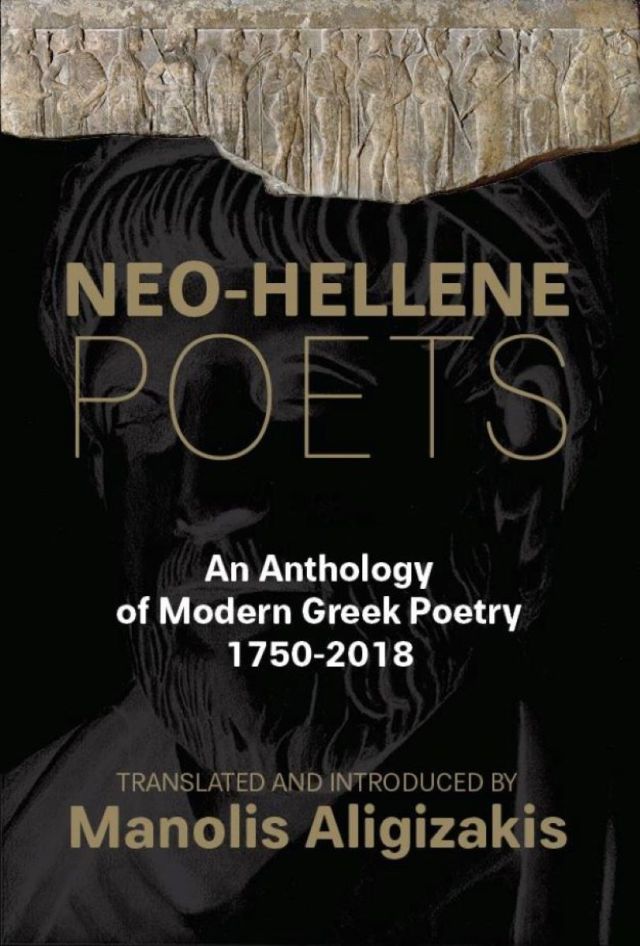
George Seferis-Collected Poems, Libros Libertad, 2012
Yannis Ritsos-Poems, Libros Libertad, 2010
Constantine P. Cafavy - Poems, Libros Libertad, 2008
Cavafy-Selected Poems, Ekstasis Editions, 2011
Books in other languages
Eszmelet, (Hungarian), poetry by Manolis Aligizakis, translated into Hungarian by Karoly Csiby, AB-ART, Bratislava, Slovakia, 2014
Hierodoules, (Greek), poetry, Sexpirikon, Salonica, Greece, 2014
Yperanthropos,(Greek), poetry, ENEKEN Publications, Salonica, Greece, 2014
Übermensch (German), poetry by Manolis Aligizakis, translated into German by Eniko Thiele Csekei, WINDROSE, Austria, 2014
Nostos si Algos, (Romanian) poetry by Manolis Aligizakis, translated into Romanian by Lucia Gorea, DELLART, Cluj-Napoca, Romania, 2013
Tolmires Anatasis, (Greek) poetry, GAVRIILIDIS EDITIONS, Athens, Greece, 2013
Filloroes, (Greek ) poetry, ENEKEN PUBLICATIONS, Thessaloniki, Greece, 2013
Earini Isimeria, (Greek) poetry, ENEKEN PUBLICATIONS, Thessaloniki, Greece, 2011
Stratis o Roukounas, (Greek) novel, MAVRIDIS EDITIONS, Athens, Greece, 1981
Magazines
Canadian Fiction Magazine—Victoria, BC
Pacific Rim Review of Books—Victoria, BC
Canadian Poetry Review—Victoria, BC
Monday Poem, Leaf Press-Lantzville, BC
The Broadkill Review, Milton, Delaware
Ekeken, Thessaloniki, Greece
Envolimon, Beotia, Greece
Annual Literary Review, Athens, Greece
Stigmes, Crete, Greece
Apodimi Krites, Crete, Greece
Patris, Crete, Greece
Nyxta-Mera, Chania, Greece
Wallflowers, Thessaloniki, Greece
Diasporic Literature Spot, Melbourne, Australia
Black Sheep Dances, California, USA
Diasporic Literature Magazine, Melbourne, Australia
Spotlight on the Arts, Surrey, BC
Barnwood, International Poetry Magazine, Seattle, USA
Unrorean, University of Maine, Farmington, Maine, USA
Vakhikon, Athens, Greece
Paremvasi, Kozani, Greece
Szoros Ko, Bratislava, Slovakia
Mediterranean Poetry, Sweden
Apostaktirio, Athens, Greece
Life and Art, Athens, Greece
Logos and Images, Athens, Greece
Contemporary Writers and Thinkers, Athens, Greece
Palinodiae, Athens, Greece
Royal City Poet’s Anthology, 2013, New Westminster, BC, Canada
To parathyro, Paris, France
Ragazine C.C, New Jersey
Artenistas, Athens Greece
Deucalion the Thessalos, Greece.
Literary Lectern, Athens, Greece
Homo Universalis, Athens Greece
VOICES OF THE SEA Drink your wine in the dark tavern by the sea, now that the autumn rains have started, drink it with sailors facing you and stooping fishermen, men whom poverty and angry seas have punished. Drink your wine so that your soul grows free and if grim Fate arrives smile upon it and if new sufferings befall you let them also drink and when Hades comes, calmly offer Him a drink as well.
“What are you doing in those clothes, Rachael? You look like a hippie.” The words had only just left his mouth when he realized that was exactly her intent. Looking up at him, she giggled. “We were danshing. It wash … it wash fun.” Her head fell back onto the sofa and she closed her eyes. Ronald could not bring himself to move from where he stood staring at her. He had rescued Rachael from many scrapes, or worse, but this time he was at a total loss. What could he do with her? She was drunk, that much was obvious. Ronald had seen the signs before but never, God forbid, in his own family. He had the overwhelming urge to sit down and cry. Taking a tight rein on his emotions, he leaned over her, took her arm and tried to pull her to her feet. “Don’t you dare go to sleep. I’ll make some strong coffee, then I’m taking you home.” Let Morley and Tyne deal with her; this time she’s gone too far. “Let me sleep, please Ronnie,” she begged. In her plea Ronald heard again the cries of a little girl – lost, cold and near death in a frozen wasteland created by a prairie blizzard. Hesitating for only a moment, he said, “Okay, you can sleep it off in my bed. Come on, I’ll help you upstairs.” “Oh no, you won’t, Ronald. She’ll sleep down here for what’s left of the night.” At the sound of Aunt Millie’s unusually stern voice, he swung around. She was standing in the doorway of the downstairs hallway. Gray hair formed a cloud around her pale face. One hand clutched a terrycloth robe around her ample bosom; the other hand held out a long flannel nightgown and a blanket in the direction of the startled girl on the sofa. “Get out of those clothes and put this on. You’ll stay on the sofa tonight, young lady. Ronnie needs his sleep. I’ll talk to you in the morning when you’ve sobered up.” Millie Harper turned abruptly towards her bedroom.
Sandals Young boy with sandals and a hole in his shirt elbow ideal poem laughter like glory of tattered books on the table where coffee steams above your cup you grasp the sugar bowl gaze through blue glass the young boy chases umbrella shadows on the grass while others fight chimeras at the borders or hunt for peace behind barricades raising unfurled flags they sing marching paeans and glory myths for the fallen boy with sandals
The Apple Tree Most of the times, I think for free with no pencil. Gain and loss steam up as, with severed arms, I harvest the ripened fruit. How can you tell the gender of a tree? I remember a lazy apple tree which imagined apples in its armpits yet it resisted the spring flowers. Brainless apple tree: its rustle but sobs and hiccups of the root pus. An internal sob for all who reach their purpose and are happy with the dowry. If I now mention that apple tree is because such imagination of fruit was considered an insult to nature like heresy to the dogma of creation. Desolate tree, unproductive. They cut it down, burned it and its flames lick my last branches as long as I’m talking to you.
Charioteer You took the main road that dashes down from the dark thighs of Delphi like the arrow’s lissome quiver symmetrical to their questionable stature you vibrated its unruffled gravel-road with polemic sandals and the waterfall thunder you held tight in your hands the reigns of the sea and a reddish coppery gleam. Arriving you talked about the serenity of the god who suckles the nipple of a star.
Adulthood If I write my biography someday, I won’t forget to report my hatred for dye houses; they are spiteful, and when they returned the last children’s clothes, without wings, we got quite ill and when we recovered, we felt awkward and strange, like the ones who have disappeared for years, and when they return, they make excuses that the garden was far away. Where had they gone? Unknown. Only now, mother cries more often.
Kraskolkyn pulls delicately at the creases of an expensive grey mohair suit, but his tie is loose, his smart shirt is open, the hairy fruit of his paunch sports a chunky gold chain. He’s adorned with gold—wristwatch, rings, tieclip, fountain pen. Fancy leather luggage bulges on the back seat. Pauline would have been appalled at this display of conspicuous affluence. That dongle on the chain has a phallic shape. This is not a correct person. “Never mind, it don’t matter . . . I get everyone out of the shit, know what I mean? I put ’em in deep. Oh yeah! But I get ’em out again . . .” The laughter bellows on and on. Lucas can’t find the correct verbal register for dealing with this big Kraskolkyn. His fellow-traveller is delving into a pocket and pulling out cigars. Lucas is queasy about smoking, he’s only tried timid experiments with Wicked Trevor’s hash behind the gym at Westway, but now he feels obliged to take part in another kind of machismo, its camaraderie, matches, blue smoke, coughs, expectorations. Kraskolkyn slaps him on the back. “Crazy damn kids. Always on the run. Give bastards the runaround . . . Just have a nice cigar . . . then you be OK. Enjoy the sights.” Lucas isn’t OK. All he can hear is this bullying laughter. “You gonna love those sights, I tell you. Better than any nutty house, you know? I put loadsa money inna sights, believe me kid, crazy peoples gonna love it all over the Seaside.” Mr. K chuckles, chews purposefully on his cigar, as if waiting for a confession; and Lucas realises that he should have the willpower to keep silent. The slopes are becoming thickly wooded. He doesn’t know this edge of the Moor, nor can he relate it to the location of distant Oakhill—or the coastal resorts. His rescuer (abductor?) is asking him if he wants to learn any good jokes. Lucas moves his head ambiguously. Too late, a fruity narration is already underway: a Ukrainian, a Serb, an Englishman and a Croat went to the toilet. In the toilet, see, there was this big telly— The car lurches over potholes, compounding his difficulties in following Mr. K’s polyglot diction, so he can only nod weakly at the gaseous explosions of mirth. His head starts to throb with the noise and tedious obscurity of it all. They’ve just roared past the darkened ruins of a station. He thinks the crooked signboard said Abbots Oakham—for Oakhill Hospital. There, there’s no way back, not now, it’s too late, best to close down that area, keep his eyes open.
The Enemy He not only fought against loneliness and isolation, but against his whole identity, been in constant rupture and orgiastic sectoral emotions that couldn’t settle in his pneumatic completeness, but always took him to the immense void, lurking behind every set concept, that rendered him unable to position one against the other or choose one so he could annul the other; his vision was multifaceted and plethoric opposite the metallic and unbendable silence which destroyed every effort for relaxation and acceptance of the regular, the common-sensical with his pride unable to settle down, as he was not only against the world but against his viscera that demanded the impossible of him
Focusing Again, and always the selection and the contest are hard. We stood on the stone terrace for a while listening to the vertical silence of the trees occasionally interrupted by the minimal exclamation of a finch. The faraway mountains are lighter blue than the unreachable. What can you look at? He asked, what can you avoid, what can you remember? We hid the holed undershirt with the small monogram between two pillows. The hole was passed onto the body and the wall, while the three blind men held their violins underarm, raising their heads slowly to look straight at you.
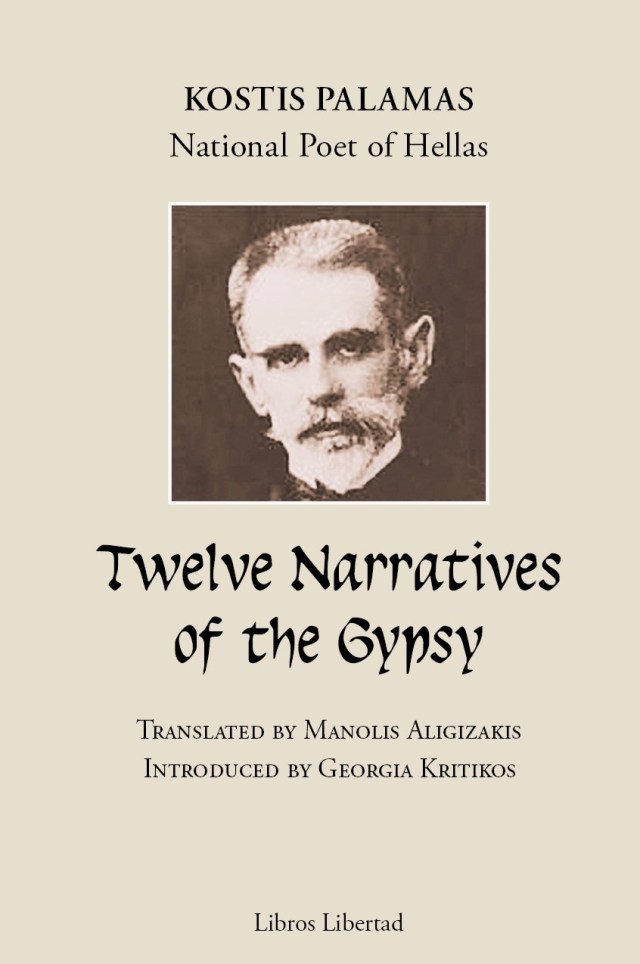
And they said to one another: Who’s the one with the violin who isn’t pleasing our hearts and inflames the surprise and anger in our viscera? Who’s conniving with his unwise hand awakening this violin which talks of what we watch it doesn’t see and what we hold it doesn’t keep and in all festivities and joys the anguish stands before us like the traitor of our kin and killer of our joy? No other bow has ever played such ugly, novice and imperfect music on any gypsy violin like the music of this foolish one. And only the young children oh the beloved children filled my serene loneliness turning it into my main fun since my violin always surprised and attracted them and they run around me with their big and bright eyes into which they always had hidden a tiny secret and they made of all their surprise and awe a great silence and joy from my violin, the cursed violin as if my own race, from the far future time.







 Manolis Aligizakis