Cretan Canadian Poet, Author, Translator, Publisher
Author: vequinox
BIOGRAPHY
Manolis (Emmanuel Aligizakis) is a Greek-Canadian poet and author. He was recently appointed an honorary instructor and fellow of the International Arts Academy, and awarded a Master’s for the Arts in Literature. He is recognized for his ability to convey images and thoughts in a rich and evocative way that tugs at something deep within the reader. Born in the village of Kolibari on the island of Crete in 1947, he moved with his family at a young age to Thessaloniki and then to Athens, where he received his Bachelor of Arts in Political Sciences from the Panteion University of Athens. After graduation, he served in the armed forces for two years and emigrated to Vancouver in 1973, where he worked as an iron worker, train labourer, taxi driver, and stock broker, and studied English Literature at Simon Fraser University. He has written three novels and numerous collections of poetry, which are steadily being released as published works. His articles, poems and short stories in both Greek and English have appeared in various magazines and newspapers in Canada, United States, Sweden, Hungary, Slovakia, Romania, Australia, and Greece. His poetry has been translated into Spanish, Romanian, Swedish, German, Hungarian languages and has been published in book form or in magazines in various countries. He now lives in White Rock, where he spends his time writing, gardening, traveling, and heading Libros Libertad, an unorthodox and independent publishing company which he founded in 2006 with the mission of publishing literary books. His translation book “George Seferis-Collected Poems” was shortlisted for the Greek National Literary Awards the highest literary recognition of Greece.
Distinguished Awards
Winner of the Dr. Asha Bhargava Memorial Award, Writers International Network Canada, 2014
“George Seferis-Collected Poems” translated by Manolis, shortlisted for the Greek National Literary Awards, translation category.
1st International Poetry Prize for his translation of “George Seferis-Collected Poems”, 2013
Master of the Arts in Literature, International Arts Academy, 2013
1st Prize for poetry, 7th Volos poetry Competition, 2012
Honorary instructor and fellow, International Arts Academy, 2012
2nd Prize for short story, Interartia festival, 2012
2nd Prize for Poetry, Interartia Festival, 2012
2nd Prize for poetry, Interartia Festival, 2011
3rd prize for short stories, Interartia Festival, 2011
Books by Manolis
Autumn Leaves, poetry, Ekstasis Editions, 2014
Übermensch/Υπεράνθρωπος, poetry, Ekstasis Editions, 2013
Mythography, paintings and poetry, Libros Libertad, 2012
Nostos and Algos, poetry, Ekstasis Editions, 2012
Vortex, poetry, Libros Libertad, 2011
The Circle, novel, Libros Libertad, 2011
Vernal Equinox, poetry, Ekstasis Editions, 2011
Opera Bufa, poetry, Libros Libertad, 2010
Vespers, poetry by Manolis paintings by Ken Kirkby, Libros Libertad, 2010
Triptych, poetry, Ekstasis Editions, 2010
Nuances, poetry, Ekstasis Editions, 2009
Rendition, poetry, Libros Libertad, 2009
Impulses, poetry, Libros Libertad, 2009
Troglodytes, poetry, Libros Libertad, 2008
Petros Spathis, novel, Libros Libertad, 2008
El Greco, poetry, Libros Libertad, 2007
Path of Thorns, poetry, Libros Libertad, 2006
Footprints in Sandstone, poetry, Authorhouse, Bloomington, Indiana, 2006
The Orphans - an Anthology, poetry, Authorhouse, Bloomington, Indiana, 2005
Translations by Manolis
Idolaters, a novel by Joanna Frangia, Libros Libertad, 2014
Tasos Livaditis-Selected Poems, Libros Libertad, 2014
Yannis Ritsos-Selected Poems, Ekstasis Editions, 2013
Cloe and Alexandra-Selected Poems, Libros Libertad, 2013
George Seferis-Collected Poems, Libros Libertad, 2012
Yannis Ritsos-Poems, Libros Libertad, 2010
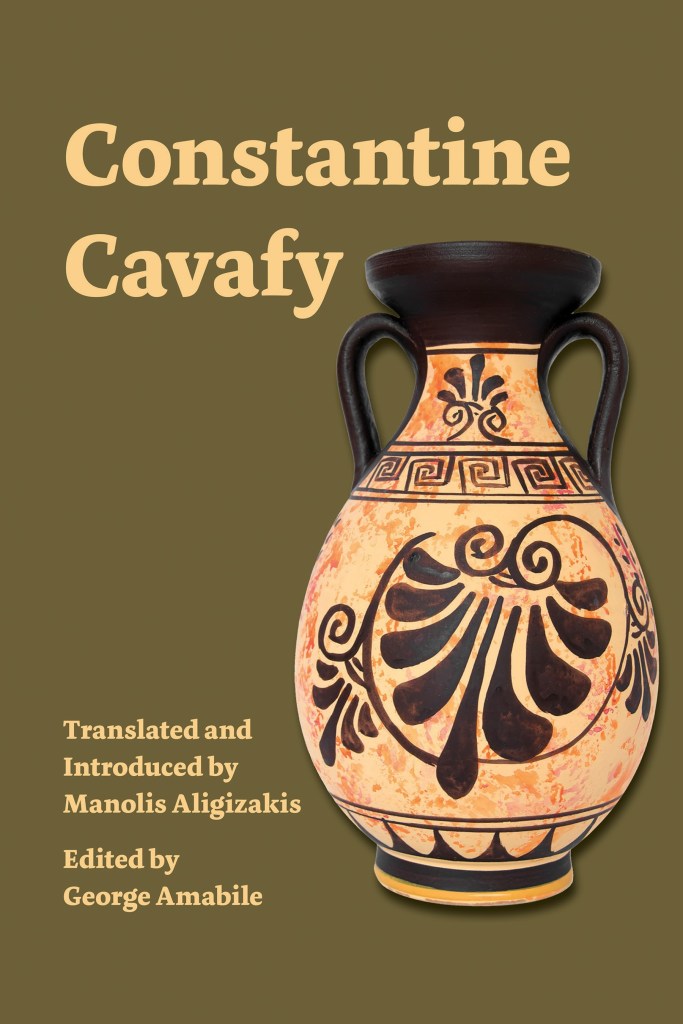
Constantine P. Cafavy - Poems, Libros Libertad, 2008
Cavafy-Selected Poems, Ekstasis Editions, 2011
Books in other languages
Eszmelet, (Hungarian), poetry by Manolis Aligizakis, translated into Hungarian by Karoly Csiby, AB-ART, Bratislava, Slovakia, 2014
Hierodoules, (Greek), poetry, Sexpirikon, Salonica, Greece, 2014
Yperanthropos,(Greek), poetry, ENEKEN Publications, Salonica, Greece, 2014
Übermensch (German), poetry by Manolis Aligizakis, translated into German by Eniko Thiele Csekei, WINDROSE, Austria, 2014
Nostos si Algos, (Romanian) poetry by Manolis Aligizakis, translated into Romanian by Lucia Gorea, DELLART, Cluj-Napoca, Romania, 2013
Tolmires Anatasis, (Greek) poetry, GAVRIILIDIS EDITIONS, Athens, Greece, 2013
Filloroes, (Greek ) poetry, ENEKEN PUBLICATIONS, Thessaloniki, Greece, 2013
Earini Isimeria, (Greek) poetry, ENEKEN PUBLICATIONS, Thessaloniki, Greece, 2011
Stratis o Roukounas, (Greek) novel, MAVRIDIS EDITIONS, Athens, Greece, 1981
Magazines
Canadian Fiction Magazine—Victoria, BC
Pacific Rim Review of Books—Victoria, BC
Canadian Poetry Review—Victoria, BC
Monday Poem, Leaf Press-Lantzville, BC
The Broadkill Review, Milton, Delaware
Ekeken, Thessaloniki, Greece
Envolimon, Beotia, Greece
Annual Literary Review, Athens, Greece
Stigmes, Crete, Greece
Apodimi Krites, Crete, Greece
Patris, Crete, Greece
Nyxta-Mera, Chania, Greece
Wallflowers, Thessaloniki, Greece
Diasporic Literature Spot, Melbourne, Australia
Black Sheep Dances, California, USA
Diasporic Literature Magazine, Melbourne, Australia
Spotlight on the Arts, Surrey, BC
Barnwood, International Poetry Magazine, Seattle, USA
Unrorean, University of Maine, Farmington, Maine, USA
Vakhikon, Athens, Greece
Paremvasi, Kozani, Greece
Szoros Ko, Bratislava, Slovakia
Mediterranean Poetry, Sweden
Apostaktirio, Athens, Greece
Life and Art, Athens, Greece
Logos and Images, Athens, Greece
Contemporary Writers and Thinkers, Athens, Greece
Palinodiae, Athens, Greece
Royal City Poet’s Anthology, 2013, New Westminster, BC, Canada
To parathyro, Paris, France
Ragazine C.C, New Jersey
Artenistas, Athens Greece
Deucalion the Thessalos, Greece.
Literary Lectern, Athens, Greece
Homo Universalis, Athens Greece
Aphrodite II Aphrodite laughed at my wonder when I constructed my dwelling from the top down with a courtyard in the clouds and a roof in the soil’s breath opposite all other matters of nature: corporeal beasts lowered their heads in the watering trough merciless light reflected in their innocent eyes as in the upper level of a fence almost painted the color of guilt before the first absolution was invented heat from the hearth warmed my heart ceiling and basement left in midair air-conditioned floor the robin’s chirp just an illusion and here I was meant to discover justice and beg the sun for a shred of logic
AND PERHAPS what we never understood was the only thing left to us. Because who could ever win the night or the dream, and inside the house one with the other were simply heirlooms, and each of us will plainly die in the disturbed evening, unnaturally lit by the torches. We were always unprepared. And this was our harvest.
Sensual Delight Joy and myrrh of my life, the memory of hours when I found and lived sensual delight as I desired it. Joy and myrrh of my life, I, who resisted all enjoyment of routine erotic love.
fifteen You multiplied you overpowered all species with deceitful progress you applied the breaks what flies won’t learn of anything else and what crawls to stay as is only you, the almighty more than any other searched for the point of Superiority for allies and Creators you investigated the sun and the moon and all the constellations
indeed happened a few years later when the teacher with her epiphany passed into the sweet embrace of her Lord, only to leave behind the unhealed scars of ridicule inflicted upon these Indian girls; scars which they were meant to retain for the rest of their lives. Anton’s and Mary’s feelings strengthened as they days went by and as they had their occasional intimacy when the circumstances would allow it and when Mary’s psychological state of mind would cooperate; they felt strongly about their future which at times they discussed. “I want us to leave and go someplace far away,” she would say to Anton. “I want that too, and I’m certain time will come for it, yet for now we have a duty to do: what is best for these kids before we bail out and leave,” Anton would say to her and to which she never had any objecting word to say. It was enough for her that she’d have a future with the man she loved and when it would come together or in which part of the world they might decide to move she was wholeheartedly willing to give it a chance. Anton had devoted some of his time to fix his room. He took all old things out, donated them to the local charity, one’s leftovers are always someone else’s treasure, as the saying goes; he also got a couple of gallons of paint and gave his office a fresh look. He bought a new bed and beddings from the local Hudson’s Bay store which he transported with his truck to the School and put it together. He didn’t even ask Father Nicolas whether the School would cover the expense, he just bought it and with the new coat of paint the room it looked a lot better than before. Anton had also developed a very strong friendship with George the Cretan cook of the School and they often talked of Anton’s plans which always included Mary and also the fate …
Double Certainly, it wasn’t I who jogged along the suburban houses last night dominance, security of four walls, and ambience with my unbuttoned shirt like forgotten piety with my heart surrounded by the auspices of the thick darkness it wasn’t I running like a dream forgetful of its origin I wasn’t, but my double who hid in his bag old picture of two stars swimming in a crystal pond twin faces, glancing at one mirror as you were coaching me to hide in your arms and release my tiredness and I held the little master key tightly ready to place in the hole and open the world like a blooming rose
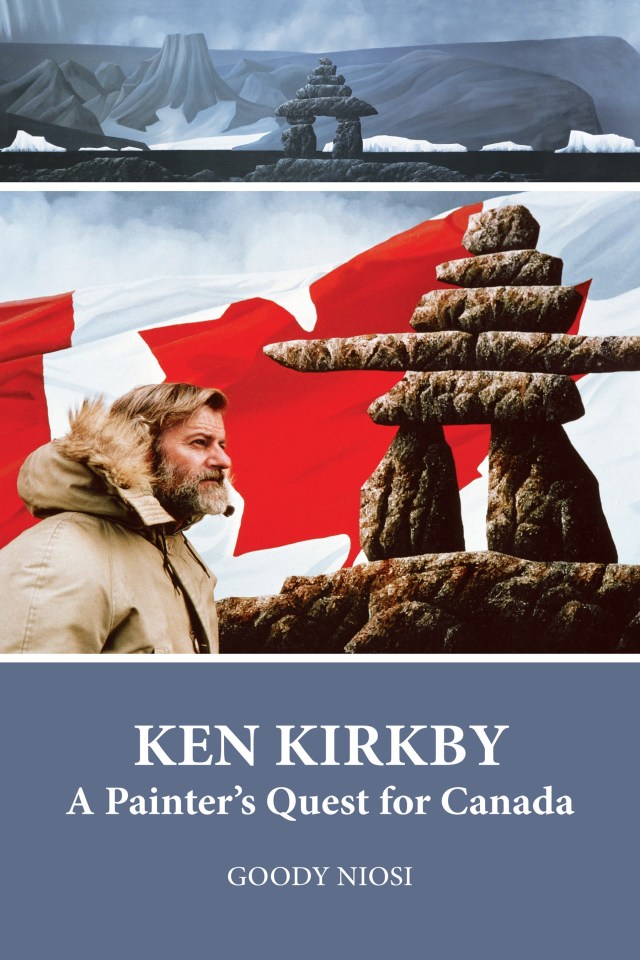
sexual gratification of a bunch of perverts. If this happened to your family, wouldn’t you want someone to care? Wouldn’t you want someone to raise a stink? Wouldn’t you want someone to help? That’s all I’m trying to do. Apparently, to my surprise, it seems this painting was the two by four needed to apply to the side of your head to get you to pay attention. My job is to announce to you what has gone on and what continues to go on. I’m robbing you of your innocence. I’m not going to give you the chance to say, ‘If only I had known’. Now you know. What are you going to do about it?” The mood of the public changed. People began calling to agree with him. Battle lines were drawn and half – or perhaps even the magic fiftyone percent – agreed with him. Ken spent an hour or more each day, at the Columbus Centre, talking to people who lined up to see the painting and talk to the artist. Thousands of people came – far more than had attended his opening night. Ken finished each of his stories with a plea for help. He urged people not to simply believe his stories, but to investigate and make up their own minds. And if they discovered that what he said was true, let the government know how they felt. This was what democracy was about – and he was appalled at how lightly most people took the democracy they lived in. “No one that is born here really takes it seriously,” he told them. “Do you know how many rivers of blood were spilled to have what we have here? How can we pretend to be this thing that we say we are when you can’t bother to inform yourselves about what goes on in your own country? How can you be a nation without knowing what goes on in your own backyard?” Ken received a phone call from Wayne Morrison, the executive director of the Friends of Canadian Broadcasting and the stepson of Northrop Frye. Could they meet, he asked? Ken invited him to the studio. Wayne was a dapper and polished gentleman who expressed fascination with the furor caused by the flag painting. The CBC was about to suffer large financial cuts, which would seriously endanger its existence, he said, and he wanted Ken’s help. He wanted to reproduce the flag painting in full page magazine advertisements with Ken standing beside it holding a paintbrush with the quote, “I haven’t been this mad in twenty years.” Below that would be the story of the CBC cutbacks. Ken said yes, but he was not prepared to use the painting. He would create another similar one instead. When Diane asked why, he said, “I’m going to give it to Canada and I don’t want it reproduced. It’s going to go to the country pure.” “You’re going to give it away? Good lord, we don’t have enough money to do what we’re doing and you’re going to give paintings away! Why are you going to give something to the government? They already take too much!”
The Shall and the Should of Death This way, then, you retained many insignificant images in your eyes. Who will have time to get baptized in the Lake of memory? Eternity lasts so little yet, it’s possible that certain justice must exist somewhere that explains under which pretensions a man dies with so many shall and should which death whispers his whole life vanishes since, you know, only one second is enough for the change of course his wings can take and don’t listen to them, seconds are precious since the man who dies is penniless with the choked death rattle of a haunted man he needed minutes, thousands of seconds to buy what? Insignificant images, yet, how can he repay? What can he borrow now? How many images of his memory can he sell? Minutes give birth to a dynasty of aged images and the interest seems to be unbearable. Is there anyone, then, who can pay for it?
the shop poor Willy had replaced the pagan turmoil of Hrothgar’s Feast with the blissed-out cooing of George Harrison. Larry grimaced at the music, took a hit off the joint. As minutes passed he grew into an Easter Island statue, a pitted mask smitten with sinister benevolence, relishing cosmic absurdities . . . I wasn’t interested in more drugs. I was cultivating a new yearning—for comforting fetishes like Turkish rugs or French etchings, or at least quality post-war British stuff, the old Pye Black Box gramophones, Hornby Trains in the original blue boxes, I was fed up with bankrupt stock and garage-sale rejects. And I wanted something with class. Something safe, please. Nothing too radical. “It’s not weapons, is it, Larry?” He passed the joint and began prising open the tea chest with a bent fork. “Just weird shit. Specially for you.” The chest contained thick folio-sized notebooks, bulging box files, a crumpled set of plans or blueprints, and half a dozen books in uniform bindings, ex-lib, half-calf and purple clo, gilt lttr, top edge gilt, gilt device on sp, approx 200 pp, frnt brds sl warped and stained, torn frontis in Vol I, some neat inscr, otherwise v good, ideal for a proper bookseller with a catalogue, not my Surprise Book Bins. “They’ve been in storage for years . . .” Larry sniffed defensively. A yellowed newspaper cutting fell out. ‘Fears of Red Atom Bombs’. He told me he’d acquired this heap of forties memorabilia as payment for some dope. I asked him which clients usually paid in waste paper. Larry looked uneasy. He liked to keep the different strata of his life separate. “A photographer that my gorgeous creature did some work for. A young guy. But ugly, thank God. She says he snuffles while he’s setting up the poses. Like a great rat . . .” He sucked the joint and giggled. “He’s heavily into cuisine and wine. I guess he can’t perform vintage sex.” Despite the dope I was getting impatient. I might raise something on tomes with fancy bindings, but as for wartime diaries, old blueprints—I inquired as to where the stuff originated. “Some old attic, south of the river. Like Norwood, or Streatham Common. ForGod’s sake, Nick, I only went there once. One of those high old houses with stained glass in the porch window. A Victorian rose-window with cruciform panels . . .” He exhaled slowly,seemingly bemused by the sudden emergence of this elegant adjective. “I suppose there aren’t any pieces from the windows in that trunk?” I was seized with entrepreneurial glee at discovering yet another way of repackaging splinters of the past, little sunset glints of nostalgia for an already uneasy seventies. “Too late. His gaffer was tearing the place apart, converting it into a shop







 Manolis Aligizakis