Cretan Canadian Poet, Author, Translator, Publisher
Author: vequinox
BIOGRAPHY
Manolis (Emmanuel Aligizakis) is a Greek-Canadian poet and author. He was recently appointed an honorary instructor and fellow of the International Arts Academy, and awarded a Master’s for the Arts in Literature. He is recognized for his ability to convey images and thoughts in a rich and evocative way that tugs at something deep within the reader. Born in the village of Kolibari on the island of Crete in 1947, he moved with his family at a young age to Thessaloniki and then to Athens, where he received his Bachelor of Arts in Political Sciences from the Panteion University of Athens. After graduation, he served in the armed forces for two years and emigrated to Vancouver in 1973, where he worked as an iron worker, train labourer, taxi driver, and stock broker, and studied English Literature at Simon Fraser University. He has written three novels and numerous collections of poetry, which are steadily being released as published works. His articles, poems and short stories in both Greek and English have appeared in various magazines and newspapers in Canada, United States, Sweden, Hungary, Slovakia, Romania, Australia, and Greece. His poetry has been translated into Spanish, Romanian, Swedish, German, Hungarian languages and has been published in book form or in magazines in various countries. He now lives in White Rock, where he spends his time writing, gardening, traveling, and heading Libros Libertad, an unorthodox and independent publishing company which he founded in 2006 with the mission of publishing literary books. His translation book “George Seferis-Collected Poems” was shortlisted for the Greek National Literary Awards the highest literary recognition of Greece.
Distinguished Awards
Winner of the Dr. Asha Bhargava Memorial Award, Writers International Network Canada, 2014
“George Seferis-Collected Poems” translated by Manolis, shortlisted for the Greek National Literary Awards, translation category.
1st International Poetry Prize for his translation of “George Seferis-Collected Poems”, 2013
Master of the Arts in Literature, International Arts Academy, 2013
1st Prize for poetry, 7th Volos poetry Competition, 2012
Honorary instructor and fellow, International Arts Academy, 2012
2nd Prize for short story, Interartia festival, 2012
2nd Prize for Poetry, Interartia Festival, 2012
2nd Prize for poetry, Interartia Festival, 2011
3rd prize for short stories, Interartia Festival, 2011
Books by Manolis
Autumn Leaves, poetry, Ekstasis Editions, 2014
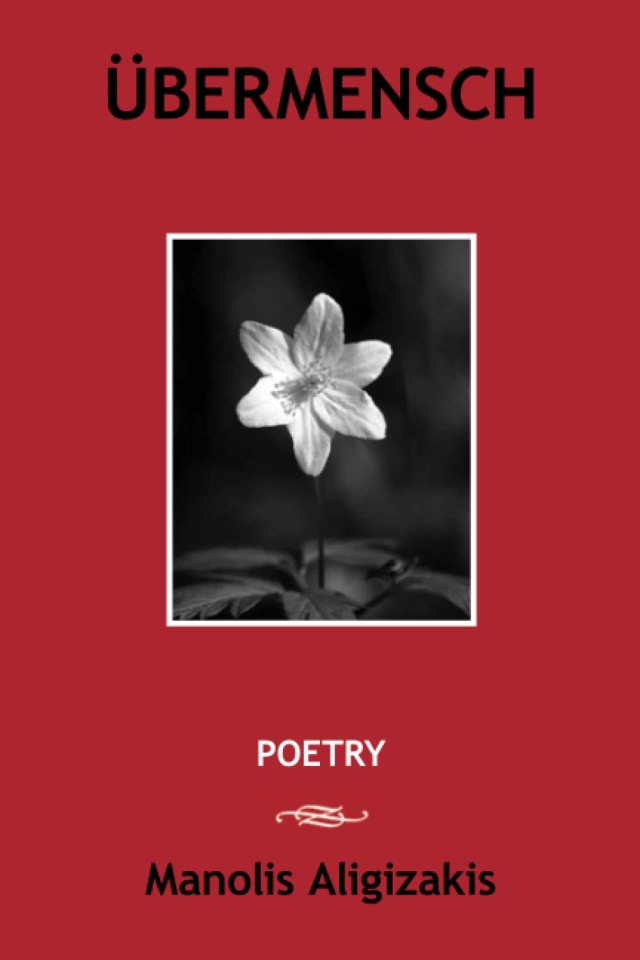
Übermensch/Υπεράνθρωπος, poetry, Ekstasis Editions, 2013
Mythography, paintings and poetry, Libros Libertad, 2012
Nostos and Algos, poetry, Ekstasis Editions, 2012
Vortex, poetry, Libros Libertad, 2011
The Circle, novel, Libros Libertad, 2011
Vernal Equinox, poetry, Ekstasis Editions, 2011
Opera Bufa, poetry, Libros Libertad, 2010
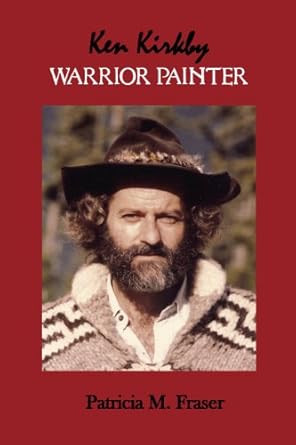
Vespers, poetry by Manolis paintings by Ken Kirkby, Libros Libertad, 2010
Triptych, poetry, Ekstasis Editions, 2010
Nuances, poetry, Ekstasis Editions, 2009
Rendition, poetry, Libros Libertad, 2009
Impulses, poetry, Libros Libertad, 2009
Troglodytes, poetry, Libros Libertad, 2008
Petros Spathis, novel, Libros Libertad, 2008
El Greco, poetry, Libros Libertad, 2007
Path of Thorns, poetry, Libros Libertad, 2006
Footprints in Sandstone, poetry, Authorhouse, Bloomington, Indiana, 2006
The Orphans - an Anthology, poetry, Authorhouse, Bloomington, Indiana, 2005
Translations by Manolis
Idolaters, a novel by Joanna Frangia, Libros Libertad, 2014
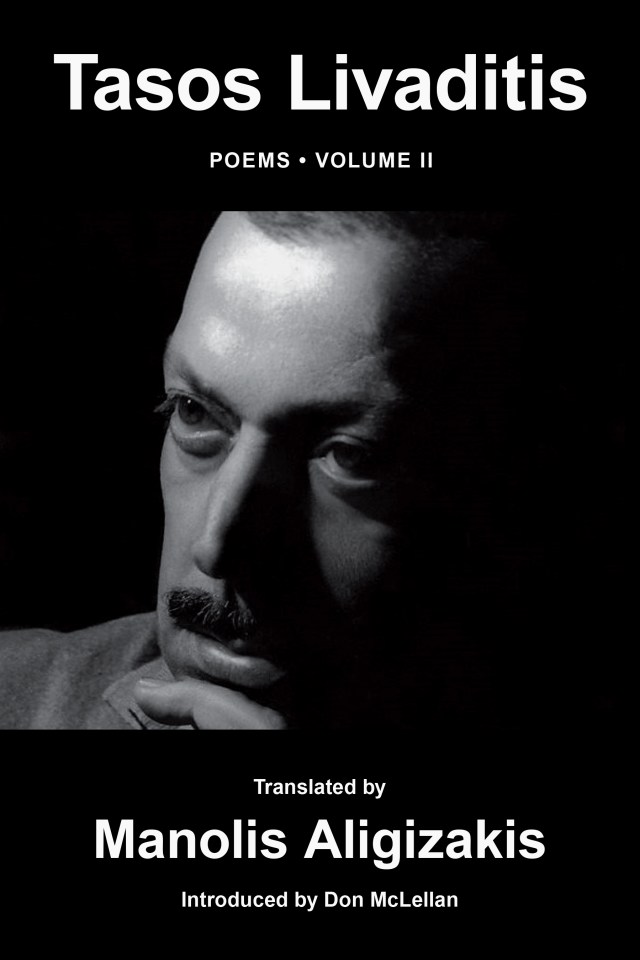
Tasos Livaditis-Selected Poems, Libros Libertad, 2014
Yannis Ritsos-Selected Poems, Ekstasis Editions, 2013
Cloe and Alexandra-Selected Poems, Libros Libertad, 2013
George Seferis-Collected Poems, Libros Libertad, 2012
Yannis Ritsos-Poems, Libros Libertad, 2010
Constantine P. Cafavy - Poems, Libros Libertad, 2008
Cavafy-Selected Poems, Ekstasis Editions, 2011
Books in other languages
Eszmelet, (Hungarian), poetry by Manolis Aligizakis, translated into Hungarian by Karoly Csiby, AB-ART, Bratislava, Slovakia, 2014
Hierodoules, (Greek), poetry, Sexpirikon, Salonica, Greece, 2014
Yperanthropos,(Greek), poetry, ENEKEN Publications, Salonica, Greece, 2014
Übermensch (German), poetry by Manolis Aligizakis, translated into German by Eniko Thiele Csekei, WINDROSE, Austria, 2014
Nostos si Algos, (Romanian) poetry by Manolis Aligizakis, translated into Romanian by Lucia Gorea, DELLART, Cluj-Napoca, Romania, 2013
Tolmires Anatasis, (Greek) poetry, GAVRIILIDIS EDITIONS, Athens, Greece, 2013
Filloroes, (Greek ) poetry, ENEKEN PUBLICATIONS, Thessaloniki, Greece, 2013
Earini Isimeria, (Greek) poetry, ENEKEN PUBLICATIONS, Thessaloniki, Greece, 2011
Stratis o Roukounas, (Greek) novel, MAVRIDIS EDITIONS, Athens, Greece, 1981
Magazines
Canadian Fiction Magazine—Victoria, BC
Pacific Rim Review of Books—Victoria, BC
Canadian Poetry Review—Victoria, BC
Monday Poem, Leaf Press-Lantzville, BC
The Broadkill Review, Milton, Delaware
Ekeken, Thessaloniki, Greece
Envolimon, Beotia, Greece
Annual Literary Review, Athens, Greece
Stigmes, Crete, Greece
Apodimi Krites, Crete, Greece
Patris, Crete, Greece
Nyxta-Mera, Chania, Greece
Wallflowers, Thessaloniki, Greece
Diasporic Literature Spot, Melbourne, Australia
Black Sheep Dances, California, USA
Diasporic Literature Magazine, Melbourne, Australia
Spotlight on the Arts, Surrey, BC
Barnwood, International Poetry Magazine, Seattle, USA
Unrorean, University of Maine, Farmington, Maine, USA
Vakhikon, Athens, Greece
Paremvasi, Kozani, Greece
Szoros Ko, Bratislava, Slovakia
Mediterranean Poetry, Sweden
Apostaktirio, Athens, Greece
Life and Art, Athens, Greece
Logos and Images, Athens, Greece
Contemporary Writers and Thinkers, Athens, Greece
Palinodiae, Athens, Greece
Royal City Poet’s Anthology, 2013, New Westminster, BC, Canada
To parathyro, Paris, France
Ragazine C.C, New Jersey
Artenistas, Athens Greece
Deucalion the Thessalos, Greece.
Literary Lectern, Athens, Greece
Homo Universalis, Athens Greece
FORGIVE me, oh Lord, that I survived since You had secretly placed my life under a peplos like lovers, at night, who hold someone else in their arms while they stand behind, in the shadow, and ah, to tread the world is nothing but a sob. However, under the lighted torches of the evening let him be blessed who is ready to forget like the farmer who throws his seed on the ground until autumn when we light the oil lamp earlier and all the silent people resort to words that perhaps save us somewhere else.
The Promise that Propelled a Life “But I have promises to keep, and miles to go before I sleep…” (Robert Frost, Poet) ~~ Ken worked at a number of jobs on the lower mainland but never gave up his fixation on the north. It is unlikely his sense of destiny remotely hinted that the path he was on would directly consume thirty years and several fortunes, the majority of which would be spent in one of the major cities of the world. It was enough that his mind was filled with his dream of this vast and empty land. Many thousands of Canadians made their home in Vancouver and environs, and it frustrated him that he’d not found anyone who had been to the Arctic, or even expressed more than a passing interest in that inaccessible land that made up one-third of Canada. The city was not a good fit for him, and within a year, he was leaving it behind. He worked for several seasons on the construction of the WAC Bennett Dam at Hudson’s Hope—an experience that has stood him in good stead both through the workplace challenges he met, and the lasting connection he made with WAC Bennett himself. This odd association resulted in a piece of useful advice offered during Ken’s long battle on behalf of the Inuit. The Premier of British Columbia recommended that if all else failed, Ken should practice “Legislation by exhaustion—the last man standing wins.” Over the years, Ken found it fit his style admirably. While working in Hudson’s Hope, he fell in love with a beautiful First Nations girl and crumbled in broken-hearted despair when she was taken in a tragic accident on the eve of their wedding. Tormented and withdrawn, he took refuge in the compelling images imprinted into his brain by Francisco’s tales of the Canadian northland. These seemed to offer some promise of respite and became the catalyst that drove him into the Arctic. By the time he was twenty-five, he had lived several years with the Inuit and travelled by foot, boat and dogsled from Coppermine, NWT to Baffin Island and back. In the process, he gave his promise to an Inuit grandmother …
SECOND ODE — TO GLORY Whoever said that glory was as purposeless as those who seek it and burn myrrh to it, spoke falsely. Glory bestows wings on those who seek it, directs them to the rough and difficult path of virtue. Whoever accepts the call of glory but refuses to follow it has an impotent soul and a contemptible heart He has never shed tears over the graves of his friends nor ever kissed the soil of his kin. Oh, Hellas, you have seeded the fiery desire of glory in the hearts of your sons and thus are called the mother of us all. As when the lion emerges from its den charging and wounding, killing and scattering alike brave hunters and multitudes of Arabs,
Similarities Although something new occurred almost daily since the hour we met Him, fame had promised not to ignore us and we didn’t ask for anything else but to occasionally pull out of the bag of chaos the bloomed rose or the perennial smile of the young lover while our Hero stood transfixed on the dead body of the rope walker who left behind a splendid legacy most people would love to have yet never had the courage to fight for. Even more so when the jester was more important than the minister and the undertaker more valuable than the tax collector, after all they all specialized on the ephemeral.
When he had finished with my face, he gave me an appreciative look and nodded his satisfaction. Then, he extended the gourd to me and told me to do the same over the rest of my body. I was reluctant at first, but after a spell he left, and I began to feel the itching ease. Good enough for me, I thought, and proceeded to do as I was told. I was squeezing the last of the sap and applying it to my groin when Guacaipuro appeared, still wearing his perpetual scowl. “Mareoka,” he said. Apparently he was resuming our conversation. He extended his hand, palm upward. I looked at it stupidly and then at his countenance, failing to grasp his meaning. “Mareoka,” he repeated. He thrust his hand toward me again. I felt as though there was a tiny monk running amok inside my head, looking in every corner for something related to this one magic word that was the gateway to his witchcraft. “Ah! Mareoka!” I slapped my forehead, as if I suddenly understood. For the first time, Guacaipuro smiled, as if he had finally won me over. From the pocket of my habit I extracted my copy of the New Testament that he had previously rejected by tossing it onto the ground. I offered it to him again. “Mareoka,” I said, solemnly. If I was agreeing that Mareoka was superior, it was only to allow me the freedom to prove to him otherwise. I hoped God would forgive me. “Tamanoa,” I said, pointing to my friend. Guacaipuro was more interested in the strangeness of the book. I seized the opportunity to take advantage of my newfound respectability by untying the ropes. Guacaipuro did not appear to object. I moved slowly, deliberately, until Tamanoa was able to stand beside me, free. Guacaipuro shook his head, dissatisfied. He took the rope and tied Tamanoa’s wrist to my wrist. This was his compromise solution. I must not allow my servant to run away. As soon as I gleaned his intent, I yanked hard on the rope, jerking Tamanoa beside me.
Ionia Ionia was lost forever in 1922 Ionia, a spring and a mother. Think of the silent deeds that stand by us when we become conscious of the great pain deeds of man and the mountains take form slowly in such a way grievance isn’t for Greece but for history. How often power hidden in the mystery of life turns its face away from the honest works of man before the decay that confronts and spreads like the frozen and parched gust of winter the longing of the Greek and the Turk’s arrogance fade away. Both alike the sun and the cloud that together sink and dissolve in the night in the great night. In Ionia one can meet us you and I and the black headscarf of the grandmother. One can see the made of oak wood boat of Odysseus the vendetta of stony Mani and Markos Mpotsaris’ Laka-Souli the voice that became Logos or the playful waves accentuated by star matter thickening the columns of the temple. In Ionia man tried to create the face of god and at last he created his own thoughtful face.
THE NIGHT led us sometimes to forgetfulness and other times into feverish roses like the love you give up and then what you want to say stands behind heavier than before and the defeated saw another shadow that walked next to him because such sorrow was too much for just one man. Until at dawn, the beggars, since the ancient days engaged to the corners of the streets, reclaimed their rights and we had to endure our everyday history like a different, wider sky.



 Manolis Aligizakis