Cretan Canadian Poet, Author, Translator, Publisher
Author: vequinox
BIOGRAPHY
Manolis (Emmanuel Aligizakis) is a Greek-Canadian poet and author. He was recently appointed an honorary instructor and fellow of the International Arts Academy, and awarded a Master’s for the Arts in Literature. He is recognized for his ability to convey images and thoughts in a rich and evocative way that tugs at something deep within the reader. Born in the village of Kolibari on the island of Crete in 1947, he moved with his family at a young age to Thessaloniki and then to Athens, where he received his Bachelor of Arts in Political Sciences from the Panteion University of Athens. After graduation, he served in the armed forces for two years and emigrated to Vancouver in 1973, where he worked as an iron worker, train labourer, taxi driver, and stock broker, and studied English Literature at Simon Fraser University. He has written three novels and numerous collections of poetry, which are steadily being released as published works. His articles, poems and short stories in both Greek and English have appeared in various magazines and newspapers in Canada, United States, Sweden, Hungary, Slovakia, Romania, Australia, and Greece. His poetry has been translated into Spanish, Romanian, Swedish, German, Hungarian languages and has been published in book form or in magazines in various countries. He now lives in White Rock, where he spends his time writing, gardening, traveling, and heading Libros Libertad, an unorthodox and independent publishing company which he founded in 2006 with the mission of publishing literary books. His translation book “George Seferis-Collected Poems” was shortlisted for the Greek National Literary Awards the highest literary recognition of Greece.
Distinguished Awards
Winner of the Dr. Asha Bhargava Memorial Award, Writers International Network Canada, 2014
“George Seferis-Collected Poems” translated by Manolis, shortlisted for the Greek National Literary Awards, translation category.
1st International Poetry Prize for his translation of “George Seferis-Collected Poems”, 2013
Master of the Arts in Literature, International Arts Academy, 2013
1st Prize for poetry, 7th Volos poetry Competition, 2012
Honorary instructor and fellow, International Arts Academy, 2012
2nd Prize for short story, Interartia festival, 2012
2nd Prize for Poetry, Interartia Festival, 2012
2nd Prize for poetry, Interartia Festival, 2011
3rd prize for short stories, Interartia Festival, 2011
Books by Manolis
Autumn Leaves, poetry, Ekstasis Editions, 2014
Übermensch/Υπεράνθρωπος, poetry, Ekstasis Editions, 2013
Mythography, paintings and poetry, Libros Libertad, 2012
Nostos and Algos, poetry, Ekstasis Editions, 2012
Vortex, poetry, Libros Libertad, 2011
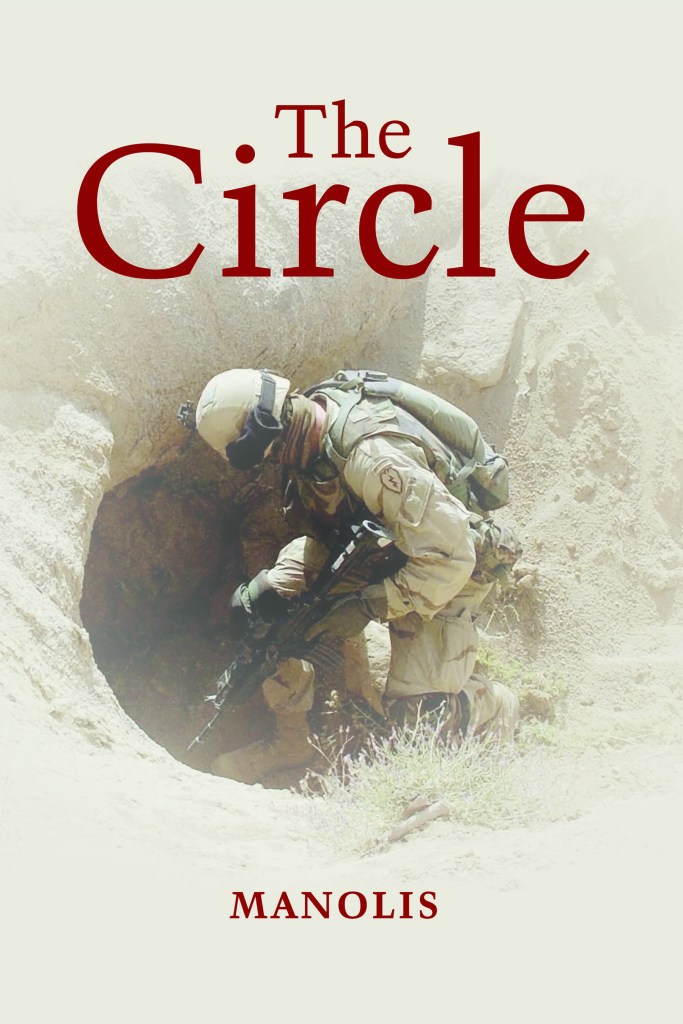
The Circle, novel, Libros Libertad, 2011
Vernal Equinox, poetry, Ekstasis Editions, 2011
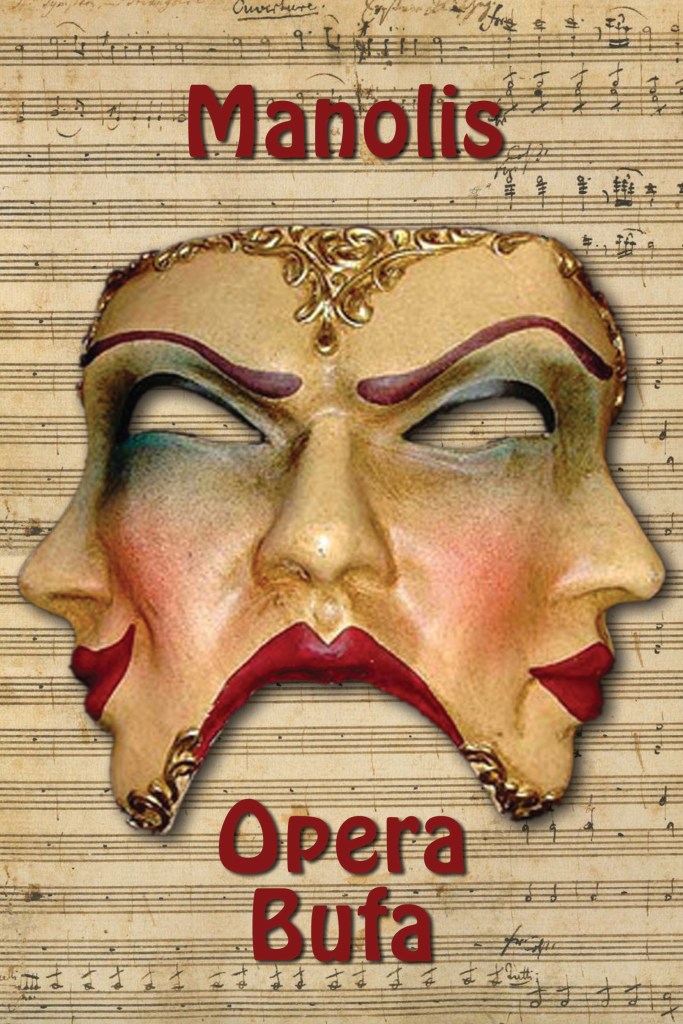
Opera Bufa, poetry, Libros Libertad, 2010
Vespers, poetry by Manolis paintings by Ken Kirkby, Libros Libertad, 2010
Triptych, poetry, Ekstasis Editions, 2010
Nuances, poetry, Ekstasis Editions, 2009
Rendition, poetry, Libros Libertad, 2009
Impulses, poetry, Libros Libertad, 2009
Troglodytes, poetry, Libros Libertad, 2008
Petros Spathis, novel, Libros Libertad, 2008
El Greco, poetry, Libros Libertad, 2007
Path of Thorns, poetry, Libros Libertad, 2006
Footprints in Sandstone, poetry, Authorhouse, Bloomington, Indiana, 2006
The Orphans - an Anthology, poetry, Authorhouse, Bloomington, Indiana, 2005
Translations by Manolis
Idolaters, a novel by Joanna Frangia, Libros Libertad, 2014
Tasos Livaditis-Selected Poems, Libros Libertad, 2014
Yannis Ritsos-Selected Poems, Ekstasis Editions, 2013
Cloe and Alexandra-Selected Poems, Libros Libertad, 2013
George Seferis-Collected Poems, Libros Libertad, 2012
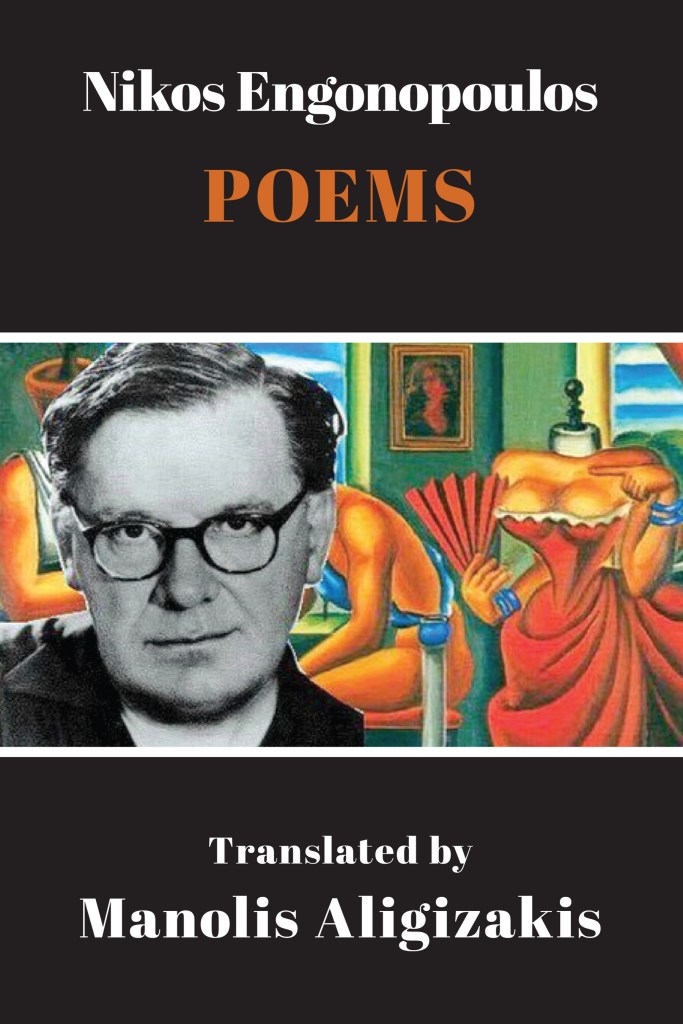
Yannis Ritsos-Poems, Libros Libertad, 2010
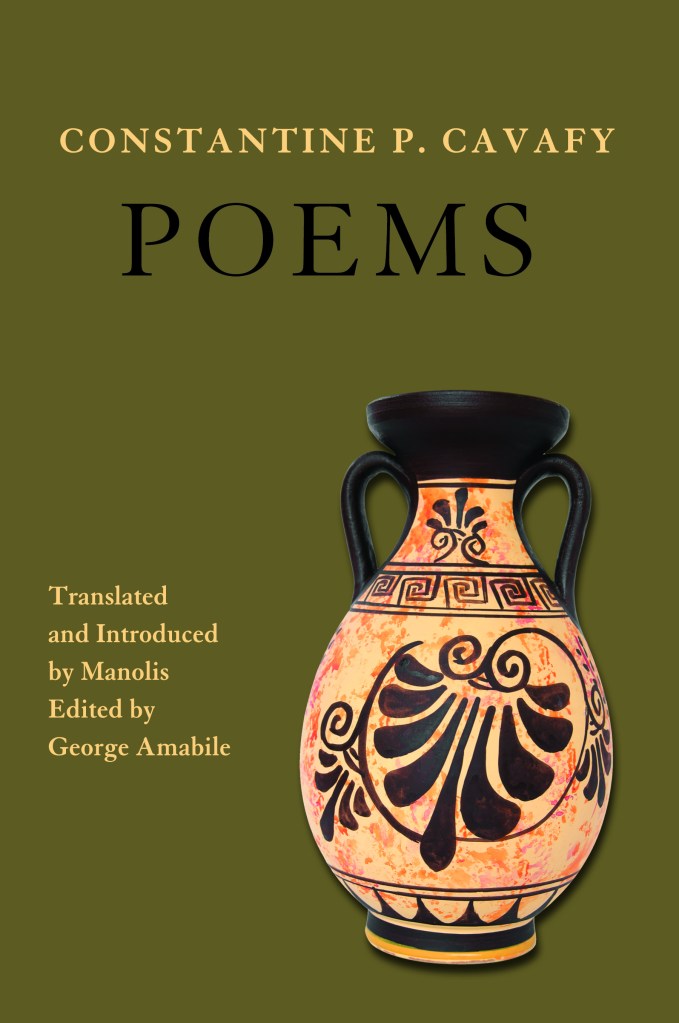
Constantine P. Cafavy - Poems, Libros Libertad, 2008
Cavafy-Selected Poems, Ekstasis Editions, 2011
Books in other languages
Eszmelet, (Hungarian), poetry by Manolis Aligizakis, translated into Hungarian by Karoly Csiby, AB-ART, Bratislava, Slovakia, 2014
Hierodoules, (Greek), poetry, Sexpirikon, Salonica, Greece, 2014
Yperanthropos,(Greek), poetry, ENEKEN Publications, Salonica, Greece, 2014
Übermensch (German), poetry by Manolis Aligizakis, translated into German by Eniko Thiele Csekei, WINDROSE, Austria, 2014
Nostos si Algos, (Romanian) poetry by Manolis Aligizakis, translated into Romanian by Lucia Gorea, DELLART, Cluj-Napoca, Romania, 2013
Tolmires Anatasis, (Greek) poetry, GAVRIILIDIS EDITIONS, Athens, Greece, 2013
Filloroes, (Greek ) poetry, ENEKEN PUBLICATIONS, Thessaloniki, Greece, 2013
Earini Isimeria, (Greek) poetry, ENEKEN PUBLICATIONS, Thessaloniki, Greece, 2011
Stratis o Roukounas, (Greek) novel, MAVRIDIS EDITIONS, Athens, Greece, 1981
Magazines
Canadian Fiction Magazine—Victoria, BC
Pacific Rim Review of Books—Victoria, BC
Canadian Poetry Review—Victoria, BC
Monday Poem, Leaf Press-Lantzville, BC
The Broadkill Review, Milton, Delaware
Ekeken, Thessaloniki, Greece
Envolimon, Beotia, Greece
Annual Literary Review, Athens, Greece
Stigmes, Crete, Greece
Apodimi Krites, Crete, Greece
Patris, Crete, Greece
Nyxta-Mera, Chania, Greece
Wallflowers, Thessaloniki, Greece
Diasporic Literature Spot, Melbourne, Australia
Black Sheep Dances, California, USA
Diasporic Literature Magazine, Melbourne, Australia
Spotlight on the Arts, Surrey, BC
Barnwood, International Poetry Magazine, Seattle, USA
Unrorean, University of Maine, Farmington, Maine, USA
Vakhikon, Athens, Greece
Paremvasi, Kozani, Greece
Szoros Ko, Bratislava, Slovakia
Mediterranean Poetry, Sweden
Apostaktirio, Athens, Greece
Life and Art, Athens, Greece
Logos and Images, Athens, Greece
Contemporary Writers and Thinkers, Athens, Greece
Palinodiae, Athens, Greece
Royal City Poet’s Anthology, 2013, New Westminster, BC, Canada
To parathyro, Paris, France
Ragazine C.C, New Jersey
Artenistas, Athens Greece
Deucalion the Thessalos, Greece.
Literary Lectern, Athens, Greece
Homo Universalis, Athens Greece
Pleasant News In your mind all night long, sleepless, you promised not to cry to go and arrange flowers in a plastic vase fill it with water from the cemetery fountain you promised not to cry perishable hopeless hope like that first time in the school yard, grade one, he squeezed your fingers emotional defeat for the strong grip of the boy you fell in love and married. How often do you visit the grave of your beloved bringing tales of laughter and never a single sad story?
Sure, he had been gone for many years and there was no doubt that the Circle H held some harsh memories for him. At the same time, there was no doubt about it: for him, Joel Hooper, the Circle H was home. And if there was any doubt in his mind, it seemed as if nature was reassuring him that he was home with a magnificent display of a spectacular sunset awash in all kinds of tones of baby blue and soft pastel pinks. This truly was the legendary land of the living skies. Alive with all kinds of colors. The kinds of colors that were capable of temporarily extinguishing even the gravest worries from one’s mind. Two days after his trip into Willow Springs for the mail, he was back up in the hills, sitting on the big buckskin gelding surveying what must be close to fifty head of Smith’s cattle helping themselves to his grass. This time he could see where the fence was down. The cattle had torn the fence down to get at the richer grass in his pasture. Poor creatures, Joel thought. They must be half-starved with the slim pickings they have in their own pasture. With all of the land that Smith has, he must have some better pasture to move these cattle to. What was he waiting for? For their ribs to show? Heck, some of them were at that stage already. Joel would be the first to admit that he did not know much about cows, but he did know enough to realize that this was a sad and sorry lot of cattle. Realizing that this was going to be more of a major production than his earlier experience that involved only three heifers, Joel rode the buckskin back to the ranch and solicited the help of Harry and Tanya. Harry headed up to the pasture in the old truck, which he had stocked with a few fence posts, a bale of barbed wire, and all of the fencing equipment, including a wire stretcher and post-hole auger. Tanya was just about to finish working with her last horse of the day, a little bay mare, so she rode her up to the hills alongside Joel on the buckskin. On the way to the fence, Joel and Tanya started to round up the intruders, and in the distance, Harry was busily repairing the fence.
“I’m cold, and I’m hungry. I don’t want to go no more. Rachael, I can’t walk no more.” Pulling his hand from hers, he fell to the ground and sat in a shivering little heap, the toy truck clasped in both arms. “Get up, Bobby, come on, we have to keep movin’.” She remembered the lunch bag that Ronnie had taken from her to carry. “We’ve got food; c’mon, get up and we’ll eat a sandwich while we’re walking.” Ronald handed the bag over, and bent to lift the little boy to his feet. “Here, Bobby, I’ll carry you piggy-back. Get on my shoulders.” With Bobby on his back, he set off again. Rachael clutched her doll under one arm as she opened the sack of food. She had started to pull the jam sandwiches out when she heard her cousin’s excited yell. “We’re there, Rachael. See – there’s your neighbor’s house. And look, there’s your place just ahead.” He began to hurry, the weight of the child on his shoulders no hindrance to his renewed energy. Rachael shoved the sandwich back into the bag, and ran to catch up to them. She strained her eyes in the murky light so that she could better see the house. And there it was – her home. She thought she had never seen anything so beautiful in all her life. Exhilarated, she ran ahead towards the front door. But, as her feet left the sidewalk to turn onto the path, she realized something didn’t feel right. She looked down. Where once a weed covered path led to the house, a concrete walkway clear of snow made an easy approach to the porch – a porch no longer in a state of disrepair, but standing straight with a coat of bright yellow paint. The steps leading up to it were new, and were also made of concrete. Rachael came to a stop, her mouth hanging open, her eyes wide and staring. She became aware that Ronnie had come up beside her. “Wow,” he breathed, as he lowered Bobby to the ground. The little boy stared at the house, then glanced around. “Where are we? Rachael, this ain’t our house.” Rachael wavered between excitement and confusion as panic seized her. She turned to Ronald, a question in her eyes. His look did not reassure her. “D’ya think maybe your dad has moved away from here?”
it’s best for their morale, for their belief in the rationality of what they do every day, and for their steadfastness in moving ahead. He has been around these people and this agency for a long time since leaving Baghdad, since the days he thought he had a good future with the CIA. Time has passed along with his belief in a good future. What went wrong? He has wondered many a time; Ibrahim is right. Bevan knows deep in his heart that Ibrahim is right. The problem is what the agency does and what his department does is often questionable. This has troubled him for a while. He has a hard time understanding the reasoning behind decisions taken that are based on a mounting fear in the psyche of the American people. He has been abroad for many years in which he has come across people of many different nationalities; Muslims and others and they are seldom the way they have been portrayed by the administration and by the Ameerican media at the best of times. Following the end of the term of the “war president” the people elected a different party and the stand of the country abroad softened a bit, but after a couple of terms they were back at the same old doctrine of pre-emptive strikes whenever it felt right, and Bevan knows that’s not the best approach. Sometimes it’s better to sit and talk to a person instead of unleashing the power of the killing machine and later trying to find answers to questions you never asked to begin with. He knows something has to be done about all this. Yet there are times when he doubts even himself, even the comments from Ibrahim, his good friend. Does he doubt his friend? A number of times he has thought about that, as well. After a while his mind gets stuck on the idea that something has to be done with this department, something has to change; it cannot keep on going like this for ever, it cannot keep on going on with the killings and the atrocities. Yes, he knows, something has to change. He has tried over the past five or six years to change the mentality of a number of people whom he has talked to; but has found it difficult to convince most of the people in higher positions that what they do and how they approach things is wrong. Some seem to thrive on other peoples’ misery and cannot suddenly change direction because Bevan Longhorn wants it. He knows the only way something will ever change is when something dramatic happens. Bevan has been thinking about that for quite a while. Ibrahim is right; substantial change takes place only when dramatic events precede, like the attack in New York in 2001. He takes a copy of the memo he has issued to his personnel and puts it in his wallet. He closes the file and calls his secretary to pick it up. Then he finishes eating his sandwich and asks Dorothy to remove his cold coffee.
“In one way they were right,” Michael interrupted. “Yes, that’s true enough,” Caitlin agreed. “The doctor tried to tell the people it was epilepsy, but they said that epilepsy was just a doctor’s big word for seizure by the Devil. Then a fishing boat went down in a storm with the loss of all hands. The people in the fishing village blamed Padraig. They dragged him from the doctor’s house, but on the way to the harbour, where they might have drowned him, he suffered another seizure. He was writhing on the ground and foaming at the mouth when my father rescued him. The doctor agreed with my father that the best thing for his own safety was to let Padraig go.” “What a terrible life that poor man has had,” Michael observed. “Only the first dozen years,” Caitlin said. “He was twelve when he came here.” “So he lived with the doctor and his wife for three years?” “About that, yes. But he was mostly confined to their house. Children stoned him one day when he went outside.” “Imagine being stuck in a house for three years.” “It was a lot better than the house he came from. The doctor continued his education.” “Padraig’s education?” “Yes.” “What do you mean, ‘continued’ it?” “His mother, the school-teacher, educated him herself as best she could under the circumstances in her brother’s house. She did a good job of it too. Padraig is a clever man. A very quick learner.” “You should know, shouldn’t you?” Michael said. “You spent a lot of time over his books too, as I’ve heard.” “I learned as much from Padraig as he did from me,” Caitlin said modestly, but honestly. “Old Shaughnessy, the schoolmaster, didn’t know what to make of Padraig. I did. I taught him what I could. Except for theology.” “Theology?” This was a new word for Michael. “The study of religion.” “I see.” “Padraig was quite well versed in that. The doctor or his wife must have known a lot about it. Padraig actually taught himself, Michael, in between the odd jobs he did for my father. He did well enough to get to university. After that there was no stopping him.”
Double Checking the Signals on the corners of the shadow the eyes got burned in the most unbelievable ferocity of the walls of the zodiac Roxane lust that charges as if the result was never mentioned hope, curse and flesh put together the awe of sleep they hold the lips tightly shut they forget of trickery in lustful mysteries the dual salvation commands to the dusk the winds raise the spinning wheel hides us attracts us wants the stranger’s passion from us the pain of the material world in the honeycombs of yesterday the rose, like a true styptic the secret serenity of the day the fast symbolic tissue band of light, of silence they feel nostalgic for the escapee who will be released and steal and hide among the leaves the body that was truly loved
Cyclamen With the first sliver of sunlight, cyclamen unfolds petals in the rock’s schism, the breeze chants a hymn before the virgin light, and the bluish window, like the verse of a faint poem, observes the dawn as I courageously try to balance life after your death —Get up to gather the leaves of the big oak. They won’t go into the recycling bag on their own Rose in the vase leans like a star on the right crest of the sky, the lock of the door remembers of all the little songs it has locked outside, and I pray to His majesty to bring you back to me —If you need three recycling bags, I have more in the storage room Closer to my retina, I discover a tear that will flow like a ripened fruit, rebellious molecules dancing in a frenetic mode as if to redefine Terpsichore’s flow, the brownish finch discovers our birdfeeder and takes control of his hunger — Tell me what is on your mind, and you ignore me today? The colourful dawn paints idols and symbols onto my retinas, and I can almost hear your footsteps, my beloved, echoing on the gleaming floor of the terrace, reminding me of the need to have you — You don’t care whether I talk to you or not, do you?
a sweet humming whisper and my fingers closed around the aluminium body shutting off the little air holes that made it sing. I stuffed it into my shirt pocket and my fingers brushed against the last Spud menthol I’d forgotten to smoke that afternoon after baseball. I pulled it out and straightened it carefully into a limp tube that dribbled dry tobacco from its open end. Scary stuff, lighting up in front of your own house, but what the hell. My scalp came alive with little electric maggots, wriggling. I found some matches in my pants. The end of the Spud flared and settled into a hot core that let sparks off in the breeze when I sucked on the cork tip. I put one foot up behind me against the fence, and the movie came on in my head. My eyes narrowed; my ears sifted the sounds of the city for clues. Then suddenly they were there, the big boys. Joey comes up to me, all excited and talking like he wants everybody on the block to hear. “’ey, Georgie, Pasquale wants you to go to D’Amato’s an get im four cansa Ballantine ale.” He presses a damp, crumpled bill into my palm and says it again. “Your nonno, ‘ey, he wants you to get ‘im four Ballantine’s.” He winks at me, and gives me an elbow. He laughs. His eyes are heavy lidded and his face is damp with sweat. He’s been talking loudly at me so the neighbours can hear, and now he makes a face that says to his buddies, it’s cool, don’t sweat it. I remember that look from dozens of Saturday matinees. I feel the damp currency in my hand. I know there’s something wrong with all this, but I can’t figure it out. Then he bends close to my ear and tells me to meet them in the park. Sometimes Nonno Pasquale would come and stay with us. On a shelf in the pantry he kept this little tin pail with a lid he’d give me to go and get beer in. The guy behind the bar at D’Amato’s, Gioffo, an old guy, but not as old as Pasquale, always thought I was worth a smile, this little kid with a beer pail, and he knew my nonno from years ago, so he’d wink at me and fill it up and give me a Sarsparilla on the house, and I’d run back home so the foamy draft wouldn’t get warm in the sun, and my grandfather would laugh and give me a nickel, and pinch my cheek and tell my mother what a prize she had for a son. But I never saw him drink from a beer can, ever. Or even a bottle. Still, it was tonight, and they were having a party in there, and what did I know. So I marched importantly into D’Amato’s Bar & Grill.
Dangerous Things Said Myrtias (a Syrian student in Alexandria, during the reign of Augustus Constans and Augustus Constantios, partly pagan, partly Christian); “Strengthened by theory and by study I shall not fear my passions like a coward. I shall give my body to carnal delights, to the pleasures we dream about, to the most daring erotic desires, to the lascivious urges of my blood, without any fear, because, whenever I choose, and have the will, strengthened as I shall be by theory and by study— at the critical moment I shall find my spirit, as it was before, ascetic.”
Eighteenth Hour I halt my straddle before yellow emotion opposite a well-preserved church echoing with blessings and phony wishes for everlasting peace and lifting the veil of opulent kisses blowing like dynamite Eros is transformed to stigma degraded by arrogance of critics stalled in error time literate fanatics the dream bled to phlegmatic negligence puffy cloud none looks at below masses graced by folly endless self-love in spite of solid advice from erudite Death who has seen the evidence yet the belligerent mind guides its faithful to the steps of immortality as all others just die pointless deaths observing an opera bufa as every breath drawn hangs like a half-open eyelid observing benevolent acts exulting bigotry promoting the sin-turned-blessing scaffold dropping noosed heretics through the hole like monotonous drips from the gutter after rain every virulent thought done up to splendorous diction and meditating olive branches ask ‘why?’ as the percuss of breaking spines spits emphatically: who cares?





 Manolis Aligizakis