Cretan Canadian Poet, Author, Translator, Publisher
Author: vequinox
BIOGRAPHY
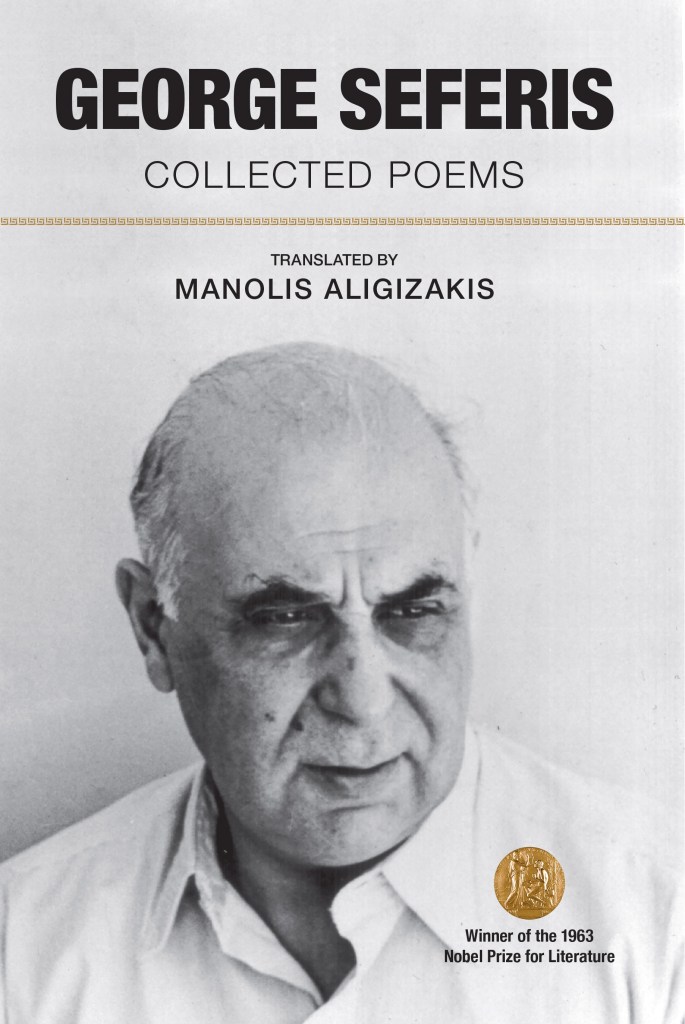
Manolis (Emmanuel Aligizakis) is a Greek-Canadian poet and author. He was recently appointed an honorary instructor and fellow of the International Arts Academy, and awarded a Master’s for the Arts in Literature. He is recognized for his ability to convey images and thoughts in a rich and evocative way that tugs at something deep within the reader. Born in the village of Kolibari on the island of Crete in 1947, he moved with his family at a young age to Thessaloniki and then to Athens, where he received his Bachelor of Arts in Political Sciences from the Panteion University of Athens. After graduation, he served in the armed forces for two years and emigrated to Vancouver in 1973, where he worked as an iron worker, train labourer, taxi driver, and stock broker, and studied English Literature at Simon Fraser University. He has written three novels and numerous collections of poetry, which are steadily being released as published works. His articles, poems and short stories in both Greek and English have appeared in various magazines and newspapers in Canada, United States, Sweden, Hungary, Slovakia, Romania, Australia, and Greece. His poetry has been translated into Spanish, Romanian, Swedish, German, Hungarian languages and has been published in book form or in magazines in various countries. He now lives in White Rock, where he spends his time writing, gardening, traveling, and heading Libros Libertad, an unorthodox and independent publishing company which he founded in 2006 with the mission of publishing literary books. His translation book “George Seferis-Collected Poems” was shortlisted for the Greek National Literary Awards the highest literary recognition of Greece.
Distinguished Awards
Winner of the Dr. Asha Bhargava Memorial Award, Writers International Network Canada, 2014
“George Seferis-Collected Poems” translated by Manolis, shortlisted for the Greek National Literary Awards, translation category.
1st International Poetry Prize for his translation of “George Seferis-Collected Poems”, 2013
Master of the Arts in Literature, International Arts Academy, 2013
1st Prize for poetry, 7th Volos poetry Competition, 2012
Honorary instructor and fellow, International Arts Academy, 2012
2nd Prize for short story, Interartia festival, 2012
2nd Prize for Poetry, Interartia Festival, 2012
2nd Prize for poetry, Interartia Festival, 2011
3rd prize for short stories, Interartia Festival, 2011
Books by Manolis
Autumn Leaves, poetry, Ekstasis Editions, 2014
Übermensch/Υπεράνθρωπος, poetry, Ekstasis Editions, 2013
Mythography, paintings and poetry, Libros Libertad, 2012
Nostos and Algos, poetry, Ekstasis Editions, 2012
Vortex, poetry, Libros Libertad, 2011
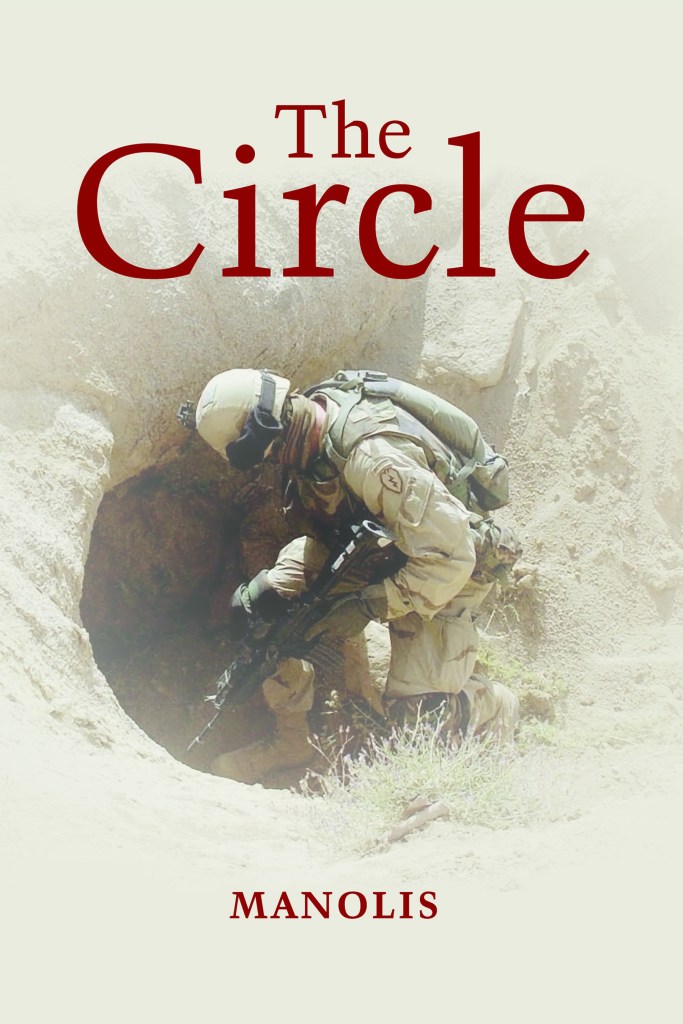
The Circle, novel, Libros Libertad, 2011
Vernal Equinox, poetry, Ekstasis Editions, 2011
Opera Bufa, poetry, Libros Libertad, 2010
Vespers, poetry by Manolis paintings by Ken Kirkby, Libros Libertad, 2010
Triptych, poetry, Ekstasis Editions, 2010
Nuances, poetry, Ekstasis Editions, 2009
Rendition, poetry, Libros Libertad, 2009
Impulses, poetry, Libros Libertad, 2009
Troglodytes, poetry, Libros Libertad, 2008
Petros Spathis, novel, Libros Libertad, 2008
El Greco, poetry, Libros Libertad, 2007
Path of Thorns, poetry, Libros Libertad, 2006
Footprints in Sandstone, poetry, Authorhouse, Bloomington, Indiana, 2006
The Orphans - an Anthology, poetry, Authorhouse, Bloomington, Indiana, 2005
Translations by Manolis
Idolaters, a novel by Joanna Frangia, Libros Libertad, 2014
Tasos Livaditis-Selected Poems, Libros Libertad, 2014
Yannis Ritsos-Selected Poems, Ekstasis Editions, 2013
Cloe and Alexandra-Selected Poems, Libros Libertad, 2013
George Seferis-Collected Poems, Libros Libertad, 2012
Yannis Ritsos-Poems, Libros Libertad, 2010
Constantine P. Cafavy - Poems, Libros Libertad, 2008
Cavafy-Selected Poems, Ekstasis Editions, 2011
Books in other languages
Eszmelet, (Hungarian), poetry by Manolis Aligizakis, translated into Hungarian by Karoly Csiby, AB-ART, Bratislava, Slovakia, 2014
Hierodoules, (Greek), poetry, Sexpirikon, Salonica, Greece, 2014
Yperanthropos,(Greek), poetry, ENEKEN Publications, Salonica, Greece, 2014
Übermensch (German), poetry by Manolis Aligizakis, translated into German by Eniko Thiele Csekei, WINDROSE, Austria, 2014
Nostos si Algos, (Romanian) poetry by Manolis Aligizakis, translated into Romanian by Lucia Gorea, DELLART, Cluj-Napoca, Romania, 2013
Tolmires Anatasis, (Greek) poetry, GAVRIILIDIS EDITIONS, Athens, Greece, 2013
Filloroes, (Greek ) poetry, ENEKEN PUBLICATIONS, Thessaloniki, Greece, 2013
Earini Isimeria, (Greek) poetry, ENEKEN PUBLICATIONS, Thessaloniki, Greece, 2011
Stratis o Roukounas, (Greek) novel, MAVRIDIS EDITIONS, Athens, Greece, 1981
Magazines
Canadian Fiction Magazine—Victoria, BC
Pacific Rim Review of Books—Victoria, BC
Canadian Poetry Review—Victoria, BC
Monday Poem, Leaf Press-Lantzville, BC
The Broadkill Review, Milton, Delaware
Ekeken, Thessaloniki, Greece
Envolimon, Beotia, Greece
Annual Literary Review, Athens, Greece
Stigmes, Crete, Greece
Apodimi Krites, Crete, Greece
Patris, Crete, Greece
Nyxta-Mera, Chania, Greece
Wallflowers, Thessaloniki, Greece
Diasporic Literature Spot, Melbourne, Australia
Black Sheep Dances, California, USA
Diasporic Literature Magazine, Melbourne, Australia
Spotlight on the Arts, Surrey, BC
Barnwood, International Poetry Magazine, Seattle, USA
Unrorean, University of Maine, Farmington, Maine, USA
Vakhikon, Athens, Greece
Paremvasi, Kozani, Greece
Szoros Ko, Bratislava, Slovakia
Mediterranean Poetry, Sweden
Apostaktirio, Athens, Greece
Life and Art, Athens, Greece
Logos and Images, Athens, Greece
Contemporary Writers and Thinkers, Athens, Greece
Palinodiae, Athens, Greece
Royal City Poet’s Anthology, 2013, New Westminster, BC, Canada
To parathyro, Paris, France
Ragazine C.C, New Jersey
Artenistas, Athens Greece
Deucalion the Thessalos, Greece.
Literary Lectern, Athens, Greece
Homo Universalis, Athens Greece
Timer Lamp on the side table timer switches at the perfect hour every dusk the room shadows each night the lamp glows you bask in the grand house all its sturdy windows and when you think escape automation clicks like clock works the sting of your guilt déjà vu and you prod eternity or where your grace leads you
And gypsies came who built their lives like their houses 86 founded on horse carriages rolling along and pulled by cows that have something of the elephants and of the travelling ships and as they groan and echo passing over rough paths and streets when suddenly houses stop with the panting gypsies close behind they resemble as something holy and great like Epitaphios or the Holy Arc. Here are the Turkish gypsies who sleep in tents, the pure race. They always travel in plains and in deserts the ones with their invincible souls their straight and erect bodies and the wildness of their souls shines in their lighted eyes the soft and the powerful as if made of steel and sting; they’re joyous in the snow and in the rain, in the sunshine they celebrate the best festival on bare earth as Hades finds the man naked and chokes him to death in the ripped tent whipped by the wind that charges and wilts men as if they’re flowers.
An old woman crosses herself: Lord of all Powers; of the Western Powers of course A street sweeper shivers in the cold his teeth rattle playing a subterranean angry song hey, bosses who yelled? No one it blows Workers in the produce market, laborers using chainsaws, workers unloading fertilizers, longshoremen, laundress, quarry workers the crowd of workers carrying the flour sacks, eighty kilos each, old women cleaning the public washrooms with their eyes swollen and red from the ammonia the wind howls in side streets, squares train stations, electric wires, bells, the upcoming years howl Two workers talk in a low tone voice you can’t hear what they say you only see their lips moving like hands ready to strike A shining car stops two bald-headed men and a woman with a big ass disembark the nation demands sacrifices the banks spread over the wide sidewalks like prehistoric beasts that digest their prey
Neutral Neutral colour of the page before the words inviolable void uncommitted absence plan for a dream unrealized before your hand takes the pencil and draws emptiness on the whitewash page like the immaculate skin of a conflagrated woman you touch painting of a mountain peak adorned by snow and you say, before I write a single word the poem sings eloquently
“But aren’t you trying to change souls with your sermons? Aren’t you trying to make them more acceptable to your God?” Finn leaned forward on the table, his massive hands cupped around his glass of wine. “The soul cannot be so untouchable.” “With the word of God one can indeed reach into the soul,” Padraig consented. “But no instrument devised by man has the same power.” “Ah, we have a conflict here,” said Finn. “Sweeney, fill up my glass and top up your own. Any of you others care to join us, help yourselves to whatever you want. That stage is getting set again. See why I prefer to act than to watch?” “You don’t act, Finn,” Sweeney observed; “you direct.” He poured the wine for Finn. The last drops from the decanter he shook into his own glass. His sunset face was blazing crimson, with purple only in the shadows. He replaced the empty decanter in the centre of the table and turned up the wick of the low-burning lamp. Shadows flickered on the walls, on the dark sideboard and the cabinets, on the tall clock and the pale porcelain of the Victory. “So, Padraig,” Finn went on, “you think the word is mightier than the surgeon’s knife.” “The Word that was in the beginning, yes; the Word of God that was made flesh as Jesus Christ.” “What do you say to that, young Clifford?” Finn asked. “Does the Word of God tell us more of man and nature, life and death, than your brain and blade will ever reveal?” “You’re confusing two separate realms, Finn,” Clifford argued in a precise, dry voice. “The brain is a material thing. We probe into it, repair it, understand it, with the aid of material instruments. The soul is immaterial. We change it, if we change it at all, with immaterial instruments: with words, thoughts, ideas, emotions, that reach it through the mind.” “Body and mind; matter and spirit; material, immaterial.” Finn repeated the words reflectively. “That sounds reasonable enough. Conflict resolved.” He sipped some wine, then looked at Clifford. “You say that the soul is reached through the mind. So you separate mind and soul?” Clifford looked around the table self-consciously. Michael was asleep with his head fallen forward on his chest. Seamus and Sweeney stared at their wine and looked as though they wished they too were asleep. Only Padraig, facing Finn across the length of the dish-and-bottle-laden table, stayed alert, leaning back in his chair with his left hand dangling and his right hand holding a half-emptied glass of wine.
“Yes, indeed. It’s terrible, Bevan, yet what do you think could be the cause of all this?” The Admiral doesn’t get the chance to answer right away, because the server brings their plates. When she walks away, Bevan tells Ibrahim that maybe Matthew’s death had a lot to do with his work. So much time away from home, away from his wife, from his daughter. “Who knows, perhaps our line of work is not meant for family people? Most don’t have the ability to cope with the pressure. They begin to show signs of stress and despair even from their early days on the job.” “Yes, perhaps some people don’t have the ability to cope with the pressure, deadlines, and demands of the system. Then maybe the problem is not the people. Have you ever thought of that?” “Yes, my old friend, I have thought of that many times.” They remain quiet for a while. Ibrahim raises his wine glass and toasts the Admiral. “This is to your good health, my old friend.” “And to yours, Ibrahim. May Allah bless you with many pleasant and healthy days…Have a good trip back home. Don’t forget I’m here and you may call me anytime.” Ibrahim has tears in his eyes, and looking deep into his friend’s eyes, says the only thing he cares for is his beloved son who lives here. He asks the Admiral to make sure nobody harms him or puts any impediment in his path. “As long as I am alive, you can count on that, my dear friend.” Then Ibrahim leads their conversation back to Matthew’s suicide. In his view, the problem hasn’t been the pressure; perhaps it isn’t even the people. It’s the agency and what the operatives are called on to do for the agency. It’s also what the other side does with the intelligence turned over to them. “You mean ‘The Circle’?” the Admiral asks. “Of course it is, my dear friend. Look inside yourself there where the answer lies. See how you feel about the results of your work. The other guys you work with are humans, too. The time comes when they crack, because of the guilt, because of all the anxiety, because of all the killings and destruction they help create. They see it in the daily news, they hear about it everywhere they go, they know what goes on when they see the dead or the maimed soldiers coming back home. Don’t think you are the only one who feels the misery of what you help create all over the world, my good friend. Perhaps this man collapsed under the same pressure of guilt and disappointment for all the years of killings and murders.” “Yes, perhaps that’s where the root of the problem is. That means we need to do something about it and bring about change.”
trying to meet you for years,” he said. Gruber carved decoys, many of which had made their way into Ken’s extensive collection. “Our paths have crossed many times,” he said. “But somehow we’ve never met. Now, unfortunately, we have to meet under circumstances that aren’t the best. I work for a credit company, and I have to cancel and pick up your gas card. I’m awfully sorry to do this.” “That’s fine,” Ken said. “You’re just doing your job. Come over now.” They talked, while consuming an entire bottle of Scotch, and became friends for life. Ron and his wife lived in a big house near Jericho Beach, that had separate living quarters on the ground floor. When Ken told him he had just lost his house, Ron suggested he move into their ground floor suite, and a few days later, Ken loaded his possessions into his truck and drove to Jericho Beach. Revenue Canada sent a letter demanding a large sum of money in back taxes on his real estate investments. Because he had never taken the money, but only reinvested it, it had never been taxed. Ken put the letter on his bureau. Another letter arrived and then another, until he had accumulated seventeen progressively threatening tax notices. The final one informed him he was being sued. Ken took the notices to his accountant who was as puzzled as Ken. Each one demanded a different sum of money. When they went to court, the lawyer for Revenue Canada made his statement. The judge turned to Ken. “Guilty or not guilty?” “Not guilty,” Ken said. “Impossibly and completely not guilty.” “How so?” “Your honour, if I may be allowed to approach the bench and present you with the situation in writing. But, before I do that, may I ask you a question in order to help clarify the situation?” “What if one were walking down the street,” he asked, “and came across a car lot, and spotted a car he fancied, and wanted to buy it, and the salesman didn’t know how much it cost? And what if he went to his sales manager and the manager, also, didn’t know how much it cost? And what if he went to the owner of the car lot and the owner didn’t know how much the car cost – would one be able to conclude a satisfactory transaction?” “Clearly not,” the judge said. “This would appear to be the same situation,” Ken said, handing the demand letters to the judge. “There are seventeen different notices here, which are completely confusing. There is no way, even according to the accountants I am acquainted with, to make head or tail of it. Every single one has a different figure on it: that makes no sense at all.” The judge studied the demands, his frown deepening. “As far as I’m concerned, I don’t owe the money,” Ken said. “I think you’re absolutely correct,” the judge said. “This is disgraceful.” And he threw the case out of court.
XXI We who started out on this pilgrimage looked at the broken statues we lost ourselves and said life is not so easily lost that death has unfathomable ways and his own special justice; that when we died standing on our feet like brothers inside the stone united in toughness and weakness the ancient dead have escaped the circle and have been reborn and smile in a peculiar silence.
Libeccio The anemograph caught fire confused wondering which direction to adopt Southeastern explosion or southwestern heatwave that gallops over the dunes of Africa and steady charges to come and engulf your body to explain its mysticism languorous upward pressure promiscuous desire lingering over the jasmine petals and on your lascivious curves while the midnight cock knowing the magic of lust under the moon’s direction calls his first lover and lost in the fire of your body, you moan and beg the north wind to come and rescue you
She could barely restrain herself from making a second public accusation. “You might get the answer to your question if you asked our friend, Gregorio,” I replied, looking at Gregorio instead of Josefa. Gregorio immediately understood. He grabbed Josefa by the arm to forcibly remove her. I stood rooted to the ground, hoping he would drag her away and that could be the end of it. But Josefa remained feisty and broke away from him, running to me with a pained expression. She leaned forward and whispered devilishly in my ear, so that only I could hear. “I know what happened at the river,” she said. “I know everything. I know you let her touch you!” I jerked back from her, as though she had slapped me in the face. The servant, she had seen me, and Josefa could barely contain the power she had over me. There was no point in trying to deny anything. I walked away, horrified by Josefa’s misplaced jealousy, and dumbfounded by my inability to eradicate her secret knowledge. Right then, I decided I did not want to learn whether Apacuana had bitten Josefa or not. There was a part of me that hoped she had.
In the morning, when Losada was notified of the incident, he preferred to dismiss it as mere female hysteria rather than discern which party was responsible. It was the prudent decision: to concentrate on completing his negotiations with the cacique Chacao. After mass, Losada ordered the captives brought to him and untied. “We want to be your friends. You see we have not harmed you,” Losada told Chacao. “We can decide to do this in peace, or we can do it in war. We are powerful. To show you my goodwill, I give you all your people back.” Chacao was a middle-aged man with deep lines running down the sides of his nose to his mouth in a permanent scowl. He did not answer, just stood there, hands folded in front of him. It was important for him not to appear grateful for Losada’s benevolence.






 Manolis Aligizakis