Cretan Canadian Poet, Author, Translator, Publisher
Author: vequinox
BIOGRAPHY
Manolis (Emmanuel Aligizakis) is a Greek-Canadian poet and author. He was recently appointed an honorary instructor and fellow of the International Arts Academy, and awarded a Master’s for the Arts in Literature. He is recognized for his ability to convey images and thoughts in a rich and evocative way that tugs at something deep within the reader. Born in the village of Kolibari on the island of Crete in 1947, he moved with his family at a young age to Thessaloniki and then to Athens, where he received his Bachelor of Arts in Political Sciences from the Panteion University of Athens. After graduation, he served in the armed forces for two years and emigrated to Vancouver in 1973, where he worked as an iron worker, train labourer, taxi driver, and stock broker, and studied English Literature at Simon Fraser University. He has written three novels and numerous collections of poetry, which are steadily being released as published works. His articles, poems and short stories in both Greek and English have appeared in various magazines and newspapers in Canada, United States, Sweden, Hungary, Slovakia, Romania, Australia, and Greece. His poetry has been translated into Spanish, Romanian, Swedish, German, Hungarian languages and has been published in book form or in magazines in various countries. He now lives in White Rock, where he spends his time writing, gardening, traveling, and heading Libros Libertad, an unorthodox and independent publishing company which he founded in 2006 with the mission of publishing literary books. His translation book “George Seferis-Collected Poems” was shortlisted for the Greek National Literary Awards the highest literary recognition of Greece.
Distinguished Awards
Winner of the Dr. Asha Bhargava Memorial Award, Writers International Network Canada, 2014
“George Seferis-Collected Poems” translated by Manolis, shortlisted for the Greek National Literary Awards, translation category.
1st International Poetry Prize for his translation of “George Seferis-Collected Poems”, 2013
Master of the Arts in Literature, International Arts Academy, 2013
1st Prize for poetry, 7th Volos poetry Competition, 2012
Honorary instructor and fellow, International Arts Academy, 2012
2nd Prize for short story, Interartia festival, 2012
2nd Prize for Poetry, Interartia Festival, 2012
2nd Prize for poetry, Interartia Festival, 2011
3rd prize for short stories, Interartia Festival, 2011
Books by Manolis
Autumn Leaves, poetry, Ekstasis Editions, 2014
Übermensch/Υπεράνθρωπος, poetry, Ekstasis Editions, 2013
Mythography, paintings and poetry, Libros Libertad, 2012
Nostos and Algos, poetry, Ekstasis Editions, 2012
Vortex, poetry, Libros Libertad, 2011
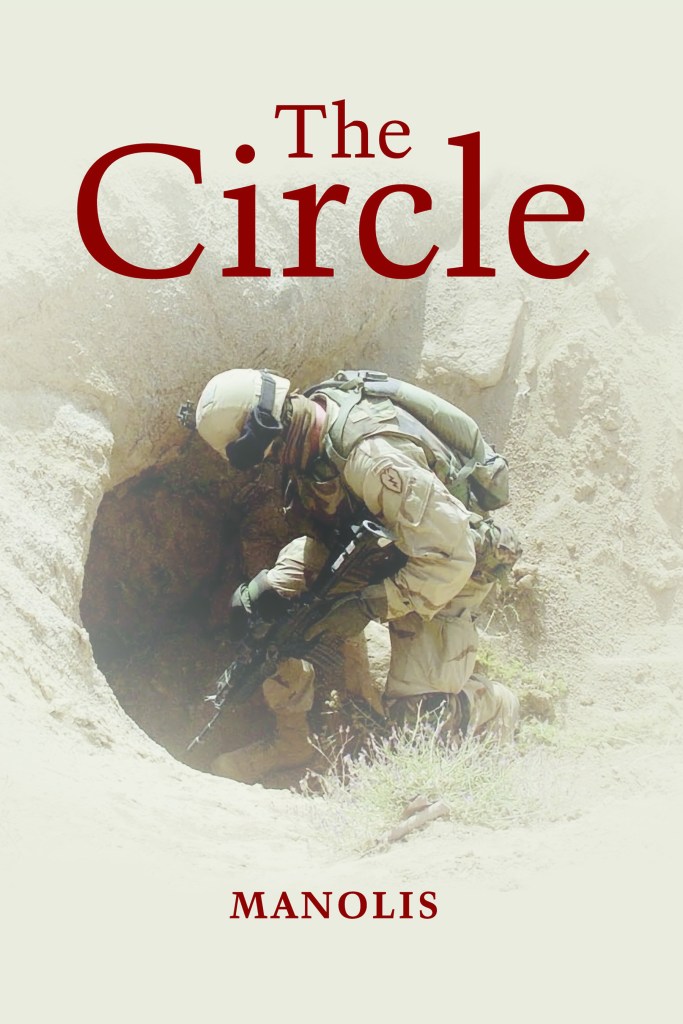
The Circle, novel, Libros Libertad, 2011
Vernal Equinox, poetry, Ekstasis Editions, 2011
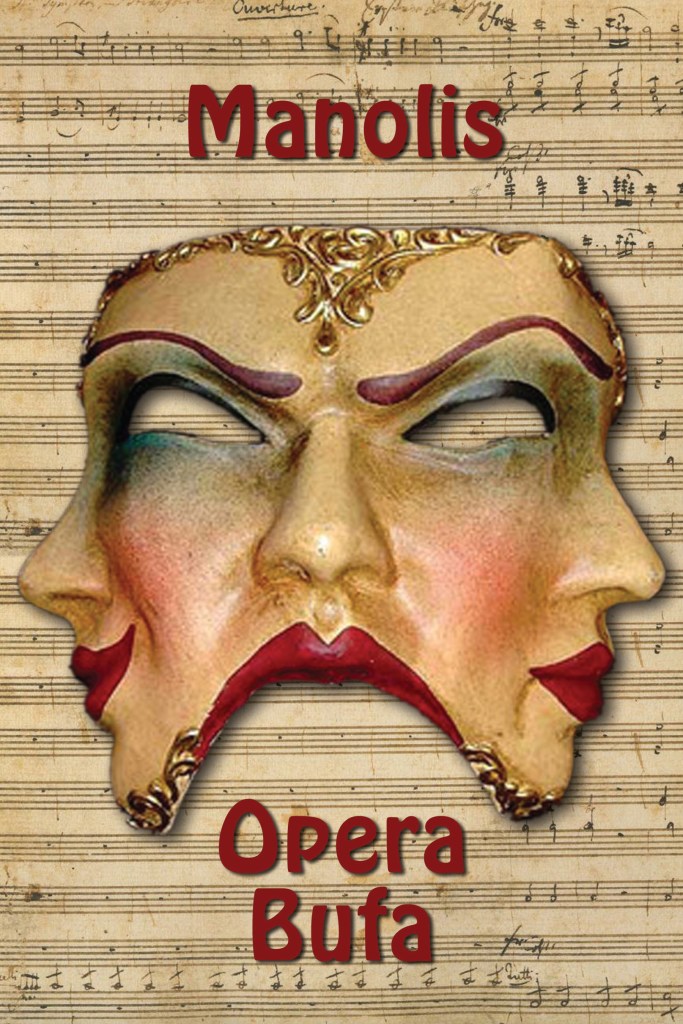
Opera Bufa, poetry, Libros Libertad, 2010
Vespers, poetry by Manolis paintings by Ken Kirkby, Libros Libertad, 2010
Triptych, poetry, Ekstasis Editions, 2010
Nuances, poetry, Ekstasis Editions, 2009
Rendition, poetry, Libros Libertad, 2009
Impulses, poetry, Libros Libertad, 2009
Troglodytes, poetry, Libros Libertad, 2008
Petros Spathis, novel, Libros Libertad, 2008
El Greco, poetry, Libros Libertad, 2007
Path of Thorns, poetry, Libros Libertad, 2006
Footprints in Sandstone, poetry, Authorhouse, Bloomington, Indiana, 2006
The Orphans - an Anthology, poetry, Authorhouse, Bloomington, Indiana, 2005
Translations by Manolis
Idolaters, a novel by Joanna Frangia, Libros Libertad, 2014
Tasos Livaditis-Selected Poems, Libros Libertad, 2014
Yannis Ritsos-Selected Poems, Ekstasis Editions, 2013
Cloe and Alexandra-Selected Poems, Libros Libertad, 2013
George Seferis-Collected Poems, Libros Libertad, 2012
Yannis Ritsos-Poems, Libros Libertad, 2010
Constantine P. Cafavy - Poems, Libros Libertad, 2008
Cavafy-Selected Poems, Ekstasis Editions, 2011
Books in other languages
Eszmelet, (Hungarian), poetry by Manolis Aligizakis, translated into Hungarian by Karoly Csiby, AB-ART, Bratislava, Slovakia, 2014
Hierodoules, (Greek), poetry, Sexpirikon, Salonica, Greece, 2014
Yperanthropos,(Greek), poetry, ENEKEN Publications, Salonica, Greece, 2014
Übermensch (German), poetry by Manolis Aligizakis, translated into German by Eniko Thiele Csekei, WINDROSE, Austria, 2014
Nostos si Algos, (Romanian) poetry by Manolis Aligizakis, translated into Romanian by Lucia Gorea, DELLART, Cluj-Napoca, Romania, 2013
Tolmires Anatasis, (Greek) poetry, GAVRIILIDIS EDITIONS, Athens, Greece, 2013
Filloroes, (Greek ) poetry, ENEKEN PUBLICATIONS, Thessaloniki, Greece, 2013
Earini Isimeria, (Greek) poetry, ENEKEN PUBLICATIONS, Thessaloniki, Greece, 2011
Stratis o Roukounas, (Greek) novel, MAVRIDIS EDITIONS, Athens, Greece, 1981
Magazines
Canadian Fiction Magazine—Victoria, BC
Pacific Rim Review of Books—Victoria, BC
Canadian Poetry Review—Victoria, BC
Monday Poem, Leaf Press-Lantzville, BC
The Broadkill Review, Milton, Delaware
Ekeken, Thessaloniki, Greece
Envolimon, Beotia, Greece
Annual Literary Review, Athens, Greece
Stigmes, Crete, Greece
Apodimi Krites, Crete, Greece
Patris, Crete, Greece
Nyxta-Mera, Chania, Greece
Wallflowers, Thessaloniki, Greece
Diasporic Literature Spot, Melbourne, Australia
Black Sheep Dances, California, USA
Diasporic Literature Magazine, Melbourne, Australia
Spotlight on the Arts, Surrey, BC
Barnwood, International Poetry Magazine, Seattle, USA
Unrorean, University of Maine, Farmington, Maine, USA
Vakhikon, Athens, Greece
Paremvasi, Kozani, Greece
Szoros Ko, Bratislava, Slovakia
Mediterranean Poetry, Sweden
Apostaktirio, Athens, Greece
Life and Art, Athens, Greece
Logos and Images, Athens, Greece
Contemporary Writers and Thinkers, Athens, Greece
Palinodiae, Athens, Greece
Royal City Poet’s Anthology, 2013, New Westminster, BC, Canada
To parathyro, Paris, France
Ragazine C.C, New Jersey
Artenistas, Athens Greece
Deucalion the Thessalos, Greece.
Literary Lectern, Athens, Greece
Homo Universalis, Athens Greece
Searching Have you seen my nest in barn’s upper beam just behind the middle post hid well from predators youthful eyes wondering in an abandoned building this post an observatory for owl and clever wind that dances grasses and her mind as she hunts for her young chicks begging on the beam for evening’s meal as the surprise of elements endures patient meditation on a lower post
Each morning they take a count of us; each evening we count the leftover plates the leftover grief in our eyes as the rain casts the dice with the policemen night falls and the whistles start echoing. Now we want to put our hands in our armpits to look whether a star gleams in the sky, to remember that face against the opening of the door but we can’t remember we have no time to remember we don’t have time but to stand tall and die. My beloved I perhaps feel cold when it rains I perhaps caress the crumbs of memory in my pockets my palms that once held you are still hot but I can’t return. How can I deny the piece of hardened bread that twenty of us shared? How can I deny my mother who expects from me a cup of sage tea? How can I deny our child who we promised a wedge of the sky? How can I deny Nikolas who was singing while they aimed to execute him? When I return we won’t have a lamp to light, we won’t know where to place our dream. We shall remain silent.
“Those people didn’t buy a car, did they Irv?” “They said they’d be back tomorrow, Mr. Torgerson.” “They won’t be back, Irv. They’ll go down the street to Pearson’s and buy a Mercury, maybe even a Lincoln, because you didn’t cinch that deal, Irv. You’ve got to cinch those deals, Irv.” “I do my best.” “Your best is going to have to get better, Irv. You call those people tonight and you get ’em back in here tomorrow. You tell ’em you’ll make a deal they’ll like, Irv. I want to see ’em sitting at that table signing things.” “They’re from up the river.” “You find ’em. You get ’em in here again. You sell ’em a Packard.” “I’ll do my best, Mr. Torgerson.” “I know you will, Irv.” The salesman turned back into the show room. Torgerson’s voice tracked him. “Irv, I just know you will.” Maybe it was because times were good, Torgerson thought, or maybe it was because the mayor job brought him attention, but Packard sales were up almost 20 percent over two years ago. A third of the way through his first term, he was mapping out his next campaign. Only I’ll really run, he thought. Last time was a fluke, I know that. Ken Spear, he’s the one who could take it away, but I don’t think he realizes it. Somebody will tell him. You can count on that, because a lot of people would like me out. I piss off too many of them. But, that’s what happens when you make waves in a little town. Torgerson looked up from his musing. Poodie James was passing in front of the window. Torgerson moved through the show room and out onto the sidewalk just as Poodie stopped his wagon and reached into the used car lot for a Coke bottle standing in front of a ’41 Ford Roadster. Torgerson charged over and stepped in front of him. “Get out of my lot,” he yelled. “Go on, get out of here. Go on.”
Il Pagliaccio With his pink face, his tardy pants, his perennially smiling lips, the pagliaccio* runs to the stage drawing an imaginary circle in front of kids who laugh especially when he pulls a kerchief out of his pocket, a green kerchief with no end and after he pulls three meters of endless fabric and focusing on the faces of the children the pagliaccio gets ready for his next act: he takes off his hat and turning it upside down he puts his hand in it and after three abracadabra he raises a snow-white rabbit in the air to the yelling and laughing kids as the pagliaccio, as happy as ever with his performance, disappears behind the big red curtain not forgetting his duty to the man, he once was, one who could reach the stars, who could transcend the flesh and touch the eternal, which, alas, he never did.
Chapter Eight The ringing of the alarm clock awakened Tyne. She opened her eyes to glare at the offending timepiece on the desk across the room. To heck with it. She closed her eyes and snuggled again into her pillow. Moe bounced from her bed and grabbed the clock to shut it off. “Come on, sleepyhead. Get out of that sack. Don’t you know what day this is?” Tyne forced her eyes open. Moe, standing in the middle of the room in her short nightshirt, stretched and yawned. “How can you sleep this morning? We’ve been waiting three years for this day.” She walked to the door to turn on the ceiling light. Tyne blinked and pulled the sheet up to shield her eyes from the sudden brightness. “What day … oh yeah, so it is. Our last day of training.” “You don’t sound very excited.” Moe grabbed her dressing gown from the chair and shrugged into it. “Believe it or not, I feel a little sad.” “Oh come on, Moon River. What’s to be sad about? We’ll still be at the Holy Cross if that’s what’s worrying you, and you’ll be doing what you like best – helping to cut people up.” Tyne got up, walked to the dresser and began to brush her hair. “I didn’t tell Curly when I saw her yesterday that I’m going to be working in surgery. I thought it would be like rubbing salt into the wound.” “That was good of you, but she’ll find out sooner or later. How’s she doing, anyway?” Tyne reached for her dressing gown. “Okay, I suppose.”
THE SEAGULLS FROM TRANSYLVANIA This thorough country called nature Lost breath of the heaven’s dragons And from the wide waters of the sea deep from the very beginnings, Even before the old Pannonian Sea Added its extensions here, Yes, this tenacious natural amphitheatre, Full of thick forests, Still silencing the Romans’ language, This Transylvania is Both the mountain shuddering with memory And the fairy tale of the eyes suggesting the morning, And especially the mild anxiety of some seagulls, By their generations’ adage, Becoming smaller and more grey than their ancestors, Living signs of the millennia, Of the seas fatally squeezed into rivers, In whose name there is a constant whisper: The Someş, the Mureş, the Criş, the Criş, the Criş5 … How could I not have recognized, Even if I had not known what they were, The thin quest of these Transylvanian seagulls
Gravely questioning the waves of my Criş River And floating almost weightlessly, As the poplar’s seeds fall; Who can know if the absolute Is not the forgotten song Of the Transylvanian seagull?
Tenth Canto I discover eloquence in ash falling like opened wishes of thirsty lips and marking my share of urgency I retract the curtain to reveal an orchestra and chorus harmonies in celestial reverb with the dynamism of a faceless entity that dresses itself in crimson riding greed on some apocalyptic horse carrying conversion coercion assimilation proselytizing consequence of infidels the necessity of martyrdom which started in primeval depths of Miseria Dura the end justifying any means with colorful insignia of archons and beacons of lords and crests flying high potent cross banners unfolding speed to deep grooves and flattening the firm virgin’s breast the zealot’s façade transforms into wrinkled face of the moon over me standing on the steep-cut road indifferent to his imminent demise I witness a beheading and everything shifts right powered by a limited company acting as if controlling infinite growth as if reaching no end as the wise dandelion retains bitterness for blood virulence spread on faith’s path unflinching curtain asks the same question and the off-tune chorus answers: I can do better
She’s proud of her body and doesn’t hesitate to show it off. She takes her seat and orders a glass of red wine, as well. When seated and relaxed, she looks at Emily. Suddenly, she brings her hand to her mouth and says, “Oh, my God, what is it? Tell me it isn’t—Emily, what’s going on?” Emily leans a bit closer. “What is it? I’m just a happy woman. That’s all.” “Who is he? Tell me, I know there’s someone. Just tell me who he is!” Emily laughs at her, and admits, “Yes, there is someone. I’m crazy, Cathy! I’m crazy to feel this way at my age. I’m crazy, you can say that!” “Oh no, love, I don’t think you’re crazy at all. Just take a deep breath, and tell me all about it.” Emily sips her wine and talks slowly, as if afraid of people in the restaurant hearing her talk, or as if she is afraid Matthew will hear from where he is. She’s almost whispering and Cathy has to lean in close to understand her. At one point, Cathy interrupts her and says, “My dear Emily, I have been wondering for a long time when this moment would come. You know, with Matt always so busy working and out of town. I’m proud of you. Life is for everyone, you know? We all deserve a share in the sun. The question, of course, is when are you going to tell Matt? Oh yes, one more question. You lucky girl, a thirty-something-year-old? Is that Talal’s age?” Emily laughs again and they both sip their wine. They have ordered salads and when the waiter serves them they begin eating with relish. As they eat, Cathy asks, “I suppose no one knows so far? Does Jennifer know?” “No, no one knows other than you. You must keep it from Bob. I don’t really know which way things are going to go or which direction I’m going to take right now.” Cathy leans closer to her, “There is only oneway to go in things like this, darling, and that is the way of the heart. Don’t let fear lead you to failure; don’t fail me and don’t fail yourself. Unless you want to regret it later. One fine day, you’ll wake up with tears in your eyes and ask the terrible question in front of the mirror.” “What do you mean? What question?” “The question that says, ‘how stupid was I not to take the chance when I had it?’ That’s the question, darling. You see, by that time it’s too darn late, even to cry about it.” Emily looks at her and admits Cathy has a good point. Deep in her heart, she already knows what she wants to do, yet the fear is there, staring at her with a sardonic smile. Thinking about it makes her spine squirm. How is she going to find the courage to do what she wants?
“We can’t go back.” Bobby pulled away from her. “Why can’t we? I want to go.” “Because they don’t want us, that’s why.” He looked up, cherub cheeks turning red, big brown eyes full of fire. “Who said so? I don’t believe you.” Rachael turned on him, her voice rising. “Aunt Ruby said so. She said Auntie Tyne didn’t want us, and was going to send us away. That’s why Auntie Ruby took us in.” Bobby kicked out at her. “I don’t believe you, Rachael; that’s not true. Auntie Tyne did so want us.” “She didn’t, Bobby, and neither did Uncle Morley. And Aunt Ruby says we’re not to call them aunt and uncle anymore, because they’re not related to us.” Bobby’s eyes opened wide as he looked at her. “What are we s’posed to call them?” “We have to call them Mr. Cresswell and Mrs. Cresswell.” Defiance written all over his small face, Bobby leapt off the bed and stood there glaring at her, “No, I don’t want to. I won’t, Rachael. You can’t make me.” Rachael took a deep breath. She felt helpless and frustrated, at a loss to know how to deal with Bobby’s sudden rebellion. She would soon be eight years old, and should be big enough to protect him and make him feel better. But she didn’t know how. She didn’t know if she even believed her aunt, but she had to go along with what the woman said for Bobby’s sake, and her own. Somehow she had to convince Bobby to calm down and not get either of them into trouble. She reached out and pulled him back onto the bed. “Maybe what Aunt Ruby says isn’t true, Bobby. Let’s just forget it. Why don’t you go play with Freddie now until bedtime?” Bobby’s lower lip stuck out, and Rachael could see that he was trying hard not to cry. “Don’t want to play with Freddie. I want to go to bed now.” Rachael hesitated. She didn’t know if he should go into the boys’ bedroom right away because Ronald had been sent there …
I The lucidity of rose petals suffuses as the wind ripples and caresses the dunes of praying sunlit trees dressed in their primeval innocence and abundant feeblemindedness as the creeks lovingly murmur songs to one another and Heaven whispers lullabies to virgins not yet kissed other than in dreams, when one buries his forefathers under the big oak at the forlorn edge of the village abiding with nature’s peace commanding the birth and death in one breath, all creatures crawl eastward, life lingers in light the greater the number of peaceful days the higher the oak of death irresistibly climbs and the first ode swings in transparency.









 Manolis Aligizakis