The Wolf George left Vratsa behind him, and after he walked for three hours, he came close to the Balkan Mountain range. He kept on going, knowing that with every step he took, he was coming closer to his destination. This was a thought that truly calmed him, and without any unexpected incident, his day passed as he covered the distance, he believed he had to cover every day. He followed Highway 15, which the next evening would bring him around the next big city of Botevgrad, 55 south of Vratsa. But for now, he was walking uphill and soon had to go off the road to find a place to spend the night. Upon leaving the road, he climbed 100 meters, thinking it would take him another full day of walking to pass the mountains. He also knew that once he passed them, he would follow the valley southward until he came to the Struma River, called the Strimonas River in Hellas. The Struma River would be his landmark. He noticed the trees around him weren’t too high nor too dense. He stopped at a little plateau and gazed around the surrounding area. The open area provided him with a good view of everything. He walked further and found a spot between two trees and a big boulder on the far side. That spot welcomed him as his place for the night. He put his backpack against the boulder and gathered a bunch of leaves from a tree, which he used to make a makeshift bed onto which he laid his sleeping bag. He gathered a few pieces of wood and created a circle of a fire pit with a few rocks. He arranged the firewood and lit it with the help of some toilet paper. In a minute, his fire was ablaze.
Tyne gave him a brief smile. “Thank you, Mr. Tournquist. I can’t tell you how grateful I am.” He waved away her thanks. “One other thing – I’m going to Medicine Hat tomorrow morning to look around, especially in the area where you say Morley was heading when he left home. You’ll have to give me the details.” Tyne sat up straight in her chair. “I’ll do better than that – I’ll go with you.” He chuckled. “Why am I not surprised? But are you sure? What about the children you’re looking after?” “I’ll check with Aunt Millie but I know she’ll be happy to stay with them. I’ll be ready in the morning whenever you want to leave.” He looked at her for a long moment. “That’s my Miss Milligan,” he said with emphasis on the ‘Miss’. Tyne laughed as they got up from the table. He had not forgotten that the first time they met, on the private ward of the Holy Cross, she had forbidden him to call her by her first name.
Spring A.D. Again with spring she was dressed in light colors and with a light steps again with spring again in the summer she was smiling. Amid the fresh blossoms breast naked to the veins beyond the dry night beyond gray haired old men who spoke in low voices what would have been better to give up the keys or to pull the rope and hang from the noose to leave empty bodies there where the souls couldn’t endure there where the mind couldn’t reach and the knees buckled. With the new blossoms the old men missed and they gave up everything grand children and great-grand children and the vast fields and the green mountains and love and life compassion and dwelling and rivers and the sea; and they left like statues and left behind silence that the sword couldn’t cut that gallop couldn’t take nor voices of the young; and the great loneliness came and the great austerity…
Repetitions Repetitions recurring events deaths still you don’t dare shake dust from your clothes slit a new path for rain the riverbed yearns for repetitions of promises or vows recurring battle victories still you hold the sword like an unspoken oracle assume resolve in its edges solutions in its skill to truncate the early spring and erase the word peace from your life
Pip: Manolis Aligizakis runs a site where the ancient and the urgent share the same page — Cavafy and civil war, hobos and murder investigations, all in the same week.
Mara: vequinox has been busy across a wide range of territory — modern Greek poetry, political conflict and social upheaval, and narrative fiction with some sharply drawn characters at the center of it all. Let's start with the poetry.
Greek Voices, Ancient and Modern
Pip: The poetry posts here span centuries of Greek sensibility — from Cavafy's cool historical ironies to contemporary voices wrestling with longing, identity, and the weight of the body itself.
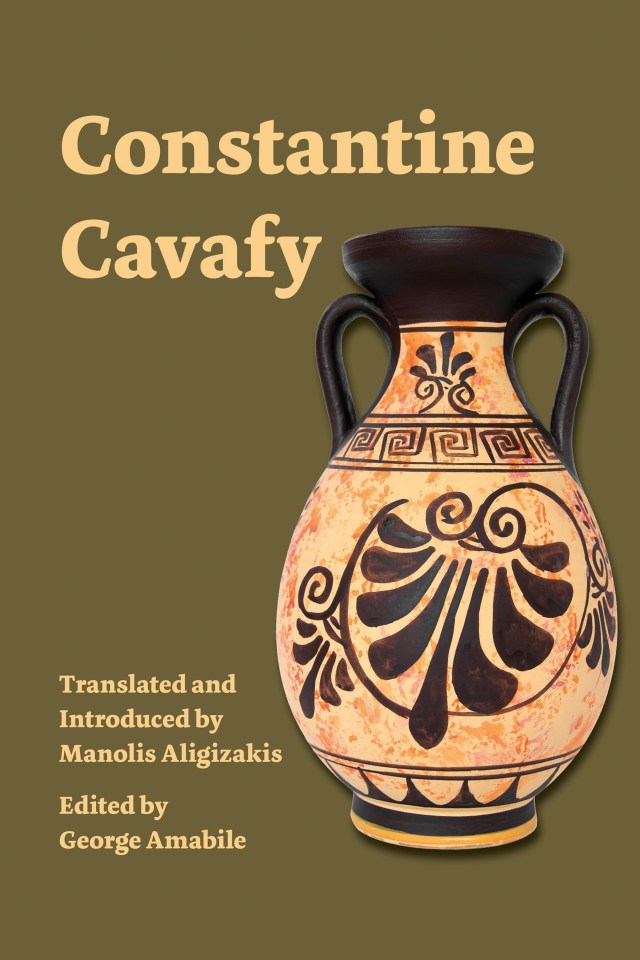
Mara: The Cavafy post sets the tone. Translating the poem "In 200 B.C.," it ends with a pivot that reframes the whole Macedonian campaign: "And from this marvellous Panhellenic campaign, the victorious, the splendorous, the most famous, glorified, as no other has been glorified, the incomparable: we were born."
Pip: So the Spartans sitting it out becomes almost beside the point — the world that emerged from their absence is the real subject.
Mara: Exactly the move Cavafy makes. The Yannis Ritsos posts — two of them, from Volume VI — work very differently, in tight, surreal domestic images: a severed antler left by a mirror, an owl made of sheet metal perched quietly on a roof.
Pip: Ritsos does a lot with a very cold room.
Mara: The Livaditis post, "For Maria," takes grief further: "as I stretched my arm to find your hand, it was as if I stole bread from the hands of the hungry." The Titos Patrikios piece, "Obstacles," turns inward — the speaker raising walls not to repel but to test how far endurance can reach. Katerina Anghelaki Rooke's "Stowaway in a Dream" and the Kariotakis-Polydouri post, "Lost," both circle longing and absence. The Fostieris, Livaditis, Introspection, Hours of the Stars, Orange, Medusa, and Neo-Hellene Anthology posts fill out a week's worth of translated voices, each one landing a different emotional register.
Pip: A lot of that longing has a political undercurrent — which is where the next segment lives.
Conflict, Division, and the Cost of Conviction
Pip: Several posts this week place characters inside political fracture — moments where ideology hardens into something people are willing to die, or kill, for.
Mara: The novel excerpt from Redemption captures it in texture rather than argument. Two characters are hunting near an olive grove when the mood shifts: "Hermes bent down and reached for the fluttering bird; he could see the huge pain in its eyes. Suddenly, the strange shudder overtook his body again, like when he was aboard the ship."
Pip: A man who can shoot without hesitating suddenly can't. That's doing a lot of quiet work.
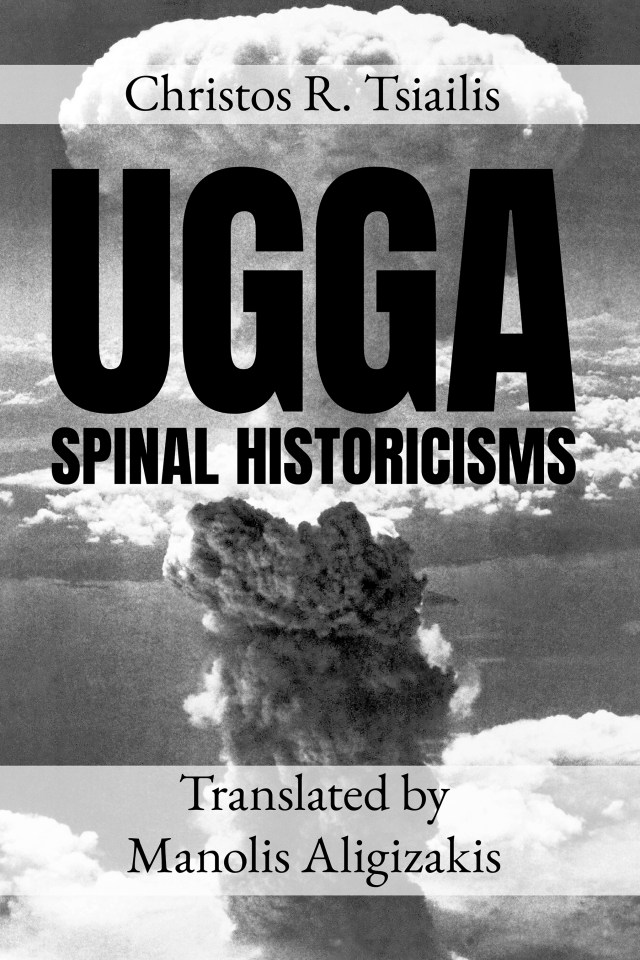
Mara: The Unquiet Land goes louder — a pub argument about Irish partition, Lloyd George, Carson, and Sinn Fein, where Flynn Casey and Jim Patterson talk themselves toward the edge of civil war. The Troglodytes poem frames the same pattern more abstractly: institutional power dressed in sanctity, "Four Golden Gates to Heaven still stand firm while dividing into castes, races, and creeds." Ugga compresses it to almost nothing — half the planet on the line of fire, white doves, international agreements, and a dead avatar. Twelve Narratives of the Gypsy asks where conviction actually leads: "Strike Chimera mercilessly, life is just a dream."
Pip: From a pub in Ireland to a collapsed avatar in seventeen lines — the scale changes, the problem doesn't. Which brings us to the fiction, where the conflict gets personal.
Character Under Pressure
Pip: The fiction excerpts this week are less about plot than about the moment a character's interior life collides with what the world expects of them.
Mara: Small Change is the clearest example. Rico comes home to an empty house, finds a note, and sits alone in the dark rather than cross the street. When Marianna finds him, she asks what's wrong, and the excerpt gives us this: "He goes to the piano bench and opens it. He takes out the papers he has worked on and holds them up to her. Suddenly he feels very small, and scared and shy."
Pip: A kid showing someone his work in the dark — that's the whole thing, right there.
Mara: What the excerpt does well is hold the reader inside Rico's hesitation without explaining it. Poodie James works a different register entirely — a public hearing where Engine Fred defends a hobo against a bully's insinuation. He tells the council: "It is so not because he risked his life to save someone. It is so because under circumstances that would defeat most of us, he lives his life with independence, dignity and joy."
Pip: A defense of dignity delivered at a lectern, which is somehow more moving than it has any right to be.
Mara: Savages and Beasts stays procedural — RCMP officers questioning a caretaker and a Cretan cook about a murder, a missing kitchen knife surfacing as the key detail. Fury of the Wind puts Sarah in the middle of a crowd enjoying her distress, with Will Andrews forcing his way through to help her. Swamped follows Eteo walking English Bay, his thoughts moving between a drilling project, his parents in Crete, and Vietnamese fishers working nets in the shallows — immigration and displacement held in a single afternoon walk. And Cloe and Alexandra delivers the sharpest scene of the week: Antigony standing before six judges, hearing none of their words, then offering them her severed breast and announcing her name.
Pip: Antigony gets the last word, which feels right.
Mara: What ties the week together is that question of endurance — whether it's Cavafy's Alexandrians, Flynn Casey's republicans, or Rico in the dark with his papers.
Pip: Everyone's deciding how much of themselves to show, and to whom. More of that next time.
The two RCMP officers went down to the basement and knocking at the laundry door they entered just to find Anton busy with his washers and driers; heat that was flowing down from the machines onto the floor and spreading in the space of the laundry room gave the atmosphere of cosiness and relaxation. Constable Johnson greeted Anton to which the caretaker replied in kind. The sergeant asked a few questions about the night of the murder and learning that Anton was at his place when the abominable thing happened he also asked about the two missing kids to which he received the satisfactory answer of nothing and then he left with his constable only to go to the kitchen and confront George, the Cretan cook who couldn’t help him any more than Anton. “Have you noticed any of your kitchen knives missing?” sergeant Ryan asked the cook. “No I haven’t but let me check it won’t take too long,” he turned and perused his knives only to realize that one cutting knife was missing, “yes, one is missing, a cutting knife, one like this one,” he said and taking another cutting knife from his drawer he pointed it to the cops. The constable asked him to put down the knife to which George obeyed uninterestingly enough; the constable took the knife and examined it carefully, showing to his superior that perhaps it was time for him to step up one step in the ladder of seniority or even perhaps become a detective. His superior took the knife too and after examining it he put it on the counter again.
seventeen Half of the planet’s nations on the line of fire all others the opposite targets the conflagrated Mother looks at the white doves International Agreement each rifle explodes as soon as it shoots a target Man — the beginning of the End my avatar is lying dead
In 200 B.C. “Alexander, son of Philip and the Greeks, except the Lacedaemonians—” We can very well imagine that in Sparta, they were completely indifferent to this inscription, “except the Lacedaemonians”. But of course. The Spartans were not to be led and ordered like valuable servants. Besides a Panhellenic campaign without a Spartan king as their leader wouldn’t appear really prestigious. Ah, definitely, “except the Lacedaemonians”. That’s one point of view. Understandable. Therefore, to Granicus, without the Lacedaemonians, and then to Issus; and in the decisive battle, where the formidable army of the Persians gathered at Arbela were swept away: the army that set out for a victory at Arbela was destroyed. And from this marvellous Panhellenic campaign, the victorious, the splendorous, the most famous, glorified, as no other has been glorified, the incomparable: we were born; the great, new Hellenic world. We, the Alexandrians, the Antiochians, the Seleucids, and the innumerable other Greeks of Egypt and Syria, and those in Media, and in Persia, and so many others. With our extended dominions, with the variety of our policies and thoughtful adaptations. With our Common Hellenic Language that we carried deep into Bactria, as far as the Indians. Are we to speak of the Lacedaemonians now?
The Judges ‘She’s a lawless woman’ judge number one said ‘firstly, she has no wedding band’ accused judge number two emphatically stroking his gray hairdo ‘she has neither title of ownership nor a mark on her thigh’ judges three and four, who were twins, said at the same time and fluffed their black robes as if ready to fly. ‘She sells her body and in the same way her soul’ judge number five coughed he suffered from stomach aches. ‘And the worst: she’s a poetess’ the sixth judge declared his double chin trembled in fear ‘you know, like those who foresee future disasters or put their heads in an oven or travel on the Orient Express drinking tea in inexistent cups.’ She listened to them reading their lips sequence of their words never reached her ears, she only heard the walk of the tortoise running to catch the rabbit or the sound of a blossoming rose. Then with a knife she severed her left breast and like an orange she offered it to the judges. ‘My name is Antigony, she cried out with courage, and this is the way I love.’
“I came here to say what I know about hobos.You have been told that we mean no harm. I believe that we cause none.” Engine Fred paused to look at Stout. “No more harm than most people do, and less than some.” He turned toward Torgerson and halted again. The room was suspended in silence. “But now, this hearing about hobos turns into an attack on the best, the bravest man I have known. He came to help after the train ran off the tracks near the hobo jungle. If he hadn’t, I could not have got the engineer out of the cab. I probably would have been blown up trying. Mr. Stout says that Poodie James is my accomplice. He says that Mr. James and I caused the train wreck so that we could make ourselves look good. That is offensive, Mr. Stout. It is also slanderous.” The fat on Stout’s face quivered as he ratcheted his head in Torgerson’s directon and back to Engine Fred. “’If,’ I said. That’s what I said, ‘If.’ I was only raising a possibility.” Stout’s voice had lost some of its vigor. Engine Fred took a step in Stout’s direction. “That is the defense of a bully and a coward. You made an accusation, Mr. Stout.” He looked at Torgerson. “It did not occur to you that the hobo or his accomplice would defend against it.” He’s even better than I remembered, Sam Winter thought. “Mr. Clarkson,” Spear’s voice cut through the tension, “under the hearing rules, you may make a statement and answer questions. You may not engage in debate.” “Mr. Spear,” Engine Fred said, with the trace of a smile, “you’re trying to be fair, of course. I’ll observe the rule.” He stepped back to the lectern. “I told the council that Poodie James is the bravest man I have known. That is so not because he risked his life to save someone. It is so because under circumstances that would defeat most of us, he lives his life with independence, dignity and joy. He does not accept charity and he does not seek institutional help. He makes his own way, gathering and selling discarded newspapers and bottles.




 Manolis Aligizakis