Then the old man vanished I don’t know where and when he died or he ascended to the heavens and his companion eagle also flew away from his side and the violin, the most precious treasure was left to me. Play oh bow, play and create a new world from my hands in my two hands. Oh a new race, oh you, new race not the logos nor the song not a sound from any mouth. Only you exist, oh my violin and there is only one tongue and just one sound, yours, which I, the player, create and what creates the miracle is none other but your music. And if I’m a tree made of chords and music and nothing more, one sound and one breath and one song exist inside of me.
MORNING STAR Oh lustful morning star how you surrender to the day in the inundation of light before you blend and freshly spread the footprints of the night. And more than the moon you calm the darkness while you shine in secret like hope that with a mere caress defeats the blackest thoughts. Oh how alike to dreams you are, double-edged and slowly fading, flickering, alas, betrayed by night and even by the day’s bright, ruthless light.
Mirrors You left behind you the mirrors into which you met their ugliness, and the closed door concealing their injustice, once noticed. Where do these animals go why do they still breathe what do they contribute to this beauty save their excrements? Do they deserve to live or should they be helped to do the honourable thing? The mirrors into which you saw their ugliness, you left next to the boiling coffee pot, next to the severed umbilical cord as proof of the uncertainty of future days. Can you now connect to the inglorious past, during which you dreamed to save this world?
Pale Spirochaete* The scientific books had well prepared their blood thirsty images the doubting girl who smiled secretly beautiful the joy we received from her lips our forehead shook softly, persistently as we opened up that it would come in the craziness in our heads and lock itself inside and now our life becomes the strange, old story. The logic and our emotions becomes luxury burden we give to any sane person we retain the impulse, our childish laughter the instinct to rely onto the hands of God. His creation is but an atrocious comedy He, with the eternal good intention managed to pull the curtain before our eyes oh comedy, the awe, the dream, the smoke and the girl I went with was beautiful during that winter evening long ago, when enigmatically laughing she gave me her lips while seeing the fateful abyss closing in.
A short while later, a tall man came to the kitchen door. Salvador greeted him and the two men talked quietly together for a few minutes. Then Salvador pointed, and Ken heard him say, “This is the man I told you about. He is the man who has been sent.” Albert waved Ken toward him. “If you’ve been sent, you’d better come in.” Ken shook his hand and entered the kitchen. “Who sent you?” Albert asked. “It isn’t a who; it’s a what. An idea sent me and the idea starts with one human being asking another human being for one hour of his life to listen to a story, and the story is of a man you may have some familiarity with. His name is Lorenzo de Medici. Are you familiar with him?” “Yes I am.” “I want one hour of your life.” Albert sat at the kitchen table, quiet and composed. Even his eyes were still. His hands rested motionlessly on the tabletop, his fingers curled comfortably inward. Ken sat, took off his watch, and placed it on the table where he could see the time ticking away. He told Albert his understanding of Lorenzo de Medici’s life. He drifted away on his words, just as he had when he had made his speech at the Columbus Centre. He lost himself in the intensity of the moment – rushing down the white water of ideas like a kayaker tumbling down a raging river. “There are parts of that story I wasn’t familiar with,” Albert said, when Ken had finished. “Where did you get your information?” He told Albert about his birthday trip to Florence to see the statue of David and how on another birthday his father had given him a beautifully bound book of Michelangelo’s letters to Popes, kings and princes. The letters, he told him, described his relationship to the Medicis in his own words. “So you are an artist?” “I am a painter. Michelangelo was a sculptor who was made to paint. I am a politician who is made to paint. I have a job to do, and I have a mission to carry out that has to do with the people of the Arctic and the soul of a nation. We in Canada wander around very confused as to our identity. Our subjects of conversation are the weather, Quebec, and our identity. I have found the soul of this nation, and in the process, I found many wonderful stories and many wonderful symbols. At the same time, I discovered hell on earth – hell is what is happening to those people. I have been asked by the grandmothers to please tell the world about this. The first thing I want to do is tell you about it.” “Why would you want to tell me about it?” “In Michelangelo’s time there were Popes, queens, and princes. There were people who could sponsor great ideas.
Sam thought about the trajectory of his own career, the comfort of his retirement, the adventure of his new work on the bench. He wasn’t sure that he could trust words to say what he felt. He offered his hand to the big man sitting in the coppery sunshine on the stoop of Poodie’s cabin. Engine Fred grasped it and smiled. “I talk too much,” he said. As Sam backed his car around and headed down the lane, Engine Fred shambled up the path through the bunch grass toward the jungle. Poodie hefted the three boxes of reds into a stack next to the cabin. He would put them on the wagon and take them to Ralph Gritzinger at the market. With his apple money, ten or twelve dollars a week from newspapers and bottles and what he made stocking shelves and doing odd jobs for Gritzinger, he was all right, he thought. He had a place to stay and people who helped him. The YMCA let him swim laps in the indoor pool now that the city pool was closed for the season. He wondered what would happen to a man like him in another country, another time. What would the Egyptians 4000 years ago have done with an undersized deaf man whose talk was hard to understand, who walked badly? Would the Pharaoh’s master builders have wanted him to work on the pyramids? Maybe, he thought, if he was lucky. Most likely, he would starve. He walked out into the field where the orchard used to be and turned to face his cabin and trees. If he was from a nice neighborhood in town, wouldn’t he think the cabin was too small, too run down and dirty for anyone to live in, with no running water and no bathroom? If he were an Egyptian slave from 2680 BC, wouldn’t he think that living in such a place would be a blessing? He was blessed, he told himself; a lucky man. He would hate the jobs the school for the deaf wanted him to take, fixing furniture, repairing shoes, inside all the time, stuck in a routine. Poodie thought about how hard most folks in the valley worked to pay for their houses, buy their cars, raise their children. He thought about Dan and Ruth Thorp losing their orchard and their house.
Republican Army, and the British forces. What Sinn Fein calls ‘the forces of occupation.’ Nora is worried sick. The reports of killings, of arson, of intimidation and repression: they terrify her.” “They’re always talking of war in Dublin,” Michael said. “It’ll come soon enough, I’m sure,” Caitlin murmured half to herself, “and we’ll all be involved in it.” “And yet it’s so peaceful here,” Michael said, listening to the silence that enclosed them and watching the lazy drift of turf smoke from the farmhouse chimneys. He let his hands slide down over the sides of Caitlin’s breasts and lowered his lips to the cool flesh of her cheek. Caitlin shivered with the thrill of his touch. “Are you cold?” Michael asked. He raised her to her feet, placed both arms around her waist and pulled her to him. Caitlin circled her arms around his neck and gazed with longing into his eager, blue eyes. “No, I’m not cold,” she whispered. She was frightened. Things Padraig had said were beginning to struggle to the surface of her consciousness. Michael kissed her lips lightly, then with more and more pressure. She felt his tongue and opened her mouth. She quivered all over. “Thou shallt not commit adultery.” Padraig’s words sounded distantly in her ears like the echo of waves in a seashell. “One of the ten commandments from God Himself to his servant Moses. You cannot disobey God’s explicit precepts with impunity, Caitlin.” Michael’s feet shifted as he pressed his body even more tightly against Caitlin’s. His breathing was uneven. His heart pounded. “A sin is a word, deed or desire contrary to the law of God.” Padraig’s fierce, dark eyes and passionate, white face appeared in Caitlin’s thoughts like a nightmare figure in a child’s uneasy sleep. Desire. Desire. Desire. Michael was seized by a passion that tightened every fibre in his body and found release only in the kisses that he pressed on Caitlin’s mouth and face. Caitlin responded with a passion as consuming as his. She pushed her body against his muscular frame with an eagerness that almost fused them into one. “The flesh lusteth against the spirit.” The priest’s black eyes, bright as coal, burned into her own eyes with the fierce heat of fanaticism. “Adultery, fornication, uncleanness, lasciviousness. These are the works of the flesh. These are the Devil’s works. Not God’s.”
“Come in, my son, come in. Let me introduce you to the Minister of Finance, Omar Salem. Here’s one of my sons from the United States, minister. His name is Talal Ahem.” Omar Salem looks at Talal and smiles. “He’s one of the seven?” “Yes.” “I’m very pleased to meet you, sir,” Talal says, and shakes the man’s hand. “You, too, Talal Ahem,” says the minister. “Should we expect you to return to your country soon?” Ibrahim smiles with obvious pleasure as he tells the minister, “He’s a chemical engineer.” “A chemical engineer, very good; now, this is a man our country needs, don’t you think, my good friend, Ibrahim?” “Yes, of course. Yes, our country needs all her talents to help her in our years of development.” “Please tell me, Ibrahim, when your dearest son Hakim will visit us?” “I hope very soon in the new year, minister.” Talal shakes the hand of the minister once again and leaves him with Ibrahim in the study. He finds Emily in the garden and they walk together for a while. She’s curious to know what happened. “Who’s meeting with Ibrahim, honey?” “It’s the Minister of Finance for Iraq.” “Well, it certainly seems Ibrahim is well-connected here.” “He’s well-connected all over the world, my love. What surprises me, though, is that there are seven of us in the United States.” “What do you mean, seven of you?” “Hakim and I are in the United States thanks to Ibrahim’s money. Now, I find out there are another five who have gone to the states for studies, just as Hakim and I did. I only know Ahmed, in Los Angeles whom I see often, but who are the other four and where are they?” “Why did Ibrahim send you if you are not a blood relative?” “My mission is to be with Hakim and make sure he never feels alone, nor gets into trouble. To make sure nothing bad happens to him.” They walk hand in hand, silently, while Talal tries to figure out who the rest of the seven could be and where they may be now. There must be a reason the old man sent us all to the United States. Talal knows he needs to find that out before they return home, so he can brief Hakim before he gets involved with Bevan and his plans. “Tomorrow we’re going to the gulf. Are you not excited?” he asks Emily.
Endless Story How does a lonely man die how does his soul transcend into astral genes and in the hand of God that through the ages resurrect the youth. What does his primeval memory remembers of cascading colors of painful rebirths the whistling wind that hurls messages in code to the roots of cells where life twists its edge with beaks of birds that transfer reflection and whooshing of waves. What is his identity or even his destination as naked as he is and hanging off the tunnels of time undisputed reward of eternity.
IV The drunk men rolled in the muddy road the old guerilla sang among sobs and saliva Hail to you ELAS** for Hellas until the army police took him. Sophianos was crawling next to me stinking of ouzo and yelling in the empty room I turned into a traitor for a 48 hour release expel me from your company, expel me and I held his forehead so he could throw up.

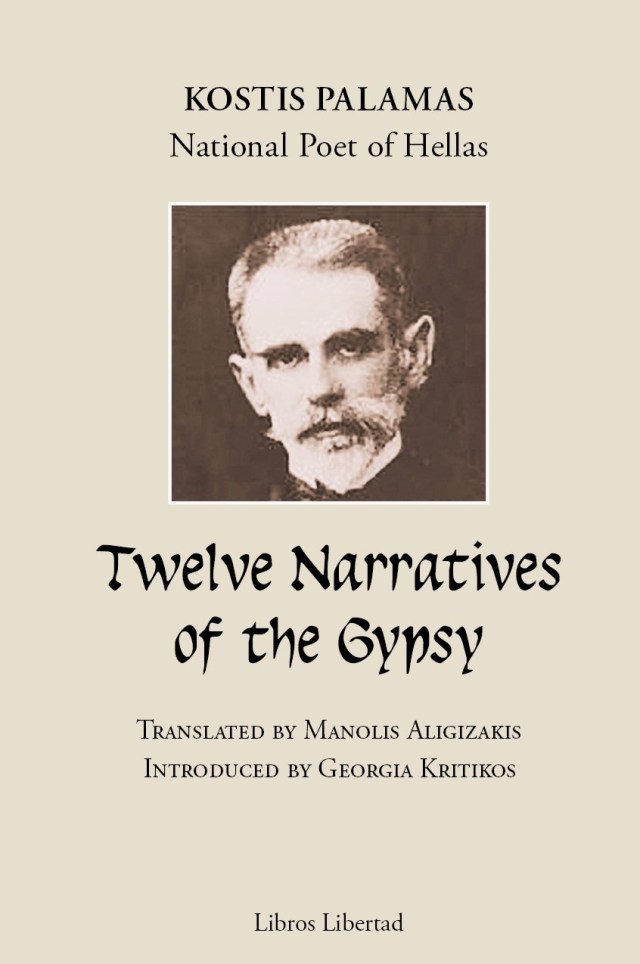
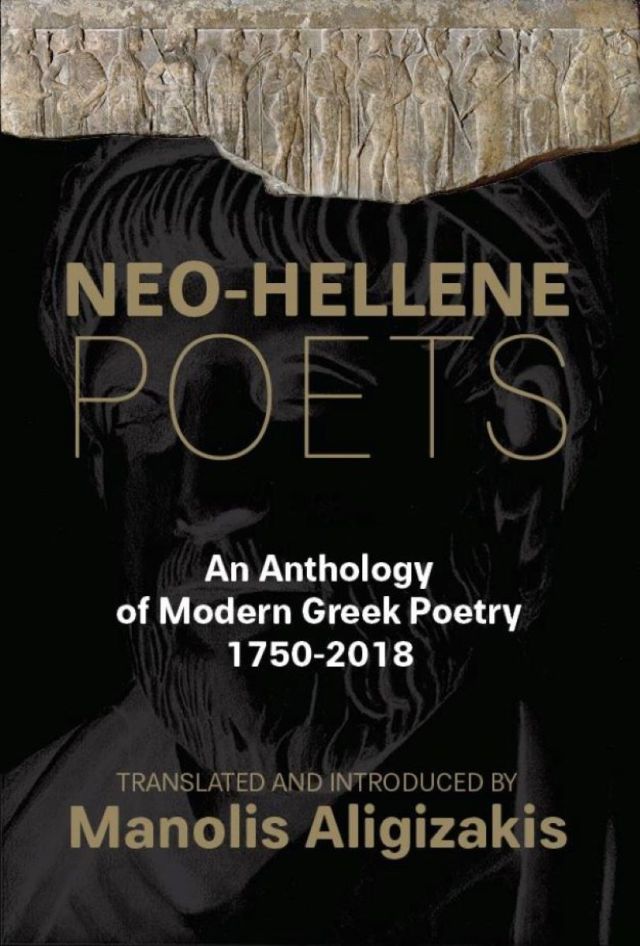






 Manolis Aligizakis