Barge The red barge rocks slowly its mind is not completely made up to the right of the light to the left of the light? The red barge full of wood chips on its way to the paper mill its mind dwells in ambivalence to the right or the left? Your eyes are like a storm tears and fulgurations from the left to the right or from the right to the left?
Oh God, there are all so uncertain like a stone with no mystery or like the one who rediscovers his lost money in the wasted time. Travellers bring some flowers to the hasty funerals in train stations, while beggars run for a few coins behind ballooned outfits. Oh, if I could have my own telephone booth or cleaner false teeth perhaps many killings could have been avoided or perhaps they would had been noticed before they took place. Everything else will remain unknown like a sudden ring of the bell from someone who has already gone away; a light smell that vanished before you could remember some steam from your childhood chamomile that many natural disasters haven’t dispersed yet. Oh, if I had the power, I could make a hand for each street beggar or easy puzzles for the exhausted; I could create a talkative cemetery that each evening would narrate old stories to us or I’d put the bed-sheets out to air like in a shipwreck. Therefore I am crossed out like the miracle that makes life more uncertain.
Salome The guards brought to her his head on a silver platter. His eyes shut as if dreaming and his lips still warm. Drop of blood, dripped from his severed neck, a stain onto the white sheet that wrapped his head. She took in her hands the lifeless face, neared hers to the still warm lips, leaned down and kissed them. Her face had an expression of desperation along with satanic satisfaction. “I after all kissed your lips, John” she whispered, her eyes full of tears; “I had to have you killed, but I kissed them.” To what extend the passion and craziness of love can reach, my love? You got up from the table and got ready to leave. Could I have killed you to have you totally mine? But instead I picked the used plates, your glass I brought it lustfully, slowly close to my lips I licked its circumference and finally, with an indescribable satisfaction I drank the last drop of wine left in it. Perhaps I didn’t kiss you good night however that last drop from your glass was equally satisfying as the seven veils of Salome’s dance.
Tyne pursed her lips and looked down at the table. Several seconds passed in silence while she moved her mug of tea in circles in front of her. Then she looked up. “All right, Auntie, tell me what I’ll have to do.” She could not hide the excitement in her voice. She attended her first meeting of the Furnishings Committee of the Emblem & District Hospital the following Thursday evening at Millie’s home. Three other members greeted Tyne with enthusiasm. “Your help will be invaluable, Tyne,” Laura Charters said. “I’m so glad your aunt persuaded you to come. How’s your dad, by the way?” “He’s doing well, thank you,” Tyne told the mother of the girl who had been her best friend through high school. “He’s determined to fight this thing, so that helps.” Jennifer Sears, a young school teacher whom Tyne had not previously met, nodded her head in agreement. “I’m pleased to hear he’s getting better, Tyne. I met him when he came to see me about Jeremy’s grades. I like your dad.” Goodness, could this be one of Jeremy’s teachers? She looked far too young. The third member of the committee was the wife of the Royal Bank manager. Edith Siebold was getting on in years being, it was said, at least ten years older than her husband. Tyne had always had the greatest respect for her, and regarded her as one of the most charming and cultured women she knew. Tyne helped her aunt serve coffee as the women gathered around the kitchen table. Then Millie called the meeting to order. Catalogues with information on everything from hospital beds to overbed tables to stainless steel supply carts were spread out over the Formica top. Even after the first hour Tyne was overwhelmed by the number of decisions and the amount of research the committee had to face. She wondered how they even knew where to begin, but was pleased when, a number of times throughout the evening, they called on her for advice. “After all,” Laura Charters pointed out, “who is better equipped to deal with these things than a recently graduated nurse?”
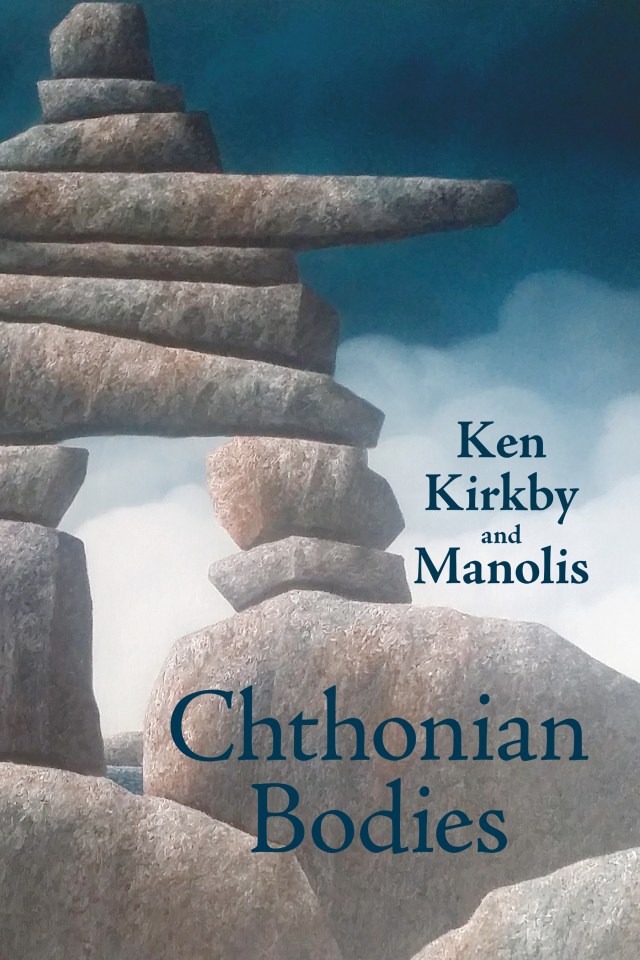
Didascalic Persephone’s abode summer and spring this thicket the beetle’s kingdom and locust’s schoolyard beasts of the microcosm and a dividing line, painter’s brush stroke limiting the underworld where the queen slumbers for six months, a line between two heartbeats an alive chthonian body a corpse on the other side and the pond’s role: to keep guard of lines invisible yet distinct and separating one death from the next
22nd of November Frosty sunshine; I didn’t look at the colors; I didn’t turn my eyes towards them. I know of nothing but my cigarette and the weight of its ash. I contemplate on the most bizarre things. During the nights, soon as we lie down, the rats wake up, walk around the table, gnaw edges of our shoes and our papers; they sit on our stools, lick the leftover oil off the cans and we always find holes in our bread and traces of their paws on the table. Monday is usually full of holes and small crosses of dust from one end to its other.
“Come on, sweetheart, you need to see all this; don’t forget you won’t have this opportunity again anytime soon.” She perks up a bit and looks at the immense horizon on her right side with all the sand and light; the brightness blinds her. The sun is definitely something they have plenty of in this part of the world. “Everything looks so bright, honey. I can’t look at this for too long because my eyes get tired, even though I’m wearing sunglasses.” “I know, Emily, yet you must try to see all you can,” he insists. They’ve driven halfway to their destination when Rassan stops the car at a small town where they’ll have lunch and the chance to stretch their legs before they carry on. They find a small restaurant. Rassan and Abdul go inside and check things out; when they come back appear pleased the place looks good, the women and Ibrahim with Talal go inside. The small restaurant is filled with travelers and there are a few other women. Ibrahim lets Rassan order food and wine from the menu. The food will be shared by everyone as they don’t order individual plates. Emily likes this way of ordering as she doesn’t have to ask Talal to order things for her. They are served on big platters and the wine comes in a carafe; Rassan fills their glasses and they toast the health of everyone. To Emily’s surprise, the food is very tasty, although she doesn’t know what everything she eats is. Talal leans closer to her and asks, “Do you like the food, sweetheart?” She smiles at him and nods with her mouth full of delicious, creamy pate, and her wine glass raised, ready to take a sip. They arrive in Basra by mid afternoon when the heat of the day is at its peak. Basra is the second largest city in Iraq with a population of 1,700,000; it’s the center of the oil-exporting facilities in the south. There are substantial petroleum resources and many oil wells in the area. They pump out about 150,000 barrels a day. The fertile land around the periphery of the city produces a variety of grains, such as rice, wheat, barley and corn. They also produce many meat and dairy products here. During the war, the British stationed themselves in Basra and the city experienced few effects from the war. Now, the city is completely rebuilt and in full swing with the export of oil. In fact, most Iraqi oil wealth passes through this city. Basra was first built thousands of years ago and was considered the cradle of the Sumerian civilization. These days it’s called the Venice of Iraq because of its elaborate system of canals and waterways leading to the open waters of the Persian Gulf. The canal system is a lot more visible and functional during the high tide, than at low tide.
SECRET Some souls are made of marble others of pain or smiles and one is made of rose petals though I won’t reveal who. My heart would suffer if I exposed you so I put a lock on my mouth and though many wise people are around me no one has managed to guess yet. Some souls are made of crystals others are made of tears and one is made of rose petals though I won’t reveal who. I’ve sworn never to disclose even unto death, but then, who knows, perhaps someday… Something is burning my lips! Better to stop this song right now and go no further.
Phone Call Imperceptible laughter your eyes question rekindling the absence your arms an embrace waiting and I dreamed of the moment that escapes me your light voice feather touch on my tympanums a fairy’s caress that felt the stress of sundown its kingdom and its power and you let a light laughter in the cool afternoon as if spring suddenly came and the hyacinths had already bloomed
Visit of a Thought I’ve been trying to sleep for the last three hours. August heat sweat of the mind and thoughts, all around, like mosquitos, poke it. What has happened to me? They rarely come during the day now I surely feel happy or to be exact: I forbid such visits. As soon as by chance a thought comes to my mind it soon invites the other, for just a little while, a short visit, you know all this, when voila: caravans of inter-related images charge inside of me seeking a permanent habitation. I don’t want them. Then sealing the borders safely, I end it. Because I’m not American, nor can my lands feed so many migrants.





 Manolis Aligizakis