Duty It was all lost. It was the time of Hades and since our God was dead we planted a hyacinth in the pot and that, perhaps, was another act of redemption. Übermensch stood by the fireplace and shifting the logs He said: since you can do nothing for the wilted anemone at least try to push your empty cart uphill perhaps one day it might find its way, with you or without, back to the desolate house, and I bent down to pick my defeated ego; it had all started because of our devout narcissism, when I noticed all our dead laid in caskets as if waiting for their resurrection.
The Wind Perks Up my friend laughed and suddenly he looked like my father who would close his eyes tightly when he laughed his shoulders would jolt and he would hold together his hands as if clapping. my friend, standing in front of the fireplace whispered: The wind has perked up; we’ll try to survive and my father dived in his ashes again. Reality locked itself inside its present castle raising the white flag of the unequivocal age days of joy re-locked themselves in a few teardrops something insignificant was coming through the air something of an insignificant lust suddenly appeared in the room something insignificant we said and life passed by.
mother had waited for him to get up so she could talk to him, so she could look at him, so she could look at her first and only child, a man now, a graduate from the university, her pride. All night, she wondered about what to prepare for him, what to treat him with. She knew it was difficult for him to live away from his mother’s touch while studying in the city, attending classes, writing exams, and all. She had prepared some cheese pies of her own recipe with lots of sugar and cinnamon, which she knew he loved. She expected him to rise late since he had travelled all day yesterday; she fixed his coffee and walked to his bedroom. To her surprise, he was not only awake but also dressed. Hermes’ father, George Dragakis, was a fifty-two-year-old man who grew up in the orphanage, placed there by his mother, a young, unmarried woman who got pregnant out of wedlock. George grew up in the orphanage until he reached the age of eighteen, when he went back to the village where his mother and natural father lived. He had two stepsiblings on his mother’s side: a brother, Demetre, who lived in Athens, where Hermes stayed while in school, and a sister, Katerina, who lived somewhere in Germany. He also had a few stepsiblings from his natural father’s side, but his father had never told Hermes how many there were and whether they had any children. Hermes’ father was a reticent man, and it was rare to be able to start a conversation with him. It was Hermes’ mother, Despina, who told him the story about his father and how they got married soon after he came back to the village from the orphanage. Despina was a chubby sixty-four-year-old woman, a saint, as her son thought of her. She had only love in her heart, so much love for everyone, but mostly for her only son Hermes, who was her pride. “Oh, Mother,” he said affectionately and embraced her. “I will have to leave you soon after breakfast because I need to go up to the monastery. I promise we will have a long talk when I come back.” “Why do you need to go to the monastery, son?” “I need to look for something in their library. I will go by the orchards to say good morning to Father first and then carry on from there. I will be back for lunch.”
Sale Day The Circle H Ranch Willow Springs, Montana
That night Cindy and Lila slept in the guest bedroom. Joel woke to the alarm at five a.m. and quickly shut off the bell before it roused his guests. He dressed for the day and made his way to the kitchen. Joel could tell from the smell of the coffee that Tanya was ahead of him. Not only was she ahead of him, but also she was already out of the house. What a great girl, he thought, as he gobbled down a quick bowl of oatmeal, pulled on his boots, and headed out the door. Entering the barn, Joel saw Harry and Tanya already hard at work grooming the sale horses. In the distance, he could see the trails of dust rising in the sky as Roy and some of his helpers made their way to the ranch. By six a.m. the Circle H was buzzing. By seven they were ready to go. Joel was absolutely amazed when the first buyers showed up at eight to preview the horses that weren’t scheduled to be demonstrated until ten. With trucks parked every which way in every spot imaginable in the ranch yard, the visitors started to park on the road by nine. In no time at all, the line of trucks extended a good mile back on the road. Roy assigned two of his helpers to man their half-tons and cruise the road to pick up the buyers as they walked from their vehicles and deliver them to the ranch yard. Joel had never seen anything like it. Of course, it was the first horse sale of this nature that he had ever seen, so that was easy for him to say. What he didn’t know was that Roy had never seen…
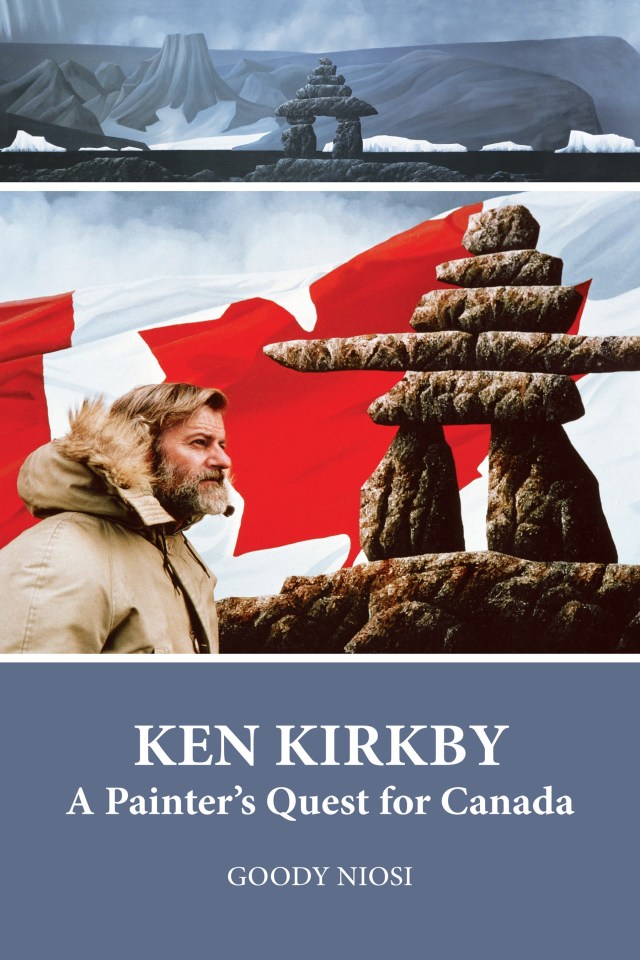
Keith nodded. “Well, that’s something I want to talk to you about. I can help you and I want you to help me.” His room bookings for the following year, when the lodge would be completed, were with Americans and a handful of Europeans – not a single Canadian on the reservation list. “You seem to have a great capacity for publicity and getting media attention, and I’d like you to help me. In return, you can come and stay here, have the use of airplanes – anything you want. But I need you to help me to get people to come.” Ken thought about the problem and suggested a slide show in his studio with multiple projectors. He enlisted the help of Avril and Roberto; they commandeered Tergey, the young Norwegian pilot who worked for the lodge. As Keith had predicted it wasn’t long before they heard the sound of an approaching float plane that glided to a landing on the lake. It pulled up to the dock and two men stepped out. They shook hands and asked Ken what he was doing at the lodge. “Fishing with my son,” he said, and excused himself, explaining that it had been a long trip and they were tired. They crawled into their sleeping bags, pulled caribou hides over them, and drifted blissfully off to sleep. Too soon, a hand shaking his arm woke him. “There’s someone I want you to meet,” Keith said. Joan Scottie, a reserved and beautiful Inuk woman, had been born about two miles down Ferguson Lake. “Joan has been a friend for years,” Keith said. “She’s here to help us finish building the lodge. She is the most capable human being you will ever encounter. There isn’t anything she can’t do. She was born in an igloo and is a computer expert. She is also the finest hunter and fisher you will ever meet.” Joan was also a photography buff. She took Ken to her hut near Keith’s home and showed him a collection of photographs. Her Scot and Inuk, father, Basil Scottie, who was almost totally deaf and dumb, glared fiercely at the camera. Another photo showed her family, two men, and seven women, standing formally in a row, dressed in bleached white hides with intricate designs. “I think I have been where these pictures were taken,” Ken said, studying them. “But I can’t be sure.” “Yes,” she said. “They were taken near here and you were there.” “How do you know?” “I heard.” “Who told you?” “Old folks.” “I had an incredible experience – a horrible experience that never left me. It was somewhere in this region – a lot of people died.” “Yes, I know.”
Brother Rordan, tied up alone in another hut, wondered about his new friend, Ul. So far, no one had been able to get him to say more than a few words. Rordan still knew nothing about him except for his strange name. Brown Bear and his son, Running Deer, returned from mourning at the Island of the Dead to find the camp deserted. Corn Mother was gone but had drawn into the sandy soil at the door to his lodge a picture of the hunt. He erased the message meant for his eyes alone. A young Native with spear stood watch while Rordan relieved himself at a long pit, dug some distance from the huts. As he squatted, he looked toward the hut where he’d spent the night, hoping for some sign of the others but he was alone with his guard. Perhaps they were only being let out one at a time. His business done, Rordan was led back to one of a dozen or more small huts. The huts were slung low and covered with sheets of thick birch bark woven between saplings. At the centre of the camp, several Native women ground corn and roots on a large flat rock surface with wooden mortars. In the semidarkness, Rordan’s guard tied his hands behind his back and attached him once more to the centre lodge pole. Another Native came in with a wooden bowl of corn mush and baked fish and tried to feed him but he refused to open his mouth. Rordan heard distant drumming and felt a headache coming on. His eyes burned but he couldn’t close them. The Native gave up his attempt to feed him and finally left with the food bowl. Rordan preferred the quiet and darkness. Brown Bear asked to see the captives. He looked in on two but did not recognize either. In the farthest lodge, he saw Bjorn, his companion from the night of the hunting feast, tied to the lodge pole, refusing to eat the food being offered by Broken Wing. Brown Bear took the bowl and sat facing Bjorn. As soon as Broken Wing left the lodge, Brown Bear untied Bjorn and handed him the food bowl. Neither tried to speak. Bjorn wolfed down the corn and fish while Brown Bear sat and watched his friend eat. Rordan opened his eyes and gazed down at his previously bare feet now dressed in gold slippers. His body was covered with brilliant, multicoloured feathers. Rordan looked up to where a low ceiling had held him in darkness. The sky was filled with stars. He extended his arms, no longer tied to the lodge pole behind his back and effortlessly floated up, high above the captors’ village. He flew with a myriad of birds of many colours, over forests, rivers, and great expanses of desert landscape with deep canyons and pink sandstone plateaus. He flew on between mountains capped with snow. Rordan glided above their frosted solitude then down over a steamy jungle to a vast city on a lake. There he saw exotic flowers and sparkling fountains and heard strange and beautiful instrumental music. The birds led him on to another city on a hill. Here were many pyramids of white and pink stone. People dressed in flowing robes of multicoloured feathers moved up and down countless steps.
On the Eve of Autumn The last vacationers sit in front of windows with crossed arms the few in love and dry leaves sit on benches of gardens When the coach was heard from the road no one went down to open only a dog came out of the door and looked straight in the eyes of the afternoon Perhaps she was in there the sick lady who is always cold and holds a bouquet of violets on her knees It was she – the hotel manager said and spat out the window Then he wiped his lips and closed the shutters
Suits Two identical suits black pinstripes and vests Clay reddish ties snow-white shirts ironed pants worn by both men gazing at the silent emptiness One in a posh casket surrounded by cheap flowers The other in the office surrounded by screens data, stocks, charts, sales beautified zombies sleepwalking In pinstripe suits with vests, with ties gazing at emptiness
Theatre of Sidon (400 A.D.) Son of an honourable citizen, above all, handsome ephebe of the theatre, pleasing in many ways, I often compose very daring verses in Greek, that I circulate, secretly most of the time. Oh gods! That they won’t be seen by the darkly clothed people, those who speak of morality these verses are about a superior quality of carnal pleasure leading to sterile love, often rejected.
Dry Mouth Fasting is not necessary, he said. I chewed my saliva, ripped the bed sheet, knocked at the door, smelled the wall, waited in the hallway, out of the stoa, and I stood in the road. The night was falling late, later than the void between two hands. The bus arrived, and all five of them disembarked together. The woman’s kerchief fell. The lights were still on; the ticket collector had long hair, tickets, two drachma coins, and his secrets. The spotlight hit the man with the black suit, who was coming from the other side, the man I didn’t expect, yet he had my hat on and held a basket with yellow apples.







 Manolis Aligizakis