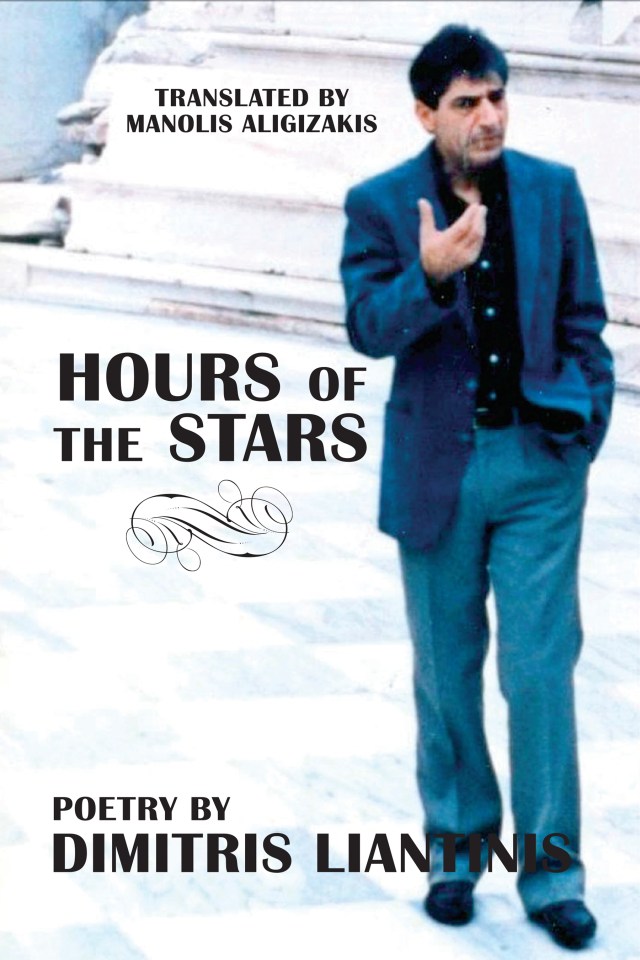
Verse Nothing mattered anymore the years felt heavy upon his shoulders and absence oversaw from high up on its throne the absurd descending the smooth hill slope and his emotions that were rekindled in the loneliness of the desert where he dwelt crafting exquisite verse with images for the seven stanzas of this poem
night beyond the window. But tonight was different. Tonight the heavy, unmoving air grew stagnant; it weighed upon the room unstirred by old Finn’s gusty tales. Tonight the old sailor’s verbal gales had died to barely audible sighs. Finn appeared to be unaware of the deepening depression that had settled over the homecoming party. His mind was on the day many years ago when he first saw Padraig: a skinny boy in short pants, writhing on the cobbles of a market square, foaming at the mouth like a rabid dog. Never would he forget the sight. The crowd pushed back, staring in ignorance and horror at the boy’s convulsions. Two mongrel pups snapped at his legs and arms, and a sheepdog snarled and barked, its vicious teeth bared as if ready to rush in and chomp them into the boy’s neck. “The whelp with the trousers isn’t putting up much of a fight,” someone said, and the crowd started to laugh. Ignorance and horror relaxed into mirth. “I wonder what he’d do with a bitch in heat,” said another. Finn waded through the crowd as through a field of barley, pushing the people aside in anger. He burst into the clearing where the boy was lying still now, his face in the muck that covered the cobbles of The Square. Finn kicked the sheepdog hard; it ran off into the crowd with a howl of pain. The pups pranced around him, yelping still, as Finn knelt down, rolled the boy over and picked him up in his arms. “I spit on you all,” he shouted to the crowd and carried the boy away down the sloping street to where his fishing boat was tied in the harbour. Now the Devil’s child, his own adopted son, was home again, a priest. “I hoped to make a man of you, Padraig.” Finn was rising out of his reverie. “And I made a monk. Well, I suppose that’s not a bad accomplishment, considering what I had to work with. Come now, gentlemen, let’s not look as if we’re at a Presbyterian wake. Let’s drink. Let’s eat.” He turned towards the door that led into the kitchen. “Caitie! Jinnie! Bring us some supper. We’re half a dozen hungry men in here.” Supper revived the company. Even Clifford forgot his headache and his queasy stomach. He enjoyed the food, the conversation, the dark red wine that everyone started drinking again in large measures. The more they drank, the more convivial they became. Only Finn MacLir seemed more subdued than usual. “We had many more people here to welcome you last night, Padraig.” Slattery’s purple face was taking on a crimson cast like a spectacular sunset.
Train A rattling train, full of passengers traveling to their death passes through my mind. Christ stands in the front wagon and reads his metaphysical poems to them and you who I’ve come to know and you, who I never met, have your frightened eyes glued on the windowpanes and you, oh cursed world of mine, coal, coal to be burnt in the bowels of earth. And, high up, the night resembles the Epitahpios cubicle.
Caribou Mother caribou bears her calf and two wolves call it who will strike first matter of balance to seize the newborn from her side hordes of caribou this year more food not much snow scant misery what else to do but roll the dice repeat and charge Let us overeat this year famine always comes soon after like two small peas in soup pass by your teeth only once
Boreas With sharpened fangs and grasping talons they depict Boreas, though its benevolence runs smoothly through your veins as my hand under a satin blouse follows the contour of your nipple and the Boreas sings for us two hiding in the terrace loveseat secluded from the conspiring eyes of the neighbour and you said, I enjoy the wind’s caress on my legs as I do your fingers on my nipple
The day before the exhibit, he helped hang the paintings; only one in each room of the gallery. Opening night resembled a Hollywood premier. People gathered in the street and, when a chauffeur driven limousine drew up to the curb, the media descended. Ken parted the crowd and opened the door, guiding the Duchess into the gallery. The crowd inside fell back as though God himself had made an entrance. Ken led her through the rooms, telling the stories of the Canadian North. She nodded, smiled, listened attentively, and left as quickly as she had come. Forty-five minutes later every painting wore a sold sticker. Ken extended his stay, in order to accept all the invitations he was besieged with. He had been in Madrid for six weeks, when his father called. “You must come home right away.” “What happened?” “Just, come home immediately. It looks like the trust company has gone under.” He flew home the next day and took a cab directly to his father’s apartment, where he found him more agitated than Ken had ever known him to be. “This is real trouble,” he said. “We tried to get into the office and it’s locked – the locks have been changed and nobody is there.” In his own office, he discovered several key files missing. He arranged a meeting with other clients of the trust company. There were rumours. Some said the company principal had moved to the Fraser Valley, where he had set up an Arabian horse farm and purchased a Rolls-Royce. Others said he had simply vanished without a trace. Ken called the RCMP commercial crime division and drove to the station with his father. The officer explained that the department was aware of the issue. “It’s a complicated mess,” he said. “We’re going to have to investigate you and your activities, the same as everyone else.” The police found many of the missing files but not a trace of the company president and CEO. Rumours continued to circulate. One claimed that the head of the trust company had had nothing to do with the missing funds. It was Ken Kirkby. He was crazy, and smart, and out of the country when disaster struck. He was the one who had masterminded the plot. The media ran with it and reporters parked their cars and vans in front of his house waiting for one glimpse – to take just one picture with a telephoto lens. Two professional hockey players, convinced that Ken had taken their money, filed a lawsuit. The judge threw it out of court. Ken threw himself into the investigation, working with the police day after day to piece together what had happened. The RCMP interviewed the victims of the fraud and examined the documents. Sorting through his own papers became a full time job, and there were many times he gave up all hope of making sense of them. His greater despair was the loss of his friends.
Fixing Fence The Circle H Ranch Willow Springs, Montana It was the first time that Joel rode the sorrel gelding into the hills on its own. He had saddled up the sorrel, and instead of leading it to the corral, Joel had sensed that both of them would benefit from a ride in the hills. Over the last little while, all of the horses had spent some time in the hills, escorted by another horse and rider. Most of the horses only needed the escort’s company a couple of times before they were ready to explore on their own. For some reason, the sorrel gelding was slower to settle down than some of the others; and today would be the first time solo, just him and the rider, in the hills. The sorrel had seemed pretty steady to Joe. Maybe a little hesitant to start, but after some time and some miles in the hills, the gelding was either getting tired or had settled down. Joel wasn’t sure which one it was, but he was enjoying the smoother ride. The sorrel spooked a little when he had first saw them before Joel, but as soon as Joel felt the shiver run through the horse and up into the saddle, he knew something was up. “Probably a deer,” he thought. But no. There were three heifers on Joel’s side of the fence that were obviously part of the herd of several hundred on the other side of the fence. No wonder these three wanted to escape onto his pasture. The contrast between the lush prairie grasslands in Joel’s pasture and the barren patch of dirt on Buck Smith’s side of the fence was something to see.
He sits down and looks around the office; the lieutenant catches his eye and says, “Well, it’s as functional as any other, I suppose.” The Admiral smiles thinking of his own office, which is very similar. “Yes, I suppose so, lieutenant. Well, tell me what we know so far; do you have an autopsy report?” “Yes, it arrived a little earlier,” Bonetti gives him the written report of the autopsy. The Admiral reads the half-page brief and hands it back to the officer. “It appears to be a clear-cut case, I suppose. Anything else on your mind, lieutenant?” “It’s strange that, when we got the phone records from the house, we determined the widow had made a few calls when she discovered the body. The first call was to a lover, then to the daughter, then to us third. Then to her girlfriend.” “To a lover? There is another man in the picture? I never expected that from Emily. Are you sure?” The lieutenant looks him in the eye and says, “No doubt, Admiral. She calls him “sweetheart” and he says to her, “I’ll be there shortly.” I have seen this scenario many times, however we cannot place him at the crime scene at the time of death. The evidence is crystal clear, ballistics, prints, etc.” “That means the third person has no involvement, I presume,” the Admiral says. “Who is he, anyway?” “A person named Talal Ahem, an Iraqi chemist, presently unemployed.” “I have met this man, Talal Ahem. He is a friend of Hakim Mahdi, boyfriend of the deceased’s daughter?” “Yes, Admiral. He was the one with the limo, when I got there.” “Yes, I know him as well. He’s the nephew of Ibrahim Mahdi, an Iraqi billionaire, here for cancer treatment. I wouldn’t think these two boys would have anything to do with this,” he admits to himself aloud. “Well, it seems you know these people. Now I have something else for you, Admiral, and this is most strange. When I conducted my examination at the scene, I noticed signs of tears on the cheeks of the deceased; the medical examiner confirmed it. The examiner says this man was in a blissful state of mind when he took his own life. I find that very difficult to follow. Yet the autopsy confirms that; as you read in the report they found traces of serotonin in his bloodstream. On the other hand, there was plenty of adrenaline in his bloodstream also, which means this man had been quite unhappy and angry before coming to the state of blissfulness, as the examiner put it.”
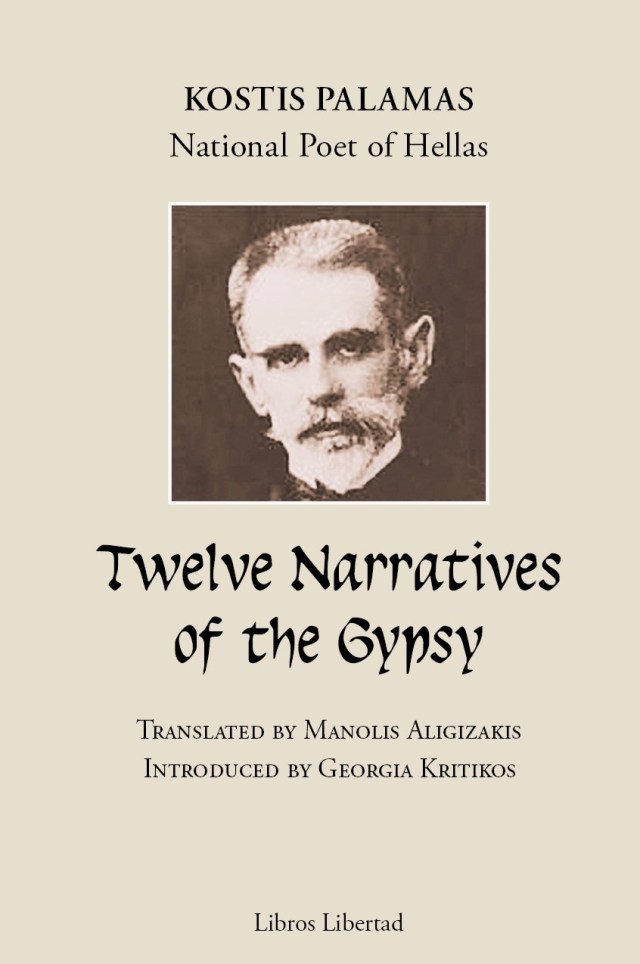
Phemonoe What they didn’t understand enchanted them the most, especially if it didn’t refer to them — those general and vague that relieved them from most of the difficulties — those words that hid and referred to one of their locales (barren and unknown lands), a place of quietness and freedom. The priestess Phemonoe (it was said) understood the bird chirps, the water trickle, the stirring of leaves, and after she’d drink three gulps from the spring of Cassotis*, and after she’d sit on the high tripod, she explained them (with inarticulate cries) and holding in her mouth a laurel branch. The prophets, around her, wrote down her cries hastily. After, the decipherers explained, with clearness and exactness, the exegesis of her words. Until, one day, they showed her the written exegesis of her cries, Phemonoe couldn’t understand them “who said these?” she asked. And when, “You” they said to her, she smiled ambiguously and added: “Yes, but I meant something else too” This “something else too” fifty years later (or even eons) none of our decipherers has explained, and perhaps for this reason the poets still continue to write with the secret suspicion that even Phemonoe doesn’t know what that else is.
Naiad who lived in the spring at the Temple of Apollo at Delphi.
II Eros caresses the ephebe’s heart as the Muses sing delights to the senses and an ethereal conscience suffuses under the citadel of Athena, where thoughts create a man and infinite splendor spreads over every pleat of the insignificant, and in which the lyre fills the air with its diaphanous euphony. The dark blue Aegean is in consonance with Eros when the freest mind succumbs to the freeing poison as the glaucous sky sheds tears and the agile goat climbs the rocks licking the salt of its sweat. The body is hardened like a stone. The crest of the eastern sky shivers from the taste of blood as under the shining marbles the furies unleash macabre lamentations and the vision of an analytical mind ascends.